Oil level monitoring in a Toyota Supra depends heavily on which generation you own. A classic A70 or A80 Supra is usually checked with a dipstick, while the modern GR Supra uses electronic oil measurement through Toyota Supra Command. Treat low-oil warnings seriously, use the method in your owner’s manual, and avoid guessing by generation because sensors, displays, oil capacity, and check procedures are not the same across every Supra.
Quick Answer
The Toyota Supra does not use one universal oil level system. Older Supras usually rely on a dipstick, while the 2020-and-newer GR Supra checks oil electronically through Toyota Supra Command. For the most accurate result, park level, follow the correct warm-engine or dipstick procedure, and never ignore a low-oil or oil-pressure warning.
Key Takeaways
- Modern GR Supra models use an electronic oil measurement system, not the same check method as older dipstick-equipped Supras.
- Toyota’s GR Supra manual says electronic oil monitoring works while driving, but a detailed measurement requires the car to be level, the engine at operating temperature, and the engine running.
- For older Supras with a dipstick, consistent level-ground checks are more important than chasing tiny cold-versus-warm differences.
- Low oil level and low oil pressure are not the same problem; a red oil-pressure warning can mean immediate engine-damage risk.
- Aftermarket apps and sensors can help with monitoring, but they should not replace the factory warning system or the owner’s manual procedure.
At a Glance
| Time Required | 2–5 minutes for a dipstick check; several minutes for a GR Supra detailed electronic measurement once conditions are met |
| Difficulty | Easy for checking; moderate if diagnosing a sensor, wiring, or retrofit issue |
| Tools Needed | Owner’s manual, clean lint-free cloth for dipstick models, correct engine oil, and optional OBD/ECU logging tool |
| Cost | Free to check; oil top-off cost varies; sensor or wiring repair can range from minor parts cost to professional diagnostic labor |
Understanding the Oil Level Sensor in the Toyota Supra
The first thing to know is that “Supra oil level sensor” can mean different things. An A70, A80, and A90/A91 GR Supra do not all use the same oil monitoring setup. That is why advice from a forum post, a swap guide, or a tuning app may be correct for one Supra and wrong for another.
| Supra generation | Typical oil-level check | What to watch for |
|---|---|---|
| A70 / MK3 (1986.5–1992) | Dipstick; some markets or configurations may have additional warning hardware | Wrong dipstick, bent dipstick tube, oil-pan swaps, wiring differences, and engine-swap changes |
| A80 / MK4 (1993–2002) | Dipstick-based checking | Oil consumption, leaks, modified oil pans, and incorrect check technique |
| A90/A91 GR Supra (2020+) | Electronic measurement through Toyota Supra Command | Short trips, aggressive driving, sensor faults, wrong oil, overfilling, and failed measurement conditions |
On the GR Supra, Toyota describes two electronic measuring principles: ongoing monitoring while driving and a detailed stationary measurement. The manual also states that oil consumption can increase with sporty driving, engine break-in, idling, or unsuitable oil types. You can find Toyota’s official owner-manual access page at Toyota Owners Manuals and Warranties, and the GR Supra manual section on electronic oil measurement is also available in digitized manual form.
Note: The GR Supra’s electronic oil level reading is not the same thing as a red oil-pressure warning. Low oil level means the oil quantity needs attention. Low oil pressure can mean the engine is not being lubricated properly and should be treated as urgent.
How to Check the Oil Level on a GR Supra
For the 2020-and-newer GR Supra, use the in-car electronic measurement instead of a traditional dipstick routine. Toyota’s GR Supra manual says a current monitored value is available after about 30 minutes of normal driving, and a detailed measurement is done with the car stationary.
- Park on level ground. The vehicle must be in a horizontal position.
- Bring the engine to operating temperature. A cold engine is not the correct condition for the GR Supra’s detailed electronic check.
- Leave the engine running. During the measurement, idle speed may increase slightly.
- Put the selector in P or N. Keep your foot off the accelerator pedal.
- Open Toyota Supra Command. Go to My Vehicle > Vehicle status > Engine oil level.
- Start the detailed measurement. Select Measure engine oil level, then Start measurement.
- Read the displayed scale or message. Add oil only if the car instructs you to add oil, and add only the quantity shown by the vehicle message.
Warning: Do not overfill a GR Supra “just to be safe.” Toyota warns that too much engine oil can damage the engine or catalytic converter. If the car is overfilled, have the level corrected by a Toyota dealer or qualified technician.
For the GR Supra, Toyota lists Toyota Genuine Motor Oil SN 0W-20 C5 for GR Toyota Supra as the suitable oil type in the manual. If a continuous-use oil is not available, the manual allows a limited top-off amount of certain API-rated oils in listed viscosities, but you should always follow the manual for your exact model year and market.
How to Check Oil Level on Older Dipstick-Equipped Supras
Older Supra models with a dipstick are simpler, but technique still matters. A bad reading usually comes from checking on a slope, not seating the dipstick fully, reading only one side of the dipstick, or checking immediately after shutdown before the oil has drained back into the pan.
- Park on level ground. Even a slight slope can change the reading.
- Shut the engine off and wait a few minutes. This lets oil drain back into the pan. If your owner’s manual gives a specific wait time, use that.
- Pull the dipstick and wipe it clean. Use a clean, lint-free cloth.
- Reinsert it fully. A dipstick that is not seated all the way can show a false low reading.
- Pull it again and read both sides. Use the lower, clearer oil line if one side is smeared.
- Keep the level between the low and full marks. Add oil in small amounts, then recheck.
Pro Tip: Use the same check method every time. For a dipstick-equipped Supra, a consistent level-ground reading after a short drain-back period is more useful than comparing one cold check to one rushed hot check.
Checking Oil Level: Cold vs. Warm
The cold-versus-warm debate is one of the biggest sources of bad Supra oil-level advice. The right answer depends on the generation and check system.
- GR Supra electronic measurement: Do the detailed measurement warm, level, stationary, engine running, and through Toyota Supra Command.
- Dipstick-equipped Supras: Follow the owner’s manual. In general, park level, shut the engine off, wait a few minutes, wipe and reinsert the dipstick, then read the level.
- Cold dipstick checks: They can be useful for consistency, but they may not match the manual’s intended service-check condition.
- Hot dipstick checks: They can smear oil up the stick or read inconsistently if you check too soon after shutdown.
Warm oil expands slightly, but the larger real-world problem is usually drain-back and technique. Checking immediately after hard driving can leave oil clinging to engine parts and make the dipstick hard to read. Checking after the car sits level and the oil has drained back is usually more repeatable.
Common Problems With Oil Level Sensors
Oil level sensor problems can show up as warnings, missing readings, impossible measurements, or readings that do not match what you know was added during an oil change. Before replacing parts, confirm that the car is being checked under the correct conditions.
| Symptom | Likely causes | What to do first |
|---|---|---|
| GR Supra will not complete oil measurement | Engine not warm, car not level, selector not in P/N, accelerator touched, short-trip driving history | Repeat the detailed measurement exactly as the manual describes |
| Reading says low after an oil change | Wrong fill quantity, wrong oil, sensor not ready, incomplete measurement, actual leak | Verify the oil added, check for leaks, then remeasure under correct conditions |
| Dipstick reading changes every time | Car not level, dipstick not fully seated, smeared oil, wrong dipstick, bent tube | Clean, reseat, read both sides, and confirm the dipstick is correct for the engine and pan |
| Low oil warning appears repeatedly | Oil consumption, external leak, sensor fault, wiring issue, wrong oil level after service | Do not ignore it; inspect level, leaks, and service history |
| Red oil-pressure warning | Low oil pressure, very low oil, pump/pickup issue, electrical fault, severe engine problem | Stop safely and shut the engine off as soon as possible |
On older A70 cars, some owners retrofit market-specific or later oil-level warning parts, but compatibility is not always simple. Oil pan, sensor, harness, cluster warning logic, and engine-swap details can all matter. Do not assume a European, Japanese-market, or donor-car sensor will plug into a North American harness without confirming the wiring diagram and oil-pan configuration.
[Products Worth Considering]

This central dashboard cover strip trim is designed as a replacement for the instrument cluster panel area on compatible Toyota RAV4 models. It helps restore the look of your interior with a precise fit, durable construction, and reliable long-term performance. Ideal for replacing worn or damaged trim while maintaining a clean factory-style appearance.

These genuine Toyota oil drain plug gaskets are designed to help maintain a reliable seal during oil changes, reducing the chance of leaks and supporting proper engine maintenance. With an OEM fit and trusted Toyota quality, they are a practical choice for routine service on compatible vehicles. The convenient quantity pack is ideal for keeping multiple maintenance intervals covered.

This flexible oil funnel is designed to make fluid changes cleaner and easier by guiding oil around obstacles like skid plates and crossmembers. Its shape-retaining core and silicone body can be molded for custom positioning, while the heat-resistant, leak-proof design helps prevent spills during draining and filter removal. Reusable and easy to clean, it works well for cars, trucks, motorcycles, and other hard-to-reach fluid fill or drain applications.
How Aftermarket Solutions Can Help You Monitor Oil
Aftermarket monitoring can be useful, especially on modified or track-driven Supras, but it should be treated as extra information rather than a replacement for the factory check method.
For the A90/A91 GR Supra, tuning and logging tools such as EcuTek ECU Connect can display customizable dashboard parameters through the EcuTek Bluetooth Vehicle Interface. Some Supra owners and tuners use EcuTek-based data to watch engine parameters more closely than the factory display. However, available parameters can depend on the ECU setup, tune, software version, and vehicle support, so you should confirm what your specific setup can read before relying on it.
Basic OBD II phone apps may show oil temperature or diagnostic trouble codes, but they often do not expose manufacturer-specific oil-level data. If you want oil-level visibility beyond the factory display, ask your tuner or diagnostic technician which parameters are actually available on your Supra.
Note: A tuning app, retrofit sensor, or aftermarket gauge can help you spot trends, but it does not make it safe to run the engine with a low-oil or low-pressure warning active.
[Products Worth Considering]

This oxygen O2 sensor set is designed for select Toyota Camry and RAV4 models with 2.4L engines, providing upstream and downstream replacement coverage in one package. Built to OEM specifications for plug-and-play installation, it helps improve fuel efficiency, support accurate air-fuel monitoring, and restore reliable engine performance. The stainless steel and heat-resistant construction is made for long-lasting durability and stable operation.

This oil filter housing cap assembly is designed as a direct replacement for a wide range of Toyota and Lexus vehicles, helping restore a secure seal for proper oil filtration. It is made for easy installation and tested for compatibility with multiple part numbers and model years. The package includes the cap, plug, and gasket for a complete replacement solution.

This mass air flow sensor is designed to replace compatible OEM parts for a wide range of Toyota and Lexus vehicles, helping restore accurate airflow readings and smoother engine operation. It is computer-tested for stable signal output, fast response, and improved fuel efficiency, while also supporting reliable performance under demanding driving conditions. The easy-install design makes replacement straightforward, and a 12-month warranty adds extra peace of mind.
What Happens If Your Oil Level Sensor Fails?
When an oil level sensor or electronic measurement system fails, the main risk is not the failed sensor itself. The risk is that you no longer have a trustworthy early warning before the engine runs low on oil.
Possible symptoms include:
- Oil level readings that do not update after normal driving.
- A measurement that starts but will not complete.
- Repeated low-oil messages after a verified correct oil service.
- Oil-level warnings that appear along with other electrical or sensor faults.
- Conflicting information between the dipstick, service fill amount, and dashboard messages.
If your Supra shows a red oil-pressure warning, do not treat it like a routine oil-level reminder. Oil pressure is what keeps bearings, cams, turbocharger components, and other moving parts separated by a lubricating film. Running the engine with low pressure can cause major damage quickly.
Warning: If a red oil-pressure warning appears while driving, reduce load, pull over safely, shut the engine off, and arrange inspection. Do not keep driving just because the oil level was recently checked.
[Products Worth Considering]

This upgraded aluminum oil filter housing cap is designed as a direct replacement for compatible Toyota and Lexus models, helping restore a secure, reliable seal for the oil filter housing. Built from durable aluminum, it offers improved strength and heat resistance over factory plastic covers, while the included gasket and plug support straightforward installation and dependable leak-free performance.
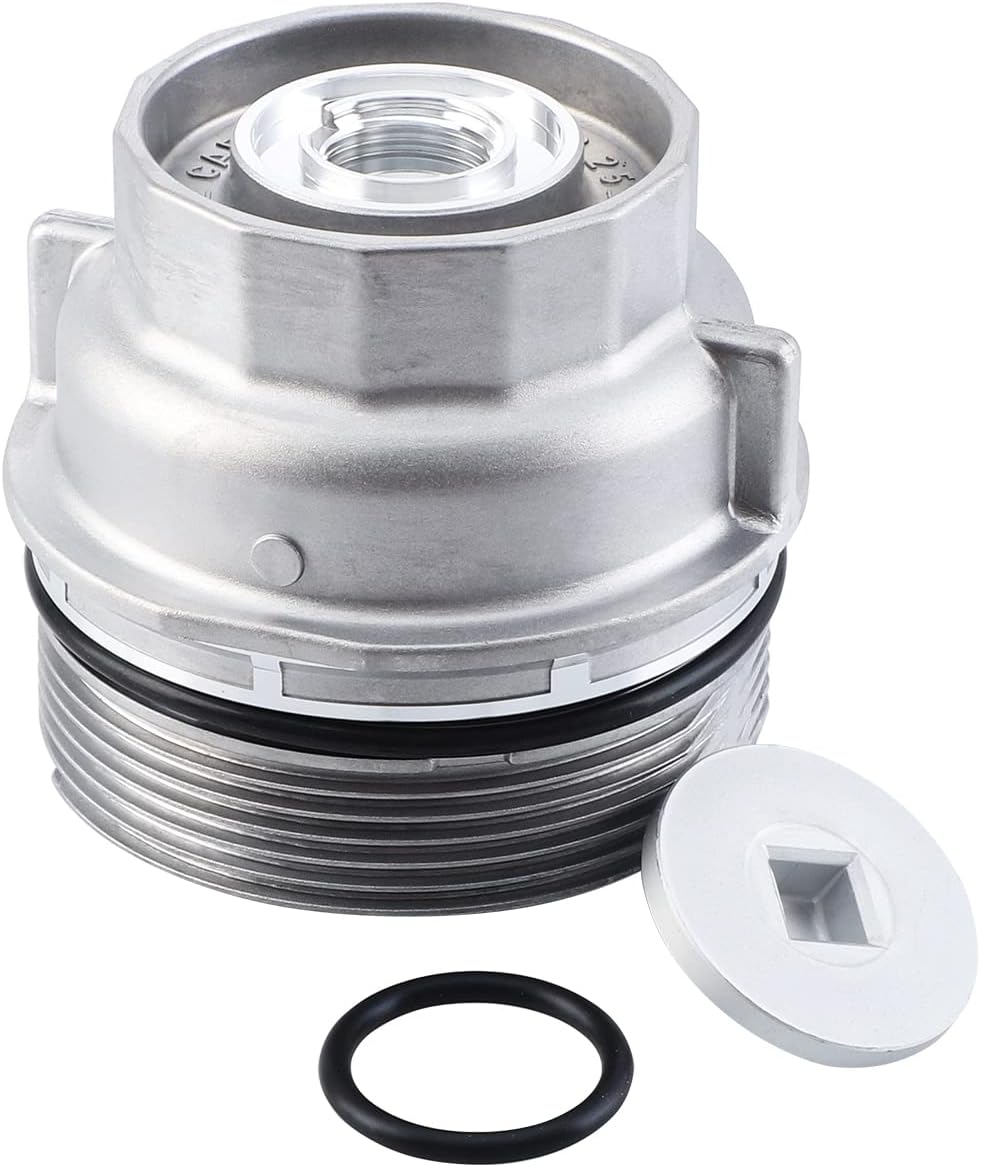
This oil filter housing cap assembly is designed as a replacement for select Toyota and Lexus vehicles, helping restore proper sealing and reliable oil filter function during routine maintenance. Built to meet OEM standards, it supports leak-free performance and long-lasting durability while fitting a wide range of popular models across multiple years.

This upgraded engine oil funnel kit makes oil changes cleaner and easier with a spill-proof design, flow control valve, and transparent body for precise filling. Built from durable polycarbonate and equipped with 12 adapters, two 45-degree elbows, and a debris filter, it fits a wide range of vehicles and works well in tight engine spaces. The secure, hands-free setup helps reduce mess while improving control during oil filling and fluid transfers.
When to Add Oil and How Much to Add
On a GR Supra, Toyota’s manual says to add engine oil only when a message appears in the instrument cluster, and to add the quantity shown on the Control Display. This helps prevent overfilling, which Toyota warns can damage the engine or catalytic converter.
On dipstick-equipped Supras, add oil only when the level is near or below the low mark. Add small amounts, wait briefly, and recheck. Do not pour in a full quart unless the dipstick or manual clearly supports that amount. Oil capacity also varies by engine, filter change, oil pan, cooler setup, and model year. For example, the MK3 Supra factory service information lists specific drain-and-refill capacities for the 7M engines, so owners should use the manual that matches their exact car.
The safest oil-level habit is simple: use the correct procedure for your Supra generation, add oil in small measured amounts, and never use overfilling as insurance against low oil.
When to Get Professional Diagnosis
Get the car inspected by a Toyota dealer, Supra specialist, or qualified technician if:
- The oil level warning returns soon after a correct top-off.
- The GR Supra electronic measurement repeatedly fails even when all requirements are met.
- You see oil leaks under the car, around the filter housing, drain plug, oil pan, turbo oil lines, or valve cover area.
- The dipstick reading does not match the known fill amount after an oil change.
- A red oil-pressure warning appears at any time.
- You are retrofitting an oil-level sensor into an older Supra with different market wiring or a swapped engine.
A proper diagnosis may include checking actual oil quantity, scanning for fault codes, inspecting wiring, verifying the oil level sensor or oil condition sensor, checking for leaks, and confirming that the engine has the correct oil and filter installed.
Frequently Asked Questions
How do you check Supra oil level?
For a GR Supra, use Toyota Supra Command: go to My Vehicle > Vehicle status > Engine oil level and start the detailed measurement when the car is level, warm, running, and in P or N. For older dipstick-equipped Supras, park level, shut the engine off, wait a few minutes, wipe and reinsert the dipstick, then read the level between the marks.
Does the Toyota Supra have an oil level sensor?
Some Supras use electronic or warning-based oil monitoring, but the setup depends on generation, market, and trim. The modern GR Supra uses electronic oil measurement through the vehicle display. Older Supras are usually checked with a dipstick, and any oil-level warning hardware can vary by model and market.
Should I check Supra oil cold or warm?
For a GR Supra detailed electronic measurement, check it warm because Toyota requires the engine to be at operating temperature. For older dipstick-equipped Supras, follow the owner’s manual and use a consistent level-ground method after the oil has had time to drain back into the pan.
Why will my GR Supra oil measurement not complete?
The usual causes are unmet measurement conditions: the car is not level, the engine is not at operating temperature, the selector is not in P or N, the accelerator was pressed, or the car has mostly been driven on short trips. If the measurement still fails after the correct procedure, scan for faults and have the sensor system inspected.
Can EcuTek or an OBD app replace the factory oil level check?
No. EcuTek and other logging tools can be helpful for monitoring supported parameters, but they should be used as extra visibility, not as a replacement for the owner’s manual procedure or factory warnings. Basic OBD apps may not show manufacturer-specific oil-level data at all.
What oil should I add to a GR Supra?
Use the oil listed in the owner’s manual for your exact model year and market. The GR Supra manual lists Toyota Genuine Motor Oil SN 0W-20 C5 for GR Toyota Supra and gives limited alternative top-off guidance when suitable continuous-use oil is not available.
Conclusion
Keeping your Toyota Supra’s oil level in range is one of the simplest ways to protect the engine, turbocharger, and catalytic converter. The key is using the right method for the right Supra. Do not use a cold dipstick rule for a GR Supra electronic measurement, and do not rely on a tuning app when the factory system is warning you. Park level, follow the manual, add oil only in measured amounts, and investigate repeated warnings before they become expensive engine damage.
Sources
- Toyota Owners Manuals and Warranties — official Toyota manual access for GR Supra owner information
- Toyota GR Supra Owner’s Manual, page 293 — engine oil consumption notes, low-oil warning, and electronic oil measurement overview
- Toyota GR Supra Owner’s Manual, page 294 — detailed electronic oil measurement requirements and Toyota Supra Command menu path
- Toyota GR Supra Owner’s Manual, page 296 — suitable GR Supra engine oil type and oil-change caution
- MK3 Supra Factory Service Manual Specifications — 7M engine oil capacity reference for older Supra models
- EcuTek ECU Connect Dashboards Setup and Use — official EcuTek documentation for customizable dashboard and logging features