If your 2021 Toyota Supra uses some oil between services, don’t panic right away. The 2021 GR Supra uses BMW-sourced turbocharged engines, and oil use can vary with break-in, temperature, short trips, track use, and how often the engine sees boost. What matters most is the trend: check the electronic oil level regularly, use the correct Toyota-approved oil, document any top-offs, and treat repeated low-oil warnings as a reason to involve a Toyota dealer.
Quick Answer
A 2021 Toyota Supra 3.0 can use a small amount of oil, and owner reports vary from no measurable loss to about 500 ml every 2,500 miles. Repeated “add one quart” warnings, blue exhaust smoke, visible leaks, or oil use that suddenly increases should be checked by a qualified Toyota technician.
Key Takeaways
- The 2021 Supra 3.0’s B58 turbo inline-six may use some oil, but Toyota does not publish one simple “normal” oil-consumption number for every driver.
- Track use, aggressive acceleration, frequent boost, short trips, long idling, and break-in miles can increase oil consumption.
- Use the correct full-synthetic Toyota GR Supra 0W-20 oil specification and avoid oil additives unless Toyota specifically approves them.
- If the car repeatedly asks for a quart of oil before the service interval, document mileage and top-offs and contact a Toyota dealer.
At a Glance
| Time Required | 5–10 minutes to check the electronic oil level; longer if the engine needs to reach operating temperature |
| Difficulty | Easy for monitoring; professional diagnosis is recommended for repeated low-oil warnings |
| Tools Needed | Toyota Supra Command display, level parking surface, correct 0W-20 oil for top-offs, and a mileage/top-off log |
| Cost | Usually just the cost of approved oil for top-offs; diagnostic costs vary by dealer and warranty status |
How Much Oil Does the 2021 Toyota Supra Use?
The 2021 Toyota GR Supra came with an available turbocharged 2.0-liter four-cylinder and a 3.0-liter turbo inline-six. Most oil-consumption discussions focus on the 3.0 model, which Toyota lists at 382 horsepower for 2021 in its official 2021 Supra vehicle information. That higher-output turbo engine can use oil differently from a typical naturally aspirated commuter engine.
A useful real-world baseline is this: light oil use can be normal, especially during spirited driving, but a healthy stock Supra should not need constant top-offs. Some owners report almost no measurable oil loss between services, while others report about 500 ml over a few thousand miles. Treat those owner reports as context, not a Toyota specification.
| Oil Use Pattern | What It Usually Means | What to Do |
|---|---|---|
| No measurable loss between checks | Common for many lightly driven cars | Keep checking monthly and before long trips |
| Small drop over several thousand miles | Can be normal for a turbo performance engine | Record mileage and top-off amount |
| Repeated “add one quart” messages | Needs documentation and dealer guidance | Contact a Toyota dealer and mention the low-oil warning history |
| Blue smoke, visible leaks, or rapid loss | Possible mechanical fault | Stop hard driving and schedule diagnosis |
Note: Toyota issued Tech Tip T-TT-0642-21 for the 2021 Supra B58 six-cylinder covering customer reports of low oil or the message “Oil level at minimum, add one quart.” The document tells dealers to gather driving style, driving location, trip length, and top-off history before diagnosis.
Key Factors Affecting Oil Consumption in the Toyota Supra
Oil consumption in the Toyota Supra is not controlled by one factor. The engine design matters, but so do the way you drive, the oil specification, the age of the oil, and whether the engine is still in its early break-in period.
Driving Style and Boost Use
Aggressive driving, repeated high-rpm pulls, track sessions, and frequent boost can raise oil temperature and increase oil use. Steady highway driving usually produces less consumption. If you notice oil loss mainly after track days or mountain-road drives, the usage pattern may be driving-related rather than a constant mechanical failure.
Break-In and Engine Mileage
New engines can consume more oil while internal parts seat. Follow the break-in guidance in the owner’s manual, avoid repeated hard pulls during the early miles, and start tracking oil level from the first few fill-ups. If oil use becomes worse after break-in instead of stabilizing, that is worth investigating.
Oil Type and Oil Quality
The Supra is sensitive to the correct oil rating. For top-offs and oil changes, use the oil specification listed in the Toyota owner’s manual for the 2021 Supra. In general, the 2021 GR Supra calls for Toyota Genuine Motor Oil 0W-20 for GR Supra or an equivalent oil meeting the listed Toyota/BMW specification. Do not replace that with generic conventional oil.
Warning: Do not ignore a low-oil message, and do not overfill the engine. Too little oil can cause oil starvation; too much oil can damage the engine or catalytic converter. Add only the amount shown by the vehicle message, then recheck the level.
How to Check the Oil Level in a 2021 Toyota Supra
The 2021 GR Supra uses an electronic oil-level measurement system rather than a traditional dipstick. That makes regular checks easy, but it also means you need to follow the correct conditions for an accurate reading.
- Park the car on a level surface.
- Bring the engine up to operating temperature.
- Leave the engine running and keep the transmission in Park or Neutral as directed by the on-screen prompts.
- Open Toyota Supra Command and go to My Vehicle, then Vehicle Status, then Engine Oil Level.
- Select Measure Engine Oil Level or the equivalent on-screen option.
- Wait for the measurement to finish before adding oil.
- If the car says to add oil, add the displayed amount slowly and avoid overfilling.
Pro Tip: Keep a simple note in your phone with the date, mileage, oil level message, brand/spec of oil added, and amount added. That record is useful if a dealer needs to evaluate consumption under Toyota’s diagnostic process.
[Products Worth Considering]

ECOGARD X5608 is a premium cartridge oil filter designed for a wide range of Toyota, Lexus, and Scion vehicles. It helps protect your engine by screening out harmful contaminants and is built for use with both synthetic and conventional oils. Included O-rings support a proper housing seal for dependable maintenance between oil changes.

FOCUSFILTER 04152-YZZA1 OEM grade oil filter is designed to help protect your engine with reliable filtration and 10K mile protection. It cross references multiple OE part numbers and fits a wide range of Toyota and Lexus applications, making it a practical replacement for routine maintenance. Built for compatible vehicles including Camry, Avalon, Highlander, Tacoma, RAV4, Sienna, ES 350, and RX 350.

This 12-pack oil filter and drain plug washer set is designed for a wide range of Toyota and Scion vehicles, helping support clean oil flow and dependable engine performance. It replaces several common OE part numbers and offers an easy-fit solution for routine maintenance. Built with corrosion-resistant materials and efficient filtration, it helps keep engine contaminants out and supports longer service life.
Signs of Excessive Oil Consumption
How can you tell if your Toyota Supra is consuming oil excessively? Look for a pattern, not just one isolated reading. A single small top-off after hard use may not mean trouble, but repeated warnings or visible smoke should not be brushed aside.
- Repeated low-oil warnings: Especially if the message returns well before the next scheduled service.
- Blue smoke from the exhaust: Blue-tinted smoke can suggest oil is being burned in the combustion process.
- Burning-oil smell: A hot oil smell after driving can point to leaks dripping onto hot components.
- Oil spots under the car: Check the garage floor or parking space after the car sits overnight.
- Sudden change in oil use: A car that used almost no oil and then starts needing frequent top-offs should be inspected.
- Misfires or rough running: Oil entering the intake or cylinders can sometimes contribute to drivability problems.
If you suspect excessive consumption, a technician may inspect for external leaks, check the PCV system, inspect the turbocharger oiling area, look for oil in the intake tract, and perform compression or leak-down testing when needed.
Best Oils and Change Intervals for Your Supra
When it comes to keeping your Toyota Supra running smoothly, the correct oil matters more than brand loyalty. Use the oil grade and approval listed for your exact engine, and confirm the specification by VIN if you are unsure. Toyota’s 2021 Supra Warranty & Maintenance Guide also recommends scheduled maintenance every 10,000 miles, 12 months, or when the maintenance reminder appears, whichever comes first.
[Products Worth Considering]

This upgraded aluminum oil filter housing cap is designed as a direct replacement for compatible Toyota and Lexus models, helping restore a secure, reliable seal for the oil filter housing. Built from durable aluminum, it offers improved strength and heat resistance over factory plastic covers, while the included gasket and plug support straightforward installation and dependable leak-free performance.

This oil filter housing cap assembly is designed as a direct replacement for a wide range of Toyota and Lexus vehicles, helping restore a secure seal for proper oil filtration. It is made for easy installation and tested for compatibility with multiple part numbers and model years. The package includes the cap, plug, and gasket for a complete replacement solution.

3X Stronger than the leading full synthetic*
Recommended Oil Types
For the 2021 Supra, avoid generic oil advice. The GR Supra’s engine family has specific oil requirements, and using the wrong oil can affect oil consumption, protection, and warranty conversations.
| Engine | Recommended Oil Approach | Notes |
|---|---|---|
| 2021 Supra 3.0 turbo inline-six | Toyota Genuine Motor Oil 0W-20 for GR Supra or equivalent approved 0W-20 oil | Common oil-change fill is about 6.5 liters, or about 6.9 U.S. quarts, with filter; verify by manual and final electronic level |
| 2021 Supra 2.0 turbo four-cylinder | Toyota-approved 0W-20 oil for the Supra 2.0 | Uses less oil than the 3.0; confirm capacity by VIN and owner’s manual |
| Tuned or track-driven cars | Follow the builder’s recommendation only if it does not conflict with warranty needs | Modified engines may consume more oil and may need shorter service intervals |
Warning: Do not use oil additives to “fix” Supra oil consumption unless a Toyota-approved repair procedure calls for them. The owner’s manual warns against unsuitable oil types and additives because they can cause engine damage.
Change Frequency Guidelines
For normal street use, follow Toyota’s maintenance reminder and the 10,000-mile or 12-month schedule in the maintenance guide. For frequent track use, very short trips, dusty conditions, or repeated hard driving, many careful owners choose shorter oil-change intervals, such as around 5,000 miles or 6 months, because turbo engines are harder on oil.
| Use Case | Practical Oil-Change Plan | Why It Helps |
|---|---|---|
| Normal commuting and highway driving | Follow Toyota maintenance reminder, 10,000 miles, or 12 months | Matches Toyota’s scheduled maintenance guidance |
| Short trips, hot climate, or spirited weekend driving | Consider checking oil more often and changing around 5,000–7,500 miles | Reduces oil aging from heat and fuel dilution |
| Track days or repeated hard use | Check before and after each event; consider a post-event oil change | Track heat and high-rpm use can accelerate oil breakdown |
Insights From the Supra Community on Oil Consumption

While many enthusiasts celebrate the performance of the Toyota Supra, oil consumption remains a common discussion in the community. The most useful takeaway is that owner experiences vary widely. Some 3.0 owners report no visible oil loss over several thousand miles, while others need small top-offs, especially after aggressive driving.
That community experience lines up with Toyota’s own dealer guidance in the NHTSA-hosted Toyota Tech Tip T-TT-0642-21, which specifically asks dealers to record whether the owner drives aggressively, moderately, or easily, and whether the car is used on highways, in the city, or on racetracks.
| Driving Style | Oil Consumption Tendency | Owner Action |
|---|---|---|
| Steady street driving | Often little to none | Check monthly and before road trips |
| Aggressive driving | Can increase | Check more often and log top-offs |
| Track use | Can increase significantly | Check before and after every event |
| New engine break-in | May vary | Follow break-in instructions and track trends |
| Repeated low-oil messages | Needs attention | Contact a Toyota dealer with mileage and oil records |
How to Address Excessive Oil Consumption
Excessive oil consumption can be frustrating, especially for Toyota Supra owners who expect strong performance from their engines. The best fix starts with measurement, not guesswork.
- Confirm the reading: Perform a detailed electronic oil-level measurement on level ground with the engine at operating temperature.
- Document the pattern: Record mileage, date, warning message, and oil added.
- Use only approved oil: Top off with the correct 0W-20 Toyota GR Supra oil specification.
- Check for leaks: Look for oil around the filter housing, drain plug area, valve cover area, turbo oil lines, and underbody panels.
- Review recent driving: Note track days, long idling, short trips, or repeated hard acceleration.
- Stop relying on additives: Additives can create more risk than benefit if they are not approved for the engine.
- Ask for dealer diagnosis: If warnings repeat, ask the dealer to follow Toyota’s low-oil guidance and create a case if needed.
The most important number is not one isolated oil reading. It is the repeatable trend: miles driven, oil added, driving conditions, and whether the low-oil warning returns.
[Products Worth Considering]

Advanced protection against the four main causes of engine breakdown: wear friction heat and deposits

High Mileage for engines 75,000+ miles
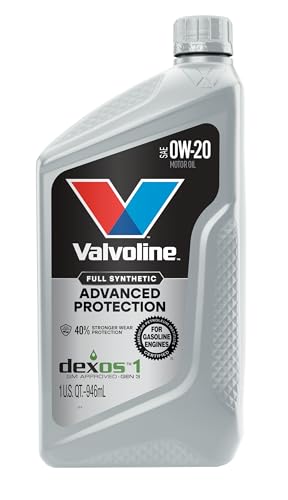
Advanced protection against the four main causes of engine breakdown: wear friction heat and deposits
When to Consult a Mechanic About Oil Consumption
If your Supra repeatedly asks for oil before the normal service interval, don’t keep topping it off without a plan. Toyota’s 2021 Supra low-oil Tech Tip tells dealers to gather detailed driving and top-off information before diagnosis, so your records can speed up the process.
| Signs to Consult a Mechanic | Why It Matters |
|---|---|
| “Oil level at minimum, add one quart” message returns repeatedly | Matches the type of concern Toyota addressed in its 2021 Supra low-oil Tech Tip |
| Blue smoke from the exhaust | Can indicate oil entering the combustion chamber |
| Visible oil leaks or oil burning smell | May point to gasket, seal, filter housing, or turbo oil-line issues |
| Rapid oil-level drop after a recent oil change | Could be an underfill, leak, wrong oil, or mechanical problem |
| Rough running, misfires, or check-engine light with oil loss | Needs professional diagnosis before further hard driving |
Addressing these issues promptly can help maintain your Supra’s performance and longevity. If the car is still under warranty or an extended service contract, keep receipts and avoid non-approved additives or repairs that could complicate a claim.
Frequently Asked Questions
What amount of oil consumption is normal for a 2021 Toyota Supra?
There is no single Toyota-published number that applies to every 2021 Supra. Some owners report no measurable loss, while others report small top-offs such as about 500 ml over a few thousand miles. Repeated low-oil warnings, sudden increases in use, smoke, or leaks should be checked.
How much oil consumption is normal for Toyota?
Toyota does not use one universal oil-consumption number for every engine. A performance turbo engine like the Supra’s can use more oil than a typical naturally aspirated Toyota engine, especially under hard driving. The safest approach is to follow the owner’s manual, monitor the trend, and ask a dealer if consumption increases.
How much oil does a 2021 Supra need for an oil change?
A 2021 Supra 3.0 oil change is commonly listed at about 6.5 liters, or about 6.9 U.S. quarts, with the filter. The 2.0 uses less. Always confirm the capacity for your exact engine by VIN and use the electronic oil-level measurement after filling.
Does the 2021 Toyota Supra have an oil dipstick?
No. The 2021 GR Supra uses an electronic oil-level system. Check the level through Toyota Supra Command on a level surface with the engine warm, and follow the on-screen measurement instructions.
Can I use 5W-30 oil to reduce Supra oil consumption?
Do not switch viscosity just to mask oil consumption unless a qualified Toyota technician or a documented motorsport setup calls for it. For a stock street car, use the oil specification listed in the owner’s manual. Wrong oil can affect protection, emissions equipment, and warranty discussions.
Should I use oil additives in a Toyota Supra?
No, not as a routine fix. The Supra owner’s manual warns against unsuitable oil types and additives. If oil consumption is high, diagnose the cause instead of trying to thicken or chemically alter the oil.
Conclusion
For a 2021 Toyota Supra, some oil use can be part of owning a turbocharged performance car, especially if you drive hard or attend track days. But “normal” should not mean careless. Use the correct 0W-20 GR Supra oil, check the electronic oil level regularly, log any top-offs, and get the car diagnosed if the low-oil warning returns or the consumption pattern changes. Treat the oil level like you treat tire pressure and brake condition: a small routine check that protects the fun.
Sources
- Toyota Owners — 2021 Supra Manuals and Warranties — owner’s manual access for oil-level procedures, oil specifications, and model-specific maintenance information
- Toyota 2021 Supra Warranty & Maintenance Guide — scheduled maintenance timing, owner maintenance responsibilities, and monthly oil-level check guidance
- NHTSA / Toyota Tech Tip T-TT-0642-21 — official Toyota guidance for 2021 Supra B58 low-oil warnings and dealer information-gathering steps
- Toyota USA Newsroom — 2021 Toyota Supra — official 2021 Supra engine lineup and 3.0-liter performance specification context