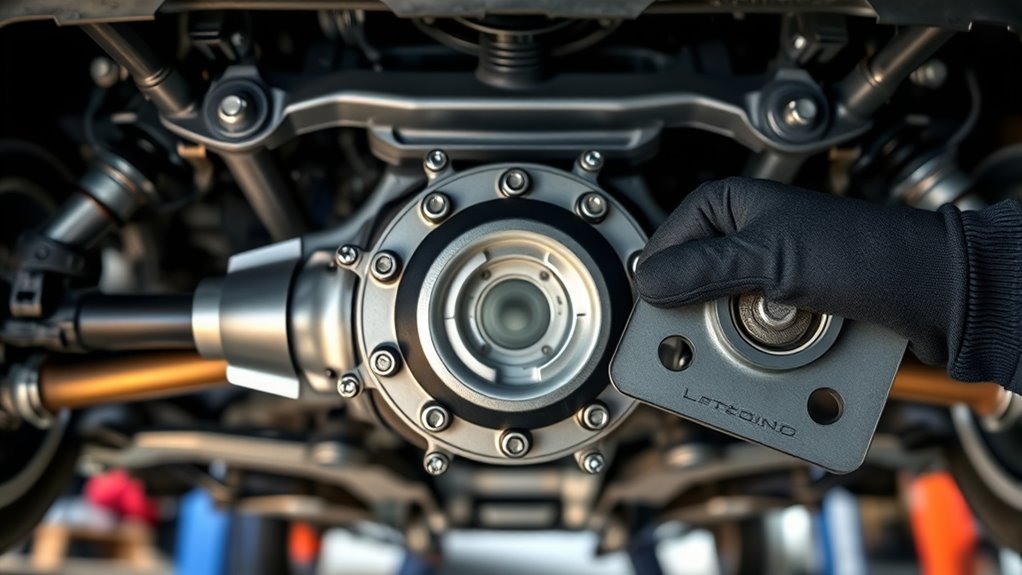
A Toyota Supra does not automatically need an aftermarket limited-slip differential. A stock daily driver with enough traction can stay on its existing differential, while a JZA80 used for hard street driving, autocross, track days, drag launches, drifting, or added power can benefit substantially from a properly matched LSD. For the 2026 U.S. GR Supra lineup, Toyota already lists an active rear sport differential as standard on the 3.0, 3.0 Premium, and MkV Final Edition, so owners of those cars should diagnose tires, alignment, differential operation, and electronic settings before assuming they need replacement hardware.
Last updated: August 31, 2026 · Sources checked include Toyota’s 2026 GR Supra specifications, JZA80 axle-code references, and current KAAZ, OS Giken, and Cusco application data.
Quick Answer
You need a Supra LSD when one-wheel spin or inconsistent rear traction is limiting acceleration, corner exit, drifting, or repeatability. For a street-driven JZA80, a factory Torsen/helical unit or street-friendly clutch LSD is usually easier to live with than an aggressive 2-way. For a JZA80 swap, identify the actual housing, axle code, ring-gear size, output stubs, flange, and current differential before ordering anything. A modern GR Supra 3.0 may already have the active rear differential you need.
Key Takeaways
- An LSD does not create tire grip; it helps the rear axle use available grip more consistently instead of letting one rear tire dominate the wheelspin.
- For street and mixed-use JZA80s, a factory-style Torsen/helical unit or street-tuned clutch LSD is generally easier to live with than an aggressive 2-way.
- Final drive ratio changes acceleration, cruising rpm, shift points, and road speed in each gear, but you do not necessarily need to change the ratio when installing an LSD center.
- JZA80 fitment must be verified from the actual car. Toyota used 200mm and 220mm differential families across different markets, transmissions, and production periods.
- Manufacturer application data matters. Current aftermarket catalogs list separate JZA80 units for different ring-gear and factory-differential configurations.
- Use the oil, break-in procedure, preload guidance, and service interval specified by the manufacturer of the exact LSD installed.
At a Glance
| Best Upgrade For | JZA80s that need better traction or more predictable lock for hard street, track, drag, autocross, or drift use |
| Street-Friendly Starting Point | Healthy factory Torsen/helical LSD or a clutch LSD configured for progressive engagement |
| Fitment Difficulty | Moderate for a correctly matched center; advanced when changing housing family, ratio, flange, axles, or driveshaft |
| Typical Parts Cost | As checked August 31, 2026, current JZA80 aftermarket LSD-center examples are roughly $1,520–$1,746 before bearings, seals, fluid, labor, or conversion parts |
Do You Need a Supra LSD?
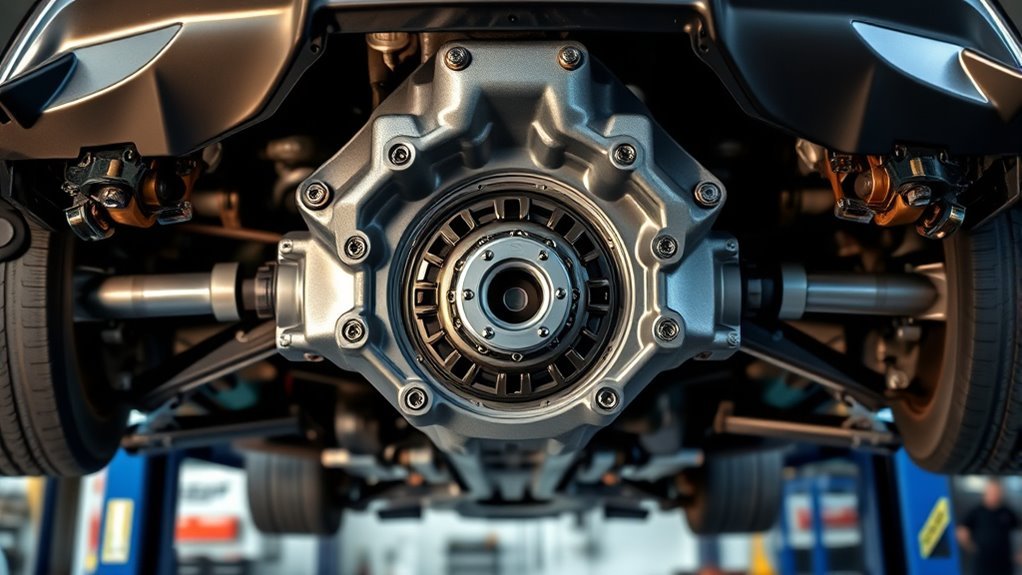
You do not need an aftermarket LSD simply because you own a Supra. The upgrade starts to make sense when the existing rear differential cannot deliver the traction behavior your tires, power level, and driving use demand.
Typical signs include repeated one-wheel spin, inconsistent launches, poor drive off tight corners, or a build moving toward track, autocross, drift, drag, or higher-power street use. An LSD limits excessive left-to-right wheel-speed difference so the rear tires can contribute more consistently.
First confirm what the car already has. A factory-equipped JZA80 may already have a Torsen-type LSD, while a previous owner may have swapped the original housing or center. On a current GR Supra, the answer is different again: Toyota’s 2026 U.S. brochure lists an active rear sport differential as standard on the 3.0, 3.0 Premium, and MkV Final Edition.
Before You Buy: Treat the axle code as evidence of the car’s original configuration, not absolute proof of what is installed today. Photograph the code and differential, identify the housing family, and check service records or physical parts if the car has been modified.
What Is the Difference Between an Open Diff, LSD, and Welded Diff?
A differential allows the left and right rear wheels to turn at different speeds while cornering. An open differential does this smoothly, but when one tire has much less traction, usable torque at the rear axle can become limited by that low-grip side.
A limited-slip differential retains differential action while resisting excessive speed difference between the rear wheels. The exact behavior depends on whether the unit uses helical/worm gearing, clutch plates, or active electronic control.
A welded differential or spool is fundamentally different because it forces both rear wheels to turn together. That can be useful in a purpose-built drift or race application, but it compromises normal turning behavior, tire life, wet-road predictability, and street refinement.
| Diff Type | How It Behaves | Best Use |
|---|---|---|
| Open | Smooth and quiet but offers limited help when one rear tire loses grip | Casual street driving |
| Helical/Torsen LSD | Biases torque through internal gearing with smooth street behavior | Street, canyon, autocross, mixed performance use |
| Clutch LSD | Uses friction plates and ramp/preload tuning to control lock behavior | Street/track, drag, drift, competition |
| Active rear differential | Electronically adjusts rear differential locking according to vehicle conditions | Modern GR Supra performance use |
| Welded/Spool | Locks both rear wheels together continuously | Dedicated drift or race use |
Warning: A welded differential is not a low-cost equivalent to a street LSD. Binding, tire scrub, parking-lot hopping, abrupt wet-surface behavior, and additional driveline stress are normal consequences of permanently locking both rear wheels together.
How Do LSD Type and Final Drive Affect Supra Handling?
The LSD and final drive do different jobs. The LSD controls how strongly the two rear wheels are coupled when their speeds try to separate. The final drive controls the overall gearing between the driveshaft and rear wheels.
A numerically shorter final drive, such as 4.083 or 4.272 compared with 3.133, multiplies torque more strongly at the wheels and raises engine rpm at a given road speed. A taller ratio reduces cruising rpm and extends road speed in each gear. That can suit powerful turbo combinations that do not need as much torque multiplication.
You can often install a compatible LSD center while retaining the existing ring-and-pinion ratio. That lets you change traction behavior without deliberately changing highway rpm or the road speed reached in each transmission gear.
| Change | What You Feel | Main Tradeoff |
|---|---|---|
| More clutch-LSD lock/preload | Stronger coupling between the rear tires | Can increase chatter, push, rotation, or tire scrub depending on setup |
| Milder LSD action | Smoother low-speed and corner-entry behavior | Less locking assistance when traction differs sharply side to side |
| Shorter final drive | Stronger wheel torque and quicker engine-speed rise | Higher cruise rpm and more frequent shifting |
| Taller final drive | Lower rpm at speed and longer gearing | Less torque multiplication |
The best Supra LSD is the one that matches the tires, power delivery, transmission, surface, and driver—not simply the unit with the strongest possible lock.
Which Supra LSD Type Should You Choose?
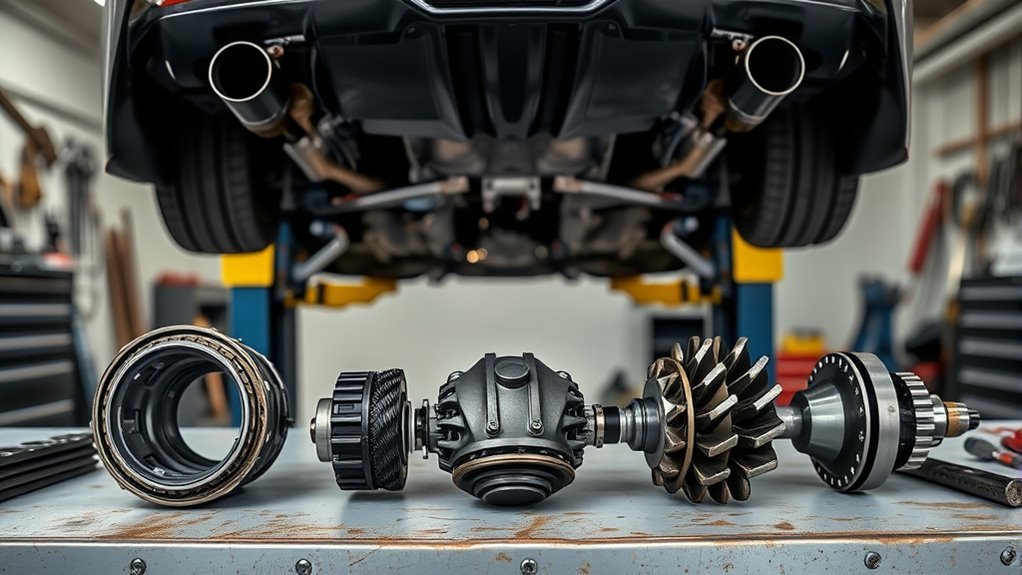
Start with how the car is actually used. Street comfort, corner-entry behavior, launch consistency, and drift predictability require different amounts and types of locking action.
| Use Case | Good Starting Point | Main Reason |
|---|---|---|
| Daily street JZA80 | Healthy factory Torsen/helical LSD or progressively tuned clutch LSD | Low-speed refinement with better traction than an open diff |
| Street + autocross/track | Helical LSD or street-friendly 1.5-way clutch LSD | Balances corner-exit drive with manageable entry behavior |
| Road course | Tunable clutch LSD matched to tires and chassis setup | Allows preload and locking behavior to be matched to the car |
| Drag | Strong LSD setup with verified axles, mounts, and housing | Launch repeatability and drivetrain strength matter most |
| Drift | 2-way clutch LSD | Strong locking on acceleration and deceleration |
| 2026 GR Supra 3.0 | Diagnose the factory active rear differential first | Toyota already equips these models with an active rear sport differential |
A daily-driven car rarely benefits from choosing the harshest setup available. KAAZ, for example, describes its JZA80 1.5-way unit as providing full locking characteristics under acceleration with reduced engagement during deceleration. OS Giken lists progressive 1.5-way JZA80 applications in both 200mm and 220mm configurations. These examples show why the exact LSD design matters as much as the word “limited-slip.”
Pro Tip: Before changing the final drive, calculate the road speed reached in each gear using your tire diameter, transmission ratios, rev limit, and intended track or drag-strip speed. Changing only the LSD center may give you the traction behavior you want without creating an unwanted extra shift.
[Products Worth Considering]

This heavy duty cargo net helps secure loose items in pickup truck beds, trailers, and cargo racks during travel. Its expandable design stretches to fit a wide range of loads, while the included metal carabiners provide reliable fastening for everyday hauling and adventure trips. A storage bag makes it easy to pack away when not in use.

This Capume engine air filter is designed to help maintain clean airflow for compatible Toyota and Lexus vehicles, supporting efficient engine performance and reliable daily driving. It replaces multiple OEM and aftermarket part numbers and covers a wide range of non-hybrid models across popular sedans, SUVs, and hatchbacks. Use the fitment guidance to confirm compatibility before purchase and keep your vehicle's air intake system operating smoothly.

This smart automatic battery charger and maintainer helps keep automotive batteries charged and ready by delivering a full charge before switching to float mode for long-term maintenance. It supports 6V and 12V batteries with broad compatibility for lead-acid, AGM, gel, and lithium types, while built-in safety features like reverse polarity detection and spark-proof connection help ensure reliable use. Compact construction, included connection cables, and indicator lights make it a convenient choice for cars, SUVs, trucks, and storage maintenance.
What Do 1-Way, 1.5-Way, and 2-Way LSDs Mean?
The 1-way, 1.5-way, and 2-way descriptions are most useful when discussing clutch-type LSD ramp behavior. They describe how strongly the differential is designed to create locking action under acceleration and deceleration.
| LSD Type | General Lock Behavior | Typical Use |
|---|---|---|
| 1-Way | Primarily locks under acceleration | Street, drag, performance use where mild decel behavior is preferred |
| 1.5-Way | Strong acceleration lock with reduced deceleration lock | Street/track, autocross, road course |
| 2-Way | Strong locking under both acceleration and deceleration | Drift and aggressive competition setups |
| Helical/Torsen | Uses internal gearing rather than clutch ramp angles | Street and lower-maintenance performance use |
A 1.5-way is popular in mixed performance applications because it provides strong drive when the throttle is applied without behaving exactly like a 2-way during deceleration. KAAZ currently sells a JZA80 220mm 1.5-way application for 1993–1996 6-speed cars, while Cusco catalogs several JZA80 1-way, 1.5-way, and 2-way configurations.
Do not use the aftermarket clutch-LSD “way” descriptions as a universal decoder for every factory Torsen suffix. For factory JZA80 identification, use the axle code as a starting point and then confirm the actual center installed in the car.
[Products Worth Considering]
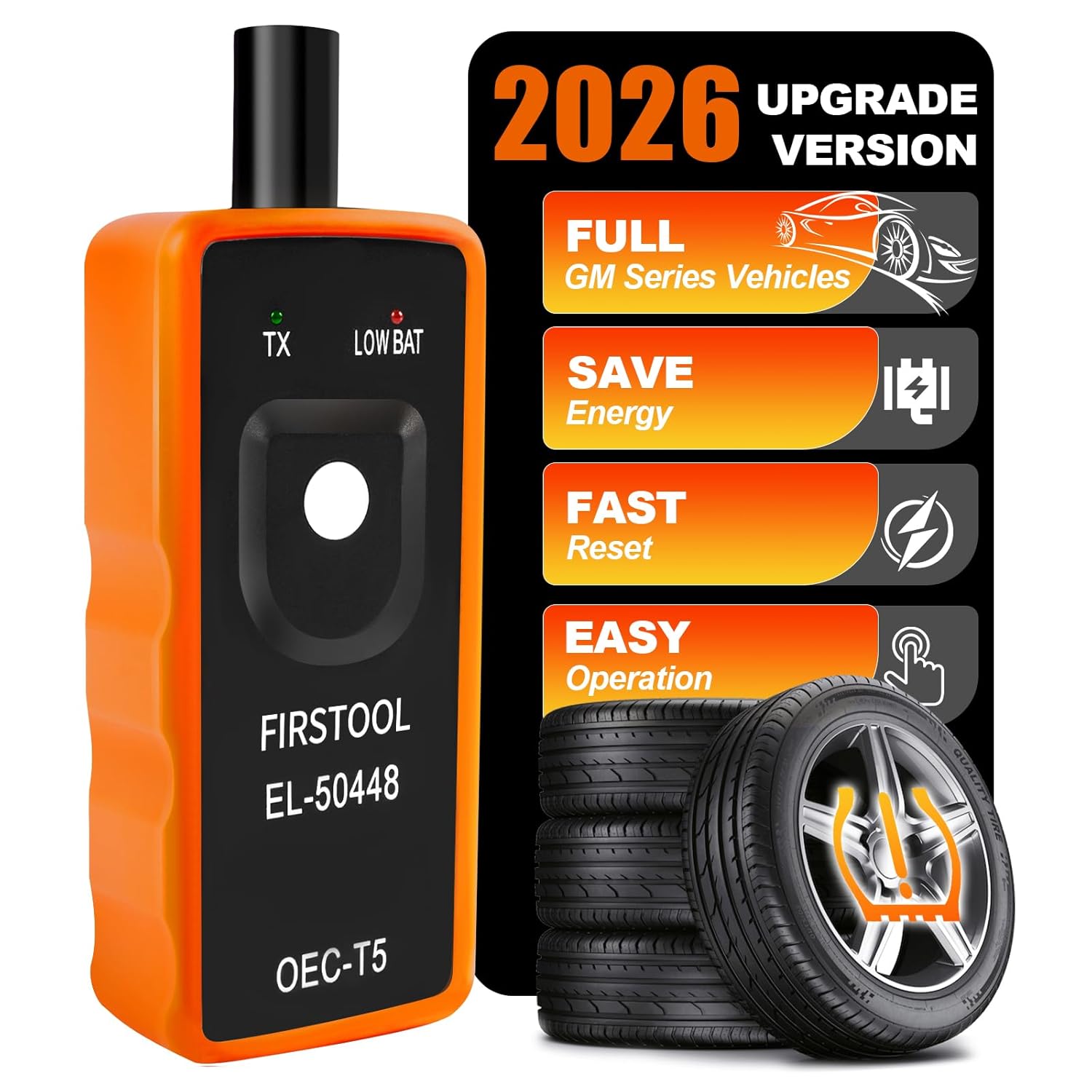
This EL-50448 TPMS relearn tool helps quickly activate and reset tire pressure sensors so your vehicle’s monitoring system stays accurate after tire rotations, sensor replacement, or seasonal tire changes. Designed for many GM-related vehicles and compatible with common 315 and 433 MHz TPMS systems, it offers simple one-button operation and reliable performance for clearing warning lights and relearning sensor positions.

The IIWEY iK11 adds a large wireless Apple CarPlay and Android Auto display to almost any vehicle, making it easy to upgrade older cars with modern smart connectivity. It combines voice control, Bluetooth, wireless mirroring, and built-in navigation support with a front dash cam and rear camera for added driving confidence. Designed for quick installation and everyday convenience, it delivers a portable all-in-one infotainment and safety solution.
Toyota Supra JZA80 LSD Fitment: Ratios, Sizes, and Axle Codes
JZA80 LSD fitment starts with the actual differential installed in the car. Specialist references such as Grannas Racing’s MKIV differential code guide document the common A-series 200mm and B-series 220mm families and the common ratio-code mapping.
The basic code pattern is useful, but it should not be used as a substitute for physical verification on a modified car.
| Code Element | Common Meaning | Fitment Importance |
|---|---|---|
| A | 200mm ring-gear family | Used across numerous NA, automatic, and some later JDM 6-speed configurations |
| B | 220mm ring-gear family | Found in U.S. 6-speed cars and certain early JDM/export configurations |
| 01 | 4.083 | Ratio identifier |
| 02 | 3.769 | Ratio identifier |
| 03 | 3.266 | Ratio identifier |
| 04 | 3.538 | Ratio identifier |
| 05 | 4.272 | Ratio identifier |
| 07 | 3.133 | Ratio identifier |
The important lesson is that engine and transmission alone do not reliably identify the differential. For example, Grannas Racing lists the U.S.-market B07D 3.133 220mm LSD for 6-speed turbo cars, an early JDM B03B 3.266 220mm setup, and a later JDM A03B 3.266 200mm 6-speed setup. Market and production period matter.
If your main question is final-drive decoding rather than LSD selection, see our Supra differential and final-drive guide. Keeping the two decisions separate helps prevent choosing a ratio simply because it happens to come with the differential you found for sale.
Do You Need to Change the Final Drive When Adding an LSD?
No. If the aftermarket LSD center is compatible with your existing carrier, ring gear, output arrangement, and required setup dimensions, the original final drive can often remain in place.
That is frequently the cleaner upgrade when the problem is traction rather than gearing. Changing the ratio adds another set of decisions involving ring-and-pinion compatibility, gear setup, backlash, bearing preload, cruise rpm, and speed in each transmission gear.
| Final Drive | General Character | Typical Reason to Keep/Choose It |
|---|---|---|
| 4.272 / 4.083 | Shorter gearing | Stronger torque multiplication and response |
| 3.769 / 3.538 | Middle ground | Balanced gearing depending on transmission and tire size |
| 3.266 / 3.133 | Taller gearing | Longer gears, lower cruise rpm, high-power applications |
Why 200mm vs. 220mm Fitment Matters
The ring-gear family affects far more than the marketing name of the LSD. Housing dimensions, side/output arrangement, bearings, axle stubs or side shafts, spline compatibility, and companion flange can all affect the conversion.
Current manufacturer catalogs demonstrate the distinction. OS Giken separately lists a JZA80 2JZ-GTE 200mm application and a JZA80 6MT 220mm application. KAAZ’s DBT3010 specifically lists a 220mm 1.5-way unit for the 1993–1996 JZA80 6-speed factory-Torsen application.
| Configuration Example | Ring Gear | What to Verify |
|---|---|---|
| Many NA / turbo-auto / selected later JDM configurations | 200mm | Exact carrier application, output shafts/stubs, spline compatibility, ring gear and flange |
| U.S. 6-speed and selected early JDM/export configurations | 220mm | Housing, larger-diff application, side shafts/stubs, driveshaft and companion flange |
| SC300/SC400/related donor combinations | Varies | Donor year, flange, side shafts, axle length, splines and housing dimensions |
Warning: Do not order a center because a listing merely says “JZA80 Supra.” Confirm the exact 200mm or 220mm application, original/open/Torsen configuration where required, spline/output arrangement, ring gear, companion flange, and transmission/housing combination.
What Should You Check Before a Supra LSD or Differential Swap?
Treat the differential as part of the whole rear driveline. A correctly chosen LSD center can still produce leaks, vibration, noise, or failure if the housing, bearings, gear setup, mounts, axles, or driveshaft are wrong.
Axle and Output-Shaft Compatibility
Check axle length, output/side-shaft engagement, spline count, shaft dimensions, CV condition, and flange pattern. Do not assume a Supra or Lexus donor combination is a direct bolt-in because the housings look similar.
- Read and photograph the axle code.
- Confirm whether the differential physically installed matches that original code.
- Identify the 200mm or 220mm housing family.
- Confirm the exact output stubs/side shafts and spline compatibility required by the LSD manufacturer.
- Inspect CV boots, joints, axle play, and damage before reusing existing shafts.
- Match axle and driveline strength to torque, tire grip, vehicle weight, and launch severity rather than horsepower alone.
For a deeper look at the rest of the rear driveline, see our Supra driveshaft and axle guide.
Driveshaft and Companion-Flange Match
Driveshaft compatibility is one of the common hidden costs in a complete differential conversion. MKIV technical references such as MKIV.com’s 6-speed differential installation notes illustrate why differential length, driveshaft configuration, and axle choice need to be checked as a system.
| Item to Check | Possible Problem | Correct Approach |
|---|---|---|
| Companion/input flange | Driveshaft does not bolt to the differential | Use the correctly matched flange, shaft, or properly engineered conversion solution |
| Driveshaft length | Poor engagement, binding, or vibration | Use the correct shaft dimensions for the transmission/differential combination |
| Driveline alignment | Speed-related vibration or joint wear | Inspect mounting, alignment, and damaged components before blaming the LSD |
| Seals and bearings | Oil leaks, whine, excess play | Replace worn components while the assembly is apart |
Mounts, Setup, and Real Installation Cost
The LSD center is only one line item. Depending on the job, the final bill can include carrier bearings, seals, manufacturer-specified gear oil, friction modifier where required, ring-gear hardware, backlash setup, bearing preload work, axles, driveshaft changes, mounts, or fabrication.
As a current price reference rather than a universal market average, OS Giken lists its JZA80 200mm and 220mm SuperLock applications at $1,520. KAAZ lists its DBT3010 220mm JZA80 1.5-way unit at $1,636.25–$1,746.75. These prices exclude the rest of the installation and can change after publication.
- Inspect the housing: Check threads, sealing surfaces, oil condition, bearing noise, cracks, and metal debris.
- Inspect the mounts: Excess differential movement can create clunks, wheel hop, and driveline shock.
- Follow exact setup data: Use the applicable Toyota service information and LSD manufacturer instructions for torque, backlash, preload, and assembly.
- Use a qualified installer when needed: Ring-and-pinion setup requires precision measurement rather than approximate tightening.
- Follow the manufacturer’s break-in procedure: Requirements differ. Do not assume every clutch LSD uses the same break-in or friction modifier.
How Do You Maintain a Supra LSD?
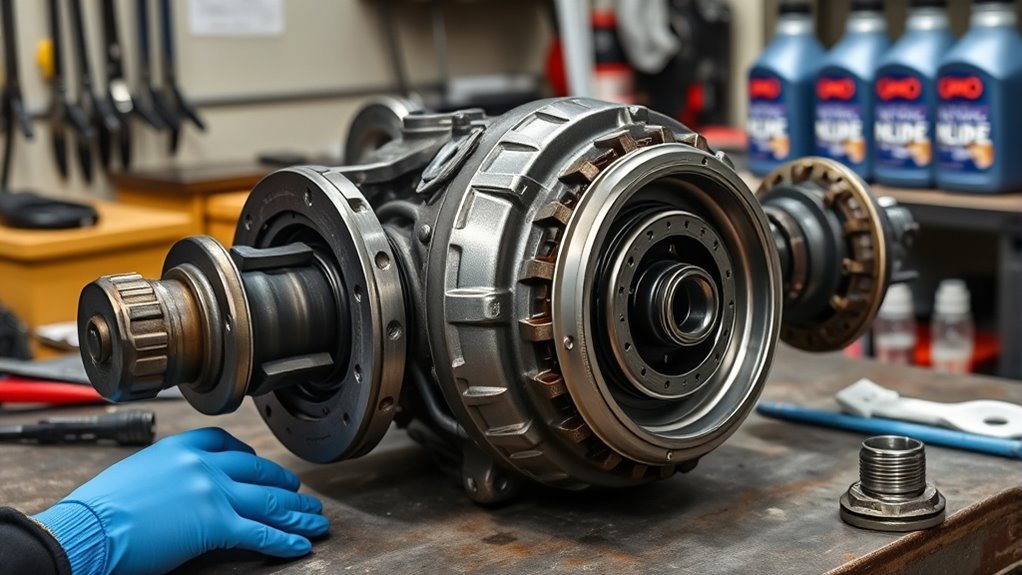
Maintenance depends on the exact differential. A gear-type factory LSD has different friction and service requirements from a clutch-type competition unit. Track and drift use also create far more heat and wear than normal highway driving.
Watch for a return of one-wheel spin, new chatter or binding, clunks during torque reversal, whining that changes with vehicle speed, oil leaks, metallic debris, or a sudden change in locking behavior. Some noises can also come from mounts, bearings, axles, CV joints, or the driveshaft, so diagnose the full driveline before condemning the LSD center.
Fluid Rule: Use the oil specified by the manufacturer of the exact differential. Do not automatically add friction modifier to every LSD. Clutch, helical/Torsen, and active systems can have different fluid requirements.
Recommended Supra LSD Upgrade Path
- Identify the existing hardware: Confirm axle code, housing family, ratio, current center, flange/output arrangement, and condition.
- Fix existing driveline faults first: Repair leaks, bad bearings, mounts, CV joints, axles, or driveshaft problems.
- Choose the locking behavior: Prioritize smooth operation for a street car, balanced acceleration/deceleration behavior for mixed track use, or stronger two-way action for dedicated drift use.
- Choose a verified application: Match the manufacturer’s exact ring-gear, transmission, factory-diff, and output requirements.
- Decide whether the ratio actually needs to change: Do not change final drive solely because you are already replacing the center.
- Install and set up correctly: Backlash, bearing preload, fastener torque, and sealing matter.
- Service according to the LSD manufacturer: Follow the specified oil and inspection procedure after installation and hard use.
Frequently Asked Questions
Does the GR Supra have a limited-slip differential?
For the 2026 U.S. lineup, Toyota lists an active rear sport differential as standard on the GR Supra 3.0, 3.0 Premium, and MkV Final Edition. Earlier availability varies by year and trim, so verify the exact car against Toyota information before assuming its hardware.
How do I know if my MK4 Supra already has an LSD?
Start with the JZA80 axle code to identify the original factory configuration, then verify the differential physically because previous owners may have swapped the housing or center. Check the housing family, ratio information, output shafts or stubs, service records, and the actual center if the car’s history is uncertain.
What is a Toyota limited-slip differential?
A limited-slip differential allows necessary left-to-right wheel-speed difference while resisting excessive difference when traction changes. Depending on the Toyota model or aftermarket setup, the system may use helical or worm gears, clutch plates, or electronically controlled locking hardware.
Is a 1.5-way or 2-way LSD better for a Supra?
A 1.5-way clutch LSD is usually the more street-friendly starting point for a mixed street/track Supra because it provides strong acceleration lock with reduced locking action on deceleration. A 2-way is more appropriate when strong deceleration lock is intentionally wanted, especially for drifting or aggressive competition use.
Can I install an LSD without changing my final drive ratio?
Yes, when the LSD center is compatible with the existing housing, ring gear, bearings, output arrangement, and other application requirements. Keeping the existing ratio changes traction behavior without intentionally changing cruising rpm or the road speed reached in each transmission gear.
Will an LSD make a Supra accelerate faster?
Not automatically. An LSD does not add engine power or tire grip. It can improve acceleration when the existing differential allows one rear tire to spin or unload, because more of the available traction can be used consistently. If both tires already have enough grip, the acceleration difference may be small.
What fluid should I use in a Supra LSD?
Use the lubricant specified for the exact differential installed. Factory Toyota units, aftermarket clutch LSDs, helical units, and active differentials can have different requirements. Follow the LSD manufacturer’s instructions and the applicable Toyota service information rather than assuming every limited-slip unit needs the same oil or friction modifier.
Conclusion
A Supra LSD is worthwhile when the car’s existing differential is limiting traction, consistency, or the locking behavior you need. For normal street driving, the smoothest suitable solution is usually better than the most aggressive one. Mixed street/track builds often benefit from progressive Torsen/helical or 1.5-way-style behavior, while dedicated drift cars commonly need stronger two-way locking.
For a JZA80, fitment comes before brand choice. Verify the installed 200mm or 220mm housing, axle code, ring gear, output arrangement, flange, driveshaft, and current center. For a modern GR Supra 3.0, remember that the factory active rear sport differential may already provide the hardware you are trying to add. Identify what the car has, define the behavior you need, and then choose the LSD rather than buying by model name alone.
Sources
- Toyota 2026 GR Supra brochure — current U.S. GR Supra drivetrain and active rear sport differential reference
- Toyota Owners Manuals and Warranties — official owner and service-information lookup
- Grannas Racing MKIV Supra differential code guide — JZA80 axle-code, final-drive, 200mm/220mm, and market/application reference
- MKIV.com 6-speed differential installation notes — MKIV differential, axle, driveshaft, and conversion reference
- KAAZ USA JZA80 220mm 1.5-way LSD — current 1993–1996 6-speed application, 1.5-way behavior, and pricing reference
- OS Giken JZA80 200mm SuperLock LSD — current 200mm JZA80 application and pricing reference
- OS Giken JZA80 220mm 6MT SuperLock LSD — current 220mm JZA80 application and specification reference
- Cusco JZA80 LSD application catalog — current JZA80 1-way, 1.5-way, and 2-way application examples