
What Is Toyota Safety Sense?
Last updated: July 14, 2026
Toyota Safety Sense, often shortened to TSS, is Toyota’s factory suite of active safety and driver-assistance systems. Depending on the generation, it uses a forward-facing camera, radar or laser radar, vehicle sensors, and software to help warn you about certain hazards, support braking or steering in limited situations, maintain a following distance, recognize some road signs, and control high beams. It is not self-driving and does not replace an alert driver.
Quick Answer
Toyota Safety Sense can include Pre-Collision System, Dynamic Radar Cruise Control, Lane Departure Alert, Lane Tracing Assist, Road Sign Assist, Automatic High Beams, and Proactive Driving Assist. The exact features depend on the vehicle’s model year, trim, market, transmission, equipment, and TSS generation, from the earlier TSS-C and TSS-P packages through TSS 2.0, TSS 2.5/2.5+, TSS 3.0, and TSS 4.0.
Key Takeaways
- Toyota Safety Sense supports the driver with collision warnings, limited braking or steering assistance, adaptive cruise control, lane support, road-sign information, and high-beam control.
- TSS-C, TSS-P, TSS 2.0, TSS 2.5/2.5+, TSS 3.0, and TSS 4.0 do not use identical sensors or include identical functions.
- TSS 3.0 introduced an upgraded camera and radar, improved intersection support, motorcyclist detection in certain situations, Proactive Driving Assist, and update capability on certain vehicles.
- TSS 4.0 further changes sensors, networking, processing, software, feature behavior, and the way drivers access TSS settings.
- Blind Spot Monitor, Rear Cross-Traffic Alert, parking assistance, and similar systems may work alongside TSS but are not automatically included in every core TSS package.
How Does Toyota Safety Sense Work?
Toyota Safety Sense is a group of active safety and driver-assistance systems. Its sensors and software monitor specific conditions around the vehicle, such as a vehicle stopping ahead, an unintended lane drift, changing highway traffic, a recognized road sign, or headlights approaching at night.
The system can warn about certain detected hazards, adjust cruise speed, display recognized signs, switch high beams, and provide limited braking or steering support when its operating conditions are met. A newer Toyota with TSS 3.0 or TSS 4.0 may detect more situations or respond more smoothly than an older model with TSS-C, TSS-P, or TSS 2.0.
Warning: Toyota Safety Sense is not an autonomous-driving system. You must watch the road, steer, brake, follow traffic laws, and be ready to take control at all times.
Editorial scope: This guide compares Toyota’s current U.S. Safety Sense documents, model information, and owner-manual guidance. It does not claim hands-on testing, and equipment or feature names can differ in other markets.
How Toyota Safety Sense Versions Differ: TSS-C Through TSS 4.0
Toyota has updated Safety Sense several times. The main differences involve sensor type, detection range, recognized road users, lane-support behavior, cruise-control capability, available software functions, and the number of systems included on a specific vehicle.
| TSS Version | Main Features | What Distinguishes It |
|---|---|---|
| TSS-C | Pre-Collision System, Lane Departure Alert, Automatic High Beams | Early compact-car package using a forward camera and laser radar. It did not include Dynamic Radar Cruise Control. |
| TSS-P | Pre-Collision System with vehicle and pedestrian detection, Dynamic Radar Cruise Control, Lane Departure Alert, Automatic High Beams | Used a camera and millimeter-wave radar. Select vehicles added Full-Speed Range DRCC or Steering Assist. |
| TSS 2.0 | PCS with expanded road-user detection, DRCC, LDA with Steering Assist and road-edge detection, LTA, RSA, AHB | Added Lane Tracing Assist and Road Sign Assist and improved pedestrian, bicyclist, lane, and road-edge detection compared with earlier suites. |
| TSS 2.5 / 2.5+ | Enhanced PCS, DRCC, LDA, LTA, RSA, and AHB on equipped models | Improved pre-collision, intersection, cruise, and lane-support behavior. Exact differences between 2.5 and 2.5+ depend on the model. |
| TSS 3.0 | Improved PCS, DRCC, LDA, LTA, RSA, AHB, and Proactive Driving Assist on equipped vehicles | Higher-resolution, wider-angle camera, improved radar coverage, enhanced intersection support, motorcyclist detection in certain situations, and update capability on certain vehicles. |
| TSS 4.0 | Updated PCS, DRCC, LDA, LTA, RSA, AHB, and PDA as its published core pillars | Toyota describes improvements to sensors, network, processing, software, natural response, and TSS controls in the Audio Multimedia screen. |
[Products Worth Considering]

Fitment: for Toyota RAV4 2016-2018, for Toyota Tundra 2014-2018, for Toyota Tacoma 2016-2018.

[Vehicle Fitment]: Compatible with Toyota Camry 2010-2017 L4 2.5L, Highlander 2009-2019 L4 2.7L, RAV4 2014 Electric, RAV4 2013-2018 L4 2.5L, Sienna 2011-2013 L4 2.7L, Venza 2009-2015 L4 2.7L; Compatible with Scion tC 2011-2016 L4 2.5L --- Note requirements vary by vehicle model, please enter your vehicle information in the top left corner to confirm compatibility before purchasing

【Warranty】12 months. (100% brand new high quality aftermarket PDC Packing Sensor)
What Changed From TSS 3.0 to TSS 4.0?
TSS 3.0’s headline changes were a higher-resolution, wider-angle forward camera, an improved radar sensor with a longer and wider field of view, enhanced intersection detection, motorcyclist detection in certain circumstances, Proactive Driving Assist, and over-the-air update capability on certain vehicles. TSS 4.0 further changes the sensors, network, processing, and software and moves Toyota Safety Sense controls to the Audio Multimedia screen. Toyota describes the result as more natural system behavior, but exact functions still depend on the model, transmission, market, and installed equipment.
What Other Differences Matter?
Toyota’s TSS 3.0 overview explains that its improved camera and radar expand the forward sensing area. Toyota’s TSS 4.0 overview describes further sensor, networking, processing, software, and interface changes.
- TSS-C: provided three foundational systems but no radar cruise control.
- TSS-P: added millimeter-wave radar, pedestrian detection, and Dynamic Radar Cruise Control.
- TSS 2.0: commonly added Lane Tracing Assist, Road Sign Assist, road-edge detection, and broader road-user detection.
- TSS 2.5 / 2.5+: refined pre-collision, intersection, cruise, and lane-support behavior on many models.
- TSS 3.0: upgraded forward sensing and added Proactive Driving Assist on equipped vehicles.
- TSS 4.0: updates the hardware and software architecture and moves related settings into the multimedia interface.
Toyota also says certain TSS 3.0 vehicles can receive over-the-air software updates. That statement does not mean a software update changes the vehicle’s physical sensors or converts TSS 3.0 into TSS 4.0.
Why the Version Name Is Not Enough
TSS version and feature availability vary by model year, trim, market, powertrain, transmission, production specification, and installed options. Manual-transmission vehicles may not have Full-Speed Range Dynamic Radar Cruise Control or the same Proactive Driving Assist functions as an automatic-transmission model.
Note: Toyota’s Safety Sense hub warns that not all displayed content reflects the selected vehicle. Your VIN-specific equipment information and owner’s manual are the final references for your Toyota.
How Do You Find the TSS Version on Your Toyota?
Toyota does not publish one permanent model list that remains accurate across every production year and market. The same model name can use different TSS generations after a redesign or model-year update.
How to Check Your Exact TSS Version
- Read the window sticker or original build sheet. Look for “Toyota Safety Sense” followed by a generation such as TSS-P, TSS 2.5+, TSS 3.0, or TSS 4.0.
- Check the owner’s manual for the exact model year. Search for Toyota Safety Sense, driving support systems, PCS, DRCC, LDA, or LTA.
- Compare the listed features. A vehicle with RSA and LTA may use a newer package than one listing only PCS, DRCC, LDA, and AHB, but feature names alone are not final proof.
- Ask Toyota to check the VIN. Trim, production date, transmission, market, and equipment packages can change what is installed.
- Separate core TSS from related equipment. Blind Spot Monitor, Rear Cross-Traffic Alert, parking sensors, Panoramic View Monitor, and parking braking systems may be listed outside the core TSS suite.
A Verified Current Example
Older Toyota vehicles may use TSS-C or TSS-P. Many late-2010s and early-2020s vehicles use TSS 2.0 or TSS 2.5/2.5+, while many newer redesigns use TSS 3.0. Toyota identified the 2026 RAV4 as the first U.S. Toyota model to receive TSS 4.0 and later stated that every 2026 RAV4 model would include it as standard equipment. Verify future models individually because the rollout can expand.
For vehicle-specific coverage, see the Toyota Safety Sense in the Camry guide or the Toyota Tacoma Safety Sense guide. This page remains the broad hub for Toyota Safety Sense versions and shared feature definitions.
What Features Does Toyota Safety Sense Include?
Most Toyota Safety Sense generations are built around several recurring systems. Their names may remain similar, but their target detection, operating speeds, warnings, and control behavior can change by vehicle and generation.
- Pre-Collision System with Pedestrian Detection (PCS w/PD): Uses forward sensors to help detect certain potential frontal collisions. Depending on the version and conditions, it can warn you, increase braking support, or apply automatic emergency braking.
- Dynamic Radar Cruise Control (DRCC): Adjusts vehicle speed to help maintain a selected distance from a detected vehicle ahead. Full-Speed Range DRCC can operate at lower speeds and may bring the vehicle to a stop when conditions permit.
- Lane Departure Alert with Steering Assist (LDA w/SA): Warns if the vehicle appears to leave a detected lane without an intended lane change. On equipped vehicles, it can add limited corrective steering.
- Lane Tracing Assist (LTA): Generally works while DRCC is active. Depending on the version, it can use detected lane markers and, on some systems, the path of a preceding vehicle to provide lane-centering support.
- Road Sign Assist (RSA): Uses the forward camera to recognize certain signs and display them in the Multi-Information Display or another supported display.
- Automatic High Beams (AHB): Uses the forward camera to detect certain oncoming headlights and preceding taillights, then switches between high and low beams when operating conditions are met.
- Proactive Driving Assist (PDA): On equipped newer vehicles, it may provide gentle braking, acceleration, or steering support around certain vehicles, road users, curves, or road boundaries, depending on the TSS generation.
Pro Tip: Do not compare vehicles by acronym alone. “Dynamic Radar Cruise Control” and “Full-Speed Range Dynamic Radar Cruise Control” can behave differently, even when both vehicles carry a Toyota Safety Sense badge.
What Advanced Features Appear in Newer TSS Versions?
Newer Safety Sense systems expand what the forward sensors and software can recognize. TSS 3.0 improves intersection support and can help detect a motorcyclist in certain circumstances. It also includes Proactive Driving Assist on equipped vehicles. TSS 4.0 updates the underlying sensing, networking, processing, software, controls, and behavior of Toyota’s core systems.
| Feature | Function | Driver Benefit |
|---|---|---|
| Lane Tracing Assist | Provides active steering inputs when the required lane and cruise-control conditions are met | Reduces steering workload on suitable roads while you remain attentive |
| Road Sign Assist | Recognizes and displays certain road signs supported by that TSS version | Provides an additional reminder of selected posted signs |
| Proactive Driving Assist | May provide gentle braking, acceleration, or steering assistance, depending on the version and detected situation | Adds low-level support during some everyday driving situations |
| Motorcyclist Detection | Helps newer Pre-Collision Systems detect a motorcyclist in certain circumstances | Expands detection to another vulnerable road-user category |
The seven systems in Toyota’s short TSS 4.0 overview are its published core pillars. A specific model can list additional driving-support systems. For example, the 2026 RAV4 owner-manual excerpt also references Lane Change Assist, Front Cross Traffic Alert, Emergency Driving Stop System, and Traffic Jam Assist, with some features marked as available only when equipped.
Blind Spot Monitor, Rear Cross-Traffic Alert, parking sensors, Panoramic View Monitor, and parking braking systems can also be valuable. Do not assume they are included merely because a vehicle has Toyota Safety Sense.
[Products Worth Considering]

FAST AND EASY INSTALLATION WITH NO PERMANENT VEHICLE MODIFICATION: Enjoy a true plug & play installation process as this dash cam power adapter plugs directly into your vehicle's lane trace system, leaving no permanent modifications to your vehicle and keeping your dash cam installation completely hidden.
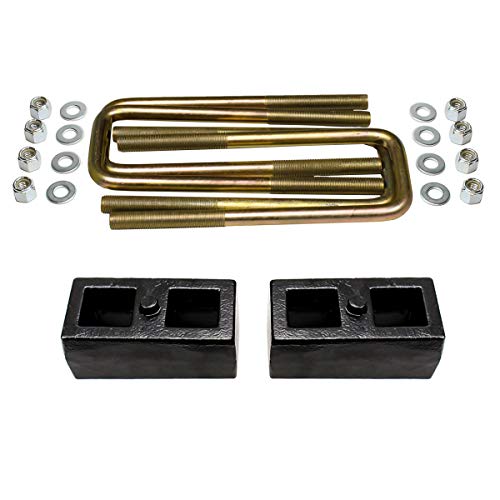
1.5" Rear Lift Kit 2005 to 2023 compatible with model Tacoma trd sr5 6Lug Blocks with U bolts
What Does Toyota Safety Sense Not Do?
Toyota Safety Sense adds a support layer, but it does not take over the complete driving task. Keep these limits in mind when comparing or using the system:
- It does not make the Toyota autonomous or permit you to stop monitoring the road.
- It does not detect every vehicle, person, object, lane boundary, sign, curve, or traffic situation.
- It does not guarantee that a collision will be avoided or that automatic braking will stop the vehicle in time.
- It does not replace mirror checks, shoulder checks, safe following distance, or normal braking and steering.
- It does not mean Blind Spot Monitor, Rear Cross-Traffic Alert, parking assistance, or every newer driver-assistance feature is installed.
- It cannot be identified reliably from the model name alone. Model year, market, trim, transmission, production date, and equipment matter.
Do Driver-Assistance Features Reduce Crashes?
Independent research supports the value of several feature categories found within Toyota Safety Sense. The Insurance Institute for Highway Safety reports that forward-collision warning combined with automatic braking cut rear-end crashes by about half in its cited research. It also reports that pedestrian-detecting automatic braking reduced pedestrian crashes by 27%.
Those are broad category-level findings, not a guarantee for every Toyota, TSS version, road, speed, or weather condition. A system’s real performance depends on its sensors, software, target type, maintenance, road environment, and whether its operating conditions are met.
How Do You Set Up and Use Toyota Safety Sense Safely?
Learn the controls and limits for your exact vehicle before relying on a TSS feature. A button, menu name, operating speed, or dashboard symbol can change between model years and generations.
- Read the driving-support section of the owner’s manual. Review operating speeds, detection targets, warnings, and situations that can limit each feature.
- Review which features are active. Depending on the vehicle, settings may appear in the Multi-Information Display or the Audio Multimedia screen.
- Adjust settings while safely parked. Some vehicles let you change PCS warning timing, lane-alert behavior, steering support, recognized-sign alerts, or DRCC following distance.
- Keep sensor areas unobstructed. Dirt, snow, ice, fog, bugs, stickers, accessories, windshield damage, or changes near the radar can interfere with operation.
- Use DRCC and LTA first in light traffic. Learn how the vehicle accelerates, slows, displays warnings, and asks for driver input before using the systems in demanding traffic.
- Watch for temporary-unavailable messages. Weather, glare, dirty sensors, poor lane markings, sensor temperature, construction areas, or unusual roads can limit operation.
- Consider recent vehicle work. Windshield, grille, bumper, suspension, alignment, or sensor-area repairs may require inspection or calibration.
- Record persistent warnings before clearing them. A Toyota dealer or qualified ADAS technician may need the exact message and diagnostic information.
RAV4 owners can also review the model-specific guides for RAV4 Pre-Collision System settings and an unavailable RAV4 adaptive-cruise warning.
Treat every TSS alert as a prompt to look and act, not proof that the system has the situation under control.
Frequently Asked Questions
What is the Toyota TSS package?
Toyota TSS means Toyota Safety Sense. It is a suite of active safety and driver-assistance systems. Depending on the generation and vehicle, it can include Pre-Collision System, Dynamic Radar Cruise Control, Lane Departure Alert, Lane Tracing Assist, Road Sign Assist, Automatic High Beams, and Proactive Driving Assist.
Is Toyota Safety Sense standard on every Toyota?
Many newer Toyota vehicles include a TSS package as standard equipment, but you should not assume every Toyota in every market or model year has the same suite. Check the window sticker, build sheet, official model specifications, and owner’s manual for the exact vehicle.
Does Toyota Safety Sense 3.0 include Blind Spot Monitoring?
Blind Spot Monitor is not one of Toyota’s core TSS 3.0 features. It may still be standard or available on the same vehicle, but Toyota generally lists it separately. Verify it on the vehicle’s equipment list rather than assuming TSS includes it.
What is the difference between Toyota Safety Sense 2.5 and 3.0?
TSS 3.0 uses an upgraded forward camera and radar compared with TSS 2.5/2.5+. It improves several pre-collision, intersection, lane, road-sign, and cruise-control functions. It also adds Proactive Driving Assist on equipped vehicles, motorcyclist detection in certain circumstances, and update capability on certain vehicles.
What is Toyota Safety Sense 4.0?
Toyota Safety Sense 4.0 is a newer generation of Toyota’s driver-assistance suite. Toyota describes changes to its sensors, network, processing, software, system response, and controls. Its published core pillars include PCS, DRCC, LDA, LTA, RSA, AHB, and PDA, while a specific model may offer additional systems.
Can Toyota Safety Sense be turned off?
Many TSS settings can be adjusted or turned off, but controls and restart behavior depend on the model and feature. Read the owner’s manual before disabling a system so you know which warnings or assistance functions will no longer be available.
Can Toyota Safety Sense be added to an older Toyota?
Toyota does not present Safety Sense as a universal add-on for older vehicles. The factory suite depends on integrated cameras, radar or laser radar, control modules, wiring, displays, brakes, steering systems, and vehicle-specific software. Ask Toyota to check your VIN before accepting any retrofit claim. An aftermarket warning device is not the same as factory TSS.
Can Toyota Safety Sense 3.0 be upgraded to 4.0?
Toyota says certain TSS 3.0 vehicles can receive over-the-air software updates, but it does not say those updates convert TSS 3.0 into TSS 4.0. TSS 4.0 includes sensor, networking, processing, software, and interface changes. Verify any claimed generation upgrade with Toyota using the vehicle’s VIN.
Conclusion
Toyota Safety Sense is a useful layer of collision warning, braking assistance, lane support, adaptive cruise control, sign recognition, and lighting assistance. Its capabilities depend on the generation and the exact vehicle. TSS-C and TSS-P introduced the foundational systems, TSS 2.0 and 2.5 expanded detection and lane support, TSS 3.0 upgraded the forward sensors and added PDA, and TSS 4.0 further changes the system’s hardware, software, networking, processing, and controls.
Before using or buying a Toyota, confirm the TSS version through the build information and owner’s manual, check which related systems are listed separately, keep sensor areas clear, and learn the feature limits. Use every TSS function as driver support while remaining fully responsible for steering, braking, observation, and safe decisions.
Sources
- Toyota Safety Sense official overview: Core feature descriptions, version categories, and vehicle-specific availability warning.
- Toyota Safety Sense C overview PDF: TSS-C sensors, systems, and operating overview.
- Toyota Safety Sense P overview PDF: TSS-P feature descriptions, pedestrian detection, DRCC, lane assistance, and operating examples.
- Toyota Safety Sense 3.0 overview PDF: Camera and radar updates, intersection support, motorcyclist detection, LTA, RSA, AHB, PDA, EDSS, and update capability.
- Toyota Safety Sense 4.0 overview PDF: TSS 4.0 sensors, network, processing, software, core pillars, controls, and limitations.
- Toyota USA Newsroom 2026 RAV4 announcement: TSS 4.0 availability on the 2026 RAV4 lineup.
- NHTSA Driver Assistance Technologies: Driver-responsibility guidance and standardized descriptions of warning, braking, cruise, lane, and lighting technologies.
- IIHS Advanced Driver Assistance research: Independent crash-reduction findings and limitations for driver-assistance technology categories.
Recommended Garage Tool
Practical Maintenance Pick
Garage Essential
For Routine Vehicle Maintenance
Maxority Low-Profile Hydraulic Floor Jack
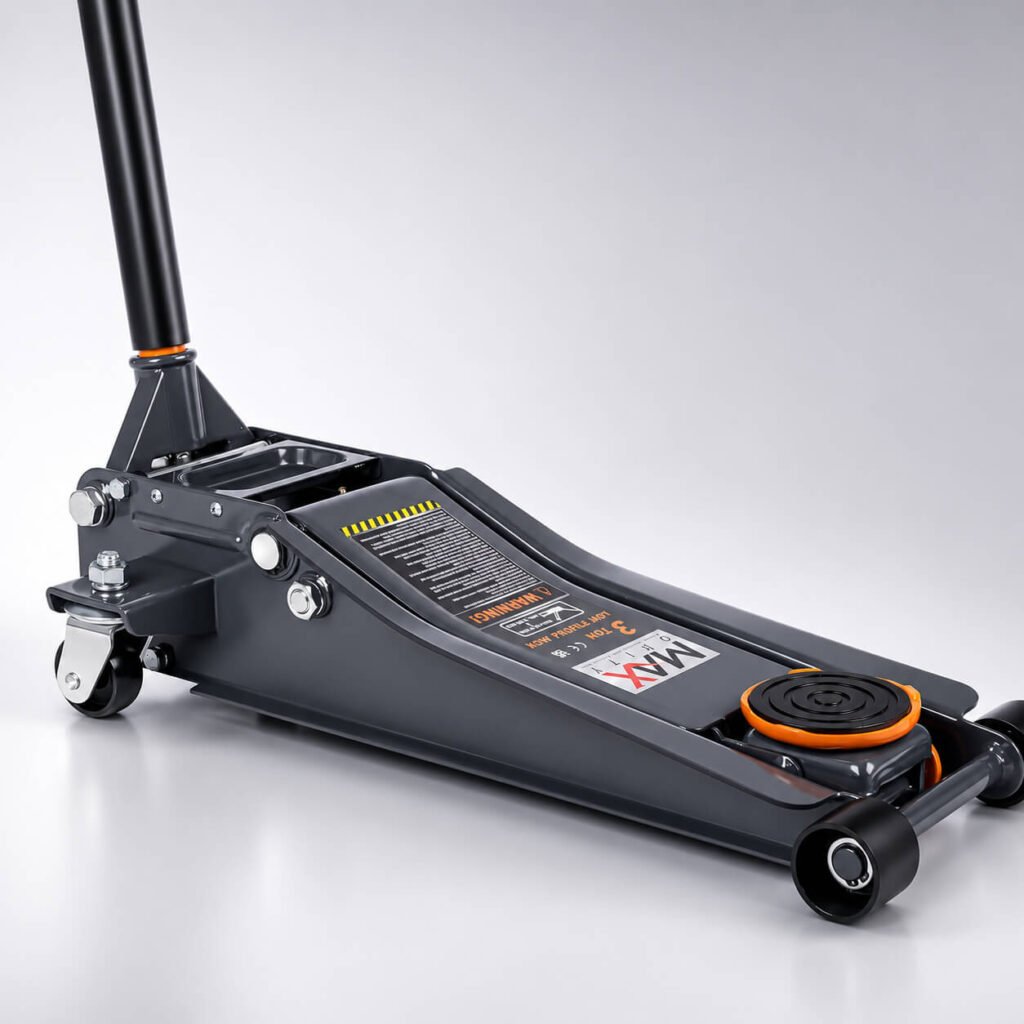
A practical garage tool for tire service, inspections, and routine maintenance. Always support the vehicle with properly rated jack stands before working underneath it.
- Low-profile vehicle access
- Hydraulic lifting system
- Useful for tire service
- Home-garage friendly


[…] For a model-by-model overview of related features, see the Toyota Safety Sense guide. […]
[…] Model-year note: This article uses 2024 and 2025 U.S. Toyota owner information as examples. Warning wording, sensor-cover design, Toyota Safety Sense generation, scan data, and calibration requirements vary. Confirm the procedure in the owner’s manual and repair information for your exact RAV4 model year and market. For system-generation background, see the Toyota Safety Sense guide. […]
[…] Automatic High Beam uses the forward-facing camera near the top of the windshield to assess road brightness, streetlights, oncoming headlights, and the taillights of vehicles ahead. When the system’s operating conditions are met, it switches between high and low beams. AHB is one part of the broader Toyota Safety Sense feature set. […]
[…] and steering vibration, and Sensitivity to adjust warning distance. See our detailed guide to Toyota Safety Sense features for additional TSS 2.0 system […]
[…] explanation of how Toyota’s TSS generations differ from model-specific systems, see the Toyota Safety Sense guide. For Supra-specific controls, see how to use Lane Departure Warning in the GR […]