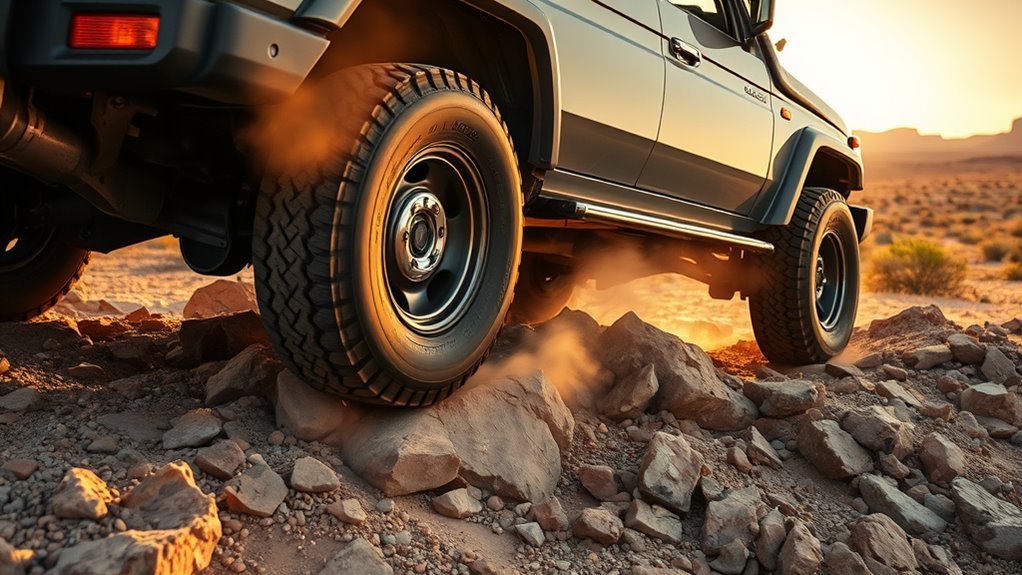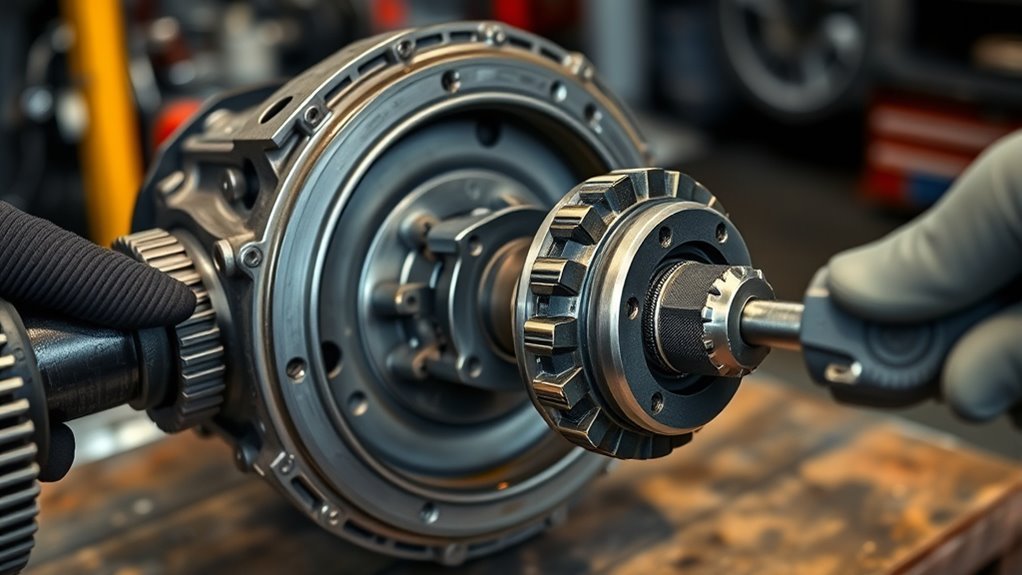
A locking differential, often called a diff lock or locker, is a traction device for low-speed off-road situations where one tire may lose grip, lift off the ground, or spin in loose terrain. When it is locked, both wheels on the same axle are forced to rotate together, helping the tire with grip keep the vehicle moving.
Quick Answer
A locking differential locks both wheels on an axle together so they rotate at the same speed. This helps in mud, rocks, ruts, sand, and deep snow when one tire loses traction. Use it at low speed, mostly off-road, and disengage it before tight turns, pavement, glare ice, or high-speed driving.
Key Takeaways
- A locked differential forces equal wheel speed on one axle; it does not guarantee equal torque in every situation.
- Lockers work best at low speed on loose, uneven, or slippery off-road terrain where one wheel may lose grip.
- Avoid lockers on dry pavement, tight turns, high-speed driving, glare ice, and significant side slopes unless your owner’s manual says otherwise.
- Selectable lockers give the driver the most control; automatic lockers, welded diffs, and spools have bigger handling trade-offs.
- Always follow your vehicle’s owner’s manual because locker speed limits and ABS/traction-control behavior vary by model.
At a Glance
| Best Use | Low-speed off-road traction: rocks, mud, ruts, sand, loose climbs, and deep snow |
| Avoid | Dry pavement, sharp turns, high speed, glare ice, and steep side slopes |
| Driver Skill | Moderate; smooth throttle and steering matter |
| Main Risk | Tire scrub, understeer, driveline binding, and loss of steering control if used in the wrong conditions |
What a Locking Differential Does
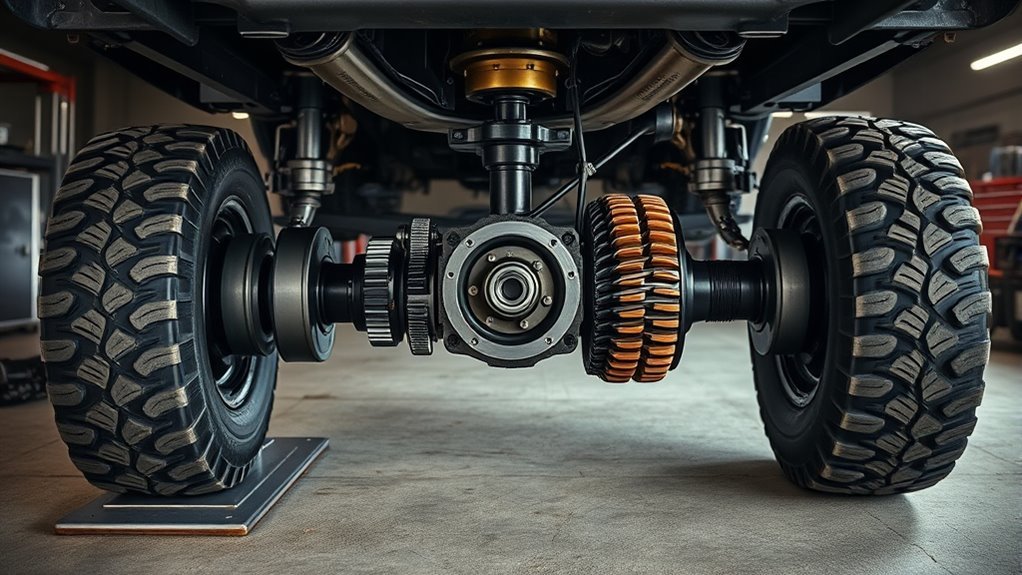
A locking differential mechanically links both wheels on an axle so they rotate at the same speed when the locker is engaged. That matters because a normal open differential lets left and right wheels turn at different speeds, which is great for smooth cornering but weak when one tire has little or no traction.
With an open differential, if one tire is hanging in the air or spinning in mud, the axle may not send enough usable drive through the tire that still has grip. A locker solves that by tying the axle shafts together, so the grounded tire can keep pushing the vehicle forward.
The key phrase is equal wheel speed. A locked axle does not magically create traction, and it does not always split torque equally in a perfect 50/50 way. It simply prevents one side of the axle from freewheeling while the other side sits still.
Note: A locker is not a cure-all. It helps most when at least one tire on the locked axle has enough grip to move the vehicle.
How a Locking Differential Changes Traction
When you engage a locker, you remove the left-to-right speed difference on that axle. Both wheels must turn together. On rocks, ruts, mud, sand, or deep snow, that can keep momentum going when one tire slips, lifts, or unloads.
That same locked behavior can become a problem on high-traction ground. During a turn, the outside wheel needs to travel farther than the inside wheel. An open differential allows that difference. A locked differential resists it, which can cause tire scrub, hopping, understeer, wider turns, and extra stress on axle shafts, CV joints, U-joints, gears, and the transfer case.
A locker gives you more traction potential off-road, but it reduces the differential action your vehicle needs for smooth steering on firm ground.
Types of Locking Differentials and How They Engage
Different locker designs behave very differently on the road and trail. Choosing the right one depends on how often you drive on pavement, how difficult your trails are, and how much control you want from the driver’s seat.
| Type | How It Works | Best For | Main Trade-Off |
|---|---|---|---|
| Selectable locker | Driver turns it on or off by switch, air system, cable, or electronic actuator | Mixed street/off-road use | More parts, wiring, air lines, or controls |
| Automatic locker | Locks and unlocks mechanically depending on design, load, and turning behavior | Trail rigs that need automatic traction | Can click, bang, understeer, or feel abrupt on pavement |
| Spool | Permanently couples both axle shafts with no differential action | Competition or dedicated off-road use | Poor street manners and constant driveline stress |
| Welded differential | Open differential gears are welded to act like a permanent lock | Low-budget off-road or drift builds | Harsh handling, tire wear, and reliability concerns |
A selectable locker, such as an Eaton ELocker or an ARB Air Locker, is usually the most street-friendly choice because it can behave like an open differential during normal driving and lock only when needed.
Front vs Rear Lockers: Which Matters More?
A rear locker is usually easier to live with and is often the first locker people add. It helps on climbs, ruts, mud, rocks, and situations where one rear tire unloads. Because the rear wheels do not steer, a rear locker usually affects steering less than a front locker.
A front locker can add major traction in rocks and deep ruts, but it also has a bigger effect on steering. When the front axle is locked, the vehicle may push straight ahead instead of turning easily, especially on firm ground. Many drivers engage the front locker only for short obstacles, then turn it off before the next tight turn.
Pro Tip: On technical trails, try the rear locker first. Add the front locker only when the vehicle still cannot climb, crawl, or cross the obstacle with controlled throttle.
When to Use a Locker: Real On- and Off-Road Scenarios
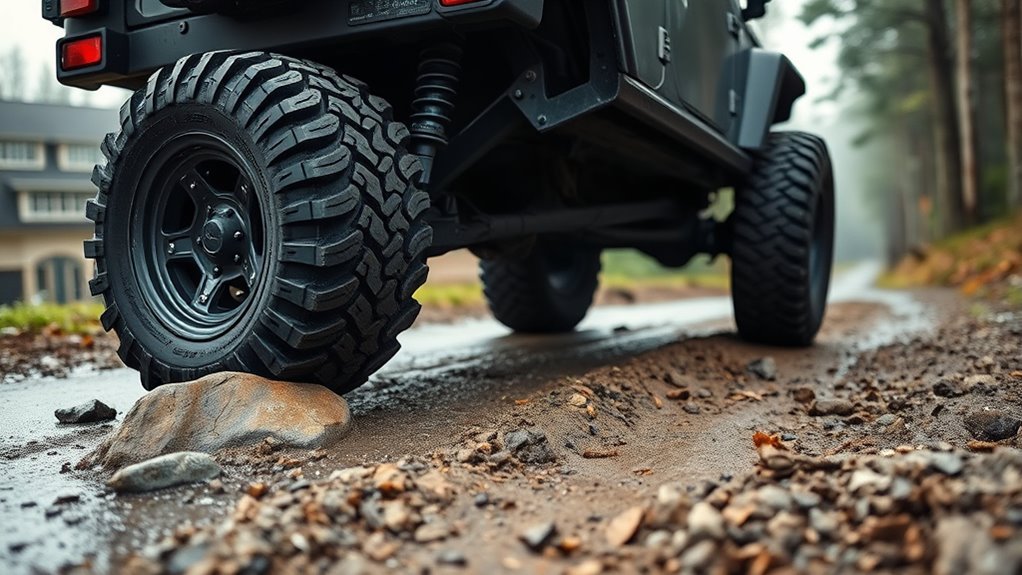
Use a locker when traction is uneven and you need both wheels on an axle to keep turning together. The best locker situations are usually slow, controlled, and off-road.
Low-Speed Rock Crawling
Rock crawling is one of the best uses for a locking differential. When a tire lifts or rests on a slick rock, an open differential may let that tire spin while the tire with grip does little work. A locker keeps both wheels turning together so the vehicle can crawl forward with less wheelspin.
- Engage the locker before the obstacle, not while bouncing on the throttle.
- Use low range when available.
- Keep steering inputs smooth.
- Use steady throttle instead of wheelspin.
- Disengage before tight turns when traction improves.
Muddy Ruts and Hills
Mud and ruts create uneven traction from side to side. A locker can keep the vehicle moving when one tire is in slick mud and the other has firmer ground. On climbs, it can help preserve momentum without needing as much throttle.
Do not confuse locker use with aggressive throttle. Spinning locked tires can dig holes quickly, slide the vehicle sideways, and shock the driveline when the tires suddenly bite.
Sand, Loose Dirt, and Gravel
In sand or loose dirt, lockers can help if the vehicle is cross-axled, climbing slowly, or losing drive through one tire. However, in faster sand driving, a locked axle can make the vehicle push wide or feel less stable. Use the locker only when traction loss is stopping progress, then unlock it when speed and steering control matter more.
Snow, Ice, and Slopes
Deep snow can be a good locker situation when you are moving slowly and mostly straight, especially on a climb where one tire keeps spinning. Glare ice and icy pavement are different. On ice, a locked axle can make the vehicle slide or understeer because both tires are forced to rotate together even when steering control matters more than forward drive.
Be especially cautious on side slopes. A locker may help forward motion, but it can also make the vehicle slide sideways if both tires break loose together. If the vehicle starts to drift sideways, unlock the axle when safe and regain steering control.
How to Engage and Disengage a Locker Safely
Locker controls vary by vehicle, axle, and aftermarket system, so the owner’s manual or manufacturer instructions always come first. Some factory systems only work in 4WD Low or below a set speed. Some aftermarket selectable lockers can engage at a wider range of speeds, but that does not mean you should use them carelessly.
- Stop or slow to crawl speed. Reduce throttle and avoid wheelspin before engaging the locker.
- Straighten the wheels when possible. Engagement is smoother when the axle is not bound in a sharp turn.
- Select the right drive mode. Use 4WD Low if your vehicle or trail conditions call for it.
- Engage the locker before the obstacle. Do not wait until the vehicle is bouncing, spinning, or heavily loaded.
- Use smooth throttle. A locker works best with steady, controlled torque.
- Disengage after the obstacle. Unlock before pavement, tight turns, or higher-speed sections.
- Confirm the locker is off. Watch the indicator light and listen for binding, tire chirp, or hopping.
Warning: Never assume every locker can be engaged while moving. Some vehicles allow low-speed engagement only under specific conditions, and some owner’s manuals list strict speed limits when the differential is locked.
When Not to Use a Locker and Handling Risks
A locker is a traction tool, not an all-weather stability system. In the wrong conditions, it can make the vehicle harder to steer and easier to damage.
Avoid Lockers on Dry Pavement
Dry pavement gives both tires strong grip, so the locked axle has nowhere to release the speed difference between the inside and outside tires during a turn. This causes tire scrub, chirping, hopping, driveline wind-up, and extra stress on drivetrain parts.
Avoid Lockers on Glare Ice
On icy pavement or uniformly slick roads, steering control is more important than forcing both wheels to turn together. A locker can make both tires lose lateral grip at the same time, which can increase understeer or cause the rear of the vehicle to step sideways.
Do Not Lock During Tight Turns
A locked axle resists the different wheel speeds needed for turning. In tight switchbacks, parking-lot-style maneuvers, or technical turns on high-traction rock, unlock the axle if possible. This reduces steering effort, tire scrub, and driveline stress.
Watch for Driveline Shock
Driveline shock happens when spinning tires suddenly regain grip or when a locker engages under load. The sudden torque spike can damage axle shafts, CV joints, U-joints, ring-and-pinion gears, locker parts, or transfer-case components.
- Do not engage a locker while tires are spinning hard.
- Do not use heavy throttle to “force” a locked vehicle over an obstacle.
- Back off if you hear loud banging, repeated clunks, or axle hop.
- Unlock when traction improves.
Pros and Cons: Automatic, Selectable, Welded, and Spool Lockers
Every locker design trades traction against comfort, control, cost, and durability. The best choice is not the strongest lock in every case; it is the lock that matches how the vehicle is actually used.
| Locker Type | Pros | Cons |
|---|---|---|
| Selectable | Best driver control; street-friendly when unlocked; excellent off-road traction when locked | Higher cost; wiring, air lines, switches, or actuators can fail |
| Automatic | No switch needed; strong trail traction; simple driver operation | Can be noisy or abrupt; may affect road manners and turning feel |
| Welded | Cheap; permanent traction effect | Poor street handling; severe tire wear; not ideal for daily driving |
| Spool | Very strong; predictable for racing or dedicated trail use | No differential action; harsh on tires and drivetrain |
How Lockers Interact With ABS, Traction Control, and AWD
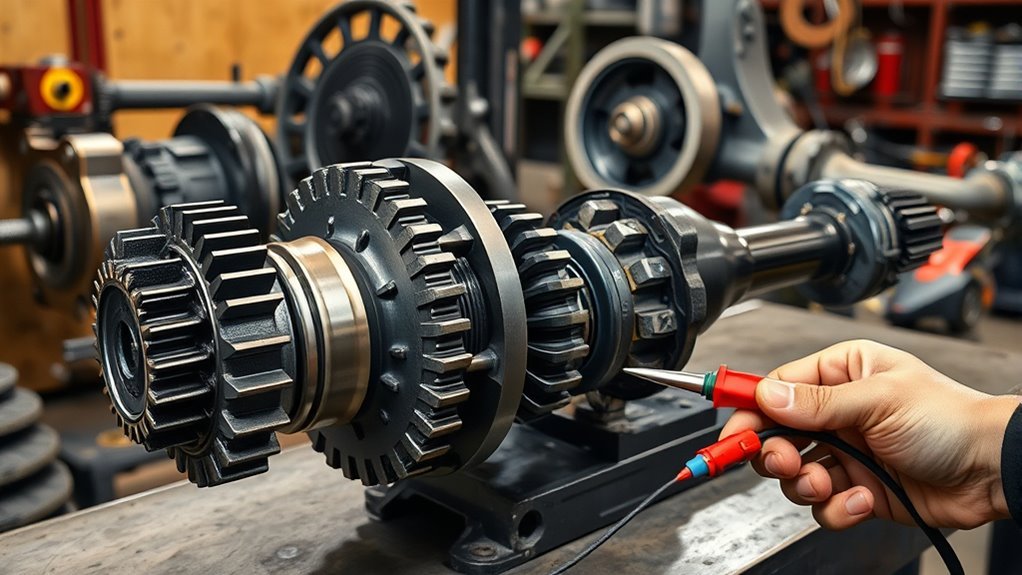
Modern vehicles use wheel-speed sensors and electronic control systems for ABS, traction control, stability control, hill-descent control, and AWD torque management. A locked differential changes wheel-speed behavior on that axle, so the vehicle’s electronics may react differently.
On some vehicles, certain systems are limited, recalibrated, or disabled when the rear differential lock is active. For example, Toyota owner information for some models notes that systems such as ABS, brake assist, VSC, downhill assist, and TRAC may not operate while the rear differential is locked. That is why owner-manual guidance matters more than general advice.
Traction Control vs Locking Differential
Traction control usually works by detecting wheelspin and reducing engine power or applying brake pressure to a spinning wheel. A locking differential is mechanical or electromechanical: it physically ties the axle sides together. Brake-based traction control can be smoother and automatic, but it may build heat in the brakes and may not work as strongly as a true locker in severe cross-axle terrain.
AWD and 4WD Systems
In AWD or full-time 4WD systems, lockers must be integrated carefully because the drivetrain already manages torque between axles or wheels. Factory electronic lockers are usually designed to communicate with the vehicle’s control modules. Aftermarket lockers can work very well, but installation and operation should match the vehicle’s drivetrain design.
Aftermarket Fitment: Can You Install a Locking Differential?
Yes, many trucks, SUVs, Jeeps, and off-road builds can accept an aftermarket locking differential. Fitment depends on axle model, gear ratio, spline count, carrier break, bearing size, ABS tone-ring design, and available space inside the axle housing.
Installing a locker is more involved than bolting on an accessory. The installer may need to remove the carrier, set backlash, check gear contact pattern, set bearing preload, route wiring or air lines, install switches, replace seals, and refill the axle with the correct gear oil.
- Check axle compatibility: axle model, spline count, ratio range, and carrier size.
- Plan the control system: electric wiring, air compressor, air line routing, or cable actuation.
- Inspect related parts: bearings, seals, axle shafts, U-joints, CV joints, and gears.
- Use proper setup tools: dial indicator, torque wrench, bearing tools, and gear-marking compound.
- Test before the trail: confirm lock/unlock function in a safe area.
Note: If ring-and-pinion setup is required, use a qualified differential shop. Incorrect backlash or bearing preload can quickly destroy gears.
[Products Worth Considering]

Great Compatibility — Perfectly fit for Dana 30, 44 and 60 Front Differentials. Widely compatible with Jeep, Dodge, Ford, GMC, Chevrolet, Volvo, Isuzu, Jaguar, Plymouth, International, Mercury and more models (Please refer to the models in the product description list below the page).

Great Compatibility — Perfectly fit for Dana 30, 44 and 60 Front Differentials. Widely compatible with Jeep, Dodge, Ford, GMC, Chevrolet, Volvo, Isuzu, Jaguar, Plymouth, International, Mercury and more models (Please refer to the models in the product description list below the page).

FITMENT: Designed for Dana 30/ 44/ 60 front differentials.
Locking Differential Maintenance and Troubleshooting
A locking differential needs the same basic care as the rest of the axle, plus extra attention to the engagement system. Service intervals vary by vehicle and locker type, so use the owner’s manual or locker manufacturer’s instructions as the final guide.
Routine Maintenance
- Check gear oil level and condition at the recommended interval.
- Look for metal debris, burnt smell, water contamination, or leaking seals.
- Inspect wiring, connectors, switches, air lines, solenoids, or cables.
- Verify that the locker engages and disengages in a safe test area.
- Rotate tires regularly, because uneven tire size can increase driveline stress.
Common Locker Problems
| Symptom | Possible Cause | What to Check |
|---|---|---|
| Locker will not engage | Electrical fault, air leak, actuator issue, or driveline bind | Switch, fuse, wiring, air pressure, actuator, and wheel position |
| Locker will not disengage | Axle wind-up, stuck actuator, low air release, or mechanical fault | Roll slowly straight ahead, unload the axle, then inspect controls |
| Loud banging or clunking | Normal automatic locker behavior or excessive wear | Locker type, gear backlash, mounts, axle shafts, and U-joints |
| Tire chirp or hopping | Locker active on high-traction surface | Disengage locker and avoid tight turns while locked |
| Flashing locker light | Locker has not fully engaged or disengaged | Vehicle speed, wheel speed match, actuator status, and manual conditions |
Alternatives to Diff Locks: LSD, EDL, Traction Control, and Independent Wheel Drive
A locking differential is not the only way to improve traction. Many vehicles use softer, more automatic systems that work better for mixed road conditions.
| System | Core Function | Best For |
|---|---|---|
| Limited-slip differential (LSD) | Biases torque while still allowing some wheel-speed difference | Street, snow, towing, mild trails |
| Electronic differential lock / brake-lock differential | Uses brakes to slow a spinning wheel and send drive to the other side | Factory traction help without a mechanical locker |
| Traction control | Reduces engine power or applies brakes when wheelspin is detected | Everyday slippery-road stability |
| Independent wheel drive / torque vectoring | Uses individual motors or clutches to control wheel torque | Modern EVs and advanced AWD systems |
For a daily driver, an LSD or factory traction-control system may be easier to live with. For serious low-speed off-road use, a selectable locker gives stronger mechanical traction while still letting you return to normal driving when unlocked.
Frequently Asked Questions
Why would you lock your differential?
You lock your differential when one wheel on an axle is losing traction and you need both wheels to keep turning together. This is useful in low-speed off-road situations such as rocks, mud, ruts, loose climbs, sand, and deep snow.
Can you engage diff lock while moving?
Only if your vehicle or locker manufacturer allows it. Many factory systems require low speed, 4WD Low, matching wheel speeds, or reduced throttle. The safest general habit is to slow down, reduce wheelspin, straighten the vehicle, engage the locker before the obstacle, and follow the owner’s manual.
What are the disadvantages of a locking differential?
The main disadvantages are wider turning radius, tire scrub, understeer, driveline binding, extra mechanical stress, and faster tire wear if used on high-traction surfaces. Some lockers also add noise, vibration, wiring, air-system maintenance, or abrupt road manners.
What is the difference between a locking and non-locking differential?
A non-locking or open differential lets the two wheels on an axle rotate at different speeds, which helps smooth turning. A locking differential can tie both axle shafts together so both wheels rotate at the same speed, improving traction when one tire slips or lifts.
Is a locker better than traction control?
For severe low-speed off-road obstacles, a true locker is usually stronger because it mechanically locks the axle. For daily driving, rain, light snow, and mixed pavement, traction control is usually smoother and safer because it works automatically and preserves more normal steering behavior.
Should I lock the front or rear differential first?
In most situations, lock the rear first because it adds traction with less steering penalty. Use the front locker only when you need more traction for a specific obstacle, then unlock it before tight turns or faster trail sections.
Can a locking differential damage your vehicle?
Yes, if it is used incorrectly. Damage is most likely when a locker is used on dry pavement, at high speed, in tight turns, or while tires are spinning and then suddenly grab traction. Smooth throttle, low speed, and unlocking when traction improves reduce the risk.
Conclusion
A locking differential is one of the most useful traction upgrades for slow, difficult off-road terrain. It helps when an open differential would waste drive through a spinning or lifted tire. The trade-off is that a locked axle does not turn as freely, so it can hurt steering, wear tires, and stress drivetrain parts when used on firm ground or at the wrong speed.
Use lockers deliberately: engage before the obstacle, drive smoothly, unlock when traction improves, and follow the owner’s manual for your exact vehicle. Used correctly, a locker can be the difference between controlled progress and getting stuck. Used carelessly, it can make the vehicle harder to control.
Sources
- Eaton — What is a locking differential? — supports the basic definition of lockers, axle locking, and same-speed wheel rotation.
- Eaton ELocker — supports selectable locker behavior: open during normal driving and locked on demand.
- ARB Air Lockers — supports driver-controlled selectable locker function and off-road traction use.
- Toyota Owners — Rear Differential Lock System — supports manual-first safety guidance and vehicle-specific operating limits.
- NHTSA — Functional Safety Assessment of Hydraulic Braking Systems With ABS, Traction Control, and ESC — supports the discussion of modern braking and stability-control systems.