Editorial Team · Reviewed for accuracy · Last updated: July 15, 2026
To decode a Hyundai Sonata VIN, copy the complete 17-character number from the driver-side dashboard or door-jamb label. Read positions 1–3 as the manufacturer identifier, 4–8 as the vehicle descriptor, 9 as the check digit, 10 as the model-year code, 11 as the plant code, and 12–17 as the production sequence. Then enter the full VIN in the official NHTSA vPIC decoder to confirm the factory-reported result.
This guide focuses on U.S.-market Hyundai Sonata vehicles using the standardized 17-character VIN required from the 1981 model year onward. Imported or non-U.S.-market vehicles may use different manufacturer coding or database coverage.
Quick Answer
A Hyundai Sonata VIN decoder can return factory-reported details such as model year, make, model, body class, engine information, restraint system, assembly plant, and serial sequence. Use the official NHTSA vPIC VIN Decoder first. A VIN decode does not prove accident history, ownership history, lien status, mileage accuracy, or current vehicle condition.
Key Takeaways
- A U.S.-market modern Hyundai Sonata VIN has 17 characters and does not use the letters I, O, or Q.
- The VIN identifies factory information, but it does not prove accident history, ownership history, mileage accuracy, or current condition.
- Use NHTSA vPIC for decoding and Hyundai’s official lookup for open safety recalls and service campaigns.
- Model-year codes repeat, so interpret the 10th character with the full VIN and the position-7 cycle indicator.
- If the dashboard, door label, title, registration, or insurance VINs do not match, pause the transaction and investigate before paying.
At a Glance
| Time Required | 5–10 minutes |
| Difficulty | Easy |
| Tools Needed | Your VIN, a web browser, and your title, registration, or insurance card |
| VIN Position Map | 1–3 WMI · 4–8 VDS · 9 check digit · 10 year · 11 plant · 12–17 sequence |
| Cost | Free for basic decoding and recall checks; vehicle history reports may charge a fee |
What Does a Hyundai Sonata VIN Tell You?

The Hyundai Sonata VIN, or Vehicle Identification Number, is the car’s unique identification code. In the United States, VIN requirements are governed by 49 CFR Part 565. NHTSA requires a correctly formatted 17-character VIN on vehicles manufactured for sale in the United States.
For a Sonata owner, the VIN helps confirm the vehicle’s factory identity, check open recalls, order compatible parts, compare ownership documents, register the vehicle, and research a used car. Depending on the model year and manufacturer-submitted data, a decoder may return the make, model, body class, engine, fuel type, restraint system, trim or series, and assembly plant.
A basic decoder may not list every package, paint code, interior color, port-installed option, or dealer-installed accessory. When exact equipment matters, compare the decode with the original window sticker, certification labels, build information, physical equipment, or Hyundai dealer records.
Note: A VIN decoder identifies factory-reported information. It is not a complete vehicle history report and may not show accident repairs, private service work, liens, ownership changes, or current mechanical condition.
Where Is the VIN on a Hyundai Sonata?
Hyundai lists the driver-side dashboard, driver-side door jamb, vehicle insurance card, and title record as the main VIN locations. Use the number printed on the vehicle as your starting point, then compare it with the paperwork.
- Driver-side dashboard: Stand outside the car and look through the lower driver-side corner of the windshield.
- Driver-side door jamb: Open the driver’s door and inspect the certification label near the latch or door-frame area.
- Registration, title, or insurance card: Compare each document with the VIN printed on the vehicle.
- Owner resources: You may need the VIN when adding the vehicle to MyHyundai, checking campaigns, contacting an insurer, or ordering parts.
Pro Tip: Take clear photos of the dashboard VIN and door-jamb label. When buying a used Sonata, compare them with the title, registration, bill of sale, insurance record, and history report before money changes hands.
How Do You Decode a Hyundai Sonata VIN Step by Step?
The safest method combines a manual structure check with NHTSA’s official decoder:
- Copy the VIN exactly. A U.S.-market modern VIN should contain 17 characters. VINs do not use I, O, or Q, but they may use the number 0 or 1.
- Check positions 1–3. These form the World Manufacturer Identifier, or WMI.
- Review positions 4–8. These form the Vehicle Descriptor Section and encode manufacturer-defined vehicle attributes.
- Verify position 9. The check digit is a number from 0 to 9 or the letter X. It helps detect an incorrectly transcribed VIN.
- Read position 10. This carries the model-year code. Because codes repeat, do not interpret it without the complete VIN.
- Read position 11. This identifies the assembly plant within the manufacturer’s coding system.
- Review positions 12–17. These contain Hyundai’s assigned production sequence. They distinguish the vehicle but do not provide an exact production date by themselves.
- Use the official decoder. Enter the complete VIN in the NHTSA VIN Decoder.
- Check campaigns separately. Use the Hyundai Safety Recalls and Service Campaigns lookup.
- Compare the result. Confirm that the decoded model, year, engine, body class, and plant information are consistent with the car and its documents.
Why Won’t My Hyundai Sonata VIN Decode?
A Sonata VIN usually fails because a character was copied incorrectly, the wrong market database was used, or the decoder has incomplete manufacturer data.
- Wrong character entered: A single mistyped character can produce an error or a result for a different vehicle.
- Too few or too many characters: U.S.-market vehicles from the 1981 model year onward use the standardized 17-character format.
- Invalid letters: Standard VINs do not use I, O, or Q because they are easily confused with numbers.
- Zero-versus-letter confusion: A VIN may contain the number 0, but not the letter O. It may contain the number 1, but not the letter I.
- Unsupported market or older vehicle: A non-U.S. vehicle or pre-1981 identifier may not decode correctly in a U.S.-focused database.
- Decoder limitations: Some tools show only basic factory data and may omit trim, packages, transmission details, colors, or accessories.
- Model-year ambiguity: Position-10 year codes repeat, so the decoder needs the full VIN and the position-7 cycle indicator.
- History-report confusion: Factory decoding and vehicle history reporting are different services.
Warning: If the VIN on the Sonata does not match the title or registration, stop the purchase. Ask for documentation and verify the discrepancy through the seller, lender, insurer, dealer, state motor vehicle agency, or law enforcement as appropriate.
What Do the First Three VIN Characters Mean?
The first three VIN characters form the World Manufacturer Identifier, or WMI. The code identifies the manufacturer and vehicle type within the international WMI system. It also gives an origin clue, but the full decoded plant field is more precise than the first character alone.
For many U.S.-built Sonata vehicles, the VIN begins with 5NP. Other Sonatas may use a KMH prefix associated with Hyundai passenger vehicles produced in South Korea. WMI assignments and model usage can change, so confirm the complete VIN rather than relying on a prefix alone.
Why the WMI Matters
- Manufacturer check: It helps confirm that the VIN belongs to the expected manufacturer and vehicle category.
- Origin clue: It can indicate the country or manufacturer group connected with the vehicle.
- Recall and parts accuracy: Correct manufacturer identification helps recall, insurance, and parts systems return the appropriate records.
Common WMI Clues
Use this as an orientation guide. Always confirm the complete VIN through an official decoder.
| VIN/WMI Clue | What It Indicates | How to Use It |
|---|---|---|
| First character | Geographic region or country-group clue | Use it as an initial clue, not an exact plant result |
| First three characters | World Manufacturer Identifier | Confirms the manufacturer and vehicle type |
| KMH | Hyundai passenger-vehicle WMI associated with South Korea | Common on Korean-built Hyundai passenger cars |
| 5NP | Hyundai passenger-vehicle WMI associated with U.S. production | Common on U.S.-built Sonata vehicles |
Can the WMI Identify the Exact Plant?
Not reliably by itself. The WMI provides a manufacturer and origin clue, while position 11 carries Hyundai’s plant code. Enter the full VIN in NHTSA vPIC and review the returned plant name, city, state, and country fields when available.
What Does Each Character in a Hyundai Sonata VIN Mean?
The following table is the main reference for reading a U.S.-market Sonata VIN. The exact meaning of positions 4–8 is manufacturer-specific and may change by model year.
VIN Character Breakdown
| VIN Position | Section | What It Tells You |
|---|---|---|
| 1–3 | WMI | Manufacturer and vehicle type |
| 4–8 | VDS | Manufacturer-coded attributes such as model, body class, engine, series, or restraint system |
| 9 | Check digit | A calculated number or X used to check VIN transcription |
| 10 | Model year | Identifies the model-year code within a repeating cycle |
| 11 | Plant code | Identifies the assembly plant within Hyundai’s coding system |
| 12–17 | Production sequence | Manufacturer-assigned sequence that distinguishes the vehicle |
Which Vehicle Attributes Can the VIN Confirm?
Positions 4–8 may encode several attributes through Hyundai’s model-year-specific lookup tables. A single character does not necessarily correspond to only one visible feature.
| Attribute | What to Check | Why It Helps |
|---|---|---|
| Body class | Sedan or another decoded body descriptor | Confirms the vehicle configuration |
| Engine information | Displacement, fuel type, cylinder count, or engine family when reported | Supports parts, maintenance, recall, and insurance checks |
| Restraint system | Airbag or seat-belt configuration when decoded | Supports vehicle identification and safety checks |
| Trim or series | Trim-related fields when provided by the manufacturer | Helps with valuation and compatibility, but may not identify every package |
What Does the 10th VIN Character Mean?
Position 10 carries the model-year code. The codes repeat, so do not interpret this character alone. For U.S. passenger cars, an alphabetic character in position 7 indicates that the position-10 code falls within the 2010–2039 cycle. Use the complete VIN and NHTSA vPIC to confirm the year.
For example, H can represent 1987 or 2017 in different cycles, while T represents 1996 or 2026. A modern Sonata with an alphabetic seventh character and T in position 10 falls within the current cycle and indicates the 2026 model year.
| Model Year | 10th VIN Character |
|---|---|
| 2017 | H |
| 2018 | J |
| 2019 | K |
| 2020 | L |
| 2021 | M |
| 2022 | N |
| 2023 | P |
| 2024 | R |
| 2025 | S |
| 2026 | T |
What Do VIN Positions 4–8 Mean?
Positions 4–8 form the Vehicle Descriptor Section, or VDS. Hyundai uses this five-character section to encode required vehicle attributes through model-year-specific decoding tables. Depending on the Sonata and the data supplied to NHTSA, the result may include model, series, body class, engine, fuel type, and restraint information.
A generic Hyundai code chart should not be your only source. The same character may be used differently across model lines, markets, or years. Enter the complete VIN in NHTSA vPIC and compare the result with the door-jamb certification label, engine-bay labels, window sticker, and owner documents.
What Do VIN Positions 10–17 Mean?
Positions 10–17 complete the vehicle-specific portion of the VIN. They contain the model-year code, plant code, and Hyundai-assigned production sequence.
VIN Character Significance
- Position 10: Carries the model-year code within a repeating cycle.
- Position 11: Carries Hyundai’s assembly-plant code.
- Positions 12–17: Contain the manufacturer-assigned sequence used to distinguish the vehicle.
These positions help recall, service, parts, and manufacturing systems distinguish between Sonatas that may share a model year but differ by plant, production period, engine, or equipment.
Can Positions 10–17 Identify the Engine or Trim?
Not by themselves. The model year, plant, and production sequence work with the WMI and VDS to complete the vehicle identity. Decode the full 17 characters rather than trying to identify the trim, engine, or equipment from one character.
Does the Serial Sequence Show the Exact Build Date?
No. The sequence helps distinguish the vehicle within Hyundai’s VIN system, but it should not be interpreted as an exact build date. Check the certification label for the production month and year, and use Hyundai records when a precise production date or VIN range matters.
Always check recalls with the complete VIN, not only the model year. Eligibility may depend on production dates, plant, engine, equipment, or a defined VIN range.
Which Hyundai Sonata VIN Tools Are Most Accurate?
Start with official tools. Use a paid history report only when you need information beyond factory identification and recall status.
| Tool | Best For | What It Does Not Prove |
|---|---|---|
| NHTSA vPIC VIN Decoder | Factory-reported identity, attributes, and plant information | Accident, ownership, lien, service, or current-condition history |
| Hyundai recall lookup | Open Hyundai safety recalls and service campaigns | Complete repair, maintenance, accident, or title history |
| NHTSA recall lookup | Federal safety-recall status and general recall information | Every manufacturer service campaign or completed-repair record |
| NMVTIS-approved history report | Title information, latest reported odometer reading, brand history, and salvage or total-loss indicators | Every accident, repair, owner, lien, or maintenance event; choose a provider listed through NMVTIS consumer resources |
[Products Worth Considering]

The NOCO GENIUS1 is an all-in-one smart charger, maintainer, trickle charger, and desulfator designed to help restore and keep batteries ready for use. It supports 6V and 12V lead-acid and lithium batteries, uses temperature compensation for safer charging, and can recover deeply discharged batteries with advanced charging modes. Compact and easy to leave connected, it is built for cars, motorcycles, ATVs, boats, and other vehicles that need reliable battery care.

The TOPDON BT100 helps you quickly check the health and charge status of 12V lead-acid batteries with clear analytical results, including state of health, state of charge, voltage, and cranking performance. It supports a wide range of battery types and vehicles, making it a practical tool for diagnosing starting and charging issues at home or in the shop. Compact and easy to use, it provides fast, reliable testing without needing to charge the device first.
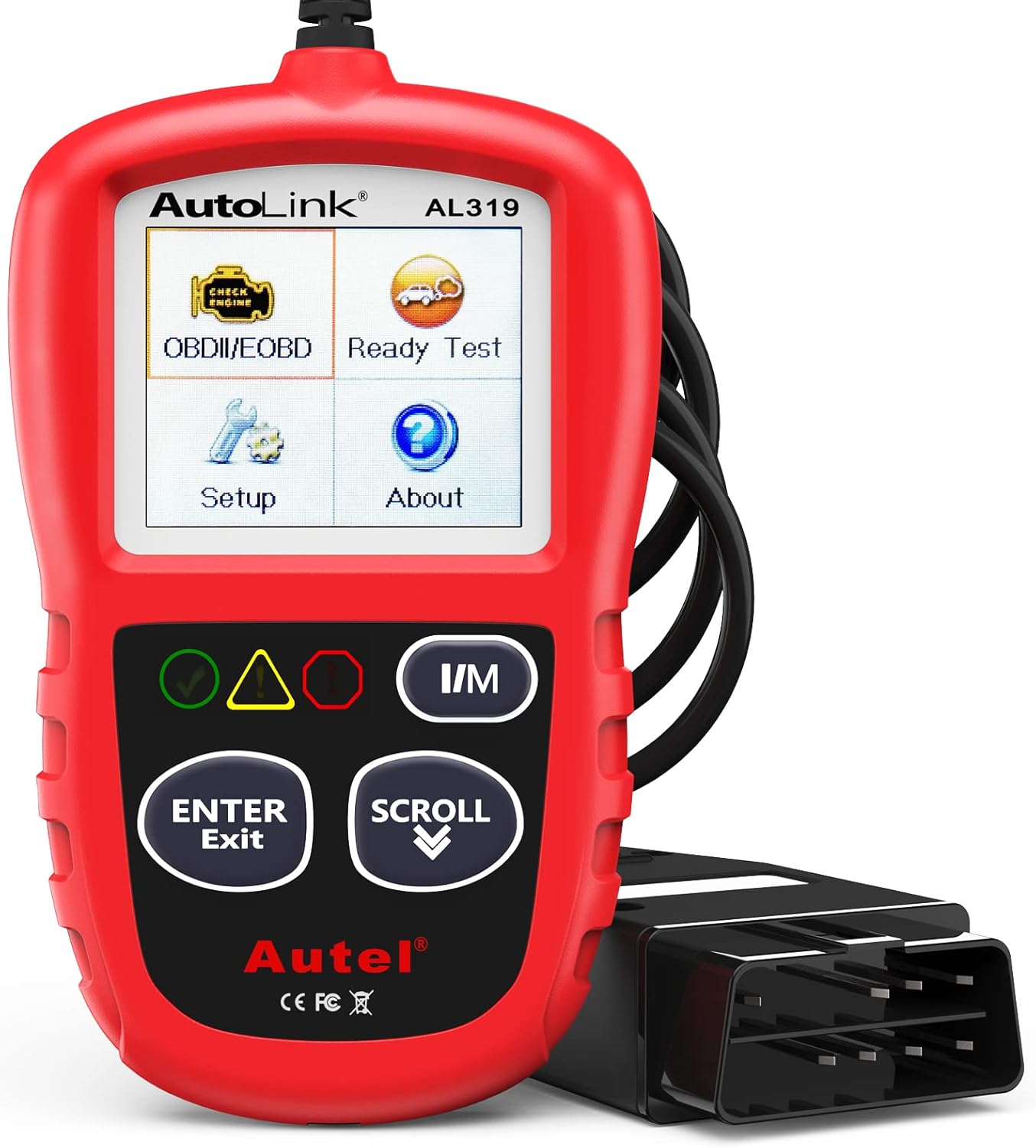
The Autel AL319 is a user-friendly OBD2 scan tool designed to help drivers quickly diagnose check engine light issues and understand vehicle fault codes. It supports reading and clearing DTCs, live data, freeze frame, I/M readiness, and vehicle information, making it a practical choice for DIYers and everyday car owners. With plug-and-play operation, a color display, built-in speaker, and broad vehicle compatibility, it delivers fast, reliable diagnostics without complicated setup.
How Do You Check a Sonata’s History With the VIN?
A complete used-car check requires several separate sources:
- Decode the VIN: Confirm the Sonata’s factory-reported identity with NHTSA vPIC.
- Check recalls and campaigns: Search the complete VIN through Hyundai and NHTSA. For result meanings and repair steps, read our guide to checking Hyundai Sonata recalls by VIN.
- Review title and loss indicators: Use an approved NMVTIS provider when buying a used Sonata.
- Compare every document: Check the dashboard, door label, title, registration, insurance record, lender documents, and bill of sale.
- Request supporting records: Review the window sticker, service invoices, inspection documents, and seller disclosures when available.
- Inspect the car: A clean decode or history report does not replace a test drive and an independent pre-purchase inspection.
[Products Worth Considering]

The ANCEL AD410 helps drivers quickly read and clear engine-related fault codes, view live data, and understand why the check engine light is on before heading to a repair shop. With built-in code definitions, readiness checks, and support for common OBD2 functions, it makes basic diagnostics straightforward for beginners and DIY users. Powered directly from the vehicle and easy to use with no app required, it offers practical value for everyday vehicle troubleshooting.
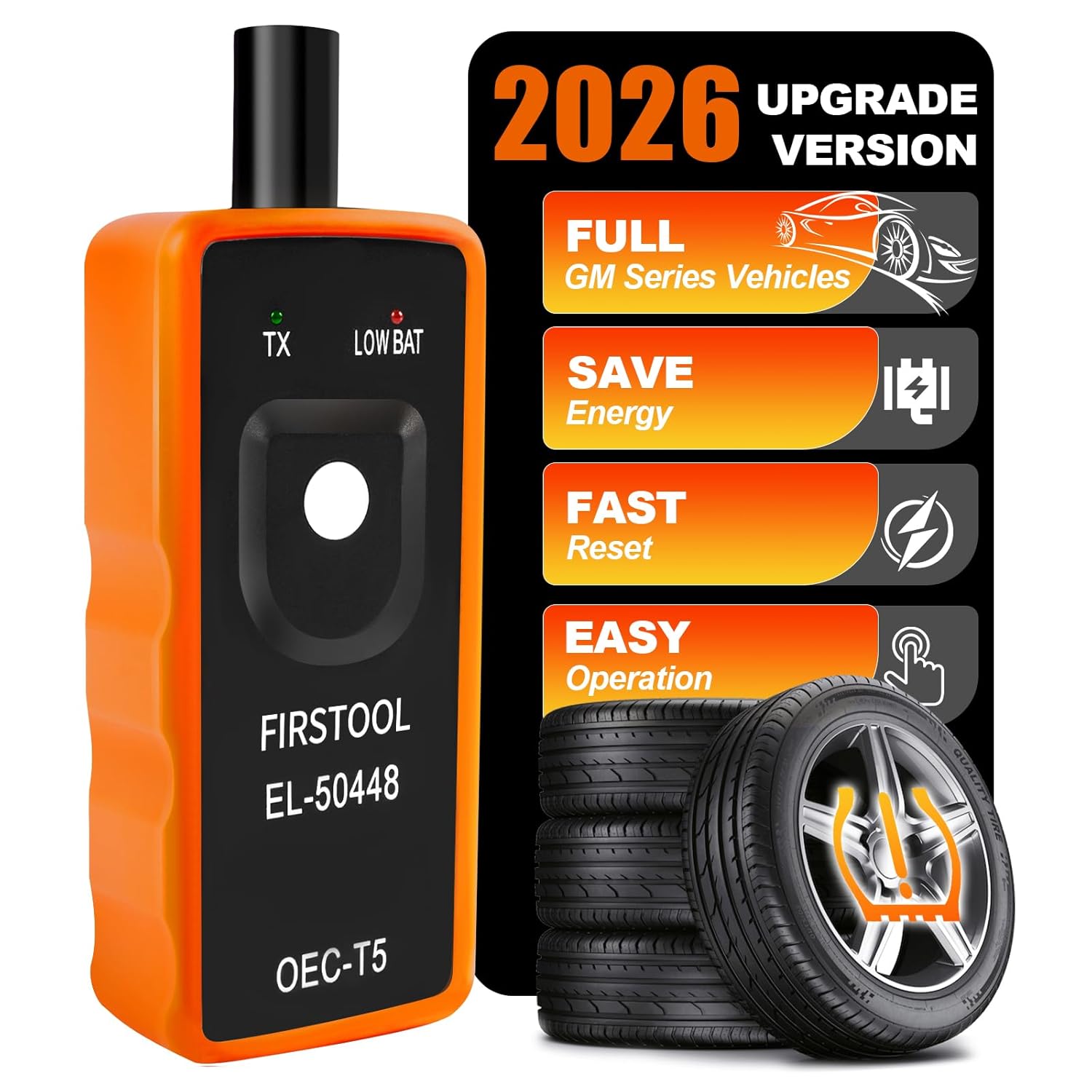
This EL-50448 TPMS relearn tool helps quickly activate and reset tire pressure sensors so your vehicle’s monitoring system stays accurate after tire rotations, sensor replacement, or seasonal tire changes. Designed for many GM-related vehicles and compatible with common 315 and 433 MHz TPMS systems, it offers simple one-button operation and reliable performance for clearing warning lights and relearning sensor positions.
How Can You Check for a VIN Mismatch or Cloning?
Start with the VIN plate visible through the windshield and compare it with every other source. A mismatch may result from a paperwork error, replacement component, title problem, or possible VIN tampering. Do not assume the cause without verification.
- Compare the physical identifiers: Check the dashboard plate and driver-side certification label for different numbers, damaged rivets, altered printing, unusual adhesive, or signs that a label was replaced.
- Compare ownership records: Confirm the same VIN appears on the title, registration, insurance record, loan documents, seller paperwork, and service invoices.
- Compare the decoded vehicle: The year, model, engine, body class, and plant result should be consistent with the car being inspected.
- Review history and mileage: Look for impossible mileage changes, title-brand conflicts, or records for a different color, body type, or location.
- Pause when something conflicts: Ask the seller for supporting documents and verify the issue through the state motor vehicle agency, insurer, lender, dealer, or law enforcement as appropriate.
A VIN is visible through the windshield and is routinely used for legitimate insurance, parts, recall, and history checks. Avoid publishing it together with your address, title image, driver’s licence, account details, or other identity documents.
Frequently Asked Questions
How do I manually decode a Hyundai Sonata VIN?
Break the VIN into sections: characters 1–3 are the WMI, 4–8 are the VDS, 9 is the check digit, 10 is the model-year code, 11 is the plant code, and 12–17 are the production sequence. Confirm the result with the official NHTSA vPIC decoder.
Where is the VIN on a Hyundai Sonata?
Look through the lower driver-side windshield at the dashboard VIN plate. You can also check the driver-side door-jamb certification label, title, registration, or insurance card.
Is a Hyundai VIN decoder free to use?
Yes. NHTSA’s VIN decoder is free for factory decoding, and Hyundai’s lookup is free for checking open safety recalls and service campaigns. A vehicle history report may charge a fee because it uses separate title, odometer, brand, salvage, or loss data.
Can a Hyundai Sonata VIN tell me the exact trim?
Sometimes. A decoder may show the trim, series, engine, body class, or restraint system when Hyundai submitted those fields. It may not identify every package, paint code, interior color, port-installed option, or dealer-installed accessory. Compare it with the window sticker, build information, physical equipment, or dealer records.
Why does my Hyundai Sonata VIN not decode correctly?
Common causes include a mistyped character, missing digit, confusing zero with the letter O, using a pre-1981 or non-U.S. identifier, or using a decoder with limited market coverage. Recheck the VIN on the dashboard and try NHTSA vPIC.
Does a VIN check show all accidents or owners?
No. A basic VIN decode shows factory identity, not history. An NMVTIS or commercial history report may show selected title, odometer, theft, brand, salvage, total-loss, sale, owner, or accident data, but no single report captures every event. Pair the report with document checks and a physical inspection.
Conclusion
To decode a Hyundai Sonata VIN, start with the 17-character number on the dashboard or driver-side door label. Confirm positions 1–3, 4–8, 9, 10, 11, and 12–17, then verify the complete number through NHTSA vPIC. Check Hyundai and NHTSA separately for recalls, and use an approved history provider when you need title or loss indicators.
Before buying, selling, registering, insuring, or ordering parts for a Sonata, make sure the physical VIN, documents, decoded vehicle details, and history records agree. Stop and investigate any mismatch before completing the transaction.
Sources
- NHTSA VIN Decoder — explains the standardized VIN, public decoder, manufacturer-reported data, and plant information.
- NHTSA vPIC VIN Decoder — official tool for decoding factory-reported VIN information.
- NHTSA Manufacturer Handbook — covers VIN length, restricted characters, VIN sections, check digits, model-year codes, and plant coding.
- 49 CFR Part 565 — current U.S. vehicle identification number requirements.
- Hyundai VIN and Production Date Information — Hyundai guidance for finding the VIN.
- Hyundai Safety Recalls and Service Campaigns — Hyundai’s VIN lookup for recalls, campaigns, remedy information, and dealer scheduling.
- NHTSA Recall Lookup — federal safety-recall search by VIN, licence plate, or vehicle details.
- NMVTIS Consumer Resources — official guidance on title, odometer, brand, salvage, total-loss, and related history data.