Your Toyota GR Supra differential does not have a simple “replace every X miles” factory line item in the current U.S. Toyota maintenance chart. Toyota’s schedule calls for regular fluid-level checks and leak inspections, while a proactive fluid change is smart for owners who drive hard, track the car, or want extra long-term protection.
Quick Answer
For normal street use, follow Toyota’s scheduled inspections and check the sealed differential for leaks at each 10,000-mile service. For proactive maintenance, many Supra owners change the differential fluid around 30,000–60,000 miles. For track, autocross, drifting, or repeated hard launches, shorten that to about 15,000–30,000 miles, based on inspection and fluid condition.
Key Takeaways
- Toyota’s current U.S. maintenance chart lists differential leak inspection under “All Fluid Levels,” not a fixed differential fluid replacement interval.
- Use the correct oil for your differential type: Hypoid Axle Oil G4 for Supra models with LSD, and Hypoid Axle Oil G3 for models without LSD.
- A sulfur smell is normal for many gear oils; leaks, whining, chatter, burnt odor, milky fluid, or metallic debris are more useful warning signs.
- Never add a generic limited-slip additive unless Toyota service information or a qualified Supra technician specifically calls for it.
At a Glance
| Time Required | About 45–90 minutes for an experienced DIYer |
| Difficulty | Moderate; the car must be safely level and lifted |
| Tools Needed | Jack stands or lift, drain pan, correct sockets, fluid pump, torque wrench, gloves, eye protection |
| Cost | Varies by fluid type, quantity, and labor; OEM G4 fluid is sold in 500 ml bottles |
Why You Should Care About Differential Fluid Changes
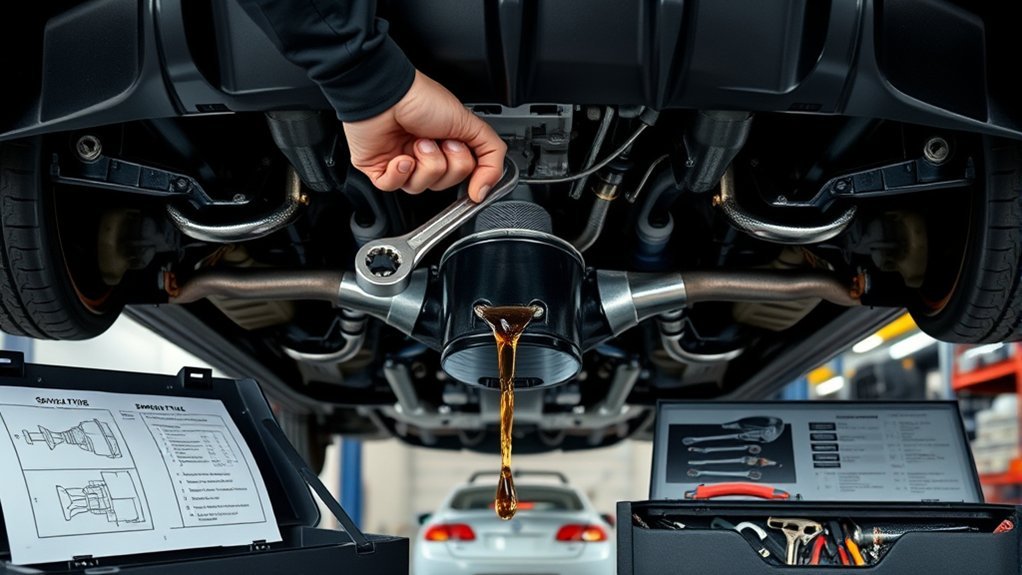
The rear differential sends engine torque to the rear wheels while allowing the wheels to rotate at different speeds in corners. In the GR Supra, that job happens under high torque, heat, and load, especially during spirited driving.
Toyota treats the transmission and differential as sealed components in the maintenance schedule. That does not mean they should be ignored. Toyota’s 2026 GR Supra maintenance guide says sealed transmissions, transfer cases, and differentials should be inspected for signs of leakage as part of the scheduled fluid-level inspection. If leakage is suspected, Toyota recommends inspection by a Toyota dealer.
Fresh, correct differential oil helps protect the ring gear, pinion, bearings, and limited-slip components from heat, friction, and wear. Old or contaminated oil can lose protection, carry metal debris, or fail to control noise and chatter.
Note: The factory maintenance chart is the baseline for warranty and scheduled service. A proactive differential fluid change is extra preventive maintenance, especially useful for hard-driven cars.
Essential Differential Fluid Change Intervals for the Supra
There are two different ways to think about the Supra differential fluid service interval: the Toyota factory schedule and a proactive enthusiast schedule.
| Use Case | Practical Service Interval | What to Do |
|---|---|---|
| Factory scheduled maintenance | Every 10,000 miles or 12 months | Inspect all fluid levels and sealed driveline components for leaks |
| Normal street driving | Inspect on schedule; optional change around 50,000–60,000 miles | Change sooner if leaks, noise, contamination, or age-related concerns appear |
| Spirited street driving | About 30,000–40,000 miles | Use the correct OEM-spec fluid and document the service |
| Track, autocross, drifting, repeated hard launches | About 15,000–30,000 miles, or seasonally | Inspect fluid condition more often and shorten intervals if the oil overheats or darkens quickly |
Factory Schedule vs. Enthusiast Maintenance
Toyota’s U.S. maintenance chart lists “All Fluid Levels” at every 10,000-mile interval through 150,000 miles. The footnote for that item includes inspection of sealed transmissions, transfer cases, and differentials for leakage. It does not list a routine differential oil replacement at 30,000 or 60,000 miles.
That makes the common 30,000–60,000-mile recommendation a preventive-maintenance choice, not a Toyota-required service line. It can still be a wise choice if you keep the car long term, drive aggressively, or want to refresh the oil before wear debris and heat cycles build up.
Impact of Driving Conditions
Driving style matters more than mileage alone. A Supra that mostly cruises on the highway is easier on differential oil than one used for canyon runs, track days, drifting, autocross, or repeated launches.
Heat is the main reason to shorten the interval. Hard acceleration and cornering load the differential, raise oil temperature, and can speed up fluid breakdown. Once the oil loses viscosity or becomes contaminated, it may not cushion the gears and bearings as well.
Warning: Competitive racing, misuse, or improper maintenance can affect warranty coverage. Toyota’s warranty materials exclude damage caused by misuse, racing, overloading, lack of proper maintenance, or use of fluids other than those specified in the Owner’s Manual.
Signs Your Supra Differential Fluid Needs Changing
Do not rely on mileage alone. Check the differential if you notice any of these symptoms:
- Gear whine, growling, or humming: New noise from the rear of the car can point to low fluid, worn fluid, or a mechanical issue.
- Chatter or vibration during tight turns: This can happen when the limited-slip differential is unhappy with the oil condition or oil type.
- Visible leaks: Oil around the differential housing, drain/fill plugs, seals, or underbody should be inspected promptly.
- Burnt odor: A burnt smell is more concerning than the normal sulfur smell of gear oil.
- Dark, gritty, or metallic fluid: Fine paste on a magnetic plug can be normal; shiny flakes or heavy debris are warning signs.
- Milky fluid: A milky look suggests water contamination and should be addressed quickly.
A strong sulfur smell by itself is not automatically a failure sign. Many gear oils contain extreme-pressure additives that naturally smell sharp or sulfur-like. Use smell together with color, debris, noise, leaks, and service history.
[Products Worth Considering]

The DEWALT 20V MAX XR 1/2-inch high torque impact wrench delivers powerful fastening and breakaway performance for demanding jobs like wheel lugs, pipe flanges, and anchor setting. Its 4-mode control, variable speed trigger, and precision wrench mode help improve accuracy and reduce overtightening, while the on-tool LED light boosts visibility in dark work areas. Built with a brushless motor, battery guard, and durable housing, it is designed for tough jobsite use.

These genuine Toyota oil drain plug gaskets are designed to help maintain a reliable seal during oil changes, reducing the chance of leaks and supporting proper engine maintenance. With an OEM fit and trusted Toyota quality, they are a practical choice for routine service on compatible vehicles. The convenient quantity pack is ideal for keeping multiple maintenance intervals covered.

This flexible oil funnel is designed to make fluid changes cleaner and easier by guiding oil around obstacles like skid plates and crossmembers. Its shape-retaining core and silicone body can be molded for custom positioning, while the heat-resistant, leak-proof design helps prevent spills during draining and filter removal. Reusable and easy to clean, it works well for cars, trucks, motorcycles, and other hard-to-reach fluid fill or drain applications.
Best Oils and Additives for Your Supra Differential
The best differential oil is the one that matches your exact Supra differential type. Toyota owner information lists two differential oil categories:
| Differential Type | Specified Oil Type | Important Note |
|---|---|---|
| Without LSD | Hypoid Axle Oil G3 | Do not substitute G4 just because it is newer or more expensive |
| With LSD | Hypoid Axle Oil G4 | Use LSD-compatible fluid such as Toyota/BMW part 83222447362 where specified |
[Products Worth Considering]

This 12-pack oil filter and drain plug washer set is designed for a wide range of Toyota and Scion vehicles, helping support clean oil flow and dependable engine performance. It replaces several common OE part numbers and offers an easy-fit solution for routine maintenance. Built with corrosion-resistant materials and efficient filtration, it helps keep engine contaminants out and supports longer service life.

This ignition coil pack and pre-gapped spark plug set is designed for select 3.5L V6 Toyota and Lexus models, helping restore smooth engine performance and reliable starting. Built to meet or exceed OEM specifications, it can help fix common issues like misfires, rough idle, poor fuel economy, and reduced power. The complete 6-piece set offers a convenient replacement solution for compatible vehicles.

This upgraded engine oil funnel kit makes oil changes cleaner and easier with a spill-proof design, flow control valve, and transparent body for precise filling. Built from durable polycarbonate and equipped with 12 adapters, two 45-degree elbows, and a debris filter, it fits a wide range of vehicles and works well in tight engine spaces. The secure, hands-free setup helps reduce mess while improving control during oil filling and fluid transfers.
Recommended Differential Oils
For a Supra with a limited-slip differential, Toyota Hypoid Oil G4 500 ml is the safest OEM-reference choice. The same part number is commonly listed as 83222447362.
For a Supra without LSD, use Hypoid Axle Oil G3 as specified by the owner information. If you are not sure which differential your car has, verify by VIN, trim, build sheet, or a Toyota parts/service department before buying fluid.
Essential Additives Overview
Modern hypoid gear oils use additive packages to protect gears under sliding pressure. These can include:
- Extreme-pressure additives: Help protect hypoid gears under high load.
- Friction modifiers: Help limited-slip units operate smoothly when the oil is formulated for LSD use.
- Anti-foam agents: Help maintain lubrication when gears churn the oil.
- Corrosion inhibitors: Help protect internal metal surfaces.
Pro Tip: Do not add a universal “limited-slip additive” to the Supra differential unless Toyota service information or a qualified Supra technician specifically recommends it. The correct G4 fluid is already formulated for the LSD application.
The Impact of Severe Driving on Fluid Change Frequency
Severe driving is not just about mileage. A 5,000-mile season with several track days can be harder on differential oil than 25,000 miles of normal commuting.
Shorten the interval if the car sees:
- Track days or high-speed lapping
- Autocross or drifting
- Repeated hard launches
- Hot-weather canyon driving
- Long mountain drives with repeated acceleration and deceleration
- Performance modifications that increase torque
For these conditions, a 15,000–30,000-mile interval is a reasonable preventive range. Many track-focused owners inspect or replace fluid seasonally, especially if the car has seen repeated high-temperature events.
Toyota’s schedule tells you when to inspect the differential. Your driving style tells you how often it is smart to refresh the oil.
Easy Steps for Changing Your Differential Fluid

Changing Supra differential fluid is straightforward for an experienced DIYer, but the car must be level, securely supported, and serviced with the correct oil. If you are not comfortable working under a lifted car, have a qualified Toyota or performance shop do it.
- Confirm the correct oil. Verify whether your Supra uses Hypoid Axle Oil G3 or G4 before starting.
- Warm the fluid slightly. A short drive helps the oil drain, but do not work on a dangerously hot differential.
- Lift the car safely and keep it level. Use a lift or properly rated jack stands on a solid surface.
- Remove the fill plug first. This prevents draining the differential and then discovering the fill plug is stuck.
- Place a drain pan under the differential. Gear oil has a strong odor, so wear gloves and protect the floor.
- Remove the drain plug and drain fully. Inspect the old oil and plug magnet for debris.
- Reinstall the drain plug with a new seal if required. Tighten using the correct Toyota repair specification for your VIN.
- Pump in the correct new fluid. Fill until the fluid reaches the proper level at the fill opening, following Toyota service information.
- Reinstall the fill plug. Use the correct seal and torque specification.
- Clean the area and road test. Check for leaks after the drive and again after the next heat cycle.
Warning: Never crawl under a vehicle supported only by a jack. Use a lift or properly rated jack stands, keep the car level, and wear eye protection.
[Products Worth Considering]

This A-Premium windshield washer pump is designed to restore reliable windshield cleaning performance across a wide range of compatible vehicles. It supports numerous Toyota, Honda, Lexus, Mazda, Ford, Lincoln, and other models, making it a versatile replacement choice for maintaining clear visibility in all driving conditions. Built for straightforward fitment, it helps ensure consistent washer fluid delivery when you need it most.

The Milwaukee M18 FUEL 1/2" High Torque Impact Wrench delivers powerful fastening and breakaway performance in a compact, easy-to-handle design. Its brushless motor and REDLINK PLUS intelligence help maintain strong output while protecting against overload, overheating, and over-discharge. With multiple control modes, durable all-metal construction, and a friction ring anvil for fast socket changes, this tool is built for demanding automotive and jobsite applications.

This NewYall pack of two oil filters is designed for a wide range of Toyota, Lexus, and Scion vehicles from the 2005 to 2014 model years. Each filter includes a gasket seal O-ring element for a proper fit and reliable oil filtration, helping support clean engine oil flow and routine maintenance. It is a practical replacement choice for many popular sedans, SUVs, and hybrids.
Maintaining Service Records for Optimal Performance
Good records matter for maintenance planning, resale value, and warranty conversations. Toyota’s warranty guide says owners should keep records showing the date of service, mileage, and a description of the work or parts installed.
| Record Item | What to Write Down |
|---|---|
| Date | The day the differential service was completed |
| Mileage | Odometer reading at the time of service |
| Fluid Type | Hypoid Axle Oil G3 or G4, plus brand and part number |
| Quantity Used | Number of bottles or measured amount installed |
| Fluid Condition | Normal, dark, burnt, milky, metallic debris, or leak found |
| Service Provider | DIY, Toyota dealer, or independent shop name |
Keep receipts for the fluid and any shop invoice. If you do the work yourself, take a photo of the bottles, odometer, and service notes.
Used Oil Disposal and Cleanup
Differential oil should not be poured into drains, onto the ground, or into household trash. Store used oil in a clean, sealed container and take it to a used-oil collection center, auto-parts store, recycling facility, or repair shop that accepts used automotive fluids. The U.S. EPA explains that used oil can be recycled and re-refined into new lubricating oil or processed for other petroleum uses.
Frequently Asked Questions
How often should I change the differential oil on my Toyota GR Supra?
Toyota’s current U.S. maintenance chart does not list a fixed differential fluid replacement interval. It calls for regular fluid-level checks and inspection of sealed driveline components for leaks. For preventive maintenance, consider a change around 50,000–60,000 miles for normal driving, 30,000–40,000 miles for spirited use, and 15,000–30,000 miles for track or hard-use cars.
What is the factory service interval for the Supra differential?
The factory schedule focuses on inspection, not routine replacement. Toyota lists “All Fluid Levels” every 10,000 miles or 12 months, and the related footnote includes checking sealed transmissions, transfer cases, and differentials for signs of leakage.
What differential fluid does the Supra use?
It depends on the differential. Supra models without LSD use Hypoid Axle Oil G3. Supra models with LSD use Hypoid Axle Oil G4. Verify by VIN or service information before buying fluid.
Is the sulfur smell from Supra differential oil normal?
Yes, a sulfur-like smell is common in gear oils because many use extreme-pressure additive chemistry. A sulfur smell alone does not mean the fluid is bad. Burnt odor, metal flakes, milky oil, leaks, whining, or chatter are more useful warning signs.
Can I use aftermarket synthetic gear oil in my Supra differential?
Only use an aftermarket oil if it clearly matches the exact Toyota/BMW requirement for your differential type. For the LSD differential, the safest choice is OEM Hypoid Axle Oil G4. Using the wrong oil can cause chatter, vibration, poor limited-slip behavior, or wear.
Conclusion
The best Supra differential fluid service interval depends on how the car is used. Toyota’s factory schedule requires regular inspection of sealed driveline components, but it does not list a fixed replacement interval for the differential oil. For a stock street car, inspection plus a proactive 50,000–60,000-mile change is a sensible plan. For spirited driving, track use, drifting, or repeated hard launches, shorten the interval and inspect the fluid more often.
The most important rule is simple: use the correct fluid for your differential type. Hypoid Axle Oil G4 belongs in LSD-equipped cars, while non-LSD cars call for G3. Keep records, watch for leaks or unusual noise, and treat the differential like the high-load performance component it is.
Sources
- Toyota 2026 GR Supra Warranty & Maintenance Guide — factory maintenance chart, fluid-level inspection, sealed driveline leak inspection, warranty maintenance notes.
- Toyota 2026 Supra Interactive Owner’s Manual — official owner information and operating-material reference.
- Toyota Hypoid Oil G4 500 ml — official Toyota parts listing for Hypoid Oil G4, part number 83222447362.
- U.S. EPA: Managing, Reusing, and Recycling Used Oil — safe disposal and recycling guidance for used automotive oil.
- Chevron Gear Oil GL-5 Product Data Sheet — general gear-oil additive background, including sulfur-phosphorus extreme-pressure additive technology.