
Last reviewed: July 31, 2026 · Checked against multiple 2021 U.S. Supra owner-manual revisions, Toyota’s maintenance guide, and current HT-12 product documentation.
The correct 2021 Toyota Supra coolant type is Antifreeze and Corrosion Inhibitor Frostox HT-12. Toyota’s owner’s manual specifies a 50:50 water-to-coolant-additive ratio when concentrate is used, two coolant circuits, and a cold level just below the maximum mark in each reservoir’s filler neck. For an aftermarket top-off, choose a product whose label explicitly states HT-12 compatibility. BMW LC-18 approval is a useful confirmation for green HT-12 coolant, but color, brand, or G12evo wording alone does not prove that a product is suitable for the Supra.
Quick Answer
Use Frostox HT-12 or an aftermarket coolant whose label explicitly lists HT-12 compatibility. Mix concentrate 50:50 with water; distilled or deionized water is the safest default when the water quality is unknown. Do not dilute a 50/50 premix. Check both reservoirs only when the engine is fully cold, and do not select coolant by color or the Toyota name alone.
Key Takeaways
- The March 2020, July 2020, November 2020, and March 2021 U.S. owner-manual revisions checked for this guide all list Frostox HT-12.
- Use a 50:50 water-to-coolant-additive ratio when working with concentrate.
- The Supra has an engine cooling circuit and an auxiliary cooling circuit, so check both reservoirs when the engine is cold.
- The correct cold level is just below the maximum mark in each reservoir’s filler neck; do not overfill.
- Do not treat coolant color, a broad “European” label, or G12evo wording alone as proof of HT-12 compatibility.
- Toyota’s maintenance guide emphasizes coolant condition, composition, freeze protection, hoses, and leak inspections rather than a blanket 30,000-mile or two-year replacement rule.
What Type of Coolant Does the 2021 Toyota Supra Use?
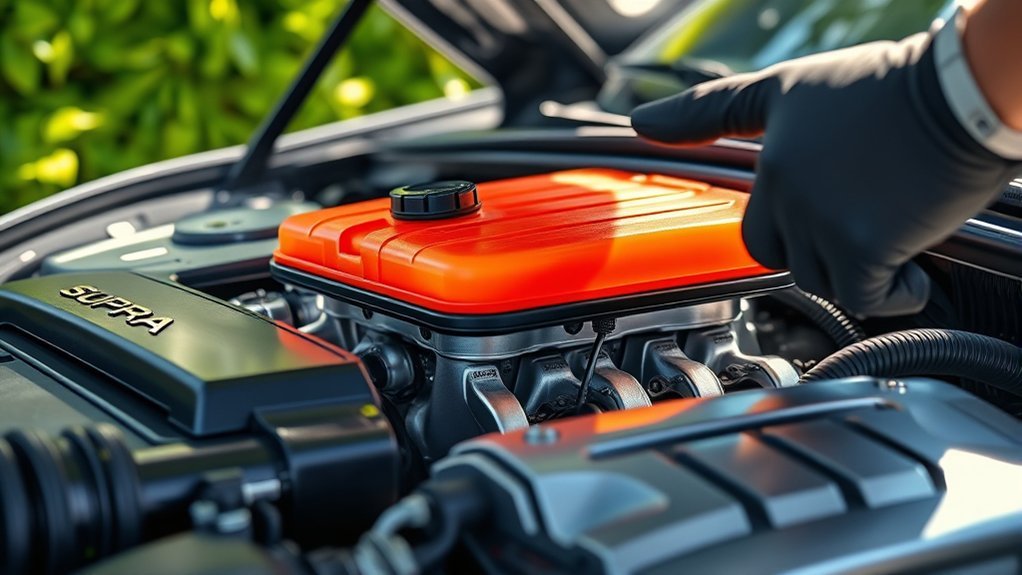
The 2021 Toyota GR Supra owner’s manual identifies the cooling-system fluid as Antifreeze and Corrosion Inhibitor Frostox HT-12. This wording appears in the U.S. owner-manual revisions checked from March 2020 through March 2021 production, so the specification is more precise than “green coolant,” “European coolant,” “BMW coolant,” or “Toyota coolant.”
Toyota’s official 2021 Supra manuals and warranty page is the correct starting point for owner information associated with the vehicle. The 2021 Supra Warranty & Maintenance Guide also calls for checking the coolant level and composition in both reservoirs and inspecting hoses and connections for corrosion and leaks.
2021 Supra Coolant Specification
| Factory coolant type | Antifreeze and Corrosion Inhibitor Frostox HT-12 |
| Required selection wording | The product label should explicitly state HT-12 compatibility |
| Useful approval check | BMW LC-18 approval on a green HT-12 product |
| Insufficient by itself | Color, “European,” “BMW,” “Toyota,” “universal,” or G12evo wording alone |
| Concentrate mix | 50:50 water to coolant additive |
| Cooling circuits | Engine cooling and auxiliary cooling; check both reservoirs |
| Correct cold level | Just below the maximum mark in the filler neck |
| Replacement timing | Follow Toyota service data and coolant condition; no blanket 30,000-mile or two-year rule |
Warning: Do not mix coolant additives of different colors or specifications. Color does not establish compatibility, and similarly named coolant families can carry different approvals. Match the specification and approval wording printed on the product label.
What Should You Buy for a 2021 Supra Coolant Top-Off?
For a small top-off, use the same HT-12 coolant already installed whenever possible. If the original container or service record is unavailable, choose Frostox HT-12 or an aftermarket product whose manufacturer explicitly lists HT-12 compatibility. BMW LC-18 approval provides an additional label check for green HT-12 products, but a bottle labeled only for BMW, European vehicles, G12evo, Toyota vehicles, or all makes and models is not automatically suitable.
If the installed fluid cannot be identified from the service record, original container, or reliable prior-work documentation, do not guess from its color. Have the affected circuit identified and, when necessary, drained and refilled with the correct coolant instead of mixing an unknown formula with HT-12.
If the coolant is concentrate, prepare a 50:50 water-to-additive mixture before adding it. Toyota specifies the ratio but does not require a particular water type in the owner’s manual. Distilled or deionized water is the safest default because it avoids uncertain mineral content. If another water source is used, it must meet the coolant manufacturer’s published water-quality limits. Do not dilute coolant sold as a ready-to-use 50/50 premix.
Valvoline Zerex HT-12 Green is one example of coolant marketed for genuine HT-12 applications. Valvoline’s European HT-12 Green product documentation also lists BMW LC-18 approval. Read the exact package being purchased because similarly named products and different colors may carry different approval wording.
Are Coolant and Antifreeze the Same Thing?
Antifreeze commonly refers to the concentrated base fluid and corrosion-inhibitor package. Engine coolant is the finished mixture that circulates through the cooling system. On the 2021 Supra, HT-12 concentrate must be prepared at the specified 50:50 water-to-additive ratio, while an approved 50/50 premix is ready to use.
How Do You Check and Top Off a 2021 Supra’s Coolant?
At a Glance
| Time Required | About 10–15 minutes for a cold inspection or small top-off |
| Difficulty | Easy for checking and topping off; Toyota repair data is required after draining or opening a circuit |
| Tools Needed | Gloves, eye protection, flashlight, clean funnel, correct HT-12 coolant, and suitable water if using concentrate |
| Cold Fill Level | Just below the maximum mark in each reservoir’s filler neck |
Check the 2021 Supra’s coolant only after the engine has cooled completely. The system remains pressurized when hot, and opening a reservoir can release scalding coolant. Park on level ground, shut the engine off, allow it to cool fully, and inspect the engine and auxiliary coolant reservoirs separately.
- Turn the engine off, park on level ground, and let the car cool completely.
- Open the hood and identify the engine coolant reservoir and the auxiliary coolant reservoir.
- Clean loose dirt from around each cap so debris cannot fall into the reservoir.
- Slowly loosen a cap only after the system is cold, allowing any remaining pressure to dissipate.
- Check whether the coolant sits just below the maximum mark in the filler neck.
- If the level is low, slowly add an approved premixed HT-12 coolant or a correctly prepared 50:50 mixture. Do not overfill.
- Secure the cap, wipe away spills, and repeat the inspection for the other reservoir.
- Record which reservoir was low and approximately how much fluid was added.
- Recheck both cold levels after the next heat cycle. If either level falls again, arrange leak diagnosis and a pressure test when appropriate.
Pro Tip: Recording which circuit lost coolant is more useful than repeatedly topping off both reservoirs. A warning that returns or a level that continues to fall needs diagnosis.
[Products Worth Considering]
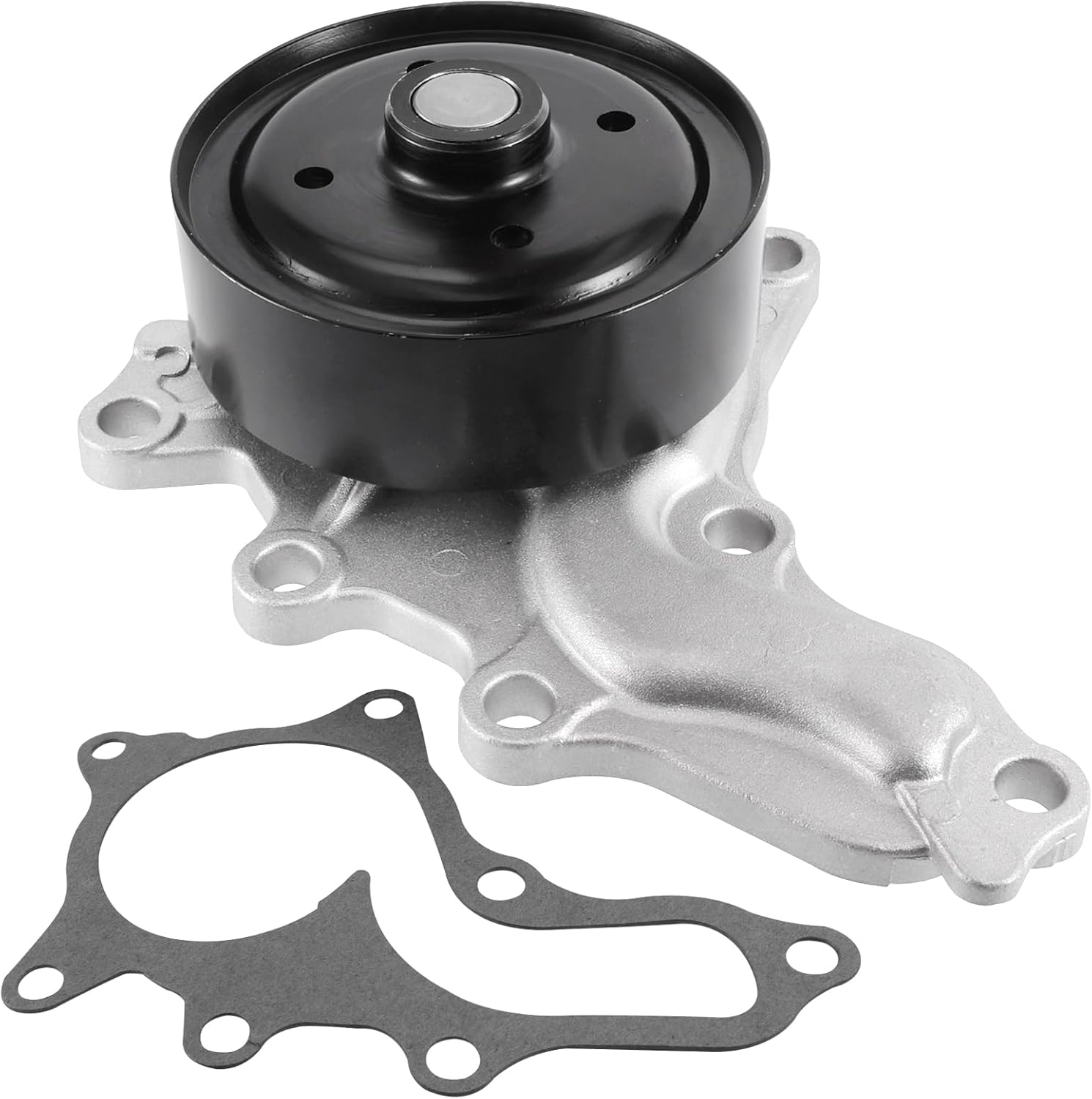
This AW6252 water pump is designed for a wide range of Toyota, Scion, and Lexus applications, helping maintain reliable engine cooling across compatible models. It features case hardened bearings for durability, a graphite-impregnated gasket for a secure seal, and 100% function and leakage testing for dependable performance. Built in TS16949 certified facilities, it offers a strong replacement option backed by service support.

This coolant electric water pump is designed as a replacement for select Toyota vehicles, helping maintain proper engine cooling performance and reliable temperature control. Built to OE specifications, it offers fitment support for compatible Avalon, Camry, and RAV4 models with 2.5L L4 engines. It also includes cross-reference part numbers for easier matching and comes with after-sales support for covered defects.

The OEMTOOLS coolant vacuum refill kit helps quickly refill a vehicle’s cooling system while removing trapped air that can lead to overheating and engine damage. It also performs vacuum leak tests to help confirm system integrity and reduce the chance of repeat repairs. With multiple bushings, adapters, and a tapered cone seal, it is designed for flexible use on many radiator and coolant bottle necks.
When Does a 2021 Supra Need a Coolant Flush?
A 2021 Supra needs a circuit-specific drain and refill when coolant is contaminated, the installed formula is unknown or incompatible, freeze protection or composition fails testing, a cooling-system component has been opened, or Toyota service data calls for replacement. A small top-off and a full cooling-system service are not interchangeable.
| Condition | Appropriate Response |
|---|---|
| Small one-time loss; installed fluid is known HT-12 | Top off the affected reservoir with the same approved coolant and monitor both cold levels. |
| Installed coolant cannot be identified | Do not mix based on color. Verify the service history or have the affected circuit correctly drained and refilled. |
| Level falls again after a correct top-off | Diagnose the loss, inspect caps, reservoirs, hoses, and connections, and pressure-test when appropriate. |
| Wrong coolant or incompatible mixture was added | Drain, refill, and bleed the affected circuit using the applicable Toyota repair procedure. |
| Oily, rusty, muddy, or particle-contaminated coolant | Diagnose the contamination source before replacing the fluid; a drain and refill alone may not correct the underlying failure. |
The Supra has separate cooling circuits. Once either circuit has been drained, repaired, or opened, use the Toyota repair procedure for that circuit, engine, and production date. Do not infer drain points, filling steps, or the bleeding routine from a generic radiator-flush guide.
[Products Worth Considering]

This engine water pump kit is designed to help maintain reliable cooling performance across a wide range of compatible Toyota, Lexus, Scion, and Pontiac vehicles. Built with aluminum and tested for leak-free operation, it offers a direct replacement solution that supports engine efficiency and long-term service life. The kit includes a professional water pump and gasket for a convenient installation-ready repair.

This radiator burping funnel kit helps simplify coolant refilling, bleeding, flushing, and spill-free maintenance across a wide range of vehicles. Its translucent body with clear scale supports controlled filling, while multiple adaptors, caps, and extension pieces improve compatibility and access in tight engine bays. The built-in shut-off valve and rubber-gasket design help reduce spills and make cooling system service cleaner and more convenient.

This coolant bypass valve is a direct replacement for select Toyota models, helping regulate coolant flow for stable engine temperature and dependable performance. Built from high-temperature, corrosion-resistant materials, it is designed to handle demanding driving conditions while supporting long-term durability. Its straightforward design also makes installation quick and hassle-free.
What Is Needed for a Full Coolant Service?
A qualified shop should confirm the vehicle’s production date, the circuit being serviced, the coolant specification, and the applicable Toyota repair procedure before work begins.
- Correct coolant: Frostox HT-12 or a product explicitly identified as HT-12 compatible.
- Suitable water: Needed when preparing concentrate. Distilled or deionized water is the safest default when source-water quality is unknown.
- Clean filling equipment: Funnels, containers, or filling tools that have not held incompatible fluids.
- Drain pan and sealed waste containers: Used coolant must be captured and recycled properly.
- Vehicle-specific repair information: Required for circuit identification, access, filling, and bleeding.
- Gloves and eye protection: Coolant is harmful and must be handled carefully.
What Does a Proper Coolant Service Include?
The following is a service overview, not a substitute for Toyota repair instructions. The repair procedure for the engine, production date, and affected circuit controls the drain points, access steps, filling method, and bleeding routine.
| Stage | Required Action |
|---|---|
| 1. Diagnose first | Identify leaks, contamination, failed parts, or an incorrect mixture before replacing the coolant. |
| 2. Identify the circuit | Determine whether the engine circuit, auxiliary circuit, or both circuits require service. |
| 3. Capture the old coolant | Drain the required circuit according to Toyota service data and collect all fluid in a suitable container. |
| 4. Refill with HT-12 | Use the correct premix or a 50:50 mixture of HT-12 concentrate and suitable water. |
| 5. Follow the specified bleeding routine | Perform the Toyota procedure for the serviced circuit. Do not assume the absence of visible bubbles or a full reservoir proves that all air has been removed. |
| 6. Verify the repair | Recheck both cold levels, inspect for leaks, confirm normal temperature operation, and pressure-test when needed. |
What Coolant-Service Safety Precautions Should You Follow?
- Never open either coolant reservoir while the system is hot or pressurized.
- Wear gloves and safety glasses when handling coolant.
- Keep coolant off skin, clothing, painted surfaces, and electrical connectors.
- Use only clean containers and equipment to avoid contaminating the cooling circuits.
- Do not pour used coolant into a household drain, soil, street, or stormwater system.
- Keep coolant away from children and animals; ethylene-glycol coolant is harmful if swallowed.
Note: Repeated top-offs cannot restore the intended coolant composition after an incompatible or unidentified formula has been added. Correct the affected circuit with the applicable drain, refill, and bleeding procedure.
How Often Should 2021 Supra Coolant Be Changed?
Toyota’s 2021 Supra maintenance guide does not give the generic “every 30,000 miles or two years” coolant-flush rule repeated on many service pages. Instead, Toyota’s maintenance schedule calls for recurring inspections of coolant level, composition, freeze protection, hoses, connections, corrosion, and leaks.
Follow the service data associated with the vehicle and the results of those inspections. Replace the coolant when its condition or freeze protection is unacceptable, when it has been diluted or contaminated, when incompatible coolant was added, or when cooling-system repairs require a circuit to be drained. Keep the work documented with the car’s other Supra fluid-service records.
[Products Worth Considering]

This coolant thermostat is a direct replacement designed for a wide range of Toyota, Lexus, and Scion vehicles. It helps maintain proper engine temperature, supports reliable cooling system performance, and installs easily without special tools or programming. Built to meet OEM standards, it offers durable, stable operation and dependable fitment for compatible models.

This all-in-one radiator pressure tester and vacuum refill kit helps diagnose cooling system leaks, measure temperature, and refill coolant efficiently. It includes a wide range of adapters for broad vehicle compatibility, plus a pressure tester, vacuum refiller, thermometer, and storage case for organized use. Designed for DIY mechanics and professionals, it simplifies coolant service while reducing guesswork and unnecessary repairs.

This professional water pump kit is designed as a direct OE replacement for select Toyota and Lexus 3.5L V6 vehicles, helping restore reliable engine cooling performance. Built to strict quality standards and tested for leak-free operation, it includes the necessary gasket for easier installation and a secure fit. It offers a practical upgrade for drivers seeking dependable cooling system maintenance and long-lasting performance.
What Is a Practical 2021 Supra Coolant-Service Rule?
- Check both cold levels: Inspect the engine and auxiliary reservoirs before long trips and whenever a warning appears.
- Inspect during scheduled service: Ask for coolant condition, composition, and freeze-point testing instead of requesting an automatic flush by mileage alone.
- Replace when condition requires it: Drain and refill coolant that is contaminated, incorrectly mixed, rusty, oily, or no longer providing the required protection.
- Service after cooling-system work: Follow the appropriate filling and bleeding procedure after a hose, pump, reservoir, radiator, heat exchanger, or related component has been opened or replaced.
What Are the Symptoms of Low Coolant?
Possible signs include a low-coolant message, rising engine temperature, reduced heater output, a sweet coolant smell, dried residue near a cap or hose, or fluid beneath the car. A recurring warning should be investigated even when the displayed temperature still appears normal.
If the temperature is rising, steam is visible, or the warning indicates overheating, stop as soon as it is safe and shut the engine off. Do not open a reservoir until the system has cooled completely. If the temperature remains normal, avoid hard acceleration and stop promptly in a safe place to let the car cool before inspecting both reservoirs.
Why Do Regular Cooling-System Inspections Matter?
Toyota’s maintenance guide calls for checking both coolant reservoirs, coolant composition, hoses, connections, corrosion, and leaks. These checks can identify small losses before air enters a circuit or the vehicle overheats. They can be completed alongside other scheduled work, such as the Supra engine air-filter inspection.
What Signs Mean the Coolant Needs Service?
A 2021 Supra’s coolant needs testing, diagnosis, or replacement when the fluid is contaminated, its protection is no longer acceptable, the wrong formula was added, or a cooling-system repair has opened a circuit. Mileage alone does not identify the cause of a coolant problem.
- Rust, sediment, or particles: These can indicate corrosion or contamination inside a circuit.
- Milky, oily, or muddy fluid: Diagnose the source before performing a simple drain and refill.
- Incompatible coolant was added: Drain and correctly refill the affected circuit instead of trying to dilute the mistake through top-offs.
- Repeated low-coolant warnings: Inspect the reservoirs, caps, connections, hoses, and related components, then pressure-test when appropriate.
- Overheating or steam: Stop driving and diagnose the failure before restarting the engine.
- Sweet odor or dried residue: Coolant may be escaping only when the system becomes hot and pressurized.
- Gurgling or unstable levels after service: The serviced circuit may not have been filled or bled correctly.
Replacing degraded coolant restores the fluid, but it does not repair the leak, failed component, or contamination source that caused the problem.
Why Does the Correct Supra Coolant Matter?
The cooling system controls engine and auxiliary cooling loads while protecting aluminum and other cooling-system materials against corrosion and freezing. The HT-12 specification and its inhibitor package are part of that protection, which is why ordinary Toyota coolant or a universal formula should not be substituted solely on the basis of brand or color.
Toyota’s general engine-coolant guidance recommends following the vehicle owner’s manual for coolant type and replacement timing. On the 2021 Supra, the manual-specific HT-12 requirement takes priority over generic Toyota coolant advice.
What Are the Most Common Supra Coolant Mistakes?
The most consequential error is treating the GR Supra like another Toyota model and selecting coolant based only on the Toyota name. Avoid these mistakes:
- Using ordinary Toyota pink coolant without vehicle-specific approval: The 2021 Supra owner’s manual specifies Frostox HT-12.
- Treating G12evo wording as automatic approval: Confirm that the exact product also states HT-12 compatibility.
- Choosing coolant by color: The specification and approval wording are more important than whether the liquid is green, pink, blue, or another color.
- Opening a hot reservoir: Pressurized coolant can escape and cause severe burns.
- Checking only one reservoir: The engine and auxiliary cooling circuits must be inspected separately.
- Overfilling: The correct cold level is just below the maximum mark in the filler neck.
- Assuming distilled water is Toyota’s only permitted water: Toyota specifies a 50:50 ratio. Distilled or deionized water is the safest default, while any other water must meet the coolant maker’s quality limits.
- Skipping the correct bleeding procedure after service: Air can remain trapped even when a reservoir appears full.
- Repeatedly topping off a leak: A returning warning requires diagnosis and may require a pressure test.
- Using stop-leak as a first response: Sealers can complicate diagnosis and may obstruct small cooling passages.
2021 Supra Coolant Maintenance Checklist
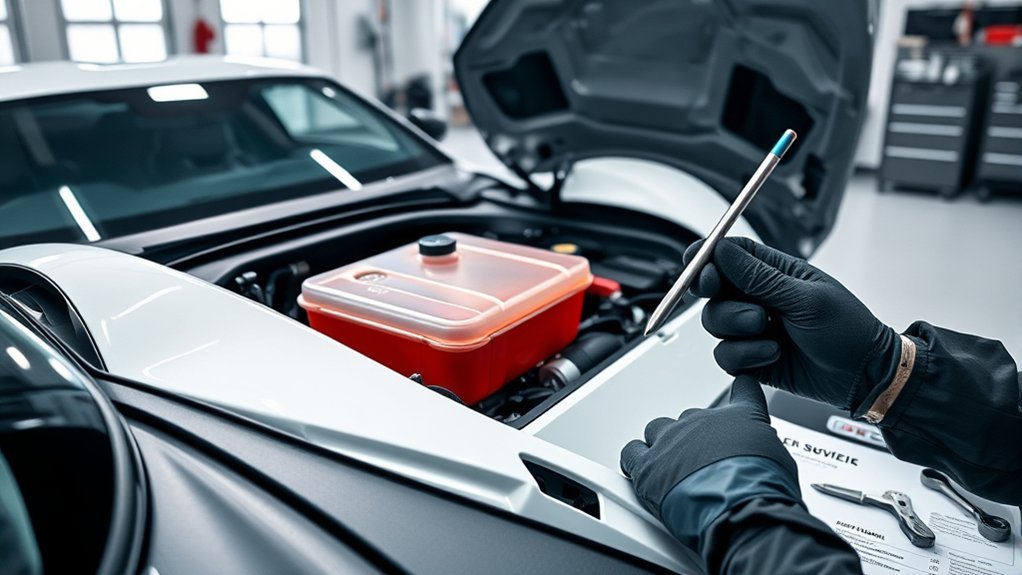
Use this checklist before buying fluid or opening either reservoir:
- Confirm that the exact product explicitly identifies HT-12 compatibility.
- Use BMW LC-18 approval as an additional label check for green HT-12 coolant.
- Do not rely on color, brand, “European,” “universal,” or G12evo wording alone.
- Let the engine cool completely and park the car on level ground.
- Inspect both the engine and auxiliary coolant reservoirs.
- Use a 50:50 water-to-additive mixture when preparing HT-12 concentrate.
- Do not further dilute an approved 50/50 premix.
- Fill only to just below the maximum mark in the filler neck.
- Do not mix an unknown installed coolant with a newly purchased formula.
- Investigate a level that drops again after a correct top-off.
- Use Toyota service data whenever a circuit has been drained or opened.
Frequently Asked Questions
What coolant does a 2021 Toyota Supra take?
Toyota specifies Antifreeze and Corrosion Inhibitor Frostox HT-12 for the 2021 GR Supra. Use Frostox HT-12 or a product whose manufacturer explicitly lists compatibility with the HT-12 requirement.
Can I use Toyota Super Long Life Coolant in a 2021 Supra?
Do not substitute Toyota Super Long Life Coolant merely because it is a Toyota product. The 2021 Supra owner’s manual specifies Frostox HT-12. Use another formula only when Toyota service information specifically confirms compatibility for the vehicle.
Can I use BMW HT-12 coolant in a 2021 Supra?
A BMW-market coolant can be suitable when the exact product label explicitly states HT-12 compatibility. BMW LC-18 approval is a useful additional check for green HT-12 coolant. Do not assume every coolant sold for BMW vehicles meets the 2021 Supra’s HT-12 requirement.
Is 2021 Toyota Supra coolant green?
HT-12 coolant is commonly sold in green, but color is not a reliable specification. Confirm HT-12 compatibility on the exact product label and do not mix coolant merely because the colors look similar.
Does HT-12 coolant need to be mixed 50/50?
Yes. The Supra owner’s manual calls for a 50:50 water-to-coolant-additive ratio. Distilled or deionized water is the safest default when water quality is unknown. Do not further dilute a product sold as a 50/50 premix.
What should I do if I do not know which coolant is already installed?
Do not identify an unknown coolant by color or mix it with a newly purchased formula. Check the service record or original container. If the fluid still cannot be identified, have the affected circuit inspected and, when necessary, drained and refilled with the correct HT-12 coolant.
How often should 2021 Supra coolant be changed?
Toyota’s maintenance guide does not give a blanket 30,000-mile or two-year coolant replacement rule. Follow Toyota service data and replace the coolant when testing, contamination, an incorrect mixture, cooling-system repairs, or its condition makes replacement necessary. Keep the service with your other Supra maintenance records.
Why does the 2021 Supra have two coolant reservoirs?
The Supra uses an engine cooling circuit and a separate auxiliary cooling circuit. Each circuit has its own reservoir and level, so inspect both when the car is fully cold.
Is it safe to drive with a low-coolant warning?
If the temperature is rising, steam is present, or the vehicle is overheating, stop as soon as it is safe and shut the engine off. If the temperature remains normal, avoid hard driving and stop promptly in a safe place. Let the engine cool completely before inspecting both reservoirs.
How much coolant does a 2021 Toyota Supra take?
The owner’s manual identifies the coolant type and checking procedure but does not provide one simple combined refill capacity for both circuits. Capacity depends on which circuit was opened and how completely it was drained, so use engine-, production-date-, and circuit-specific Toyota service data for a full drain and refill.
Conclusion
The 2021 Toyota GR Supra uses Frostox HT-12 coolant. For an aftermarket product, require explicit HT-12 compatibility and use BMW LC-18 approval as an additional check for green HT-12 coolant. Do not substitute a product based only on its brand, color, European-vehicle claim, or G12evo wording.
Prepare concentrate at a 50:50 water-to-additive ratio, inspect both reservoirs only when the engine is fully cold, and fill each one to just below the maximum mark in its filler neck. If the installed fluid is unknown or either reservoir loses coolant again, stop treating the problem as a routine top-off and arrange circuit-specific diagnosis and service.
Sources
- Toyota 2021 Supra Manuals and Warranties — official access point for 2021 Supra owner information and available manual revisions.
- Toyota 2021 Supra Warranty & Maintenance Guide — coolant-level, composition, hose, connection, corrosion, and leak-inspection guidance.
- Toyota: How Often to Change Engine Coolant — general Toyota guidance explaining why the vehicle owner’s manual controls coolant type and service timing.
- Valvoline Zerex HT-12 Green Antifreeze — coolant-manufacturer information about HT-12 applications and product forms.
- Valvoline HT-12 Green Product Information — BMW LC-18 approval, 50% dilution, ready-to-use availability, and water-quality documentation.


[…] repair, or assume conventional Toyota coolant is correct for every GR Supra. See the site’s Supra coolant type and service interval guide for the model-specific fluid […]