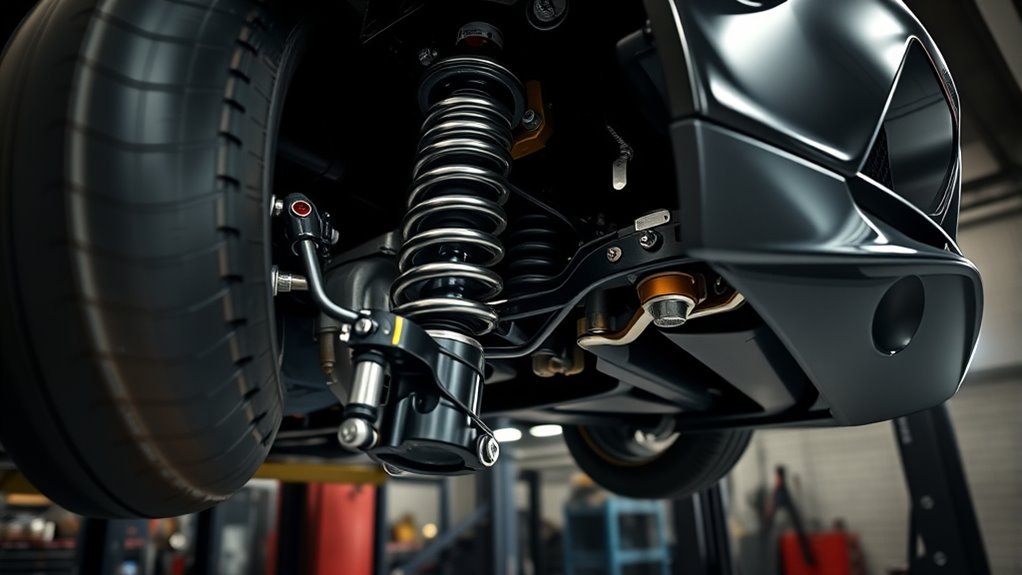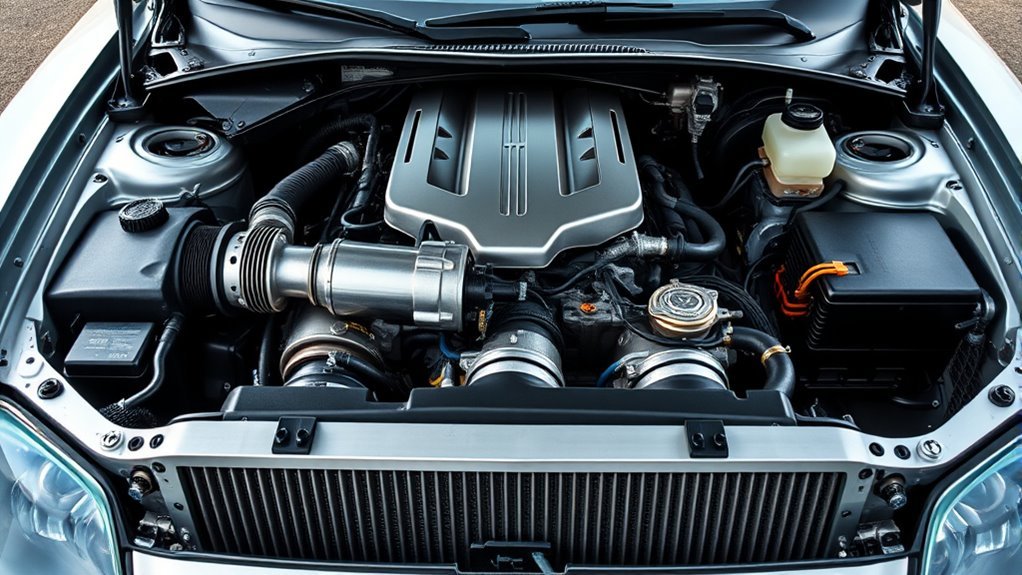
The Supra cooling system is not one universal design. On the A80/MK4, a radiator pressure cap, recovery bottle, thermostat, pump, radiator, and fan system manage engine heat. On the 2020–2026 GR Supra, separate cooling circuits use their own reservoirs and heat exchangers. Start every diagnosis by identifying the generation, model year, engine, production date, and modifications. Then check the failure pattern: overheating at idle points first toward airflow or fan control, while overheating at road speed deserves closer checks of coolant flow, pressure retention, heat-exchanger restriction, trapped air, or excess heat load.
Last updated: August 31, 2026 — 2026 production-date manual listings, GR cooling-circuit guidance, A80 thermostat/cap specifications, internal-link scope, and troubleshooting structure rechecked.
Technical review: [VERIFY: add the real author/reviewer name, relevant hands-on credentials, and review date before publishing.]
Quick Answer
A Supra cooling system moves engine heat into coolant, circulates that coolant through the correct heat exchanger, and releases the heat through airflow. Pressure control raises the coolant’s boiling margin and manages expansion, but the cap and reservoir layout differs between A80/MK4 and GR Supra models. If a temperature warning appears, the gauge reaches the hot range, steam is visible, or coolant is escaping rapidly, pull over safely, shut the engine off, and let the car cool completely. Never open a coolant cap while the system is hot.
Key Takeaways
- Match every procedure and specification to the Supra’s generation, model year, engine, and production date.
- The A80/MK4 uses a radiator pressure cap and recovery bottle; the GR Supra uses separate sealed cooling circuits with their own reservoirs and heat exchangers.
- A80/MK4 factory service data lists an 80–84°C thermostat opening range and a standard radiator-cap relief range of 93–123 kPa.
- Toyota’s GR Supra owner information says gasoline-engine vehicles have two cooling circuits, so check both reservoirs where fitted and only when the engine is cool.
- Diagnose overheating in this order: immediate safety, coolant level and leaks, pressure control, airflow and fans, coolant flow, then internal-engine or modification-related heat load.
At a Glance
| First Step | Identify the generation, model year, engine, and whether the car is stock or modified |
| Time Required | 10–20 minutes for cold visual checks; longer for pressure testing, bleeding, or repairs |
| Difficulty | Beginner for cold visual checks; intermediate or professional for pressure, electrical, flow, or internal-engine diagnosis |
| Useful Tools | Flashlight, gloves, scan tool, infrared thermometer, cooling-system pressure tester, combustion-gas tester, and basic hand tools |
| Stop Driving When | A red temperature warning appears, the gauge enters the hot range, steam is visible, or coolant is rapidly escaping |
Diagnostic Shortcut: Match the Symptom to the First Test
- Hot at idle, better while moving: check fan command, fan operation, shrouding, blocked fins, coolant level, and trapped air first.
- Hot mainly at road speed or under load: check radiator heat transfer, thermostat behavior, coolant flow, pressure retention, ducting, and combustion-gas intrusion.
- Temperature became unstable after cooling-system service: verify the model-specific fill and bleed procedure and recheck cold levels in every circuit.
- Modified or track-driven car: log temperatures by circuit before buying a larger radiator or heat exchanger so the upgrade targets the measured problem.
Which Supra Cooling System Do You Have?
“Supra cooling system” does not describe one universal layout. The A80/MK4 2JZ cars and the 2020–2026 GR Supra use different pressure-control and reservoir designs. Specifications, cap locations, coolant types, fill procedures, fan controls, and bleeding steps are not interchangeable.
| Generation | Cooling Layout | What to Verify First |
|---|---|---|
| A80/MK4 Supra | Engine-coolant circuit with a radiator pressure cap and separate recovery bottle | 2JZ-GE or 2JZ-GTE, transmission type, radiator/cap rating, fan system, and modifications |
| A90/A91 GR Supra | Separate sealed cooling circuits with their own reservoirs, pumps/valves, and multiple heat exchangers | Model year, engine, production date, both reservoir levels where fitted, warning messages, and fault codes |
For the A80/MK4, factory service data lists the thermostat valve opening temperature at 80–84°C and the standard radiator-cap relief pressure at 93–123 kPa. Toyota’s GR Supra owner information says gasoline-engine vehicles have two cooling circuits and instructs owners to check both coolant reservoirs. Toyota currently lists multiple 2026 owner-manual revisions tied to production date, so use the Toyota Supra manual library or the exact factory repair information for the vehicle before opening, filling, bleeding, or modifying the system.
Scope note: This page focuses on cooling-system architecture and diagnosis. For fluid selection and service intervals, use the Supra coolant type guide. For cold-level and top-off steps, use the Supra coolant-level guide. For oil-temperature behavior or track-specific heat management, use the Supra oil-cooling guide and Supra track-temperature guide.
Warning: Never remove a radiator cap or coolant-reservoir cap when the engine is hot. Hot coolant and steam can escape under pressure and cause serious burns.
How the Supra Cooling System Manages Heat
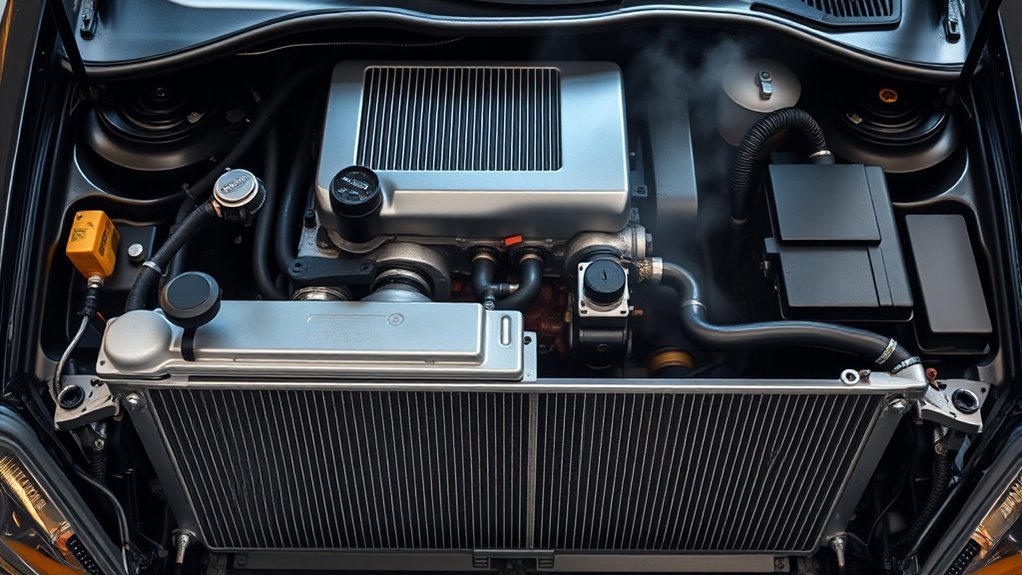
While you’re driving, the Supra’s cooling system carries heat away from the engine so metal parts, oil, seals, and electronics stay within a safe operating range. Coolant absorbs heat in the cylinder head and block, then flows toward the radiator when the thermostat opens. Air passing through the radiator fins removes heat from the coolant before it returns to the engine.
The core jobs are simple even when the plumbing is not: the pump circulates coolant, the thermostat regulates radiator flow during warm-up, the radiator rejects heat, and the fan supports airflow at low road speed. Pressure control differs by generation. The A80 radiator cap works with a recovery bottle, while the GR Supra uses pressurized reservoirs within separate cooling circuits. Turbocharging, automatic-transmission cooling, engine-oil cooling, and the A/C condenser can add heat to the front cooling stack.
Note: Aftermarket single-turbo kits, front-mount intercoolers, thicker radiators, ducting, undertrays, and electric-fan conversions can change airflow. Diagnose the actual setup on your car, not just the stock diagram.
Coolant Flow Step by Step
- Cold start: The thermostat stays closed or mostly closed so the engine warms up quickly.
- Warm-up: Coolant circulates through the engine and bypass passages while temperature rises.
- Thermostat opening: As coolant reaches the thermostat’s rated range, the valve opens and sends more coolant through the radiator.
- Heat rejection: The radiator tubes and fins transfer heat to airflow moving through the front of the car.
- Low-speed support: The fan pulls or pushes air through the radiator when road speed does not provide enough airflow.
- Pressure and expansion: The pressure cap controls system pressure, while the recovery bottle or pressurized expansion tank manages coolant volume as temperature changes.
What Should You Do If Your Supra Overheats?
- Move to safety: Reduce load, turn off the A/C, and pull over as soon as it is safe.
- Shut the engine off: A red warning, hot-range gauge, steam, or rapid coolant loss means you should not keep driving.
- Keep the system closed: Do not remove a radiator or reservoir cap while the engine is hot or pressurized.
- Let the car cool completely: Wait until the engine bay and cooling system are cold before checking reservoir levels or visible leaks.
- Choose repair or towing: Tow the car if coolant is pouring out, the warning returns, the engine runs poorly, the oil looks milky, or you cannot confirm a safe coolant level.
Warning: Do not use a cold-water splash, open a hot cap, or continue driving to “see if it clears.” Rapid temperature change can damage parts, and one severe overheat can cause expensive engine damage.
[Products Worth Considering]

This engine water pump kit is designed to help maintain reliable cooling performance across a wide range of compatible Toyota, Lexus, Scion, and Pontiac vehicles. Built with aluminum and tested for leak-free operation, it offers a direct replacement solution that supports engine efficiency and long-term service life. The kit includes a professional water pump and gasket for a convenient installation-ready repair.

The OEMTOOLS coolant vacuum refill kit helps quickly refill a vehicle’s cooling system while removing trapped air that can lead to overheating and engine damage. It also performs vacuum leak tests to help confirm system integrity and reduce the chance of repeat repairs. With multiple bushings, adapters, and a tapered cone seal, it is designed for flexible use on many radiator and coolant bottle necks.

This all-in-one radiator pressure tester and vacuum refill kit helps diagnose cooling system leaks, measure temperature, and refill coolant efficiently. It includes a wide range of adapters for broad vehicle compatibility, plus a pressure tester, vacuum refiller, thermometer, and storage case for organized use. Designed for DIY mechanics and professionals, it simplifies coolant service while reducing guesswork and unnecessary repairs.
Main Radiator: Design, Placement, and Airflow
The main radiator sits in the front airflow path so incoming air can pass through its fins. Inside the core, hot coolant moves through tubes while heat transfers into the fin pack and then into the air. A clean core, sealed ducting, intact undertrays, and working fans are just as important as radiator size.
On A80/MK4 cars, inspect the radiator core, plastic or aluminum end tanks, hose necks, upper mounts, lower mounts, cap seat, and fan shroud. On modern GR Supra models, also pay attention to the condition of the separate coolant reservoirs and the airflow path through the front heat exchangers.
| Component | Function | Action |
|---|---|---|
| Core | Transfers heat from coolant to air | Inspect fins, clean debris, check for corrosion |
| Tanks | Distribute coolant into and out of the core | Check seams, hose necks and seals |
| Fan/shroud | Improves airflow at idle and low speed | Test operation and confirm shroud fitment |
| Ducting/undertray | Forces air through the heat exchangers | Replace missing panels and seal gaps |
Pro Tip: Before buying a larger radiator, clean the condenser/radiator stack, restore missing ducting, verify the fan shroud, and check that air is not escaping around the core. Airflow problems often look like radiator problems.
[Products Worth Considering]

This coolant thermostat is a direct replacement designed for a wide range of Toyota, Lexus, and Scion vehicles. It helps maintain proper engine temperature, supports reliable cooling system performance, and installs easily without special tools or programming. Built to meet OEM standards, it offers durable, stable operation and dependable fitment for compatible models.

This spill-proof radiator coolant filling funnel kit helps you refill cooling systems cleanly while reducing trapped air pockets that can affect heater and engine performance. It includes a 5-inch extension bar and 45-degree elbow for easier access under shrouds or at awkward angles. Color-matched caps for dedicated adapters make setup simpler and more organized.

This radiator burping funnel kit helps simplify coolant refilling, bleeding, flushing, and spill-free maintenance across a wide range of vehicles. Its translucent body with clear scale supports controlled filling, while multiple adaptors, caps, and extension pieces improve compatibility and access in tight engine bays. The built-in shut-off valve and rubber-gasket design help reduce spills and make cooling system service cleaner and more convenient.
How Do Supra Pressure Caps and Coolant Tanks Differ?
The pressure cap raises the coolant’s boiling margin by keeping the system sealed to its specified pressure. It also protects the system by venting when pressure exceeds the cap rating. The cap design and tank function differ between the A80/MK4 and the GR Supra, so do not treat every coolant reservoir as an unpressurized overflow bottle.
A80/MK4 Radiator Cap and Recovery Bottle
On the A80/MK4, the pressure cap is on the radiator. Factory service data lists a standard relief-valve opening pressure of 93–123 kPa (0.95–1.25 kgf/cm², 13.5–17.8 psi), with 78 kPa (0.8 kgf/cm², 11.4 psi) as the minimum opening pressure before replacement is required.
As the engine heats, expanding coolant can move from the radiator into the separate recovery bottle. During cool-down, the cap’s vacuum valve allows coolant to return. A leaking hose between the radiator neck and bottle can break that recovery cycle even when the main cooling system shows no obvious leak.
GR Supra Pressurized Reservoirs
The modern GR Supra uses pressurized coolant reservoirs as part of separate cooling circuits. The reservoir is not merely a storage bottle; it is part of the active, sealed system. Check the correct reservoir or reservoirs for the exact engine and production date, and never open a reservoir cap while hot.
Do not install a higher-pressure cap as an overheating fix. Higher pressure may delay boiling, but it also increases stress on hoses, plastic tanks, seals, heater components, and clamps. Use the cap specified for the vehicle and test the system rather than choosing a rating by appearance.
| Part | A80/MK4 Role | GR Supra Role |
|---|---|---|
| Pressure cap | Mounted on the radiator; controls pressure and recovery | Mounted on a pressurized reservoir within its cooling circuit |
| Coolant tank | Separate recovery bottle receives and returns expanded coolant | Pressurized expansion reservoir is part of the active circuit |
| Cold-level check | Verify radiator and recovery-bottle level according to the service procedure | Check both reservoirs where fitted according to the owner’s manual |
How Should You Inspect the Expansion or Recovery Tank?
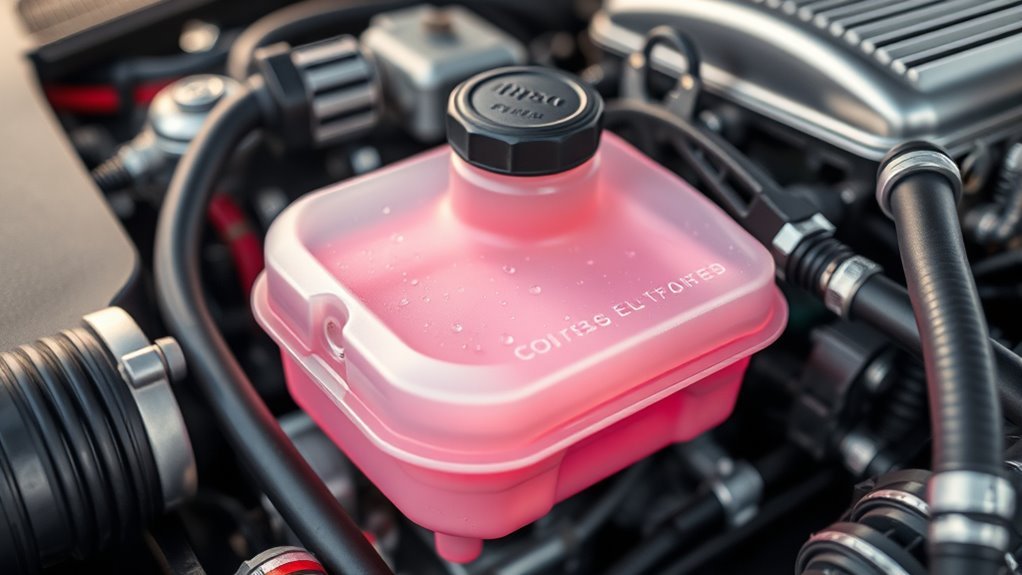
Inspect coolant tanks only when the engine is completely cool. Look for cracks, cloudy or brittle plastic, dried coolant residue, loose hoses, damaged caps, and level changes between cold checks. On the A80, also inspect the small recovery hose from the radiator neck. On the GR Supra, check both reservoirs where fitted because one normal level does not prove the other circuit is full.
A level that drops repeatedly is evidence of a leak, trapped air after service, or an internal fault. Do not keep topping off without diagnosis. Use the correct model-specific coolant and fill procedure; color alone does not prove two coolants are compatible.
How Does the Supra Water Pump Move Coolant?
The water pump is the cooling system’s active circulator. It moves coolant through the engine, radiator, heater circuit, and related passages. If pump flow drops, the radiator can be clean and the thermostat can be new, but the engine may still overheat because heat is not being carried away fast enough.
For the A80/MK4, inspect the pump area for leakage, bearing noise, shaft play, drive problems, and evidence that service work disturbed the timing-belt area. For the GR Supra, use model-specific fault-code and temperature data because pumps, valves, and separate cooling circuits are coordinated differently from the A80 layout. Do not condemn a pump from one temperature reading alone.
Supra Thermostat: Opening Temperature and Symptoms
The thermostat controls when coolant gets full access to the radiator. It stays closed or partly closed during warm-up, then opens as coolant reaches its rated temperature. For A80/MK4 Supra factory service data, the thermostat valve opening temperature is listed as 80–84°C (176–183°F), with valve lift checked at 95°C (203°F).
A stuck-closed thermostat can cause fast overheating because coolant cannot move properly through the radiator. A stuck-open thermostat can make the engine warm up slowly, reduce heater performance, and hurt efficiency. A thermostat that opens late can cause temperature spikes under load.
Warning: Do not remove the thermostat as a “fix” for overheating. Toyota’s A80/MK4 repair information warns that removing the thermostat can reduce cooling efficiency.
How Do the Intercooler, A/C Condenser, and Oil Cooler Affect Supra Cooling?
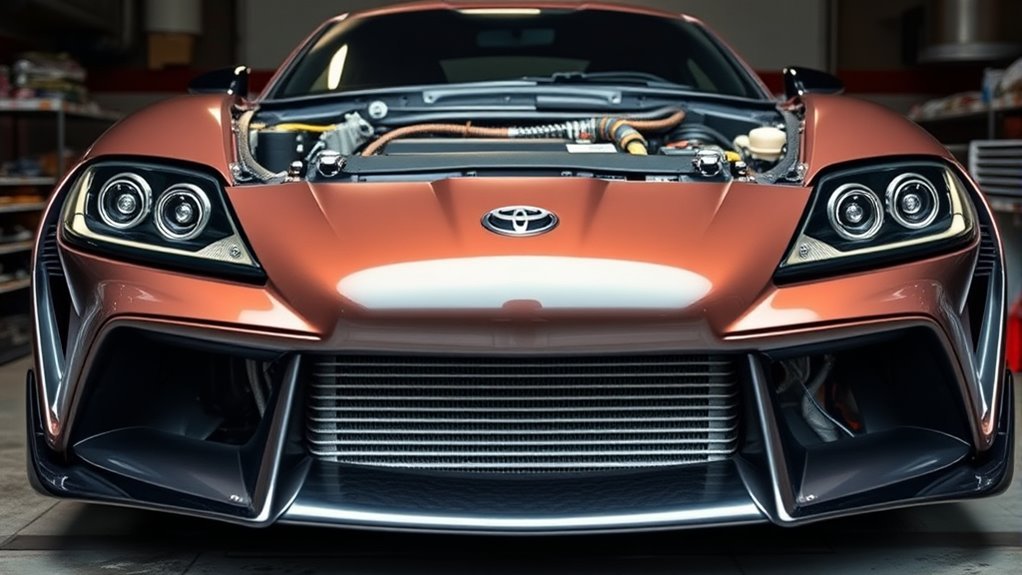
The radiator is not the only heat exchanger in the front of a Supra. The A/C condenser rejects refrigerant heat, turbocharged models use charge-air cooling, and some models or builds use engine-oil or transmission-fluid coolers. On the GR Supra, the charge-air cooler has its own low-temperature coolant circuit. These heat exchangers share the same limited front-end airflow, so blocked fins or poor ducting can raise more than one temperature at once.
On a modified Supra, the cooling stack often changes. A large front-mount intercooler can block radiator airflow if ducting is weak. An oil cooler without a thermostat can overcool oil on the street. A transmission cooler mounted directly in front of the radiator can add heat during track or high-load use. Treat the system as one airflow package, not separate parts.
Do You Need an Auxiliary Radiator or Heat Exchanger?
Do not add auxiliary cooling until logs or repeatable testing show which circuit is too hot. A larger engine radiator will not correct high charge-air temperature, and a larger charge-cooler heat exchanger will not repair an engine-coolant leak. First verify coolant level, pressure retention, thermostat behavior, pump operation, fan control, front-stack cleanliness, ducting, and the correct bleeding procedure.
Additional cooling can be justified for sustained track use, high-power builds, repeated hot-lap temperature rise, or packaging that limits the original heat exchanger. Any added radiator also creates more hose length, coolant volume, joints, bleed points, and possible pressure loss. Choose the part for the measured problem, not because “bigger” sounds safer. If the problem appears only during repeated high-load laps, compare the logged coolant, oil, charge-air, and transmission behavior with the site’s Supra track-temperature guide before changing hardware.
What Supra Cooling Weak Points Are Worth Upgrading?
Upgrades work best when they solve the real weak point. A thicker aluminum radiator can improve capacity, but it will not fix a failed cap, trapped air, poor fan wiring, blocked condenser, missing shroud, or wrong coolant mix. Start by finding whether the problem is pressure, flow, airflow, heat load, or control.
- Radiator core: Upgrade when the stock core is clogged, damaged, too small for the build, or heat-soaked under sustained load.
- End tanks: Replace aging plastic tanks or leaking seams with quality replacements or TIG-welded aluminum where appropriate.
- Fans: Use properly sized fans, relays, fuses, wiring, shrouding, and temperature control. Poor electric-fan conversions often perform worse than a healthy stock setup.
- Hoses and clamps: Replace swollen hoses, soft hoses, cracked heater hoses, weak clamps, and mismatched silicone-hose hardware.
- Ducting: Seal air gaps so incoming air goes through the radiator instead of around it.
- Coolant mix: Use the coolant type and water mix specified for your model and climate. For A80/MK4 service information, Toyota specifies ethylene-glycol-based coolant mixed with demineralized or distilled water and warns against alcohol-type coolant.
[Products Worth Considering]

This coolant electric water pump is designed as a replacement for select Toyota vehicles, helping maintain proper engine cooling performance and reliable temperature control. Built to OE specifications, it offers fitment support for compatible Avalon, Camry, and RAV4 models with 2.5L L4 engines. It also includes cross-reference part numbers for easier matching and comes with after-sales support for covered defects.

This professional water pump kit is designed as a direct OE replacement for select Toyota and Lexus 3.5L V6 vehicles, helping restore reliable engine cooling performance. Built to strict quality standards and tested for leak-free operation, it includes the necessary gasket for easier installation and a secure fit. It offers a practical upgrade for drivers seeking dependable cooling system maintenance and long-lasting performance.
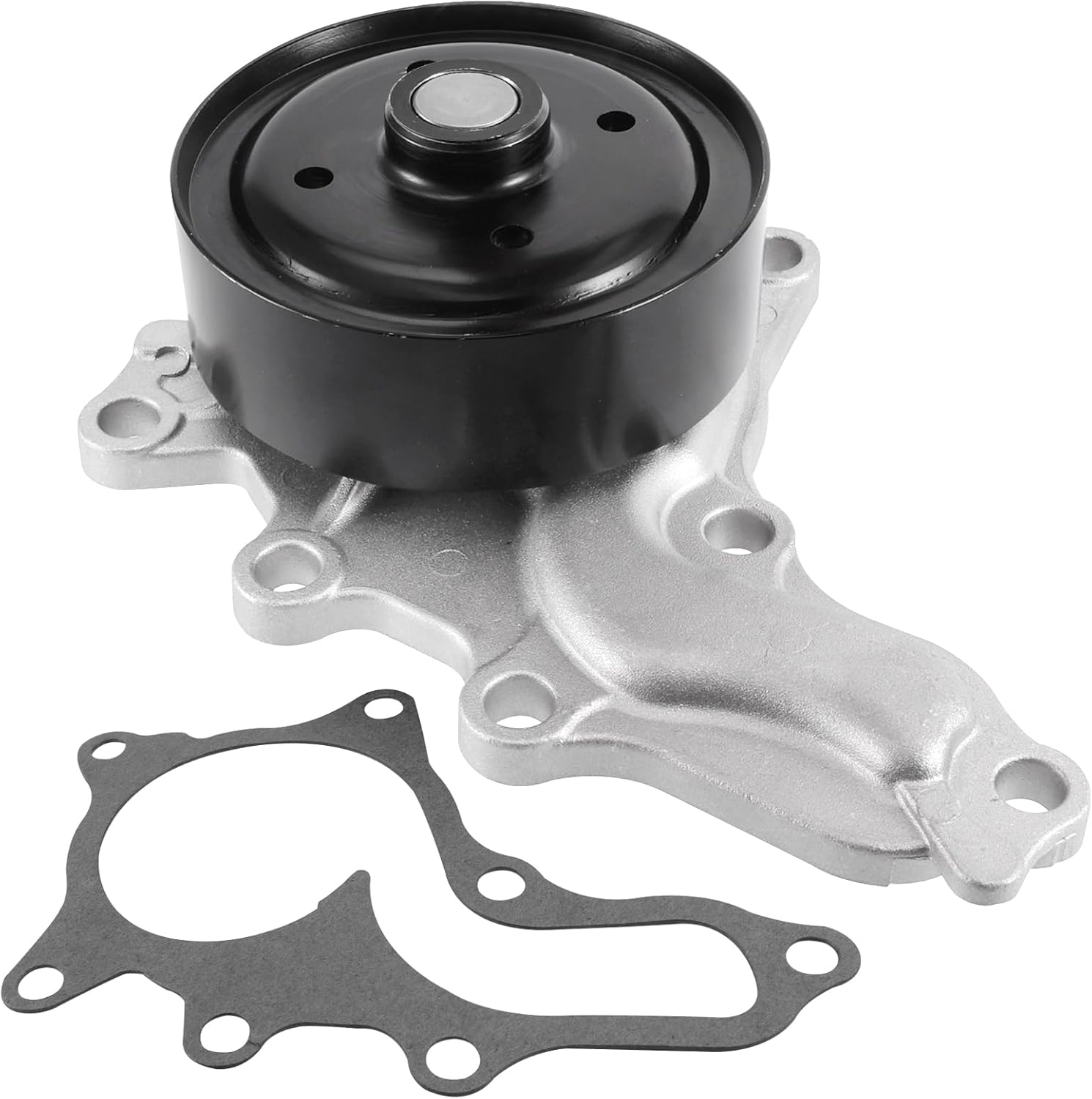
This AW6252 water pump is designed for a wide range of Toyota, Scion, and Lexus applications, helping maintain reliable engine cooling across compatible models. It features case hardened bearings for durability, a graphite-impregnated gasket for a secure seal, and 100% function and leakage testing for dependable performance. Built in TS16949 certified facilities, it offers a strong replacement option backed by service support.
Why Is My Supra Overheating?
Start with the conditions that trigger the problem. Overheating at idle points first toward low-speed airflow or fan control. Overheating mainly at road speed points more toward restricted heat transfer, poor coolant flow, trapped air, combustion-gas intrusion, or excess heat load. A problem that starts immediately after coolant service moves trapped air and an incorrect bleed procedure higher on the list. These patterns guide testing; they do not prove a failed part by themselves.
Quick Visual Inspections
Inspect the cooling system only after it is cold. Look for dried coolant residue, wet hose ends, cracked plastic, damaged fins, loose clamps, and missing undertray or ducting panels. Do not squeeze or handle hot pressurized hoses as a diagnostic test.
- Verify coolant level at the reservoir or reservoirs when the engine is cool.
- Check the radiator, tank seams, hose necks, heater hoses, drain plugs, and water pump area for leaks.
- Look for collapsed lower radiator hoses or soft hoses that balloon under pressure.
- Inspect the radiator cap or pressure cap seal and confirm the correct rating.
- Check the radiator and condenser fins for dirt, bugs, bent fins, leaves, or track debris.
Basic Fluid Checks
Coolant should be clean and free from oil, heavy rust, scale, or sludge. Milky or oily coolant needs diagnosis before a routine flush. Repeated bubbling, rapid hose pressurization from a cold start, unexplained coolant loss, white exhaust after warm-up, or repeat overflow can justify a combustion-gas test and internal-engine diagnosis.
If coolant is low, use only the coolant type and mixture specified for the exact Supra. Then find why the level dropped. Do not mix coolant by color, add stop-leak as a substitute for repair, or assume conventional Toyota coolant is correct for every GR Supra. See the site’s Supra coolant type and service interval guide for the model-specific fluid discussion.
Fan and Thermostat Tests
Fan and thermostat testing helps separate airflow problems from flow problems. Watch coolant temperature with a scan tool or accurate temperature reader instead of relying only on the dash gauge.
- Read coolant temperature with a scan tool and compare it with the dash warning or gauge behavior.
- Confirm thermostat operation against the specification for the exact model and engine.
- Use an infrared thermometer or thermal camera to compare radiator inlet, outlet, and core temperature patterns without touching hot parts.
- Verify commanded and actual fan operation at idle, with A/C demand, and when coolant temperature rises.
- Check fan power, grounds, fuses, relays, control modules, and connectors under electrical load.
- Pressure-test the cold system and cap when coolant disappears, residue is visible, or the system will not hold level.
Symptom-to-Cause Guide
| Symptom | Likely Causes | First Check |
|---|---|---|
| Overheats at idle | Fan, shroud, relay, low coolant, air pocket | Fan operation and coolant level |
| Overheats at highway speed | Blocked radiator, weak pump, thermostat, airflow ducting | Radiator airflow and thermostat behavior |
| Coolant pushed into overflow | Weak cap, overfill, air pocket, combustion gas, overheating | Cap pressure test |
| Slow warm-up | Thermostat stuck open, wrong thermostat, fan control issue | Thermostat temperature test |
| Temperature spikes after hard driving | Heat soak, airflow blockage, low coolant, wrong circuit upgraded, inadequate heat exchanger | Temperature logs by circuit and cooling-stack inspection |
| Hard hoses, repeat overflow, or coolant loss with no external leak | Trapped air, cap fault, combustion-gas intrusion, internal leak | Cold pressure test and combustion-gas test |
How Do Air Pockets Affect a Supra Cooling System?
Air reduces coolant contact with hot metal, interrupts pump flow, and can create unstable temperature readings or heater output. Air often enters after a hose, thermostat, radiator, pump, reservoir, or coolant circuit is opened.
Do not use one generic “burping” method for every Supra. The A80 and GR Supra have different fill points, bleed hardware, pump controls, and circuit layouts. Follow the factory procedure for the exact model, use a vacuum-fill tool when the procedure permits it, and recheck every cold level after a complete heat cycle. The detailed cold-level and top-off steps belong in the separate Supra coolant-level guide.
How Can You Prevent Supra Cooling Problems?
Check cold coolant levels regularly and before track days, summer road trips, dyno sessions, or long high-load drives. Inspect hoses, clamps, tanks, cap seals, front heat exchangers, ducting, and undertrays during routine service. Also set the correct Supra tire pressures before track or high-speed use.
Use the owner’s manual or factory repair information for coolant type, replacement interval, fill procedure, cap rating, torque specifications, and bleed steps. On a modern GR Supra, check both coolant reservoirs where fitted. On an A80, verify the radiator remains full when cold and that the recovery hose and bottle can return coolant during cool-down.
- Schedule diagnosis now: repeated coolant loss, sweet odor, dried residue, fault codes, unstable heater output, or recurring temperature rise.
- Stop driving and arrange towing: red temperature warning, steam, rapid leak, coolant mixed with oil, misfire after overheating, or another overheat after topping off.
- Document modifications: radiator, fan, intercooler, oil cooler, thermostat, cap, ducting, tune, and undertray changes can alter both heat load and airflow.
Frequently Asked Questions
How does a Toyota Supra cooling system work?
Coolant absorbs engine heat, the pump circulates it, the thermostat regulates radiator flow, and the radiator releases heat into moving air. Fans add airflow at low speed, while the pressure cap and coolant tank control pressure and expansion. The A80 and GR Supra use different cap, reservoir, and circuit layouts.
How many coolant reservoirs does a GR Supra have?
Toyota owner information says gasoline-engine GR Supra models have two cooling circuits and instructs owners to check both coolant reservoirs. Exact reservoir location and hardware can vary by engine and production date, so use the manual for the specific vehicle.
What temperature does the MK4 Supra thermostat open?
A80/MK4 Supra factory service data lists the thermostat valve opening temperature at 80–84°C (176–183°F), with valve lift checked at 95°C (203°F). Match replacement parts to the exact engine and service specification.
Why does a Supra overheat at idle but cool down at speed?
That pattern points first toward weak low-speed airflow: a fan, fan control, shroud, blocked cooling stack, or missing ducting. Low coolant, trapped air, thermostat faults, or pump problems can produce similar symptoms, so confirm fan operation and coolant level before replacing parts.
What are common Supra cooling problems?
Common faults include low coolant, external leaks, weak caps, damaged tanks, trapped air, thermostat failure, poor fan operation, blocked radiator fins, missing ducting, pump problems, and internal combustion-gas leakage. Modified cars can also suffer from a heat exchanger that blocks airflow or an upgrade aimed at the wrong circuit.
Should I upgrade the Supra radiator first?
Not usually. First confirm coolant level, pressure retention, thermostat operation, pump condition, fan performance, bleeding, and airflow ducting. Upgrade only after testing shows the original radiator or a specific cooling circuit cannot control temperature under the car’s real use.
Can I drive a Supra with an overheating warning?
No. Pull over safely and shut the engine off. Let it cool completely without opening a hot cap. Arrange towing if steam is visible, coolant is escaping, the warning returns, the engine runs poorly, or you cannot confirm a safe coolant level.
Why does a Supra overheat after coolant service?
If temperature behavior changes after a radiator, hose, thermostat, pump, reservoir, or coolant service, trapped air or an incomplete bleed is a strong first suspect. Recheck every cold reservoir level and follow the factory fill-and-bleed procedure for the exact generation, engine, and cooling circuit. Also inspect the repaired area for leaks before assuming a new component has failed.
Conclusion
A Supra cooling diagnosis starts with the correct generation. The A80/MK4 uses a radiator cap and recovery bottle, while the GR Supra uses separate pressurized cooling circuits and reservoirs. That difference changes how you check levels, test pressure, bleed air, and choose upgrades.
If the car overheats, stop driving, let it cool completely, and test the system in order: coolant level and leaks, cap and pressure retention, airflow and fan control, thermostat and pump flow, then internal-engine or modification-related heat load. Replace or upgrade a part only when the evidence points to that part or circuit.
Sources
- Toyota 2026 Supra Manuals and Warranties — current official manual library showing multiple owner-manual revisions by production date.
- Toyota 2026 Supra Owner’s Manual (OM9AE47U) — coolant safety, reservoir checks, cooling-circuit guidance, and coolant requirements for that production revision.
- Toyota Technical Information System — official access point for factory repair manuals, service specifications, diagnostic procedures, and wiring information.
- Toyota Supra 2JZ Cooling-System Repair Manual (archived copy) — A80/MK4 thermostat inspection, radiator-cap test procedure, and cooling-system service data.
- Toyota Support: Obtaining Manuals and Repair Information — confirms that repair manuals and wiring diagrams are available through Toyota TIS.