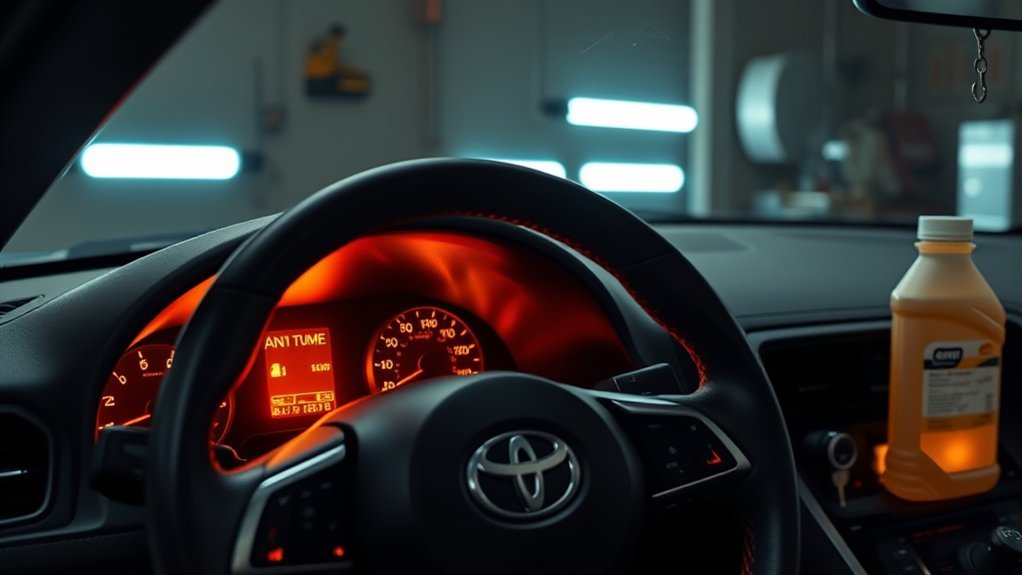
When your Toyota Supra low coolant warning activates on the dashboard or infotainment screen, your engine’s cooling circuit has dropped below its safe operating volume. Whether you drive a classic MKIII (A70) displaying the amber radiator “birdcage” icon or a modern MKV GR Supra (A90/A91) flashing an iDrive check-control alert, acting immediately prevents warped aluminum cylinder heads and blown head gaskets.
Quick Answer
If your Toyota Supra low coolant warning comes on, pull over safely, turn off the engine, and wait 15 to 30 minutes before opening the hood. Check the cold fluid level against the reservoir MIN and MAX lines, inspect hoses and radiators for leaks, and top off with the factory-specified 50/50 coolant mixture.
Why the Low Coolant Warning Matters
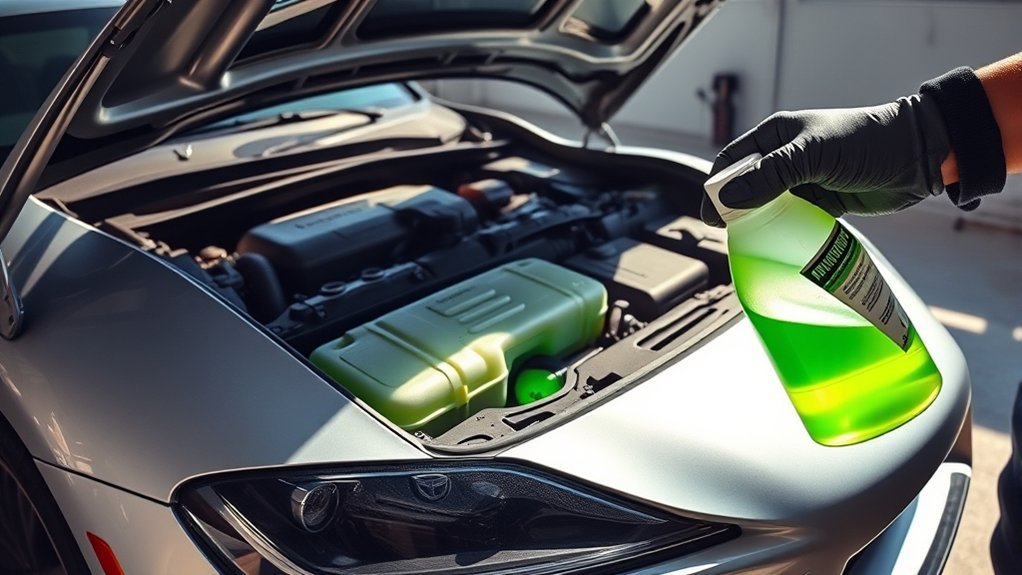
The low coolant warning light is an early defense system that triggers before your engine temperature gauge spikes into the red. Because every generation of the Toyota Supra pairs an inline-six or turbocharged engine with an aluminum cylinder head, even brief overheating can warp the head surface or score cylinder walls.
A modern automotive cooling system is sealed and pressurized to raise the boiling point of the fluid above 250°F (121°C). Coolant does not simply evaporate during normal driving, so a drop in level almost always points to trapped air pockets, a venting reservoir cap, a weeping hose connection, or an internal leak. Ignoring the alert or repeatedly topping off the tank without finding the source risks head gasket failure, turbocharger heat soak, or complete engine seizure.
Common Causes of Coolant Loss in the Supra
A drop in coolant level stems from either trapped air escaping the system or physical fluid loss through external and internal failure points. Identifying which component is failing helps you stop minor seepage before it turns into a roadside breakdown.
| Cause | Description |
|---|---|
| Air Pockets & Factory Underfill | Trapped air in dual-circuit or heater cores self-bleeds over time, causing the reservoir level to drop suddenly on cold mornings. |
| Defective Hose Clamps & Caps | Weak spring clamps or a worn expansion tank cap seal allow pressurized vapor to escape once the system reaches 1.1 to 1.5 bar. |
| Blown Head Gasket | Allows high-pressure combustion gases to push coolant out of the overflow tank or burn coolant inside the cylinders. |
| Heater Core & Rear Head Hoses | Rubber hoses routed behind the cylinder head against the firewall degrade from extreme exhaust and turbocharger heat. |
| Water Pump & Housing Leaks | Weeping water pump shaft seals or cracked plastic oil filter and thermostat housings lose fluid only while under operating pressure. |
Because the Toyota Supra has evolved across very different engine platforms, the most likely cause of a low coolant alert depends heavily on your car’s generation:
| Supra Generation | Engine Platform | Factory Coolant Type | Primary Low-Coolant Culprit |
|---|---|---|---|
| MKIII (1986.5–1992 A70) | 3.0L 7M-GE / 7M-GTE | Toyota Long Life Red (50/50 mix) | Head gasket failure (58 ft-lbs factory head bolt torque), rear 90-degree heater hose, or stuck reservoir float sensor |
| MKIV (1993–1998 A80) | 3.0L 2JZ-GE / 2JZ-GTE | Toyota Long Life Red or Super Long Life Pink | Cracked plastic radiator top tank, aging turbo coolant feed lines, or weeping water pump weep hole |
| MKV GR Supra (2020+ A90/A91) | 3.0L B58 / 2.0L B48 | Frostox HT-12 (Green/Magenta) or G48 (Blue) 50/50 | High-temperature expansion tank cap evaporation, trapped factory air pockets, water pump seal, or stone punctures in front auxiliary radiators |
Immediate Steps to Take When the Light Activates
When the low coolant warning light turns on, reduce your throttle load immediately, watch the temperature gauge, and pull over in a safe location. Turn off the engine and let the cooling system depressurize for 15 to 30 minutes before inspecting the reservoir or adding fluid.
Warning: Never twist open a radiator cap or pressurized expansion tank cap while the engine is hot. Pressurized coolant sits at 16 to 22 psi (1.1 to 1.5 bar) and can flash-boil and spray scalding liquid on contact with outside air. Pouring cold coolant into a hot engine can also crack or warp an aluminum cylinder head.
Safely Open The Hood
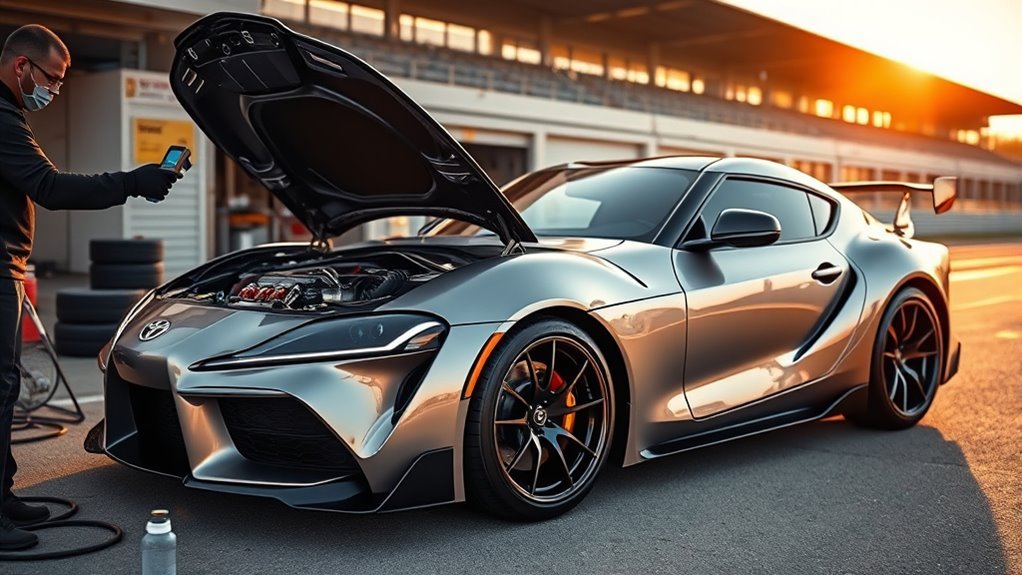
Before unlatching the hood, turn the ignition off and wait 15 to 30 minutes for under-hood temperatures to drop. If you see steam rising from the grille or smell the sweet smell of burning ethylene glycol, keep the hood closed until the steaming stops completely.
- Park on level ground, set the parking brake, and switch the engine off.
- Pull the interior hood release lever (pull twice on 2020 and newer GR Supra models), then lift the hood slowly while standing to the side to avoid residual heat.
- Feel the upper radiator hose with a gloved hand only after waiting; if it still feels rock-hard and hot, the system remains under pressure and needs more cooling time.
Check Coolant Level First
Once the engine is cool to the touch, perform a visual reservoir inspection to verify how much fluid is missing. On classic MKIII and MKIV Supras, inspect the translucent plastic overflow bottle mounted near the radiator and check the fluid level against the FULL and LOW (or MIN and MAX) markings on the side.
On the 2020 and newer MKV GR Supra, open the black caps only after the engine is cold and check both circuits: the larger high-temperature expansion tank (which cools the engine block and turbocharger and triggers the dashboard warning) and the smaller low-temperature reservoir (which cools the water-to-air charge air cooler). Inside the neck, verify whether the yellow level indicator sits at the MAX tab or has dropped below the MIN step.
Add Coolant If Necessary
If the cold fluid level sits below the minimum mark, top off the tank slowly to prevent air pockets from entering the lines. Mixing incompatible coolant chemistries can form a thick gel that clogs radiator passages and heater cores, so always match the factory specification in your owner’s manual:
- MKIII and MKIV Supras (1986.5–1998): Use an ethylene-glycol based coolant free of silicates, borates, and nitrites, such as Toyota Long Life (Red) diluted 50/50 with distilled water or pre-mixed Genuine Toyota Super Long Life Coolant (Pink).
- MKV GR Supra (2020–present): Use BMW-approved Frostox HT-12 (Green or Magenta) diluted 50/50 with distilled water, or the backward-compatible G48 (Blue) specification if originally filled with G48. Never put Toyota Pink or Red coolant into a B58 or B48 GR Supra.
- Pour slowly to the cold MAX mark: Fill only to the cold maximum line so the fluid has room to expand when heated, then tighten the cap until it clicks or locks against its stop.
- Emergency roadside top-up: If you are stranded without the correct coolant, add only distilled water to reach a repair shop, then have the system drained and refilled to restore the 50/50 antifreeze ratio.
Diagnosing Cooling System Issues
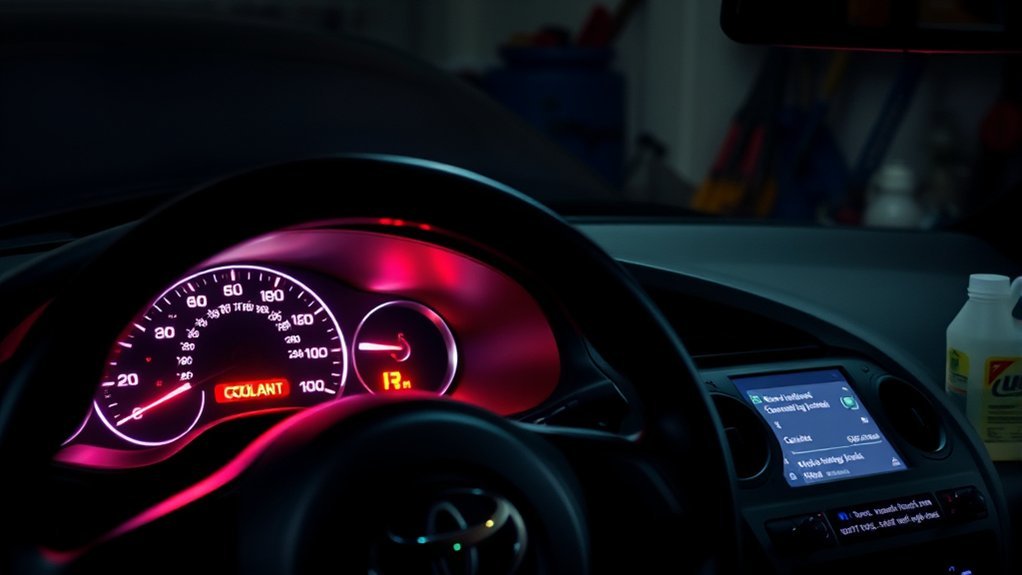
Diagnosing cooling system issues in your Toyota Supra requires matching when the warning light appears with physical clues around the engine bay and exhaust. Because slow leaks often evaporate on hot engine parts before hitting the ground, combining visual checks with pressure and chemical testing is the most reliable way to find the fault.
Common Symptoms Observed
Pay close attention to the exact conditions when the low coolant warning light illuminates, as the symptom pattern narrows down the faulty component:
- Warning light triggers only on cold mornings or during hard cornering: Usually indicates the fluid level is sitting right at the minimum threshold sensor due to minor evaporation or a small air pocket settling overnight.
- Sweet smell from the vents or white exhaust smoke on cold starts: Points to coolant leaking onto hot exhaust manifolds, seeping from the cabin heater core, or burning inside the combustion chambers.
- Gurgling or sloshing waterfall noise behind the dashboard at idle: Signals trapped air pockets circulating through the heater core pipes, a classic early sign of combustion gas entering the cooling system.
- White, crusty residue around the reservoir cap or water pump: Shows dried coolant deposits where hot vapor or liquid has been escaping under driving pressure.
Potential Causes Identified
Once you observe the symptoms, match the behavior to its specific mechanical cause and corrective action:
| Cause | Description | Solution |
|---|---|---|
| Trapped Air Pockets | Air locks in the cylinder head or heater core displace liquid and cause erratic temperature spikes and low-level alerts. | Bleed the cooling system via the bleeder screw or electric pump cycle |
| Pinhole Hose or Radiator Leaks | Gradual fluid loss from rubber hoses, plastic end tanks, or rock-damaged auxiliary coolers under the front bumper. | Pressure test to 1.5 bar (22 psi), replace damaged part, and install rock guards |
| Defective Level Sensor | A waterlogged float in an MKIII overflow bottle or a faulty reed switch in an MKV expansion tank triggers false warnings when full. | Test sensor continuity with a multimeter and replace the sensor or tank |
| Cross-Contaminated Oil or Coolant | Milky, coffee-colored residue under the oil cap or oily film floating in the coolant reservoir indicates an internal breach. | Stop driving immediately; inspect the head gasket and engine oil cooler |
Recommended Troubleshooting Steps
Follow a step-by-step diagnostic order from simplest to most thorough so you do not replace parts unnecessarily:
- Inspect cold levels and cap seals: Check both the radiator (on classic models) and the expansion tank when completely cold. Inspect the rubber O-rings on the cap for cracks or chalky white buildup.
- Perform a cooling system pressure test: Attach a manual pressure tester to the reservoir neck and pressurize the cold system to its rated cap specification (typically 13 to 16 psi on classic models or 22 psi / 1.5 bar on the MKV B58). If the gauge drops over 10 minutes, inspect the water pump, heater hoses, oil filter housing, and radiator seams with a flashlight.
- Bleed trapped air pockets: On classic Supras, elevate the front end slightly and use a spill-free funnel at the radiator neck with the cabin heater set to maximum heat until bubbles stop rising. On 2020 and newer GR Supras, run the electronic bleeding routine before topping up.
- Run a block combustion leak test: If coolant disappears with no external drip and the overflow tank bubbles, use a chemical block tester with blue bromothymol-blue test fluid over the reservoir opening. If exhaust hydrocarbons turn the blue fluid yellow or green, combustion gases are leaking past the head gasket. On MKIII 7M-GE and 7M-GTE engines, factory head bolts were torqued to only 58 ft-lbs (78 Nm), making cylinder #5 and #6 head gasket leaks a well-known failure point that requires resurfacing and torquing upgraded bolts or studs to roughly 72 ft-lbs (97 Nm).
Pro Tip: On a 2020 or newer GR Supra (B58/B48), never bleed the cooling system by idling with the cap off. Instead, connect a battery charger, press the Start button three times without touching the brake to enter diagnostic mode, set the cabin heater to maximum temperature with the fan on its lowest speed, turn on the low-beam headlights, and hold the accelerator pedal to the floor for 10 seconds. The electric water pump will cycle automatically for about 11 minutes to purge trapped air.
Simple Tips to Keep Your Coolant Levels Up
Consistent preventive maintenance keeps your cooling system sealed and stops minor seepage from triggering a dashboard warning. Experts at AAA recommend that drivers check coolant levels every six months when the engine is completely cold, as well as before any track day or long road trip.
| Task | Frequency | Notes |
|---|---|---|
| Check cold coolant levels | Every 5–6 months (or monthly if driven hard) | Always check on level ground before the first start of the day so thermal expansion does not skew the reading. |
| Inspect common leak points | At every oil change (every 5,000–6,000 miles) | Check the expansion tank cap threads, upper neck seam, water pump area, rear heater hoses, and exposed front bumper coolers. |
| Top off with a 50/50 mixture | As needed | Use a 50/50 blend of distilled water and factory-approved coolant (never tap water, which causes mineral scale and electrolysis). |
| Monitor cabin heat and odors | Regularly while driving | Lukewarm cabin heat at idle or a sweet maple-like odor is often the earliest warning of dropping coolant volume. |
| Pressure test and flush fluid | Pressure test annually; flush every 3–5 years | Old coolant loses its anti-corrosion additives and turns acidic, eating away at aluminum cylinder head passages and gaskets. |
When to Call a Pro for Your Coolant Issues?
While a one-time top-up of a few ounces can resolve a minor factory air pocket or seasonal evaporation, recurring coolant loss always requires professional diagnostic equipment. Schedule an inspection with a qualified Toyota or BMW-certified technician immediately if you notice any of these warning signs:
A sealed cooling system should never consume fluid regularly; if you have to top off your Toyota Supra’s reservoir more than once in a season, a pressure or combustion leak is present and needs professional repair.
- Frequent coolant refills: Needing to add fluid every few weeks points to a pressurized leak at the water pump, oil filter housing, radiator, or head gasket.
- Active overheating or sweet-smelling puddles: Any rise in the temperature gauge above the midpoint or green, pink, red, or blue puddles beneath the engine bay means the car should be towed rather than driven.
- Cold air from the cabin heater accompanied by gurgling: Indicates a severe air lock where coolant is no longer reaching the top of the cylinder head and heater core.
- Milky oil residue or pressurized radiator hoses after sitting overnight: Residual pressure in the upper radiator hose the next morning is a telltale sign that combustion gas is pressurizing the cooling system through a compromised head gasket.
Note: Ethylene glycol coolant is highly toxic to humans and pets despite its sweet smell and taste. Always wipe up spills immediately, store spare bottles in sealed containers out of reach, and dispose of drained coolant at an authorized automotive recycling center.
Frequently Asked Questions
How to Fix Low Coolant Warning Light?
To fix the low coolant warning light, let the engine cool completely for 15 to 30 minutes, check the expansion tank, and refill it to the MAX mark with the manufacturer-specified 50/50 coolant mixture. If the warning returns, perform a 1.5-bar cooling system pressure test to locate hidden leaks in the hoses, water pump, or radiator.
How Do You Fix Low Coolant Levels?
Fix low coolant levels by topping off the cold reservoir with a 50/50 blend of distilled water and factory-approved antifreeze, then bleeding any trapped air pockets from the system. Always inspect the reservoir cap O-rings, radiator seams, and heater hoses so you repair the root leak rather than just masking the symptom.
Can I Still Drive My Car if the Coolant Level Is Low?
No, you should not continue driving when the low coolant warning activates. Low fluid creates steam pockets around the cylinders and turbocharger that can warp the aluminum cylinder head or blow the head gasket before the temperature gauge even spikes.
Why Is My Low Coolant Light on but the Coolant Is Full?
If your low coolant light stays on when the reservoir is full, the culprit is usually a stuck magnetic float or faulty level sensor inside the expansion tank. On 2020 and newer GR Supras, also make sure you checked the larger high-temperature tank rather than only the smaller low-temperature intercooler reservoir.
What Coolant Does a Toyota Supra Use?
Classic MKIII and MKIV Supras use ethylene-glycol Toyota Long Life (Red) or pre-mixed Toyota Super Long Life (Pink) coolant. The 2020 and newer MKV GR Supra (A90/A91) uses BMW-specification Frostox HT-12 (Green or Magenta) or G48 (Blue) mixed 50/50 with distilled water.
Why Does the MKV GR Supra Get a Low Coolant Warning With No Visible Leak?
Many MKV GR Supras trigger a low coolant alert between 5,000 and 15,000 miles because small air pockets left from factory filling self-bleed into the expansion tank, or because vapor slowly escapes past the high-temperature reservoir cap under high turbocharger heat. Topping up the cold tank and inspecting the cap threads for white residue usually resolves it.
Conclusion
A Toyota Supra low coolant warning is an alert you should always address before the temperature gauge climbs. Wait for the engine to cool completely, check the reservoir level on flat ground, and top off only with the exact 50/50 coolant formula specified for your generation. If the level drops a second time, schedule a cooling system pressure test and combustion block check right away so your Supra stays reliable on the road and track.
Sources
- AAA Automotive: Overheating warning signs, sweet ethylene-glycol odor, and safe roadside cool-down procedures.
- Toyota Scheduled Maintenance Guide: Factory ethylene-glycol coolant requirements and cooling system service intervals.
- Toyota Genuine Parts (Super Long Life Coolant #00272-SLLC2): Factory pre-mixed 50/50 coolant specifications and corrosion protection standards.
- AAA Club Alliance Maintenance Schedule: Six-month cold-engine coolant reservoir inspection interval and pressurized cap safety.