Managing track temperatures in a Toyota GR Supra is mostly about controlling heat before the ECU, fluids, tires, or driver confidence force the session to end. The MkV Supra’s turbocharged engine is strong, but repeated high-load laps can raise oil, coolant, charge-air, transmission, brake, and fuel temperatures quickly. The safest plan is simple: inspect the car before every session, log the right data, run shorter stints, and add cooling upgrades in the order that solves the problem your logs actually show.
Quick Answer
To keep a Supra cool on track, start with fresh Toyota-spec synthetic oil, verified coolant level, clean heat exchangers, and a data logger. Watch oil, coolant, intake-air, and transmission temperatures, then cool down before warnings appear. If temps still climb, prioritize a heat exchanger, auxiliary radiators, transmission cooler, and venting based on your logs.
Key Takeaways
- Track heat is not one problem; oil, coolant, intake-air, transmission fluid, brakes, and fuel temperature all need attention.
- Use the factory-recommended oil specification unless your builder, tuner, or track-focused service plan calls for a documented alternative.
- The GR Supra uses an 8-speed automatic or 6-speed manual, not a DCT, so transmission-cooling advice should match the actual gearbox.
- Aftermarket cooling parts help most when they are chosen from real log data, not installed blindly.
- Warnings, rapid temperature spikes, falling oil pressure, or repeated limp-mode events mean the session should end until the cause is fixed.
At a Glance
| Time Required | 30–60 minutes for pre-track checks; more for cooler installation and testing |
| Difficulty | Beginner for inspections and logging; intermediate to advanced for cooling upgrades |
| Tools Needed | Tire gauge, torque wrench, OBD/CAN logger, flashlight, fluid inspection tools, basic hand tools |
| Cost | Low for fluids and logging; moderate to high for heat exchangers, radiators, coolers, and ducting |
How Heat Affects Your Supra: Oil, Coolant, Transmission, and IATs
When you push a Supra on track, heat becomes the limiting variable. The engine can make strong power, but repeated full-throttle pulls and heavy braking load several systems at once. Oil protects the bearings and turbocharger, coolant removes engine heat, the charge-air system controls intake-air temperature, and the transmission fluid protects shift quality and internal parts.
The 2025 GR Supra 3.0 uses a turbocharged inline-six rated at up to 382 horsepower and 368 lb-ft of torque, with manual and automatic transmissions available, according to Toyota’s official newsroom. That performance is why heat management matters. The harder the car works, the less margin you have for old fluid, blocked airflow, heat-soaked charge-air cooling, or weak data.
Warning: Do not treat any single internet temperature number as a factory limit. Use the owner’s manual, dashboard warnings, oil-pressure behavior, coolant warnings, and your own logs. If the car warns, pulls power repeatedly, misfires, loses pressure, or shows rapid temperature spikes, stop the session and inspect it.
Engine Oil Temperature
Oil temperature is usually the first number track drivers watch because the turbocharged B58-style engine works hard under sustained load. Hot oil thins, oxidizes faster, and can lose protection if it is old, diluted, or repeatedly overheated. Toyota’s support documentation lists 0W-20 C5 synthetic oil as the recommended oil for the GR Supra, so start with the correct specification before making any track-use changes.
For track use, log oil temperature by lap and by session. Instead of chasing one universal number, build a pattern: ambient temperature, session length, peak oil temperature, cooldown behavior, and whether the car reduced power. If oil temperature climbs faster every session or does not recover on cooldown laps, reduce stint length before adding more power.
Coolant Temperature and Pressure
Coolant temperature tells you whether the engine’s main heat-rejection system can keep up. A healthy system needs the right coolant level, proper concentration, clean heat exchangers, working fans, sealed caps, and no trapped air. Coolant pressure problems are just as important as temperature problems because a weak cap, leak, or air pocket can reduce boiling margin.
Check the coolant reservoir when the car is cold, inspect hoses and caps, and confirm that the front cooling stack is not packed with rubber debris, grass, leaves, or gravel. Aftermarket front-mount heat exchangers and auxiliary radiators only work well when air can actually pass through them.
Intake-Air Temperature
Intake-air temperature, often shortened to IAT, matters because hotter air is less dense and increases knock risk. When IAT rises, the ECU may reduce timing or boost to protect the engine. That feels like the car suddenly stops pulling as hard even though nothing “broke.”
Because the Supra uses a charge-air cooling system, heat exchanger capacity, coolant flow, airflow through the nose, ambient temperature, and turbo efficiency all affect IAT. Log pre-session, mid-session, and end-of-session IAT so you can see whether the car is recovering between laps or stacking heat every lap.
Transmission Temperature
The automatic MkV Supra uses an 8-speed automatic transmission, not a dual-clutch transmission. Under repeated high-load laps, transmission fluid can still get hot enough to affect shift quality. Slower shifts, harshness, delayed response, or warnings are signs to cool the car and review logs.
If the car is automatic and sees frequent track use, a dedicated transmission cooler becomes more important as power, tire grip, ambient temperature, and session length increase. For manual cars, clutch temperature, fluid condition, and driver technique become the larger focus.
Pre-Track Checklist: Fluids, Sensors, and Quick Fixes to Avoid Limp Mode
Before you drive hard, treat the pre-track inspection like a safety system. Many “limp mode” complaints come from preventable issues: low oil, degraded fluid, blocked airflow, loose caps, sensor faults, fuel starvation, or temperatures that were ignored too long.
[Products Worth Considering]

Castrol EDGE 0W-20 advanced full synthetic motor oil is engineered for drivers seeking strong wear protection, excellent viscosity control, and thermal stability. It delivers superior performance in critical engine areas, including fuel economy, high-temperature protection, sludge control, and wear defense. Designed for extended oil-change intervals, it helps keep modern engines running smoothly under demanding conditions.

These adjustable oil filter pliers are designed to help remove engine filters, conduit, and fittings with better reach and control in tight spaces. The bent head design improves access, while soft nonslip grips add leverage and comfort during use. Built with high carbon steel and a Permalock fastener, they offer dependable strength and long-lasting performance.

Chemical Guys Tire Kicker delivers a customizable tire shine that ranges from a subtle satin look to a deep wet gloss with layered application. Its water-based, dry-to-the-touch formula helps refresh rubber without greasy residue or sling, while the included Wonder Wave applicator spreads dressing evenly across tire sidewalls for a polished finish.
Oil and Coolant Check
Start with oil level and condition. Use the correct oil specification, check the level on a level surface, and carry extra oil that matches what is already in the engine. If the car consumes oil, document how much it uses per session instead of guessing.
- Confirm the engine oil level before the first session and again after the car has cooled.
- Use Toyota-spec synthetic oil unless a qualified shop recommends a different track-use plan.
- Check coolant level only when the system is cool and safe to open.
- Inspect caps, hoses, clamps, radiator faces, and undertray areas for leaks or residue.
- Make sure the front grille and heat exchangers are clear of rubber, bugs, grass, and debris.
Pro Tip: Write the oil level, coolant level, tire pressure, ambient temperature, and fuel level in the same notes app or spreadsheet before every session. Patterns are easier to find when every session is recorded the same way.
Sensor Function Verification
Good data matters because the ECU and driver both react to sensor inputs. If a sensor is faulty, the car may protect itself even when the mechanical system is fine, or it may hide a developing problem until it becomes expensive.
Use your logger or scan tool to confirm that coolant temperature, oil temperature, intake-air temperature, fuel temperature, manifold pressure, and wheel-speed data look believable before the first hot session. Watch for values that are frozen, wildly different from ambient before startup, or inconsistent with how the car is behaving.
Brakes, Tires, and Fuel
Thermal management is not only an engine issue. Brake fluid can boil, pads can fade, and tires can overheat. A powerful Supra on sticky tires will create more brake and drivetrain heat than the same car on street tires at a slower pace.
- Use track-capable brake fluid and pads if you are running repeated hot laps.
- Torque wheels properly and recheck after the first heat cycle if your event rules recommend it.
- Start with enough fuel to prevent starvation during long sweepers, but avoid carrying unnecessary weight all day.
- Set tire pressures cold, then adjust from hot pressure readings after each session.
Cooling Upgrades That Work: Heat Exchangers, Auxiliary Radiators, Transmission Coolers, and Hood Vents
Cooling upgrades should follow the problem your data shows. If IAT climbs first, focus on charge-air cooling. If coolant temperature rises and does not recover, improve radiator capacity and airflow. If the automatic transmission gets hot or shift quality drops, add transmission cooling. If underhood heat builds and oil temperature recovers slowly, venting and ducting may help.
| Upgrade | Best For | Priority | Notes |
|---|---|---|---|
| High-performance heat exchanger | IAT control and charge-air heat soak | High | Useful for tuned cars, hot climates, and repeated sessions |
| Auxiliary radiators | Sustained coolant heat rejection | High | Most helpful when coolant recovery is poor |
| Transmission cooler | Automatic transmission heat | High for automatic track cars | Targets shift consistency and fluid protection |
| Hood vents and ducting | Underhood heat and pressure relief | Medium | Works best with thoughtful airflow path, not random cutting |
| Oil cooler upgrades | High oil temperature that does not recover | Data-dependent | Add when logs show oil is the limiting system |
CSF lists MkV Supra-specific parts including a high-performance heat exchanger, auxiliary radiator, transmission cooler, and all-aluminum radiator in its A90/A91 GR Supra cooling catalog. Its B58 heat exchanger is aimed at charge-air temperature control, while the transmission cooler targets automatic gearbox heat under prolonged hard use.
Note: More cooling is not automatically better if airflow is poorly managed. Seal gaps, keep the cooling stack clean, and avoid blocking one cooler with another unless the full airflow path is planned.
[Products Worth Considering]

This engine water pump kit is designed to help maintain reliable cooling performance across a wide range of compatible Toyota, Lexus, Scion, and Pontiac vehicles. Built with aluminum and tested for leak-free operation, it offers a direct replacement solution that supports engine efficiency and long-term service life. The kit includes a professional water pump and gasket for a convenient installation-ready repair.
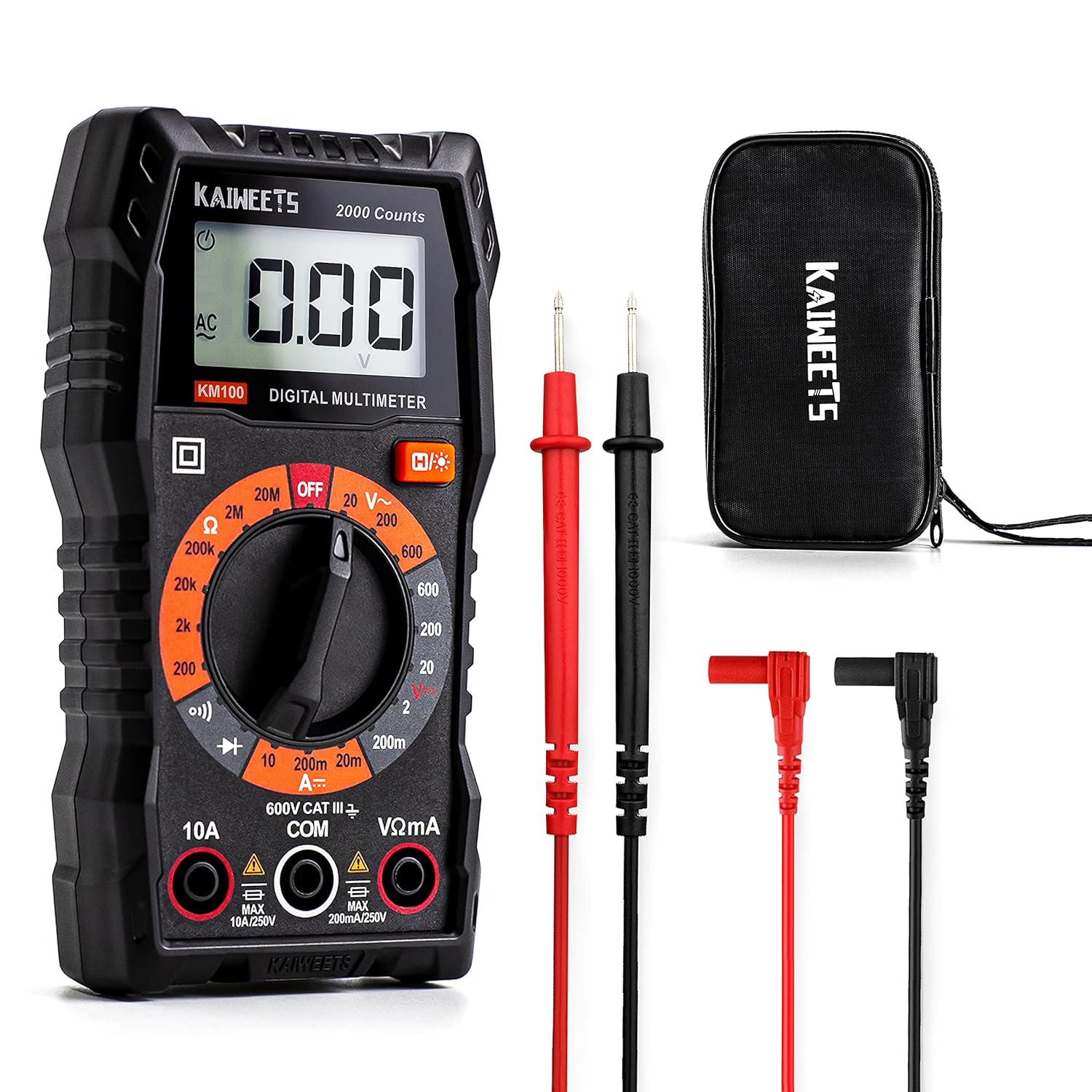
This KAIWEETS digital multimeter is a versatile tool for measuring AC/DC voltage, DC current, resistance, continuity, and diodes in home, automotive, and electrical applications. It includes pre-installed batteries, a carrying case, test leads, data hold, backlight, and overload protection for easier and safer everyday testing. Built with double fuses and rated for broad household and light professional use, it helps users diagnose electrical issues with confidence.
Intake and Turbo Strategies for Supra: CAI, Manifold, Ethanol, and Turbo Sizing
Power upgrades change the heat equation. A car that runs comfortably at stock power may struggle once boost, tire grip, ambient temperature, and session length increase. Intake, manifold, ethanol, and turbo choices should be treated as a system, not separate parts.
Cold-Air Intake Benefits
A well-designed cold-air intake can reduce restriction and help the turbo breathe, but it is not a complete thermal solution by itself. The key is whether the intake pulls cooler air consistently and avoids heat soak from the engine bay.
- Choose an intake with a sealed or well-shielded air path.
- Log IAT before and after installation instead of relying only on marketing claims.
- Check filter placement for water, debris, and heat exposure.
- Retune only when needed and when the intake meaningfully changes airflow behavior.
Manifold and IATs
Upgraded charge-air manifolds and heat exchangers can help stabilize IAT during repeated pulls, especially on modified cars. The goal is not just a lower peak number; it is faster recovery. A car that cools down quickly between hard laps is easier to manage and more consistent.
When reviewing manifold or charge-air upgrades, focus on fitment, pressure drop, coolant routing, sensor placement, serviceability, and proven track data. A part that looks impressive but traps heat or complicates maintenance may not help your lap consistency.
Ethanol and Turbo Sizing
Ethanol blends can reduce knock tendency and support more power when the fuel system and tune are designed for it. That does not mean “more ethanol” is always the right track answer. Higher ethanol content can increase fuel demand, raise fuel-system load, and expose weaknesses during long sessions.
Turbo sizing matters too. A small turbo working outside its efficient range can create more charge heat. A larger turbo may reduce charge temperature at a given power level, but it can also change response, stress, and tuning needs. Match turbo size to your actual lap goals, not just a dyno number.
What to Do on Track: Logging, Driving Tips, and When to Stop
During hot laps, your job is to catch the trend before the warning light does. Start with shorter sessions and build up only after you know how the car behaves. A stock or lightly modified Supra may feel fine for a few laps, then heat-soak once the oil, coolant, intercooler circuit, brakes, tires, and transmission all reach their steady-state temperatures.
What to Log
At minimum, log oil temperature, coolant temperature, IAT, boost/manifold pressure, throttle position, timing correction if available, fuel temperature if available, and transmission temperature on automatic cars. Add brake and tire notes manually after each session.
| Data Point | Why It Matters | Action If It Trends Badly |
|---|---|---|
| Oil temperature | Shows engine and turbo oil heat load | Shorten stint, cool down, inspect oil condition |
| Coolant temperature | Shows main cooling-system capacity | Check airflow, leaks, fans, caps, and radiator capacity |
| IAT | Shows charge-air heat soak | Improve heat exchanger, ducting, cooldown strategy, or turbo efficiency |
| Transmission temperature | Protects automatic shift quality and fluid | Add cooling, shorten sessions, service fluid more often |
| Timing/boost behavior | Shows ECU protection or knock response | Reduce load and review tune, fuel, and IAT |
Driving Techniques to Control Heat
Driving style has a major effect on heat. Smooth throttle, clean braking, and one cooldown lap at the right time can save a session. Avoid repeated full-throttle pulls when the car is already heat-soaked. If you feel power fall off, do not try to “drive through it.” Use a cooldown lap, pit in, and check the logs.
- Run shorter stints in hot weather until you know the car’s trend.
- Use one or two cooldown laps before shutting the car off.
- Lift earlier on long straights if temperatures are climbing fast.
- Avoid sitting still with heat-soaked hardware after a hot lap; keep airflow moving when safe.
- Let brakes cool with airflow instead of holding the pedal hard while stationary.
The best cooling upgrade is the one your data proves you need. Log first, modify second, and retest under the same conditions whenever possible.
When to Stop
Stop the session if the car gives a temperature warning, repeatedly cuts power, misfires, loses oil pressure, smells strongly of coolant or oil, shows smoke, or has a sudden change in brake pedal feel. Do not wait for the next lap to “see if it clears.” A safe early stop is cheaper than a damaged engine, gearbox, or brake system.
Troubleshooting Limp Mode After Hot Laps
If your Supra enters limp mode after a few hard laps, do not assume the ECU is being overly sensitive. It may be responding to real heat, fuel, pressure, or sensor data. Use a repeatable diagnosis process.
- Save the codes and logs. Do not clear everything before reviewing the fault history.
- Check fluid levels after the car cools. Look for low oil, low coolant, leaks, or overflow residue.
- Review the temperature timeline. Identify whether oil, coolant, IAT, or transmission temperature climbed first.
- Inspect the front cooling stack. Rubber buildup and bent fins can reduce airflow.
- Check tune and fuel quality. Heat-related timing pull may be fuel, boost, or IAT related.
- Retest with shorter stints. Confirm the issue is solved before returning to full sessions.
Warning: A tune that is safe for a short street pull may not be safe for repeated track laps. Track validation should include sustained-load logs, not only dyno pulls or highway acceleration.
Post-Session Maintenance: Oil Checks, Changes, and Data Review
After each session, check the car while the data is still fresh. You are looking for trends, not just obvious failures. A car that runs a little hotter every session is telling you something.
- Record peak oil, coolant, IAT, and transmission temperatures.
- Check oil level after the car has cooled and the measurement process is valid.
- Inspect for coolant smell, oil residue, undertray leaks, and loose fittings.
- Review tire pressures, brake pad wear, brake fluid feel, and rotor condition.
- Shorten the oil-change interval for frequent track use, especially after high-temperature sessions.
- Save logs by date, track, ambient temperature, fuel type, tune, and hardware setup.
If oil has been overheated, fuel-diluted, or run through multiple hard track days, replace it sooner rather than trying to stretch the normal street interval. Track use is severe use. Fresh fluid is cheaper than accelerated wear.
Common Mistakes That Create Heat Problems
Most heat issues are not caused by one dramatic failure. They come from stacking small mistakes until the car has no thermal margin left.
- Adding power before cooling. More boost usually means more heat.
- Ignoring airflow. A bigger cooler can underperform if it is blocked or poorly ducted.
- Running long sessions too soon. Build up from short stints and review the data.
- Using vague oil advice. Follow Toyota specification unless a qualified track shop gives a complete plan.
- Clearing codes without saving logs. The fault history may explain the heat problem.
- Assuming winter or cool weather eliminates risk. Cool ambient air helps, but sustained load can still overheat fluids.
Frequently Asked Questions
Is a Supra good for winter?
A Supra can be driven in winter with the right tires and careful driving, but it is not naturally ideal for snow. It is rear-wheel drive, low to the ground, and often equipped with summer performance tires. Use proper winter tires, avoid deep snow, and drive gently in cold conditions.
What are the common problems with Supras on track?
Common track complaints include heat soak, high oil temperature, coolant-temperature creep, automatic-transmission heat, brake fade, tire overheating, and power reduction from protective ECU strategies. Many issues improve with fresh fluids, shorter stints, better logging, clean airflow, and targeted cooling upgrades.
Does the MkV Supra have a DCT?
No. The MkV Toyota GR Supra is available with an 8-speed automatic transmission or, on later 3.0 models, a 6-speed manual transmission. It does not use a dual-clutch transmission, so cooling and service advice should match the correct gearbox.
What should I upgrade first for Supra track cooling?
Upgrade based on your logs. If IAT is the first problem, start with charge-air cooling and heat-exchanger airflow. If coolant temperature rises, address radiators and ducting. If the automatic transmission gets hot or shifts degrade, add transmission cooling. If oil temperature remains high, review oil cooling, venting, and session length.
Should I change oil after every track day?
Not every light track day automatically requires an oil change, but frequent or hot track use should shorten the interval. Replace oil sooner if it was overheated, fuel-diluted, heavily used, or exposed to repeated high-temperature sessions. Oil analysis can help you set a smarter interval.
Conclusion
A track-driven Supra stays consistent when heat is managed as a complete system. Start with the right oil, correct coolant level, clean airflow, reliable sensors, and disciplined logging. Then use your data to choose the next upgrade: heat exchanger, auxiliary radiator, transmission cooler, ducting, venting, or oil-cooling improvements. The goal is not one perfect temperature number; it is a car that recovers predictably, avoids warnings, and finishes every session safely.
Sources
- Toyota Newsroom: 2025 Toyota GR Supra — official engine output, trim, and transmission availability.
- Toyota Support: GR Supra oil recommendation — factory-recommended 0W-20 C5 synthetic oil reference.
- Toyota Owners: 2026 Supra Owner’s Manual — official owner manual reference for warnings, maintenance, and vehicle operation.
- GR Track Experience — Toyota GR owner track-day and NASA membership program details.
- CSF Race: A90/A91 GR Supra cooling catalog — available Supra-specific heat exchangers, radiators, and transmission-cooling products.
- CSF Race: A90 Supra / BMW G-Series Transmission Cooler — transmission-cooling application for prolonged hard use.