
By: Editorial Team
Last updated: September 1, 2026
Toyota’s 2026 Supra owner information says to check tire inflation at least twice a month and before an extended trip. For normal street use, that means a cold check about every two weeks, plus an extra check after a major temperature swing, a hard pothole or curb impact, or a TPMS warning. Use the cold PSI on the driver’s door-pillar Tire and Loading Information label or in the owner’s manual. Do not use the maximum PSI printed on the tire sidewall as the vehicle target, and do not rely on TPMS instead of a gauge.
Quick Answer
Check your Toyota Supra tire pressure at least twice a month and before every extended trip. Recheck on the next cold reading after a major temperature change or road impact. Use the cold PSI on your car’s door-pillar label or in its owner’s manual, not a value copied from another Supra and not the maximum pressure printed on the tire sidewall.
Key Takeaways
- For a late-model GR Supra, check tire inflation regularly, at least twice a month, and before extended trips.
- Use the PSI on the driver’s door placard or in the official Toyota manual, not the maximum PSI printed on the tire sidewall.
- Check the tires cold, ideally after the car has been parked for at least three hours.
- Pressure commonly changes by about 1 psi for each 10°F change in ambient temperature, although the exact change varies.
- A steady TPMS light normally signals low pressure. A flashing light followed by steady illumination can signal a system malfunction.
At a Glance
| Time Required | 5–10 minutes |
| Difficulty | Easy |
| Tools Needed | Consistent tire-pressure gauge and an air compressor or service-station air pump |
| Correct Pressure Source | Driver’s door-pillar label first, then the owner’s manual |
How this guide was checked: On September 1, 2026, the guidance below was rechecked against Toyota’s 2026 U.S./Canada Supra owner-manual listing and owner information, NHTSA TireWise, 49 CFR § 571.138 for TPMS behavior, FuelEconomy.gov, and current Michelin cold-weather tire guidance. Your vehicle’s tire label and the owner’s manual for its exact production version remain the final authority for pressure.
Why Does Tire Pressure Matter on a Toyota Supra?
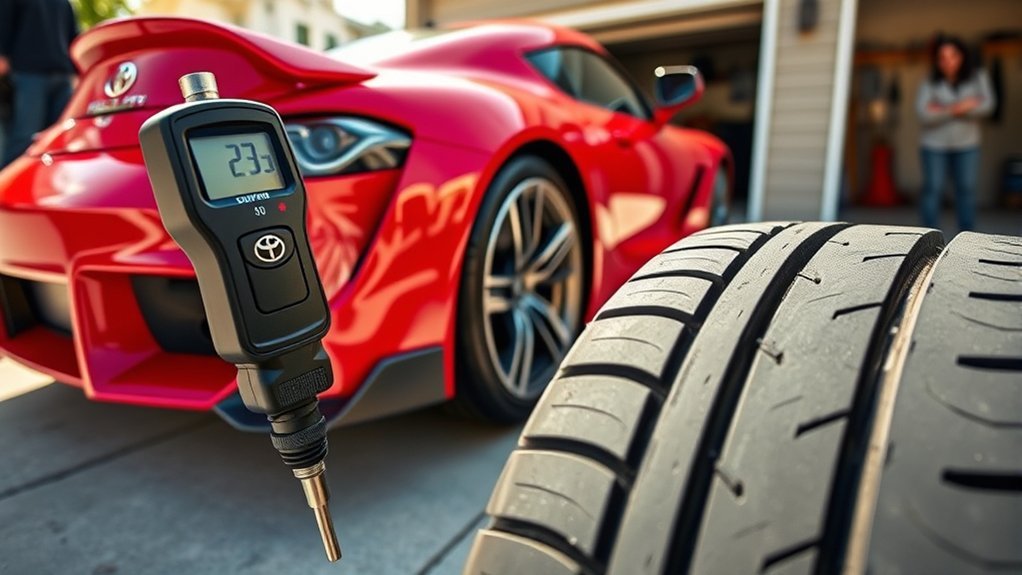
Tire pressure affects the Supra’s steering response, braking behavior, ride, and tire temperature. Low pressure allows excessive tire flex, which creates more heat and can make the car feel less stable. Excessive cold pressure can produce a harsher ride and change how the tire responds to bumps and steering inputs.
Incorrect pressure can also contribute to irregular tread wear. Pressure is not the only cause, so persistent shoulder wear, center wear, cupping, or one-sided wear should also prompt an alignment, suspension, and tire inspection.
The correct setting is the vehicle manufacturer’s cold tire inflation pressure. For your Supra, use the Tire and Loading Information label on the driver’s door pillar or the applicable owner’s manual. NHTSA’s TireWise guidance also directs drivers to the vehicle manufacturer’s recommendation rather than the maximum PSI printed on the tire sidewall.
Fuel-economy note: FuelEconomy.gov reports that proper inflation can improve gas mileage by about 0.6% on average and by up to 3% in some cases.
How Often Should You Check Toyota Supra Tire Pressure?
For a late-model Toyota GR Supra, use twice a month as the normal baseline because Toyota specifies checks at least twice monthly and before an extended trip. Add an extra cold check when something happens that can change pressure or damage a tire.
| Situation | When to Check | Why |
|---|---|---|
| Normal street use | At least twice a month | Toyota’s Supra-specific routine helps catch normal pressure loss and slow leaks early |
| Extended trip | Before departure, with cold tires | Highway driving adds sustained heat and load |
| Sharp temperature change | On the next cold reading | Ambient temperature can move measured PSI even when there is no leak |
| Pothole or curb impact | As soon as you can stop safely, especially if the car pulls, vibrates, or loses pressure | An impact can damage a tire, valve, bead, or wheel |
| TPMS warning | As soon as practical in a safe location | TPMS warns about significant underinflation or a system problem |
| Performance or track use | Before the event and as required by the fitted tire/event guidance | Track setup is tire- and condition-specific, not a generic street target |
This twice-monthly schedule is more specific than the general monthly minimum in NHTSA TireWise. Toyota’s Supra owner information is the model-specific source for the interval.
Pro Tip: Choose two repeatable days each month, such as the 1st and 15th. Check before the first drive of the day so temperature and driving heat do not distort the comparison.
What PSI Should a Toyota Supra Use?
The correct PSI depends on the model year, market, factory tire size, axle, and load condition. Do not copy one universal number from another Supra. Earlier 2.0 and 3.0 versions, current 3.0 models, and cars with different wheel packages may not share the same pressure specification.
Use these sources in order:
| Pressure Source | When to Use It | Important Note |
|---|---|---|
| Driver’s door-pillar label | Normal street driving with the listed tire size | This is the primary vehicle-specific source |
| Toyota owner’s manual | Tire-size, speed, or load-specific instructions | Use the manual for your exact model year and market |
| Toyota Supra Command | Viewing current readings and intended pressure information when displayed | The menu may update only after the vehicle moves |
| Tire manufacturer or qualified installer | Non-original tire sizes, track tires, or modified wheel setups | Do not assume the original placard value transfers unchanged |
On many late-model cars, Toyota Supra Command places tire information under My vehicle > Vehicle status > Tire Pressure Monitor. Menu wording can vary, so use the manual for your vehicle if the displayed path differs.
If you are trying to set or correct the pressure rather than decide how often to check it, use our step-by-step Supra tire-pressure setup guide. For factory and historical fitment context, see the Toyota Supra tire-size chart by model year.
Warning: Never use the maximum PSI printed on the tire sidewall as your normal vehicle setting. It is a tire limit, not the recommended cold pressure for your Supra.
[Products Worth Considering]
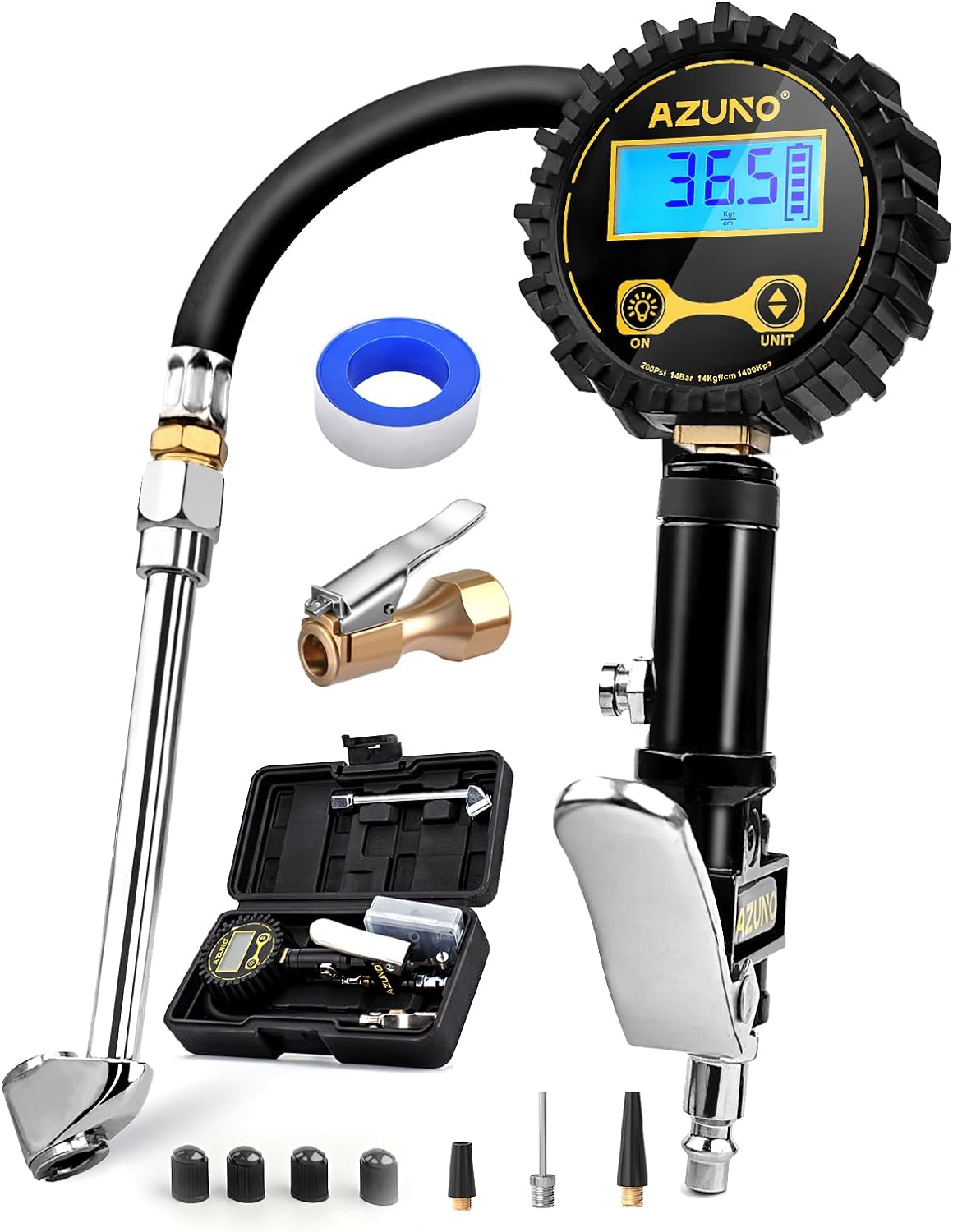
This digital tire inflator delivers accurate, easy-to-read pressure measurements with a bright backlit LCD and precise 0.1 resolution for confident inflation. Designed for single-handed use, it makes it simple to inflate or deflate tires while staying organized in the included portable carrying box. Built for a wide range of vehicles, it is a practical air compressor accessory for cars, trucks, SUVs, motorcycles, and more.
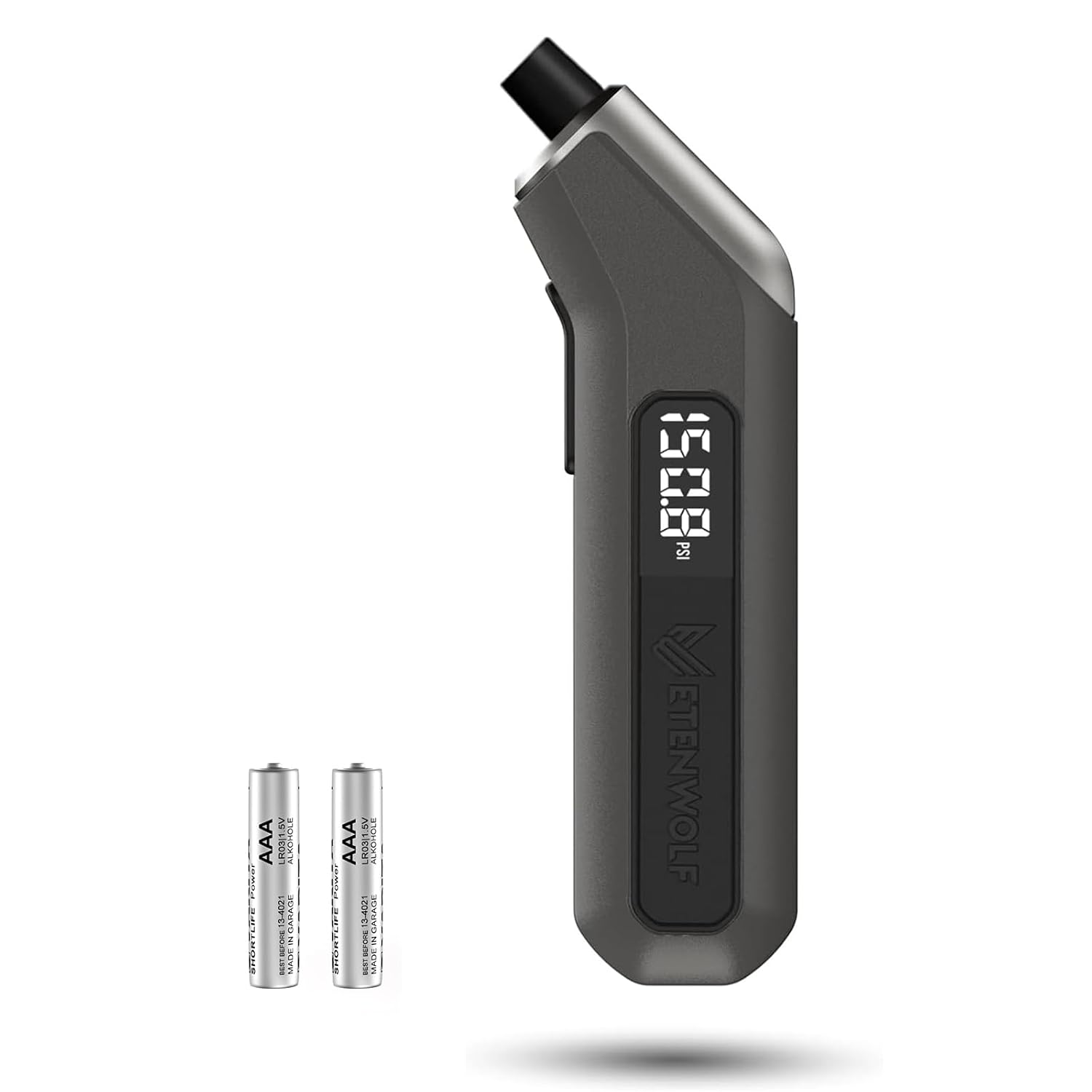
The ETENWOLF T300 digital tire pressure gauge delivers precise readings for cars, RVs, trucks, bikes, and heavy-duty vehicles with a wide measuring range and consistent accuracy. It is built to perform in extreme temperatures, includes a bright LED light for low-visibility use, and uses replaceable AAA batteries for convenient long-term operation. Durable enough to withstand rugged use, it is a practical tool for maintaining proper tire pressure across a variety of vehicles.

The ETENWOLF T300 digital tire pressure gauge delivers accurate readings for cars, trucks, RVs, bikes, and heavy-duty vehicles with a wide pressure range and reliable calibration. It is built to perform in extreme temperatures, includes an LED light for dark conditions, and uses replaceable AAA batteries for long-term convenience. Its durable design and automatic shut-off make it a practical, dependable tool for everyday tire maintenance.
How Does Temperature Affect Supra Tire Pressure?
A useful rule of thumb is that tire pressure changes by about 1 psi for each 10°F change in ambient temperature. Michelin’s 2026 winter guidance uses the same 1 psi-per-10°F estimate for temperature drops. Treat it as a reminder to measure, not as a substitute for checking each tire, because the exact change varies with the tire, starting pressure, temperature range, and measurement conditions.
Cold weather lowers the measured pressure because the air inside the tire cools. Driving and warmer weather raise the reading as the tire and contained air heat up. This is why a marginally low tire may trigger the TPMS warning on a cold morning and appear closer to normal after driving.
When Is a Tire Considered Cold?
Check your Supra’s pressure when the tires are cold. NHTSA describes a cold tire as one that has not been driven for at least three hours. A tire checked after driving may read several PSI higher than its cold pressure.
Do not bleed air from a hot tire simply because its reading is above the cold placard value. Let the car sit, measure again when cold, and then make the final adjustment.
How Much Can Seasonal Temperature Changes Affect PSI?
If the tires were adjusted on a 75°F day and the next cold reading is taken at 35°F, the pressure may be roughly 4 psi lower. Treat this as an estimate, not a substitute for measuring each tire.
| Ambient Temperature Change | Approximate Pressure Change | Recommended Action |
|---|---|---|
| -10°F | About -1 psi | Measure cold and add air if below the placard value |
| 0°F change | No temperature-related change expected | Maintain the listed cold pressure |
| +10°F | About +1 psi | Do not bleed a tire that is warm from driving |
| +20°F | About +2 psi | Recheck cold before adjusting |
| Large seasonal shift | Varies | Check all four tires rather than estimating |
What Can Pressure Differences Tell You?
Pressure patterns can help separate a weather change from a possible tire problem. If all four tires lose a similar amount after a cold night, temperature is the likely cause. If one tire repeatedly loses more than the other three, inspect it for a puncture, valve leak, bead leak, or wheel damage.
A consistent left-to-right difference can also affect steering feel. Correct the pressure first. If the car still pulls, vibrates, or wears a tire unevenly, schedule an alignment, tire, and suspension inspection.
What Is the Fastest Way to Check Toyota Supra Tire Pressure?
This is the short inspection routine. For a fuller pressure-setting walkthrough, use the dedicated Supra tire-pressure setup guide.
- Park long enough for a cold reading. Let the car sit for at least three hours or check before the first drive of the day.
- Find the correct PSI. Read the driver’s door-pillar label or the owner’s manual for your exact car.
- Remove the valve cap. Put it in a secure place where it cannot roll away.
- Press the gauge squarely onto the valve stem. A continuing hiss normally means the gauge is not seated correctly.
- Compare the reading with the target. Add air when the cold reading is low. Release small amounts only when the tire is cold and above the specified pressure.
- Measure again after each adjustment. Do not rely only on an inflator’s automatic cutoff.
- Repeat for all four tires. Use the specified value for each axle if the label lists different front and rear pressures.
- Reinstall every valve cap. The cap helps keep dirt and moisture away from the valve core.
- Confirm the TPMS display. Some readings update only after a short drive.
Warm-tire note: If a tire is clearly low after you have driven, do not continue driving it significantly underinflated while waiting for a perfect cold reading. Add air to the placard pressure as a temporary safety step, then check and set it precisely after the tire has cooled.
[Products Worth Considering]

This digital tire pressure gauge delivers highly accurate readings with a bright backlit LCD for easy use in any lighting condition. Designed for cars, trucks, SUVs, and motorcycles, it offers multiple unit options, ergonomic handling, and dependable AAA battery power for everyday checks and roadside confidence.
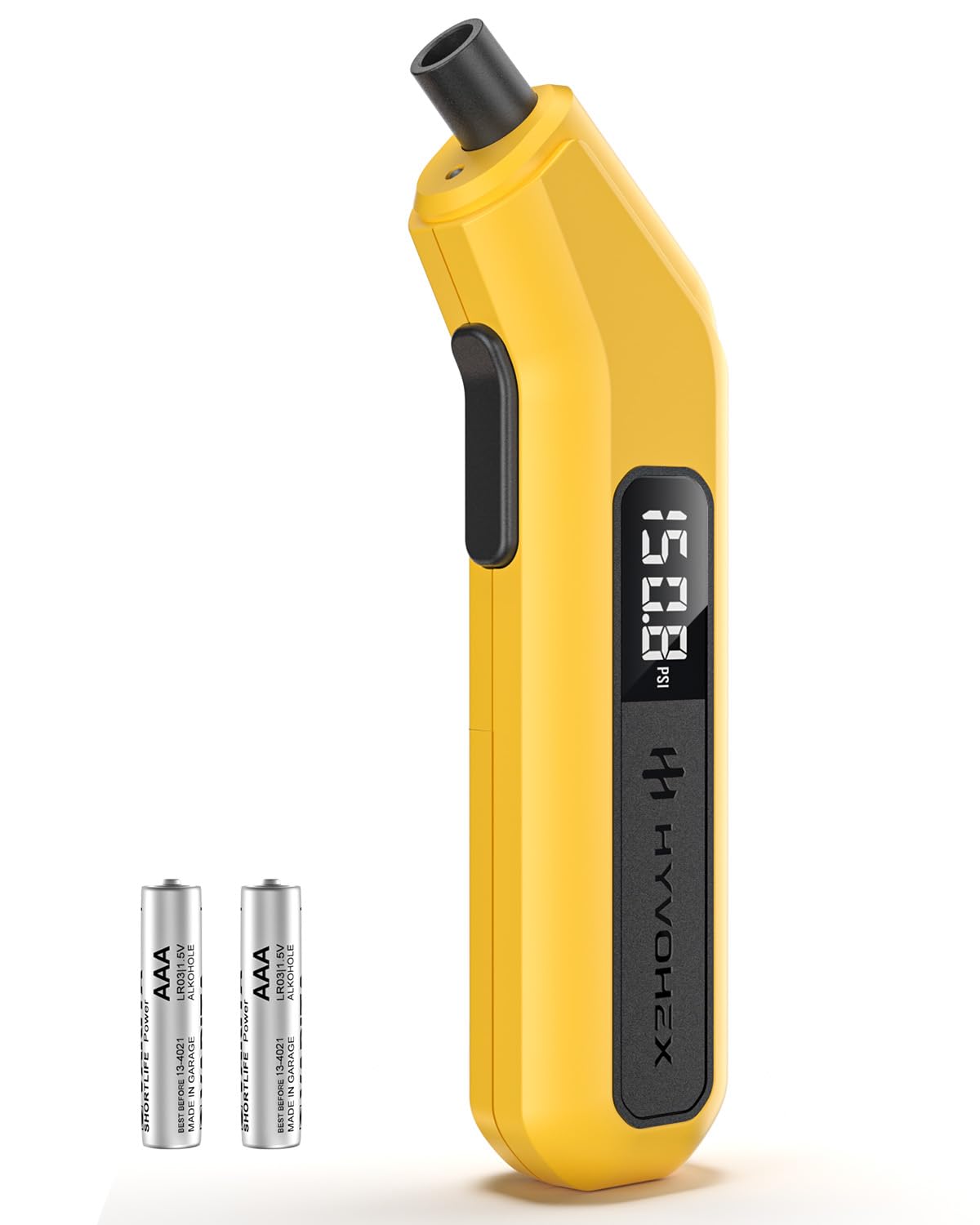
HYVOHEX digital tire pressure gauge delivers fast, accurate readings with an easy-to-read LED backlit display and a high-sensitivity sensor for reliable tire checks. Its valveless one-click operation, rotating valve head, and broad compatibility make it a practical tool for cars, bikes, and trucks. Built with a durable rubber shell and aluminum nozzle, it is compact enough to keep in your glove box or tool bag.
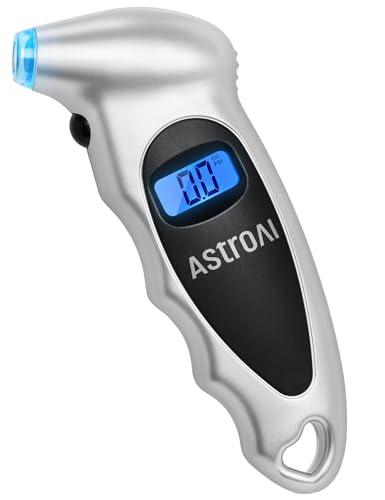
Accurate, Dependable Readings: Factory‑calibrated to ±1 PSI, so you can confidently match your vehicle’s recommended PSI (check the door jamb sticker). Ideal for monthly checks and road trips — consistent results every time, cold or warm.
Should You Check Tire Pressure Before and After a Long Trip?
Check the tires cold before a long trip. Confirm the placard pressure, inspect the tread and sidewalls, and look for nails, cuts, bulges, missing valve caps, or uneven wear. Underinflation increases tire flex and heat buildup during sustained highway driving.
After the trip, you do not need to lower pressure simply because the tires are warm. Inspect the car again when you notice vibration, pulling, an impact, a TPMS alert, or visible damage. Make final pressure adjustments only after obtaining a cold reading.
What Should You Inspect During a Monthly Tire Check?
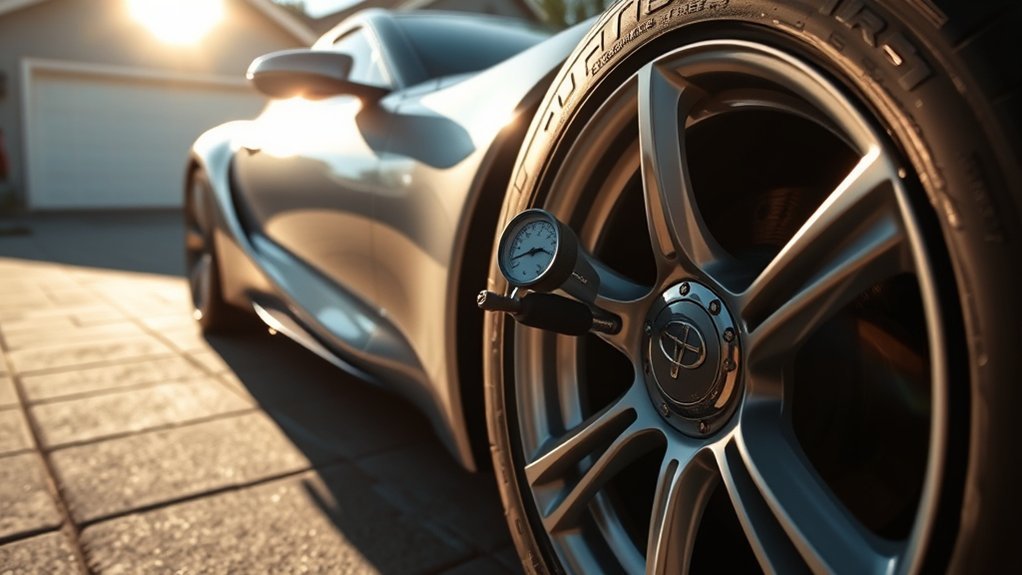
A pressure check should take only a few minutes, but it can also reveal damage and wear that TPMS cannot detect. Compare all four readings and note whether one tire is losing pressure faster than the others.
| Action | Recommended Frequency | What It Can Reveal |
|---|---|---|
| Measure pressure cold | At least twice a month and before trips | Weather-related loss, slow leakage, or unequal pressure |
| Inspect tread and sidewalls | Every pressure check | Punctures, cracking, cuts, bulges, and impact damage |
| Check tread depth and wear pattern | Monthly | Wear, alignment problems, or suspension concerns |
| Review rotation eligibility | At the service interval | Many Supras use staggered or directional setups that restrict rotation |
Should You Change Supra Tire Pressure for a Heavy Load?
Stay within the load limit printed on the Tire and Loading Information label. The Supra has limited passenger and cargo capacity, so adding luggage is not a reason to exceed its listed payload.
Use a higher loaded-pressure value only when Toyota lists one for your exact model, tire size, and load condition. Do not automatically add 2 or 3 psi. If no separate loaded value is provided, retain the listed cold pressure and keep the vehicle within its load rating.
Warning: An overloaded car and an underinflated tire create additional heat and handling risk. If a tire looks visibly low or the car feels unstable, slow down and stop in a safe location before continuing.
How Should You Use the Supra TPMS?
The Tire Pressure Monitoring System supports your inspections but does not replace them. Federal requirements are designed around warning drivers about significant underinflation, not maintaining each tire at an exact everyday target. A pressure error can therefore exist before the warning activates.
On many modern GR Supra models, tire information is available through Toyota Supra Command under My vehicle > Vehicle status > Tire Pressure Monitor. The display may not show a fresh reading while the vehicle is stationary.
What Do Steady and Flashing TPMS Lights Mean?
A steady TPMS warning normally means at least one tire is significantly underinflated. Stop in a safe location and check all four tires with a gauge.
A warning that flashes for about 60–90 seconds and then remains illuminated indicates a TPMS malfunction pattern. The system may not detect or report low pressure correctly while the fault exists. Have the system inspected if the sequence continues after the tires are properly inflated.
How Do You Reset the Supra Tire Pressure Monitor?
Correct the tire pressures before starting any reset or relearn. Toyota’s Supra manual notes that corrected pressures can be applied automatically when the mounted tires are recognized; a reset is specifically required for tire setups that cannot be found in the Control Display pressure values. Do not reset the system simply to hide a low-pressure warning.
- Set all tires correctly: Use the cold pressure from the vehicle label or applicable manual.
- Open the Tire Pressure Monitor menu: Use Toyota Supra Command under My vehicle > Vehicle status > Tire Pressure Monitor. Menu wording can vary by production version.
- Confirm the tire settings: Make sure the displayed tire type/size matches the tires actually mounted.
- Reset only when the manual or display calls for it: Follow the on-screen procedure for your tire setup rather than forcing a reset after every pressure correction.
- Drive and confirm: Give the system time to update the current readings, then confirm that the displayed pressures are reasonable.
What Do Common Tire-Pressure Patterns Mean?
| Pattern | Likely Explanation | What to Do |
|---|---|---|
| All four tires are similarly low after a cold night | Ambient temperature drop | Measure cold and inflate each tire to its listed value |
| One tire repeatedly loses more pressure | Puncture, valve leak, bead leak, or wheel damage | Have the tire and wheel inspected instead of repeatedly topping it off |
| All readings rise after driving | Normal operating heat | Do not bleed the tires; recheck when cold |
| Warning stays on after inflation | Incorrect pressure, delayed sensor update, or a system issue | Recheck with a gauge, drive as directed, and follow the manual |
| Light flashes and then stays on | TPMS malfunction | Check pressure manually and arrange system diagnosis |
| Uneven tread wear continues after pressure correction | Possible alignment, suspension, tire, or driving-related issue | Schedule a tire and chassis inspection |
When Should You Stop Driving and Get the Tire Inspected?
Inflation alone is not an adequate fix when a tire has structural damage or loses air rapidly. Stop in a safe place and arrange professional inspection when you find:
- A sidewall bulge, deep cut, exposed cord, or split in the rubber.
- A tire that becomes visibly low again soon after inflation.
- Rapid pressure loss while the gauge is attached or shortly after driving begins.
- Strong vibration, pulling, or new noise after hitting a pothole, curb, or road debris.
- A wheel that appears bent, cracked, or damaged.
- A flashing-then-steady TPMS malfunction warning that continues at later start-ups.
Do not drive at normal road speed on a visibly damaged or rapidly deflating tire. Use the roadside procedure and equipment specified for your Supra, or request roadside assistance.
[Products Worth Considering]

[Accurate Real-time Monitoring & Multi-Alert System]: Tymate TM7 tpms sensor can be used to monitor your tires’ pressure and temperature data within robust accuracy of ±1.5 PSI or ±3°F (The units can be displayed as ℃ or ℉ & BAR or PSI). Designed with six distinct alarm modes: high/low pressure, fast leakage, high temperature, sensor low battery, and sensor signal lost. This system is a reliable tool for maintaining tire health, and it is especially beneficial for DIY enthusiasts and pre-owned vehicle markets, where constant vigilance on tire conditions is paramount for safety and vehicle longevity
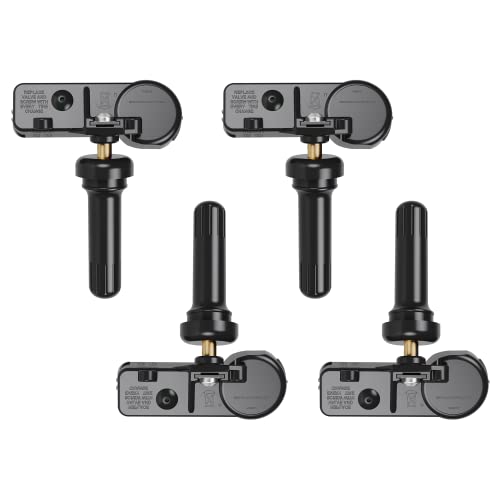
PREFECT REPLACEMENT:The tire pressure monitor system (TPMS) is 100% Brand new Compatible with most GM branded vehicles manufactured after 2006.including GMC Chevy Buick Cadillac

✿IMPORTANT NOTE: ❶ GM VEHICLES ONLY: ONLY for Chevrolet, GMC, Cadillac and Buick, Check Compability List before buying. NOT support Ford, Toyota, Nissan, Honda and other non-GM brands; ❷ SENSOR REQUIREMENTS: Optimized for OE/OEM sensors. Most aftermarket sensors can work BUT some may fail if their frequency or parameters do not match the OEM original. NOT for UNIVERSAL TPMS sensors.❸ Requires a 9V battery for operation BUT NOT included.❹NOTE: If one or some sensors can't be activated after multiple attempts (because they were dead, low power or damaged, not our tool's not work), please replace them with new sensors then try again.
Frequently Asked Questions
What is the best PSI for a Toyota Supra?
The correct PSI is the cold pressure printed on your Supra’s driver’s door-pillar label or listed in the owner’s manual for its exact tire size and condition. Do not apply a value from another model year or trim without confirming it against your car.
Should I check Supra tire pressure monthly or twice a month?
Use twice a month for a late-model GR Supra because Toyota’s owner guidance specifies checks at least twice monthly and before an extended trip. NHTSA’s broader tire guidance says at least monthly, so the Toyota interval is the more specific routine for this car.
Can I trust the TPMS instead of using a gauge?
No. TPMS warns about significant underinflation and may not activate for a smaller pressure error. Use it as a safety warning while checking all four tires manually with a consistent gauge.
Can I check Toyota Supra tire pressure after driving?
You can identify a clearly low tire after driving, but a warm reading is not the final cold setting. If the tire is significantly low, add air for safety and then recheck it after the car has been parked for at least three hours.
Should I use the maximum PSI printed on the tire?
No. The sidewall number is a tire limit associated with its load rating, not the recommended everyday pressure for your car. Use the cold PSI on the Supra’s vehicle label or in its owner’s manual.
Should I lower tire pressure for better grip on the street?
For normal street driving, use Toyota’s recommended cold pressure. Lowering it without tire-specific guidance can increase heat and sidewall flex. Track pressure is a separate setup based on the tire, weather, driving pace, and event guidance.
Why did my Supra tire-pressure light come on in cold weather?
Cold air lowers the measured pressure. A drop of about 10°F can reduce pressure by roughly 1 psi, so a tire that was already near the warning threshold may trigger the light on a cold morning. Measure all four tires rather than assuming temperature is the only cause.
Conclusion
For a late-model Toyota Supra, make a cold tire-pressure check part of your routine at least twice a month and before every extended trip. Add a check after major temperature changes, road impacts, or a TPMS alert. Follow the door-pillar label or the exact owner’s manual for PSI, compare all four readings for patterns, and treat TPMS as a warning system rather than a substitute for a gauge. Stop driving and arrange service when you find rapid pressure loss, visible structural damage, or severe vibration.
Sources
- Toyota 2026 Supra Owner’s Manual PDF (OM9AE47U) — one U.S./Canada 2026 production-version manual with Supra-specific tire and TPM guidance.
- Toyota: 2026 Supra Manuals and Warranties — confirms that Toyota lists multiple 2026 U.S./Canada owner-manual editions by production period.
- Toyota: 2026 GR Supra — current U.S. trim, wheel, and vehicle context.
- Toyota Owners: Supra Wheels and Tires — pressure-monitor menu and adjustment guidance.
- NHTSA TireWise — cold measurements, vehicle-label pressure, tire safety, and TPMS behavior.
- FuelEconomy.gov: Keeping Your Vehicle in Shape — inflation-related fuel-economy data and sidewall-pressure warning.
- 49 CFR § 571.138 — federal TPMS warning and malfunction-indicator requirements.
- Michelin: Preparing for Winter — current guidance on cold-weather tire-pressure changes and the approximate 1 psi-per-10°F rule.

[…] on level ground with normal tire pressure and your normal daily setup. If you usually carry tools, a bed cover, a rack, recovery boards, or a […]
[…] your tire pressure against the cold pressure on the vehicle’s door placard or in its owner’s manual. Do […]