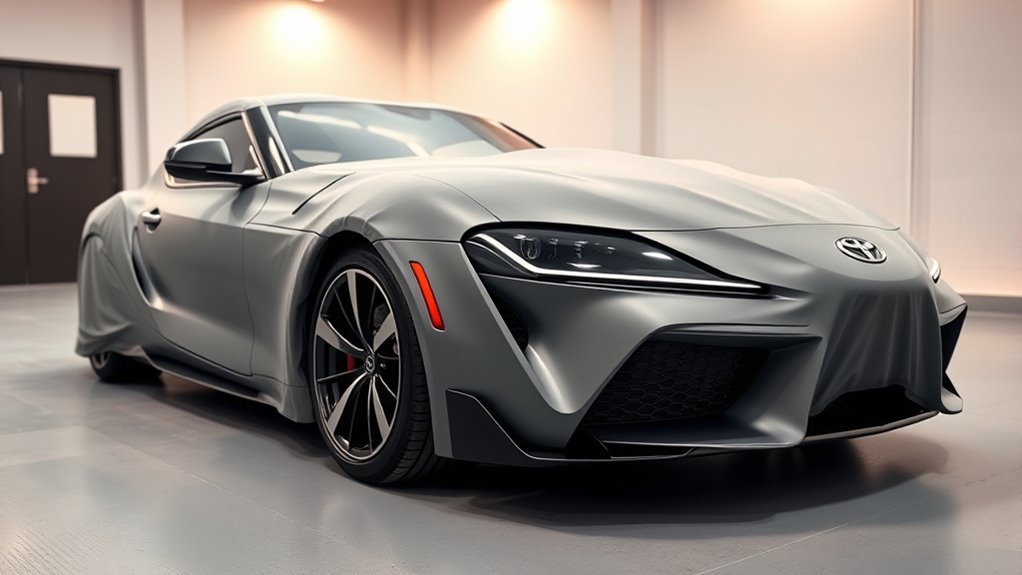
You’ll protect your 2022 Toyota GR Supra best with a precision-fit, climate-appropriate cover that fits the car’s low 172.5-inch body, uses a paint-safe inner lining, includes mirror pockets, and anchors securely against wind. Start by deciding where the car will sit—garage, driveway, carport, or long-term storage—then choose indoor, outdoor, or hail-ready protection based on dust, UV, rain, snow, wind, and storm exposure.
Quick Answer
For a 2022 Toyota GR Supra, the best cover is a custom-fit, soft-lined cover made for the A90/A91 Supra body. Use an indoor stretch cover for garage dust, a breathable water-resistant outdoor cover for driveway parking, and a padded hail cover or hail mat when severe storms are likely.
Key Takeaways
- The 2022 GR Supra is about 172.5 inches long, 73.0 inches wide without mirrors, and roughly 50.9–51.1 inches tall, so fit matters more than generic “sports car” sizing.
- Choose a soft-lined indoor cover for garage storage and a breathable, UV-resistant, water-resistant outdoor cover for driveway use.
- Secure straps, elastic hems, mirror pockets, reinforced seams, and grommets help reduce wind flapping that can dull or scratch paint.
- Never install a cover over a dirty, wet, hot, or freshly waxed surface unless the cover maker says it is safe to do so.
- For hail, a normal weather cover is not enough; use covered parking first, then a padded hail cover or dedicated hail mat as backup.
At a Glance
| Time Required | 5–10 minutes to install; 15–30 minutes to clean and dry the car first |
| Difficulty | Easy, but two people make outdoor installation safer in wind |
| Tools Needed | Microfiber towels, pH-neutral car wash, tape measure, storage bag, cable lock or straps if included |
| Cost | Budget universal covers cost less; custom-fit and hail-rated covers usually cost more but protect better |
Quick Guide: Best Cover for a 2022 Toyota Supra
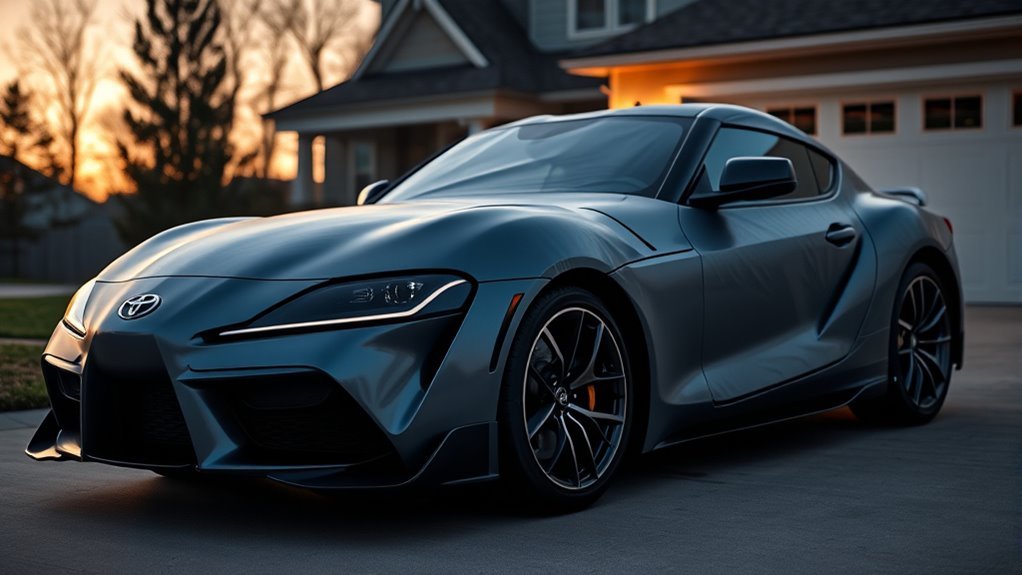
When protecting your 2022 Toyota GR Supra, choose a cover that balances fit, material performance, breathability, and wind control. The Supra’s low roofline, wide mirrors, short rear deck, and sculpted body make a custom-fit cover the safest choice for paint protection.
According to Toyota’s official 2022 GR Supra materials, the car is 172.5 inches long and 73.0 inches wide without mirrors. That means many universal covers labeled for “compact sports cars” may be too loose, too tight at the mirrors, or too long at the bumpers. For the cleanest fit, select a cover listed specifically for the 2020–2022 Toyota GR Supra or the A90/A91 generation.
For indoor storage, look for a soft stretch fabric that keeps dust away without dragging across the clearcoat. For outdoor parking, prioritize breathable weather resistance, UV protection, reinforced seams, secure straps, and an elastic hem. For storm-prone areas, use a padded hail cover or a separate hail mat rather than relying on a thin outdoor cover alone.
Note: “Water-resistant” and “waterproof” are not the same. A fully waterproof tarp-style cover can trap condensation against paint if it is not breathable. For regular outdoor storage, breathable weather resistance is usually safer than a non-breathing plastic barrier.
[Products Worth Considering]

Compatible with 2020-up Toyota Supra A90; also compatible with 2019-up BMW G29 Z4
Indoor vs Outdoor vs Dual-Layer Covers
Indoor, outdoor, and dual-layer covers all protect your Supra, but each solves a different problem. The right choice depends on where the car sits, how often you drive it, and what risks you face most.
Indoor Covers
An indoor cover is best when the Supra lives in a garage, storage unit, or enclosed shop. Its job is to block dust, light bumps, fingerprints, and garage debris. A good indoor cover should feel soft on the inside and stretch around the body without sagging.
- Best for: garage storage, show cars, weekend cars, dust protection.
- Look for: fleece, stretch-knit, flannel, or microfiber-like inner material.
- Avoid: rough universal covers, dirty covers, and covers used outdoors then brought directly onto clean paint.
Outdoor Covers
An outdoor cover needs to handle UV rays, rain, bird droppings, tree sap, dust, and wind. For the Supra, the most important outdoor features are breathability, secure straps, mirror pockets, reinforced seams, and a snug elastic hem.
- Best for: driveway parking, carport use, apartment parking, short-term outdoor storage.
- Look for: UV-resistant fabric, water resistance, breathability, grommets, tie-downs, and soft lining.
- Avoid: loose covers that flap, non-breathable plastic tarps, and covers that do not fit around the mirrors.
Dual-Layer and Multi-Layer Covers
Dual-layer and multi-layer covers combine a softer inner surface with a tougher outer shell. They are a strong choice when the car is stored outside often, but they can be bulkier to install and store. The best versions add weather protection without feeling abrasive on the paint.
- Best for: regular outdoor parking, mixed indoor/outdoor storage, mild storm exposure.
- Look for: soft inner lining, breathable outer material, reinforced stitching, and good storage bag quality.
- Avoid: overly heavy covers that are hard to remove without dragging across the paint.
Essential Cover Features: Straps, Zippers, Lining, Mirror Fit
After choosing the right cover type, examine the hardware and fit details. These small features decide whether the cover protects the Supra or slowly rubs against it.
- Soft inner lining: Helps reduce micro-scratches when the cover touches the clearcoat.
- Mirror pockets: Help the cover sit correctly over the Supra’s wide mirrors instead of pulling across the doors.
- Elastic hems: Keep the cover tucked around the lower bumper edges.
- Integrated straps: Reduce wind lift and flapping.
- Reinforced seams: Improve durability at stress points.
- Grommets and cable locks: Add theft resistance and help secure the cover in wind.
- Zippered access: Lets you reach the cabin or cargo area without removing the entire cover, but only if the zipper is well protected and paint-safe.
Warning: A loose cover can damage paint in wind. Flapping fabric acts like a soft abrasive, especially when dust or grit is trapped between the cover and the clearcoat.
[Products Worth Considering]
![iCarCover Custom Fit [2020-2026 Toyota GR Supra] Premium Car Cover | Waterproof All Weather Automobiles Hail UV Sun Rain Snow Dust Protection Full Exterior Covers for Outdoor Indoor (Sky Gray)](https://m.media-amazon.com/images/I/41jEb761d8L._SL500_.jpg)
PERFECT CUSTOM FIT FOR YOUR VEHICLE: Ensure your 2020-2026 Toyota GR Supra is fully protected with our precision-engineered, custom-fit car cover. Each cover is machine-cut to fit the unique contours of every model, including 2020, 2021, 2022, 2023, 2024, 2025, and 2026. The elastic hems at both the front and back provide a secure, snug fit, preventing the cover from slipping and ensuring maximum protection at all times.
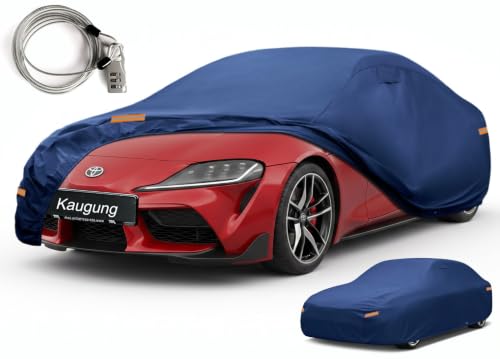
CUSTOM FIT CAR COVER FOR TOYOTA SUPRA & GR SUPRA – Expertly designed to fit Toyota Supra (A80, A90) and GR Supra (A90) models. NOTE: Designed for factory standard dimensions. This cover may NOT fit vehicles with extensive aftermarket body modifications, oversized off-road bumpers, roof racks with significant protrusions, or heavily customized suspension/lift kits.

🚕【Applicable Models】— Daeiclru Center control gear shift panel trim cover perfect fit original car model. Compatible with 2019-2022 Toyota Supra GR A90 A91 MK5.
How to Measure Your 2022 Toyota Supra for a Cover
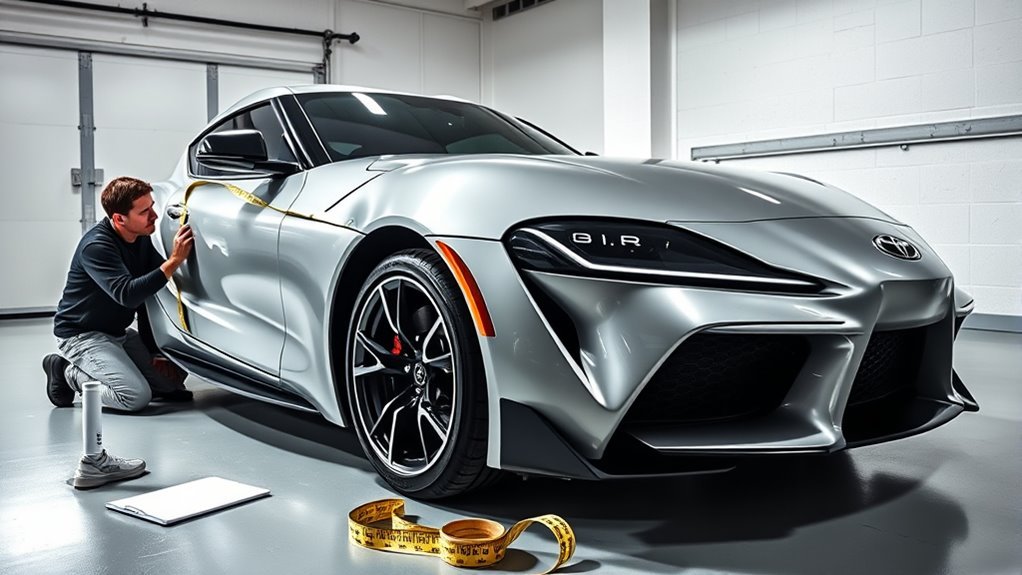
Start by parking your 2022 Supra on a level surface. Use a tape measure and record each number to the nearest half-inch. Toyota lists the 2022 GR Supra at about 172.5 inches long, 73.0 inches wide without mirrors, and about 50.9 inches tall for 3.0 models or 51.1 inches tall for 2.0 models. Those numbers are a starting point, but you should still measure your own car if it has aftermarket parts.
- Measure overall length: Measure from the front bumper’s farthest point to the rear bumper’s farthest point.
- Measure width with mirrors: Measure across the widest point, usually mirror to mirror, because the cover must clear the mirrors.
- Measure height: Measure from the ground to the highest roof point.
- Check add-ons: Add room for a larger rear wing, front splitter, roof antenna, aftermarket mirrors, or body kit.
- Compare with the sizing chart: If buying universal, choose the size closest to your measurements without leaving excessive loose fabric.
Pro Tip: For the Supra, a model-specific cover is usually better than choosing by length alone. The car is short, wide, and low, so a universal cover with the right length can still fit poorly around the mirrors, roof, and rear haunches.
Top Brands Compared: Covercraft, Coverking, WeatherTech, iCarCover
Covercraft, Coverking, WeatherTech, and iCarCover are commonly considered by Supra owners because they offer different strengths. The best choice depends on whether you want a precise indoor fit, all-weather outdoor protection, UV resistance, or budget-friendly multi-layer coverage.
| Brand | Best For | What to Check Before Buying |
|---|---|---|
| Covercraft | Custom-fit indoor and outdoor covers with many fabric choices | Fabric type, weather rating, cleaning instructions, mirror pockets, strap kit |
| Coverking | Custom-fit patterns and paint-safe storage options | Exact year/make/model fitment, lining softness, outdoor fabric rating |
| WeatherTech | Sunbrella outdoor covers with strong UV and water-repellent performance | Vehicle selector fitment, outdoor-only use, storage and care instructions |
| iCarCover | Budget-friendly multi-layer weather coverage | Actual dimensions, strap placement, lining quality, return policy |
[Products Worth Considering]

【Custom-Like Fit, Complete Protection】 Find your vehicle in the size chart (images 4–6). Don’t live with loose covers that slap and leak. Kayme car covers are tested vehicle-by-vehicle for a precise, custom-like fit - guaranteed. See the size chart and order with confidence. For other pickups, go to the truck page for a detailed size guide.

Applicable Models: Glass Fiber key fob cover compatible with Toyota Supra GR A90 A91 2019-2025; NOTE: To avoid buying the wrong key fob, please check your key refer to the picture before purchasing

Compatible with: This Waterproof All Weather Full Car Cover Custom-fits for 2020 2021 2022 2023 2024 2025 Toyota Supra GR A90 A91 MK5. Fully protects your car like a mobile garage
Fit and Sizing
For the 2022 GR Supra, prioritize model-specific tailoring over a universal fit. A correct cover should follow the front bumper, mirrors, roof, rear deck, and lower bumper without bunching. If the cover hangs loosely at the sides, it can flap in wind. If it is too tight, it can stress seams and pull against mirrors or body-kit pieces.
- Verify that the product listing includes the 2022 Toyota GR Supra, not just “Toyota Supra” generically.
- Check whether it fits the 2.0, 3.0, 3.0 Premium, and A91-CF body details.
- Confirm mirror pockets before buying.
- Read recent owner reviews for fit complaints, especially around the front bumper and rear hatch.
- Choose custom fit for long-term paint protection; use universal fit only for short-term, budget-focused protection.
Material and Protection
The cover material determines how well the Supra is protected from dust, water, sunlight, and scratches. A soft indoor fabric is not the same as an outdoor weather fabric. Likewise, a heavy outdoor cover is not automatically better if it traps moisture or is difficult to remove without dragging.
For garage storage, choose softness first. For outdoor storage, choose breathability, UV resistance, and secure anchoring first. For hail, choose padding or covered parking first. For snow and freezing rain, choose a cover that can be removed safely without ice bonding to the fabric.
The best Supra cover is not the thickest cover. It is the one that fits the car closely, breathes properly, stays secure in wind, and matches the storage environment.
Install & Secure Your Cover: Step-by-Step for Wind and Storms
Correct installation matters as much as the cover itself. Before the fabric touches the paint, the Supra should be clean, dry, and cool to the touch.
- Clean the paint first. Rinse grit away, wash with a pH-neutral automotive shampoo, and dry with clean microfiber towels.
- Unfold the cover on a clean surface. Identify the front label or logo before placing it on the car.
- Start at the mirrors and roof. Lightly drape the center section over the roof and align the mirror pockets.
- Fit the front bumper. Pull the front edge over the nose without dragging fabric across the paint.
- Fit the rear bumper. Pull the rear edge into place and check that the fabric is centered.
- Attach straps and buckles. Route integrated straps under the car only where the cover maker instructs.
- Use grommets or a cable lock if needed. This helps reduce theft risk and keeps the cover from lifting.
- Check for flapping points. The cover should be snug, not stretched tight like a drum.
- Recheck after storms. Inspect straps, seams, mirror pockets, and any areas that may have rubbed.
Warning: Do not tow the Supra with a car cover installed unless the cover manufacturer specifically says it is safe for trailering. Most regular storage covers can tear, flap, or damage paint at road speed.
Hail and Storm Protection: Do You Need a Mat?
You should treat a hail mat or padded hail cover as a serious upgrade if severe storms are likely. A standard outdoor cover can protect against sun, dust, bird droppings, and light debris, but it usually does not have enough cushioning to stop dents from larger hailstones.
Hail Mat Necessity
A dedicated hail mat adds a cushioning layer between the falling hail and the Supra’s body panels. That layer helps absorb and spread impact energy. It also reduces direct cover-to-paint contact during heavy wind and rain.
- Use covered parking first: A garage, carport, or parking structure is the best hail protection.
- Use a hail mat second: Choose a mat or padded system sized for a low sports coupe.
- Secure it carefully: Padding that shifts in wind can still rub paint.
- Protect glass: Pay special attention to the windshield, rear glass, and roof.
- Inspect after the storm: Remove the cover once safe, dry the car, and check for moisture or trapped debris.
Practical Storm Prep
If severe weather is in the forecast, move the Supra under cover before the storm begins. The National Weather Service recommends monitoring severe thunderstorm watches and warnings during hail threats. If covered parking is not available, use a padded hail cover or hail mat and secure it before wind arrives.
Do not install padding in the middle of lightning, high winds, or active hail. Protect yourself first. A car can be repaired; storm injuries are not worth the risk.
Cleaning, Drying, and Preventing Condensation or Scratches
Trapped dirt and moisture are the two biggest cover-related risks. Dirt can act like sandpaper, while moisture can create water spots, mildew, odor, or corrosion concerns during long storage.
- Rinse before wiping: Never wipe dry dust across the paint.
- Use clean microfiber towels: Dirty towels can scratch the clearcoat.
- Let the car cool: Avoid covering hot paint after direct sun or a hard drive.
- Dry seams and crevices: Water can hide around mirrors, badges, hatch gaps, and bumper edges.
- Choose breathable fabric: Breathability helps trapped moisture escape.
- Inspect after humid nights: If condensation appears, remove the cover and let both the car and cover dry.
- Wash the cover as directed: Follow the maker’s care guide; some covers are machine washable, while others need hand cleaning.
Pro Tip: Keep separate covers for indoor and outdoor use if possible. An outdoor cover can pick up grit, pollen, sap, and road dust that you do not want touching clean garage-kept paint.
Storage Options for Supra Owners: Garage, Buddy Storage, Long-Term Care
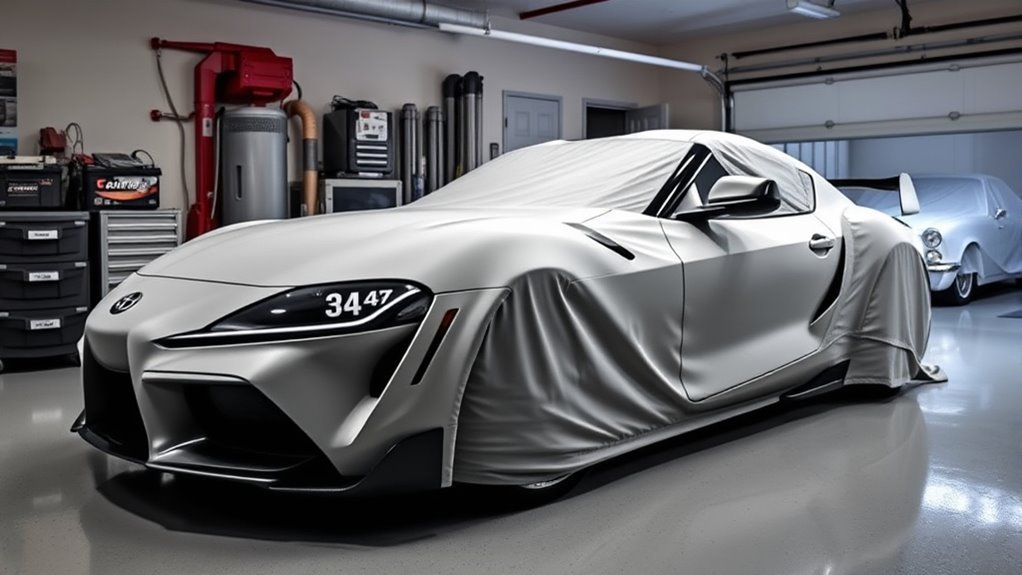
Controlled storage is the best protection for a Supra. A garage or enclosed unit shields the car from UV rays, hail, snow, tree sap, bird droppings, and wind-blown debris. If you do not have a garage, consider shared storage, a carport, or a dedicated outdoor cover setup.
| Option | Protection | Cost |
|---|---|---|
| Garage | High | Variable |
| Buddy storage | High | Shared |
| Shed/cover | Moderate | Low–Medium |
Garage Storage
Garage storage is ideal for long-term ownership. Use a soft indoor cover to keep dust off the paint, and leave the car uncovered occasionally to inspect for moisture, pests, or battery issues.
Buddy Storage
Buddy storage can be a practical option if a friend or family member has extra garage space. Confirm that the area is dry, clean, secure, and away from tools, bikes, ladders, or storage bins that could fall into the car.
Outdoor Long-Term Storage
Outdoor long-term storage requires the most care. Choose a breathable outdoor cover, use secure straps, clean the car before covering, and inspect it regularly. If the car will sit for weeks, also think about battery maintenance, tire pressure, fuel level, and pest prevention according to Toyota’s owner guidance.
Common Problems and Fixes: Zippers, Flapping, Wear
Most cover problems come from poor fit, dirty surfaces, rough handling, or worn hardware. Fix these early before they damage the cover or paint.
Zipper Care Tips
If your cover has zippered access, inspect the zipper track and slider for dirt, corrosion, or misalignment. A bad zipper can drag across paint or jam when you need quick access.
- Brush dirt from zipper teeth with a soft brush.
- Use only the lubricant recommended by the cover maker.
- Never force a stuck zipper; work it gently back and forth.
- Keep the cover dry before storage to reduce corrosion risk.
- Replace broken sliders before they scratch paint or tear fabric.
Securing Against Flapping
Wind flapping is one of the most common reasons a cover damages paint. Use integrated straps, a snug elastic hem, and correct mirror-pocket alignment. If the cover still balloons in wind, it may be the wrong size or wrong shape for the Supra.
- Anchor straps at the intended low points.
- Do not overtighten straps against body panels.
- Use a cable lock through grommets when appropriate.
- Recheck the cover after strong gusts.
- Remove the cover in extreme wind if it cannot be secured safely.
Preventing Fabric Wear
Fabric wear usually appears first at mirrors, bumper corners, seams, and strap points. If you see thinning, tears, rough spots, or exposed inner layers, repair or replace the cover before it rubs the Supra’s paint.
- Inspect zippers, straps, and seams monthly.
- Wash the cover when dirt builds up.
- Store it in a clean, dry bag.
- Do not fold the dirty outside surface against the clean inside lining.
- Replace the cover if the inner lining becomes rough or contaminated.
When You Should Not Use a Car Cover
A car cover is useful only when the surface and conditions are right. Do not use one in these situations:
- The car is dirty: Dust, sand, pollen, or road grit can scratch paint under the cover.
- The car is wet: Moisture can get trapped and cause water spots, mildew, or corrosion concerns.
- The paint is hot: Heat can make some fabrics or contaminants more likely to mark the finish.
- The cover is dirty inside: A contaminated lining can rub grit into the clearcoat.
- Wind is extreme: If the cover cannot be secured, remove it before it becomes abrasive.
- Ice has bonded to the cover: Pulling a frozen cover can tear fabric or damage trim.
Frequently Asked Questions
What is the weakness of the Toyota Supra?
As a compact two-seat sports car, the 2022 Toyota GR Supra has limited cargo space, low ground clearance, narrow rear visibility, and a firm ride compared with a regular coupe or sedan. For cover shopping, its biggest challenge is the body shape: it is short, wide, low, and sculpted, so a loose universal cover can fit poorly.
When should you not use a car cover?
Do not use a car cover when the Supra is wet, dirty, extremely hot, covered in road salt, or parked in wind so strong that the cover cannot stay secure. Also avoid using a dirty outdoor cover on clean indoor paint.
What size car cover fits a 2022 Toyota GR Supra?
The 2022 GR Supra is about 172.5 inches long, 73.0 inches wide without mirrors, and about 50.9–51.1 inches tall depending on trim. A custom-fit cover made for the 2022 GR Supra is best. If buying universal, compare your own measurements with the maker’s sizing chart and include mirror width.
Is a waterproof cover good for a Supra?
A water-resistant, breathable outdoor cover is usually better for regular use than a non-breathable waterproof tarp. The cover should shed rain while allowing trapped moisture to escape. If you need full waterproofing for short-term storms, remove and dry the cover afterward.
Can a car cover prevent hail damage?
A standard car cover can reduce minor surface exposure, but it usually cannot stop dents from larger hail. For hail protection, use a garage or covered parking first. If that is not available, use a padded hail cover or dedicated hail mat and secure it before the storm begins.
Conclusion
Think of your Supra as a precision instrument under a tailored shield: the right cover fits like a glove, breathes well, and anchors securely without rubbing the paint. Choose soft indoor fabric for garage storage, breathable weather-resistant fabric for outdoor parking, and padded protection for hail risk. Clean and dry the car before every install, inspect straps and seams regularly, and use covered storage whenever possible. With measured care and the correct gear, your 2022 Toyota GR Supra stays protected, clean, and ready to drive.
Sources
- Toyota 2022 GR Supra eBrochure — official 2022 GR Supra specifications and vehicle details.
- Toyota Owners Manuals and Warranties: 2022 Supra — official owner manual and warranty access.
- Covercraft Car Cover Cleaning Guide — car cover cleaning and care guidance.
- WeatherTech Sunbrella Outdoor Car Covers — custom-fit outdoor cover and material information.
- National Weather Service Hail Safety Rules — hail and severe thunderstorm safety guidance.
- Nationwide Hail Safety and Readiness Tips — practical vehicle protection steps during hail risk.