Last updated: September 14, 2026.
Quick answer: For a Toyota 4Runner, use the tongue-weight guidance in the owner’s manual for your exact model year rather than relying on a generic 10–15% trailer rule. Toyota fifth-generation manuals such as the 2016 manual specify 9–11% of the trailer’s actual loaded gross weight. You must also stay below every applicable vehicle, receiver, hitch, payload, GVWR, GAWR, GCWR, and trailer rating. For example, a 5,000 lb loaded trailer produces a 450–550 lb target at 9–11%, but a lower published vehicle or hitch limit still controls. Measure the combination as loaded for travel and adjust cargo before towing.
Method note: This guide is based on Toyota-published specifications and owner-manual procedures. It does not claim first-hand towing tests or substitute for the owner’s manual for your exact 4Runner.
Toyota 4Runner Tongue Weight: Quick Answer
The correct Toyota 4Runner tongue weight depends on model year, actual loaded trailer weight, and the lowest applicable vehicle or hitch rating. Toyota’s towing guidance is more specific than the often-repeated generic 10–15% rule.
| 4Runner model year | Toyota towing guidance | Important tongue-weight point |
|---|---|---|
| 2016 | 5,000 lb maximum trailer weight | Owner’s manual: 9–11% of loaded trailer weight; Toyota’s 2016 product release lists 470 lb tongue weight |
| 2017–2024 fifth generation | 5,000 lb maximum towing in Toyota model-year materials | Toyota model-year materials commonly list a 500 lb maximum tongue weight; owner’s-manual percentage guidance still applies |
| 2025 | Up to 6,000 lb maximum towing | Toyota’s 2025 manual uses 9–11% for conventional towing; verify the exact receiver, hitch, payload and axle limits for your configuration |
| 2026 | Up to 6,000 lb maximum towing |
The percentage is only one part of the calculation. The safe number is the one that satisfies all applicable limits at the same time. If a percentage calculation produces 520 lb but your vehicle or receiver is limited to 500 lb, 520 lb is not acceptable.
Where to Find Your 4Runner’s Towing and Tongue-Weight Limits
Use three sources together: the owner’s manual for model-specific towing instructions, the vehicle’s certification and tire/loading labels for vehicle and axle limits, and the receiver/hitch markings for hardware limits. Do not assume the door-jamb label contains the complete towing specification.
Check The Owner’s Manual
Start with the towing section of the owner’s manual for your exact model year. Toyota defines TWR as the maximum allowable gross trailer weight and provides instructions for tongue weight, GCWR, trailer brakes, sway control, and weight distribution where applicable.
For example, the 2016 manual specifies a 9–11% tongue-weight distribution for conventional trailers and a 5,000 lb TWR. The redesigned 2025 4Runner can tow up to 6,000 lb, so a generic 5,000/500 rule should not be applied to every 4Runner.
- Confirm your model year, drivetrain, trim, and towing equipment.
- Record TWR and GCWR from the towing section.
- Record the manual’s tongue-weight percentage and any brake, sway-control, or weight-distribution requirements.
Inspect Door Jamb Sticker
The driver’s-door certification and tire/loading labels are essential, but they serve a different purpose from the towing section of the manual. Record the vehicle’s GVWR, front and rear GAWR, and available payload information.
GVWR is the maximum allowable loaded weight of the 4Runner itself. When towing, the vehicle load includes occupants, cargo, accessories and the trailer’s tongue load. GAWR limits how much load can be carried by each axle. A combination can therefore be below its trailer tow rating and still overload the 4Runner’s payload or rear axle.
Contact Toyota With VIN
If your manual, vehicle labels, or receiver markings appear to conflict, use the vehicle’s VIN to confirm the correct specifications with Toyota or an authorized Toyota dealer. This is especially useful when the vehicle has optional towing hardware, aftermarket suspension components, a replacement receiver, or an uncertain model-year configuration.
Do not choose the highest number shown on any single component. The lowest applicable rating in the complete towing system controls.
How to Estimate Your Trailer’s Gross Weight Before Measuring
Your trailer’s useful towing weight is its actual loaded gross trailer weight: the trailer plus batteries, propane, water, tools, camping gear, motorcycles, food, accessories and anything else that will travel in it. A manufacturer’s dry or unloaded weight is only a starting point.
You can estimate loaded trailer weight by adding known cargo to the trailer’s empty weight, but a certified platform scale is better before a heavy trip.
| Weight | What it means |
|---|---|
| Loaded vehicle weight | 4Runner + occupants + vehicle cargo + accessories + tongue load |
| Gross trailer weight | Trailer + all cargo carried by the trailer |
| Tongue weight | Vertical load the trailer places on the hitch ball |
| GVWR / GAWR check | Loaded 4Runner and each axle must stay within their ratings |
| GCWR check | Loaded tow vehicle + loaded trailer must stay within GCWR |
Do not compare the vehicle-plus-trailer combination with GVWR. GVWR applies to the loaded 4Runner; GCWR applies to the combined vehicle and trailer.
Two Ways to Measure Tongue Weight on a 4Runner
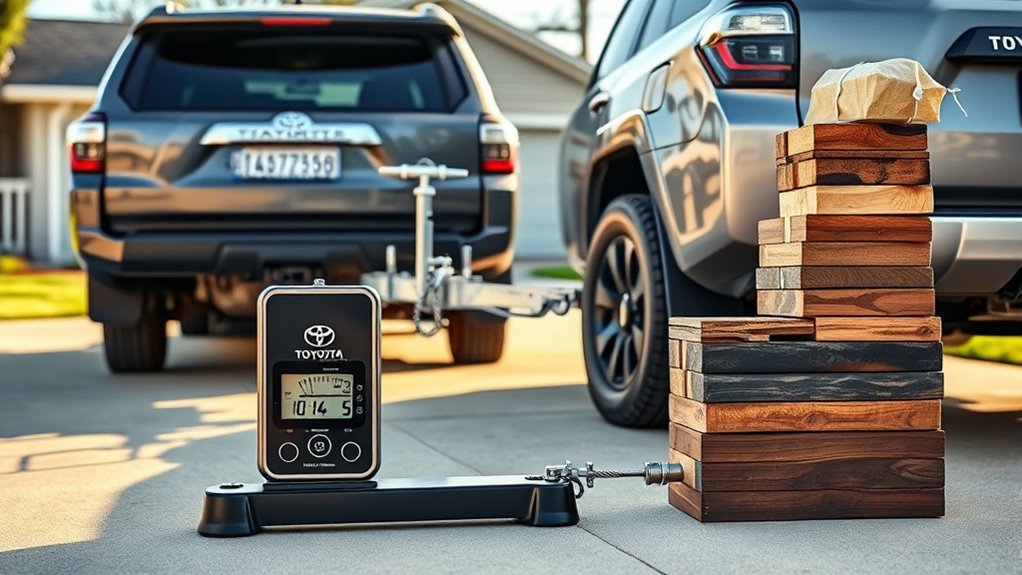
Measure tongue weight with the trailer loaded exactly as it will travel. Secure the cargo, fill tanks to the expected travel level, park on firm level ground, chock the trailer wheels, and keep the coupler at approximately its normal towing height.
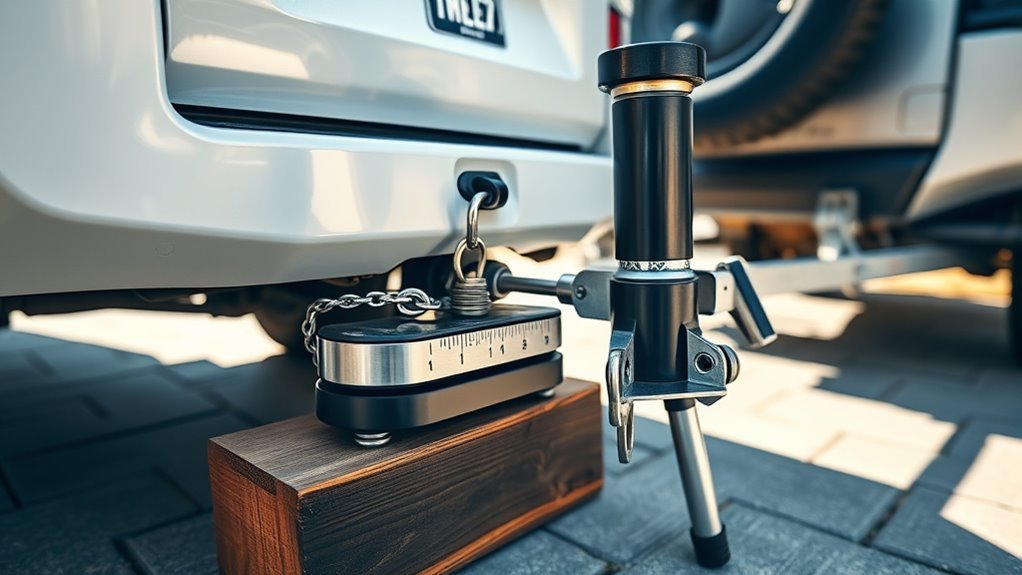
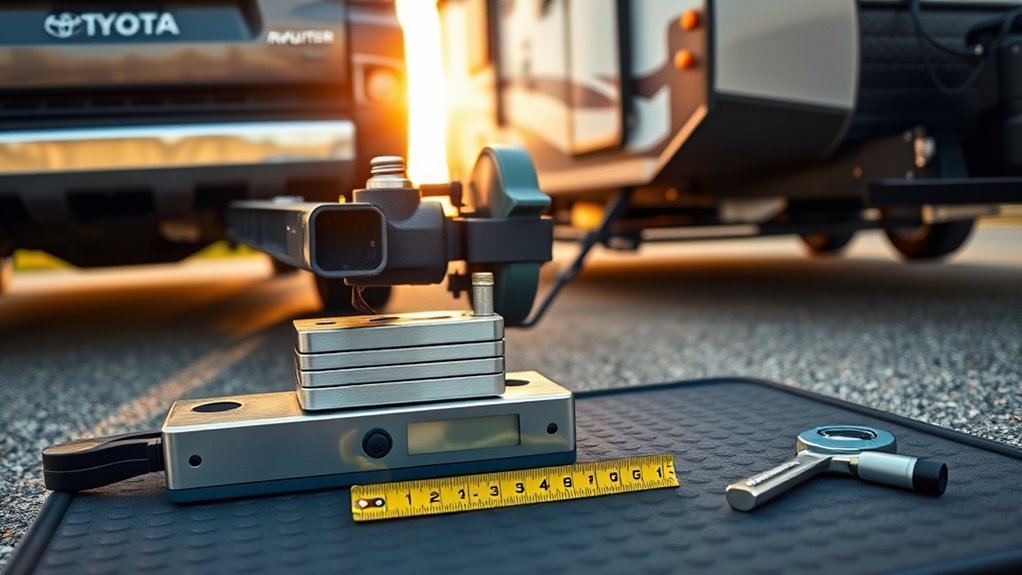
- Dedicated tongue-weight scale: place a scale rated for the expected load directly under the coupler according to the scale manufacturer’s instructions. This gives a direct tongue-weight measurement.
- Certified platform scale: record the loaded tow vehicle’s weight without the trailer connected, then weigh the same loaded vehicle with the trailer connected while following the scale operator’s axle-positioning procedure. The increase carried by the tow vehicle can be used to verify the hitch load. For an actual raw tongue-weight check, follow the scale and hitch manufacturer’s procedure rather than relying on a percentage calculation alone.
- Recheck after changing cargo: moving batteries, water, motorcycles, generators or other dense cargo can materially change tongue weight.
Calculating 9–11% tells you the target range; it does not prove your trailer actually has that tongue weight. Measure it.
[Products Worth Considering]
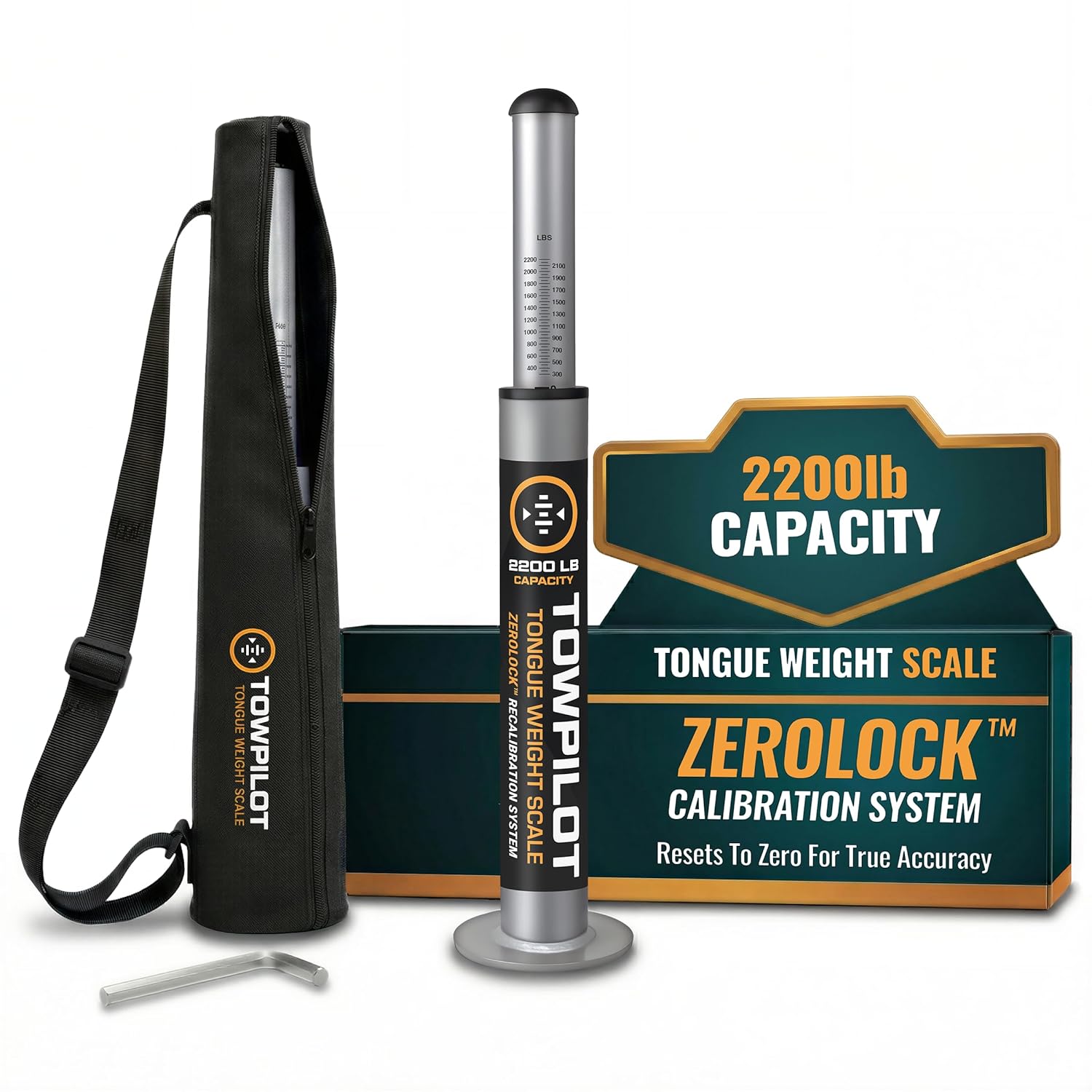
This trailer tongue weight scale helps you check hitch weight quickly and accurately before towing, reducing sway and improving overall safety. Built with durable steel and a spring mechanism, it works without batteries and includes a recalibration feature to maintain true-zero accuracy over time. It is designed for RVs, campers, and utility trailers, with a top plate that helps protect your coupler during use.
This custom-fit rear cargo liner is designed for 2012-2017 Toyota Camry models to provide reliable trunk protection without trimming or modification. Deep grooves and raised edges help trap dirt, water, mud, and snow, while the textured surface supports easy cleaning after everyday use. Made from odorless, non-toxic TPO material, it offers durable all-weather coverage and a precise fit for the cargo area.

This mud flaps kit helps protect your Toyota Camry’s lower body panels from snow, salt, sand, rocks, and road debris thrown up by the wheels. Designed for SE and XSE Sport models, it offers a direct-fit install with included mounting hardware for a cleaner, more finished look. Built from durable ABS thermoplastic, it is made to handle harsh driving conditions while helping keep your vehicle cleaner.
How to Load and Position Cargo to Hit the Ideal Tongue Weight
Load heavy items low, secured, and close to the trailer’s axle area, with a controlled bias forward of the axle as needed to achieve Toyota’s specified tongue-weight range. Keep left-to-right loading balanced. Do not simply place every heavy item as close to the coupler as possible, because that can overload the hitch and rear axle.
| Cargo change | Typical effect |
|---|---|
| Move cargo slightly forward | Usually increases tongue weight |
| Move cargo slightly rearward | Usually decreases tongue weight |
| Center cargo left-to-right | Improves side-to-side balance |
| Place dense cargo low | Reduces unnecessary trailer body roll |
| Remove excess cargo | Reduces trailer, tongue and combination weight |
Make small changes and reweigh. Moving too much mass behind the axle simply to reduce tongue weight can create an underloaded tongue and increase trailer-sway risk.
How Tongue Weight Affects Handling, Braking, and Suspension
Too little tongue weight can make a conventional trailer less stable and more prone to sway. Too much tongue weight can overload the 4Runner’s rear axle or payload capacity, increase rear suspension compression, and change the amount of load carried by the front axle.
The correct setup therefore has to pass more than a percentage test. Check:
- Tongue-weight percentage specified by the owner’s manual.
- Receiver and hitch rating.
- Vehicle GVWR and payload.
- Front and rear GAWR.
- Trailer TWR and vehicle GCWR.
If any one of those limits is exceeded, the combination needs to be corrected before towing.
What to Do If Your Tongue Weight Exceeds the 4Runner’s Limit
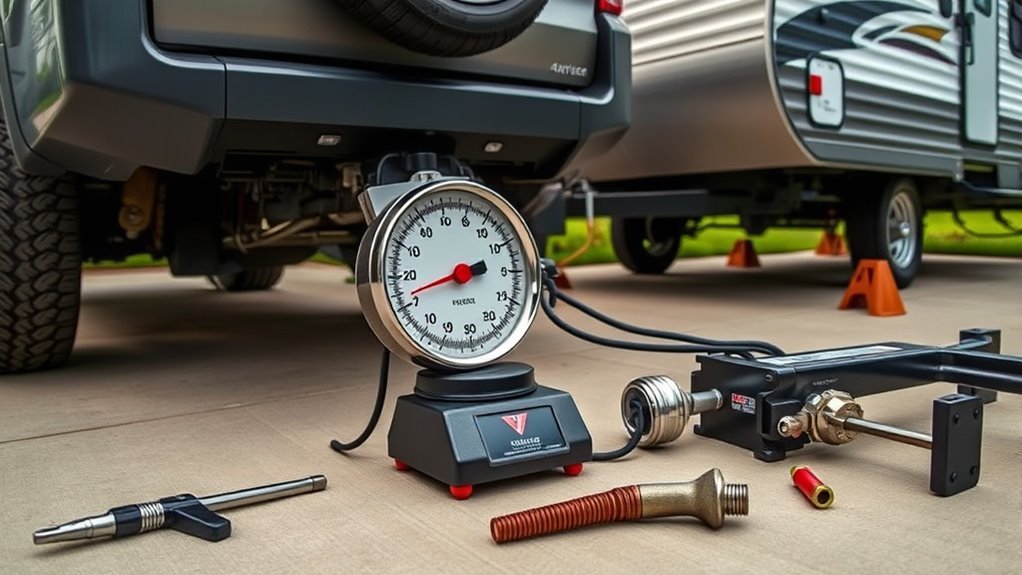
If measured tongue weight exceeds the lowest applicable limit for your 4Runner or hitch, do not tow the trailer in that configuration. Reduce or reposition cargo and measure again.
[Products Worth Considering]

Upgrade your Toyota 4Runner with these heavy duty roof rack cross bars designed for raised side rails and secure cargo transport. The aluminum construction, anti-theft locking system, and tie-down loops help keep gear stable on the road while the low-profile design helps reduce wind noise. Easy to install with no drilling required, they provide a durable and convenient solution for road trips, hauling, and outdoor adventures.

This plug-and-play OBD2 scanner helps drivers quickly read and clear engine error codes while providing live data, freeze frame information, I/M readiness, and MIL status for more confident troubleshooting. It adds a built-in voltage test and clear status indicators to support electrical checks and faster diagnostics, making it a practical choice for home users, car enthusiasts, and repair professionals. Compatible with most OBDII vehicles since 1996 and designed with an easy-to-use interface, it offers broad coverage and simple operation in one compact tool.

Accurate Tongue Weight Measurement - Reliable hitch weight readings help maintain proper load balance and reduce trailer sway.
Reduce Load Immediately
Removing cargo is the most direct solution when both trailer weight and tongue weight are high. Start with nonessential dense items near the front of the trailer, then remeasure the loaded trailer and tongue.
- Remove unnecessary cargo.
- Measure actual loaded trailer weight again.
- Measure actual tongue weight again.
- Recheck GVWR, GAWR, GCWR, TWR and hitch limits.
A weight-distribution hitch does not raise the vehicle’s rated towing, payload, axle or hitch capacity. It should not be used to disguise an overloaded setup.
Redistribute Weight Properly
If the trailer is within its gross-weight rating but tongue weight is excessive, move appropriate cargo toward the trailer axle in small increments and remeasure. Do not move so much weight rearward that tongue weight drops below Toyota’s recommended percentage.
A correctly selected weight-distribution hitch can redistribute hitch-induced axle loading between the tow vehicle and trailer when Toyota and the hitch manufacturer permit or require its use. It does not change the actual need to keep tongue weight within the applicable limits.
Use Alternative Transport
If the trailer cannot be loaded within all ratings, the correct solution is a different towing arrangement rather than accepting an overload.
- Remove or separately transport heavy cargo.
- Use a lighter trailer when practical.
- Use a tow vehicle with adequate trailer, payload, axle and hitch ratings.
Short-Trip vs. Long-Haul Tips for Heavy Hitch Loads
The 4Runner’s weight limits apply regardless of trip length. A trailer that overloads the vehicle, axle, receiver or hitch is not made compliant because the trip is only a few miles.
For any trip, secure cargo, confirm coupler and safety-chain attachment, check tire pressure and condition, verify lights and trailer brakes where fitted, and make sure the combination is within its ratings.
Long-distance towing adds repeated heat cycles, vibration and opportunities for cargo to shift. Recheck tie-downs, tire condition, hitch hardware and trailer behavior during appropriate stops. If sway, unusual steering behavior, abnormal tire heat or braking problems appear, stop and identify the cause rather than continuing at speed.
Tools, Accessories, and Checks to Improve Hitch Safety
A safe towing setup depends more on measurement and correctly rated hardware than on adding accessories after the combination is overloaded.
Useful checks and equipment include a properly rated tongue-weight scale or certified platform scale, wheel chocks, correctly rated hitch ball and mount, functioning safety chains, trailer lighting, and the braking or sway-control equipment required by the owner’s manual and applicable law.
Toyota’s 2016 4Runner manual lists an unbraked TWR of 1,655 lb and requires a sway-control device with sufficient capacity when gross trailer weight exceeds 2,000 lb. Toyota’s 2025 manual text also specifies a suitable weight-distributing hitch when gross trailer weight exceeds 5,000 lb. Always check the requirements for your exact model year rather than transferring one generation’s thresholds to another.
A weight-distribution hitch can redistribute axle loading, but it does not increase the lowest-rated towing component or make excessive tongue weight acceptable.
- Measure: loaded trailer weight and actual tongue weight.
- Verify ratings: TWR, GCWR, GVWR, GAWR, payload, receiver and hitch.
- Test systems: trailer brakes, lights, safety chains, breakaway equipment and sway-control hardware where applicable.
[Products Worth Considering]

Digital battery-powered LED display offers fast, easy-to-read measurements.
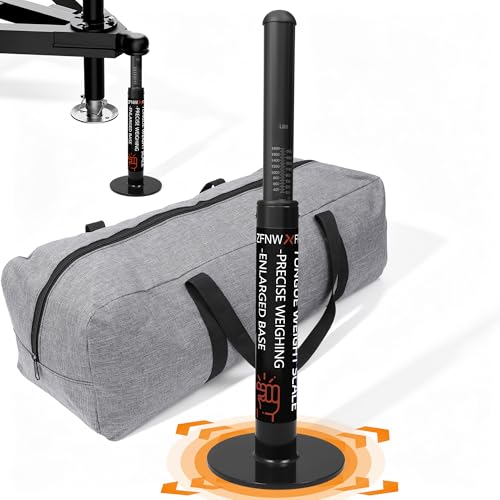
【Stable 6.3" Large Base】Our trailer tongue weight scale features an upgraded large base - 6.3" to prevent tipping, wobbling, or sinking in mud—safe and reliable for every towing trip, no messy mishaps.
Legal and Liability Checks: Staying Compliant and Safe
Manufacturer ratings and road-law requirements are related but not identical. Trailer-brake rules, weight enforcement, equipment requirements and insurance consequences can vary by state, province or other jurisdiction.
The practical baseline is straightforward: keep the combination within Toyota’s published vehicle ratings, stay within the trailer and hitch manufacturers’ ratings, and comply with the towing laws that apply where you drive. “
Legal Liability Risks
Avoid claiming that a particular overload automatically creates negligence or voids insurance; those outcomes depend on the facts, policy language and jurisdiction. What can be said reliably is that operating outside published equipment ratings can create a safety problem and may become relevant after a crash or enforcement inspection.
Keep scale tickets or other weight records when towing near a rating, and correct an overloaded combination before travel.
Compliance With Regulations
Before departure, confirm that the loaded 4Runner remains within GVWR and front/rear GAWR, the trailer remains within its own rating and the 4Runner’s TWR, and the complete combination remains within GCWR. Confirm that the receiver, ball mount, hitch ball and any weight-distribution equipment are rated for the actual load.
Recheck weights after major cargo changes. Adding water, propane cylinders, batteries, generators, motorcycles or cargo boxes can change both gross trailer weight and tongue weight.
Authoritative Sources for 4Runner Towing Limits
- Toyota Manuals and Warranties — select the exact model year and vehicle to obtain the applicable owner’s manual.
- Toyota 2016 4Runner product information — lists 5,000 lb towing and 470 lb tongue weight.
- Toyota 2024 4Runner product information — lists 5,000 lb maximum towing and 500 lb maximum tongue weight.
- Toyota 2025 4Runner product information — lists maximum towing capacity of 6,000 lb.
- Toyota 2026 4Runner product information — lists maximum towing capacity of 6,000 lb.
Frequently Asked Questions
What Is an Acceptable Tongue Weight?
For a Toyota 4Runner, use the percentage specified in the owner’s manual for your model year. Fifth-generation manuals such as 2016 specify 9–11% of actual loaded gross trailer weight. The resulting number must still remain below every applicable vehicle, axle, receiver and hitch limit.
Is 500 lb the Tongue-Weight Limit on Every Toyota 4Runner?
No. Toyota’s 2016 product information lists 470 lb, while later fifth-generation Toyota materials commonly list 500 lb. The redesigned 2025–2026 generation can tow up to 6,000 lb, so owners should check the exact owner’s manual and receiver/hitch rating rather than assuming every 4Runner uses the same tongue-weight limit.
Does Tongue Weight Count Against 4Runner Payload?
Yes. Tongue weight is load carried by the tow vehicle. Toyota defines gross vehicle weight while towing as the vehicle plus occupants, cargo, equipment and tongue weight, so a trailer can be within TWR while the 4Runner still exceeds GVWR, payload or rear GAWR.
Does a Weight-Distribution Hitch Reduce Tongue Weight?
No. A weight-distribution hitch redistributes hitch-induced axle loading. It does not make excessive actual tongue weight disappear and does not increase the lowest-rated towing component. Correct an overweight tongue by reducing or repositioning cargo first.
How Do You Measure 4Runner Tongue Weight?
Load the trailer exactly as it will travel, keep it level at normal coupler height, chock the wheels, and use a properly rated tongue-weight scale or a certified platform-scale procedure. Recheck after moving heavy cargo, changing tank levels, or altering the trailer setup.
What Happens If Tongue Weight Is Too Low?
Too little tongue weight can make a conventional trailer more prone to sway. Move suitable cargo slightly forward, secure it, and remeasure until the trailer meets Toyota’s model-year guidance without exceeding the vehicle, axle, hitch or trailer limits.
Conclusion
For a Toyota 4Runner, do not treat 10–15% or 500 lb as universal rules. Start with Toyota’s guidance for your exact model year, calculate the target from the trailer’s actual loaded weight, and then apply the lowest vehicle, axle, receiver and hitch limit.
For fifth-generation examples, Toyota manuals specify a 9–11% tongue-weight target. Toyota’s 2016 product information lists a 470 lb tongue limit, later fifth-generation materials commonly list 500 lb, and the redesigned 2025–2026 4Runner increases maximum towing capacity to 6,000 lb. Measure rather than guess, verify GVWR/GAWR/GCWR as well as trailer weight, and correct any overload before towing.