Choosing a replacement battery for a Toyota Supra is not a “close enough” job. The battery must match the car’s tray, hold-down, terminal layout, venting needs, and electrical load. For the modern GR Supra, the safest starting point is not Group 35 or Group 48—it is a VIN-based lookup, because most U.S. replacement catalogs commonly point to a BCI Group 49 / DIN H8 AGM battery, while some listings show closely related H9/95R options for certain years or trims.
Quick Answer
Most 2020–2026 Toyota GR Supra battery replacements should be verified by VIN, but common U.S. catalog listings point to a 12-volt AGM BCI Group 49 / DIN H8 battery. Do not assume Group 35 or Group 48 fits unless your owner’s manual, battery label, or Toyota parts lookup confirms it.
Key Takeaways
- The modern GR Supra commonly uses an AGM battery, and many replacement catalogs list Group 49 / H8 as the main fitment.
- BCI group size affects physical fit, hold-down security, terminal location, and cable reach—not just cranking power.
- Always confirm fitment with the VIN, the original battery label, the owner’s manual, or a Toyota parts/service lookup before buying.
- After installation, the battery may need electronic registration or system checks so the charging system manages the new battery correctly.
At a Glance
| Time Required | 10–20 minutes to confirm size; 30–60 minutes for installation and system checks |
| Difficulty | Moderate if DIY; easy for a Toyota dealer or qualified European/BMW-experienced shop |
| Tools Needed | Tape measure, gloves, 10 mm wrench or socket, battery tester, and scan tool if registration is required |
| Cost | Usually higher than a basic flooded battery because AGM Group 49/H8 batteries are large, high-capacity batteries |
Which Battery Group Size Does a Toyota Supra Use?
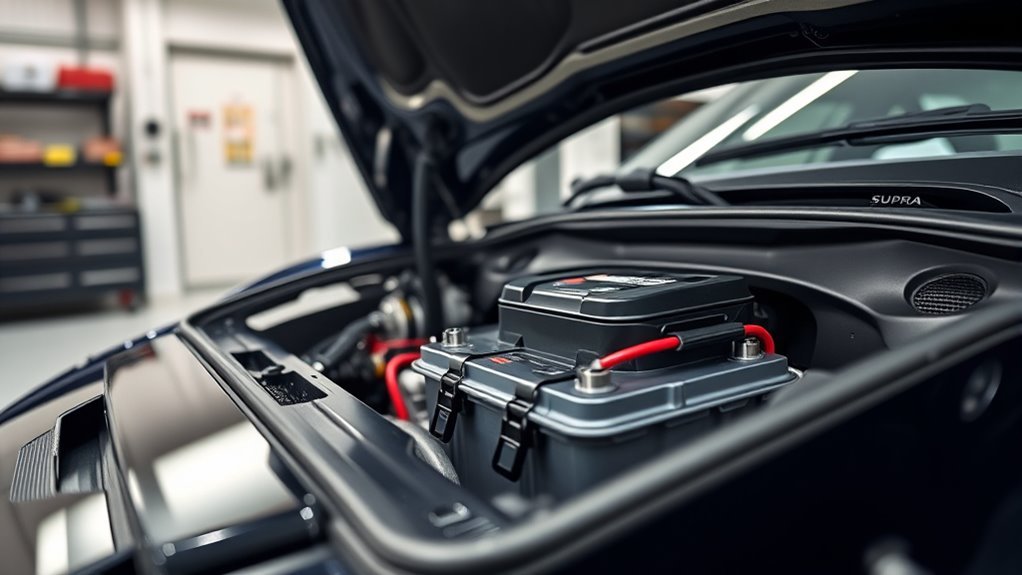
For the current-generation Toyota GR Supra, the most common replacement direction is a 12-volt AGM battery in BCI Group 49 / DIN H8 size. This is the size many major replacement catalogs show for late-model GR Supra applications, including 2021–2022 2.0L listings and 2023 GR Supra listings. Some parts catalogs also show a 95R / H9 AGM option for certain years or configurations, so the exact answer should always be confirmed against your VIN.
That means the old “just buy a Group 35” advice is risky for a GR Supra. A Group 35 battery is much smaller than a Group 49/H8 battery, and Group 48/H6 is also a different size. Either may have enough voltage to power accessories, but that does not make it the correct mechanical or electrical match for the car.
Warning: Do not choose a battery only because the posts reach the cables. A battery that is too small, too tall, incorrectly vented, or poorly secured can move in the tray, strain cables, create electrical faults, or fail under hard driving.
[Products Worth Considering]

The ANCEL AD410 PRO combines engine diagnostics and 12V battery testing in one easy-to-use tool, helping you read and clear check engine codes while checking battery health, cranking, and charging performance. It also provides live data, freeze frame details, and I/M readiness checks to help you diagnose issues faster and prepare for emissions testing. With plug-and-play operation, a clear screen, and broad vehicle compatibility, it is a practical solution for home mechanics and everyday drivers.

The TOPDON BT100 helps you quickly check the health and charge status of 12V lead-acid batteries with clear analytical results, including state of health, state of charge, voltage, and cranking performance. It supports a wide range of battery types and vehicles, making it a practical tool for diagnosing starting and charging issues at home or in the shop. Compact and easy to use, it provides fast, reliable testing without needing to charge the device first.

The ANCEL BA101 helps diagnose 12V batteries quickly with clear readings for battery health, charge level, voltage, CCA, cranking, and charging system performance. Designed for a wide range of vehicles and battery types, it offers easy-to-read results, reliable clamp connections, and built-in protection to make testing safer and more convenient.
Which BCI Group Sizes Fit Each Supra Model Year and Engine?
The table below gives a practical fitment guide for the modern GR Supra. Use it as a starting point, not as a substitute for a VIN lookup. Toyota’s official owner resources and parts channels are the best place to confirm your exact vehicle, especially if the car has been modified or imported.
| Supra model | Common replacement listing | What to verify before buying |
|---|---|---|
| 2020 GR Supra 3.0 | Usually AGM; commonly Group 49 / H8 in aftermarket listings | Original battery label, VIN fitment, terminal layout, and battery registration procedure |
| 2021–2022 GR Supra 2.0 and 3.0 | Group 49 / H8 AGM is commonly listed; Yuasa lists 2021–2022 2.0L as Group 49 | CCA, amp-hour rating, vent provision, hold-down fit, and scan-tool registration |
| 2023 GR Supra | Group 49 / H8 AGM is commonly listed; some catalogs also display 95R / H9 AGM alternatives | Whether your trim calls for H8 or H9/95R, plus the original battery’s Ah and CCA ratings |
| 2024–2026 GR Supra | Confirm by VIN; expect an OEM-equivalent AGM battery rather than assuming Group 35 or Group 48 | Toyota parts lookup, dealer/service data, battery label, and whether the charging system needs registration |
| Older Mk3/Mk4 Supra models | Different from the MkV GR Supra; do not copy the Group 49/H8 spec without checking | Owner’s manual, under-hood label, existing battery dimensions, engine, and market region |
For a quick reality check, a typical Group 49/H8 AGM battery is a large case battery with high reserve capacity and cold-cranking output. For example, Interstate’s MTX-49/H8 AGM listing shows 900 CCA and 95 Ah, which is much closer to the kind of battery commonly listed for GR Supra replacements than a smaller Group 35 or Group 48 unit.
A BCI group number is a fitment standard, not a simple “power level.” It helps define the battery’s case size, terminal arrangement, and mounting compatibility.
How Battery Group Size Affects Fit, Terminals, and Performance
The Battery Council International group-size system helps standardize battery dimensions, terminal locations, and compatibility. In a Supra, the right group size matters because the battery has to sit tightly in the tray, connect without cable tension, and match the vehicle’s expected capacity range.
Here is what can go wrong when the battery group is wrong:
- Poor tray fit: A battery that is too short or narrow may slide under braking, cornering, or vibration.
- Terminal mismatch: If the positive and negative posts are not in the right place, the factory cables may be stretched, twisted, or routed unsafely.
- Hold-down problems: A battery that cannot be clamped correctly can fail inspection and create a short-circuit risk.
- Low reserve capacity: A smaller battery may start the car at first but struggle with accessories, short trips, cold weather, or extended parking.
- Charging-system confusion: Modern battery management systems may charge the replacement incorrectly if the battery type or capacity is wrong.
Note: The Supra needs a 12-volt starting battery, not a high-voltage hybrid battery. AGM and flooded lead-acid batteries are both 12-volt designs, but they charge and age differently, so match the original battery type whenever possible.
AGM vs. Flooded Battery for the Supra
Most modern GR Supra replacement listings point to an AGM battery. AGM stands for absorbent glass mat. It is still a lead-acid battery, but the electrolyte is held in fiberglass mats instead of moving freely like a traditional flooded battery. That design helps with vibration resistance, spill resistance, charge acceptance, and reserve power.
A flooded battery may be cheaper, but it is not always the right substitute. If your Supra left the factory with AGM, stay with AGM unless Toyota service information or a qualified technician confirms another type is acceptable. Mixing battery chemistry, capacity, and registration data can shorten battery life or cause charging issues.
Pro Tip: Before removing the old battery, take a clear photo of the top label. Capture the group size, Ah rating, CCA rating, part number, post layout, and any AGM or VRLA marking. That photo is your best shopping reference.
[Products Worth Considering]

The MOTOPOWER MP0514A makes it easy to check battery and charging system health with simple plug-and-test operation. Its digital LCD display and LED indicators provide clear voltage readings and alternator status, while built-in reverse connection and over-voltage protection help support safe use. Compact and portable, it is a practical tool for drivers and mechanics who want quick, reliable diagnostics.

The KONNWEI KW371 is a versatile 2-in-1 diagnostic tool that tests automotive batteries and 4/5-pin relays with fast, accurate results. It supports 6V, 12V, and 24V systems across multiple battery types, and also checks cranking and charging performance to help pinpoint battery, starter, or alternator issues. Built for mechanics and DIY users, it offers clear visual readouts, multiple language support, and convenient vehicle-powered operation with no batteries required.

KUST Custom Fit Trunk Mat is designed for 2020-2026 Toyota GR Supra models to help protect the cargo area from dirt, spills, and daily wear. Its TPE construction offers a fresh, odor-free feel, while the raised-edge design adds extra coverage for all-weather protection. Lightweight and easy to remove, it makes cleaning simple and helps keep the trunk neat and protected.
How to Measure and Confirm Your Supra’s Battery Group Size
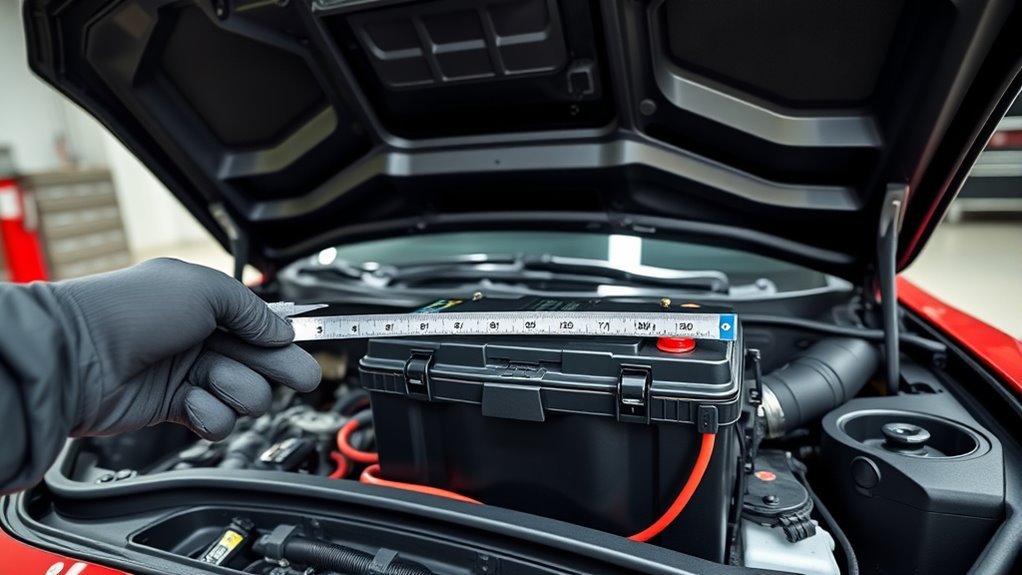
To confirm the correct Toyota Supra battery group size, use more than one check. The best match is the one that agrees across the original battery, the vehicle’s VIN, and a trusted parts source.
- Check the owner’s manual and Toyota owner resources. Start with the official Toyota manuals and warranties page for your model year.
- Read the old battery label. Look for markings such as AGM, VRLA, H8, Group 49, H9, 95R, Ah, CCA, and the Toyota or supplier part number.
- Measure the battery case. Measure length, width, and height at the largest outside points. A Group 49/H8 battery is much larger than Group 35 or Group 48/H6.
- Confirm terminal orientation. Stand at the same side of the battery used by the catalog and note which post is positive and which is negative.
- Inspect the vent tube or vent port. If your battery location requires venting, the replacement must support the same vent setup.
- Run a VIN fitment lookup. Use Toyota parts, a dealer, or a reputable battery catalog that checks year, engine, trim, and production details.
- Match the battery type and capacity. Replace AGM with AGM and stay close to the original Ah, CCA, and reserve-capacity range.
A resting voltage test can tell you whether the battery is charged, but it does not prove the battery is the correct size. A healthy, fully charged 12-volt lead-acid battery often reads around 12.6 volts at rest, while a weak battery may still show a decent voltage until it is load-tested. If the Supra cranks slowly, shows battery warnings, or loses settings, test the battery under load before replacing parts.
Installation Tips, Registration, and Safety
Battery replacement on a GR Supra should be treated like a modern European-style battery job. The mechanical part is only half of the work. The car may also need the new battery registered or reset in the battery management system, especially if the battery capacity or type changes.
Use this safe installation order:
- Park on a level surface, turn the car off, and keep the key away from the vehicle.
- Confirm the replacement battery is the correct group size, type, CCA, Ah, polarity, and vent configuration.
- Wear gloves and eye protection. Lead-acid batteries are heavy and can release corrosive acid if damaged.
- Disconnect the negative terminal first, then the positive terminal.
- Remove the hold-down and lift the battery straight out without tipping it.
- Clean corrosion from the clamps and tray, but do not force or bend the factory cables.
- Install the new battery, secure the hold-down, and reconnect positive first, then negative.
- Perform battery registration or a charging-system reset if the vehicle or scan tool calls for it.
- Check for warning lights, verify charging voltage, and keep the receipt and test printout.
Warning: Never leave a loose wrench across the battery terminals. A car battery can deliver enough current to melt metal, damage electronics, or cause injury.
Buying and Installation Tips: Warranty, Registration, and Dealer vs. Aftermarket
Before you buy a battery for your Supra, confirm the correct BCI group size and warranty terms so you do not compromise fitment or create avoidable diagnostic problems. Toyota Genuine Parts are built for Toyota specifications, but a quality aftermarket AGM battery can also be a good choice when it matches the required size, chemistry, rating, venting, and terminal layout.
Using an aftermarket battery does not automatically void a U.S. vehicle warranty, but an incorrect part or improper installation can complicate a claim if it causes the failure. Keep the receipt, the battery test report, and any registration printout. If the car is still under warranty, dealer installation is the cleanest paper trail. If you use an independent shop, choose one that can document the correct battery type and complete any required registration.
| Option | Benefit | Watch-Out |
|---|---|---|
| Toyota dealer | VIN-based parts lookup, installation record, and warranty-friendly documentation | Usually the highest price |
| Certified independent shop | Can install and register the battery correctly if equipped | Ask first whether they can register AGM batteries on a Supra |
| Quality aftermarket AGM | Often less expensive and widely available | Must match size, Ah, CCA, venting, and terminal layout |
| DIY installation | Saves labor and lets you inspect the tray and cables | Risky if you cannot confirm registration requirements |
| Saved records | Supports warranty, resale, and future diagnostics | Only useful if the receipt shows the battery part number and specs |
[Products Worth Considering]

This custom-fit car cover is designed for Toyota Supra and GR Supra models, offering dependable all-weather protection for both indoor and outdoor use. Built with durable Oxford fabric and a soft cotton lining, it helps shield your vehicle from rain, sun, snow, dust, and UV exposure while protecting the paint finish. Windproof straps, dual air vents, reflective details, and included security accessories add convenience and peace of mind.

Protect your 2020-2026 Toyota GR Supra with a precision custom-fit cover designed to hug the vehicle’s contours for a secure, reliable fit. Built for all-weather use, it helps guard against rain, snow, sun, and other outdoor elements while the soft inner lining helps reduce the risk of scratches. Added straps, waterproof seams, and ventilation provide dependable protection and everyday convenience.

The NOCO GENIUS5 is an all-in-one battery charging and maintenance solution for 6V and 12V lead-acid and lithium batteries. It features temperature compensation, dead-battery recovery, desulfation, and safe long-term maintenance to help extend battery life and performance. Compact and versatile, it works with a wide range of vehicles and comes with mounting accessories and a warranty.
Common Signs Your Supra Battery Is the Problem
A weak Supra battery can look like a much larger electrical issue. Before replacing sensors or modules, test the battery and charging system if you notice:
- Slow cranking, especially after the car sits overnight
- Battery, charging, or drivetrain warning messages after startup
- Comfort-access, infotainment, or window settings resetting
- Low voltage after short trips or long storage periods
- Clicking from relays with no normal engine start
- A battery that fails a load test even after being fully charged
If the car is stored for long periods, use a smart charger compatible with AGM batteries. Short drives, cold weather, and high accessory use can drain a battery faster than the alternator can restore it.
What About Battery Disposal?
Do not throw the old battery in the trash. Lead-acid batteries, including AGM batteries, should be returned through a retailer, dealer, recycling center, or approved collection program. The U.S. Environmental Protection Agency identifies lead-acid battery collection as an established recycling stream, and most battery sellers charge a refundable core fee to encourage proper return.
Frequently Asked Questions
What kind of battery does the Toyota Supra take?
The modern Toyota GR Supra commonly takes a 12-volt AGM starting battery. Many U.S. replacement catalogs list BCI Group 49 / DIN H8 for late-model GR Supra applications, but you should confirm the exact size, Ah rating, CCA rating, and terminal layout by VIN or original battery label before buying.
Is a Group 35 battery correct for a Toyota Supra?
Do not assume Group 35 is correct for a GR Supra. Group 35 is physically much smaller than the Group 49/H8 battery commonly listed for modern GR Supra replacements. Only use Group 35 if your Toyota parts lookup, existing battery label, or verified catalog fitment specifically calls for it.
What is the difference between Group 49 and Group 48?
Group 49, also called H8 in many catalogs, is larger than Group 48/H6 and usually offers more reserve capacity and higher cranking output. Because the case size and terminal layout differ, Group 48 should not be used in place of Group 49 unless a verified fitment source confirms it for your exact Supra.
Do I need to register a new Supra battery?
Many modern vehicles with battery management systems need battery registration or a reset after replacement, especially when the battery type or capacity changes. Because the GR Supra shares many electronic service practices with modern European platforms, ask the installer to confirm and document registration.
How do I know what group size battery I need?
Check the owner’s manual, original battery label, and a VIN-based Toyota or battery-catalog lookup. Then confirm length, width, height, terminal orientation, venting, hold-down style, CCA, Ah rating, and AGM/flooded chemistry. If those checks disagree, use the VIN-based Toyota parts result or a qualified installer.
Conclusion
The safest Toyota Supra battery choice is the one that matches the car mechanically and electronically. For the modern GR Supra, that usually points toward an AGM Group 49 / H8 replacement, not a guessed Group 35 or Group 48. Still, exact fitment can vary by model year, production details, and catalog source, so confirm by VIN, compare the original battery label, and verify terminal layout before buying. Install it securely, register it if required, recycle the old battery, and your Supra will be far less likely to turn a simple battery swap into an electrical headache.
Sources
- Toyota Owners Manuals and Warranties — official Toyota owner manual and warranty reference for Supra owners.
- Battery Council International: BCI Group Sizes — explains how battery group sizes standardize fitment, terminal layout, and compatibility.
- Yuasa Batteries: 2021–2022 Toyota GR Supra 2.0L Group 49 Listing — supports Group 49 fitment for 2021–2022 GR Supra 2.0L catalog applications.
- AutoZone: 2023 Toyota GR Supra Battery Listings — shows common aftermarket AGM Group 49/H8 and related listings for 2023 GR Supra fitment.
- Interstate Batteries MTX-49/H8 AGM Specification — provides an example of Group 49/H8 AGM battery capacity, CCA, and reserve-capacity class.
- Federal Trade Commission: Businessperson’s Guide to Federal Warranty Law — supports the warranty discussion around parts, service, and documentation.