A dead battery in a Toyota Supra is stressful, but the fix is usually straightforward when you use the correct 12-volt jump-start procedure. This guide focuses on the modern Toyota GR Supra, while also noting where older Supra models may differ. Always follow your exact owner’s manual first, especially if the battery, jump terminals, or aftermarket electronics have been modified.
Quick Answer
To jump-start a Toyota Supra, park both vehicles without touching, switch off engines and accessories, connect positive to positive, connect the negative lead to the donor battery and the Supra’s approved engine/body ground, start the donor vehicle, then start the Supra. Remove cables in reverse order.
Key Takeaways
- Use only 12-volt jump-start equipment and fully insulated jumper clamps.
- Do not let the two vehicles touch during the jump-start.
- Turn off lights, audio, climate controls, chargers, and aftermarket electronics before connecting cables.
- Use the Supra’s starting aid terminal and approved engine/body ground when your model provides them.
- If it still will not start after a few careful attempts, stop and diagnose the battery, fuses, starter, alternator, or security system.
At a Glance
| Time Required | 10–20 minutes |
| Difficulty | Beginner, if terminals are clearly identified |
| Tools Needed | Jumper cables or a 12-volt jump starter, gloves, eye protection, owner’s manual |
| Cost | Usually free if you already have cables; possible battery replacement if the battery fails testing |
What This Guide Covers and Who It’s For
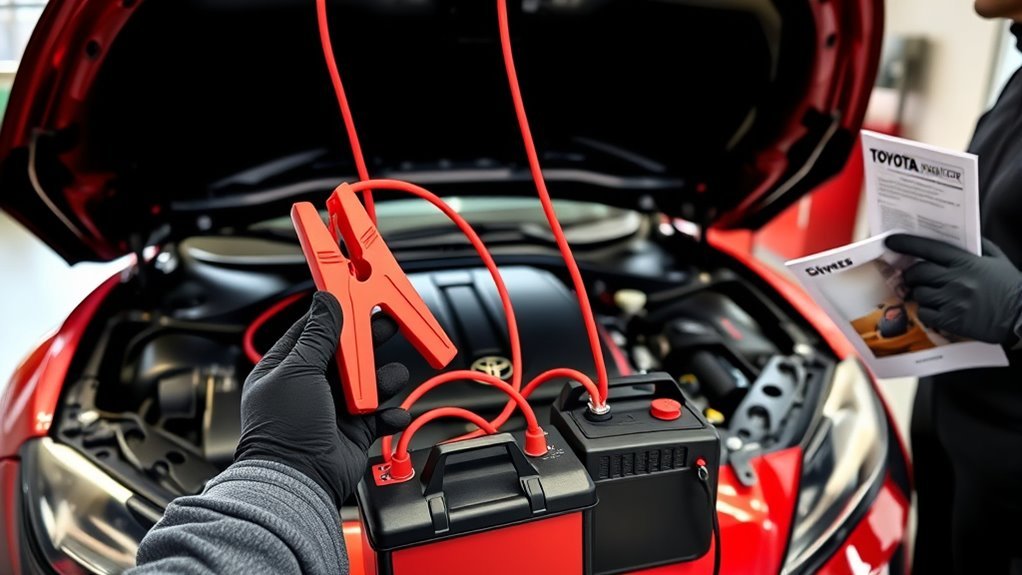
This guide explains how to jump-start a Toyota Supra safely, with extra attention to cable order, approved jump points, grounding, battery safety, and electronics protection. It is most useful for Toyota GR Supra owners dealing with a weak or discharged 12-volt battery.
The exact terminal layout can vary by model year and generation. For the 2020-and-newer GR Supra, Toyota’s owner information points owners to the official Toyota owner’s manual and warranty resources. Older MK3 and MK4 Supra models may have different battery locations, fuse layouts, and alarm wiring, so confirm the procedure for your specific car before connecting cables.
Warning: Do not jump-start a battery that is cracked, frozen, leaking, swollen, or giving off a strong sulfur smell. Move away from the vehicle and call roadside assistance or a qualified technician.
Park and Prepare Both Cars Safely
Before touching the jumper cables, park both vehicles close enough for the cables to reach but do not let the vehicles touch. Body contact between vehicles can create a short-circuit risk during jump-starting.
- Put both vehicles in Park or Neutral, depending on transmission type.
- Set the parking brakes on both vehicles.
- Switch off both engines before connecting cables.
- Turn off headlights, cabin lights, audio, climate controls, phone chargers, dash cams, radar detectors, and aftermarket controllers.
- Remove metal jewelry and keep tools away from battery terminals.
- Wear gloves and eye protection if available.
- Confirm the assisting vehicle or jump starter is a 12-volt system.
Use jumper cables with insulated clamp handles. Toyota’s GR Supra owner’s manual warns that incorrect cable order can cause sparking, and OSHA battery-safety guidance also notes that ignition sources and poor grounding around batteries can create hazards.
Locate Supra Jump Points and Battery Terminals
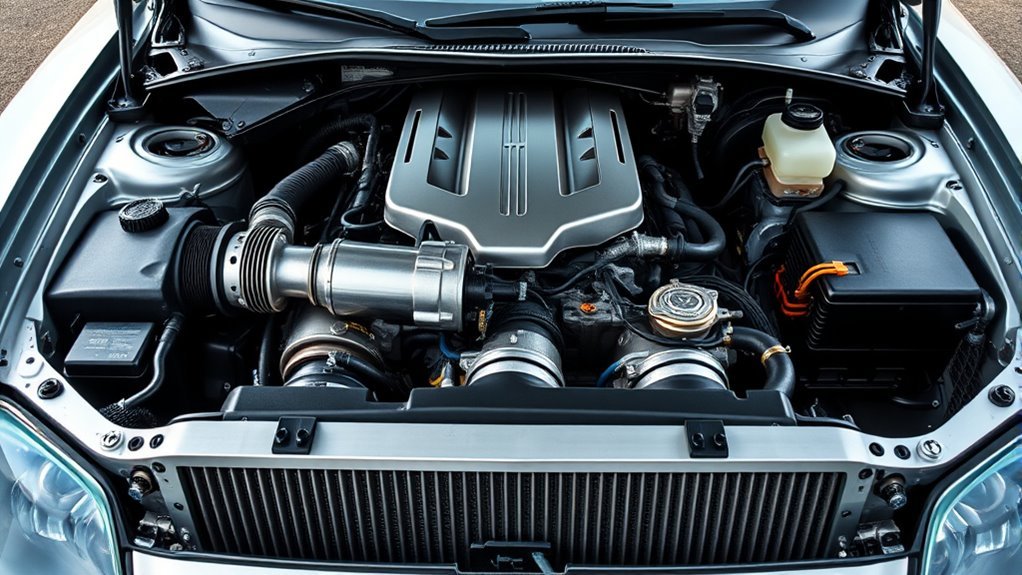
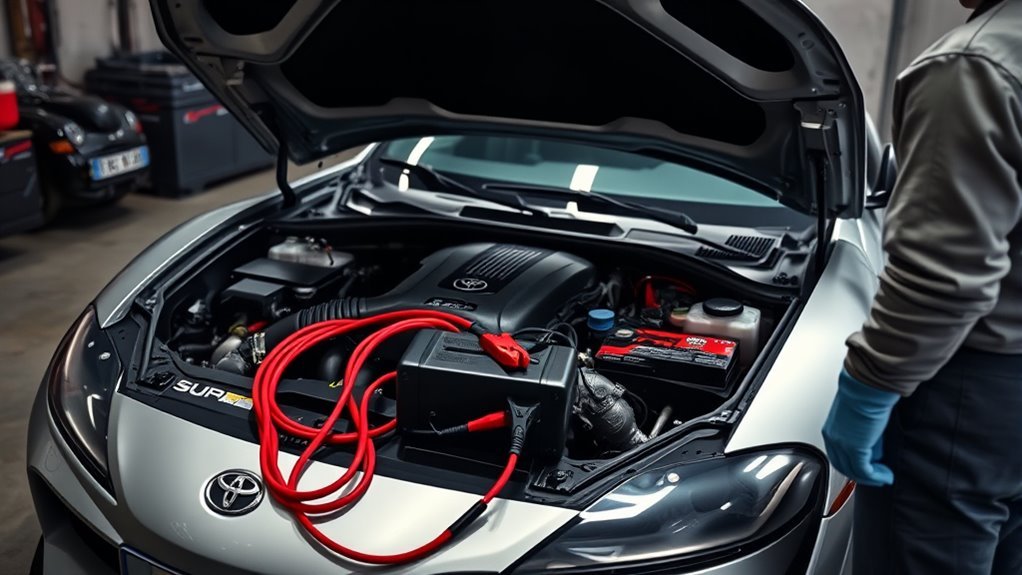
Open the hood and locate the Supra’s starting aid terminal and approved ground point. On modern GR Supra models, Toyota directs charging and jump-starting through the starting aid terminals in the engine compartment, not by casually clamping onto random battery hardware.
The positive jump point is usually protected by a red or marked cover. The negative connection should go to the approved engine or body ground, not to painted metal, plastic brackets, moving pulleys, belts, fuel lines, or delicate electrical components.
Note: If you cannot clearly identify the positive jump terminal and ground point, stop and check the owner’s manual. Guessing around a modern Supra’s electrical system can damage modules or create a spark hazard.
Jump-Start Your Toyota Supra Step by Step
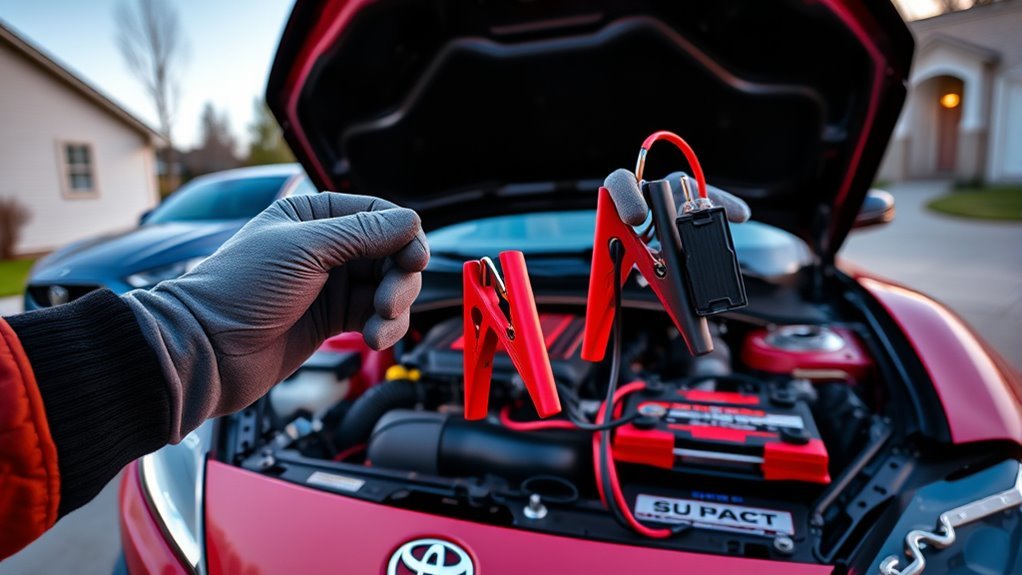
Follow this order carefully. The goal is to complete the circuit safely, reduce sparking near the battery, and protect the Supra’s electronics.
- Open the Supra’s positive starting aid terminal cover. Keep the red and black clamps separated.
- Connect the first red clamp to the positive terminal or starting aid terminal on the assisting vehicle or jump starter.
- Connect the second red clamp to the Supra’s positive starting aid terminal.
- Connect the first black clamp to the negative terminal or approved ground point on the assisting vehicle.
- Connect the second black clamp to the Supra’s approved engine or body ground.
- Start the assisting vehicle and let it run for several minutes at a slightly raised idle, or follow the jump starter’s instructions if using a portable pack.
- Start the Supra normally. Do not crank for long periods. If it does not start, wait a few minutes before trying again.
- Let both engines run for several minutes after the Supra starts.
- Remove the cables in reverse order: Supra ground, donor negative, Supra positive, donor positive.
Pro Tip: Keep the jumper clamps still once connected. A clamp that slips off can spark, interrupt the jump, or touch the wrong metal surface.
Using a Portable Jump Starter on a Supra
A portable 12-volt jump starter can be safer and more convenient than using another vehicle, especially in a tight parking space. Use a quality jump pack with reverse-polarity protection and enough cranking capacity for the Supra’s engine.
- Make sure the jump starter is charged and switched off before connecting.
- Connect the red clamp to the Supra’s positive starting aid terminal.
- Connect the black clamp to the approved engine or body ground.
- Switch on the jump starter, then start the Supra.
- Switch off the jump starter and remove the clamps in reverse order.
Never connect a charger or jump pack to random under-hood hardware. Toyota’s owner information for the GR Supra says battery charging should be done through the starting aid terminals in the engine compartment.
If It Won’t Start: Check Power, Fuses, Security, and Ignition
If the Supra still will not crank or start after a careful jump, stop repeating attempts. Long cranking can overheat components and drain the donor battery or jump pack.
Work through these checks:
- Recheck the cable order and clamp grip. Loose or dirty connections are common.
- Confirm the donor battery or jump starter is strong enough. A weak donor may light the dash but fail to crank the engine.
- Look for battery damage or severe corrosion. Do not continue if the battery looks unsafe.
- Watch the dashboard. No lights may point to a main power or battery connection issue. Lights with no crank may point to the starter circuit, immobilizer, gear selector, clutch switch, or low battery voltage.
- Check fuses only if you know the correct locations and ratings. The GR Supra has fuses in more than one location, and Toyota warns not to repair a blown fuse or substitute a different color or amperage rating.
- Consider the security system. If the alarm or immobilizer was triggered, lock and unlock the car with the key fob and try again according to the manual.
- Scan for fault codes. Persistent no-start issues may involve the starter, alternator, battery sensor, ignition coils, fuel delivery, or control modules.
For older Supra generations, forum advice often mentions large main fuses and igniter-related failures. Those details may not apply to a newer GR Supra, so use the correct service information for your exact generation before replacing parts.
Protect Your ECU, Ignition, and Aftermarket Gear
Modern Supras rely on sensitive control modules, sensors, and battery-management systems. A proper jump-start routine helps reduce the risk of voltage spikes, reverse polarity, and stray current paths.
- Turn off aftermarket electronics before connecting cables, including audio amplifiers, piggyback controllers, gauges, dash cams, and radar detectors.
- Never reverse polarity. Red goes to positive. Black goes to negative or approved ground.
- Do not touch live clamps together. Keep unused clamp ends separated.
- Do not use starting fluid. Toyota’s GR Supra jump-starting instructions warn not to use spray fluids to start the engine.
- Do not disconnect the battery while the engine is running. That old test method can damage modern electronics.
The safest jump-start is the boring one: correct voltage, correct terminals, correct order, no sparks, no guessing.
Aftercare: Charging Time, Battery Replacement & Dealer Help
After the Supra starts, let it run for several minutes before shutting it off. A short idle may get you out of the parking lot, but it may not fully recharge a deeply discharged battery. If the battery was very low, use a proper charger or have the battery and charging system tested.
Charging Time Recommendations
| Action | Typical Time | Purpose |
|---|---|---|
| Run both vehicles after start | Several minutes | Stabilize voltage before disconnecting |
| Drive to a safe location | 20–30 minutes if practical | Give the alternator time to add charge |
| Use a smart charger | Several hours or overnight | Recover a deeply discharged battery more gently |
| Battery test | 5–10 minutes | Confirm cranking health and state of charge |
| Charging-system test | 5–15 minutes | Check alternator output and parasitic drain clues |
Dealer Replacement Assistance
If the battery fails testing or will not hold a charge, replace it with a battery that matches Toyota’s specifications for the Supra. Toyota’s GR Supra owner information says the installed battery is designed specifically for the vehicle and recommends dealer involvement after replacement because the battery should be registered to the vehicle.
Battery registration matters because comfort features, battery management, and vehicle messages may not behave normally after a replacement until the vehicle recognizes the new battery. A Toyota dealer or qualified shop can also check for parasitic draw, alternator problems, loose grounds, or failed modules.
Troubleshooting Tips and When to Call a Pro
Call a professional instead of continuing to jump-start if you notice smoke, melting insulation, clicking relays with no crank, burning smells, repeated blown fuses, warning lights that will not clear, or a battery that dies again soon after a successful jump.
Use this quick decision guide:
- Dash is completely dark: Check battery connections, ground, jump terminal connection, and main power supply.
- Dash lights up but engine does not crank: Check battery voltage, gear position, clutch switch if manual, starter circuit, and immobilizer status.
- Engine cranks but will not start: Check fuel, ignition, security system, and diagnostic trouble codes.
- Battery dies again after driving: Test the battery, alternator, and parasitic draw.
- Fuse blows again after replacement: Stop replacing fuses and have the short circuit diagnosed.
Frequently Asked Questions
Can jump-starting a car damage the ECU?
Yes, jump-starting can damage electronics if you reverse polarity, use the wrong voltage, connect clamps in the wrong order, create sparks near the battery, or let clamps touch. Using the Supra’s approved jump points and correct cable sequence greatly reduces the risk.
What are the common jump-starting mistakes?
The most common mistakes are letting the vehicles touch, reversing positive and negative clamps, connecting to a painted or unsafe ground, leaving accessories on, using weak jumper cables, cranking too long, and replacing fuses with the wrong amperage.
How do you jump a Toyota battery?
Use a 12-volt donor battery or jump starter. Connect positive to positive, connect the negative cable to the donor negative and the disabled vehicle’s approved ground point, start the donor, wait several minutes, start the Toyota, then remove the cables in reverse order.
Can I connect the black clamp directly to the Supra’s dead battery?
Use the ground point specified in your owner’s manual. In general, connecting the final negative clamp to an engine or body ground away from the battery helps reduce spark risk near battery gases.
Why does my Supra need battery registration after replacement?
Toyota’s GR Supra owner information recommends registering the vehicle battery after replacement. Registration helps the car’s battery-management system recognize the new battery so comfort features and vehicle messages can return to normal operation.
Conclusion
You can jump-start a Toyota Supra safely when you slow down, confirm the correct terminals, use a 12-volt power source, follow the cable sequence, and remove the clamps in reverse order. The biggest risks come from guessing, reversing polarity, using the wrong ground, or repeatedly cranking a car that needs diagnosis instead of another jump.
After a successful jump, test the battery and charging system if the problem returns. If the Supra will not start, keeps blowing fuses, or shows unusual electrical behavior, call a Toyota dealer, roadside assistance, or a qualified technician before more damage occurs.
Sources
- Toyota Owners Manuals & Warranties: Supra — official owner manual resources for model-specific procedures.
- Toyota GR Supra Owner’s Manual PDF — jump-starting, starting aid terminals, battery replacement, and fuse safety guidance.
- OSHA 1917.157 Battery Charging and Changing — battery charging safety and grounding away from the battery.
- OSHA 1926.441 Batteries and Battery Charging — ventilation and battery charging hazard guidance.
- AAA Club Alliance: How to Use Jumper Cables — general jump-start safety and cable sequence guidance.