
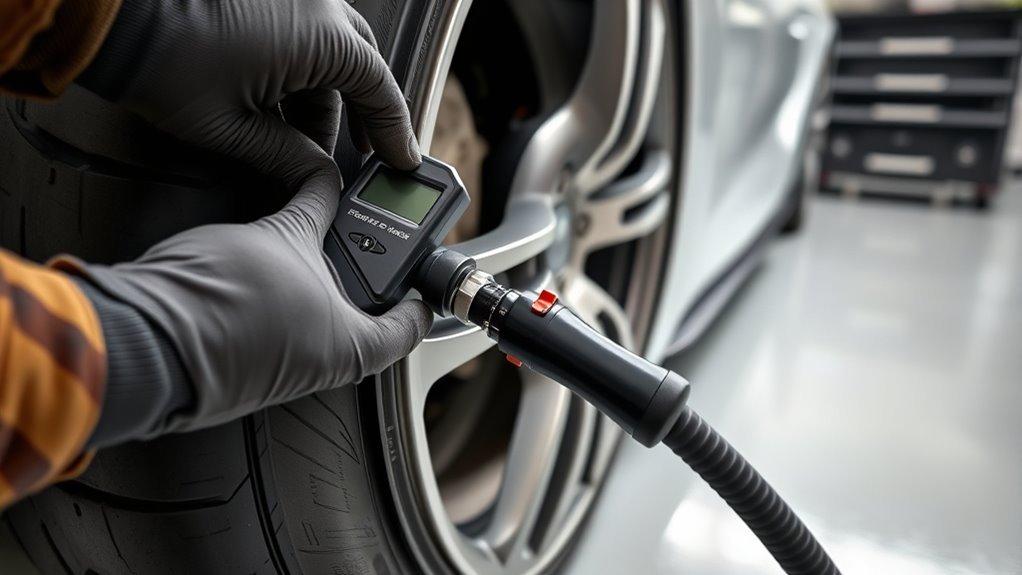
For a stock 2026 U.S. Toyota GR Supra using 255/35ZR19 front and 275/35ZR19 rear tires, Michelin’s current GR Supra fitment data lists 38 psi cold at both axles. Your own driver-side Tire and Loading Information label remains the final authority because the correct pressure can vary with model year, market, approved tire size, and load. Check pressure cold—ideally after the car has been parked at least three hours—and never use the tire sidewall maximum as the vehicle target.
Last updated: August 31, 2026. Rechecked against Toyota’s 2026 GR Supra lineup and owner resources, NHTSA TireWise, and Michelin’s current GR Supra tire-pressure data.
Quick Answer
If your 2026 GR Supra has the stock 255/35ZR19 front and 275/35ZR19 rear fitment, 38 psi cold front and rear is the current reference. Still confirm the driver-door placard before inflating. For any other model year, wheel size, tire size, or market, use the placard or Toyota owner information for that exact car.
Key Takeaways
- For the stock 2026 GR Supra 19-inch fitment, the current reference is 38 psi cold front and rear; the door placard remains the final authority.
- NHTSA defines a cold tire for pressure checks as one that has not been driven for at least three hours.
- Do not bleed normal heat-related pressure from hot tires just to bring them down to the cold placard number.
- Michelin says tire pressure typically changes by about 1 psi for every 10°F change in temperature, so recheck after major weather swings.
- For normal street driving, do not tune away from the verified placard pressure simply to chase handling feel or tread-wear patterns; diagnose alignment, load, tire damage, or fitment first.
At a Glance
| Time Required | 5–10 minutes |
| Difficulty | Easy |
| Tools Needed | Quality tire pressure gauge, air compressor or inflator, valve caps, pressure log |
| Cost | Varies by your gauge, inflator, and local air access |
Toyota Supra Tire Pressure: What PSI Should You Use?
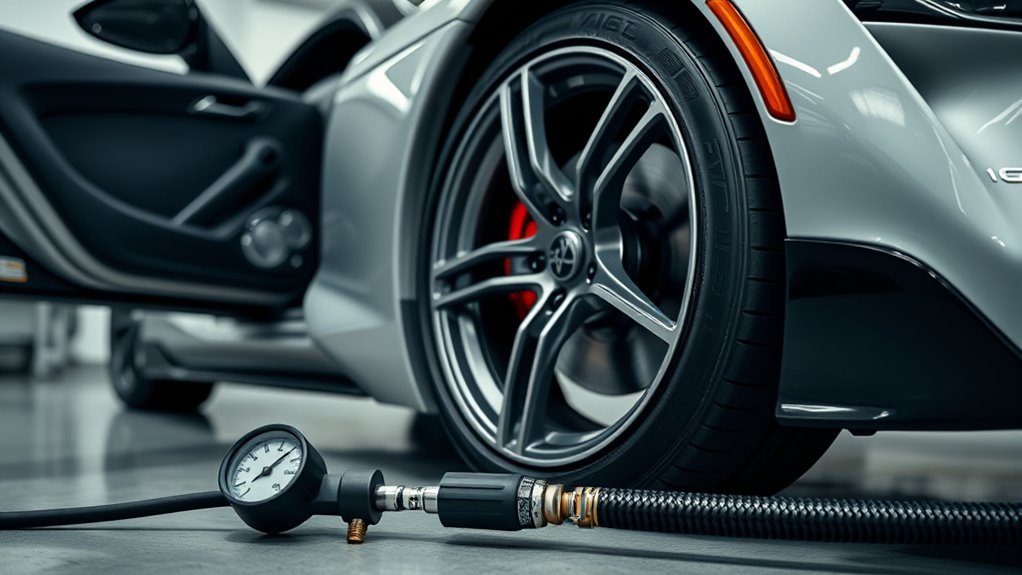
Start with the Tire and Loading Information label on the driver-side door edge or door jamb. That label is matched to the vehicle’s approved tire configuration and is your primary street-use target. Toyota also provides model-specific owner information, and late-model GR Supra vehicles can show current and intended values through Toyota Supra Command.
For a useful current reference, Toyota confirms the 2026 U.S. GR Supra lineup consists of 3.0, 3.0 Premium, and MkV Final Edition grades. Michelin’s 2026 GR Supra fitment page lists 255/35ZR19/XL 96(Y) front and 275/35ZR19/XL 100(Y) rear tires at 38 psi front and rear. Use that number only when it matches your car’s placard and tire fitment.
| 2026 Stock 19-Inch Reference | Tire Size | Cold Pressure |
|---|---|---|
| Front | 255/35ZR19/XL 96(Y) | 38 psi |
| Rear | 275/35ZR19/XL 100(Y) | 38 psi |
Do not treat 38 psi as a universal Supra number. Earlier MkV cars, other markets, alternate approved tires, and older Supra generations can use different values. If you are unsure which tire size is factory-correct for your car, check the placard and compare it with this Toyota Supra tire-size guide before adjusting pressure.
| Where to Look | What It Tells You | Use It For |
|---|---|---|
| Driver’s door placard | Vehicle-specific cold tire pressure and original tire size | Primary street-use target |
| Owner’s manual | Pressure-checking procedure, tire tables, and TPMS guidance | Confirming model-specific procedure |
| Toyota Supra Command | Current pressure readings and intended values when available | Checking each wheel and TPM status |
| Tire manufacturer or qualified tire shop | Load-capacity and alternate-size inflation guidance | Non-stock tires, wheels, or track-specific use |
Warning: The PSI molded into the tire sidewall is not your Supra’s normal street-pressure target. Use the vehicle placard or model-specific Toyota guidance for the correct cold inflation pressure.
Quick Start: What to Set Now for Cold Tire Targets
For normal street driving, set each tire to the cold PSI shown on your Supra’s door placard or in Toyota Supra Command. On a stock 2026 car with the 255/35ZR19 front and 275/35ZR19 rear fitment, that will commonly match the 38 psi front/rear reference above. If the tire size, load index, or approved fitment has changed, do not use wheel diameter alone to guess a new pressure; get tire-load guidance from the tire manufacturer or a qualified tire professional. A suspension or alignment change by itself is not a reason to change the verified street PSI.
[Products Worth Considering]

The ANCEL AD410 PRO combines engine diagnostics and 12V battery testing in one easy-to-use tool, helping you read and clear check engine codes while checking battery health, cranking, and charging performance. It also provides live data, freeze frame details, and I/M readiness checks to help you diagnose issues faster and prepare for emissions testing. With plug-and-play operation, a clear screen, and broad vehicle compatibility, it is a practical solution for home mechanics and everyday drivers.

The AstroAI S8 is a compact 12V lithium jump starter designed to get gas and diesel vehicles back on the road quickly, even from low or fully drained batteries. It combines powerful starting performance with smart boost mode, built-in safety protections, and a versatile 5-in-1 design that also works as a power bank and flashlight for everyday emergencies and travel.
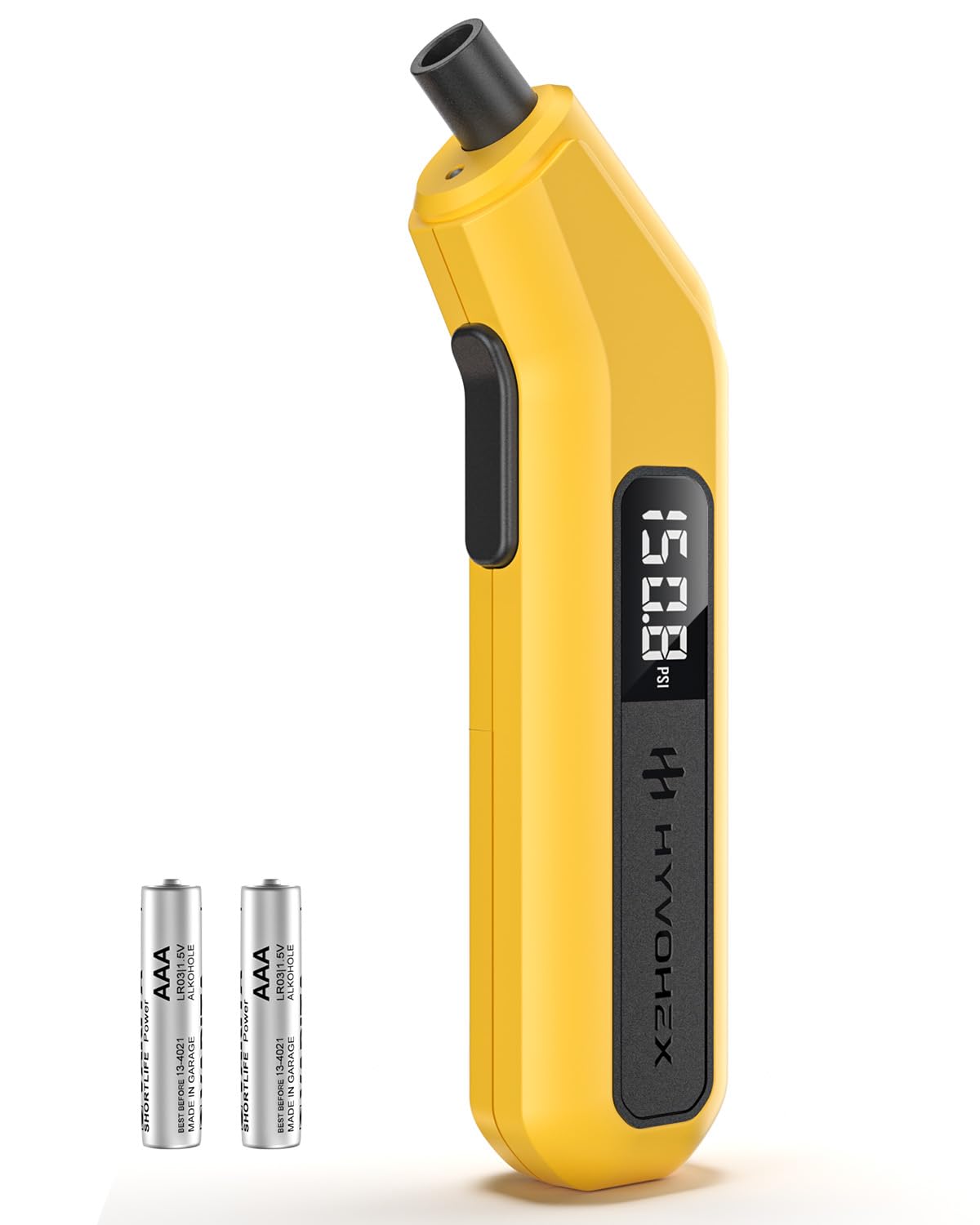
HYVOHEX digital tire pressure gauge delivers fast, accurate readings with an easy-to-read LED backlit display and a high-sensitivity sensor for reliable tire checks. Its valveless one-click operation, rotating valve head, and broad compatibility make it a practical tool for cars, bikes, and trucks. Built with a durable rubber shell and aluminum nozzle, it is compact enough to keep in your glove box or tool bag.
Cold Tire Pressure Targets
A cold tire is the reference point for setting pressure. NHTSA defines “cold” for this check as a tire on a vehicle that has not been driven for at least three hours. In practice, first thing in the morning before driving is usually the easiest time to get a stable reading.
Use this simple process:
- Open the driver’s door and read the cold PSI on the Tire and Loading Information label.
- Check all four tires with a quality gauge before driving.
- Add or release air until each tire matches the correct front or rear target.
- Reinstall valve caps tightly.
- Recheck after a few minutes and log the reading.
Quick Inflation Guidelines
Inflate in short bursts instead of holding the compressor on the valve for too long. After each adjustment, remove the inflator and check again with your own gauge. Service-station gauges can be convenient, but they may be worn, dropped, or inaccurate. Your own gauge gives you a consistent reference.
| Task | Best Practice |
|---|---|
| Find target PSI | Use the driver’s door placard, owner’s manual, or Toyota Supra Command. |
| Check pressure | Measure cold, before driving, with a reliable gauge. |
| Adjust pressure | Add or release air slowly and recheck after each change. |
| Confirm after adjustment | Recheck all four tires and make sure the front/rear values match the official target. |
Pro Tip: Keep a small tire-pressure log in your phone. Record cold PSI, outside temperature, tire model, and how the car felt. That makes future adjustments based on data instead of guesswork.
Cold vs Hot Pressures: When to Set and Why It Matters
Tires heat up while driving, and pressure rises as tire temperature rises. That is why cold pressure is the baseline Toyota and safety agencies use. If you check your Supra immediately after a highway drive, a spirited run, or a track session, the reading will usually be higher than the true cold pressure.
For normal street use, do not bleed air from hot tires just because the number looks high. If you release air while the tire is hot, the tire can end up underinflated once it cools. Instead, note the hot reading, let the car sit, and reset the tires to the official cold PSI later.
If a warm tire is clearly underinflated and you need to drive, do not leave it dangerously low just because you cannot get a cold reading. NHTSA advises adding air to the vehicle manufacturer’s recommended cold pressure as a temporary measure, then rechecking and correcting the tire when it is cold.
Set street tire pressure cold. Do not bleed normal heat-related pressure from a hot tire, and recheck any emergency warm-tire adjustment once the tire is cold.
Measure Pressure Properly: Choose and Use a Quality Gauge
A good gauge matters because small PSI changes can affect steering response, ride feel, tread wear, and fuel economy. Digital gauges are easy to read and often precise. Analog dial gauges are durable and do not need batteries. Pencil-style gauges are compact, but cheap ones can be harder to read consistently.
Use the same gauge each time so your readings stay consistent. Press the chuck straight onto the valve stem, hold it firmly, and wait for the reading to stabilize. If you hear air leaking around the chuck, reseat it and measure again. Replace any gauge that gives inconsistent readings or differs noticeably from a trusted reference gauge.
- Check all four tires, not just the one that looks low.
- Check the spare only if your vehicle is equipped with one.
- Inspect valve stems for cracks, leaks, missing caps, or damage.
- Do not rely only on visual inspection; low-profile performance tires can look normal when underinflated.
[Products Worth Considering]
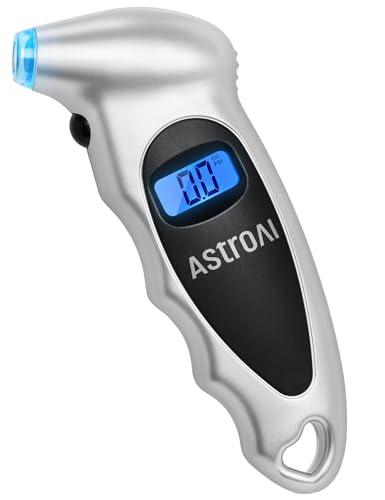
Accurate, Dependable Readings: Factory‑calibrated to ±1 PSI, so you can confidently match your vehicle’s recommended PSI (check the door jamb sticker). Ideal for monthly checks and road trips — consistent results every time, cold or warm.

PRO ACCURACY - mechanic recommended, performance tested, & calibrated accurate to professional ANSI 2A standards - with dual pressure sensors certified to ±0.50% FS (0.50 PSI), offering reliable readings up to 100 PSI w/ precise readout resolution of 0.10 PSI - so you can now maintain your tires with a shop-grade mechanic trusted tool

Enhanced Visibility in Low Light: Features a green backlit LCD screen and integrated flashlight, allowing for clear reading of tire pressure even in dark or dimly light conditions.
How Temperature Affects Tire Pressure
Ambient temperature changes can shift tire pressure even when there is no leak. Michelin says tires lose about 1 psi for every 10°F drop in temperature on average. When the weather turns colder, pressure falls; when the weather warms or the tire heats from driving, pressure rises.
Cold vs Hot Pressure
Cold pressure is the target you set. Hot pressure is a temporary result of driving, tire flex, road temperature, speed, and braking. For daily driving, the correct routine is to set the tires cold and then leave normal hot pressure rise alone.
For track use, drivers often monitor hot pressure to understand tire behavior. That is a different process from routine street maintenance and should be based on the tire manufacturer’s recommendations, track conditions, and instructor or technician guidance.
Temperature Pressure Calculations
Use the 1 psi per 10°F relationship as an approximate reminder to recheck, not as a substitute for the gauge or placard. For example, a 30°F temperature drop can produce roughly a 3 psi decrease. Check the tires cold and restore them to the vehicle’s recommended cold PSI rather than adding a fixed seasonal offset by guesswork.
| Temperature Change | Typical Pressure Effect | What to Do |
|---|---|---|
| 10°F colder | About 1 psi lower | Check cold and top up if needed. |
| 30°F colder | About 3 psi lower | Recheck all four tires before driving. |
| Long highway drive | Pressure rises from heat | Do not bleed down for normal street use. |
| Track session | Pressure can rise quickly | Use tire-specific hot targets and expert guidance. |
Ambient Effects on Readings
Seasonal pressure checks are especially important on a performance car like the Supra because its handling depends on a stable tire contact patch. Recheck pressure after the first cold snap of fall, before long road trips, before any track event, and whenever the TPMS warning appears.
Note: TPMS is a warning system, not a replacement for manual checks. NHTSA recommends checking tire pressure at least once a month when the tires are cold, even if the TPMS light is off.
Set and Calibrate Supra Tire Pressure Step by Step
Use this procedure when your tires are cold and the car is parked on level ground.
- Find the official target. Read the driver’s door placard or check the intended pressure values in Toyota Supra Command.
- Measure each tire. Use a quality gauge and write down the front-left, front-right, rear-left, and rear-right readings.
- Adjust slowly. Add or release air until each tire matches the correct cold PSI for its axle.
- Recheck all four tires. Pressure can change slightly as the gauge and valve reseat.
- Replace valve caps. They help keep dirt and moisture out of the valve core.
- Check the Tire Pressure Monitor. In Toyota Supra Command, go to My Vehicle > Vehicle Status > Tire Pressure Monitor.
- Reset only when needed. Toyota’s manual notes that corrected pressures may be applied automatically, but tires not found in the Control Display pressure values may require a Tire Pressure Monitor reset.
- Drive briefly if required. The current pressure display may update after a short drive.
If the TPMS light stays on after proper inflation, check for a puncture, leaking valve stem, damaged wheel, dead sensor battery, or mismatched tire setup. Do not ignore a warning light on the assumption that the system is wrong.
[Products Worth Considering]

✿IMPORTANT NOTE: ❶ GM VEHICLES ONLY: ONLY for Chevrolet, GMC, Cadillac and Buick, Check Compability List before buying. NOT support Ford, Toyota, Nissan, Honda and other non-GM brands; ❷ SENSOR REQUIREMENTS: Optimized for OE/OEM sensors. Most aftermarket sensors can work BUT some may fail if their frequency or parameters do not match the OEM original. NOT for UNIVERSAL TPMS sensors.❸ Requires a 9V battery for operation BUT NOT included.❹NOTE: If one or some sensors can't be activated after multiple attempts (because they were dead, low power or damaged, not our tool's not work), please replace them with new sensors then try again.

【CUSTOMIZED for FORD】This TPMS Sensor Training Tool is customized for all Ford Lincoln Mercury vehicles that has a Tire Pressure Sensor. Train the TPMS sensors and activate Tire Pressure Programming on new vehicles or after a tire rotation(Tip: You can refer to the second vehicle compatibility diagram and the A+ content to check if your vehicle is compatible with this reset tool.)

TPMS RELEARN TOOL FOR GM: This tire pressure monitor system relearn tool is compatible with most General Motors equipped with 315 MHz or 433 MHz sensor, including Chevy, Buick, GMC, Opel, Cadillac, etc, from 2006-2024, Cars, SUV, Pickup, Not for Heavy Truck
Do Wheels, Tires, or Suspension Changes Alter the Correct PSI?
Changing the tire size, tire construction, load index, or vehicle load can change the pressure needed to carry the car safely. A wheel or suspension change by itself does not create a simple PSI rule. If the tire size and load requirements remain stock, keep using the verified vehicle pressure unless Toyota or the tire manufacturer specifies otherwise.
Avoid shortcuts such as “add 2 psi for every inch of wheel diameter.” Tire inflation is tied to load capacity, tire size and construction, vehicle load, speed, and tire-maker guidance—not wheel diameter alone. Suspension and alignment changes can alter wear patterns, but that does not automatically mean the tire needs a different street pressure.
After a tire or wheel modification, use this safer process:
- Confirm the new tire size, load index, speed rating, and rim-width range are appropriate for the Supra.
- Compare the new setup with the original placard load requirements instead of copying a random PSI from another car.
- If the fitment differs from stock, ask the tire manufacturer or a qualified tire professional to confirm a safe cold pressure for the new load relationship.
- Inspect for rubbing, abnormal wear, vibration, valve or bead leaks, and TPMS errors before hard driving.
- If ride height, camber, or toe changed, have the alignment checked rather than trying to correct edge wear by changing street PSI.
Many Supras use staggered front and rear tire sizes, so front-to-rear rotation may not be possible. Follow Toyota’s manual and your tire shop’s guidance instead of forcing a rotation pattern that does not match the fitted tires.
Street vs Track Tire Pressure: What Should Change?
For everyday street driving—including spirited driving on public roads—use the verified factory cold pressure for your fitted tires. Do not lower street pressure simply to chase more grip; underinflation increases tire flex and heat. Track setup is different because tire temperature rises much more quickly, and the correct hot target depends on the exact tire, conditions, vehicle setup, and tire-manufacturer or instructor guidance.
| Use Case | Starting Point | Safe Rule |
|---|---|---|
| Daily street driving | Door placard cold PSI | Keep the verified factory target. |
| Spirited public-road driving | Door placard cold PSI | Do not tune pressure down for grip; fix tire, alignment, or setup issues separately. |
| Autocross or track day | Tire-maker or instructor guidance | Measure cold-to-hot rise and work toward the tire-specific hot target. |
| New tire or wheel setup | Verified load-based guidance | Confirm pressure before high-speed or high-load use. |
Warning: Track use can overheat street tires and raise pressure quickly. Check tire condition between sessions, stay within the tire maker’s limits, and never drive on tires showing cords, bulges, cuts, or severe shoulder damage.
Does Uneven Tire Wear Mean the PSI Is Wrong?
Uneven wear can be related to pressure, but it can also come from alignment, load, aggressive cornering, tire construction, balance, worn suspension parts, or damage. Start by returning the tires to the verified cold placard pressure and inspecting the tread across the full width.
| Wear Pattern | Possible Cause | What to Check First |
|---|---|---|
| Center wears faster | Pressure may be above the correct target, or the pattern may reflect tire/use factors | Verify cold PSI against the placard; do not reduce below the verified street target just to chase the pattern. |
| Both shoulders wear faster | Underinflation, heavy load, heat, or aggressive cornering | Check cold PSI, vehicle load, tire condition, and driving use. |
| One edge wears faster | Camber, toe, alignment, or worn component | Schedule an alignment and suspension inspection. |
| Cupping or vibration | Balance, damping, wheel, tire, or suspension issue | Have the tire, wheel, balance, and suspension inspected. |
For street use, do not use 1–2 psi trial-and-error changes as the first fix for abnormal wear. Set pressure to the verified specification, then check alignment, balance, load, tire damage, and suspension. Pressure tuning in small increments belongs to controlled track testing when it is supported by tire-temperature data and tire-specific guidance.
Frequently Asked Questions
What is the best PSI for a Toyota Supra?
Use the cold pressure on your specific Supra’s driver-door Tire and Loading Information label. For a stock 2026 GR Supra with 255/35ZR19 front and 275/35ZR19 rear tires, Michelin’s current fitment data lists 38 psi front and rear. Other years and fitments can differ.
What tire pressure should a 2026 Toyota GR Supra use?
For the stock 2026 GR Supra 19-inch fitment of 255/35ZR19 front and 275/35ZR19 rear, the current reference is 38 psi cold at both axles. Confirm the door placard before inflating because the vehicle label is the final authority for your car.
Should I check Supra tire pressure hot or cold?
Check and set pressure cold. NHTSA defines cold for this purpose as a tire on a vehicle that has not been driven for at least three hours. Normal driving heat raises pressure, so a hot reading should not be bled down to the cold placard number.
Why does my Supra’s tire pressure change with weather?
Tire pressure changes as temperature changes. Michelin says pressure drops about 1 psi for every 10°F decrease in temperature on average. Recheck the tires cold after major weather swings and restore them to the placard value.
Can I use the pressure printed on the tire sidewall?
No. The sidewall pressure is not the vehicle manufacturer’s normal street target. Use the cold PSI on the Supra’s door placard, owner information, or intended values shown in Toyota Supra Command when available.
Do I need to reset TPMS after adjusting Supra tire pressure?
Sometimes. Toyota’s Supra guidance says corrected pressures can be applied automatically, while tire setups not found in the Control Display pressure values may require a Tire Pressure Monitor reset. Correct all tire pressures before resetting the system.
How often should I check Toyota Supra tire pressure?
Check at least once a month when the tires are cold, and also before long trips, after major temperature changes, or whenever the TPMS warning appears. NHTSA recommends monthly cold-pressure checks even when the warning light is off.
Can I lower Supra tire pressure for more grip on the street?
Do not lower street pressure simply to chase more grip. Use the verified placard pressure for public-road driving. Track pressure is a separate setup that should follow the exact tire manufacturer’s hot-pressure guidance and controlled temperature measurements.
Conclusion
For a stock 2026 Toyota GR Supra with 255/35ZR19 front and 275/35ZR19 rear tires, 38 psi cold front and rear is the current reference, but your driver-door placard remains the final authority. Check pressure cold at least monthly, do not bleed normal heat-related pressure from hot tires, and recheck after major temperature changes. If tires or wheels differ from stock, confirm a safe load-based pressure instead of guessing from wheel diameter. If wear remains abnormal at the correct pressure, inspect alignment, balance, load, tire condition, and suspension rather than tuning street PSI by feel.
Sources
- Toyota USA Newsroom — 2026 GR Supra MkV Final Edition and lineup — confirms the 2026 U.S. lineup and 3.0-based model context.
- Michelin USA — Toyota GR Supra tires, sizes, and pressures — provides the current 2026 stock-size pressure reference used in this guide.
- Toyota Owners — 2026 Supra Wheels and Tires — supports Toyota Supra Command, Tire Pressure Monitor, cold-tire checking, and TPMS guidance.
- Toyota Owners — Manuals and Warranties — official source for model-specific owner information.
- NHTSA TireWise — supports cold-pressure checks, the three-hour cold definition, monthly inspections, TPMS limitations, and tire-label guidance.
- FuelEconomy.gov — Keeping Your Vehicle in Shape — supports the fuel-economy benefit of correct inflation and using the vehicle label or owner’s manual instead of the tire sidewall maximum.
- Tire Rack — How Do I Set My Tire Air Pressure? — supports cold-pressure checking and avoiding pressure release from hot tires.

[…] the complete pressure procedure, see the site’s Toyota Supra cold tire pressure guide. NHTSA recommends checking tire pressure at least monthly when the tires are […]