

Use your Toyota Supra’s track-focused settings only when the road environment matches the car’s intent: a closed course, a prepared driver, warm tires, good weather, and a car that has passed a basic safety inspection. In everyday driving, Normal or Sport mode is the better choice. Track-style settings reduce the electronic safety margin, so they should be treated as a performance tool—not a shortcut to driving faster on public roads.
Quick Answer
Use Track Mode or track-style settings in a Toyota Supra only on a closed circuit, autocross course, or HPDE event after checking tires, brakes, fluids, lug nuts, and loose items. Avoid it on public roads, wet pavement, cold tires, or anytime you are not ready for reduced stability and traction intervention.
Key Takeaways
- Track-focused settings are best for controlled motorsport environments, not normal street driving.
- Sport mode sharpens the Supra’s response, while VSC/traction settings can reduce the amount of electronic intervention.
- Reduced stability control can make the car rotate more freely, but it also gives you less help if the rear tires lose grip.
- Before a track session, inspect tires, brakes, fluids, wheel hardware, and cabin safety items.
- After track use, let the car cool down and recheck tire condition, brake feel, fluid levels, and warning lights.
At a Glance
| Best Use | Closed-course track days, autocross, driver education events, and controlled performance testing |
| Avoid Using It | Public roads, rain, snow, cold tires, worn tires, heavy traffic, or unfamiliar courses |
| Tools Needed | Tire pressure gauge, torque wrench, brake fluid check, basic inspection checklist, helmet if required by the event |
| Skill Level | Intermediate to advanced; beginners should use an instructor and keep more stability assistance active |
What Track Mode Means in a Toyota Supra
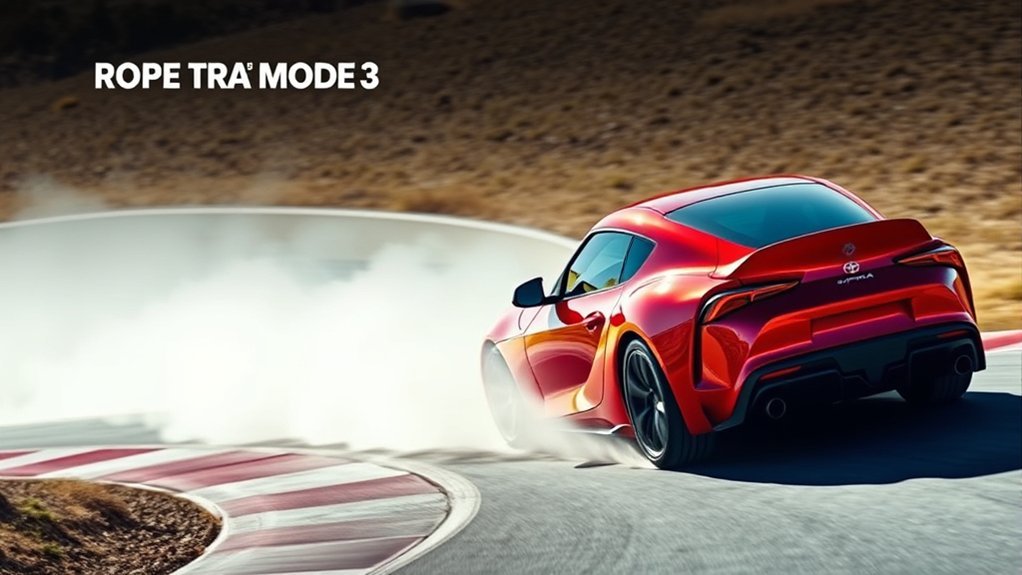
“Track Mode” is often used as a general phrase for the Supra’s most performance-focused setup. Depending on model year and market, your Supra may use a combination of Sport mode, Traction mode, and VSC Off rather than a single button labeled Track Mode. Toyota’s current 2026 GR Supra materials describe Normal and Sport driving modes, while the owner’s manual explains how the Vehicle Stability Control system and Traction mode change how much the car intervenes during acceleration and cornering.
In simple terms, track-focused settings let the Supra feel sharper and more responsive. Sport mode can change the character of the throttle, shifting, suspension feel on equipped models, exhaust sound, and steering response. Reduced stability intervention can also allow more wheel slip and rotation, which experienced drivers may use to help position the car through a corner.
Warning: Less electronic intervention does not mean more grip. It means the car may allow the tires to slide farther before helping you. Use these settings only where there is runoff, proper safety control, and no public traffic.
Track Mode vs. Normal and Sport Driving Modes
The biggest difference is not just speed; it is the amount of safety buffer the car gives you. Normal mode is designed for everyday control, comfort, and predictable traction. Sport mode wakes the car up for spirited driving. Track-focused settings go a step further by allowing more driver control, but they also demand better judgment.
| Setting | What It Changes | Best Use |
|---|---|---|
| Normal Mode | Smooth throttle response, everyday shifting, full stability assistance | Daily driving, traffic, rain, rough roads, commuting |
| Sport Mode | Sharper response, sportier drivetrain behavior, more aggressive feel | Dry back roads, spirited driving, first track sessions with assists active |
| Traction Mode / Reduced VSC | Allows more wheel slip and prioritizes forward momentum with less stability support | Autocross, HPDE, controlled low-risk practice with room for mistakes |
| VSC Off / Track-Style Setup | Minimizes or disables major stability intervention depending on model and settings | Experienced drivers only, closed course only, after learning the car progressively |
The 2026 Toyota GR Supra 3.0 is rated at 382 horsepower and 368 lb-ft of torque, so reducing stability assistance changes a very powerful rear-wheel-drive car from “helped by computers” to “mostly dependent on the driver.”
Why It Can Improve Lap Times
On a closed course, a skilled driver may go faster with less electronic intervention because the car is not cutting power as early during corner exit. That can help you carry momentum, rotate the car, and apply throttle sooner. The benefit is most noticeable when the tires are warm, the surface is clean, and the driver can sense small changes in grip before they become big slides.
Track-style settings can also make the Supra feel more direct. You may notice quicker throttle response, more aggressive shifting in automatic models, a more eager rear axle, and less interruption when the tires are near their limit. These changes can be exciting, but they are only useful if you can control them consistently.
What Changes With Stability Control
Toyota’s owner information describes Traction mode as a version of the VSC system that optimizes forward momentum while limiting driving stability. That wording matters: the system is giving you more freedom, not more safety. When grip drops suddenly, the car may not step in as early as it would in Normal mode.
Note: Button behavior can vary by model year, market, and equipment. Use the dashboard confirmation lights and your model-year owner’s manual to confirm whether you are in Sport mode, Traction mode, or VSC Off.
Safety Precautions Before Using Track Mode
Before you use track-focused settings, prepare the car the same way you would for a real performance driving event. Track driving creates more heat, more tire load, and more brake demand than street driving. A small issue that feels harmless around town can become a serious problem at high speed.
[Products Worth Considering]

This smart color coded tire tread depth gauge makes it easy to check tread wear at a glance with clear red, yellow, and green ranges. Calibrated from 0 to 1 inch in 1/32 inch increments, it helps you quickly assess tire condition for safer driving and timely replacements. The pocket clip design makes it convenient to carry and use on trucks, motorcycles, cars, and other passenger vehicles.

This click torque wrench delivers accurate, repeatable tightening for automotive and home repair tasks, helping prevent over-tightening and fastener damage. Its dual-range scale, knurled non-slip grip, and durable ratchet head make it easy to use, while the included extension bar and storage case add extra convenience.

The MaxxHaul Solid Rubber Wheel Chock 2-Pack provides dependable vehicle stabilization for cars, trucks, trailers, and RVs in garages, driveways, job sites, and campgrounds. Its solid rubber construction, non-slip traction surface, and built-in handle make placement easy while delivering long-lasting grip and all-weather durability for safer parking and storage.
Pre-Track Checklist
- Remove loose items: Empty the cabin, trunk, cupholders, floor mats if required, and anything that could move under braking.
- Check tire condition: Look for cords, cuts, bulges, nails, sidewall cracks, or uneven wear before every session.
- Set tire pressure correctly: Start with the door placard or owner’s manual pressure for your tire size, then adjust carefully based on hot pressures, tire wear, and instructor guidance.
- Inspect brakes: Confirm pad thickness, rotor condition, pedal feel, and brake fluid condition before track use.
- Check fluids: Verify engine oil, coolant, brake fluid, and any visible leaks before going on track.
- Torque the wheels: Use the correct lug bolt torque from your owner’s manual or service information.
- Warm up gradually: Use the first lap to bring tires, brakes, and drivetrain temperatures up smoothly.
- Learn the course first: Do not combine an unfamiliar track with reduced stability control on your first session.
Pro Tip: If you are new to track driving, start in Sport mode with stability systems active. Once your instructor says your inputs are smooth and repeatable, then experiment with reduced intervention in small steps.
Effects of Track Mode on Vehicle Dynamics
Track-focused settings change how the Supra responds when you ask for acceleration, braking, or rotation. Because the GR Supra is rear-wheel drive, the rear tires handle both power delivery and a major part of corner-exit balance. That is why throttle control becomes more important as stability assistance is reduced.
With less intervention, the car may rotate more willingly on corner entry and exit. That can help an experienced driver point the nose toward the next straight, but it can also lead to oversteer if throttle is applied too early or too sharply. Understeer can still happen too, especially if you enter a corner too fast and overload the front tires.
How It Feels From Behind the Wheel
- Throttle: Small pedal movements can have a bigger effect, especially in lower gears.
- Steering: The car may feel more eager to rotate, but abrupt inputs can unsettle it.
- Braking: Heavy braking zones create heat quickly, so brake feel should be monitored every session.
- Tires: Grip changes as tires heat up, cool down, or become overworked.
- Fuel use: Expect fuel consumption to rise sharply during track sessions compared with street driving.
Driving Techniques for Track Mode

Track Mode is not a magic lap-time button. It rewards smooth inputs and punishes rushed ones. The goal is to make the car stable before asking it to accelerate, brake, or turn harder.
| Technique | Why It Matters | Common Mistake |
|---|---|---|
| Progressive throttle | Keeps rear tires from being shocked at corner exit | Going full throttle before the steering wheel is unwound |
| Smooth steering | Helps the front tires build grip without sudden overload | Adding steering angle while also adding too much throttle |
| Trail braking | Can help rotate the car into a corner when done gently | Carrying too much brake pressure past turn-in |
| Heel-toe downshifting | Helps manual drivers match revs and keep the car balanced | Releasing the clutch abruptly and unsettling the rear tires |
| Cool-down laps | Reduces heat stress on brakes, tires, and drivetrain | Parking immediately after a hard session with heat-soaked brakes |
When Not to Use Track Mode
Do not use track-focused settings just because you want the car to feel more exciting. The wrong setting in the wrong conditions can make the Supra harder to control and easier to overdrive.
- Wet or icy roads: Reduced stability assistance is a poor match for low grip.
- Cold tires: Summer performance tires can be unpredictable before they warm up.
- Public roads: Traffic, curbs, pedestrians, and unknown surfaces leave no safe margin.
- New drivers: Learn the car with assistance active before reducing it.
- Worn brakes or tires: Do not ask for track performance from parts that are already near the end of their life.
- Mechanical warnings: Any warning light, fluid leak, vibration, or soft brake pedal means the session should stop.
Maintenance Tips After Using Track Mode
After a track session, the Supra needs more attention than it does after a normal commute. Heat and load are the main concerns. Give the car time to cool, then inspect the parts that worked the hardest.
[Products Worth Considering]

Mixes well with conventional fluids

Provides an extra margin of safety in extreme braking conditions (packaging may vary)

Premium brake and hydraulic clutch fluid that protects internal components from corrosion under normal use
Post-Track Inspection Checklist
- Tires: Check tread, shoulders, sidewalls, and pressures while noting hot and cold readings.
- Brakes: Look for pad taper, rotor cracks, vibration, discoloration, or a longer pedal.
- Fluids: Recheck engine oil and coolant once the car is safely cooled.
- Wheel hardware: Confirm nothing has loosened after the car returns to normal temperature.
- Suspension: Listen for new clunks and inspect for visible damage or leaks.
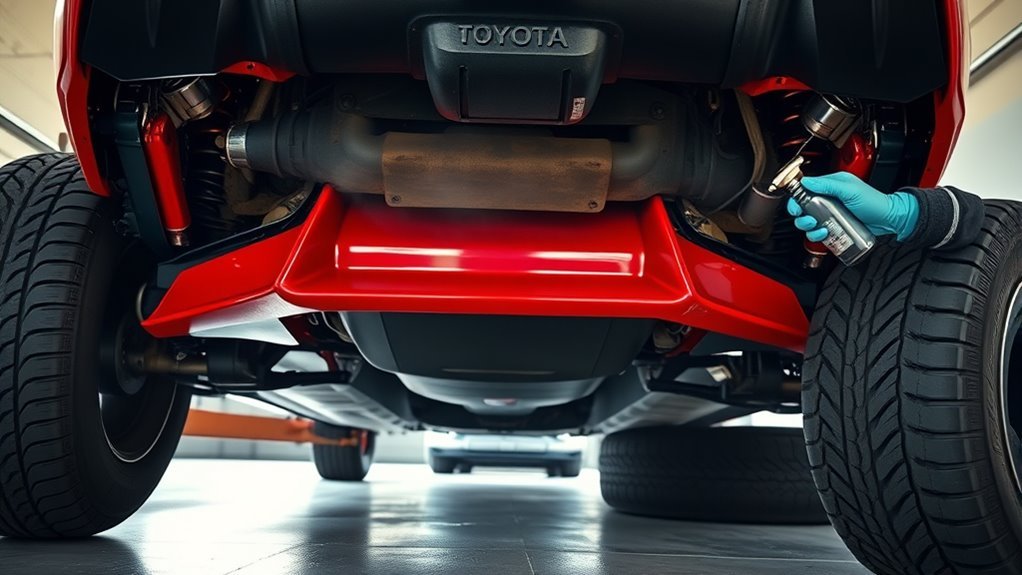
- Undercarriage: Look for scraped panels, loose trim, or signs of fluid leakage.
Fluid Levels Check
Track driving can expose weak brake fluid, low engine oil, or cooling issues quickly. If the brake pedal feels soft, spongy, or longer than usual, stop driving and inspect the system before returning to the track. Many HPDE organizers require or strongly recommend a recent brake fluid service because old fluid can boil under repeated hard braking.
| Item | What to Check |
|---|---|
| Engine oil | Correct level, no warning light, no leaks, no burnt smell |
| Coolant | Stable temperature, proper level after cooling, no overflow signs |
| Brake fluid | Freshness, pedal feel, suitable temperature rating for track use |
| Tires | Pressure change, shoulder wear, blistering, chunking, cords, sidewall damage |
| Brake lines and calipers | Leaks, damage, heat stress, uneven pad wear, unusual noise |
Frequently Asked Questions
When should I use Track Mode in a Toyota Supra?
Use it only on a closed course, autocross, or HPDE event when the car has been inspected and conditions are dry and predictable. For daily driving, use Normal or Sport mode instead.
Is Sport mode the same as Track Mode?
No. Sport mode changes the Supra’s driving character, while track-style settings may also involve Traction mode or reduced VSC intervention. The exact behavior depends on model year and equipment.
Should I turn traction control off on the street?
No. Keep traction and stability systems active on public roads. They are designed to help when grip changes unexpectedly, such as during rain, debris, bumps, or emergency maneuvers.
Does Track Mode make the Supra faster?
It can help an experienced driver go faster on a track because the car may allow more slip and less power reduction. For inexperienced drivers, it can make the car slower or harder to control.
What is the biggest risk of using Track Mode?
The biggest risk is overestimating available grip. With less stability intervention, sudden throttle, steering, or braking inputs can cause oversteer, understeer, or a spin more quickly than expected.
What should I check after a track day?
Check tires, brakes, fluid levels, wheel hardware, warning lights, and any new noises or vibrations. If brake feel changes or the car shows a warning, inspect it before driving hard again.
Conclusion
Track Mode in a Toyota Supra is best understood as a high-performance tool for the right environment. It can make the car sharper, freer, and more rewarding on a closed course, but it also reduces the safety cushion that helps on normal roads. Use Normal or Sport mode for the street, save reduced traction and stability settings for controlled events, and inspect the car before and after every hard session. The Supra has the power and chassis to shine on track; the safest way to enjoy it is to build up gradually and respect the limits of the tires, brakes, and driver.
Sources
- Toyota 2026 Supra Owner’s Manual — official owner information and model-year manual reference
- Toyota Supra Driving Stability Control Systems — VSC and Traction mode behavior
- 2026 Toyota GR Supra Brochure — official horsepower, torque, and driving mode information
- Toyota Supra Wheels and Tires Manual Section — tire pressure and high-speed tire safety guidance
- NASA HPDE / Time Trial Technical Inspection Form — track-day inspection expectations
- Sports Car Club of America: Preparing Your Car — autocross preparation and tire safety basics


[…] your car’s hardware before upgrading. If you want stronger protection during sustained high-performance driving, consider a surge tank or improved […]