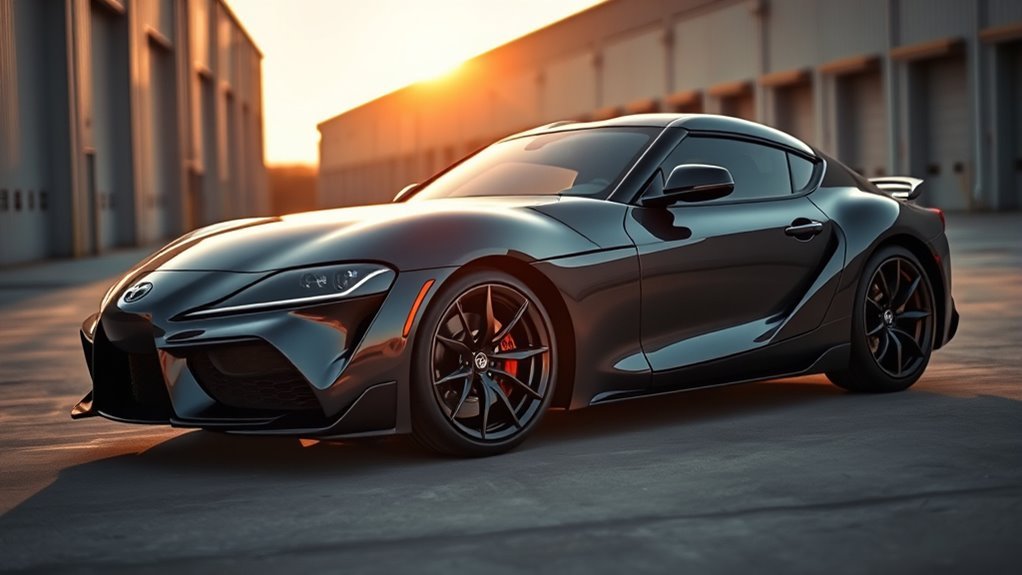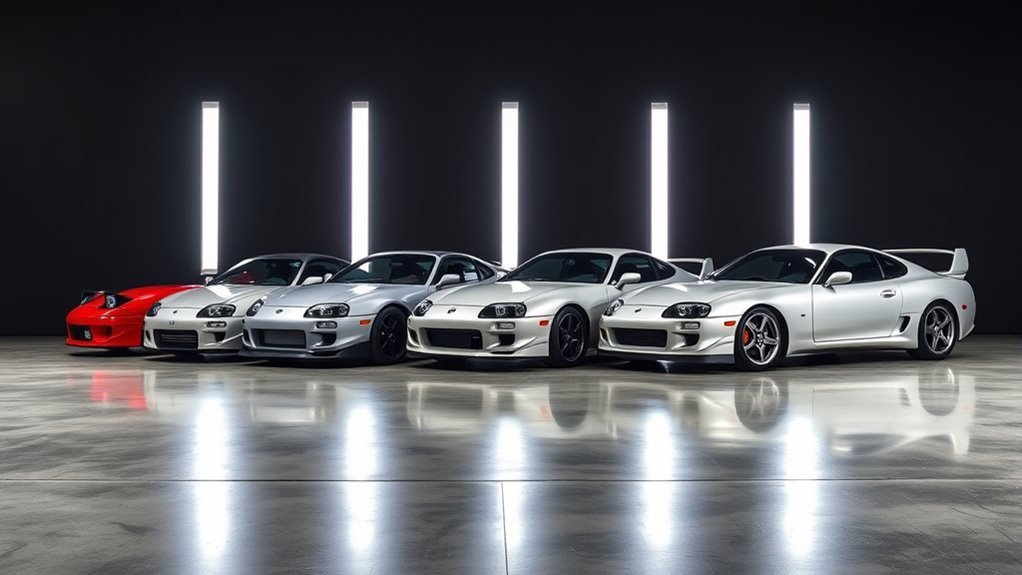
U.S.-market Toyota Supra torque ranges from 136 lb-ft in the 1979 Mk1 reference model to 368 lb-ft in the 2026 GR Supra 3.0. The important modern exception is the 2020 GR Supra 3.0, which Toyota rated at 365 lb-ft; the 3.0 increased to 368 lb-ft for 2021. Torque also varies by generation, engine, model year, transmission calibration, and market, so the most useful comparison is by specific configuration rather than one number for each generation.
Last updated: September 16, 2026 — U.S. factory torque figures and current GR Supra specifications rechecked against Toyota model-year information.
Quick Answer
The early U.S.-market Mk1 Supra produced 136 lb-ft of torque, the 1982 Mk2 reference model made 155 lb-ft, the Mk3 Turbo reached 254 lb-ft, and the U.S. Mk4 Turbo produced 315 lb-ft. The 2020 GR Supra 3.0 was rated at 365 lb-ft, while 2021–2026 U.S. GR Supra 3.0 models are rated at 368 lb-ft. The modern 2.0-liter GR Supra used a separate 295-lb-ft rating.
Toyota Supra Torque by Generation: U.S. Reference Specs
The table below uses representative U.S.-market factory specifications. It should not be treated as a universal global chart because output changed by model year, engine, and market.
| Supra version | Engine reference | Factory torque | Context |
|---|---|---|---|
| 1979 Mk1 | 2.6L inline-six | 136 lb-ft | Early U.S. Celica Supra reference |
| 1982 Mk2 | 2.8L 5M-GE | 155 lb-ft | Early U.S. Mk2 reference; later model-year output changed |
| 1989 Mk3 NA | 3.0L 7M-GE | 188 lb-ft | Naturally aspirated U.S. reference |
| 1989 Mk3 Turbo | 3.0L 7M-GTE | 254 lb-ft | Turbocharged U.S. reference |
| 1993 Mk4 NA | 3.0L 2JZ-GE | 210 lb-ft | Naturally aspirated U.S. reference |
| 1993 Mk4 Turbo | 3.0L 2JZ-GTE | 315 lb-ft @ 4,000 rpm | U.S. twin-turbo reference |
| 2020 Mk5 3.0 | 3.0L turbo inline-six | 365 lb-ft @ 1,600–4,500 rpm | First U.S. GR Supra model year |
| 2021–2024 Mk5 2.0 | 2.0L turbo four-cylinder | 295 lb-ft @ 1,550–4,400 rpm | U.S. four-cylinder GR Supra |
| 2021–2026 Mk5 3.0 | 3.0L turbo inline-six | 368 lb-ft @ 1,800–5,000 rpm | U.S. 3.0 reference |
Toyota documents the 2020 GR Supra 3.0 at 365 lb-ft and the 2021 3.0 update at 368 lb-ft. Toyota’s 2026 U.S. information continues to list 368 lb-ft for the 3.0-liter GR Supra. Older figures above are U.S.-market reference points rather than a claim that every year or global version used the same tune.
What Is Torque, and Why Does It Matter in a Supra?
Torque is rotational force measured at the engine. It affects how strongly the engine can turn the drivetrain, but engine torque alone does not determine how quickly a Supra accelerates. Transmission gearing, final-drive ratio, tire grip, vehicle mass, engine speed, and the shape of the torque curve all influence what reaches the road.
A useful simplified relationship is: wheel torque ≈ engine torque × transmission ratio × final-drive ratio, minus driveline losses. A lower gear can therefore multiply less engine torque into more wheel torque than a taller gear. This is why comparing only peak lb-ft can be misleading.
Peak torque tells you the engine’s maximum twisting force. The torque band, gearing, traction, and vehicle mass determine how useful that force feels on the road.
- Peak torque is only one point on the engine’s torque curve.
- A broad torque plateau reduces the need to chase one narrow rpm range.
- Shorter gearing multiplies torque more aggressively at the wheels.
- Tire grip determines how much wheel torque can be used without excessive slip.
- Higher modified torque also increases load on the clutch, transmission, differential, axles, cooling system, and tires.
Mk1 (1979–1981) Torque and Low-End Performance
The first-generation U.S. Celica Supra used a 2.6-liter inline-six, and a representative 1979 specification is 136 lb-ft of torque. Period data also places 0–60 mph acceleration around 10.2 seconds for that early configuration. Toyota identifies 1979–1981 as the first generation rather than extending Mk1 through the mid-1980s.
The number is modest beside later Supras, but the Mk1 is also a very different vehicle from the turbocharged A70, A80, and GR Supra generations. Comparing 136 lb-ft directly with a modern 368-lb-ft B58 figure without considering gearing, curb weight, tires, and available rpm does not describe the complete driving experience.
Mk2 and Mk3 Supra Torque: What Changed With the Turbo?
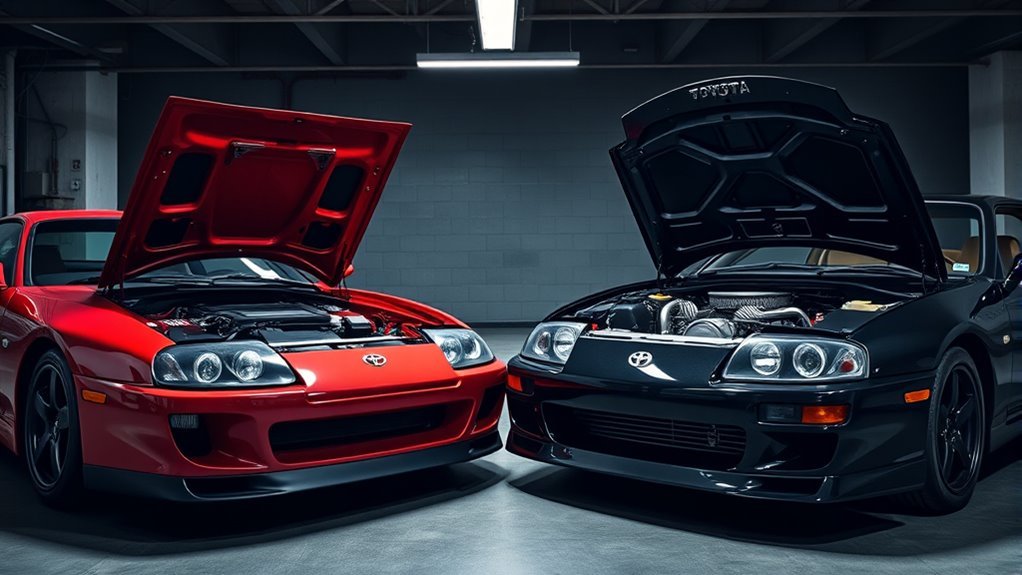
Mk2 and Mk3 Naturally Aspirated Torque
The second-generation Supra ran from 1982 through 1986. A representative 1982 U.S. 2.8-liter 5M-GE specification is 155 lb-ft, although later Mk2 model years received output changes. That model-year variation is why “Mk2 torque” should not be reduced to a single universal number.
The third-generation A70 became a standalone Supra. A U.S. 1989 naturally aspirated 7M-GE reference is 188 lb-ft, showing how displacement and engine development moved the naturally aspirated car beyond the early Mk2 figures.
- 1982 Mk2 2.8L reference: 155 lb-ft.
- Later Mk2 output changed by model year.
- 1989 Mk3 3.0L naturally aspirated reference: 188 lb-ft.
- Engine, year, and market should always be identified before comparing factory torque.
How Much Torque Does a Mk3 Turbo Make?
A representative U.S. 1989 Mk3 Turbo is rated at 254 lb-ft from its 3.0-liter 7M-GTE. That is a substantial increase over the naturally aspirated 7M-GE reference, and it is the point in the U.S. Supra lineage where forced induction creates a much larger factory torque step rather than a modest year-to-year gain.
Why Does the Turbo Torque Feel Different?
The useful difference is not simply “turbo equals more torque.” The location and shape of the torque curve matter. A naturally aspirated engine generally builds output more progressively with rpm, while a turbocharged setup can create a much stronger rise once boost is established. Transmission gearing and throttle calibration then determine how that engine response translates to the tires.
Mk4 (A80, 1993–1998 U.S.) 2JZ Torque and Real-World Impact
The U.S.-market 1993 Supra Turbo’s 2JZ-GTE was rated at 320 hp and 315 lb-ft of torque at 4,000 rpm. Period Car and Driver testing lists the same figures. The naturally aspirated 2JZ-GE version produced less torque, with a representative 1993 U.S. figure of 210 lb-ft.
For more detail on the engine itself, see the 2JZ-GTE engine design guide. Keeping the engine-design material on that page prevents this torque guide from competing with a separate 2JZ topic.
How Much Factory Torque Does the 2JZ-GTE Make?
For the U.S. Mk4 Supra Turbo reference used here, the answer is 315 lb-ft at 4,000 rpm. The 320 figure commonly associated with this car is horsepower, not torque. The distinction matters because the two measurements describe different aspects of engine output.
- U.S. 1993 Supra Turbo: 320 hp.
- U.S. 1993 Supra Turbo: 315 lb-ft at 4,000 rpm.
- U.S. 1993 naturally aspirated Supra: 210 lb-ft reference.
- Global A80 specifications can differ from U.S. ratings.
How Does Mk4 Torque Translate to Performance?
The 2JZ-GTE combines its 315-lb-ft factory peak with sequential turbocharging, rear-wheel drive, and gearing designed for a high-performance grand tourer. Period tests recorded very strong acceleration for the era, but torque alone is not the explanation. Power available at higher rpm, gearing, vehicle mass, tire grip, and launch conditions all contribute to the result.
| Attribute | U.S. Mk4 Turbo reference | Why it matters |
|---|---|---|
| Engine | 3.0L 2JZ-GTE | Twin-turbo inline-six architecture |
| Factory torque | 315 lb-ft @ 4,000 rpm | Defines the factory engine-torque reference |
| Factory power | 320 hp | Do not confuse this number with torque |
| Drive layout | Rear-wheel drive | Traction limits how much torque can be used at the tires |
What Happens to Supra Torque After Modifications?
There is no single safe modified-torque ceiling for a 2JZ, B58, transmission, or complete Supra drivetrain. Turbo size, boost, fuel, ignition timing, charge temperature, cooling, calibration, engine condition, transmission, differential, tires, and intended use all change the risk.
A useful sourced example shows why specific builds are better evidence than blanket claims: Toyota documented modified 2020 GR Supra “10-Second Twins” producing 620 hp and 590 lb-ft after turbo, intercooler, exhaust, and ECU changes. That figure describes those particular project cars; it is not a Toyota-approved universal torque limit for stock engines or drivetrains.
- Set a torque target only after identifying the engine, transmission, fuel, and intended use.
- Fuel delivery and calibration must support the requested boost and load.
- Cooling capacity becomes more important as sustained power and cylinder pressure rise.
- Clutch, transmission, differential, axle, and tire limits matter alongside engine strength.
- Use logged data and a qualified calibrator instead of treating an internet torque number as a guaranteed safe limit.
Mk5 GR Supra (2020–2026): B58 Torque by Model Year
The U.S. Mk5 requires model-year context. Toyota rated the 2020 GR Supra 3.0 at 365 lb-ft from 1,600–4,500 rpm. For 2021, Toyota revised the 3.0-liter engine to 368 lb-ft from 1,800–5,000 rpm, alongside an increase in horsepower. Toyota also introduced the U.S. GR Supra 2.0 with 295 lb-ft from 1,550–4,400 rpm.
The 2026 U.S. GR Supra lineup uses the 3.0-liter turbocharged inline-six, and Toyota lists 382 hp and 368 lb-ft across the 3.0, 3.0 Premium, and MkV Final Edition grades. The lineup offers a six-speed manual or eight-speed automatic, depending on configuration.
For the engineering differences behind the modern engine, see the B58 engine guide. For the model-year terminology and the 2020-versus-2021 update, see the A90 vs A91 guide.
Why Does the Mk5 Feel Strong in the Midrange?
The important feature is not the three-pound-foot increase from 365 to 368. It is the broad operating range over which Toyota quotes maximum torque. The 2020 3.0 is rated at 365 lb-ft from 1,600–4,500 rpm, while the 2021 update is rated at 368 lb-ft from 1,800–5,000 rpm. That wide plateau gives the drivetrain substantial factory-rated torque across a large part of the engine’s everyday operating range.
Supra Torque Comparison: Peak Lb-Ft, Gearing, and Usable Band
Peak torque is useful for comparing factory specifications, but it should not be used as a stand-alone ranking of Supra performance. A transmission’s lower gears multiply engine torque, while taller gears reduce multiplication in exchange for lower engine speed at a given road speed. Vehicle mass, tire grip, differential behavior, turbo response, and the torque curve then influence how effectively that force becomes acceleration.
Use peak lb-ft to compare engine output, then use the torque band, gearing, mass, and traction to understand how the car will actually accelerate.
- Compare the exact model year and engine before comparing numbers.
- Check the rpm range, not only the peak lb-ft figure.
- Remember that transmission and final-drive ratios multiply engine torque.
- Do not assume a higher peak-torque number automatically means a quicker car.
- For modified cars, evaluate engine, cooling, fuel, transmission, differential, and tire capacity as one system.
[Products Worth Considering]

【Reliable Material】 : The cam gear rebuild kit is included a camshaft gear gasket and a camshaft gear o-ring. The camshaft gear seal gasket is made of carbon steel and nitrile rubber, which with high hardness,high strength and it is more corrosion-resistant.
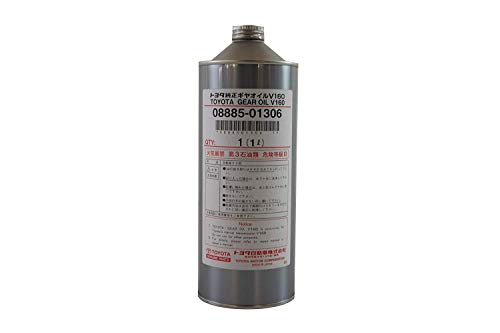
Genuine OEM Toyota Gear Lube

Supra SC300 W58 1JZ 2JZ Manual Transmission Bell Housing, Clutch Housing
Frequently Asked Questions
How Much Torque Does a 2020 GR Supra Have?
The U.S.-market 2020 GR Supra 3.0 is rated at 365 lb-ft of torque from 1,600–4,500 rpm. Toyota increased the 3.0-liter rating to 368 lb-ft for the 2021 model year.
How Much Torque Does a 2021–2026 GR Supra 3.0 Have?
U.S.-market 2021–2026 GR Supra 3.0 models are rated at 368 lb-ft of torque. Toyota’s 2021 specifications place that maximum across 1,800–5,000 rpm, and Toyota lists 368 lb-ft for the 2026 U.S. lineup.
How Much Torque Does a Mk4 Supra Turbo Have?
The U.S.-market 1993 Supra Turbo’s 2JZ-GTE is rated at 315 lb-ft of torque at 4,000 rpm. Its 320 figure is horsepower, which is why the two numbers are sometimes mistakenly swapped.
How Much Torque Does the Four-Cylinder GR Supra Make?
The U.S.-market GR Supra 2.0 introduced for 2021 is rated at 295 lb-ft of torque from 1,550–4,400 rpm. It should not be grouped under the 368-lb-ft figure used by the 3.0-liter model.
Does Toyota Supra Torque Vary by Year and Market?
Yes. Supra torque varies by generation, engine, model year, and market. Use the vehicle’s exact year and regional specification when ordering parts, comparing performance, or planning modifications rather than assuming one figure applies to an entire generation worldwide.
Conclusion
Toyota Supra torque grew dramatically across the model’s U.S. history, from a representative 136 lb-ft in the early Mk1 to 368 lb-ft in the 2026 GR Supra 3.0. The progression is not perfectly linear: Mk2 output changed by year, the Mk3 introduced a major naturally aspirated-versus-turbo split, the U.S. Mk4 Turbo produced 315 lb-ft, and the Mk5 changed from 365 lb-ft in 2020 to 368 lb-ft for the later 3.0.
When comparing two Supras, check the exact model year, engine, factory torque, torque rpm range, transmission, and market first. Then consider gearing, vehicle mass, and available traction. Those factors explain far more about real acceleration than peak lb-ft alone.