Last updated: July 22, 2026
This guide applies to U.S.-market fifth-generation Toyota 4Runners from model years 2010–2024. It does not cover the redesigned 2025-and-newer sixth-generation 4Runner. For a routine line or caliper bleed, use fresh DOT 3 brake fluid, keep the reservoir above MIN, turn the ignition on without starting the engine, and work front right, front left, rear right, then rear left. The front brakes use a conventional pump-and-hold process, while the rear brakes use the hydraulic booster pump while the pedal is held down.
Confirm the sequence and pump limits in the Toyota repair manual for your exact model year and VIN before opening a bleeder. If the reservoir ran dry or the master cylinder, hydraulic brake booster, accumulator, brake actuator, or ABS/VSC hydraulic unit was opened, use Toyota’s scan-tool air-bleeding procedure or have the work completed professionally.
Quick Answer
To bleed routine brake-line air from a 2010–2024 4Runner, use fresh FMVSS No. 116 DOT 3 or SAE J1703 brake fluid and keep the reservoir between MIN and MAX. With the ignition on and engine off, bleed front right, front left, rear right, then rear left, subject to confirmation in the VIN-specific Toyota repair manual. Close every bleeder before releasing the pedal. Stop if the reservoir ran dry, the pedal remains soft, a warning light stays on, or a major hydraulic component was opened.
Key Takeaways
- This procedure is for 2010–2024 fifth-generation 4Runners, not the 2025-and-newer sixth generation.
- Pad or rotor replacement alone normally does not require bleeding because it does not open the hydraulic circuit.
- Use only fresh, newly opened FMVSS No. 116 DOT 3 or SAE J1703 brake fluid unless the manual for your exact model year specifies otherwise.
- Do not let the reservoir fall below MIN. Air in the master cylinder, hydraulic booster, or ABS actuator can require a scan-tool procedure.
- The routine sequence used in this guide is front right, front left, rear right, then rear left. Confirm it in Toyota TIS for your VIN.
- Do not drive if the pedal is soft or sinking, a leak is present, or ABS, VSC, or brake warning lamps remain illuminated.
At a Glance
| Applies To | U.S.-market 2010–2024 fifth-generation Toyota 4Runner |
| Typical DIY Time | About 60–120 minutes for a careful routine bleed |
| Difficulty | Moderate; safety-critical work |
| Brake Fluid | Fresh FMVSS No. 116 DOT 3 or SAE J1703, subject to the exact model-year manual |
| Routine Sequence | Front right, front left, rear right, rear left; verify in VIN-specific Toyota TIS |
| Ignition State | Ignition ON, engine not running, after the booster pump has stopped |
| Scan Tool Required | When air may have entered the master cylinder, booster, accumulator, reservoir assembly, brake actuator, or ABS/VSC hydraulic unit |
| Basic Tools | Correct bleeder wrench, clear tubing, catch bottle, gloves, eye protection, wheel chocks, floor jack, jack stands, towels, and fresh fluid |
Warning: Brakes are a safety system. Do not drive if the pedal feels soft, sinks under steady pressure, fluid is leaking, the reservoir ran dry, or ABS, VSC, or brake warning lights remain on. Brake fluid can damage paint and irritate skin or eyes. Wear gloves and eye protection, and flush spills off painted surfaces immediately with plenty of water.
Which Brake-Bleeding Procedure Does Your 4Runner Need?
Choose the procedure before opening the reservoir or a bleeder. A routine wheel bleed and a full actuator air bleed are not interchangeable.
| What Was Serviced? | Likely Procedure | Important Limit |
|---|---|---|
| Pads or rotors only; no hose, line, fitting, or bleeder opened | Bleeding is not normally required | Investigate separately if the pedal changed after service |
| Caliper, hose, or brake line replaced; reservoir remained above MIN | Routine affected-circuit or four-wheel bleed using the model-year Toyota procedure | Keep the reservoir above MIN at all times |
| Old fluid exchanged without admitting air | Routine fluid exchange through the wheel bleeders | Do not treat color alone as proof that all air has been removed |
| Reservoir ran dry, or master cylinder, booster, accumulator, actuator, or ABS/VSC hydraulic unit was opened | Toyota Techstream or another verified scan tool using the required ABS/VSC air-bleeding utility | Do not rely on a normal pedal, vacuum, or pressure bleed |
Bleed Brakes on a 5th-Gen 4Runner: Step-by-Step
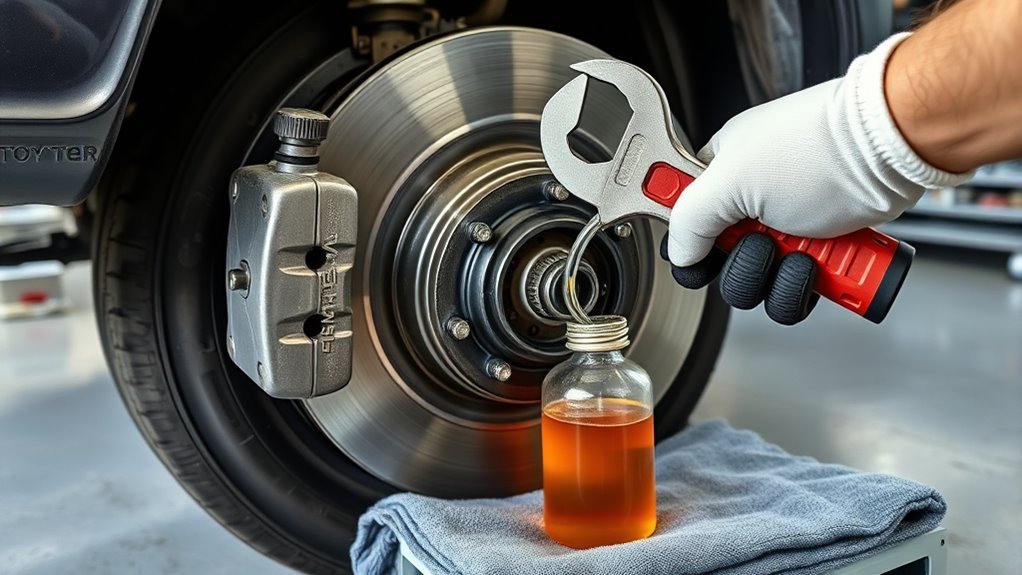
This routine procedure applies when a wheel circuit was opened but the reservoir stayed above MIN and no air entered the hydraulic booster or ABS actuator. Use the Toyota Technical Information System to confirm the exact instructions for your model year and VIN.
- Confirm the scope. Verify that the vehicle is a 2010–2024 fifth-generation 4Runner and that no major hydraulic component admitted air.
- Depressurize before opening the reservoir. With the ignition off, depress the brake pedal more than 40 times, then clean and remove the reservoir cap.
- Set the fluid level. Add fresh DOT 3 fluid until the level is between MIN and MAX. Never reuse captured fluid.
- Prepare the system. Turn the ignition on without starting the engine and wait for the hydraulic booster pump to stop.
- Bleed the front right brake. Use the conventional pump-hold-open-close-release process.
- Bleed the front left brake. Repeat the same front-brake process and recheck the reservoir.
- Bleed the rear right brake. Hold the pedal down and allow the booster pump to move fluid while the bleeder is open.
- Bleed the rear left brake. Repeat the rear procedure while monitoring the reservoir continuously.
- Complete the safety checks. Depressurize the system before the final reservoir adjustment, inspect for leaks, confirm a firm pedal, and perform only a controlled low-speed test.
The routine sequence used here is front passenger, front driver, rear passenger, then rear driver on a U.S. left-hand-drive vehicle. Do not assume that a generic “farthest wheel first” sequence overrides the Toyota procedure. Confirm the order in the repair manual for your exact VIN.
What You’ll Need: Tools, Fluid, and PPE
Gather the supplies before opening the first bleeder. Delays increase the chance that the reservoir will run low or that an open fitting will become contaminated.
[Products Worth Considering]

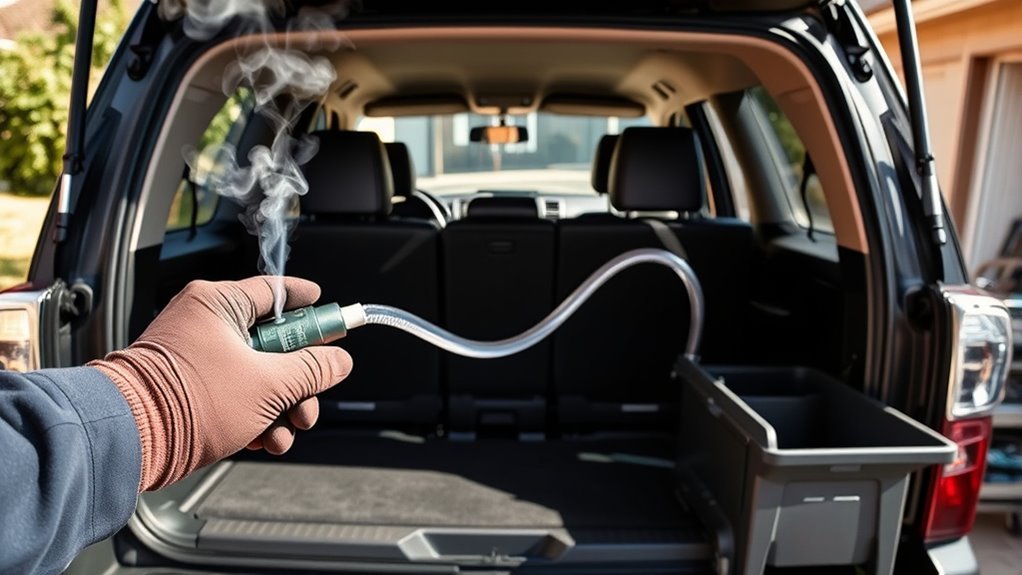
This universal brake bleeder kit makes one-person brake and clutch line bleeding simple by using compressed air to create stable vacuum-assisted fluid flow. Its extra-large 3L tank helps complete full-system flushes with fewer interruptions, while the included refill bottle, flexible hose, and universal adapter support clean, efficient use on standard and ABS brake systems.
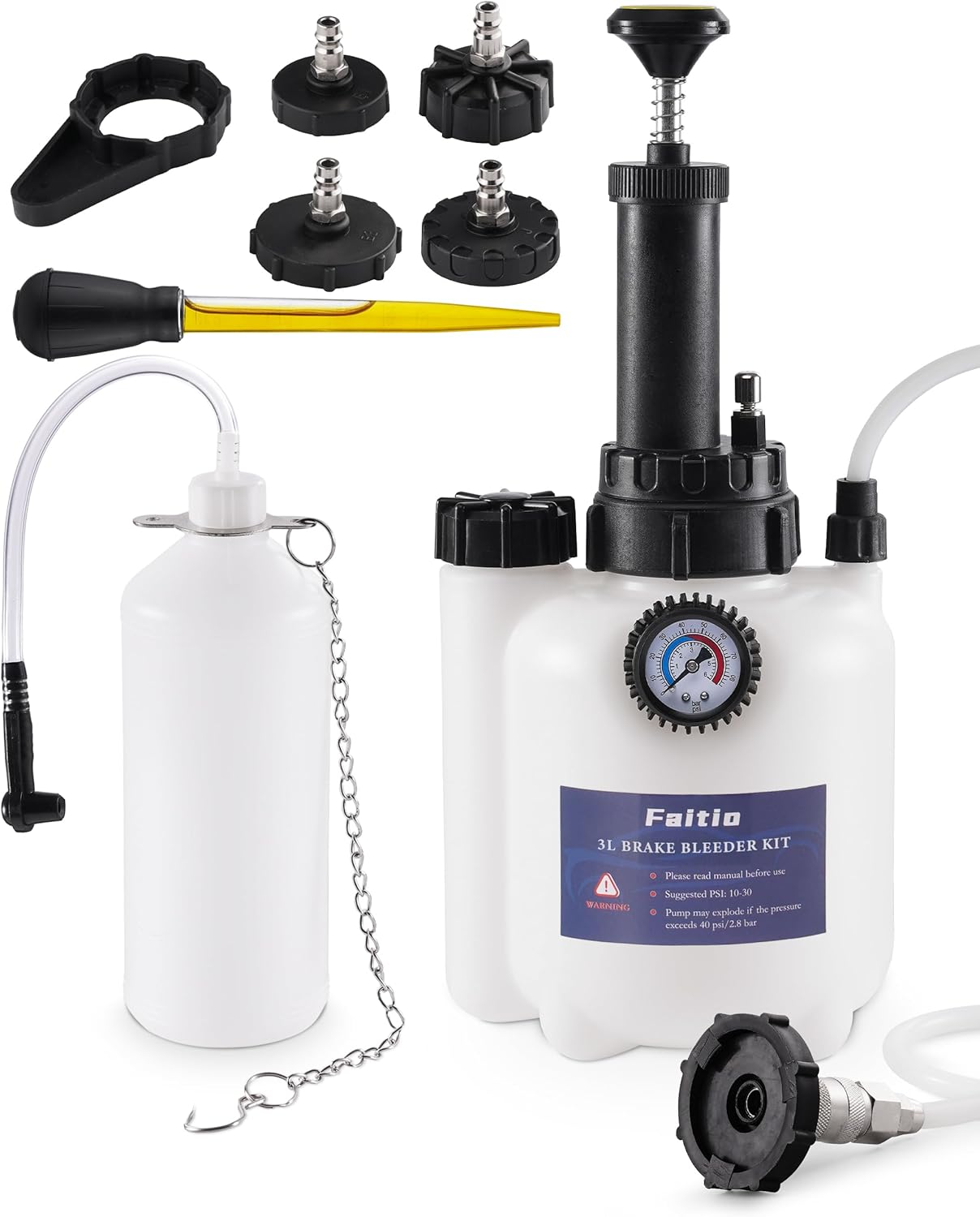
This one-man brake bleeding kit helps flush old brake fluid and remove trapped air for firmer, more responsive braking without the hassle of a second person. Its improved sealing and translucent catch bottle help prevent leaks while making fluid level checks easy during use. With multiple adapter sizes for many vehicle makes, it is a practical tool for clean, efficient brake system maintenance.

The Mityvac MV8500 Silverline Elite is a versatile automotive service kit for brake and clutch bleeding, diesel fuel priming, and vacuum or pressure testing. Its dual-capability pump streamlines diagnostics and maintenance across motorcycles, cars, trucks, and SUVs, while the ergonomic design supports comfortable use during longer jobs. Built with a durable zinc-aluminum die-cast body and a 4.5oz fluid reservoir, it delivers reliable performance for professional and DIY repair work.
Required Brake Fluid
Use fresh FMVSS No. 116 DOT 3 or SAE J1703 brake fluid unless the Toyota owner information for your exact model year specifies otherwise. Use fluid from a newly opened, sealed container because brake fluid absorbs moisture after opening.
Buy enough sealed fluid to keep the reservoir above MIN and continue until clean, bubble-free fluid reaches every circuit being serviced. The amount varies with the component replaced and how much old fluid is displaced. Never pour captured fluid back into the reservoir, and never add silicone DOT 5 fluid to the system.
Essential Hand Tools
- Correct six-point bleeder wrench; verify the size before loosening the valve
- Clear vinyl tubing that fits tightly over the bleeder nipple
- Clean catch bottle with enough capacity for the removed fluid
- Floor jack and jack stands rated for the vehicle
- Wheel chocks
- Shop towels and absorbent pads
- Small clean funnel used only for brake fluid
- Optional compatible vacuum or low-pressure pressure bleeder
Safety Gear and PPE
Wear nitrile gloves, safety glasses with side protection, and closed-toe shoes. Flush brake fluid off painted surfaces immediately with plenty of water, then dry the area. Use brake cleaner only on compatible metal brake parts and only as directed by the product label.
Note: The U.S. Environmental Protection Agency advises using local household-hazardous-waste or automotive-fluid collection programs for materials that require special disposal. Store used brake fluid in a sealed, clearly labeled container. Do not pour it onto the ground, into a drain, or into a storm sewer.
Prepare the Master Cylinder Reservoir and Vehicle
Park on level ground, set the parking brake, and chock the wheels that will remain on the ground. Raise the 4Runner at approved lifting points and support it securely on jack stands. Never work beneath or beside a raised vehicle supported only by a floor jack.
Clean the reservoir cap and surrounding area before opening it. With the ignition off, depress the brake pedal more than 40 times to release stored booster pressure. Remove the cap by hand and add fresh DOT 3 fluid until the level is between MIN and MAX.
Before bleeding, turn the ignition on without starting the engine. Wait until the hydraulic booster pump stops. Keep the reservoir level visible and check it after every few front-brake cycles. During rear bleeding, monitor it continuously because the booster pump can move fluid quickly.
Pro Tip: Clean the outside of the translucent reservoir and place a removable piece of tape beside the MIN line. Assign one person to watch the level during rear bleeding so the pump cannot empty the reservoir unnoticed.
Front Brake Bleeding: Passenger Then Driver
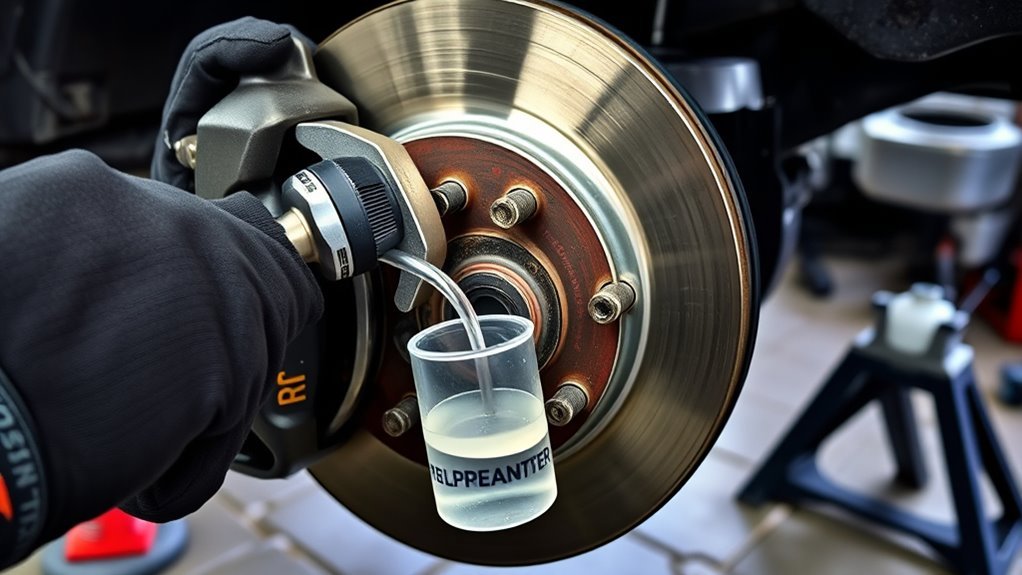
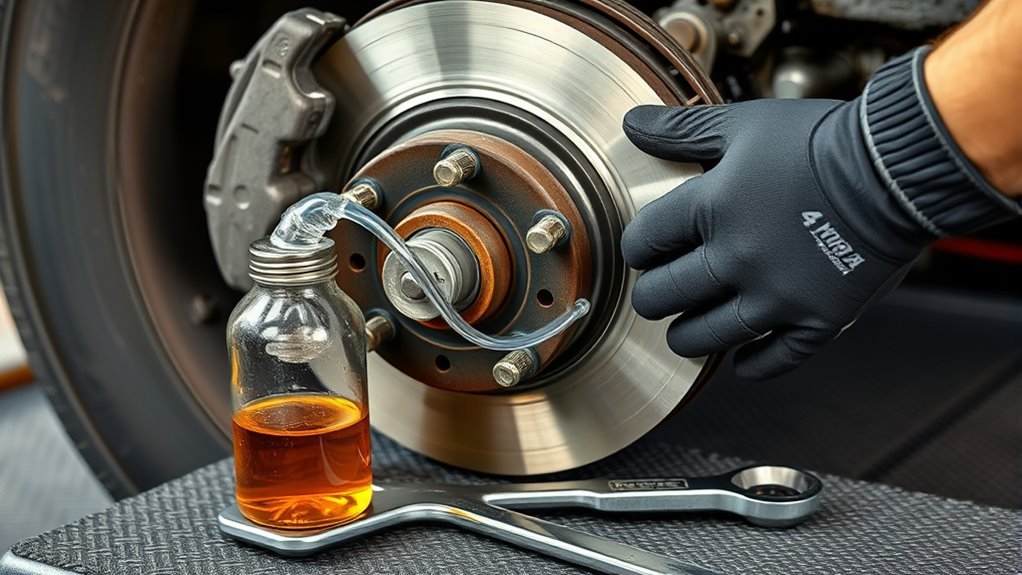
Start at the front passenger caliper. Remove the wheel if needed for safe access, locate the bleeder valve, and clean the area around it. Push clear tubing firmly over the nipple and route the other end into a stable catch bottle. Do not allow the bottle to tip or the hose to pull off the bleeder.
- Have the assistant press the brake pedal several times with controlled travel, then hold steady pressure.
- Open the bleeder slightly. Fluid and trapped air should move through the clear tubing.
- Close the bleeder before the assistant releases the pedal.
- Allow the pedal to return, then repeat until the fluid is bubble-free.
- Check the reservoir and add fresh DOT 3 fluid before it approaches MIN.
- Move to the front driver caliper and repeat the process.
Do not release the pedal while the bleeder is open. Do not slam or force the pedal to the floor. If bubbles continue indefinitely, check for a loose hose connection, air entering around the bleeder threads, a leaking fitting, or a reservoir that fell too low.
Tighten the bleeder to the specification in the VIN-specific Toyota repair manual. Do not overtighten it in an attempt to stop leakage; damaged caliper threads or a deformed bleeder seat require repair.
Rear Brake Bleeding and ABS: 4Runner-Specific Notes
The rear circuits use the 4Runner’s hydraulic brake-booster pump. With the ignition on and engine off, pressing and holding the brake pedal can cause the pump to move fluid continuously through an open rear bleeder. That is different from repeatedly pumping a conventional vacuum-booster brake system.
Move to the rear passenger wheel first, then the rear driver wheel. Attach the clear tubing, secure the catch bottle, and confirm that the reservoir is safely above MIN.
- Wait until the booster pump has stopped.
- Press and hold the brake pedal.
- Open the rear bleeder and allow fluid and air to flow while the pump operates.
- Watch both the clear tube and reservoir level continuously.
- Close the bleeder before releasing the pedal.
- Release the pedal so the pump can stop and recover, then repeat as needed.
- Move to the rear driver side and perform the same process.
Follow the exact pump duty-cycle limit in the repair manual for your model year. Do not leave the pedal held unattended, and do not keep the pump running while you walk back to inspect or refill the reservoir.
For the rear brakes, keep the pedal held only while the bleeder is open, close the bleeder before releasing the pedal, and never allow the reservoir to approach MIN.
Warning: Do not treat air in the ABS actuator or hydraulic booster as a normal wheel bleed. If the reservoir ran dry or the master cylinder, booster, accumulator, actuator, or ABS/VSC hydraulic unit was opened, use Toyota Techstream or another scan tool verified to support the required Toyota air-bleeding utility for the exact VIN.
Solo Bleeding: Pressure Bleeders, Vacuum Tools, and One-Person Methods
A helper is the safest and clearest option because one person can control the pedal while the other watches the bleeder and reservoir. One-person tools may help with a routine fluid exchange, but they do not replace the Toyota scan-tool utility when air entered the actuator or booster.
| Method | Best For | Watch Out For |
|---|---|---|
| Vacuum bleeder | Drawing old fluid through a wheel circuit with less pedal work | Air can enter around bleeder threads and look like trapped line air |
| Low-pressure pressure bleeder | Controlled fluid exchange with a correctly sealed reservoir adapter | Use only the tool maker’s approved pressure and inspect the adapter for leakage |
| One-way bleed hose or valve | Routine front-circuit bleeding when working alone | Confirm the valve seals correctly and keep the reservoir under direct observation |
| Toyota ABS/VSC air-bleeding utility | Air in the actuator, booster, master cylinder, or related hydraulic assembly | A generic pressure or vacuum tool cannot substitute for commanded pump and solenoid operation |
Do not use an unattended weight or prop to hold the rear pedal down. The booster pump may continue moving fluid while no one is watching the reservoir or catch bottle.
[Products Worth Considering]

The ANENG SZ301 digital multimeter is a versatile testing tool for measuring AC/DC voltage, current, resistance, continuity, diode, capacitance, and live wire detection. It features a clear display, precise readings, and built-in safety protections including double fuses and overload protection, making it useful for electronics, automotive work, and household electrical troubleshooting. The kit includes a protective silicone case, test leads, and pre-installed batteries for convenient use right out of the box.

This brake bleeder bottle helps simplify brake fluid replacement by draining old fluid while reducing air in the line. Its rubber connector fits most bleed screws, and the included hose and chain help keep the bottle securely in place during use. Built from durable, corrosion-resistant plastic, it is suitable for a wide range of vehicles including cars, motorcycles, ATVs, dirt bikes, and scooters.

【Specification】This 43mm master cylinder adapter is compatible with Toyota and Lexus vehicles. Please make sure it will fit your master cylinder reservoir before purchasing.
Final Checks, Reservoir Level, and Troubleshooting Soft-Pedal Issues
After all required circuits are bled, turn the ignition off and depress the brake pedal more than 40 times before removing the reservoir cap for the final level adjustment. Set the level between MIN and MAX, reinstall the cap, and clean any spilled fluid.
Inspect every bleeder, caliper, hose connection, and hard-line fitting for moisture or leakage. Press and hold the brake pedal with the vehicle stationary. The pedal should feel firm and consistent rather than spongy, slowly sinking, or unpredictable.
Reinstall the wheels and tighten the lug nuts to the specification for the vehicle and wheel setup. The related guide to reinstalling and torquing the 4Runner’s wheels provides additional wheel-service context. Perform a controlled low-speed brake test in a safe area before returning to normal traffic.
If the Pedal Still Feels Soft
- Check whether the reservoir approached or fell below MIN during the procedure.
- Inspect for wet bleeders, calipers, hose crimps, banjo fittings, flare connections, and hard lines.
- Confirm that each bleeder was closed before the pedal was released.
- Repeat the routine sequence only if the hydraulic system stayed within the routine-bleed scope.
- Check whether the pedal slowly sinks under steady pressure, which can indicate an internal hydraulic fault or external leak.
- Use the Toyota scan-tool air-bleeding procedure if air may have entered the booster, master cylinder, actuator, accumulator, or reservoir assembly.
Common Mistakes to Avoid
- Bleeding the system after a pad-only service when no hydraulic circuit was opened.
- Applying this fifth-generation guide to a 2025-and-newer sixth-generation 4Runner.
- Letting the reservoir approach or fall below MIN.
- Using old fluid from a previously opened or contaminated container.
- Mixing silicone DOT 5 fluid with the specified glycol-based brake fluid.
- Opening a bleeder and releasing the pedal before closing it.
- Leaving the rear pedal held down while the pump and reservoir are unattended.
- Assuming a vacuum or pressure bleeder can remove air trapped inside the ABS actuator.
- Ignoring ABS, VSC, or brake warning lights after the job.
- Driving before confirming a firm pedal and a leak-free system.
Frequently Asked Questions
How often should I bleed the brakes on my 4Runner?
Bleed the brakes whenever a hose, line, caliper, master cylinder, or other hydraulic component has been opened, or when air is suspected. For preventive fluid exchange, follow the maintenance information for your exact model year and consider fluid condition, service history, towing, water exposure, and climate.
Do I need to bleed the brakes after replacing pads or rotors?
Not normally. Pad and rotor replacement does not require opening the hydraulic circuit. Bleeding is needed if a bleeder, hose, brake line, caliper fluid connection, or another hydraulic component was opened, or if air entered for another reason.
What is the brake-bleeding order for a fifth-generation 4Runner?
The routine sequence used in this guide is front right, front left, rear right, then rear left. Confirm the sequence in Toyota TIS for your exact model year and VIN before beginning because the factory repair procedure controls.
Why does fluid flow continuously from a rear 4Runner bleeder?
The hydraulic brake-booster pump moves fluid through a rear circuit while the ignition is on, the pedal is held, and the bleeder is open. Close the bleeder before releasing the pedal, monitor the reservoir continuously, and follow the pump duty-cycle limit in the exact Toyota repair manual.
Can I bleed Toyota ABS brakes without a scan tool?
A routine wheel-circuit bleed can usually be completed without a scan tool when the reservoir remained above MIN and no major hydraulic component admitted air. If air entered the actuator, hydraulic booster, master cylinder, accumulator, or reservoir assembly, use Toyota Techstream or another scan tool verified to support the required Toyota ABS/VSC air-bleeding utility.
How do you bleed brakes on a 2018 Toyota 4Runner?
A 2018 model is part of the fifth generation. For a routine wheel-circuit bleed, use fresh DOT 3 fluid, keep the reservoir above MIN, turn the ignition on without starting the engine, and use front right, front left, rear right, then rear left after confirming the sequence in the 2018 Toyota repair manual.
Can I use DOT 4 brake fluid instead of DOT 3?
The fifth-generation 4Runner owner information specifies FMVSS No. 116 DOT 3 or SAE J1703 brake fluid. Follow the fluid specification printed on the reservoir cap and listed in the owner’s manual for your exact model year. Do not mix in silicone DOT 5 fluid or use fluid from an unknown or contaminated container.
Why did my brake pedal get softer after bleeding?
A softer pedal can mean air remains in a wheel circuit, the reservoir ran low, a bleeder was closed at the wrong time, a hose or fitting is leaking, or air entered a component that requires the scan-tool utility. Do not perform a normal-speed road test until the cause is corrected and the pedal is firm.
Sources
- Toyota 4Runner Icons: Fifth and Sixth Generations — Toyota source confirming the fifth generation covers 2010–2024 and the sixth generation begins with 2025.
- Toyota Owners Manuals and Warranties — model-year owner information for brake-fluid type, reservoir checks, and owner precautions.
- Toyota Technical Information System — factory repair manuals, service information, diagnostics, and Techstream resources for North American Toyota vehicles.
- 49 CFR § 571.116, Federal Motor Vehicle Safety Standard No. 116 — federal requirements for motor-vehicle brake fluids, containers, certification, and labeling.
- U.S. EPA Household Hazardous Waste — safe handling and local-disposal guidance for household materials requiring special care.
Conclusion
A routine brake bleed on a 2010–2024 Toyota 4Runner requires more than opening each bleeder and pumping the pedal. Confirm that the job is within routine wheel-circuit scope, use fresh DOT 3 fluid, keep the reservoir above MIN, follow the VIN-specific Toyota sequence, and account for the booster-assisted rear procedure.
If the reservoir ran dry, a major hydraulic component was opened, the pedal remains soft, or a brake-system warning stays on, stop. Use the Toyota ABS/VSC air-bleeding utility or have a qualified brake technician complete and verify the repair before the vehicle is driven.