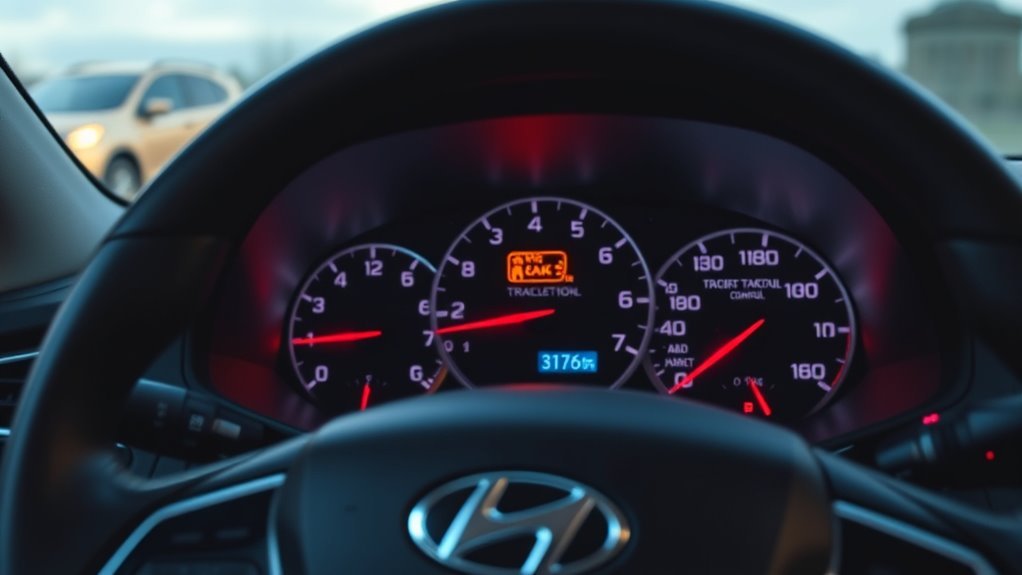
If your 2015 Sonata’s TCS light comes on, first note whether it is blinking (the system is actively working) or steady (a fault). A steady TCS light, often with ABS or BSD warnings, commonly points to a wheel-speed sensor, its wiring or connector, or the hub assembly. Read the codes with a scan tool that can access the ABS module, inspect the sensors and wiring for damage or corrosion, and have the sensor tested following the service manual before replacing parts.
Who This Guide Is For and How to Use It
Who should read this? You own a 2015 Sonata Limited and you’re seeing the traction control light tied to ABS or BSD faults. You want clear steps for finding the cause before you visit a shop.
This guide walks through inspecting wheel-speed sensors and wiring, reading ABS/BSD fault codes with a scan tool, and deciding when to repair, replace a part or take the car to a dealer. Exact test values and procedures are in the factory service manual for your car.
Quick Triage: Is Your Sonata’s TCS Light Urgent?
If the TCS light comes on while driving, first assess safety: reduce speed and avoid sudden maneuvers if the light is steady or ABS/BSD warnings come with it. A scan tool can show whether it is a sensor or wiring fault or a system problem that needs prompt repair. A blinking TCS light during slippery conditions is normal active control; a light that stays on is a fault and should be checked soon.
Immediate Safety Assessment
Traction control affects stability, so treat a steady TCS light as a prompt to check the car soon. A blinking light means the system is working; a steady one indicates a fault in traction control or a related system. Reduce speed and avoid abrupt maneuvers, especially on wet or icy roads. Inspect wheel-speed sensors and connectors for damage, contamination or loose plugs. If everything looks intact but the light stays on, get professional diagnostics.
Warning Light Persistence
If the TCS light stays on, assume the stability systems may be limited until the fault is found. Start by inspecting the wheel-speed sensors, their wiring and connectors for corrosion, damage or loose pins. Corroded connections can cause a persistent light; clean and secure them, then retest. Don’t clear codes before repairs, because clearing only hides the fault until it returns. If the light stays on after these checks, have it diagnosed with proper scan equipment.
How Sonata TCS, ABS, and BSD Work
ABS and TCS share wheel-speed inputs: ABS modulates brake pressure to prevent lock-up, while TCS reduces torque or applies brakes to a slipping wheel. A faulty wheel-speed sensor or corroded wiring can send bad speed signals that trigger TCS/ABS warnings, and other systems that use vehicle-speed data may also be affected. Check sensor and connector condition before replacing components.
ABS And TCS Interaction
When a drive wheel starts to slip during acceleration, the TCS reduces engine torque and applies brake pressure to the slipping wheel, which you see as a flashing TCS light. Wheel-speed-sensor faults commonly cause TCS and ABS warnings together. Inspect sensors and wiring for corrosion or damage, then have the codes read; after the repair, clear the codes and test drive to confirm the fix.
| Component | Symptom | Action |
|---|---|---|
| TCS | Flashing light | Scan codes, test wheel sensors |
| ABS | Stability loss | Scan for ABS codes |
| Sensors | Corrosion/damage | Clean/replace, retest |
Keeping sensors and connectors clean helps avoid repeat warnings.
Blind Spot Integration
Other systems on the car, such as Blind Spot Detection, may also use vehicle-speed information, so a wheel-speed fault can sometimes bring up several warning lights at once. If several lights come on together, start with a code scan.
- Diagnose: read ABS/TCS/BSD trouble codes with a scan tool.
- Isolate: inspect the sensor, connector and tone ring for damage or debris.
- Repair: replace faulty sensors or wiring, clear codes, and verify all systems regain normal operation.
Common Causes of a Sonata TCS/ABS/BSD Warning Cluster
If the TCS, ABS and BSD lights come on together, a wheel-speed sensor problem is a common cause, but not the only one. Read the codes first: they show which sensor or circuit is involved. Check for corrosion at the sensor connector and nearby harness, damaged or chafed wiring, and a worn hub bearing. Replace the confirmed faulty part and don’t just clear the codes.
Quick DIY Checks: Wiring, Connectors, and Sensor Spin Test
Many electrical faults hide under dirt or corrosion, so start with a visual check. Inspect the wiring and connectors at each wheel for breaks, chafing, rust or corrosion, and reseat plugs firmly. Clean moisture and grit from the connectors. Electrical tests of the sensor itself (resistance, output signal or reference voltage) depend on the sensor type and are listed in the service manual, so don’t test it without the correct procedure.
Read ABS Codes & Test a Rear Wheel Speed Sensor
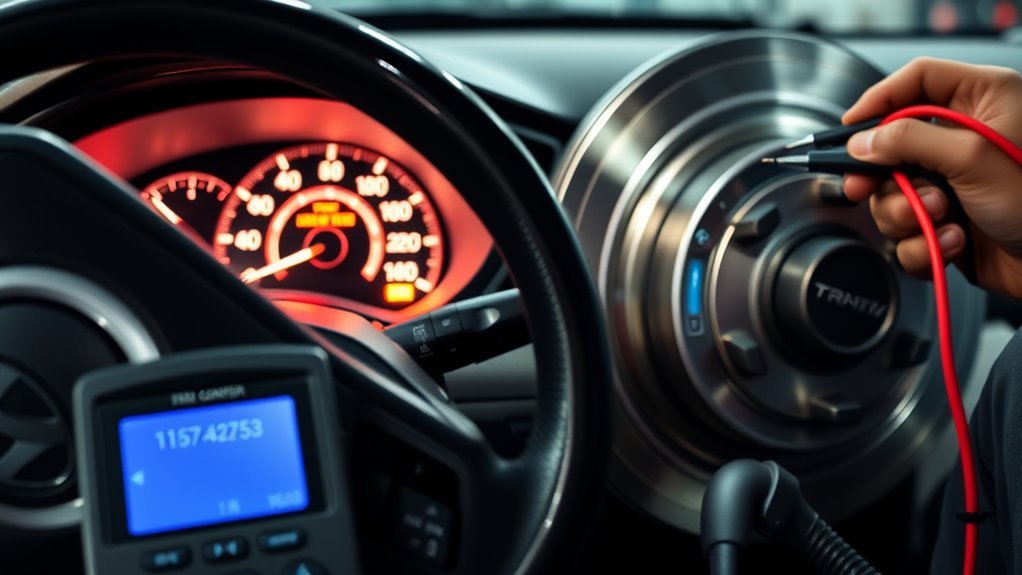
Start by pulling ABS codes with a scan tool that can read the ABS module; a basic engine-only reader may not show them. Note the code and which wheel it points to, and record the freeze-frame data if available. Then inspect that wheel’s sensor, wiring and connector for corrosion, breaks or looseness, and follow the service manual’s test procedure for the sensor. This helps you avoid guesswork before ordering parts.
Repair Options for Sonata TCS/ABS/BSD Warnings
When the Sonata shows TCS, ABS and BSD warnings together, prioritize diagnostics to avoid unnecessary parts changes. Read the codes, then check the connector and wiring for the wheel the code points to, and follow the service manual’s test for the sensor before ordering parts.
TCS, ABS, and BSD warnings often point to a wheel-speed sensor issue—diagnose wiring, connectors, and sensor before replacing parts
- Verify wiring integrity and clean ABS connector; watch for corrosion that repeats faults.
- Use diagnostic tools to confirm sensor output and decide between sensor replacement or hub assembly.
- Check warranty status; if the repair is covered, have the dealer do it.
Proving the fault before replacing parts saves money.
Hub or Sensor: Which Should You Replace?
After you confirm the codes and inspect the connector, decide whether to replace the wheel-speed sensor alone or the hub assembly. Check the service manual to see whether the sensor is serviced separately on your car. If the sensor tests bad or the signal is intermittent, replace the sensor. If there is bearing play or the sensor is part of the hub assembly, replace the hub. A service bulletin may apply to your car, so ask a Hyundai dealer or check your VIN.
Preventing Repeat Warnings: Waterproofing and Maintenance
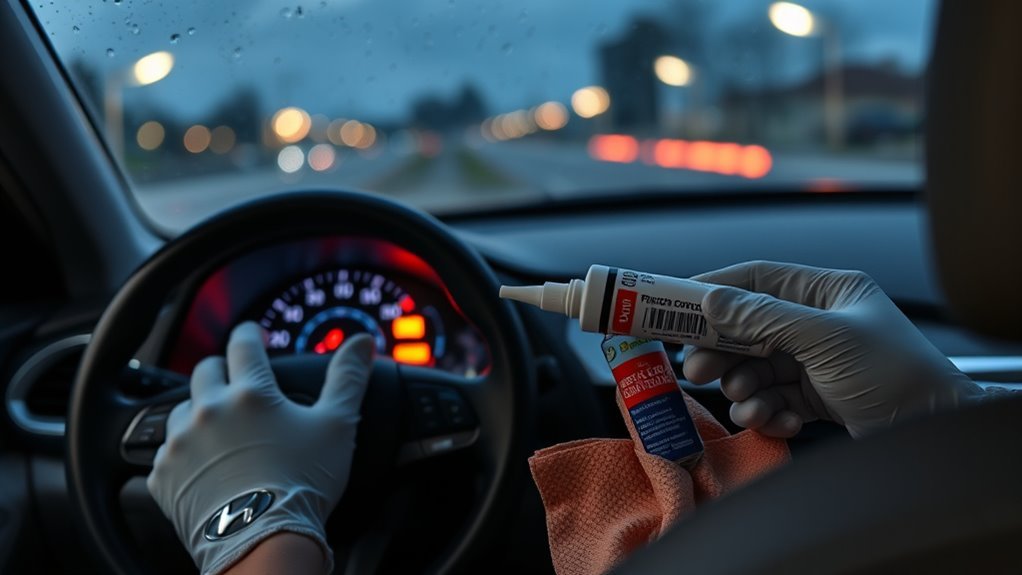
Moisture and debris can cause recurring ABS and traction faults, so clean the connector contacts during any sensor service and secure the wiring so it can’t chafe or catch road debris. Check the service manual before applying dielectric grease to a connector.
- Use quality replacement parts and make sure the connector seals are intact and fully seated.
- Check the sensor area after heavy rain, snow or off-road use.
- Tighten mounts, replace brittle clips, and verify connector fit to prevent intermittent faults.
Frequently Asked Questions
Why Is My Traction Control Light on My Hyundai Sonata?
The TCS light is on because the system detected a fault, often a wheel-speed sensor, wiring or connector problem, an ABS/TCS communication issue, or a TCS switch pressed accidentally. A scan-tool read of the ABS module will show the cause.
What Can Cause My Traction Control Light to Stay On?
The light stays on until the fault is fixed. Common causes are a faulty wheel-speed sensor or damaged wiring, low tire pressure, an ABS or stability-control fault, or stored fault codes that need diagnosis.
How Do I Reset My Traction Control Stability?
There is no simple reset that fixes a real fault. Check tire pressures, restart the car, and see whether the light goes out. If it stays on, scan the codes, inspect the sensors and wiring, and fix the cause; clear the codes after the repair.
Conclusion
If your Sonata’s traction control light comes on, don’t ignore it; early checks can catch problems before they get worse. Start with wiring and connectors, then read the ABS codes and test the suspect sensor following the service manual. Replace the sensor if its signal’s erratic; replace the hub only if it’s damaged. Keep connectors clean and inspect the tone rings to prevent repeat warnings.