For your Toyota Supra, warming up the engine through gentle driving is more effective than idling. In warm conditions, a brief idle of under a minute is enough; in cold weather, plan on 5-10 minutes of gentle driving before using full performance. This approach synchronizes fluid temperatures better, minimizes wear, and boosts engine efficiency. Avoid excessive RPMs until the water temperature exceeds 150°F, and always wait for the oil to hit 70°C before applying boost in turbocharged models. Explore further to discover more insights on maximizing your engine’s performance.
The Importance of Engine Temperature for Performance
Understanding the importance of engine temperature is vital for maximizing your Toyota Supra’s performance. Ideal engine efficiency hinges on reaching an oil temperature of 70°C before engaging in full throttle. This temperature guarantees effective lubrication, protecting critical components during performance tuning. Remember, engine fluids warm up more slowly than the engine itself, so monitor their temperatures closely. By driving gradually for the first 5-10 minutes, you allow all fluids to synchronize, enhancing overall performance and longevity. Avoid high RPMs until the water temperature exceeds 150°F; this prevents undue stress on the engine. Engaging turbo boost should wait until the oil temperature surpasses 70°C to safeguard turbo bearings and maintain peak performance. Your Supra deserves this careful approach.
Toyota Supra Warm-Up Durations for Different Conditions
When conditions are warm, you can often start driving your Toyota Supra almost immediately, typically requiring less than a minute of warm-up time. However, in colder weather, plan on 5-10 minutes of gentle driving before using high rpm or full throttle; long stationary idling is not needed. It’s crucial to monitor the engine temperature gauge; begin driving once the coolant temperature surpasses the cold indicator. Keep in mind that oil takes longer to heat, ideally reaching about 70°C (158°F) before pushing the engine hard. During the first 2-3 miles, gentle driving helps guarantee all fluids reach their best operating temperatures, enhancing performance and longevity. Weather considerations are critical in determining your warm-up strategy.
Advantages of Driving Over Idling
Driving your Toyota Supra immediately after starting it offers significant advantages over idling. Engaging in light driving rather than letting your engine idle maximizes efficiency and protection for your vehicle.
- Simultaneous warming: Engine and transmission warm up together, optimizing fluid temperatures.
- Reduced wear: Gentle driving minimizes engine wear, as vehicles are designed for effective warming during operation.
- Oil circulation: Quickens oil flow, ensuring it reaches its ideal operating temperature for better protection.
- Environmental impact: Driving reduces emissions and fuel waste, making it the eco-friendlier choice.
While idling has its drawbacks, embracing these driving benefits empowers you to enhance your Supra’s performance and longevity while being mindful of the environment.
The Role of Oil Temperature in Engine Performance
Oil temperature plays a critical role in your engine’s performance and longevity. To guarantee ideal protection, aim for the oil to reach approximately 70°C (158°F) before engaging high RPMs. Monitoring this temperature helps you maintain effective lubrication, reducing wear on essential engine components.
Optimal Oil Temperature Range
Maintaining an ideal oil temperature is essential for ensuring your Toyota Supra’s engine performs efficiently and reliably. The optimal oil temperature is around 70°C (158°F), which guarantees proper lubrication and minimizes engine wear. Since engine oil takes longer to reach this temperature compared to coolant, effective temperature monitoring is critical.
Consider the following points:
- Use the oil viscosity your owner’s manual specifies; thicker oils such as 15W-50 flow more slowly when cold.
- Gently driving for the first 5-10 minutes helps warm the oil while reducing wear.
- Avoid high RPMs and turbo boost until oil temperature exceeds 70°C.
- Proper oil viscosity is essential for optimal engine function.
Impact on Engine Longevity
While it may seem tempting to push your Toyota Supra’s performance right after starting the engine, allowing the oil to reach its preferred temperature considerably impacts the engine’s longevity. Oil takes longer to achieve optimal operating levels than coolant, which is essential for ensuring lubrication efficiency. Using the oil grade your owner’s manual specifies helps the oil reach critical parts quickly on a cold start. Monitoring oil temperature is crucial; wait until it hits 70°C before applying significant loads to minimize engine wear. Gradual driving for the first 5-10 minutes allows fluids to warm up together, reducing strain compared to idling. Engaging turbo boost prematurely can lead to damage, so prioritize proper warm-up for sustained performance and durability.
Driving Techniques for a Proper Warm-Up
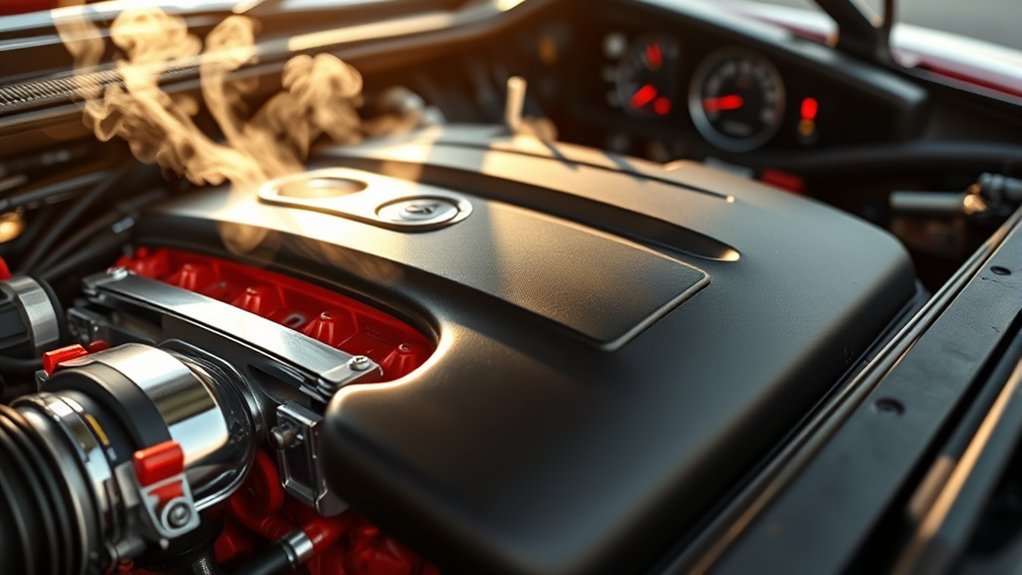
To guarantee your Toyota Supra’s engine is properly warmed up, start by idling for 20 to 120 seconds after ignition. This initial phase assures oil circulates effectively, preparing your engine for operation. For ideal warm-up benefits, adopt the following driving techniques:
- Drive gently under 3,000 RPM for the first 5-10 minutes.
- Monitor the temperature gauge; begin driving once coolant rises above the cold mark.
- Refrain from engaging turbo boost until oil temperature hits at least 70°C.
- Gradually increase engine load and speed as temperatures normalize.
How Idling Affects the Environment and Your Engine
Idling your Toyota Supra may seem harmless, but it considerably impacts both the environment and your engine’s health. When you idle, your vehicle releases harmful chemicals and greenhouse gases, releasing nearly 20 pounds of carbon dioxide for every gallon of gasoline burned. This exacerbates air quality issues and climate change. Prolonged idling also accelerates engine wear by stripping oil from critical components, risking premature failure. Countries like Germany have enacted regulations against excessive idling to promote emissions reduction and protect public health. Additionally, modern engines don’t warm up effectively while idling; driving gently is far more efficient. Each minute of unnecessary idling leads to fuel waste and environmental degradation, making it essential for you to adopt better warm-up practices.
Common Myths About Engine Warm-Up Practices
Many drivers hold misconceptions about engine warm-up practices, particularly regarding idling. Contrary to popular belief, a brief idle followed by gentle driving is more effective for warming your engine and its components. Understanding these myths can help you optimize performance and enhance engine longevity.
Engine Idling Myths
While some drivers believe that letting their vehicle idle for an extended period is essential for warming up the engine, this practice is largely a misconception. Modern vehicles actually warm up more efficiently when driven gently rather than remaining stationary. Here are some key points to take into account:
- Prolonged idling can cause unnecessary wear and tear on your engine.
- Cold starts may generate odd sounds, but they’re often normal and don’t require extended idling.
- Older vehicles had different needs; modern engines heat up quickly without long idle times.
- Idling contributes to greenhouse gas emissions, impacting our environment negatively.
Understanding these idling misconceptions can enhance vehicle efficiency and promote better driving habits. Embrace driving as the best method to warm up your engine.
Quick Start Benefits
Understanding the myths surrounding engine warm-up practices is essential for enhancing your Toyota Supra’s performance. A quick start, involving just 20-120 seconds of idling, is often sufficient before you drive gently. Contrary to popular belief, extended idling can decrease engine efficiency and increase wear. Driving immediately after a brief warm-up allows oil and fluids to circulate more effectively, ensuring all components reach ideal temperatures simultaneously. Additionally, idling contributes to pollution, making gentle driving a more environmentally friendly choice. Remember, engaging turbo boost should be avoided until the oil temperature reaches at least 70°C (158°F). By embracing these practices, you enhance not only your vehicle’s health but also its performance, liberating you from outdated beliefs about engine warm-ups.
Cooling Down Your Engine and Turbos
After spirited driving, it’s crucial to cool down your engine and turbos effectively to maintain their longevity. Idling can lead to oil cooking in turbo bearings, risking sludge buildup. Instead, adopt these cooling techniques:
- Drive gently for the last 2-4 miles, easing the load on the engine.
- Allow for a brief idle of 30-120 seconds after stopping to let residual heat dissipate.
- Monitor Exhaust Gas Temperature (EGT) to gauge engine health; turning off the engine at specific temperatures can enhance heat management.
- Avoid boost during your final mile to support oil circulation and improve engine efficiency.
What Do Manufacturers Say About Warming Up Your Engine?
Cooling down your engine and turbos is just one part of engine management; warming up your engine correctly is equally important. Manufacturers recommend starting and driving your modern vehicle, like the Toyota Supra, immediately after ignition for peak engine efficiency. According to the Toyota manual, this approach helps reach the ideal operating temperatures for all fluids, including the transmission. Keep an eye on the coolant temperature gauge, as it indicates when your engine is ready; drive gently until it rises above the cold mark. Prolonged idling can increase engine wear and decrease fuel efficiency, making immediate driving the preferred practice. For turbocharged models, wait until the oil temperature hits 70°C before engaging boost—essential for performance.
Frequently Asked Questions
How Much Idling Time Does an Engine Need to Warm Up?
Your engine needs only 20-120 seconds of idling to warm up effectively. Driving gently during this period enhances engine performance and fuel efficiency, ensuring fluids reach ideal temperatures quickly while minimizing wear and waste.
Does AAA Advise Only 30 Seconds of Warm up for Modern Cars?
Yes, AAA advises only 30 seconds of warm-up for modern cars. You’ll enhance engine efficiency and curb fuel consumption by starting your drive promptly, avoiding unnecessary idling that harms both your wallet and the environment.
How Long Should You Let Your Engine Warm Up?
Idle only briefly (under a minute), then drive gently. In winter, allow 5-10 minutes of gentle driving before using high rpm or boost, rather than idling in place.
Is It Better to Drive or Idle to Warm Up?
It’s better to drive gently than to idle for warming up. This approach optimizes engine performance and fuel efficiency, allowing oils to circulate effectively, reducing wear, and minimizing environmental impact. Start driving shortly after ignition.
Conclusion
In the grand symphony of engine performance, warming up your Toyota Supra is like tuning an orchestra before a concert. You want each component—oil, coolant, and engine—to harmonize for peak efficiency. Instead of letting it idle, think of driving as the conductor, guiding the engine through its warm-up crescendos. By embracing this proactive approach, you not only enhance performance but also extend your engine’s lifespan, ensuring it plays beautifully for many seasons to come.