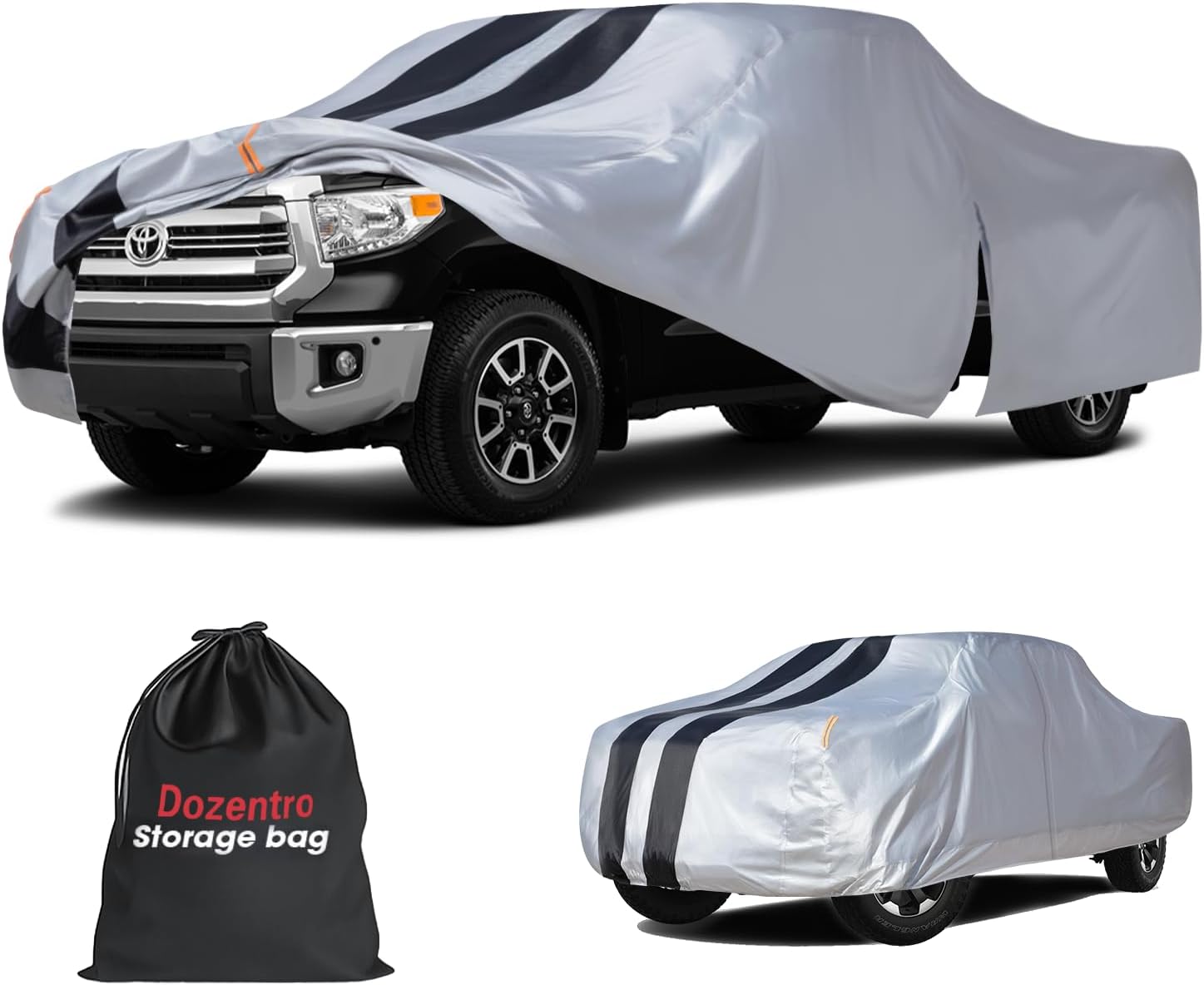

Tundra interior dimensions depend almost entirely on which cab you choose. Front-seat space is the same in every current Tundra, but rear legroom differs by more than eight inches between the Double Cab and the CrewMax. This guide lists the Tundra legroom specs, headroom, shoulder room and seating capacity, and explains what the numbers mean for adults, child seats and long trips.
Quick Answer
The current Toyota Tundra seats five. Front occupants get 41.0 inches of headroom, 41.2 inches of legroom and 65.0 inches of shoulder room in both cabs. Rear legroom is 33.3 inches in the Double Cab and 41.6 inches in the CrewMax. A panoramic roof lowers CrewMax headroom to 39.3 inches in front and 36.9 inches in the rear.
What’s in This Article
Key Takeaways
- Front-seat dimensions are identical in Double Cab and CrewMax.
- The CrewMax has 41.6 inches of rear legroom, against 33.3 inches in the Double Cab.
- The panoramic roof reduces headroom by about 1.6 to 1.7 inches.
- 2022 and newer Tundras seat five, with no six-seat front bench.
- Older 2007 to 2021 CrewMax models have slightly more rear legroom.
Tundra Interior Dimensions: 2022 and Newer
| Measurement | Double Cab | CrewMax |
|---|---|---|
| Seating capacity | 5 | 5 |
| Front headroom | 41.0 in | 41.0 in |
| Rear headroom | 38.5 in | 38.5 in |
| Front legroom | 41.2 in | 41.2 in |
| Rear legroom | 33.3 in | 41.6 in |
| Front shoulder room | 65.0 in | 65.0 in |
| Rear shoulder room | 63.4 in | 62.4 in |
| Front hip room | 62.6 in | 62.6 in |
| Rear hip room | 60.5 in | 60.5 in |
Figures apply to the current-generation Tundra introduced for 2022 and are based on published specifications for models without a moonroof. Confirm on the specification sheet for the exact truck.
Tundra Headroom Specs With a Panoramic Roof
The optional panoramic roof on the CrewMax takes up space in the headliner:
| CrewMax roof | Front headroom | Rear headroom |
|---|---|---|
| Standard roof | 41.0 in | 38.5 in |
| Panoramic roof | 39.3 in | 36.9 in |
If you or your regular passengers are over about 6 ft 2 in, sit in a truck with the roof you plan to buy. A standard moonroof on the Double Cab also reduces headroom slightly.
Tundra Legroom Specs: Double Cab vs CrewMax
This is the number that decides most purchases. With 33.3 inches of rear legroom, the Double Cab’s back seat suits children, short trips and occasional adult passengers. Adults will find their knees close to the front seatbacks.
The CrewMax, at 41.6 inches, gives rear passengers about as much legroom as those in front. It comfortably carries three adults across and makes rear-facing child seats much easier to fit behind a tall driver. The trade-off is bed length: the CrewMax is offered with the shorter beds, while the Double Cab can be paired with the longer ones.
Tundra Shoulder Room Specs and Hip Room
Front shoulder room is 65.0 inches and front hip room is 62.6 inches in both cabs, which is generous even by full-size truck standards. In the rear, shoulder room is 63.4 inches in the Double Cab and 62.4 inches in the CrewMax, with 60.5 inches of hip room in both. Three adults fit across the rear bench of either cab, although the center position is firmer and narrower.
Toyota Tundra Seating Capacity
Every 2022 and newer Tundra seats five: two front bucket seats and a three-person rear bench. Toyota does not offer a front bench seat on the current generation.
On 2007 to 2021 models, lower trims could be ordered with a front bench, giving seating for six. The Regular Cab offered on earlier years seats three. If you need six seats, look at those older trucks and check the specific vehicle.
How Older Tundras Compare
| Measurement | 2014 to 2021 Double Cab | 2014 to 2021 CrewMax |
|---|---|---|
| Front headroom | 39.7 in | 39.7 in |
| Front legroom | 42.5 in | 42.5 in |
| Front shoulder room | 65.7 in | 65.7 in |
| Rear legroom | 34.7 in | 42.3 in |
| Rear headroom | About 38.7 in | 38.9 in |
The previous generation has a little more front and rear legroom and slightly less front headroom than the current truck. The 2007 to 2013 CrewMax was the roomiest of all in the back, with 44.5 inches of rear legroom and a sliding, reclining rear seat.
Which Cab Should You Choose?
- Choose the CrewMax if adults or teenagers ride in the back regularly, if you use rear-facing child seats or if the truck doubles as the family vehicle.
- Choose the Double Cab if the rear seat is mostly for kids, tools or pets and you want a longer bed in a truck of similar overall length.
- Skip the panoramic roof if you are tall or wear a hard hat or cowboy hat in the cab.
Frequently Asked Questions
How much legroom does a Toyota Tundra have?
41.2 inches in front. Rear legroom is 33.3 inches in the Double Cab and 41.6 inches in the CrewMax on 2022 and newer models.
How much headroom is in a Tundra CrewMax?
41.0 inches in front and 38.5 inches in the rear with the standard roof, or 39.3 and 36.9 inches with the panoramic roof.
What is the Toyota Tundra seating capacity?
Five on 2022 and newer models. Some 2007 to 2021 trims with a front bench seat six.
What is the shoulder room in a Toyota Tundra?
65.0 inches in front. Rear shoulder room is 63.4 inches in the Double Cab and 62.4 inches in the CrewMax.
Is the Tundra Double Cab back seat big enough for adults?
For short trips, yes. With 33.3 inches of rear legroom it is tight for adults on long drives. The CrewMax is the better choice for regular adult passengers.