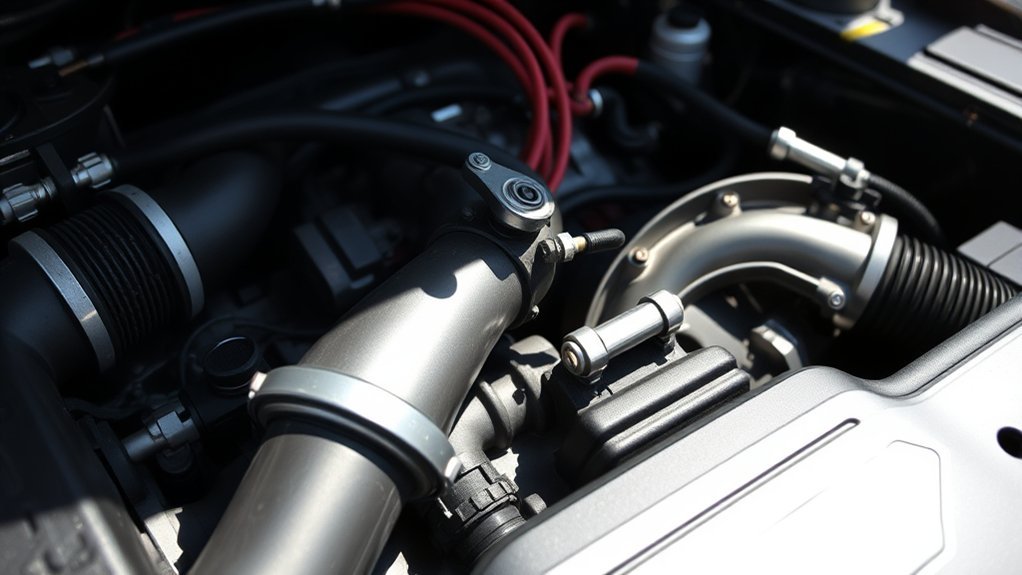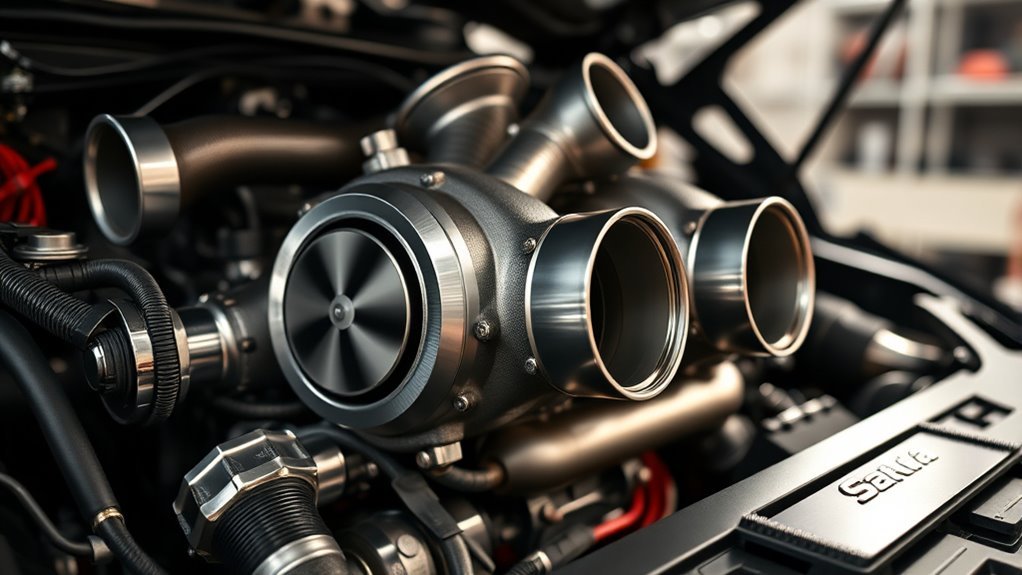
You get the best results from a Supra turbo setup when you understand what system you actually have. The current MkV Toyota GR Supra 3.0 uses a single twin-scroll turbocharger, not two turbos, while the older Mk4/A80 Supra used sequential twin turbos. Both systems fight lag, but they do it in different ways: twin-scroll design preserves exhaust pulse energy, while sequential twin turbos stage one turbo before bringing the second online.
Quick Answer
A twin-scroll turbo helps the Toyota GR Supra respond faster by keeping exhaust pulses separated before they hit the turbine. That improves low- and midrange response, reduces pulse interference, and supports strong torque without needing a larger, laggier turbo. It is not the same as the Mk4 Supra’s sequential twin-turbo system.
Key Takeaways
- The MkV GR Supra 3.0 uses a single twin-scroll turbo with variable valve timing and an electric wastegate.
- Twin-scroll turbochargers divide exhaust flow into two paths so firing pulses reach the turbine with less interference.
- The benefit is mainly response and usable midrange torque, not a guaranteed bolt-on horsepower percentage.
- The Mk4/A80 Supra’s 2JZ-GTE used sequential twin turbos, which is a different design from twin-scroll turbocharging.
- For upgrades, manifold design, correct cylinder grouping, wastegate control, heat management, and ECU calibration matter as much as the turbo itself.
What This Guide Answers (Who It’s For)
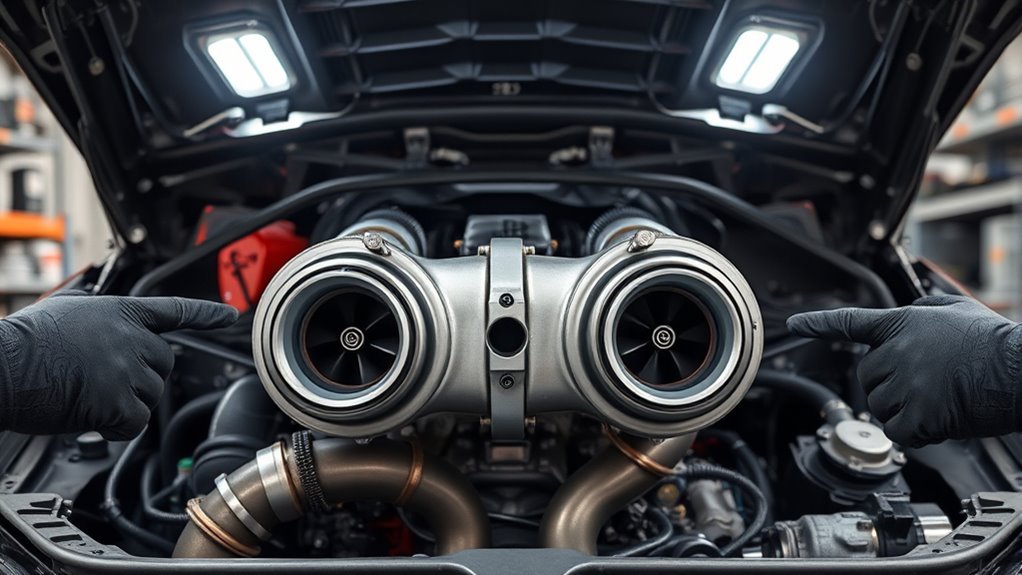
This guide is for Supra owners, shoppers, tuners, and enthusiasts who want a clear answer without marketing fluff. You’ll learn how a twin-scroll turbo works on the modern GR Supra, why it improves response compared with a basic single-scroll design, and why it should not be confused with the older 2JZ-GTE’s sequential twin-turbo system.
The goal is practical: understand what creates faster spool, what improves midrange torque, what claims are realistic, and what tuning or hardware choices can ruin those gains. Instead of promising a fixed horsepower number, this guide explains the engineering choices that make a turbo setup feel sharp, repeatable, and reliable.
How the Twin-Scroll Turbo Works on the MkV Supra
The current Toyota GR Supra 3.0 uses a turbocharged 3.0-liter inline-six rated at 382 horsepower and 368 lb-ft of torque in U.S. specification. Toyota describes the engine as using a twin-scroll turbocharger, variable valve timing, and an electric wastegate to improve response.
A twin-scroll turbocharger does not mean there are two turbos. It means the turbine housing is divided into two separate exhaust passages, or scrolls. Those passages keep exhaust pulses from interfering with each other before they reach the turbine wheel. When the pulses stay organized, more of their pressure-wave energy can spin the turbine instead of being wasted in the manifold.
That matters because turbo response depends on how quickly the turbine accelerates. A single-scroll turbo blends all exhaust pulses into one common passage. A twin-scroll layout keeps compatible cylinders separated so the turbine sees cleaner, stronger pulses. BorgWarner’s twin-scroll technical explanation describes this as using divided flow paths so firing order can send pulse energy more directly to the turbine wheel.
- Single turbo: one turbocharger feeds the engine.
- Twin-scroll turbo: one turbocharger with two separated exhaust paths inside the turbine housing.
- Twin turbo: two separate turbochargers.
- Sequential twin turbo: two turbochargers staged so one works first and the second joins later.
Note: “TwinPower Turbo,” “twin-scroll,” and “twin turbo” are often mixed up online. For the MkV GR Supra 3.0, the important point is simple: it uses one turbocharger with a divided twin-scroll turbine housing.
Why Twin-Scrolls Beat Single-Scroll Turbos for Midrange Response
Twin-scroll turbos are most useful in the part of the rev range where drivers notice lag: low and mid RPM. Because the turbine receives more organized exhaust pulses, it can respond more cleanly during throttle changes. That helps the car feel stronger when you roll into the throttle, pass on the highway, or accelerate out of a corner.
The main advantage is not a universal “20% horsepower gain.” Real gains depend on the engine, turbo size, manifold, boost target, cam timing, fuel, and ECU calibration. A twin-scroll setup can support better response and torque than a comparable single-scroll turbo, but the final dyno result depends on the whole system.
Technical references such as x-engineer’s twin-scroll turbocharger guide explain that twin-scroll systems use both thermal energy and pulse energy from the exhaust, while single-scroll systems rely more on a blended constant-pressure exhaust stream. That is why a well-matched twin-scroll turbo can feel more immediate without giving up as much top-end flow.
The real twin-scroll advantage is not a magic horsepower percentage; it is cleaner exhaust pulse energy, quicker transient response, and a wider usable torque band when the manifold, turbine housing, and calibration are matched correctly.
Twin-Scroll vs. Sequential Twin Turbo: Why the Terms Get Mixed Up
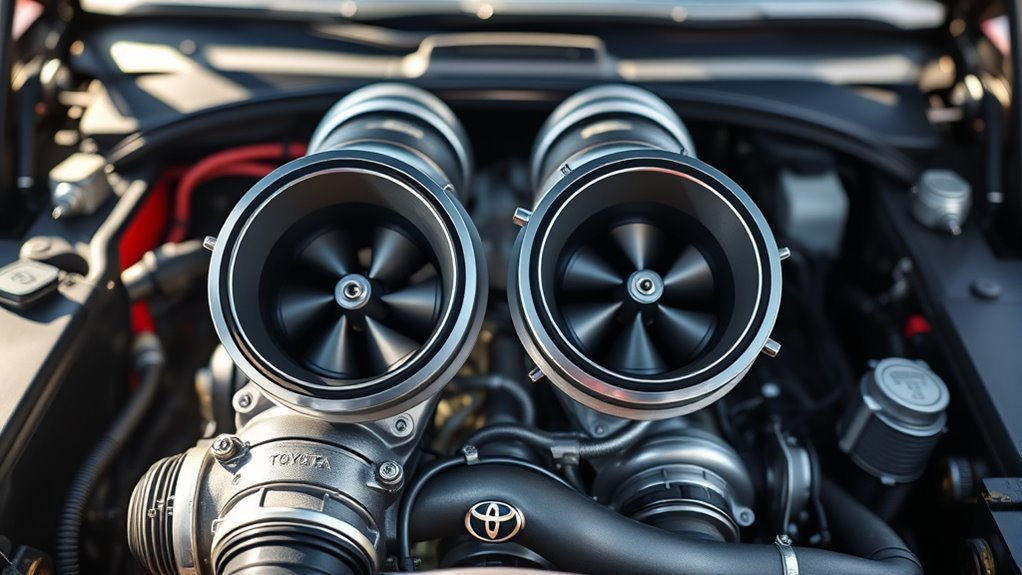
The confusion comes from Supra history. The MkV GR Supra uses a single twin-scroll turbo. The older Mk4/A80 Supra Turbo used Toyota’s 2JZ-GTE inline-six with twin sequential turbos. Toyota’s UK media archive describes the fourth-generation Supra as using a straight-six engine with twin sequential turbos, producing up to 326 bhp in UK-market specification.
Sequential turbocharging is a different strategy. Instead of dividing one turbine housing into two scrolls, the system uses two turbochargers and controls exhaust and intake flow with valves. One turbo handles lower engine speeds, then the system brings the second turbo into operation as airflow demand rises.
Sequential Turbo Activation
On a sequential twin-turbo system, the first turbo is used to create low-RPM boost and reduce lag. As engine speed and load increase, control valves route exhaust toward the second turbo so it can pre-spool before joining the intake flow. The result is a broader powerband than a simple large single turbo of the same era.
That approach made sense for the Mk4 Supra’s 2JZ-GTE because it balanced low-speed response with strong high-RPM power. It is also more mechanically complex than the MkV’s single twin-scroll turbo, with more valves, lines, actuators, and failure points.
Wastegate, EGCV and Bypass Valve Roles
In the Mk4 sequential setup, exhaust gas control valves, bypass valves, vacuum switching valves, and wastegates coordinate when and how the second turbo joins the system. The basic job is to prevent a dead zone between one-turbo and two-turbo operation while also keeping boost pressure under control.
In the MkV GR Supra’s twin-scroll system, boost control is simpler in concept: one turbocharger is regulated by an electric wastegate and engine management. The calibration controls boost pressure, torque delivery, throttle response, and safety limits without having to stage a second turbocharger.
Boost Control Strategy
Boost control is where hardware and software meet. A well-designed turbo system needs the right turbine size, wastegate flow, compressor map, fuel quality, ignition timing, air temperature control, and knock protection. When any of those are mismatched, the car may show boost creep, sluggish spool, compressor surge, overboost, or unstable torque delivery.
- Wastegate control limits turbine speed and boost pressure.
- ECU calibration manages torque targets, throttle angle, ignition timing, fueling, and safety limits.
- Charge-air cooling keeps intake temperatures under control.
- Manifold design protects exhaust pulse energy before it reaches the turbine.
Manifold, Firing Order, and Why They Matter for Spool
A twin-scroll turbo only works properly if the exhaust manifold and cylinder grouping support it. The system must separate cylinders so exhaust pulses are spaced cleanly between the two scrolls. If the manifold dumps incompatible pulses together too early, the turbo behaves more like a compromised single-scroll setup.
This is why a divided turbine housing alone is not enough. The runners, divider, collector volume, gasket sealing, turbine flange, and wastegate placement all affect how much pulse energy reaches the turbine.
Manifold Design Impact
Good manifold design preserves pulse separation as long as possible. The runners should route exhaust to the correct scroll with minimal leakage across the divider. Excessive collector volume, poor divider alignment, cracked welds, or a mismatched open flange can weaken the pulse effect and slow response.
For a street-driven Supra, the best setup is usually the one that keeps exhaust velocity high and boost control stable. Oversized manifolds and large-frame turbos can make peak power, but they often trade away the low- and midrange response that makes a twin-scroll system enjoyable on the road.
- Keep the divided path divided from the head to the turbine inlet.
- Match the flange so a twin-scroll turbo is not fed by an open, undivided collector.
- Control wastegate flow without bleeding pulse energy from one scroll into the other.
- Avoid excess runner volume if fast street response is the goal.
Correct Cylinder Pairing
Correct cylinder pairing depends on engine layout and firing order. A four-cylinder, inline-six, V6, and V8 do not all use the same grouping strategy. The goal is to feed each scroll with evenly spaced exhaust pulses and avoid overlap that causes pressure interference.
That is why generic advice like “put odd cylinders on one scroll and even cylinders on the other” can be wrong. A good turbo manifold should be designed around the actual engine’s firing order, port layout, turbine flange, and packaging limits. On a Supra, copying a random divided manifold design without confirming the cylinder grouping can cost response and make boost control harder.
Pro Tip: When shopping for a twin-scroll manifold or turbo kit, ask whether the manifold is truly divided all the way to the turbine inlet and whether the wastegate routing preserves scroll separation. A “twin-scroll compatible” label is not enough.
Supra Twin-Scroll Gains: Fuel Economy, Spool Time, Midrange Power
The safest way to talk about Supra twin-scroll gains is to separate official vehicle specs from general turbocharger benefits. Toyota’s official GR Supra information confirms the 3.0-liter engine’s twin-scroll turbocharger and its 382-hp, 368-lb-ft output. The EPA’s 2026 Toyota GR Supra fuel economy listing shows the 3.0 automatic at 25 mpg combined and the 3.0 manual at 21 mpg combined.
Those numbers do not prove that the twin-scroll turbo alone creates a fixed fuel-economy gain. Fuel economy also depends on gearing, vehicle weight, transmission, combustion strategy, aerodynamics, tires, emissions calibration, and driving style. What the twin-scroll system does support is efficient low- and midrange boost response, which can reduce the need for a larger, slower-spooling turbo in a street car.
| Area | What’s Realistic | What to Avoid Claiming |
|---|---|---|
| Spool | Faster response than a comparable single-scroll setup when the manifold and turbine are matched correctly. | A guaranteed 500–1,000 RPM improvement on every engine and turbo combination. |
| Power | Stronger usable torque and better transient response are common goals. | A fixed 15–20% horsepower gain from twin-scroll design alone. |
| Fuel use | Efficient boost response can support good real-world drivability and part-throttle torque. | A guaranteed 9% fuel saving without a controlled test. |
| Reliability | Stock-style boost control and conservative tuning can be very street-friendly. | Assuming more boost is safe without fuel, heat, knock, and torque-limit calibration. |
[Products Worth Considering]

This silicone vacuum hose kit provides a versatile selection of tubing sizes and connector pieces for automotive, marine, and industrial routing tasks. Built for heat resistance and durability, it supports air and water applications in engine bays, custom intake setups, turbo piping, and cooling system projects. The included size variety makes it a practical choice for repairs, fabrication, and DIY maintenance work.

This 2-piece oil control variable valve timing solenoid set is designed to help restore proper VVT operation and engine performance across a wide range of Toyota, Lexus, Scion, and Pontiac applications. Built to meet or exceed OE performance, it uses quality seals for reliable oil control and helps reduce issues caused by improper oil flow. It is a practical replacement choice for maintaining smooth engine timing and dependable drivability.

This coolant thermostat is a direct replacement designed for a wide range of Toyota, Lexus, and Scion vehicles. It helps maintain proper engine temperature, supports reliable cooling system performance, and installs easily without special tools or programming. Built to meet OEM standards, it offers durable, stable operation and dependable fitment for compatible models.
Common Challenges: Wastegates, Tuning, and Reliability Tips
Twin-scroll systems are sensitive to details. A poor wastegate layout can connect the two scrolls too early, reduce pulse separation, and make boost control inconsistent. A poorly calibrated electronic boost controller or ECU tune can create torque spikes that feel exciting at first but increase stress on the turbo, drivetrain, and cooling system.
Warning: Do not raise boost on a GR Supra or 2JZ-GTE setup without logging fuel trims, knock correction, boost target, boost actual, intake temperature, wastegate duty, and air-fuel ratio. More boost without proper calibration can damage the engine or turbocharger.
- Boost creep: Usually caused by inadequate wastegate flow, poor wastegate placement, or an oversized turbine flow mismatch.
- Slow spool: Can come from boost leaks, exhaust leaks before the turbo, oversized turbine housing, poor manifold design, or conservative torque management.
- Compressor surge: Often shows up as flutter or unstable airflow when the turbo is operating outside its ideal range.
- Heat soak: Reduces consistency, especially after repeated pulls or track sessions.
- Unstable boost: Can come from weak vacuum lines, actuator issues, poor boost-control tables, or electronic wastegate calibration problems.
For reliability, start with maintenance before upgrades. Check plugs, coils, filters, charge pipes, clamps, PCV health, coolant condition, oil quality, and any stored fault codes. A healthy stock system responds better to tuning than one with hidden leaks or heat issues.
[Products Worth Considering]

This coolant bypass valve is a direct replacement for select Toyota models, helping regulate coolant flow for stable engine temperature and dependable performance. Built from high-temperature, corrosion-resistant materials, it is designed to handle demanding driving conditions while supporting long-term durability. Its straightforward design also makes installation quick and hassle-free.

The OEMTOOLS coolant vacuum refill kit helps quickly refill a vehicle’s cooling system while removing trapped air that can lead to overheating and engine damage. It also performs vacuum leak tests to help confirm system integrity and reduce the chance of repeat repairs. With multiple bushings, adapters, and a tapered cone seal, it is designed for flexible use on many radiator and coolant bottle necks.

This all-in-one radiator pressure tester and vacuum refill kit helps diagnose cooling system leaks, measure temperature, and refill coolant efficiently. It includes a wide range of adapters for broad vehicle compatibility, plus a pressure tester, vacuum refiller, thermometer, and storage case for organized use. Designed for DIY mechanics and professionals, it simplifies coolant service while reducing guesswork and unnecessary repairs.
Choosing Upgrades: Twin-Scroll Supra Mods vs. Single-Turbo Swaps
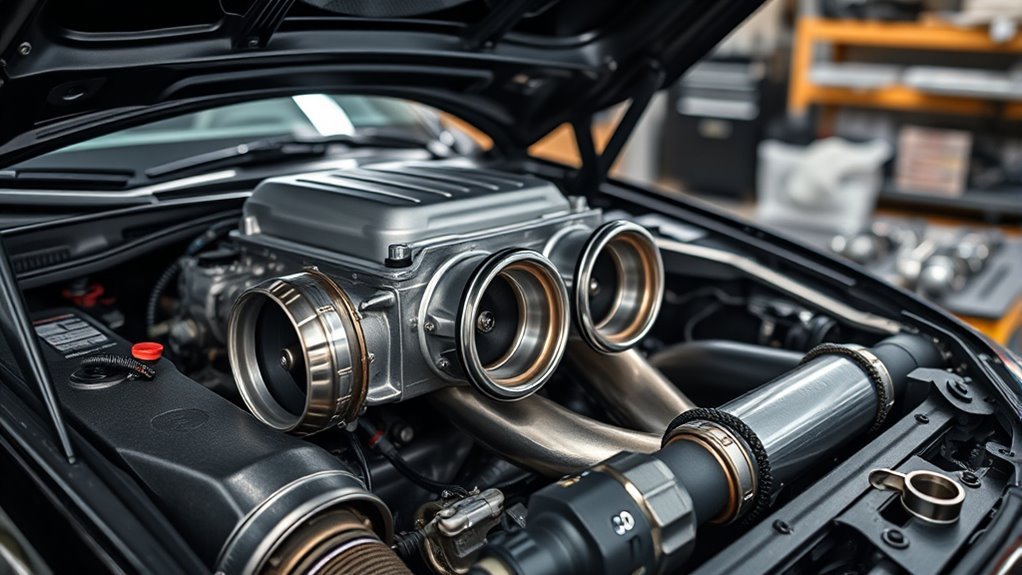
Choosing between a responsive twin-scroll setup and a large single-turbo conversion comes down to how you drive. If you want a quick street car with strong midrange, a well-matched twin-scroll turbo is usually the smarter path. If you want maximum dyno numbers or drag-strip power, a larger single turbo may make sense, but it often adds lag and supporting costs.
| Upgrade Path | Best For | Trade-Offs |
|---|---|---|
| Stock twin-scroll turbo with tune | Fast street response, simple packaging, daily drivability. | Limited peak airflow compared with larger turbo upgrades. |
| Upgraded twin-scroll turbo | More power while keeping strong response. | Requires careful manifold, wastegate, fueling, and ECU matching. |
| Large single-turbo conversion | High peak horsepower builds and drag-focused setups. | More lag, more heat, more supporting modifications, and higher cost. |
| Mk4 sequential turbo restoration | Keeping a 2JZ-GTE Supra close to factory behavior. | More valves, hoses, actuators, and troubleshooting complexity. |
For most owners, the best first upgrades are not the most dramatic ones. A quality ECU calibration, healthy cooling system, reliable plugs and coils, leak-free charge piping, and good tires can make the car faster and more consistent before a turbo swap is even necessary.
[Products Worth Considering]

AISIN OE matched engine coolant thermostat delivers consistent temperature control for reliable cooling system performance. Built with high-quality materials and designed for perfect OE form, fit, and function, it helps maintain efficient engine operation across a wide range of compatible Lexus, Scion, and Toyota vehicles. The correct OE specified operating temperature supports dependable cooling, while note that a gasket is not included.

This radiator burping funnel kit helps simplify coolant refilling, bleeding, flushing, and spill-free maintenance across a wide range of vehicles. Its translucent body with clear scale supports controlled filling, while multiple adaptors, caps, and extension pieces improve compatibility and access in tight engine bays. The built-in shut-off valve and rubber-gasket design help reduce spills and make cooling system service cleaner and more convenient.

This custom-fit cargo net is designed for the 2026 Toyota RAV4 to help keep your trunk organized and secure during everyday driving. It helps hold groceries, tools, and smaller items in place while reducing rolling and shifting, and the heavy-duty carabiners support reliable installation. The net also offers convenient storage and easy access for SUVs and other compatible vehicles.
Frequently Asked Questions
How much horsepower does a twin-scroll turbo add?
A twin-scroll turbo does not add a fixed horsepower amount by itself. Its main benefit is better exhaust pulse use, quicker response, and stronger low- to midrange torque when the manifold, turbine housing, wastegate, and tune are matched correctly. Final horsepower depends on boost, airflow, fuel, engine health, and calibration.
Is the MkV Toyota GR Supra twin-scroll or twin-turbo?
The MkV Toyota GR Supra 3.0 is twin-scroll, not twin-turbo. It uses one turbocharger with a divided turbine housing. The Mk4/A80 Supra Turbo used a 2JZ-GTE engine with sequential twin turbos, which is a different system.
What are the disadvantages of a twin-scroll turbo?
The main disadvantages are cost, packaging, and sensitivity to manifold design. A twin-scroll turbo needs correct cylinder grouping and a properly divided exhaust path. If the manifold, flange, or wastegate routing is wrong, the setup can lose the response advantage that made twin-scroll attractive in the first place.
Does a twin-scroll turbo improve fuel economy?
It can support efficient part-throttle response, but it does not guarantee a specific fuel-economy improvement. Real MPG depends on the full engine design, gearing, vehicle weight, emissions calibration, tire choice, fuel quality, and driving style. For the 2026 GR Supra 3.0, the EPA lists 25 mpg combined for the automatic and 21 mpg combined for the manual.
Is a single-turbo swap better than the Supra’s twin-scroll setup?
A single-turbo swap can be better for very high peak horsepower, but it is not automatically better for street driving. The factory-style twin-scroll approach is usually better for response and drivability. A large single turbo often needs more supporting parts and may feel slower at low RPM even if it makes more peak power.
Conclusion
The Supra’s twin-scroll turbo is a precision tool, not a magic percentage gain. On the MkV GR Supra, it helps the single turbo respond quickly by preserving exhaust pulse energy and reducing interference before the turbine. On the older Mk4 Supra, Toyota used a different solution: sequential twin turbos that staged boost across the rev range.
If you want the best real-world result, focus on the whole system. The turbo, manifold, firing-order grouping, wastegate control, cooling, fueling, and ECU calibration all have to work together. Get those details right and the Supra delivers what the platform is known for: sharp response, strong midrange torque, and power that feels usable instead of peaky.
Sources
- Toyota GR Supra official page — current GR Supra model and engine overview.
- FuelEconomy.gov 2026 Toyota GR Supra listing — EPA fuel economy ratings for 2026 GR Supra variants.
- BorgWarner Tech Tip: Twin Scroll Turbo Housing — manufacturer explanation of divided flow paths and pulse energy.
- x-engineer.org Twin-Scroll Turbochargers — technical explanation of pulse turbocharging, exhaust interference, and twin-scroll operation.
- Toyota UK Media: Supra 4th Generation Archive — official Toyota archive noting the A80 Supra’s twin sequential turbos.