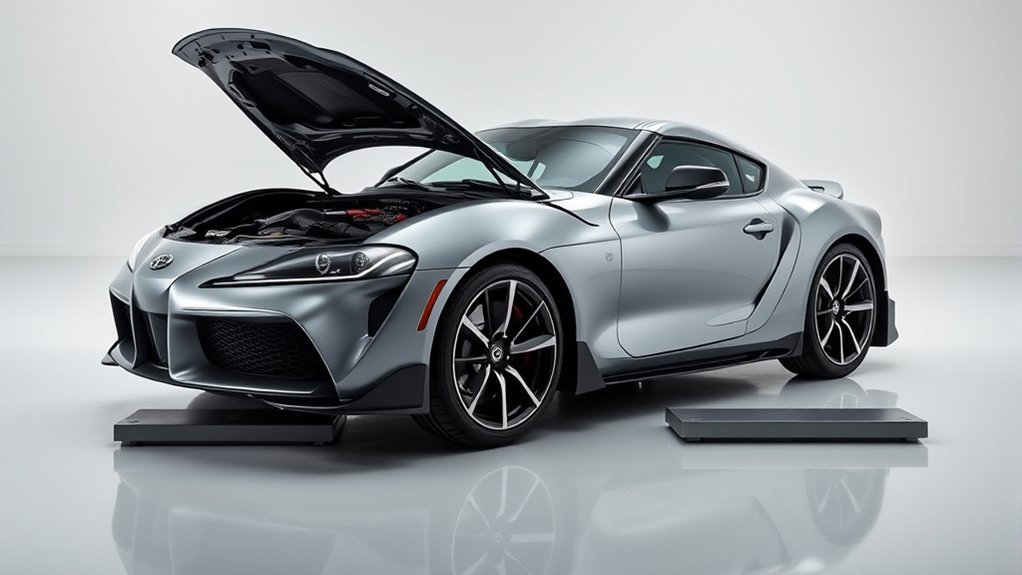
Toyota designed the fifth-generation GR Supra around an ideal 50:50 front-to-rear weight distribution, a low center of gravity, and compact sports-car proportions. Toyota says engineers moved the engine as far rearward as packaging allowed and tuned the chassis around that target. However, 50:50 is best understood as Toyota’s design and specification figure, not a guarantee that every Supra will read exactly 50.0/50.0 on individual scales. Trim, fuel, options, passengers, cargo, and measurement conditions can change the reading. The balance gives Toyota a strong starting point for predictable handling, but tires, suspension geometry, damping, differential tuning, aerodynamics, and driver inputs still determine how the car behaves in a corner.
Quick Answer
Toyota says the GR Supra was engineered for an ideal 50:50 front/rear weight distribution. In simple terms, that means roughly half the car’s static weight is supported by the front axle and half by the rear axle under the specified measurement condition. Official development material credits rearward engine placement, compact packaging, a low center of gravity, and carefully chosen chassis components. Independent scale tests have sometimes shown a slight front bias, so treat 50:50 as the factory design target rather than an exact reading for every individual car. Correct tire pressure, alignment, and suspension condition preserve handling quality, but they do not create or maintain the car’s static front/rear mass split.
Last updated: September 16, 2026.
What Does 50:50 Weight Distribution Mean on the GR Supra?
Front/rear weight distribution describes how the car’s static weight is divided between its front and rear axles. A nominal 50:50 split means each axle supports about half of the total under the stated measurement condition. It does not mean every individual Supra will show exactly 50.0 percent at each axle, and it does not mean the four individual tires each carry one quarter of the vehicle’s weight.
It is also different from dynamic load transfer and corner balancing. Braking, accelerating, and cornering temporarily change the load carried by the tires without relocating the car’s physical mass. Corner balancing, meanwhile, is a setup process used mainly to manage individual wheel loads and cross weight on cars with adjustable suspension.
| Measure | What It Means | GR Supra Context |
|---|---|---|
| Factory front/rear target | Static weight carried by the front axle versus the rear axle | Toyota specifies an ideal 50:50 balance for the GR Supra. |
| Independent scale readings | The actual measured axle split of a particular test car under specific conditions | MotorTrend measured 52/48 on a 2020 Launch Edition; Autocar reported 51/49 on its test scales. |
| Corner balance | How total load is shared among all four tires, especially diagonal or cross weight | Useful after adjustable-suspension changes, but it does not relocate enough major mass to turn a fundamentally different front/rear layout into 50:50. |
How Toyota Positioned the Engine for 50:50 Weight Distribution
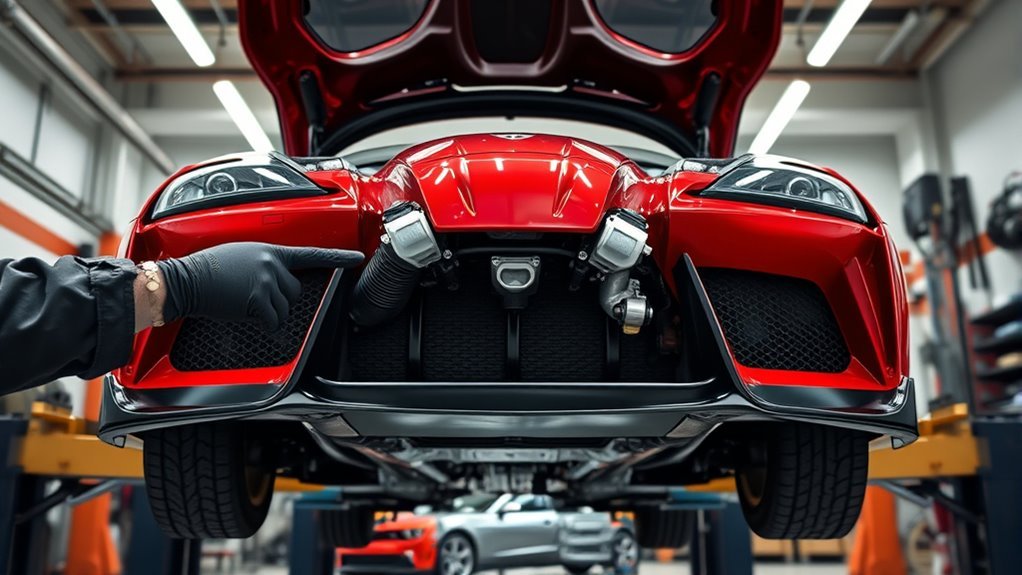
Toyota identifies rearward engine placement as one of the engineering decisions used to achieve the GR Supra’s desired front/rear balance. The company does not give a one-inch figure in its official development description; instead, it says the engine was moved as far rearward as possible. Toyota also designed the two-seat package around a short 2,470 mm wheelbase and a wheelbase-to-track ratio of about 1.55. You can review Toyota’s original chassis explanation in its GR Supra launch material and European technical release.
Weight distribution depends on more than engine location. Toyota also concentrated the vehicle’s major masses within the wheelbase and used lightweight suspension components where they could improve response. The result was a front-engine, rear-wheel-drive sports car designed around an ideal 50:50 static axle split.
Static weight distribution is only the starting point. When you brake, load transfers toward the front tires. Under acceleration, load transfers rearward. During cornering, load moves toward the outside tires. The amount of transfer depends on forces acting on the car, its center-of-gravity height, track width, wheelbase, suspension, and other factors. A 50:50 parked-car measurement therefore does not mean each axle carries equal load during every maneuver.
Why Does 50:50 Weight Distribution Matter for Supra Handling?
A near-even static front/rear split gives engineers a useful starting point because neither axle begins with a large built-in weight disadvantage. Toyota combined that distribution with a low center of gravity, a short wheelbase, wide track, staggered tires, stiff body structure, and dedicated suspension tuning to pursue neutral, responsive handling.
That does not mean 50:50 automatically eliminates understeer or oversteer. Tire size and compound, alignment, roll stiffness, damping, differential behavior, aerodynamics, road surface, speed, and driver inputs all affect which axle reaches its grip limit first. Toyota’s active differential and stability-control calibration also influence the car’s behavior as it approaches that limit. For more detail on those electronic systems, see the Toyota Supra stability control guide.
The practical advantage is therefore better described as balanced engineering potential, not automatic perfect handling. A correctly maintained Supra can use its chassis balance to deliver predictable steering and traction, while poor tires or an unsuitable suspension setup can overwhelm that advantage. Uneven wear can also change available grip, so inspect the patterns discussed in this Supra tire wear guide.
How a Lower Center of Gravity and Material Choices Support the Balance
Toyota treated weight distribution and center-of-gravity height as related but separate chassis targets. Official development material says the fifth-generation Supra has a center of gravity lower than the GT86 and structural rigidity greater than the Lexus LFA. High rigidity gave engineers a stable platform for more precise suspension-geometry and damper tuning.
Lowering the Center of Gravity
A lower center of gravity reduces the leverage that cornering, braking, and acceleration forces have to produce body roll and pitch. Toyota pursued this through the Supra’s overall packaging and chassis design rather than relying on one component. Its sports-car proportions place major components low within the vehicle, while the low seating position and compact two-seat body help keep mass concentrated.
The modern GR Supra also uses electronically controlled damping on applicable models. These dampers do not change the car’s static front/rear weight distribution; instead, they change damping force to control body motion. If you need a system-specific explanation, see the dedicated Supra adaptive dampers guide.
Lightweight Material Use
Material choice matters because engineers care about both total mass and where that mass is located. Toyota specifically highlights aluminum front control arms and swivel bearings as components that reduce unsprung weight. Lower unsprung mass helps the wheel and suspension respond more effectively to changes in the road surface.
- Aluminum front control arms and swivel bearings reduce unsprung mass.
- The rigid front suspension mounting structure helps maintain precise suspension geometry under load.
- The five-link rear suspension uses lightweight construction while retaining steel in selected areas for strength and durability.
- Moving or removing mass affects balance according to where that mass is located; a lightweight part does not automatically shift weight rearward.
Front and Rear Suspension Adjustments
The suspension does not create the Supra’s factory front/rear weight distribution. Its job is to manage wheel movement, tire contact, roll, pitch, and alignment as loads change. If you modify springs, dampers, ride height, anti-roll bars, or alignment, focus on the resulting handling behavior rather than trying to preserve a literal 50:50 number.
[Products Worth Considering]
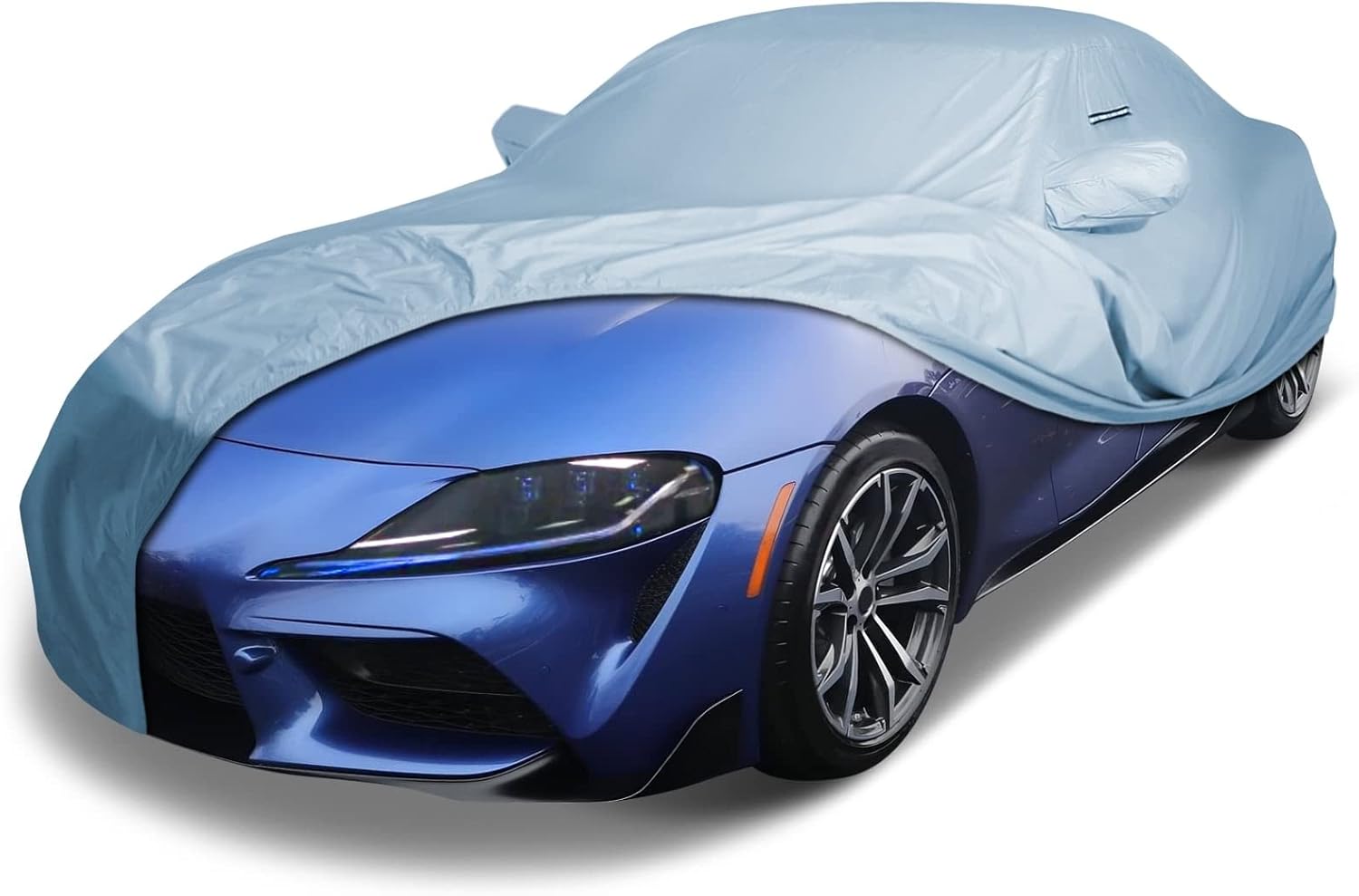
Protect your 2020-2026 Toyota GR Supra with a precision custom-fit cover designed to hug the vehicle’s contours for a secure, reliable fit. Built for all-weather use, it helps guard against rain, snow, sun, and other outdoor elements while the soft inner lining helps reduce the risk of scratches. Added straps, waterproof seams, and ventilation provide dependable protection and everyday convenience.

【Applicable Models】: The front hood lift supports gas struts shocks dampers compatible with Toyota Supra GR A90 A91 MK5 2019-2026, The size of the original car is customized.
Front Strut Tuning
The fifth-generation Supra uses a double-joint spring MacPherson-strut front suspension. Toyota made the front suspension subframe and control-arm mounting points highly rigid and used lightweight aluminum suspension components to improve precision and agility. Damper and spring changes can alter how quickly front load builds and releases during steering, braking, and transitions, but stiffer is not automatically better.
- Keep spring and damper choices matched to the vehicle’s intended street, autocross, or track use.
- Verify bump travel and ride height after lowering the car.
- Perform a complete alignment after changing suspension geometry or ride height.
- On adaptive-damper cars, confirm that replacement hardware is compatible with the factory control system or properly configured for its removal.
Rear Multi-Link Geometry
The Supra’s rear suspension uses a five-link layout that gives engineers separate control over important wheel-alignment and load paths. Toyota describes lightweight aluminum construction with steel used in selected areas for strength and durability, along with a rigid rear subframe and body bracing for precise wheel control.
Changes to rear toe, camber, bushings, springs, dampers, or ride height can substantially change stability and traction. Because small alignment changes can affect a powerful rear-wheel-drive car, use measured settings appropriate for your tires and driving environment rather than copying another car’s track setup.
Spring and Damper Ratios
Do not treat a suspension’s spring motion ratio and damper motion ratio as the same value. On a multi-link layout, the spring and damper can attach at different points and therefore move by different amounts for a given amount of wheel travel. Wheel rate depends on spring rate, installation geometry, and motion ratio, while the damper has its own leverage relationship.
This is why choosing springs from an isolated internet motion-ratio number can produce misleading results. For coilovers or custom spring rates, use measurements or data for the exact suspension hardware and have a qualified performance-alignment shop verify ride height, available travel, alignment, and corner weights.
Wheels, Brakes, and Tires
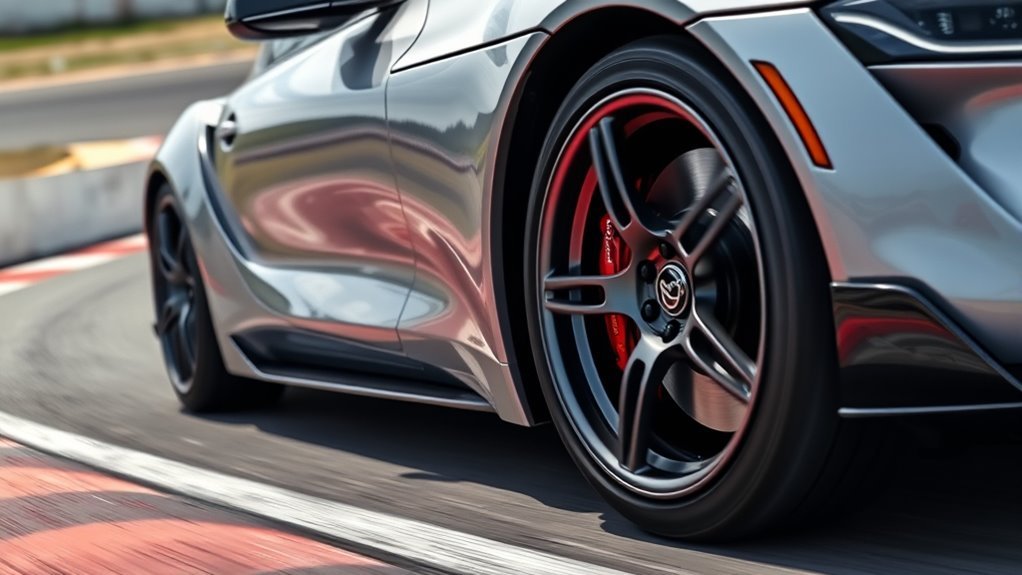
Wheel, tire, and brake specifications vary by model year and trim, so avoid applying one configuration to every fifth-generation Supra. Toyota’s U.S. launch specification for the 2020 GR Supra 3.0 used 19-inch forged-aluminum wheels, 255/35R19 front and 275/35R19 rear Michelin Pilot Super Sport tires, and 13.7-inch ventilated front discs with four-piston Brembo fixed calipers. Toyota continued to use Michelin Pilot Super Sport tires on the 2026 U.S. GR Supra, while the MkV Final Edition received additional brake and chassis changes.
The staggered tire setup is an important reminder that static 50:50 weight distribution does not dictate identical front and rear hardware. Engineers can use tire width, suspension calibration, differential control, brake sizing, and other variables to shape how each axle behaves. Check specifications for your exact model year before buying wheels, tires, brake parts, or suspension components.
[Products Worth Considering]

Quality of material:The steering wheel is made of real carbon fiber 3K high-gloss carbon fiber with epoxy resin coating, carbon fiber, ultra-light and strong, with high heat and corrosion resistance. Uniform material and symmetrical shape. Nappa perforated leather parts on the steering wheel are expertly hand-stitched to absorb perspiration quickly and prevent slippage when steering,. Reduces vibration and pressure on your hands, making your driving experience more relaxing and enjoyable. Bring you a better driving experience

【Precision Fit for GR Supra A90/A91】Specially designed for 2019-2025 GR Supra A90/A91, this carbon fiber steering wheel offers a direct OEM replacement for your factory unit. It retains full compatibility with your vehicle’s original airbag, buttons, and paddle shifters, delivering a seamless factory integration with a premium upgrade feel.
Corner-Balancing Checklist
Corner balancing is often misunderstood. Its main purpose is to manage how the car’s total weight is distributed across the four individual tires, especially the diagonal or cross-weight relationship after adjustable suspension changes. It is not a practical method for moving enough vehicle mass to convert a fundamentally different front/rear distribution into 50:50.
- Set tire pressures and place the car in the fuel, cargo, and driver-load condition the shop wants to use for measurement.
- Measure all four wheel loads on a level set of scales and record total, front/rear, left/right, and cross-weight values.
- Adjust approved ride-height or spring-perch settings to improve cross-weight while keeping safe ride height and suspension travel.
- Perform a complete alignment after ride-height changes because camber and toe can move as suspension geometry changes.
- Recheck ride height, fastener torque, alignment, and corner weights according to the suspension manufacturer’s instructions after the new components have settled.
If the car is primarily street driven, do not chase a perfect-looking scale percentage at the expense of safe ride height, suspension travel, alignment, or predictable road behavior.
Does a Real GR Supra Measure Exactly 50:50?
Not necessarily. Toyota publishes an ideal 50:50 front/rear weight-distribution figure for the GR Supra, but individual test cars can show small deviations. MotorTrend measured a 2020 Supra Launch Edition at 3,363 pounds with a 52/48 front/rear split. A later Autocar GR Supra test reported a Supra at 1,500 kg and 51/49 on its scales.
The four-cylinder Supra is another reason to treat 50:50 as an engineering target rather than a universal guaranteed scale result. Toyota’s GR Supra 2.0 technical material says the smaller engine places mass closer to the center of the car and makes an ideal 50:50 front/rear balance easier to achieve. Toyota’s U.S. introduction of the 2021 Supra 2.0 described that version as maintaining near 50:50 weight distribution.
Those readings and model-specific descriptions do not prove Toyota’s engineering claim is meaningless. They show why a manufacturer’s nominal specification should not be confused with a guaranteed corner-scale measurement for every vehicle. Equipment, transmission, fuel, fluids, options, driver or passenger load, cargo, modifications, and scale procedure can all influence the measured result.
The more useful question is how the complete chassis behaves. Toyota developed the Supra around a low center of gravity, short wheelbase, wide track, rigid body, dedicated suspension tuning, staggered tires, and rear-wheel drive. The 2026 MkV Final Edition added further suspension, braking, chassis-rigidity, steering, differential-control, and aerodynamic revisions. Toyota announced that fifth-generation production would end in spring 2026; subsequent reporting places the end of production in March 2026. See Toyota’s 2026 GR Supra MkV Final Edition release for the factory-described model-year changes.
Setup and Maintenance Tips
Routine maintenance does not preserve a mathematical 50:50 front/rear split, but it does help preserve the predictable handling Toyota engineered into the car. Tires with different pressures or wear levels can change available grip even though the vehicle’s basic mass distribution has barely changed.
- Set cold tire pressures to the specification appropriate for your model and tire setup.
- Inspect tread depth and wear patterns across all four tires.
- Check alignment after pothole impacts, suspension changes, or abnormal tire wear.
- Inspect springs, dampers, bushings, joints, and mounts for wear or damage.
- Have an experienced alignment or performance shop corner-balance the car after installing adjustable suspension if the setup and intended use justify it.
[Products Worth Considering]
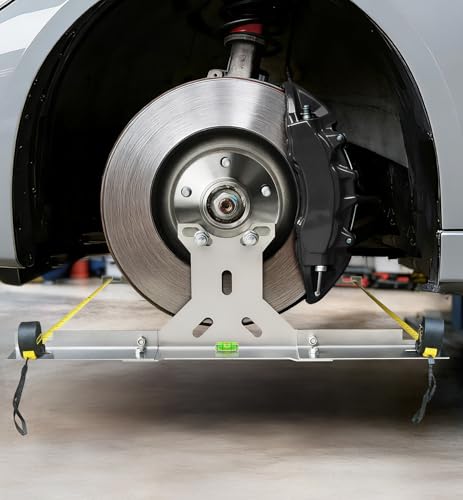
DIY front‑end toe adjustment for home garages - Designed for car owners and home garages who want tocheck front-end toe and assist with basic adjustments between professional visits. Use after minor suspension, steering, or tire work to verify toe settings and keep steering stable without a costly shop trip.
Frequently Asked Questions
Does the GR Supra really have 50/50 weight distribution?
Toyota specifies an ideal 50:50 front/rear weight distribution for the fifth-generation GR Supra. That is the factory design figure, but an individual car does not have to show exactly 50.0/50.0 when placed on independent scales. Test vehicles have shown slight front bias, and the result can change with trim, fuel, passengers, cargo, options, and modifications.
Is the four-cylinder Supra 2.0 also 50/50?
Toyota engineered the four-cylinder Supra around the same balance goal, but its wording varies by source. Toyota’s European technical material says the smaller engine places mass closer to the center of the car and makes an ideal 50:50 balance easier to achieve, while Toyota’s U.S. 2021 launch material describes the Supra 2.0 as having near 50:50 weight distribution. Treat the percentage as a design target rather than a guaranteed 50.0/50.0 reading for every car.
Does 50/50 weight distribution guarantee neutral handling?
No. Static weight distribution is only one part of vehicle dynamics. Tire sizes and compounds, suspension geometry, roll stiffness, damping, differential behavior, aerodynamics, alignment, road conditions, and driver inputs can still make a 50:50 car understeer or oversteer.
Can alignment or tire pressure change a Supra’s weight distribution?
Normal alignment and tire-pressure adjustments do not meaningfully change the Supra’s basic static front/rear mass distribution. They can significantly change tire grip, steering response, stability, and wear, which is why a poorly aligned car may feel unbalanced even though its physical mass has barely moved.
Does corner balancing make a Supra 50/50?
Corner balancing mainly adjusts how load is shared among the four wheels, particularly the diagonal cross-weight relationship on cars with adjustable suspension. Small ride-height adjustments can alter individual corner loads, but corner balancing cannot relocate enough major vehicle mass to transform a substantially front- or rear-heavy design into a true 50:50 layout.
Why is 50/50 weight distribution good for drifting?
A near-even static distribution can provide a predictable starting balance, but 50:50 is not a requirement for drifting. Rear-tire grip, front steering authority, differential behavior, power delivery, suspension setup, alignment, wheelbase, and driver technique all affect how easily a car initiates and holds a slide.
Is 60/40 weight distribution good?
It can be. There is no universal rule that makes 60/40 bad and 50/50 automatically good. Engineers tune tires, suspension, brakes, steering, differential behavior, and electronic controls around a vehicle’s layout. The final handling characteristics matter more than one static percentage by itself.
Conclusion
Toyota engineered the fifth-generation GR Supra around an ideal 50:50 front/rear weight distribution, but the number is only one part of the car’s handling story. Rearward engine placement, a low center of gravity, compact wheelbase and track proportions, rigid suspension mounting points, staggered tires, and carefully tuned suspension and differential systems work together to produce the result you feel from the driver’s seat.
For owners, focus on tire condition, correct pressure, alignment, healthy suspension components, and a properly engineered modification setup instead of chasing a perfect 50.0/50.0 scale reading. If you install adjustable coilovers or make major chassis changes, have a qualified performance shop measure alignment and corner weights using your actual driving configuration.