
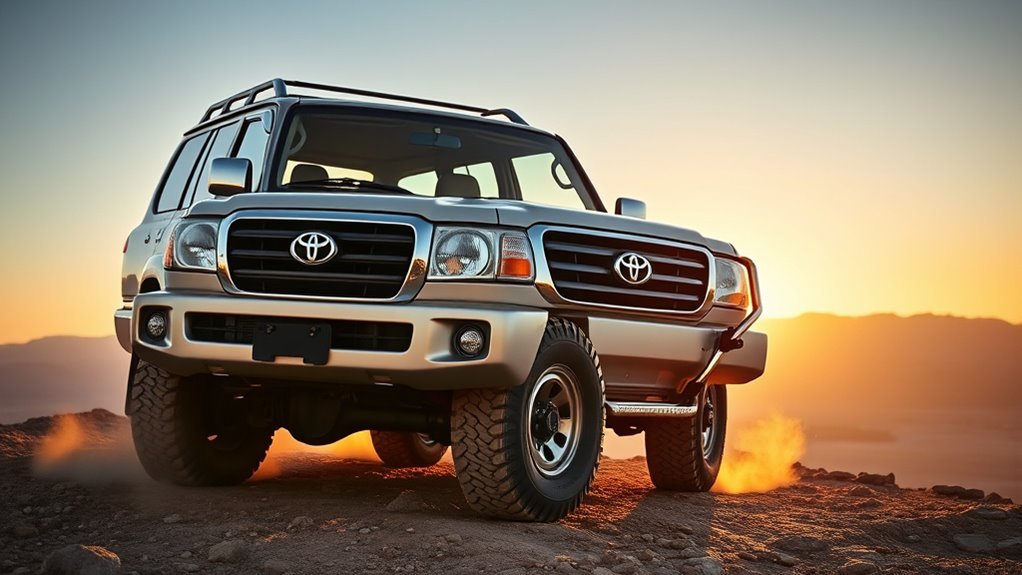
The Land Cruiser 200 Series is Toyota’s full-size, body-on-frame SUV built for people who want long-distance comfort, serious off-road hardware and long service life in one package. Launched in 2007 as the successor to the 100 Series, it kept the Land Cruiser formula of a strong ladder-frame chassis, full-time four-wheel drive, low-range gearing and durable V8 power, then added more comfort, safety tech and electronic off-road control.
Quick Answer
The Land Cruiser 200 Series is a premium, heavy-duty Toyota SUV sold globally from 2007 until the 300 Series replaced it in most markets. It is best known for its body-on-frame strength, full-time 4WD, V8 engines, crawl control, Torsen center differential, towing ability and reputation for long-term durability.
Key Takeaways
- The 200 Series replaced the 100 Series in 2007 and was later replaced by the 300 Series in 2021 in most global markets.
- Early Japan-market models used a 4.7-liter 2UZ-FE V8, while other markets received engines such as the 5.7-liter gasoline V8 or 4.5-liter V8 diesel.
- Its biggest strengths are durability, towing confidence, off-road control, cabin space and long-distance comfort.
- Its main trade-offs are fuel use, size, weight, expensive wear items and the need for a careful pre-purchase inspection.
- A clean service history matters more than mileage alone; neglected examples can still become expensive.
What the Land Cruiser 200 Series Is and Why It Matters
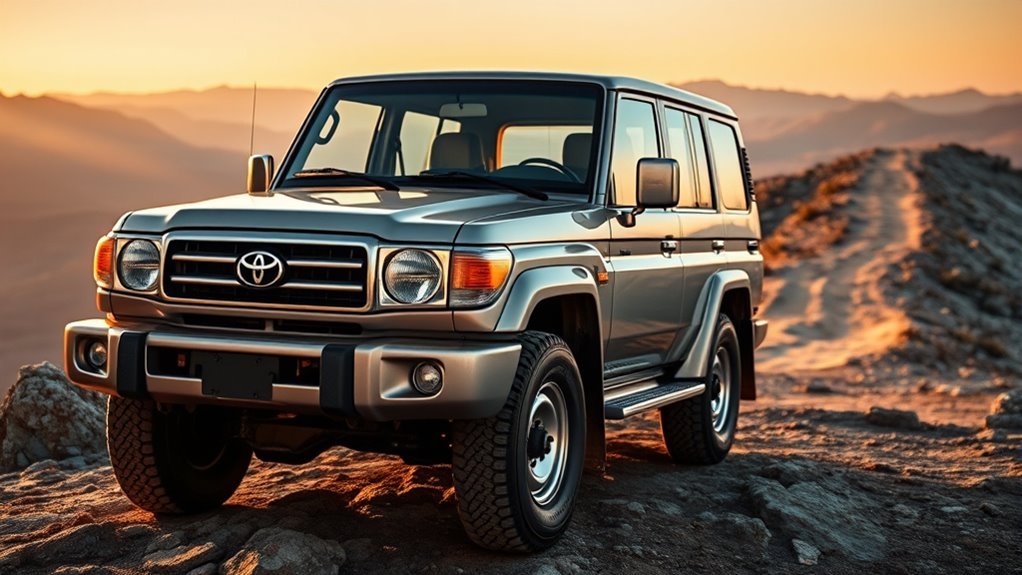
The Land Cruiser 200 Series is the full-size Land Cruiser generation known internally as the J200. Toyota introduced it in Japan on September 18, 2007, as a fully redesigned flagship SUV with a new platform, a stronger full-frame structure and a 4.7-liter V8 with VVT-i in its launch specification. Toyota’s own history page lists it as the successor to the 100 Series and notes that it was marketed in more than 100 countries as a high-end SUV.
What makes the 200 Series important is the way it bridges old-school Land Cruiser toughness and modern comfort. It still uses a separate frame, full-time four-wheel drive and low-range gearing, but it also brought features such as crawl control, a Torsen limited-slip center differential, improved safety systems and a quieter, roomier cabin. For many buyers, that mix is the sweet spot: strong enough for remote use, comfortable enough for daily driving and refined enough for long highway trips.
It is also one of the last Land Cruiser generations widely associated with naturally aspirated V8 power. That matters to owners who value simple power delivery, proven mechanicals and a relaxed driving feel more than maximum fuel economy or the newest electronics.
Design and Capability Changes Introduced by the 200 Series
The 200 Series did not simply add luxury trim to the older 100 Series formula. Toyota changed the structure, suspension, drivetrain control and cabin packaging to make the vehicle stronger, more stable and easier to drive on difficult ground.
Increased Frame Rigidity
Toyota retained a full-frame structure but redesigned it for the 200 Series. According to Toyota’s launch information, the frame had about 1.4 times greater torsional rigidity and about 1.2 times greater flexural rigidity than before. In real use, that helps reduce body flex, road noise and vibration while supporting the vehicle’s heavy-duty towing and off-road role.
A stiffer frame also gives the suspension a more stable foundation. That matters on rough trails, corrugated roads and long highway drives because the body feels less loose and the steering response feels more settled.
Enhanced Off-Road Systems
The 200 Series added smarter off-road control without abandoning mechanical strength. Early Japan-market models included Toyota’s crawl control system, which automatically managed throttle and braking at very low speeds so the driver could focus on steering over rocks, sand and steep slopes.
The full-time 4WD system also used a Torsen limited-slip center differential. In normal driving, Toyota described the torque split as rear-biased, while the system could vary front-to-rear torque distribution as road conditions changed. That gave the Land Cruiser better stability on pavement and better traction when surfaces became loose or uneven.
Interior Comfort Upgrades
The 200 Series grew slightly compared with the 100 Series, and Toyota used that extra size to improve passenger space and comfort. The interior length increased, the second-row seats became more flexible, and available luxury features helped the Land Cruiser feel more like a premium long-distance vehicle than a basic utility truck.
The cabin remains practical rather than delicate. It is built for family use, towing, touring and dirty cargo, but it offers the seating position, visibility and sound insulation needed for long trips.
Core Specs: Engine, Weight and Chassis
Because the Land Cruiser 200 Series was sold in many countries, engine specifications vary by market and model year. The key point is that every 200 Series was built around a heavy-duty body-on-frame chassis, full-time four-wheel drive and a powertrain designed for low-speed strength rather than lightweight efficiency.
| Item | Typical 200 Series Details |
|---|---|
| Launch date | September 18, 2007 in Japan |
| Platform | Separate body-on-frame construction |
| Launch engine in Japan | 4.7-liter 2UZ-FE V8 gasoline engine with VVT-i |
| Japan launch output | 212 kW / 288 PS at 5,400 rpm |
| Representative curb mass | About 2,460 kg for the Japan-market AX grade |
| Representative dimensions | 4,950 mm long, 1,970 mm wide, 1,880 mm high, 2,850 mm wheelbase |
| North American powertrain | 5.7-liter gasoline V8 in many model years, with later U.S. models rated at 381 hp and 401 lb-ft |
| Common global diesel option | 4.5-liter V8 diesel in many non-U.S. markets |
Note: Do not judge a 200 Series by one spec sheet alone. A Japan-market 4.7-liter model, a U.S.-market 5.7-liter model and a diesel-market 4.5-liter model can feel different to own, fuel and maintain.
Off-Road Systems: Center Lock, Crawl Control and Low-Range Gearing

The Land Cruiser 200 Series is not just a tall luxury SUV with four-wheel drive. Its capability comes from a set of systems that work together at low speed, under load and on changing surfaces.
- Full-time 4WD: The vehicle sends drive to all four wheels in normal use, which helps stability on wet roads, gravel and mixed surfaces.
- Torsen center differential: The center differential can vary torque distribution to help traction and stability as conditions change.
- Low-range gearing: Low range multiplies torque for steep climbs, controlled descents, sand, rocks and slow technical driving.
- Crawl control: On equipped models, crawl control automatically manages throttle and braking at very low speeds, reducing wheelspin and helping the driver concentrate on steering.
- KDSS on selected models: Toyota’s Kinetic Dynamic Suspension System can improve on-road stability while allowing more suspension movement off-road, depending on market and trim.
This combination is why the 200 Series still has strong appeal among people who tow, tour remotely or drive in sand, snow, mud and rocky terrain. It is heavy, so it needs good tires and smart driving, but the hardware is built for real use.
Comfort, Ride and On-Road Behavior Vs Predecessors
Compared with the 100 Series, the 200 Series feels larger, quieter and more composed. The stronger frame reduces vibration, while the revised suspension helps the vehicle stay calmer at highway speeds. The result is a Land Cruiser that can handle poor roads and trails but still feels relaxed during long-distance travel.
On-road, the main strengths are stability, visibility and comfort. The main weakness is size. This is a wide, heavy SUV, so it is not as easy to park or thread through narrow city streets as a midsize 4×4. Drivers coming from smaller SUVs should expect slower steering responses, more body weight and higher fuel costs.
That trade-off is part of the Land Cruiser character. The 200 Series is not trying to feel sporty; it is trying to feel secure, durable and unbothered by distance, weather or rough surfaces.
Land Cruiser 200 Series Vs GX550 and LC300 Modern Rivals
The 200 Series now sits between older analog Land Cruisers and newer, more tech-heavy models such as the Land Cruiser 300 Series and Lexus GX 550. Each has a different appeal.
| Model | Best For | Main Trade-Off |
|---|---|---|
| Land Cruiser 200 Series | Buyers who want V8 character, proven strength, towing comfort and traditional Land Cruiser durability | Heavy weight, high fuel use and aging electronics |
| Land Cruiser 300 Series | Drivers who want a newer frame, lower weight, modern safety tech and twin-turbo V6 performance | No V8 and more complex modern systems |
| Lexus GX 550 | Buyers who want a newer luxury off-roader with a 3.4-liter twin-turbo V6, 10-speed automatic and strong towing capability | Smaller class than the 200 Series and a different ownership feel |
The 300 Series is not simply a softer replacement. Toyota says it keeps the ladder-frame concept while moving to the GA-F platform, reducing weight and adding a 3.5-liter twin-turbo gasoline V6 rated at 305 kW / 415 PS in markets where that engine is offered. The Lexus GX 550 uses a 3.4-liter twin-turbo V6 rated at 349 hp and 479 lb-ft, paired with a 10-speed automatic. Both are faster and more modern in many ways, but the 200 Series still appeals to buyers who prefer the older V8 era.
[Products Worth Considering]

This flexible oil funnel is designed to make fluid changes cleaner and easier by guiding oil around obstacles like skid plates and crossmembers. Its shape-retaining core and silicone body can be molded for custom positioning, while the heat-resistant, leak-proof design helps prevent spills during draining and filter removal. Reusable and easy to clean, it works well for cars, trucks, motorcycles, and other hard-to-reach fluid fill or drain applications.

These custom floor mats are designed to fit the Toyota Land Cruiser GX550 with a 5-seat layout for a precise, secure install. Made from durable TPE, they help shield your interior from spills, mud, snow, dirt, sand, pet hair, and everyday debris while making cleanup quick and easy.

These X-BULL recovery traction tracks help drivers get unstuck from sand, snow, mud, or ice with a stable U-shaped elastic design and a wavy ramp that makes tire entry easier. Built from reinforced nylon, they are flexible, impact-resistant, and designed to perform in extreme temperatures while providing reliable emergency traction for a wide range of vehicles.
Who Should Buy a 200 Series: Decision Checklist
A Land Cruiser 200 Series makes sense when you value dependability, comfort and capability more than low running costs. It is best for buyers who understand that durable does not mean cheap to maintain.
[Products Worth Considering]

This engine water pump kit is designed to help maintain reliable cooling performance across a wide range of compatible Toyota, Lexus, Scion, and Pontiac vehicles. Built with aluminum and tested for leak-free operation, it offers a direct replacement solution that supports engine efficiency and long-term service life. The kit includes a professional water pump and gasket for a convenient installation-ready repair.

Custom-fit floor mats and cargo liner designed to provide edge-to-edge protection for the Toyota Land Cruiser Prado. Made from durable TPE material, they offer all-weather defense against rain, slush, snow, mud, and everyday dirt while remaining easy to install, clean, and maintain. The odorless, non-slip design helps keep your interior safer, cleaner, and more comfortable in every season.

This dual filter kit helps keep your vehicle running and riding cleaner by replacing both the engine air filter and cabin air filter at the same time. It is designed for a range of Toyota and Lexus hybrid models, helping support engine performance while reducing odors and airborne particles inside the cabin. Built with high-quality filtration materials, it offers a convenient maintenance solution for routine filter replacement.
Buy a 200 Series If You Want
- A full-size SUV with real off-road hardware, not just all-wheel drive.
- Strong towing confidence and stable highway manners.
- A vehicle suited to long-distance touring, remote travel and heavy family use.
- V8 power delivery and traditional Land Cruiser feel.
- A platform with strong resale demand when properly maintained.
Think Twice If You Need
- Low fuel costs or small-SUV running expenses.
- Easy city parking and tight urban maneuverability.
- The newest driver-assistance technology and infotainment.
- A cheap used SUV with low repair exposure.
- A vehicle you can buy without checking service history carefully.
Pro Tip: The best 200 Series is usually not the cheapest one. Pay more attention to service records, underbody condition, cooling system health, suspension wear and evidence of towing or off-road abuse.
Maintenance & Used-Car Checklist: Longevity and Common Issues
The Land Cruiser 200 Series has a strong reputation, but age, weight and neglect still matter. A poorly maintained example can need expensive suspension, brake, cooling, driveline or electrical work. Before buying, get a pre-purchase inspection from a mechanic familiar with Land Cruisers.
| Item | What to Check | Why It Matters |
|---|---|---|
| Service records | Oil changes, coolant service, transmission service, differential and transfer case records | Long life depends on regular maintenance, especially under towing or off-road use |
| Timing belt or chain | Check the exact engine: early 4.7-liter 2UZ-FE engines use a timing belt; many later V8s use timing chains | Service requirements differ by engine and market |
| Suspension | Leaks, sagging, worn bushings, KDSS condition where fitted, uneven tire wear | A heavy SUV wears suspension parts, and specialty systems can cost more to repair |
| Cooling system | Radiator, hoses, water pump history, coolant color and leaks | Heat and towing stress make cooling health critical |
| Brakes | Rotor thickness, pad life, calipers, brake fluid condition | The vehicle’s weight makes brake maintenance important |
| Underbody | Rust, impact damage, scraped skid plates, bent brackets and salt exposure | A clean body can hide a hard life underneath |
| Electronics | Windows, locks, infotainment, cameras, HVAC, seat controls and warning lights | Luxury features add convenience but also add repair points with age |
| Recalls | Run the VIN through Toyota’s recall lookup and NHTSA’s recall database | Recall eligibility depends on the exact VIN, not just the model year |
Warning: Avoid any 200 Series with missing service history, severe underbody rust, overheating signs, unexplained warning lights or obvious suspension sag unless the price fully reflects the repair risk.
[Products Worth Considering]

This professional water pump kit is designed as a direct OE replacement for select Toyota and Lexus 3.5L V6 vehicles, helping restore reliable engine cooling performance. Built to strict quality standards and tested for leak-free operation, it includes the necessary gasket for easier installation and a secure fit. It offers a practical upgrade for drivers seeking dependable cooling system maintenance and long-lasting performance.

This steering clock spring is designed to restore reliable steering wheel controls across a wide range of Toyota models. It supports audio, cruise control, and other multifunction commands while matching OEM part numbers for confident replacement fitment. Built for dependable signal transfer and straightforward installation, it is an effective solution for repairing steering column control issues.

This coolant electric water pump is designed as a replacement for select Toyota vehicles, helping maintain proper engine cooling performance and reliable temperature control. Built to OE specifications, it offers fitment support for compatible Avalon, Camry, and RAV4 models with 2.5L L4 engines. It also includes cross-reference part numbers for easier matching and comes with after-sales support for covered defects.
Why Many Owners Call the 200 Series the “Last True Land Cruiser”
The “last true Land Cruiser” label is not an official Toyota term, but it explains how many enthusiasts feel about the 200 Series. It still has the traditional ingredients: a ladder frame, full-time four-wheel drive, low range, a strong V8 feel and a cabin built for long-distance comfort rather than trend-led minimalism.
Newer models such as the 300 Series bring real improvements in weight, powertrain efficiency, safety technology and chassis engineering. Still, some owners prefer the 200 because it feels mechanical, overbuilt and familiar. It is modern enough to be comfortable, but old-school enough to inspire confidence far from pavement.
The 200 Series is not the newest Land Cruiser, but it remains one of the strongest choices for buyers who want proven V8-era durability with genuine long-distance comfort.
Frequently Asked Questions
What is the Land Cruiser 200 Series?
The Land Cruiser 200 Series is Toyota’s J200-generation full-size Land Cruiser. It replaced the 100 Series in 2007 and combined body-on-frame construction, full-time 4WD, V8 engines, low-range gearing and luxury-SUV comfort.
What years are the 200 Series Land Cruiser?
The 200 Series launched in 2007 and was replaced by the 300 Series in 2021 in most global markets. Availability and final model years vary by country, so always check the market-specific listing.
What is the difference between a 200 and 300 Series Land Cruiser?
The 300 Series is newer, lighter and more technology-focused. Toyota says it uses the GA-F platform, keeps a frame structure and offers twin-turbo V6 engines in place of the 200 Series V8 approach. The 200 Series appeals more to buyers who want V8 character and a proven older platform.
What is the difference between the Land Cruiser 200 Series and 100 Series?
The 200 Series is larger, more powerful in many markets, more rigid and more refined than the 100 Series. It added newer off-road aids such as crawl control, a Torsen center differential and more advanced safety and comfort features.
Is the Land Cruiser 200 Series reliable?
Yes, the 200 Series has a strong reliability reputation, but condition matters. Its weight, age and complex comfort systems mean buyers should inspect suspension, brakes, cooling, underbody rust, service history and recall status before purchase.
Which Land Cruiser 200 engine is best?
The best engine depends on your market and use. The 5.7-liter gasoline V8 is popular in North America for power and simplicity, the 4.5-liter V8 diesel is valued in many towing and touring markets, and the 4.7-liter 2UZ-FE is known for durability in early models. Buy based on condition, service history and parts support where you live.
Conclusion
The Land Cruiser 200 Series remains one of Toyota’s most respected full-size SUVs because it blends heavy-duty engineering with genuine comfort. It is not the cheapest SUV to run, and it is not the newest Land Cruiser anymore, but a well-maintained example still offers the combination buyers want most: durability, towing confidence, off-road ability, space and long-distance ease.
If you want a rugged SUV with V8-era character and proven Land Cruiser toughness, the 200 Series deserves a serious look. Just buy carefully, inspect thoroughly and choose condition over bargain pricing.
Sources
- Toyota Global Newsroom: 2007 Land Cruiser launch — launch date, frame improvements, 4.7-liter V8, crawl control, Torsen LSD and safety features.
- Toyota Vehicle Lineage: Land Cruiser 200 — dimensions, curb mass, 2UZ-FE output and 200 Series history.
- Toyota Global Newsroom: Land Cruiser 300 Series launch — 300 Series platform, weight reduction and twin-turbo V6 specifications.
- Lexus USA Newsroom: 2024 GX 550 launch — GX 550 engine, torque, transmission and off-road equipment details.
- Toyota Owners: Land Cruiser manuals and warranties — owner manual and maintenance reference access.
- NHTSA Recalls — VIN-based recall lookup guidance for used-vehicle buyers.



[…] you own an older model, the Land Cruiser 200 Series guide can help with generation context. If you own a 2026 model, use Toyota’s current […]