The 2024 Toyota Land Cruiser is a capable tow vehicle, but safe towing starts with the correct numbers. Toyota rates the redesigned U.S. model to tow up to 6,000 lb, not 8,200 lb. You also need to stay within your specific Land Cruiser’s GCWR, GVWR, GAWR, hitch rating, and available vehicle load capacity while keeping trailer tongue weight in Toyota’s recommended 9–11% range.
Quick Answer
The 2024 Toyota Land Cruiser can tow up to 6,000 lb. Toyota specifies 9–11% tongue weight, a 1,650-lb unbraked trailer limit, sway control above 2,000 lb, and a weight-distributing hitch above 5,000 lb. Always confirm your specific vehicle, hitch, axle, tire, and loaded-weight limits before towing.
Key Takeaways
- Toyota rates the 2024 Land Cruiser for a maximum 6,000-lb gross trailer weight when all other limits are also respected.
- GCWR varies by Land Cruiser model/configuration, so use the model code and Toyota owner’s manual instead of assuming one universal GCWR.
- Keep loaded trailer tongue weight at 9–11% of loaded trailer weight while remaining within vehicle, axle, hitch, and payload limits.
- Toyota requires a sway-control device above 2,000 lb gross trailer weight and a weight-distributing hitch above 5,000 lb.
- The 2024 Land Cruiser already has a Toyota Genuine Trailer Brake Controller for compatible electric or electric-over-hydraulic trailer brakes through the 7-pin connector.
- Do not exceed 65 mph while towing, and use an even lower speed when required by posted law, trailer limits, road conditions, or stability.
At a Glance
| Time Required | About 30–60 minutes for the first full setup and weight check; about 10–15 minutes for a routine pre-trip inspection once the combination is dialed in |
| Difficulty | Moderate — you must verify several weight ratings, hitch components, trailer loading, brake settings, and connections |
| Tools Needed | Cold tire-pressure gauge, properly rated ball mount and hitch ball, wheel chocks, cargo restraints, access to a platform scale, and any torque tools specified by your hitch/component manufacturers |
| Cost | Varies by trailer. The Land Cruiser includes a receiver hitch and integrated brake controller, while the correct ball mount, hitch ball, sway-control/weight-distribution equipment, scale fees, and trailer hardware depend on your setup. |
Verify Your Toyota Land Cruiser’s Towing Limits and Weight Math
Start with Toyota’s actual specifications. Toyota rates the 2024 Land Cruiser to tow up to 6,000 lb. The 2024 Land Cruiser Owner’s Manual also lists an unbraked Trailer Weight Rating (TWR) of 1,650 lb and says the gross trailer weight, combination weight, vehicle weight, axle loads, and tongue weight must all remain within their respective limits.
Do not use 6,000 lb as a stand-alone permission to hook up any trailer below that number. The actual allowable trailer weight can be reduced by passengers, cargo, accessories, hitch equipment, tongue load, or another limit that is reached first.
Understand GVWR, GAWR, GCWR, and Payload
- TWR: Maximum allowable loaded trailer weight. Toyota lists a maximum of 6,000 lb for the 2024 Land Cruiser.
- Unbraked TWR: Maximum trailer weight without a trailer service-brake system. Toyota lists 1,650 lb, subject to stricter applicable law.
- GVWR: Maximum loaded weight of the Land Cruiser itself, including passengers, cargo, optional equipment, hitch-related load, and trailer tongue load. Use the Certification Label on your vehicle.
- GAWR: Maximum allowable load on each axle. Neither the front nor rear axle may exceed the rating shown on the vehicle label.
- GCWR: Maximum combined loaded weight of the Land Cruiser and trailer. Toyota lists different GCWR values for different model codes/configurations rather than one universal number.
- Vehicle load capacity: Passengers, luggage, accessories, hitch equipment, and trailer tongue weight all use available capacity.
Warning: Do not use the original article’s 14,400-lb GCWR figure. Toyota’s 2024 manual lists configuration-specific GCWR values from 12,725 to 12,945 lb. Identify the model code on the Certification Regulation label and use the corresponding Toyota specification for your vehicle.
Weigh the Land Cruiser and Trailer as They Will Be Towed
Manufacturer “dry” or “shipping” trailer weights are not enough. Water, propane, batteries, food, camping gear, tools, bikes, and accessories can add substantial weight. Load the vehicle and trailer the way you expect to travel, including passengers and normal cargo, and then verify actual weights.
- Confirm the Land Cruiser’s GVWR and front/rear GAWR from its labels.
- Determine the correct GCWR for your Land Cruiser configuration from Toyota’s manual.
- Measure the loaded vehicle and axle weights at a suitable platform scale.
- Measure the trailer’s actual loaded gross weight.
- Measure or calculate tongue weight and confirm it is 9–11% of gross trailer weight.
- Confirm the trailer, vehicle, each axle, hitch system, tires, and combined rig remain below every applicable rating.
For example, 9–11% of a 5,000-lb loaded trailer is about 450–550 lb of tongue weight. That tongue load is also carried by the tow vehicle, so it must fit within the Land Cruiser’s GVWR, axle limits, vehicle load capacity, and hitch-component ratings.
Pro Tip: Weigh the rig after adding water, propane, batteries, coolers, bikes, and normal trip cargo. A trailer that looks comfortably below 6,000 lb on a brochure can be much closer to its limit once it is ready for the road.
Match Hitch, Ball Size, Wiring, and Trailer-Brake Requirements
The 2024 Land Cruiser comes prepared for towing with a receiver hitch and Toyota Genuine Trailer Brake Controller, but the removable ball mount, hitch ball, coupler, trailer wiring, and any sway-control or weight-distribution equipment must still match your individual trailer.
[Products Worth Considering]

This proportional electric brake controller automatically applies trailer brakes based on your vehicle's braking force and speed for smoother, more responsive stopping. It is compatible with a wide range of tow vehicles and trailer setups, and includes an LED display for easy setup, diagnostics, and manual braking control. The included mounting hardware and plug-and-play port help make installation simple and convenient.
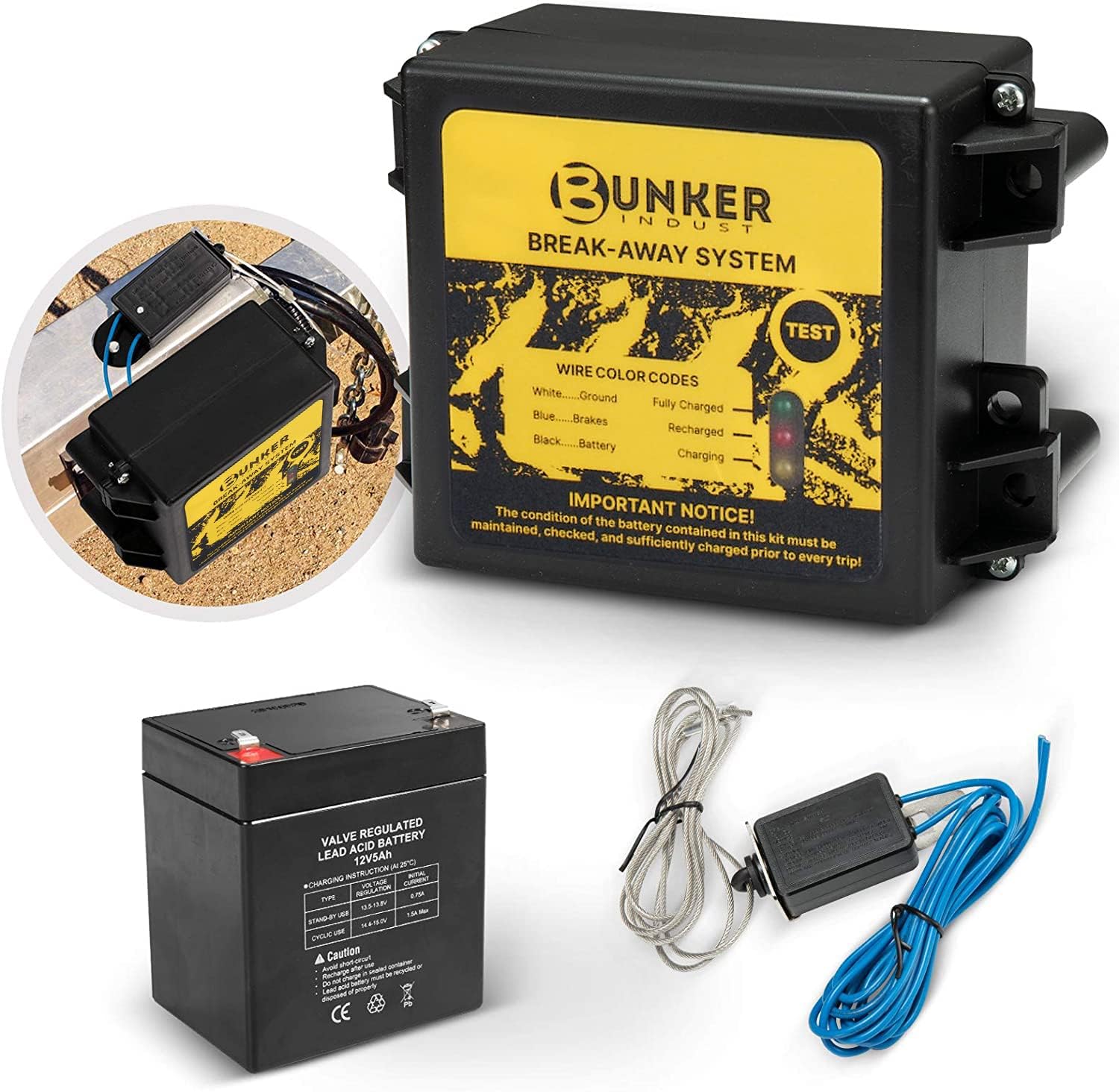
This trailer breakaway kit is designed for trailers with an existing electric brake system, helping activate the brakes if the trailer separates from the tow vehicle. It includes a battery, breakaway switch, and charger with an LED display for easy status checks, making it a practical safety upgrade for caravans and trailers. The side-mount design supports quick installation, while weather and corrosion resistance help it stand up to outdoor use.
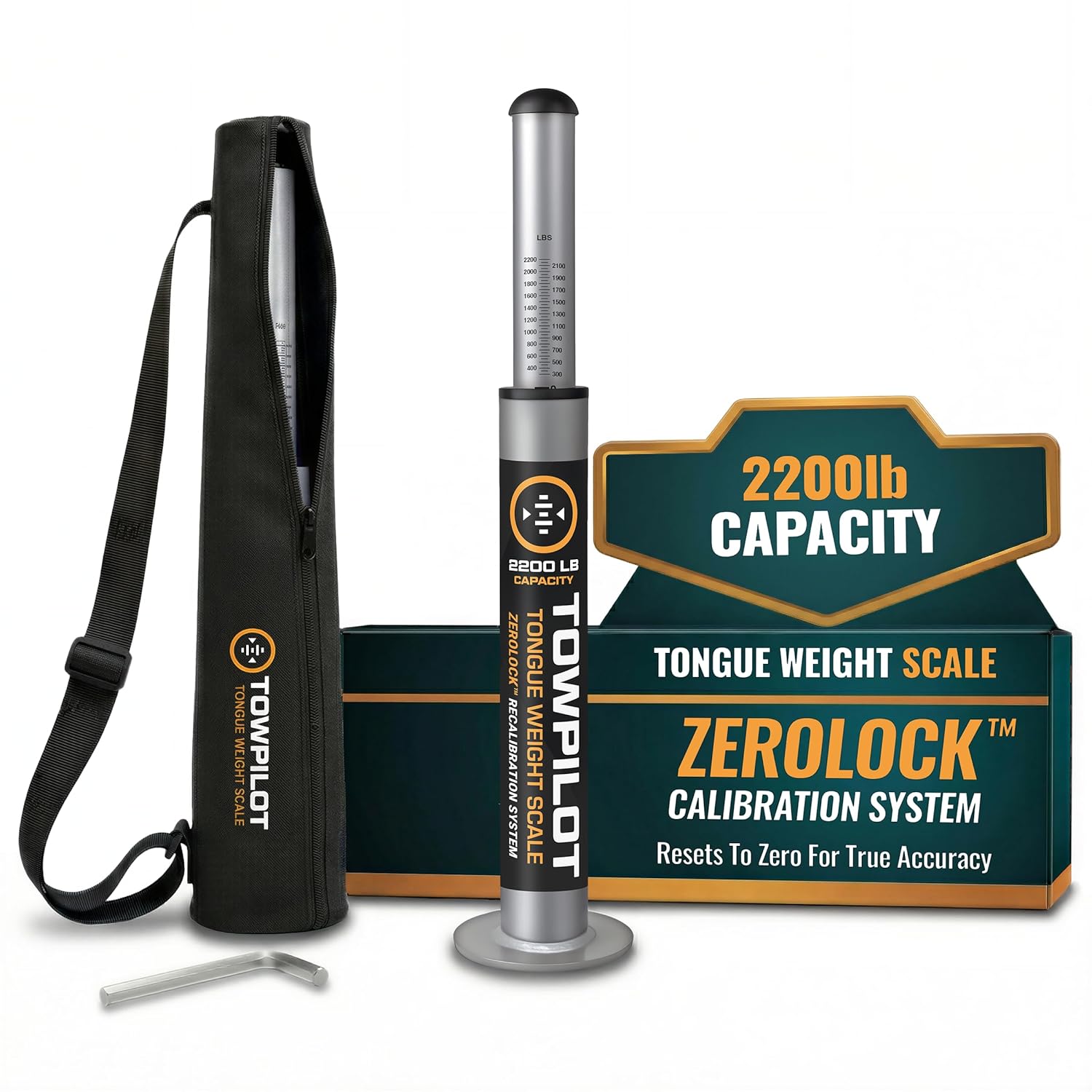
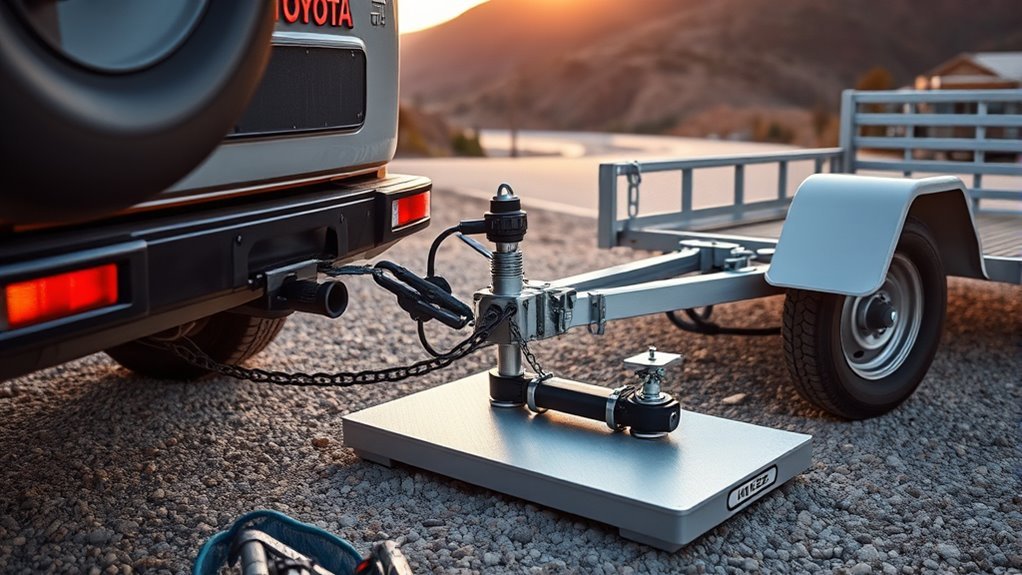
This trailer tongue weight scale helps you check hitch weight quickly and accurately before towing, reducing sway and improving overall safety. Built with durable steel and a spring mechanism, it works without batteries and includes a recalibration feature to maintain true-zero accuracy over time. It is designed for RVs, campers, and utility trailers, with a top plate that helps protect your coupler during use.
Correct Hitch And Ball
Never choose a hitch ball solely because 2 inches is common. Read the size stamped on the trailer coupler and use the exact matching ball diameter. The ball, ball mount, receiver, coupler, retaining pin, and any weight-distribution components must each be rated for the actual trailer and tongue load.
- Verify the coupler’s required ball diameter.
- Confirm the ball shank correctly fits the ball-mount hole.
- Use hitch components whose ratings meet or exceed the actual load.
- Install and torque components to their manufacturers’ specifications.
- Adjust ball-mount rise or drop so the loaded trailer sits approximately level.
- Lock the coupler latch and secure the receiver pin before moving.
Toyota requires a sway-control device with sufficient capacity when gross trailer weight exceeds 2,000 lb. When gross trailer weight exceeds 5,000 lb, Toyota requires a weight-distributing hitch with sufficient capacity.
Wiring And Connector Types
A simple 4-pin trailer connector normally handles lighting functions, while a 7-pin connection supports additional circuits needed for equipment such as compatible electric trailer brakes. The 2024 Land Cruiser’s factory trailer-brake controller operates the trailer brakes through the 7-pin connector.
Before departure, connect the trailer and verify tail lamps, brake lamps, turn signals, and any required marker lamps. Make sure the plug is fully seated, wiring cannot drag on the road, and no cable can be pinched during a tight turn.
Do not adapt a braked trailer down to a lighting-only connection if doing so disables brakes that Toyota, the trailer manufacturer, or applicable law requires.
Trailer Brake Controller Needs
You do not normally need to install an aftermarket Redarc or similar controller in a stock 2024 Land Cruiser. According to Toyota’s 2024 Land Cruiser Quick Reference Guide, the vehicle comes with a Toyota Genuine Trailer Brake Controller.
The factory controller works through the 7-pin connector. In the Multi-Information Display, select the trailer brake type that matches the trailer—electric or electric-over-hydraulic—and set the controller gain appropriately. The MID can display gain, manual brake output, brake type, and trailer-connection status.
Start with the trailer/brake manufacturer’s setup procedure and test braking response at low speed in a safe area. The trailer should contribute smooth braking without locking its wheels or pushing the Land Cruiser. Recheck gain after a major change in trailer loading or road conditions.
Note: Toyota states that using a third-party trailer-brake controller together with the Toyota Genuine Trailer Brake Controller may cause unexpected system effects and does not recommend that combination.
Check Brake and Breakaway Requirements Where You Tow
Toyota lists a 1,650-lb unbraked TWR. If gross trailer weight exceeds the unbraked TWR, Toyota requires trailer service brakes. State or provincial law may require brakes at a lower weight, so the legal threshold where you tow can be more restrictive than Toyota’s vehicle limit.
For example, the California DMV Recreational Vehicles and Trailers Handbook states that brakes are required on trailer coaches and camp trailers at 1,500 lb gross weight or more and describes breakaway-switch requirements for applicable trailers.
Where a breakaway system is required or fitted, keep its battery charged and attach its cable to a suitable stationary point on the tow vehicle so separation can pull the breakaway pin. Do not simply wrap the breakaway cable around wiring or another part that could separate with the trailer.
Set Tongue Weight, Secure Load, and Adjust Weight-Distributing/Sway Gear
Proper tongue weight is one of the most important parts of trailer stability. Toyota specifies that gross trailer weight should be distributed so 9–11% is carried as tongue weight. Too little tongue weight can make a trailer unstable; too much can overload the hitch, rear axle, tires, or vehicle and reduce front-axle loading.
| Task | Correct Action |
|---|---|
| Measure tongue weight | Use suitable weighing equipment or a platform-scale procedure; target Toyota’s 9–11% range without exceeding any component or vehicle limit. |
| Position cargo | Keep heavy cargo low and near the trailer axle area, then move load carefully as needed to achieve proper tongue weight and side-to-side balance. |
| Sway control | Toyota requires a sway-control device with sufficient capacity when gross trailer weight exceeds 2,000 lb. |
| Weight-distributing hitch | Toyota requires one with sufficient capacity when gross trailer weight exceeds 5,000 lb. Adjust it according to Toyota and hitch-manufacturer instructions. |
When a weight-distributing hitch is used, Toyota says to adjust it so the Land Cruiser’s front axle returns to the same load it carried before the trailer was connected. If you cannot measure front-axle weight directly, Toyota provides a front-fender-height method in the owner’s manual.
Secure cargo so it cannot shift during braking, turns, or rough-road movement. Recheck tongue weight after major cargo changes, after filling or emptying large water tanks, or when adding equipment to the front or rear of the trailer.
Toyota’s key 2024 Land Cruiser towing figures are a 6,000-lb maximum TWR, 1,650-lb unbraked TWR, and recommended tongue weight of 9–11% of loaded trailer weight.
[Products Worth Considering]

This proportional trailer brake controller provides smooth, responsive braking by automatically matching your tow vehicle’s stopping force for safer trailer control. The bright LED digital display makes it easy to monitor voltage output in real time, while adjustable braking and sync settings help tailor performance to different trailers and road conditions. Designed for quick installation and broad compatibility, it supports 1 to 4 axle trailers for dependable towing confidence.
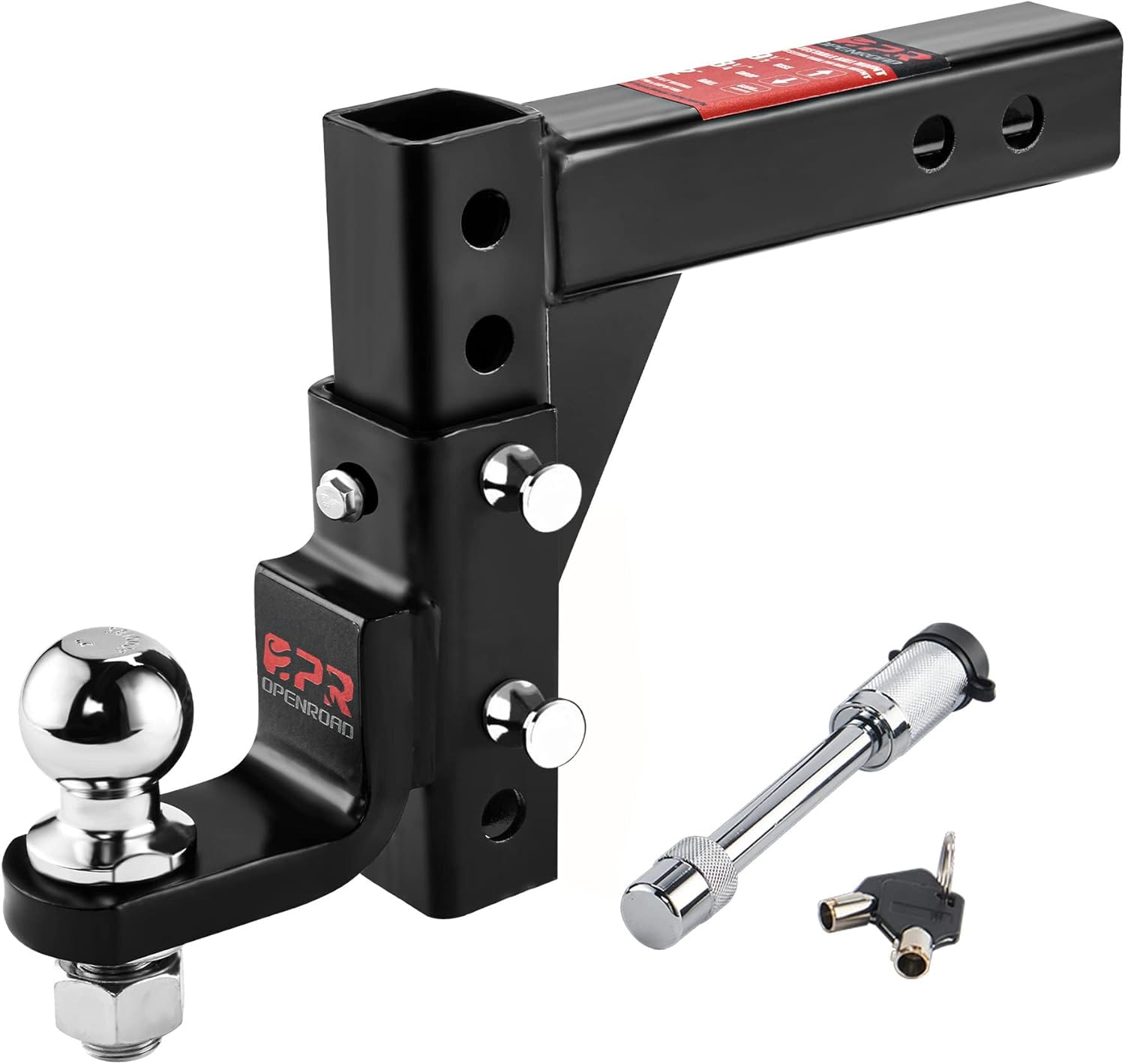
This adjustable trailer hitch ball mount is built for dependable towing with a strong steel construction and a versatile fit for 2-inch receivers. Its adjustable drop and rise settings help you dial in the right towing height, while the lock and keyed anti-theft design add security. A black powder-coated finish helps resist rust and wear for lasting performance on trucks and other towing setups.

These custom floor mats are designed to fit the Toyota Land Cruiser GX550 with a 5-seat layout for a precise, secure install. Made from durable TPE, they help shield your interior from spills, mud, snow, dirt, sand, pet hair, and everyday debris while making cleanup quick and easy.
Run Pre-Trip Checks: Tires, Brakes, Lights, TPMS, Hitch & Wiring Tests
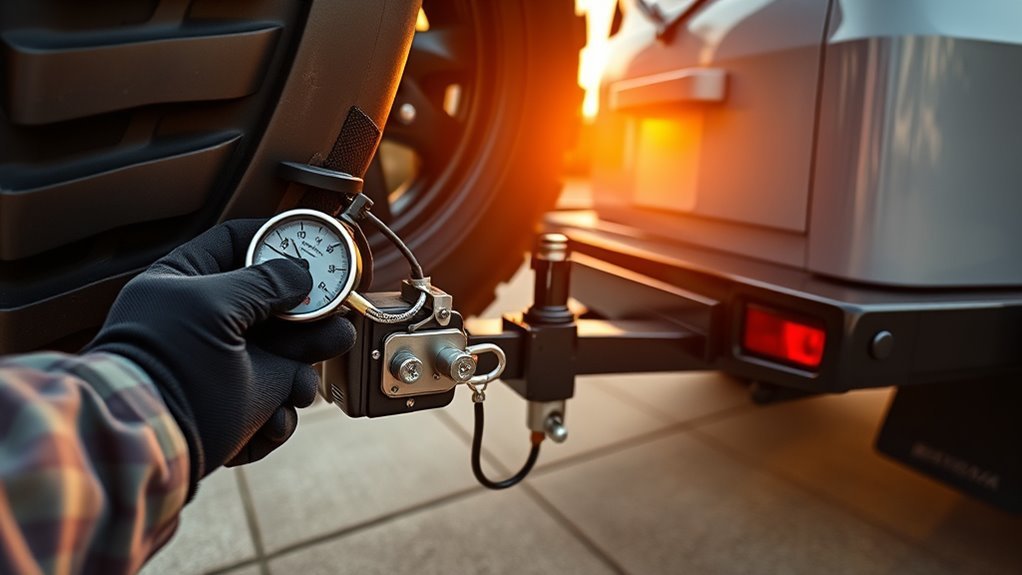
Once the trailer is correctly loaded and hitched, complete a focused inspection before every trip. Do not copy a generic trailer-tire pressure such as 65 psi. Inflate the Land Cruiser’s tires to the cold pressures specified for the vehicle, and inflate trailer tires according to the trailer/tire manufacturer’s specifications for the tires and load being carried.
- Vehicle and trailer weights: Confirm nothing has changed that could put TWR, GCWR, GVWR, GAWR, tongue weight, or hitch capacity over its limit.
- Land Cruiser tires: Check cold pressure, tread, cuts, bulges, and TPWS warnings.
- Trailer tires: Check cold pressure, condition, age, load rating, and speed rating; inspect the spare as well.
- Wheel hardware: Check trailer wheel fasteners according to the trailer/wheel manufacturer’s procedure, especially after wheel removal or service.
- Coupler and ball: Confirm the coupler is fully seated and latched on the correct-size ball.
- Receiver connection: Verify the ball mount, receiver pin, and retaining clip/lock are fully installed.
- Safety chains: Connect them correctly with enough slack for turning but not so much that they drag.
- Breakaway cable: Attach it correctly where the trailer is equipped or required to have a breakaway system.
- Electrical plug: Fully seat the connector and keep the cable clear of the road and pinch points.
- Lights: Test tail, stop, turn, hazard, marker, and license-plate lamps as applicable.
- Trailer brakes: Confirm the Land Cruiser recognizes the trailer, verify the correct brake type, check controller gain, and test brake response at low speed.
- Cargo: Lock doors, hatches, awnings, steps, ramps, bikes, propane cylinders, and internal cargo as appropriate.
- Jacks and stabilizers: Raise and secure them fully before driving.
- Mirrors and visibility: Make sure you can adequately see the trailer and surrounding traffic; use suitable towing mirrors when necessary.
[Products Worth Considering]

Custom-fit floor mats and cargo liner designed to provide edge-to-edge protection for the Toyota Land Cruiser Prado. Made from durable TPE material, they offer all-weather defense against rain, slush, snow, mud, and everyday dirt while remaining easy to install, clean, and maintain. The odorless, non-slip design helps keep your interior safer, cleaner, and more comfortable in every season.

The CURT Venturer NEXT is a compact, time-delay electric trailer brake controller designed for dependable braking control from inside your vehicle. Its low-profile design, adjustable power and ramp time, and plug-and-play friendly setup make it a practical choice for towing with confidence. Built for 12-volt systems and compatible with electric over hydraulic brakes, it offers flexible installation without leveling or internal moving parts.
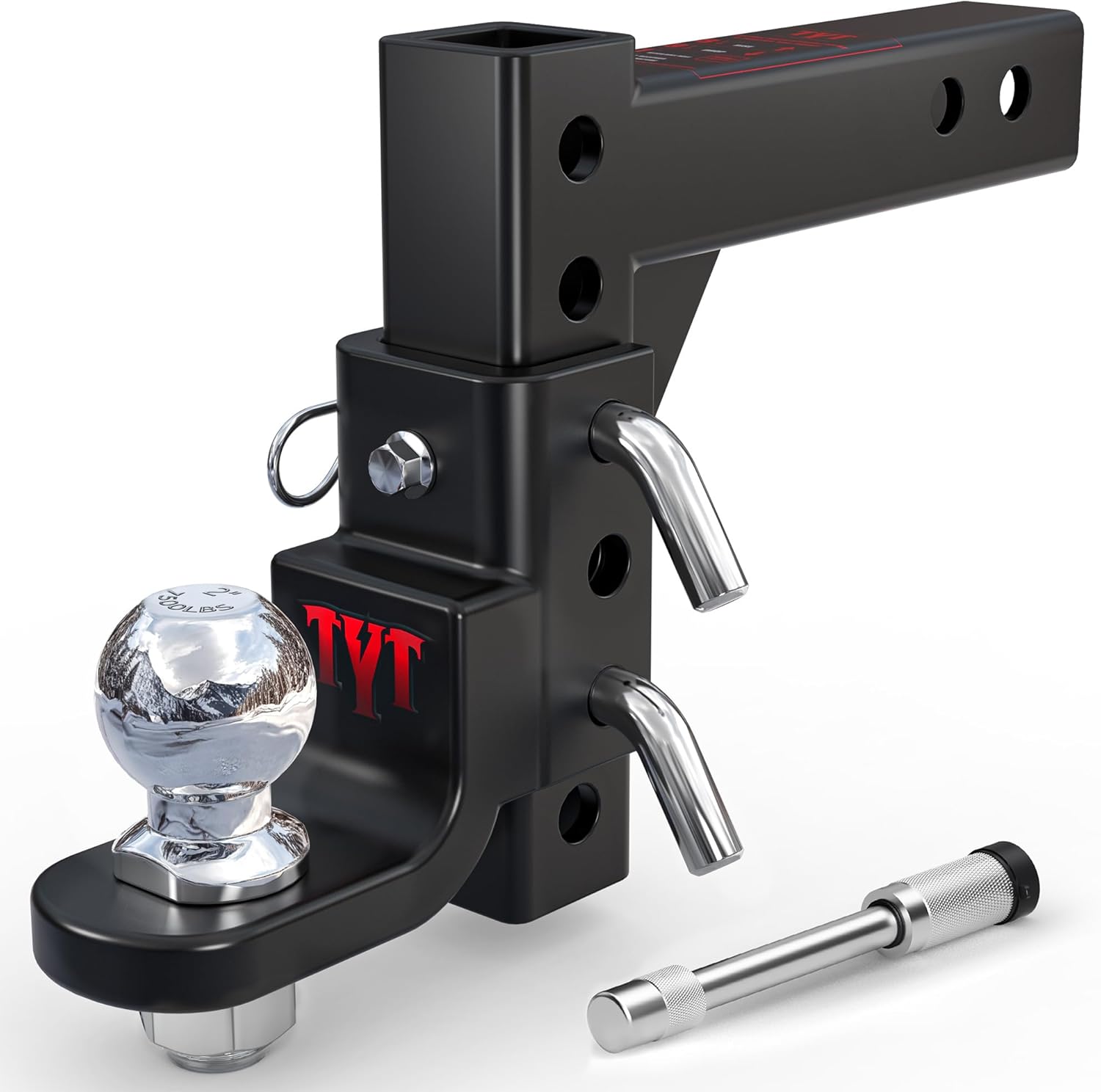
This adjustable trailer hitch ball mount is built for dependable towing with a standard 2-inch receiver and a high-capacity design suited for trucks, campers, boats, and utility trailers. Its adjustable rise and drop settings help you achieve a level tow, while the anti-rattle design supports a smoother, quieter ride. Complete with pins, clips, and a premium pin lock, it offers an easy installation and secure connection for everyday hauling needs.
Use Safe Driving Techniques When Towing With a Land Cruiser
A trailer changes acceleration, turning radius, braking distance, steering response, and crosswind sensitivity. Toyota says not to exceed 65 mph, the posted towing speed limit, or the trailer manufacturer’s speed limit—whichever is lowest. Conditions may require an even slower speed.
Maintain Slow, Steady Speed
Leave more following distance than you would without a trailer and look farther ahead so you can slow gradually. Reduce speed before curves, rough pavement, crosswinds, steep grades, and slippery surfaces rather than making abrupt steering or braking corrections after entering them.
- Keep speed at or below the lowest applicable towing limit.
- Increase following distance and plan stops early.
- Use wide, controlled turns while watching trailer tracking.
- Slow before downhill grades and curves rather than during them whenever practical.
- If the combination begins to feel unstable at a certain speed, reduce speed and stay below the speed at which instability occurred until the cause is corrected.
Use TOW HAUL and Engine Braking
The 2024 Land Cruiser has a dedicated TOW HAUL mode. Toyota says this mode changes engine, transmission, and steering operation to make the vehicle more suitable for pulling a trailer or hauling a heavy load.
On steep or long descents, slow before the grade and select an appropriate lower gear so engine braking helps control speed. Avoid sudden downshifts. Do not ride the service brakes continuously, because prolonged or repeated heavy braking can overheat them and reduce braking effectiveness.
Watch engine-coolant and other warning indicators, especially on long grades or in hot weather. If a temperature or drivetrain warning appears, follow the owner’s manual rather than continuing to pull at the same load and speed.
Warning: Toyota says not to use Full-Speed Range Dynamic Radar Cruise Control while towing. Trailer Sway Control and other electronic aids cannot make an overloaded, poorly balanced, or improperly hitched trailer safe.
What to Do if Trailer Sway Starts
If the trailer begins moving side to side, stay composed and avoid jerky steering or sudden braking. Reduce speed smoothly and, when safe, pull over and inspect the setup before continuing. Check for shifted cargo, insufficient or excessive tongue weight, tire problems, loose hitch components, suspension issues, excessive speed, and strong wind conditions.
Do not treat an anti-sway device as a substitute for correct loading. Toyota’s requirement for sway-control hardware above 2,000 lb is an additional safeguard, not permission to ignore tongue weight or other limits.
Backing, Parking Tips, and Troubleshooting Common Trailer Problems
Backing becomes much easier when you move slowly and make small corrections. Practice in an empty area before attempting a tight campsite or driveway. A spotter can help, but agree on simple hand signals in advance and stop immediately if you lose sight of the spotter.
- Set up: Approach so you have room to swing the Land Cruiser and trailer rather than starting from an extreme angle.
- Reverse slowly: Use small steering corrections and give the trailer time to respond.
- Use your mirrors: Alternate sides frequently instead of watching only one mirror.
- Get out and look: Stop and inspect clearance whenever you are unsure.
- Correct early: Pull forward and reset instead of trying to rescue a developing jackknife with a large steering input.
A roughly 45-degree starting position can make some back-in spaces easier, but the best setup angle depends on the space, trailer length, obstacles, and available swing room.
When parking, choose level ground when possible. Apply the parking brake and use properly sized wheel chocks before unhitching. Follow the trailer manufacturer’s procedure for stabilizers, tongue jacks, and leveling equipment.
Troubleshoot Common Towing Problems
| Symptom | What to Check |
|---|---|
| Trailer sways | Slow safely, stop, and check tongue weight, shifted cargo, tire condition/pressure, hitch security, sway-control setup, suspension, wind, and speed. |
| Rear of Land Cruiser sags heavily | Verify actual tongue weight, vehicle/axle limits, cargo placement, hitch rating, and weight-distributing-hitch adjustment where applicable. |
| Trailer brakes feel weak | Confirm 7-pin connection, trailer recognition, correct brake type, gain setting, trailer battery/electrical condition, and brake adjustment/service. |
| Trailer wheels lock too easily | Reduce excessive controller gain and inspect the trailer brake system if operation remains abnormal. |
| Lights work intermittently | Inspect connector seating, corrosion, bent pins, ground connections, damaged wiring, and trailer lamp circuits. |
| Tire, wheel, or hub is unusually hot | Stop in a safe location and investigate tire pressure/damage, brake drag, wheel-bearing problems, or overload before continuing. |
Frequently Asked Questions
Can a Toyota Land Cruiser pull a trailer?
Yes. The 2024 Toyota Land Cruiser is designed for trailer towing and has a maximum TWR of 6,000 lb. The actual trailer you can tow may be lighter once vehicle load, GCWR, GVWR, GAWR, tongue weight, hitch ratings, and local requirements are considered.
What is the 2024 Toyota Land Cruiser towing capacity?
Toyota rates the 2024 Land Cruiser to tow up to 6,000 lb. That figure is the maximum gross trailer weight and does not allow you to exceed the vehicle’s GCWR, GVWR, GAWR, hitch rating, tire ratings, or other limits.
What tongue weight should a 2024 Land Cruiser have?
Toyota recommends that tongue weight equal 9–11% of the trailer’s actual gross loaded weight. The resulting tongue load must also remain within the ratings of the Land Cruiser, rear axle, hitch, ball mount, and other towing components.
Does the 2024 Land Cruiser need a weight-distributing hitch?
Toyota requires a weight-distributing hitch with sufficient capacity when gross trailer weight exceeds 5,000 lb. Toyota also requires a sway-control device with sufficient capacity when gross trailer weight exceeds 2,000 lb.
Does the 2024 Land Cruiser have a trailer brake controller?
Yes. The vehicle comes with a Toyota Genuine Trailer Brake Controller that works through the 7-pin connector with compatible electric or electric-over-hydraulic trailer brakes. Toyota does not recommend operating a third-party controller alongside the factory controller.
Can a 2024 Land Cruiser tow a trailer without brakes?
Toyota lists an unbraked TWR of 1,650 lb. If the trailer exceeds that weight, Toyota requires trailer service brakes. State or provincial law may require brakes at a lower weight, so always follow the stricter applicable requirement.
How fast can you tow with a 2024 Toyota Land Cruiser?
Toyota says not to exceed 65 mph, the posted towing speed limit, or the trailer manufacturer’s speed limit, whichever is lowest. You should reduce speed further for crosswinds, curves, grades, wet or slippery pavement, poor visibility, or any sign of instability.
Conclusion
Safe towing with a 2024 Toyota Land Cruiser starts with the correct 6,000-lb maximum towing rating, not an older or unrelated Land Cruiser specification. Confirm your configuration-specific GCWR, vehicle and axle ratings, actual loaded trailer weight, and Toyota’s 9–11% tongue-weight target before leaving.
Use the factory trailer-brake controller correctly, add sufficient sway control above 2,000 lb and a weight-distributing hitch above 5,000 lb, inspect the entire connection before each trip, and use TOW HAUL with smooth driving techniques. If the trailer starts swaying, brakes behave abnormally, temperatures rise, or anything in the hitch or tire setup looks wrong, stop safely and correct the problem before continuing.
Sources
- Toyota USA Newsroom — 2024 Toyota Land Cruiser — confirms the redesigned model’s 6,000-lb towing capability and standard brake controller.
- Toyota 2024 Land Cruiser Owner’s Manual — towing limits, GCWR, TWR, unbraked TWR, tongue weight, sway-control, weight-distribution, speed, and towing precautions.
- Toyota 2024 Land Cruiser Quick Reference Guide — factory trailer-brake controller, 7-pin operation, brake type/gain settings, and TOW HAUL.
- National Highway Traffic Safety Administration — federal vehicle/trailer regulatory background.
- California DMV Recreational Vehicles and Trailers Handbook — example of state trailer-brake, breakaway, lighting, safety-chain, and towing requirements.