

You’re about to get a clear, enthusiast-friendly tour of every major Toyota Land Cruiser generation, from the 1951 Toyota BJ and early 20/40 Series workhorses to the comfort-focused station wagons, the still-working 70 Series, the Prado/light-duty branch, the Lexus luxury offshoots, and today’s 250 and 300 Series models. The goal is simple: understand what each generation changed, why it matters, and which Land Cruiser best fits collecting, daily driving, overlanding, or hard use.
Quick Answer
The Land Cruiser began as the 1951 Toyota BJ, became the 20 Series in 1955, gained icon status with the 40 Series in 1960, split into heavy-duty, station-wagon, and light-duty/Prado branches, and now continues as the rugged 70 Series, global 300 Series, and modern 250 Series sold in North America as the Land Cruiser.
Key Takeaways
- The early BJ, 20 Series, and 40 Series built the Land Cruiser’s reputation for simple, durable, body-on-frame 4×4 capability.
- The 55, 60, 80, 100, 200, and 300 Series station wagons moved the nameplate toward larger cabins, stronger engines, and more luxury.
- The 70 Series stayed closest to the work-truck mission and remains a heavy-duty favorite in harsh-use markets.
- The Prado/light-duty line evolved into the modern 250 Series, which is the current Land Cruiser in North America.
- The Lexus GX and LX share Land Cruiser DNA but trade some Toyota simplicity for premium cabins, technology, and luxury positioning.
Who This Guide Is For and How to Use It

This guide is for automotive enthusiasts, potential buyers, restorers, and Land Cruiser fans who want a clean map of the model’s long and sometimes confusing family tree. Toyota does not treat the Land Cruiser as one single straight line. It developed into three main branches: Heavy Duty, Station Wagon, and Light Duty/Prado.
Use this as a decision tool. If you want simple trail toughness, study the 40 and 70 Series. If you want comfort, long-distance touring, and collector appeal, focus on the 60, 80, 100, and 200 Series. If you want a modern body-on-frame Toyota with manageable size, advanced off-road tech, and better fuel economy, look closely at the 250 Series.
Production years can vary by market, especially for models built or sold longer in regions such as Australia, the Middle East, Africa, South America, and Japan. Treat the dates below as the main global introduction timeline, then confirm local market details before buying or restoring a specific truck.
Land Cruiser Family Tree: Heavy Duty, Station Wagon, and Light Duty
The easiest way to understand Land Cruiser history is to separate the nameplate into three branches. Toyota’s own Land Cruiser history describes a Heavy Duty line, a Station Wagon line, and a Light Duty line. That split explains why one “Land Cruiser” might be a bare-bones mining truck while another is a leather-lined Lexus relative.
| Branch | Main Generations | Best Known For |
|---|---|---|
| Heavy Duty | BJ, 20, 40, 70 Series | Simple construction, harsh-use durability, commercial and remote-area service |
| Station Wagon | 55, 60, 80, 100, 200, 300 Series | Family space, long-distance comfort, stronger engines, luxury growth |
| Light Duty / Prado | 70 Wagon, Prado 70, 90, 120, 150, 250 Series | More manageable size, comfort, global SUV usability, modern 250 Series revival |
Toyota Land Cruiser Origins: BJ, 20 Series, and 40 Series
The Land Cruiser story starts with the 1951 Toyota BJ, a rugged four-wheel-drive vehicle powered by a large six-cylinder gasoline engine. Toyota changed the vehicle name to Land Cruiser in June 1954, then released the 20 Series in November 1955 with a more civilian-friendly design, multiple wheelbases, and body styles such as soft-top, pickup, van, and fire-engine versions.
The real legend-maker was the 40 Series, launched in August 1960. This is the generation most people picture when they hear “classic Land Cruiser”: upright body, short overhangs, steel simplicity, and serious off-road intent. Toyota offered short, medium, and long wheelbases, plus soft-top, van, pickup, and cab-chassis configurations. Diesel options joined later, including the H-series six-cylinder diesel and B-series four-cylinder diesel.
| Model | Main Period | Why It Matters |
|---|---|---|
| Toyota BJ | 1951–1955 era | The military-style origin point and first expression of Toyota’s durable 4×4 formula. |
| 20 Series | 1955–1960 | Moved the Land Cruiser toward civilian and export use with more body choices and wider appeal. |
| 40 Series | 1960–1984 in Japan; longer in some markets | The classic icon: simple, repairable, tough, and highly collectible today. |
For collectors, the FJ40/BJ40 family is still the emotional center of Land Cruiser culture. The charm is not speed or luxury; it is mechanical honesty. A good one feels like a tool built to outlive trends.
Note: Land Cruiser codes can describe body style, engine family, market, and generation. For example, “FJ40” usually points to an F-engine 40 Series, while “BJ40” points to a B-diesel 40 Series. Local naming can vary.
J50 and J60: Comfort and Highway Evolution
The 50 Series, best known as the FJ55, arrived in August 1967 as Toyota’s first dedicated Land Cruiser station wagon. It replaced the earlier four-door van idea with a roomier body on a 2,700 mm wheelbase. This generation kept the sturdy frame-and-transfer-case attitude but aimed more clearly at families, export buyers, and long-distance travel.
The 60 Series followed in August 1980 and pushed the Land Cruiser deeper into daily-driver territory. It brought a more modern body, separate front seats, available air conditioning, power steering, fabric upholstery, stronger engine choices, and later features such as automatic transmissions and differential locks in some markets.
This is where the Land Cruiser’s personality started to widen. The 40 Series still felt like a farm gate with an engine. The 55 and 60 Series felt like adventure wagons: still tough, but easier to live with on highways, family trips, and long desert or mountain crossings.
J70: The Heavy-Duty Workhorse That Refused to Retire
The 70 Series launched in November 1984 as the successor to the 40 Series, and it kept the Land Cruiser’s working-class backbone alive. Toyota improved comfort and drivability, but the mission stayed clear: reliability, durability, serviceability, and real off-road ability in places where failure is not funny.
You’ll see the 70 Series in short-wheelbase models, Troop Carrier layouts, wagons, pickups, cab-chassis versions, and market-specific work trucks. Toyota updated the 70 Series over time with changes such as coil-spring front suspension on some later versions, revised styling, new engines, safety updates, and a double-cab pickup in selected markets.
From Outback tracks to African work sites and Middle Eastern desert use, the J70 became the Land Cruiser for people who need a vehicle as equipment, not decoration. It is not the plushest Land Cruiser, but it may be the one that best protects the original mission.
J80 and J100: Off-Road Icons to Luxury SUVs

The 80 Series arrived for the 1990 model era and is one of the most balanced Land Cruiser generations ever built. Toyota gave it a larger body, coil springs, improved ride comfort, and available full-time four-wheel drive on higher-end models. It could still crawl, climb, and tow, but it no longer punished passengers like an old work truck.
The 100 Series, released in January 1998, leaned harder into luxury. It expanded the cabin, added more refinement, and introduced a 4.7-liter V8 gasoline engine in the station-wagon line. Many 100 Series wagons used independent front suspension for better road comfort, while some markets also received the tougher 105 Series variant with solid axles and simpler hardware.
For buyers today, the difference matters. The 80 Series is prized for its old-school off-road hardware and overbuilt feel. The 100 Series is usually the better long-distance family cruiser, especially if you value quietness, V8 smoothness, and highway comfort.
[Products Worth Considering]

This dual filter kit helps keep your vehicle running and riding cleaner by replacing both the engine air filter and cabin air filter at the same time. It is designed for a range of Toyota and Lexus hybrid models, helping support engine performance while reducing odors and airborne particles inside the cabin. Built with high-quality filtration materials, it offers a convenient maintenance solution for routine filter replacement.

Custom-fit floor mats and cargo liner designed to provide edge-to-edge protection for the Toyota Land Cruiser Prado. Made from durable TPE material, they offer all-weather defense against rain, slush, snow, mud, and everyday dirt while remaining easy to install, clean, and maintain. The odorless, non-slip design helps keep your interior safer, cleaner, and more comfortable in every season.

These custom floor mats are designed to fit the Toyota Land Cruiser GX550 with a 5-seat layout for a precise, secure install. Made from durable TPE, they help shield your interior from spills, mud, snow, dirt, sand, pet hair, and everyday debris while making cleanup quick and easy.
J200 and J300: Modern Full-Size Land Cruisers
The 200 Series replaced the 100 Series globally in the late 2000s and carried the full-size Land Cruiser formula into the modern luxury era. In the U.S., it was sold through the 2021 model year and is known for its 381-hp 5.7-liter V8, premium cabin, strong towing ability, full-time four-wheel drive, and serious off-road systems. It was expensive, heavy, and thirsty, but deeply capable.
The 300 Series launched in 2021 as the global successor to the 200 Series. It is not the smaller U.S.-market Land Cruiser. It is the modern full-size station-wagon flagship, sold in regions such as the Middle East, Africa, Asia, and Australia. Toyota moved it to the GA-F platform, cut about 200 kg compared with the outgoing 200 Series, and replaced the old V8 approach with newer V6 powertrains, including a 3.5-liter twin-turbo gasoline V6 and a 3.3-liter twin-turbo diesel V6 in many markets.
The big shift here is not softness; it is efficiency and control. The 300 Series keeps the long-distance, harsh-road mission but adds modern chassis tuning, advanced terrain systems, and a far more digital cabin. The U.S. did not receive the 300 Series, which is why American buyers now associate the Land Cruiser name with the smaller 250 Series instead.
Toyota reported that Land Cruiser family sales had reached about 11.3 million vehicles across more than 170 countries and regions by June 2023, including Lexus LX and GX models in that total.
[Products Worth Considering]

This Toyota navigation SD card provides updated North America maps and points of interest for compatible factory navigation systems. It is preloaded with recent road and location data to help drivers find destinations, services, and routes more easily across the U.S. and Canada. Designed for select Toyota models, it offers a simple plug-and-play replacement for the original navigation card.

This replacement gas cap is designed for a wide range of Toyota and Lexus models, offering a direct-fit solution for restoring a proper seal at the fuel tank. It helps address check engine light issues related to the fuel cap while providing easy installation and dependable performance. Built from durable materials and rigorously tested before shipping, it is a practical replacement for worn or damaged fuel caps.

This engine and cabin air filter combo is designed to help keep your vehicle’s air cleaner while supporting reliable engine performance. It includes HEPA cabin filtration for finer particle capture, a pre-filter and reinforced mesh for added engine air protection, and a removal tool to make replacement easier in tight spaces. Built for a wide range of Toyota and Lexus hybrid and gas models, it lets you replace both filters at once for added convenience.
Land Cruiser 250: Modern Prado and the North American Return
The current North American Land Cruiser is the 250 Series, not the 300 Series. Globally, this model is closely tied to the Prado/light-duty branch. In Japan, Toyota launched it as the Land Cruiser “250” Series; in North America, it wears the simpler Land Cruiser name.
The 250 Series brings the nameplate back toward a more practical size and price point. Toyota’s U.S. launch details list a 2.4-liter i-FORCE MAX turbo-hybrid powertrain with 326 horsepower and 465 lb-ft of torque, an eight-speed automatic transmission, full-time four-wheel drive, a center locking differential, and an electronic locking rear differential. That is a very different recipe from the old U.S.-market 200 Series V8.
Think of the 250 as the Land Cruiser for buyers who want real frame-based Toyota off-road credibility without the size, thirst, and luxury-first pricing of the 200 Series. It is not as old-school as a 70 Series and not as grand as a 300 Series, but it is arguably closer to what many modern buyers actually need.
Pro Tip: When comparing a 200 Series, 250 Series, and 300 Series, do not compare only horsepower. Look at size, axle/suspension layout, market availability, towing needs, parts access, fuel cost, and how much trail width matters where you drive.
Prado, Lexus GX, and Lexus LX: How the Variants Fit
The Prado name sits in the Land Cruiser’s light-duty branch. It became popular because it blended real frame-based capability with easier road manners, more comfort, and better day-to-day usability than the heavy-duty trucks. Depending on the market, Prado generations include the 70, 90, 120, 150, and 250 Series.
The Lexus GX is the luxury cousin of the Prado/light-duty Land Cruiser line. The latest GX 550 uses a 3.4-liter twin-turbo V6 rated at 349 horsepower and 479 lb-ft of torque, plus a 14-inch multimedia touchscreen and Lexus Safety System+ 3.0. It gives you Land Cruiser-style bones with more luxury, more power, and a more premium cabin.
The Lexus LX is tied to the larger station-wagon branch, especially the 100, 200, and 300 Series era. If the GX is the Prado’s luxury sibling, the LX is the full-size flagship’s luxury sibling. That makes the LX a better fit for buyers who want maximum comfort and status with serious 4×4 hardware still underneath.
Prado Versus Lexus GX
The Prado/250 and Lexus GX share a similar mission, but they speak to different buyers. The Toyota side prioritizes practicality, durability, and lower-friction ownership. The Lexus side adds stronger luxury cues, more premium materials, and a richer tech experience.
- Choose Prado/250 if you want a practical Toyota badge, simpler positioning, and strong off-road value.
- Choose GX if you want Land Cruiser-type architecture with a quieter cabin, more power, and Lexus-level comfort.
- Choose LX if you want the bigger flagship experience and do not mind the higher price, size, and operating costs.
Future Trim and Tech
The Land Cruiser future is not one-size-fits-all. Toyota is keeping rugged hardware alive with the 70 Series in select markets, advancing the full-size global flagship with the 300 Series, and using the 250 Series to bring a more practical Land Cruiser back to buyers who do not need a massive luxury SUV.
Expect more hybrid assistance, more driver-assistance systems, better camera-based trail visibility, disconnecting stabilizer technology on select trims, and cabins that balance tough surfaces with modern screens. The smart move is Toyota’s split personality: keep the Land Cruiser tough where it must be tough, but make it easier to drive, cleaner, and more livable where buyers demand it.
Which Land Cruiser Generation Should You Buy?
The best Land Cruiser generation depends on your use case. There is no universal winner, because a trail-restored FJ40, a diesel 70 Series work truck, a family-ready 100 Series, and a hybrid 250 Series solve very different problems.
| Buyer Goal | Best Generations to Consider | Why |
|---|---|---|
| Classic collecting | 40 Series, early 55 Series | Iconic styling, strong enthusiast demand, simple mechanical character. |
| Hard work and remote use | 70 Series | Purpose-built durability, commercial layouts, strong parts culture in many regions. |
| Old-school overlanding | 60 Series, 80 Series | Roomy, capable, mechanical enough to feel classic without being tiny. |
| Comfortable family adventure | 100 Series, 200 Series | V8 refinement, long-distance comfort, strong towing and touring ability. |
| Modern daily driving and trails | 250 Series, Lexus GX 550 | Modern safety, body-on-frame strength, better tech, and more manageable sizing. |
| Global full-size flagship | 300 Series, Lexus LX | Latest full-size Land Cruiser platform, high-end tech, and long-distance luxury. |
Warning: Rust, neglected cooling systems, worn suspension, poor accident repairs, and bad import paperwork can turn even a “legendary” Land Cruiser into an expensive project. Always inspect the frame, body mounts, drivetrain leaks, service history, and local registration legality before buying.
[Products Worth Considering]

This center console latch lock restores a secure, reliable closure for damaged or worn console lids on a wide range of Toyota, Lexus, and Scion vehicles. Made from durable materials for long-lasting use, it helps keep the console locked properly again and is a practical replacement for failing original latches.

This AC Schrader valve tool is designed for leak-free removal and replacement of valve cores in automotive air conditioning systems filled with refrigerant. It helps prevent refrigerant loss, secures the valve core during installation or removal, and simplifies servicing with included guidance. Built from brass and aluminum alloy and stored in a protective EVA case, it offers a practical solution for both high and low pressure valve core work.

TOVASTY rear brake pads are designed for a wide range of Toyota and Lexus models, delivering dependable braking performance with a carbon ceramic formula. They help reduce brake dust, promote quieter operation, and support consistent stopping power with improved heat resistance for everyday driving confidence.
Frequently Asked Questions
How many types of Land Cruiser are there?
There are three main Land Cruiser branches: Heavy Duty, Station Wagon, and Light Duty/Prado. The Heavy Duty branch includes the 40 and 70 Series. The Station Wagon branch includes models such as the 55, 60, 80, 100, 200, and 300 Series. The Light Duty branch includes Prado models and the modern 250 Series.
What are the different levels of Land Cruisers?
In simple terms, heavy-duty Land Cruisers focus on work and off-road durability, light-duty or Prado models focus on practical SUV usability, and station-wagon models focus on larger cabins, touring comfort, and luxury. Lexus GX and LX models add premium interiors and technology while keeping Land Cruiser-related architecture.
What are the different Land Cruiser generations?
The main Land Cruiser timeline includes the Toyota BJ, 20 Series, 40 Series, 55/50 Series, 60 Series, 70 Series, 80 Series, 100 Series, 200 Series, 300 Series, and the Prado/light-duty generations that lead to the 250 Series. Market names and production years vary by region.
Is the new U.S. Land Cruiser a 300 Series?
No. The modern U.S. Land Cruiser is the 250 Series, which belongs to the light-duty/Prado side of the family. The 300 Series is the larger full-size station-wagon successor to the 200 Series and is sold in many global markets, but not as the current U.S. Land Cruiser.
Which Land Cruiser generation is most collectible?
The 40 Series is usually the most recognizable collector Land Cruiser, especially clean FJ40 and BJ40 examples. The 60 and 80 Series have also become highly desirable because they blend classic character with more usable cabin space. Condition, originality, rust, engine, market, and documentation matter more than the badge alone.
Is the Lexus GX a Land Cruiser?
The Lexus GX is not branded as a Toyota Land Cruiser, but it is closely related to the Prado/light-duty Land Cruiser family. It uses a rugged body-on-frame platform and serious four-wheel-drive hardware, then adds Lexus luxury, technology, and premium pricing.
Conclusion
You’ve just sprinted through decades of Land Cruiser evolution, and the big lesson is this: the Land Cruiser is not one vehicle frozen in time. It is a family of machines built around the same promise of durability, then adapted for soldiers, farmers, families, overlanders, luxury buyers, and modern hybrid-era SUV shoppers.
Choose the 40 Series for heritage, the 70 Series for work-truck toughness, the 80 or 100 Series for old-school adventure comfort, the 200 Series for V8 luxury, the 300 Series for the global full-size flagship experience, and the 250 Series or Lexus GX if you want modern tech with real off-road bones. That is the fun of the Land Cruiser: the legend gives you options, not just nostalgia.
Sources
- Toyota Global: Land Cruiser Heavy Duty history — BJ, 20 Series, 40 Series, and 70 Series historical details.
- Toyota Global: Land Cruiser Station Wagon history — 50, 60, 80, and 100 Series development and specifications.
- Toyota Global: Land Cruiser Light Duty history — Prado/light-duty branch and early Prado generations.
- Toyota Global Newsroom: Land Cruiser 300 launch — 300 Series GA-F platform, weight reduction, and global positioning.
- Toyota USA Newsroom: 2024 Land Cruiser return — 250 Series North American powertrain, drivetrain, and off-road technology.
- Lexus USA Newsroom: GX 550 launch — GX 550 engine output, Overtrail grades, safety technology, and multimedia details.


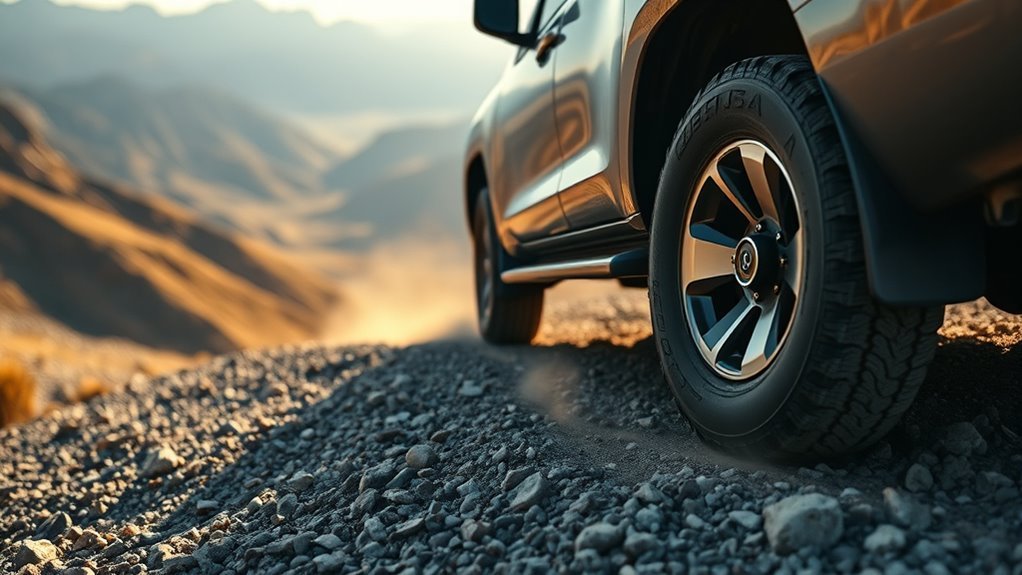

[…] The ownership experience is therefore different rather than automatically better in every category. The TNGA-F Land Cruiser is easier to use as a daily vehicle and has better EPA-rated fuel economy than recent U.S. V8 models. Older models may offer a more familiar mechanical feel and a longer record of long-term repair knowledge. Age, rust, maintenance, and parts availability can outweigh the platform difference when comparing used vehicles. For the full generation-by-generation history, from the original 1951 BJ through the 300 and 250 Series, see our Land Cruiser generations guide. […]