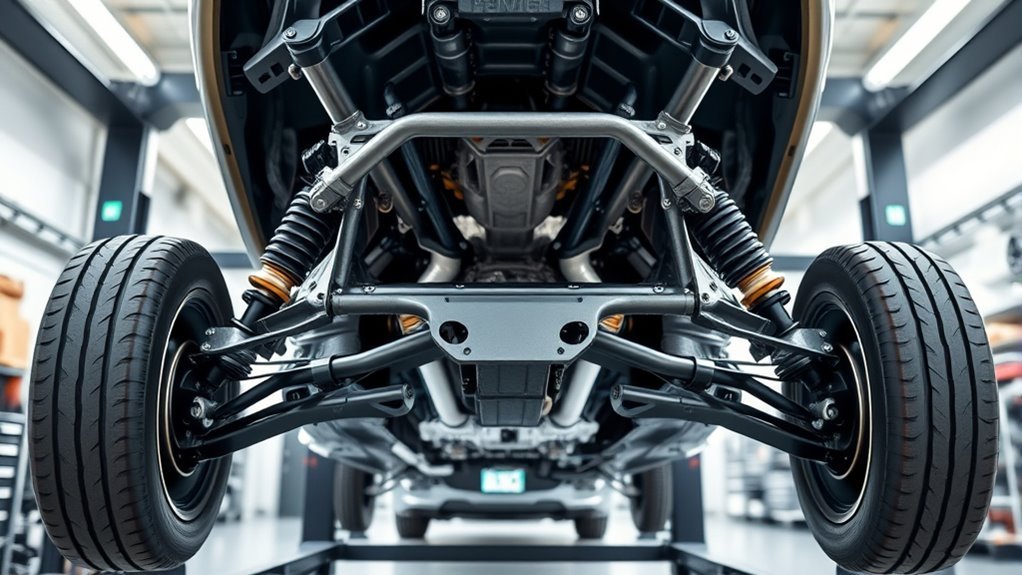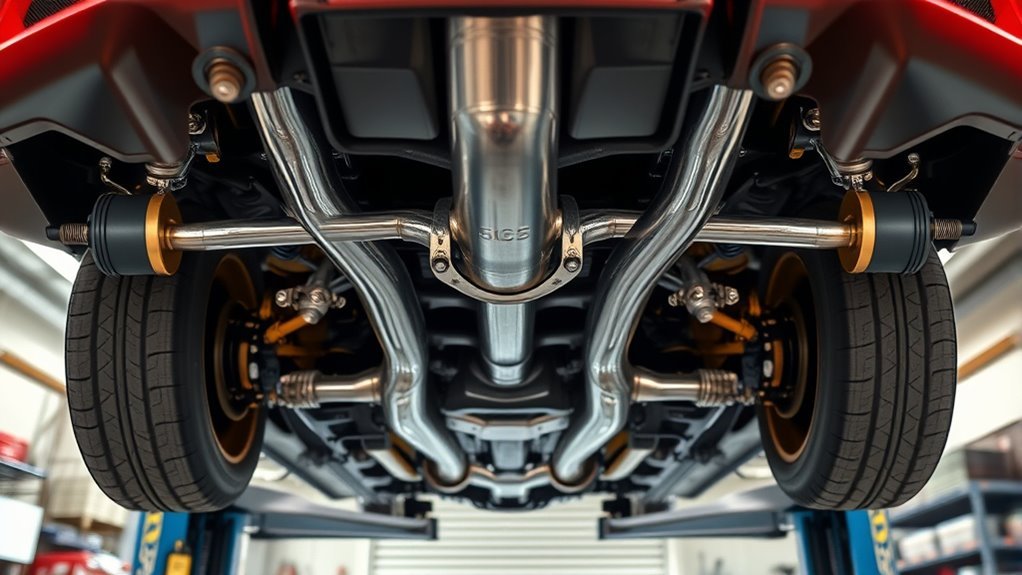
Supra driveshafts and axles are the drivetrain parts that carry engine torque from the transmission and differential to the rear wheels. On a stock or mildly modified street car, healthy factory parts can work well. On a high-horsepower JZA80, the axle material, CV joint size, spline design, differential type, driveshaft fitment, and installation details decide whether the drivetrain stays smooth and reliable—or becomes the next weak link.
Quick Answer
For most MK4 Supra builds, stock driveshafts and axles are best for stock or mild street use. High-horsepower cars need upgraded axles, stronger CV joints, correct differential fitment, and careful inspection. Around 800–1,000 WHP, direct-fit 300M axle sets are common; serious drag cars often need complete axle/hub systems.
Key Takeaways
- The driveshaft moves torque from the transmission to the differential; the rear axles and CV joints deliver that torque from the differential to the wheels.
- Stock Supra axles can be fine for healthy stock or mild street cars, but they should not be treated as launch-proof high-horsepower parts.
- For 800–1,000 WHP street/strip builds, direct-fit upgraded axle sets with 300M materials are a common middle ground.
- Some DSS Supra Pro-Level product titles still say 1400HP, but the current product descriptions for the manual and automatic kits state a 1,200 HP rating.
- JZA80 differential swaps must match the differential size, companion flange, axle stubs, ABS needs, transmission, axle plunge, and rear-end layout.
At a Glance
Main Focus
MK4 Supra driveshafts, rear axles, CV joints, hubs, and differential compatibility
Best For
Stock, street/strip, roll-race, drag, and high-horsepower JZA80 builds
Key Fitment Checks
Transmission, differential size, flange, axle length, ABS rings, hub spline count, and ride height
Inspection Interval
Every oil change for street cars; before and after track or drag-strip use
What Supra Driveshafts and Axles Do
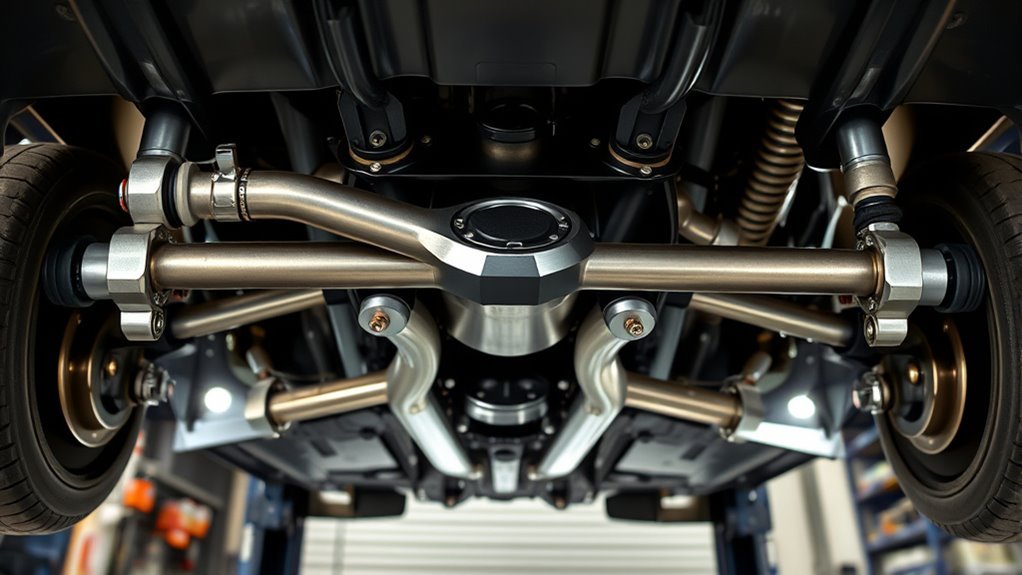
The Supra’s rear-wheel-drive layout sends power through a chain of rotating drivetrain parts. The transmission turns the driveshaft. The driveshaft turns the rear differential. The differential splits torque to the left and right axle shafts, and the CV joints let those axles move with the suspension while still turning the wheels.
That job becomes demanding when power and traction rise. A high-horsepower Supra can shock-load the drivetrain during clutch dumps, transbrake launches, sticky-tire launches, wheel hop, or sudden traction changes. The driveshaft must stay balanced and strong at speed. The axles must resist twisting. The CV joints must survive both torque and suspension angle.
Toyota’s fourth-generation Supra was sold with both turbo and non-turbo models, and Toyota notes the A80 turbo model made 320 horsepower from the factory. Once a build moves far beyond that, the factory drivetrain parts should be treated as fitment references and condition-dependent street parts—not guaranteed high-horsepower racing parts. Toyota USA Newsroom documents the fourth-generation Supra’s factory performance background.
Note: Horsepower ratings are not universal. Wheel horsepower, crank horsepower, tire grip, vehicle weight, clutch type, launch RPM, suspension setup, driveshaft angle, and wheel hop can change how much abuse an axle or driveshaft actually sees.
Driveshaft vs Axle: The Quick Difference
A driveshaft is the long rotating shaft that carries torque from the transmission to the rear differential. An axle shaft, also called a rear half-shaft on an independent rear suspension car, carries torque from the differential to each rear wheel. On a MK4 Supra, each rear axle uses CV joints so the wheel can move up and down through suspension travel without interrupting power delivery.
| Part | Main Job | Common Failure Signs |
|---|---|---|
| Driveshaft | Transfers power from the transmission to the differential | Speed-related vibration, clunking, worn joints, bad angles, balance issues |
| Rear axles | Transfer power from the differential to the wheels | Clicking, torn boots, grease leaks, twisted shafts, broken stubs |
| CV joints | Let axles transmit power while the suspension moves | Clicking, binding, heat damage, cracked cages, loose joints |
Which Axles Work for 600–1,200+ HP? Recommended Setups
The right Supra axle depends on how the car is used, not just the dyno number. A 700 WHP roll-race car on street tires can be easier on axles than a 700 WHP drag car on slicks with an aggressive clutch. A smooth automatic car can also load the drivetrain differently than a manual car that is launched hard.
Stock to 600 HP Street Builds
For stock-power and mild street cars, factory axles can work if they are in good condition. Inspect the boots, joints, splines, stubs, and fasteners before assuming the parts are healthy. Age matters: many MK4 Supras are now decades old, so cracked boots and dry CV joints are common even on cars that do not make huge power.
At roughly 500–600 HP, the decision depends on use. A street car with moderate grip may live on healthy OEM parts. A car with sticky tires, hard launches, clutch kicks, or wheel hop should be upgraded sooner. Do not treat 600 HP as a guaranteed stock-axle limit; treat it as the point where condition, traction, and launch behavior matter more than the number itself.
700–1,000 WHP Street/Strip Builds
For fast street cars that also see drag, roll-race, road-course, or autocross use, upgraded direct-fit axle sets are the usual move. The Driveshaft Shop lists its MK4 Supra 6-speed twin-turbo/Lexus SC300 direct-fit axle set as designed for 800–1,000 WHP depending on the application, using 300M materials and heat-treat processes. The Driveshaft Shop
This type of axle is the practical middle ground: stronger than tired factory parts, easier than a full hub conversion, and still suitable for a street-driven car when installed correctly. For ABS-equipped cars, confirm whether the axle set requires reusing OEM ABS rings before ordering.
1,000–1,200+ HP and Drag Builds
Once the car is built for hard drag launches, the axle shaft alone is not the only concern. The CV size, hub spline, outer stub, differential stub, wheel hub, fasteners, and suspension behavior all matter. DSS currently describes its Supra Turbo manual Pro-Level axle/hub kit as using 30-spline aerospace-grade torsional axle bars, 108mm Porsche-style inner and outer CV joints, larger hubs, ARP extended studs, and a 1,200 HP rating in the product description. The Driveshaft Shop
The automatic Pro-Level kit is described with 30-spline aerospace-grade axle bars, a direct-fit inner CV, a 108mm Porsche-style outer CV, larger hubs, ARP extended studs, and a 1,200 HP rating in the product description. The Driveshaft Shop
Warning: Do not buy by the biggest advertised number alone. Some DSS Supra Pro-Level product titles still say 1400HP, while the current manual and automatic product descriptions state a 1,200 HP rating. Always confirm the latest part number, rating, ABS compatibility, and differential fitment with the manufacturer before buying.
Stock vs Upgraded Axles and CV Joints
Stock Supra axles were built for factory power, factory tires, factory suspension behavior, and normal service life. They can be reliable on a well-maintained street car, but they become a risk when the car gains power, traction, and launch abuse.
Upgraded axles and CV joints are built to reduce common failure points: twisted axle bars, cracked CV cages, broken outer stubs, stripped splines, and heat-damaged grease or boots. High-end kits often use stronger axle materials, larger CV joints, better heat treatment, larger hub splines, and stronger outer stubs.
| Component | Best Use | Pros | Limits |
|---|---|---|---|
| Healthy OEM axle | Stock to mild street power | Factory fit, smooth street manners, no conversion parts | Age, worn boots, limited shock-load strength |
| Direct-fit upgraded axle | Fast street/strip builds | Stronger bars, better materials, easier install | Still depends on correct hubs, stubs, ABS rings, and fitment |
| Axle/hub kit | High-power drag use | Larger CVs, larger splines, stronger hubs | Higher cost, more fitment checks, more installation work |
[Products Worth Considering]
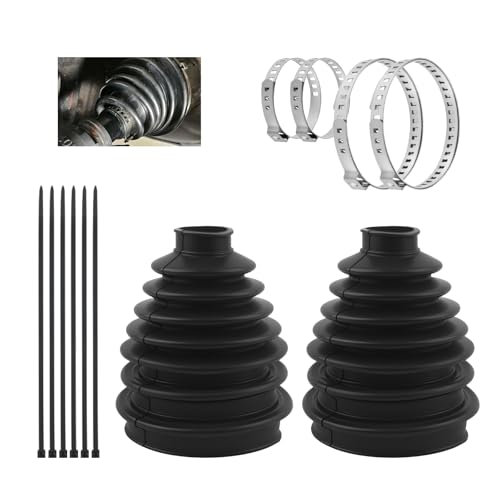
Dust and Leak Protection: This axle boot precisely covers the CV joint part, effectively blocking dust, sand, and other debris from entering the interior. It also provides a tight seal to avoid internal lubricant leakage, thereby avoiding abnormal wear that could cause gaps
What Makes an Axle Strong: Splines, Materials, and Joints
Axle strength is not one feature. It is the combination of material, heat treatment, shaft diameter, spline design, CV joint size, cage design, boot temperature control, fastener quality, and the way the whole assembly fits the car.
Spline Design and Strength
Splines are the ridges that let the axle engage the hub or differential stub. They carry torque through direct contact. Larger splines can spread load across more material, but only when the hub, stub, and axle are designed as a matched system.
Small defects at the spline root can become stress risers. Under repeated shock loads, that can start cracks. This is why quality manufacturing and heat treatment matter as much as spline count itself.
Material Selection and Heat Treat
Performance axles often use 300M or chromoly-style steels because they can offer high strength and fatigue resistance when processed correctly. The material name alone is not enough, though. Poor machining, poor heat treatment, wrong axle length, or bad CV angle can still cause failure.
Good axle selection should consider:
- Actual wheel horsepower and torque curve
- Manual or automatic transmission shock load
- Tire compound and track surface
- Car weight and suspension geometry
- Launch method and wheel-hop control
- CV angle at ride height and under squat
- ABS ring requirements
- Differential size, axle stubs, and hub spline count
CV Joint Types
CV joints must handle torque while the suspension moves. A larger CV joint can carry more load, but it must fit the hub, axle bar, and differential layout. For serious Supra drag builds, 108mm Porsche-style CV joints are common in high-end kits because they increase joint capacity compared with smaller factory-style parts.
The strongest Supra axle setup is the one that matches the differential, hubs, ABS setup, tire grip, suspension angle, and real launch abuse—not simply the one with the biggest advertised horsepower number.
Supra Driveshaft Upgrades: When They Matter
A Supra driveshaft upgrade is usually considered when the car has a transmission swap, differential swap, high-speed vibration, worn joints, or a power level that justifies stronger parts. DSS lists aluminum, carbon-fiber, heavy-duty chromoly, and swap-specific driveshaft options for 1993–1998 Supra applications, including different transmission and rear-end combinations. The Driveshaft Shop
Each material has tradeoffs:
- Aluminum driveshafts are common for street/strip use and reduce weight compared with many steel options.
- Carbon-fiber driveshafts can reduce rotating mass and may damp vibration well, but they cost more and must be protected from impact damage.
- Chromoly driveshafts are often chosen for strength in harsh racing use, but they can be heavier.
Driveshaft angle also matters. After a transmission, differential, mount, or subframe change, the car should be measured with the drivetrain installed at ride height. General Spicer driveline guidance warns that excessive universal-joint operating angle can shorten joint life and cause vibration, especially as driveshaft speed rises. Spicer Parts
Pro Tip: If you change the transmission, differential, companion flange, subframe setup, or engine/transmission mounts, measure for the driveshaft after the parts are installed. Guessing length or flange style is one of the easiest ways to order the wrong shaft.
Inspecting Supra Driveshafts and Axles: Common Failures and Maintenance
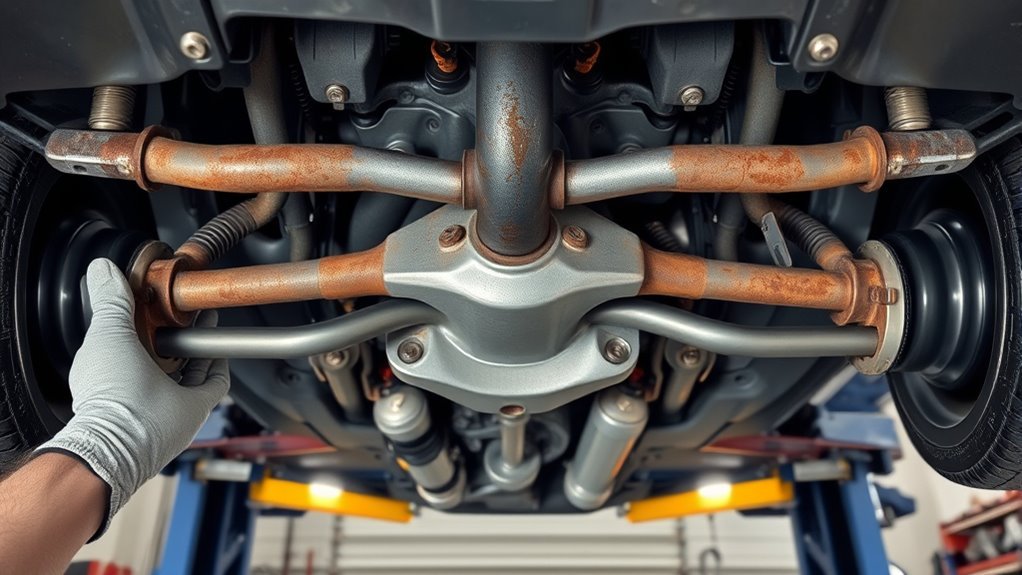
Start with the symptoms you can feel and hear. A vibration under load can point to driveshaft balance, joint wear, incorrect angle, or worn mounts. Clicking during turns or low-speed movement often points to CV wear. Grease around the axle area usually means a torn boot or loose clamp.
Warning: Drivetrain inspection often requires getting under the car. Support the Supra with proper jack stands on solid ground, never rely on a jack alone, and use the Toyota service manual or manufacturer instructions for torque specs and fastener procedures.
Inspection Checklist
- Look for torn CV boots, missing clamps, and grease spray.
- Check axle shafts for twisting, dents, corrosion, or rubbing marks.
- Check inner and outer CV joints for play, clicking, binding, or heat discoloration.
- Inspect axle splines and stubs for galling, deformation, or wear.
- Check driveshaft U-joints or CV joints for looseness.
- Inspect differential, transmission, engine, and subframe mounts for excess movement.
- Confirm all axle, hub, flange, and driveshaft fasteners are torqued to the correct service specification.
- After hard racing, recheck boots, clamps, fasteners, witness marks, and grease leaks before the next event.
Common Supra Drivetrain Symptoms
| Symptom | Likely Areas to Check | What to Do Next |
|---|---|---|
| Clicking at low speed | Outer CV joint, boot, axle spline | Inspect boot, grease, joint play, and axle nut/fasteners |
| Grease on suspension or wheel well | CV boot or boot clamp | Repair immediately before the joint runs dry |
| Vibration at speed | Driveshaft balance, angle, joints, mounts | Check shaft runout, operating angle, U-joints/CVs, and mount condition |
| Clunk on throttle tip-in | Differential mounts, axle stubs, driveshaft joints, subframe bushings | Inspect mounts, fasteners, backlash, and joint play |
| Wheel hop on launch | Suspension, tires, bushings, damping, driveline mounts | Fix hop before adding power or launching harder |
Warning: Wheel hop is brutal on Supra axles, differentials, driveshafts, and transmission parts. If the car hops on launch, fix the suspension, tire, bushing, mount, and damping issue before adding more power.
JZA80 Differential Swaps and Axle Compatibility: Installation Tips
JZA80 differential swaps need careful planning because Toyota used different axle-code families, gear ratios, differential sizes, and flange layouts. Grannas Racing’s MK4 Supra differential guide explains that A-code differentials are 200mm “small diff” units, while B-code differentials are 220mm “big diff” units. It also lists common Supra axle-code ratios such as 01 = 4.083, 02 = 3.769, 05 = 4.272, and 07 = 3.133. Grannas Racing
Do not assume every Supra, Lexus SC300, SC400, JDM, USDM, Euro, manual, and automatic rear-end combination uses the same axles or stubs. Some swaps work with common Toyota/Lexus parts, while others require custom axles, different flanges, conversion plates, or dedicated hub kits.
Before You Order Axles or a Driveshaft
- Decode the axle code. Confirm whether the car has an A-series 200mm or B-series 220mm differential.
- Confirm transmission type. Manual and automatic setups can use different differential and driveshaft combinations.
- Check the companion flange. Driveshaft flange style must match the differential input flange.
- Check axle stubs. Stub length and spline fitment can change by market and rear-end type.
- Confirm ABS compatibility. Some upgraded axles require reusing OEM ABS rings or using hubs machined for ABS rings.
- Measure axle length at ride height. Too much plunge or too little plunge can damage CV joints.
- Check ride height and suspension travel. Lowered cars can run higher CV angles and less plunge margin.
- Match the kit to the rear differential. DSS specifically separates manual and automatic Supra Pro-Level axle/hub kits.
- Verify the part number before buying. Product titles, ratings, and fitment notes can change.
How to Choose the Right Supra Drivetrain Setup
Use the car’s real job as the starting point. A street cruiser, roll-race car, road-course car, and drag car all punish drivetrain parts differently. Power matters, but tire grip, launch method, differential setup, ride height, and wheel hop usually decide what breaks first.
| Build Type | Suggested Approach | Main Priority |
|---|---|---|
| Stock or mild street | Inspect and refresh OEM parts as needed | Smoothness and reliability |
| 600–800 HP street | Consider upgraded axles if using sticky tires or launching | Prevent age-related axle and CV failure |
| 800–1,000 WHP street/strip | Use direct-fit performance axles with stronger materials | CV and axle-bar strength |
| 1,000+ HP drag | Use a complete axle/hub system matched to the differential | Stub, hub, spline, and CV survival |
| Differential swap | Confirm flange, axle length, stubs, ABS, driveshaft length, and operating angle | Fitment accuracy |
[Products Worth Considering]

Models with 12.99 inch (330mm) Front Rotors
Frequently Asked Questions
What is the difference between a driveshaft and an axle?
A driveshaft transfers torque from the transmission to the rear differential. An axle transfers torque from the differential to the wheel. On a MK4 Supra, the rear axles are half-shafts with CV joints so the wheels can move with the independent rear suspension while still receiving power.
How many axles does a Toyota Supra have?
In enthusiast drivetrain language, a rear-wheel-drive MK4 Supra has two rear axle shafts, also called half-shafts, that connect the differential to the rear wheels. In general vehicle terminology, people may also refer to front and rear axle lines, so context matters.
Are Supras front-wheel drive or rear-wheel drive?
Traditional Supra generations, including the MK4 JZA80, are rear-wheel drive. That is why the driveshaft, rear differential, rear axles, and CV joints are so important for power delivery.
What are the five major components of a driveshaft assembly?
A typical rear-wheel-drive driveshaft assembly includes the driveshaft tube, universal joints or CV joints, yokes or flanges, a slip section where applicable, and hardware that attaches it to the transmission and differential. The rear differential and axle shafts are separate drivetrain parts, even though they work with the driveshaft.
Can stock Supra axles handle 600 horsepower?
Sometimes, but there is no safe universal rating for decades-old stock axles. A healthy stock axle may survive mild street driving at that power, while drag launches, sticky tires, wheel hop, and an aggressive clutch can break it quickly. Inspect the parts carefully and upgrade if the car will be launched hard.
Do I need new axles when swapping a JZA80 differential?
Not always, but you must confirm the differential size, axle stubs, companion flange, ABS setup, axle length, and driveshaft fitment. A 200mm A-series differential and a 220mm B-series differential are not the same, and manual/automatic combinations can require different supporting parts.
Do upgraded Supra axles keep ABS?
Some upgraded axle sets require reusing OEM ABS rings, while some hub kits are machined to accept Supra ABS rings. Do not assume ABS compatibility from the horsepower rating. Check the product notes and confirm the exact part number before ordering.
Why do some DSS Supra kits say 1400HP in the title but 1200HP in the description?
Some current DSS Supra Pro-Level product titles still include 1400HP wording, but the manual and automatic product descriptions state a 1,200 HP rating. Use the latest manufacturer description and confirm directly with DSS before buying, especially for drag cars.
Conclusion
Supra driveshafts and axles are not background parts. They decide how cleanly the car delivers power, how safely it handles high torque, and how long the drivetrain survives. Keep factory parts for stock or mild use only when they inspect well. Step up to stronger axles as power, grip, and launch abuse increase. For serious drag cars, choose a complete axle and hub system matched to the exact transmission, differential, ABS, hub, and rear-end layout.
The biggest mistake is buying by horsepower number alone. Match the whole system, inspect it often, and fix vibration, wheel hop, boot damage, clicking, or grease leaks before one small problem turns into a broken axle, damaged differential, or failed driveshaft.
Sources
- Toyota USA Newsroom: The Supra Lineage — factory A80 Supra background and 320-horsepower turbo reference.
- Grannas Racing: Toyota Supra MKIV Differential Info — JZA80 axle-code, gear-ratio, 200mm A-series, and 220mm B-series differential information.
- The Driveshaft Shop: MK4 Supra Direct-Fit 1000HP Rated Axle Set — 800–1,000 WHP direct-fit axle description and 300M material reference.
- The Driveshaft Shop: Supra Turbo Manual Pro-Level Axle/Hub Kit — 108mm CV, 30-spline axle bar, hub kit, ABS-ring machining, and 1,200 HP description details.
- The Driveshaft Shop: Supra Turbo Automatic Pro-Level Axle/Hub Kit — automatic-differential fitment, direct-fit inner CV, 108mm outer CV, and 1,200 HP description details.
- The Driveshaft Shop: 1993–1998 Toyota Supra Driveshafts — current aluminum, carbon-fiber, chromoly, and swap-specific driveshaft options.