If your Land Cruiser’s check engine light comes on, start with safety first: note whether the light is steady or flashing, check for other dashboard warnings, and pay attention to how the vehicle drives. A steady light often allows cautious short-distance driving, while a flashing light, rough running, overheating, smoke, or sudden power loss means you should pull over and arrange service or towing. The fastest way to move from guesswork to a real fix is to read the stored OBD-II trouble codes and diagnose the cause before replacing parts.
Quick Answer
For a Toyota Land Cruiser check engine light, tighten the gas cap, check fluids and other warning lights, then scan the OBD-II codes. You can usually drive cautiously with a steady light if the SUV feels normal. If the light flashes, the engine shakes, or power drops, stop driving and call for help.
Key Takeaways
- A steady check engine light usually means the onboard diagnostics system has stored a fault code that should be checked soon.
- A flashing check engine light often points to an active misfire that can damage the catalytic converter, so stop driving as soon as it is safe.
- Common Land Cruiser causes include a loose gas cap, EVAP leak, oxygen or air-fuel ratio sensor, MAF sensor, worn spark plugs, ignition coil issue, or catalytic converter fault.
- Do not replace parts based on a code alone. Use the code, freeze-frame data, symptoms, and a visual inspection to confirm the real cause.
At a Glance
| Time Required | 10–30 minutes for basic checks; longer if repairs are needed |
| Difficulty | Easy for checks and code reading; moderate to advanced for repairs |
| Tools Needed | OBD-II scanner, flashlight, gloves, owner’s manual, basic hand tools if inspecting ignition parts |
| Typical Cost | $0 for a loose gas cap check; about $122–$179 for Land Cruiser check engine diagnosis before repairs, based on current RepairPal estimates |
What the Land Cruiser Check Engine Light Means
When your Land Cruiser’s check engine light comes on, the engine control module has detected a problem in an emissions-related, fuel, ignition, or engine-management system. The onboard diagnostics system stores diagnostic trouble codes, or DTCs, that help point you toward the affected system. According to the U.S. Environmental Protection Agency’s OBD overview, OBD systems monitor emission-control and related engine components and can illuminate the malfunction indicator light when a fault is detected.
The light does not automatically tell you which part is bad. It tells you where to start testing. For example, a P0420 code points toward catalyst-system efficiency, but the root cause could be a catalytic converter, exhaust leak, oxygen sensor, air-fuel problem, or misfire history. A P0300 code points to random or multiple misfires, but you still need to check plugs, coils, injectors, vacuum leaks, compression, and fuel delivery before buying parts.
Warning: Never ignore a flashing check engine light. It can indicate an active misfire that may overheat and damage the catalytic converter. Reduce load, pull over safely, and arrange a diagnostic or tow.
Quick Triage: Is It Safe to Drive Your Land Cruiser?
Before you keep driving, decide whether this is a caution situation or a stop-now situation. Toyota explains that dashboard warning icons can vary by vehicle and that red warnings require immediate attention, while yellow warnings still need attention but may not always be an emergency. Always compare what you see with your specific Land Cruiser owner’s manual or Toyota’s official dashboard warning light guide.
Steady Light: Usually Lower Risk
A steady check engine light often means you can drive a short distance cautiously if the Land Cruiser feels normal. Keep speeds moderate, avoid towing, avoid hard acceleration, and watch for changes in engine sound, temperature, shifting, fuel smell, or throttle response.
- Tighten the gas cap until it clicks, especially if the light appeared after refueling.
- Check for other warning lights, overheating, low oil pressure, low coolant, or battery/charging warnings.
- Use an OBD-II scanner to read the stored codes and freeze-frame data.
- Schedule service soon if the light stays on, returns after clearing, or is paired with drivability symptoms.
Flashing Light: Stop Driving
A flashing check engine light is urgent. It often means the engine is misfiring badly enough to risk catalytic converter damage. Pull over safely, turn the engine off, and call Nalley Toyota of Roswell, roadside assistance, or your nearest qualified repair shop. If you are far from help, towing is usually safer than trying to limp home.
Also stop driving if the light is steady but the Land Cruiser shakes, overheats, loses power, smells like fuel, shows smoke, or enters limp mode. Those symptoms can turn a manageable repair into a much more expensive one.
Fast Checks: Gas Cap, Dashboard Alerts, and Fluids
Start with the simple checks because they are quick, free, and often reveal whether you need immediate help.
Check the Gas Cap
A loose, missing, cracked, or worn gas cap can trigger an EVAP-system code because fuel vapors can escape. After refueling, tighten the cap until it clicks. Inspect the seal for cracks and check that the cap threads smoothly.
- If the cap was loose, tighten it and keep driving normally if the vehicle has no other symptoms.
- Give the vehicle a few normal drive cycles to recheck the EVAP system. The light may not turn off immediately.
- If the cap is damaged, replace it with a correct-fit cap and scan the codes again.
Pro Tip: Do not disconnect the battery just to hide the light before an emissions test. Clearing codes also resets readiness monitors, so the vehicle may show “not ready” until it completes the required self-tests.
Inspect Dashboard Lights
Look for other warning indicators before focusing only on the check engine light. Oil pressure, coolant temperature, battery/charging, brake, traction control, transmission, or hybrid-system warnings can change the safest next step. Check the message display as well, since newer Land Cruiser models may show additional guidance in the multi-information display.
Check Fluid Levels and Leaks
With the vehicle parked safely and the engine cool where needed, check engine oil, coolant, and transmission-related alerts according to the owner’s manual. Look under the vehicle for fresh oil, coolant, fuel, or exhaust leaks. Low oil pressure, overheating, or a fuel smell is not a “drive it and see” situation; stop and get help.
Read OBD-II Codes and Common Land Cruiser Codes
To read codes, plug an OBD-II scanner into the diagnostic port under the driver’s side of the dash. Turn the ignition on, follow the scanner prompts, and write down the code numbers, freeze-frame data, and whether the codes are current, pending, or permanent. OBD-II systems store DTCs and readiness information, which is why a scan is far more useful than guessing.
| Code or Code Family | What It Often Means | What to Check First |
|---|---|---|
| P0300, P0301–P0308 | Random or cylinder-specific misfire | Spark plugs, ignition coils, fuel delivery, vacuum leaks, compression |
| P0420 / P0430 | Catalyst efficiency below threshold | Exhaust leaks, oxygen sensors, fuel trim, misfire history, catalytic converter |
| P0171 / P0174 | System too lean | Vacuum leaks, intake leaks, MAF sensor, fuel pressure, dirty injectors |
| P0440, P0441, P0455, P0456 | EVAP-system leak or purge-flow problem | Gas cap, EVAP hoses, purge valve, vent valve, charcoal canister |
| P0101–P0104 | Mass air flow sensor or circuit issue | Air filter, intake tube, wiring, MAF sensor contamination |
After reading the codes, do not clear them until you have saved the information. If you clear the codes too soon, you may erase freeze-frame data that helps identify when the fault happened.
[Products Worth Considering]
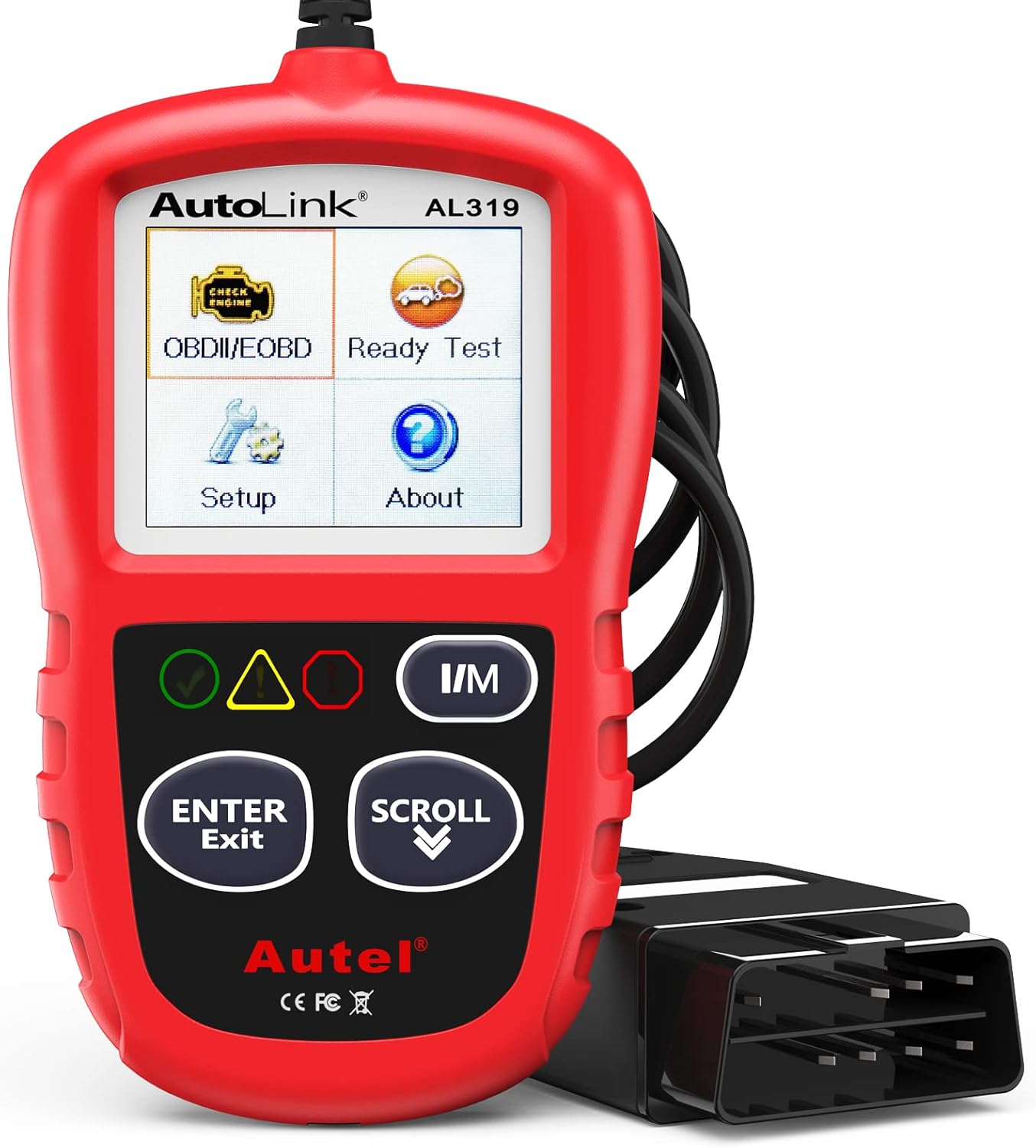
The Autel AL319 is a user-friendly OBD2 scan tool designed to help drivers quickly diagnose check engine light issues and understand vehicle fault codes. It supports reading and clearing DTCs, live data, freeze frame, I/M readiness, and vehicle information, making it a practical choice for DIYers and everyday car owners. With plug-and-play operation, a color display, built-in speaker, and broad vehicle compatibility, it delivers fast, reliable diagnostics without complicated setup.

The ANCEL AD410 helps drivers quickly read and clear engine-related fault codes, view live data, and understand why the check engine light is on before heading to a repair shop. With built-in code definitions, readiness checks, and support for common OBD2 functions, it makes basic diagnostics straightforward for beginners and DIY users. Powered directly from the vehicle and easy to use with no app required, it offers practical value for everyday vehicle troubleshooting.

The FOXWELL NT301 is a plug-and-play OBD2 code reader designed to help drivers and home mechanics diagnose check engine light issues with ease. It reads fault codes, clears emissions-related warnings, displays live sensor data in graph form, and shows I/M readiness so you can quickly check vehicle status before an emissions test. With broad compatibility across many OBD2 vehicles and a clear color screen, it offers a practical, user-friendly way to monitor and troubleshoot engine performance.
Likely Causes: O2 Sensor, MAF, Spark Plugs, Catalytic Converter
Once you have the codes, focus on the systems most commonly tied to check engine lights in a Land Cruiser.
[Products Worth Considering]

This plug-and-play OBD2 scanner helps drivers quickly read and clear engine error codes while providing live data, freeze frame information, I/M readiness, and MIL status for more confident troubleshooting. It adds a built-in voltage test and clear status indicators to support electrical checks and faster diagnostics, making it a practical choice for home users, car enthusiasts, and repair professionals. Compatible with most OBDII vehicles since 1996 and designed with an easy-to-use interface, it offers broad coverage and simple operation in one compact tool.

The ANCEL AD410 PRO combines engine diagnostics and 12V battery testing in one easy-to-use tool, helping you read and clear check engine codes while checking battery health, cranking, and charging performance. It also provides live data, freeze frame details, and I/M readiness checks to help you diagnose issues faster and prepare for emissions testing. With plug-and-play operation, a clear screen, and broad vehicle compatibility, it is a practical solution for home mechanics and everyday drivers.

Denso narrow-band Oxygen (O2) Sensor with 4 wire 9.45 inch long wiring harness
Loose Gas Cap or EVAP Leak
If the light came on after fueling, start here. A loose cap, cracked cap seal, damaged filler neck, leaking EVAP hose, or stuck purge valve can trigger small or large leak codes. This is one of the cheapest problems to check, but EVAP diagnosis may require a smoke test if the leak is not obvious.
Oxygen or Air-Fuel Ratio Sensor
A failing oxygen sensor or air-fuel ratio sensor can cause poor fuel economy, rough running, and incorrect fuel-trim readings. Current RepairPal estimates put Toyota Land Cruiser oxygen sensor replacement at about $416–$554 on average, not including taxes, fees, location differences, or related repairs.
Mass Air Flow Sensor
The mass air flow sensor measures incoming air so the engine computer can calculate fuel delivery. A dirty or faulty MAF sensor can cause hesitation, stalling, hard starting, poor fuel economy, and lean or rich codes. Before replacing it, inspect the air filter, intake tube, wiring connector, and sensor contamination.
Spark Plugs and Ignition Coils
Worn spark plugs, weak ignition coils, or damaged plug wires can cause misfires. Misfires are especially important because unburned fuel can overheat the catalytic converter. If your Land Cruiser shakes and the light flashes, treat it as urgent.
Catalytic Converter
A catalytic converter fault can appear as P0420 or P0430, but a converter code does not always mean the converter is the only failed part. Misfires, oil burning, rich fuel mixture, exhaust leaks, and sensor faults can all affect catalyst readings. Current RepairPal estimates list Toyota Land Cruiser catalytic converter replacement at about $2,718–$2,777 on average, with costs varying by year, location, and parts availability.
A check engine code is a direction, not a diagnosis. Confirm the cause before replacing sensors, coils, or the catalytic converter.
DIY Checks to Try Before Going to the Shop
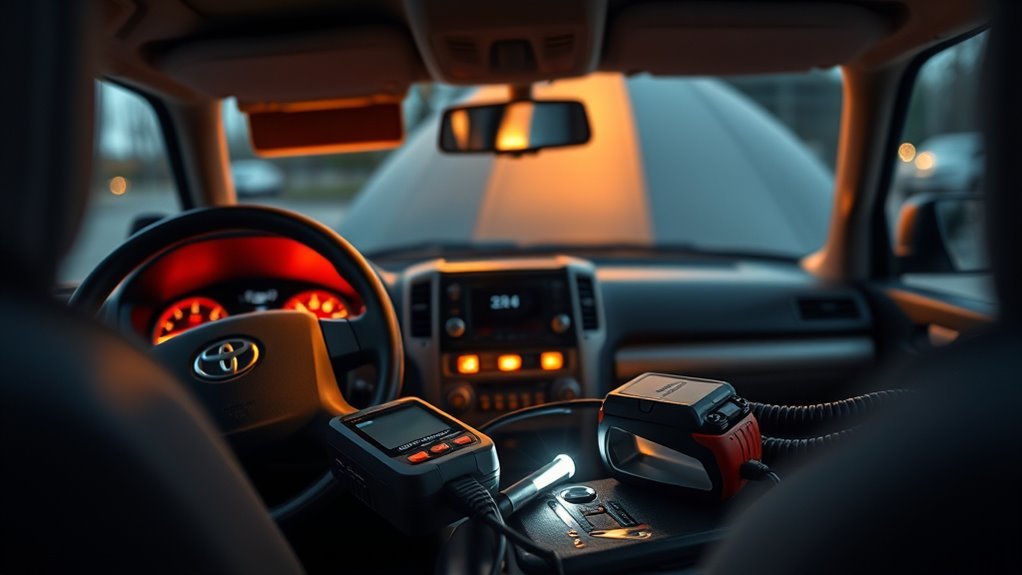
Start with a quick walk-around and basic under-hood inspection. You are looking for obvious problems you can safely spot before paying for diagnostics.
- Confirm the light pattern: steady or flashing.
- Check the gas cap: tighten it, inspect the seal, and replace it if damaged.
- Look for other warnings: oil, coolant temperature, battery, brake, traction, or transmission alerts.
- Inspect fluids: check oil and coolant only when safe and according to the owner’s manual.
- Look for visible damage: disconnected intake hoses, cracked vacuum lines, loose electrical connectors, rodent damage, or obvious leaks.
- Scan the codes: record current, pending, and permanent codes plus freeze-frame data.
- Check maintenance history: overdue spark plugs, old air filters, neglected oil changes, or past misfire issues can narrow the search.
Note: A free parts-store code scan can be useful, but it is not the same as a full diagnosis. A full diagnostic checks live data, wiring, fuel trim, service bulletins, and the conditions that triggered the code.
[Products Worth Considering]

[Easy to Use—Work Out of the Box] + [FOXWELL 2026 New Version] FOXWELL NT604 Elite scan tool is the 2026 new version from FOXWELL, designed for car owners who want to figure out the cause of issues before fixing car problems by scanning common systems like ABS, SRS, engine, and transmission. The NT604 Elite obd2 scanner diagnostic tool comes with the latest software—no need to waste time downloading software first. Plug the scanner into the OBDII port with OBDII cable to start the diagnosis.

⚠️【Important Tips Before Purchcase】1. Compatible with standard OBD II vehicles from 1996 onward in the US market. ⚠️2. Due to the Safe Gateway (SGW) / FCA AutoAuth security system, this tool cannot access OBDII modules to clear codes for FCA vehicles (including Chrysler, Dodge, Jeep, etc.) manufactured after 2017. ⚠️And vehicle brands equipped with a SGW are not supported either. ⚠️3. Not support TPMS or other service functions. Only the basic OBDII code reader. Functions not universal, please s-end mes-sage via Ama-zon or 📞autelofficial @ outlook . com📞 to check before order.

OBD2 SCANNER & BATTERY TESTER IN ONE – The INNOVA 5210 OBD2 scanner not only reads and clears check engine light and ABS codes (coverage may vary) but also functions as a car battery tester to check alternator health and prevent unexpected breakdowns.
When to Tow or Call Nalley Toyota of Roswell for Help
If the check engine light flashes, the Land Cruiser loses power, or the engine runs rough, pull over safely and call Nalley Toyota of Roswell, roadside assistance, or a qualified repair facility. Nalley Toyota of Roswell lists check engine light service and diagnostic support on its service pages, and Toyota-trained technicians can use Toyota-specific scan tools and service information when needed.
| Condition | Best Action | Why It Matters |
|---|---|---|
| Flashing check engine light | Stop driving and arrange a tow | May indicate a severe misfire that can damage the catalytic converter |
| Sudden power loss or limp mode | Limit driving; towing is recommended | The vehicle may be protecting itself from further damage |
| Overheating, smoke, fuel smell, or oil pressure warning | Pull over and shut off the engine when safe | Continuing to drive can cause major engine damage or create a fire risk |
| Steady light with normal driving | Drive cautiously and schedule diagnostics soon | The fault may be minor, but it can worsen or affect emissions |
| Light returns after clearing | Have the system diagnosed instead of repeatedly clearing it | The underlying fault is still present |
Repair Costs, Resetting the Light, and Preventive Care
Check engine light costs range from free to expensive depending on the cause. A loose gas cap may cost nothing. A damaged cap is usually inexpensive. Sensor, ignition, EVAP, wiring, or catalytic converter repairs can cost much more, especially if the vehicle has high mileage or the issue has been ignored.
As of 2026, RepairPal estimates Toyota Land Cruiser check engine light diagnosis and testing at about $122–$179 before taxes, fees, location differences, or related repairs. Oxygen sensor replacement is estimated around $416–$554, while catalytic converter replacement can average about $2,718–$2,777. These are planning ranges, not a quote, so ask your shop for a written estimate after diagnosis.
Should You Reset the Light Yourself?
Only reset the light after the underlying problem has been repaired or after you have documented the codes. Clearing codes without fixing the problem does not repair the vehicle. It may also reset readiness monitors, which can delay emissions testing until the OBD-II self-tests run again. The California Bureau of Automotive Repair explains that OBD readiness monitors show whether emissions-related self-tests have completed, which is why clearing codes right before an inspection can create a “not ready” result.
How to Prevent the Light From Coming Back
- Follow Toyota’s maintenance schedule for oil changes, spark plugs, filters, coolant, and inspection items.
- Use the correct fuel and oil for your model year and engine.
- Fix misfires quickly so they do not damage the catalytic converter.
- Repair intake leaks, exhaust leaks, and sensor wiring problems before they trigger repeat codes.
- Ask the technician to record all stored codes and freeze-frame data on the repair order.
- Check for recalls and technical service bulletins if the same code returns after a correct repair.
Frequently Asked Questions
Can I drive my Toyota Land Cruiser with the check engine light on?
You can usually drive a short distance with a steady check engine light if the Land Cruiser feels normal and there are no other serious warnings. Drive gently and scan the codes soon. If the light flashes, the engine shakes, power drops, or the vehicle overheats, stop driving and call for help.
How do I reset a Toyota Land Cruiser check engine light?
Fix the cause first, save the codes and freeze-frame data, then use an OBD-II scanner to clear the codes. Some minor faults may turn the light off after several successful drive cycles. Disconnecting the battery is not the best reset method because it can erase useful data and reset readiness monitors.
How do I fix my check engine light myself?
Start by tightening the gas cap, checking fluids, looking for other warning lights, and scanning the OBD-II codes. You can inspect obvious issues such as loose intake hoses, damaged wiring, dirty air filters, worn spark plugs, or cracked vacuum lines. For flashing lights, catalyst codes, wiring faults, or repeat misfires, get a professional diagnosis.
Is a loose gas cap really enough to turn on the check engine light?
Yes. A loose, cracked, or missing gas cap can allow fuel vapors to escape and trigger EVAP-system codes. Tighten the cap until it clicks and inspect the seal. If the light stays on after normal driving or the code returns, scan the vehicle and check for other EVAP leaks.
What does a flashing check engine light mean on a Land Cruiser?
A flashing light often means an active misfire severe enough to risk catalytic converter damage. Pull over safely, shut the engine off, and arrange a tow or immediate diagnosis. Do not keep driving normally with a flashing check engine light.
Can I pass emissions with the check engine light on?
In many emissions-testing programs, a lit malfunction indicator light or unset readiness monitors can cause a failed or incomplete test. Repair the fault, clear the codes only after saving diagnostic information, and allow the vehicle to complete its OBD-II readiness checks before testing.
Conclusion
A Land Cruiser check engine light is not something to panic over, but it is something to treat seriously. If the light is steady and the SUV drives normally, start with the gas cap, fluids, dashboard alerts, and an OBD-II scan. If the light flashes, the engine runs rough, or power drops, stop driving and call Nalley Toyota of Roswell, roadside assistance, or a qualified shop. Acting early protects the engine, catalytic converter, emissions system, and your repair budget.
Sources
- Toyota Owners — Dashboard Warning Lights Explained — official guidance on dashboard warning light colors and owner’s manual confirmation.
- Toyota Owners — 2025 Land Cruiser Warning Lights and Indicators — model-specific Land Cruiser warning light reference.
- U.S. EPA — On-Board Diagnostics Overview — explanation of how OBD systems monitor emissions-related components and illuminate the malfunction indicator light.
- California Bureau of Automotive Repair — OBD Readiness Monitors — explains readiness monitors and emissions self-tests.
- RepairPal — Toyota Land Cruiser Check Engine Light Diagnosis Cost — current average diagnostic cost range.
- Nalley Toyota of Roswell Service Center — local Toyota service and diagnostic support.