
Putting a Toyota Land Cruiser in 4H is simple once you know which four-wheel-drive system your model has. Older part-time Land Cruisers may use manual or free-wheeling front hubs, while many later Land Cruisers use full-time 4WD with a center differential lock instead of manual hub dials. Check your owner’s manual first, then use the steps below for the system on your vehicle.
Quick Answer
On a manual-hub Land Cruiser, stop safely if the hubs are in Free, turn both front hub dials to Lock, then shift from H2 to 4H/H4 as your owner’s manual allows. Keep the wheels straight, ease off the throttle, and confirm the 4WD indicator. Do not use part-time 4H on dry pavement.
Key Takeaways
- If your Land Cruiser has manual or free-wheeling hubs, both front hubs must be locked before 4H can drive the front wheels.
- Do not treat “62 mph” as a universal 4H rule. Shift speed and procedure vary by model and transfer case.
- Use part-time 4H on loose, wet, icy, snowy, muddy, or gravel surfaces—not dry hard pavement.
- Modern full-time Land Cruisers are different: H4 may be normal driving mode, and the center differential lock is used only when extra traction is needed.
- Never shift into 4H while the wheels are spinning, and never drive with only one manual hub locked.
At a Glance
| Time Required | 1–3 minutes once you know your hub and transfer-case layout |
| Difficulty | Easy, but model-specific |
| Tools Needed | No tools for normal engagement; gloves or a rag help if the hub dials are muddy |
| Cost | Free unless hubs, linkage, actuators, or driveline parts need service |
Confirm Your Land Cruiser’s 4WD System First
Before you touch the transfer lever or switch, identify the system in front of you. Toyota used different layouts across Land Cruiser generations, markets, and trim levels, so the right 4H procedure depends on the exact vehicle.
| Manual/free-wheeling hubs | You will see Lock/Free dials on the front wheel hubs. Lock both before using 4H/H4. |
| H4 button or electric hub system | Follow the button/lever sequence in the owner’s manual. Do not assume it works like a manual hub. |
| Full-time 4WD with center differential lock | H4 may be normal driving mode. Use the center differential lock only for slippery, bumpy, or stuck conditions, then unlock it on dry hard roads. |
| Newer J250/2025+ Land Cruiser | Toyota lists H4 as normal driving on all road types and L4 for maximum power and traction. Shifting between H4 and L4 requires a complete stop and N. |
Note: Toyota’s owner manuals are the final authority for your exact model year. If your hub dials, transfer lever, H4 button, or dashboard indicators do not match these instructions, stop and check the manual before forcing anything.
Prepare Manual Front Hubs for 4H

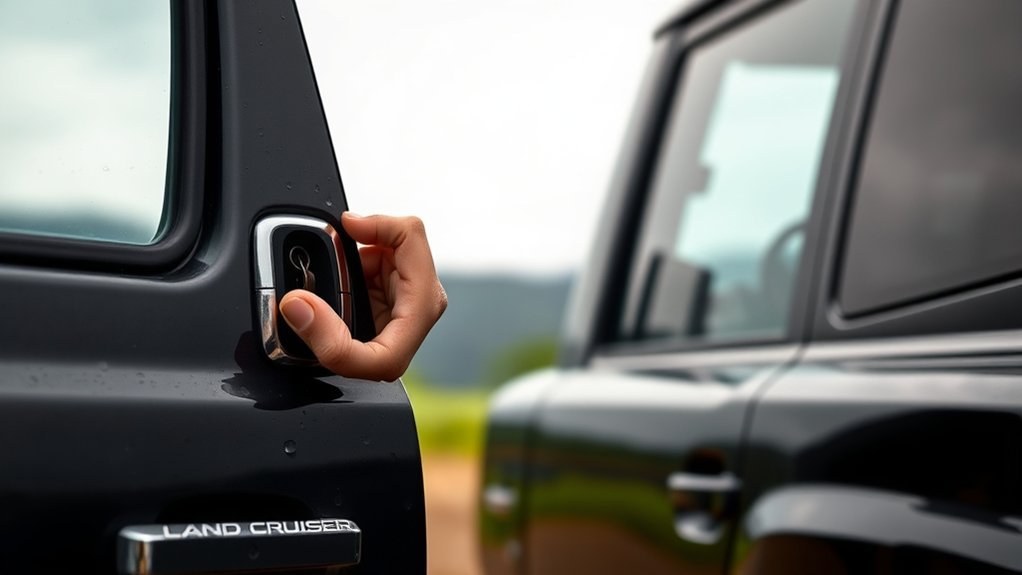
If your Land Cruiser has manual front hubs, start outside the vehicle. Look at both front hub dials and turn each one fully from Free to Lock. Wipe mud, ice, or grit from the dial first so it can seat fully. You should feel a firm stop or click, not a vague half-position.
Manual hubs connect the front wheels to the front axle. If the hubs stay in Free, shifting the transfer case into 4H may turn front driveline parts, but the front wheels will not receive useful drive. If only one hub is locked, the vehicle may still fail to pull correctly and can load the front differential unevenly.
Warning: Never drive with only one manual hub locked. Lock both front hubs or unlock both front hubs.
[Products Worth Considering]

Custom-fit floor, trunk, and backrest mats are designed for 2007-2014 Toyota FJ Cruiser models using precise 3D laser scanning for full interior coverage. Made from odorless TPE, these all-weather mats help protect against mud, rain, snow, stains, and scratches while staying securely in place for everyday use. They are easy to clean, simple to install, and built for reliable protection in every season.

These custom floor mats are designed to fit the Toyota Land Cruiser GX550 with a 5-seat layout for a precise, secure install. Made from durable TPE, they help shield your interior from spills, mud, snow, dirt, sand, pet hair, and everyday debris while making cleanup quick and easy.

Custom-fit floor mats and cargo liner designed to provide edge-to-edge protection for the Toyota Land Cruiser Prado. Made from durable TPE material, they offer all-weather defense against rain, slush, snow, mud, and everyday dirt while remaining easy to install, clean, and maintain. The odorless, non-slip design helps keep your interior safer, cleaner, and more comfortable in every season.
How to Put a Manual-Hub Land Cruiser in 4H
- Stop safely if the hubs are in Free. Manual hub dials are on the front wheels, so you must stop and get out to turn them.
- Turn both front hubs to Lock. Confirm the left and right hub dials are fully seated in the same position.
- Get back in and drive straight. Keep the steering wheel straight and avoid throttle surges.
- Shift from H2 to 4H/H4. Move the transfer lever or press the H4 control exactly as your owner’s manual describes.
- Ease off the accelerator during engagement. A brief lift helps the gears or actuator complete the shift smoothly.
- Confirm the indicator. Wait for the 4WD/H4 light to stay on. If it flashes or does not confirm, drive straight a short distance, stop, and recheck the hubs and transfer position.
Some older Land Cruiser manuals allow H2 to H4 shifting while moving when the free-wheeling hubs are already engaged. Other Toyota systems specify a lower speed, a straight-ahead condition, or a complete stop. Because these rules vary, avoid high-speed engagement and never use a single number as a universal limit.
Pro Tip: If you expect repeated snow, mud, or gravel sections, you can lock the manual hubs before the rough section starts, then shift between H2 and 4H from the cabin if your owner’s manual allows it.
How to Engage 4H While Driving
You can only shift into 4H while driving if your Land Cruiser’s manual allows it and the required conditions are already met. On a manual-hub model, that means the front hubs must already be locked before you try to shift from H2 to H4. Do not attempt to lock manual hubs while the vehicle is moving.
For a smooth on-the-move shift, keep the vehicle pointed straight, maintain a steady low-to-moderate speed, ease off the throttle, and shift gently. Do not shift while the rear wheels are spinning, while the vehicle is sliding, or while you are turning tightly. If the lever resists, do not force it. Slow down, straighten out, or stop and try again.
Warning: Never move the 4WD control while wheels have lost traction or are spinning freely. Let the wheels stop slipping first, then shift.
H4 Versus L4: What Is the Difference?
H4 or 4H is high-range four-wheel drive. It is for extra traction at normal driving speeds on snow, wet dirt, gravel, sand, mud, and other loose or slippery surfaces. On full-time 4WD Land Cruisers, H4 may be the normal high-range mode.
L4 or 4L is low-range four-wheel drive. It multiplies torque for slow work such as steep climbs, steep descents, deep sand, rocks, recovery, or heavy pulling. Most Land Cruisers require you to stop or nearly stop and shift the transmission to Neutral before selecting L4. Do not use L4 as a normal road-driving mode.
[Products Worth Considering]

These X-BULL recovery traction tracks help drivers get unstuck from sand, snow, mud, or ice with a stable U-shaped elastic design and a wavy ramp that makes tire entry easier. Built from reinforced nylon, they are flexible, impact-resistant, and designed to perform in extreme temperatures while providing reliable emergency traction for a wide range of vehicles.
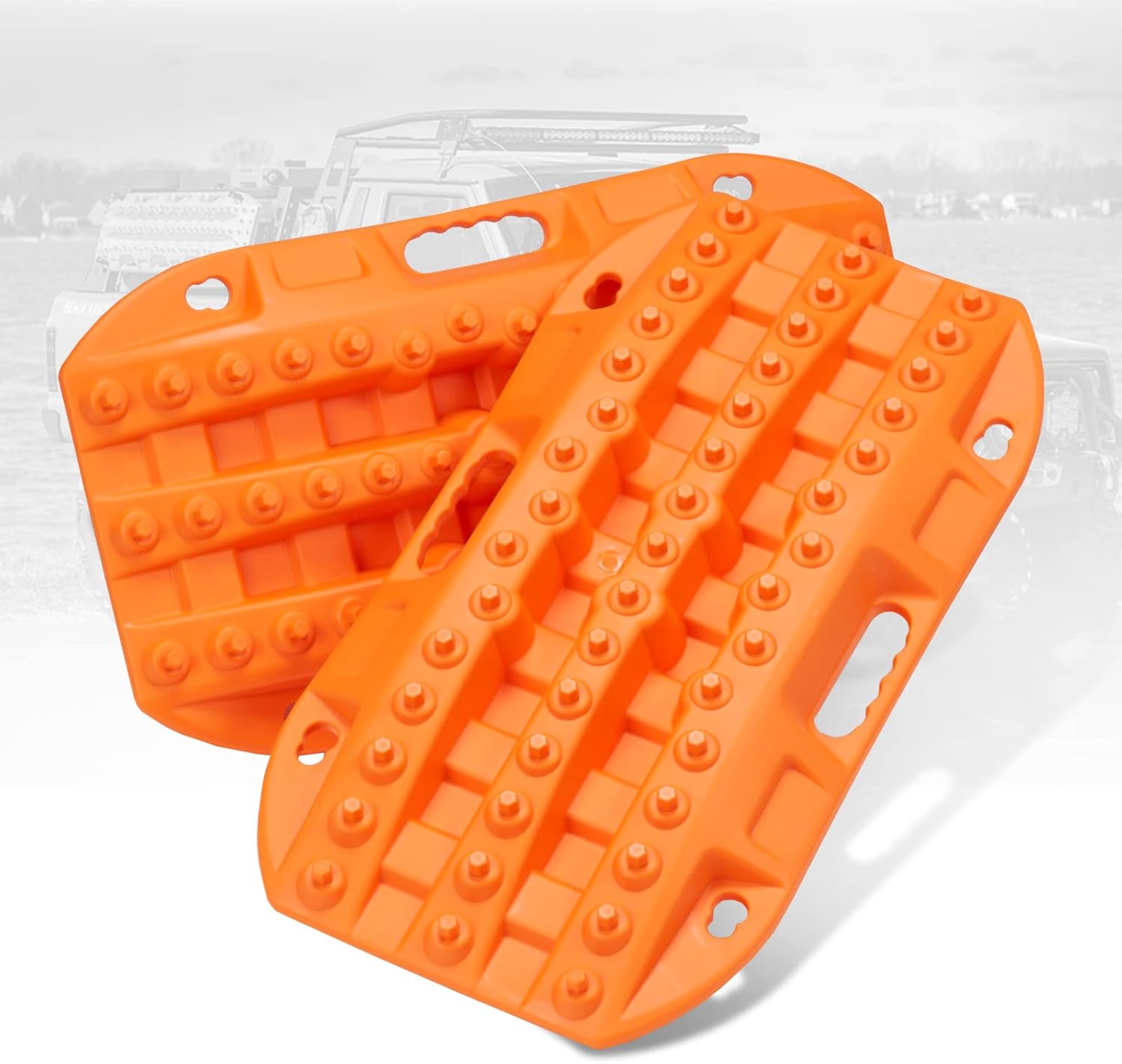
These short off-road traction boards are designed to help ATV and UTV drivers recover from mud, sand, and snow with added convenience and portability. Built with strengthened teeth and a stable bottom channel design, they help prevent wheel slip and improve traction in tough terrain. Made from durable automotive-grade polypropylene, they are lightweight, easy to clean, and suited for year-round use in extreme temperatures. Built-in shovels, ergonomic handles, and nesting storage make them practical for compact vehicle setups.
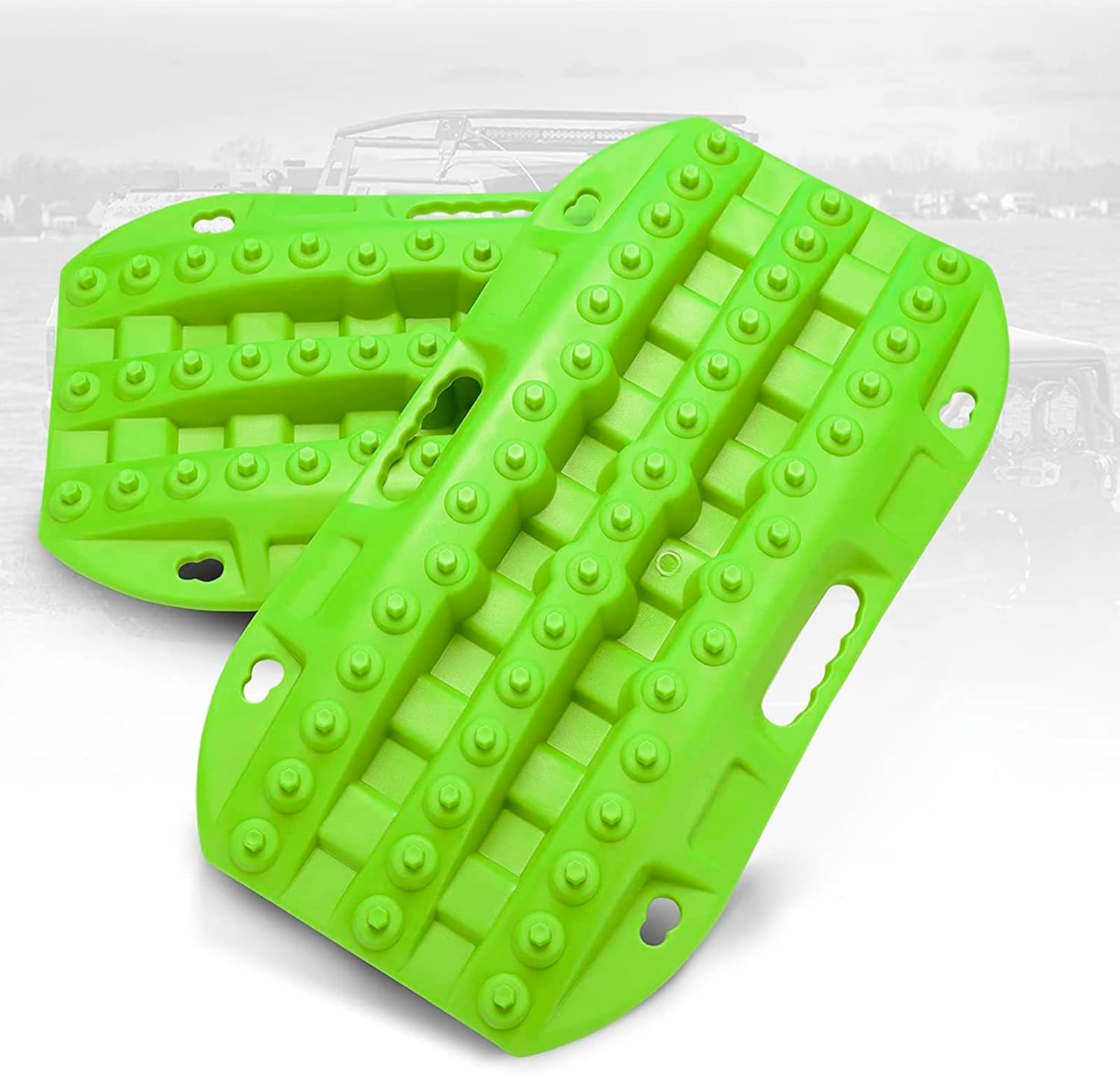
These short recovery traction boards are designed to help ATVs, UTVs, and other off-road vehicles regain grip in mud, sand, and snow. Built with strengthened teeth and a durable polypropylene construction, they provide reliable traction, easy handling, and year-round performance in tough conditions. Their nested, space-saving design and integrated shovels make them practical for carrying and using on remote adventures.
What You’ll Notice After Engaging 4H
Once both hubs are locked and 4H is engaged, the Land Cruiser should feel more settled on loose or slippery ground. The front wheels help pull, rear-wheel spin is reduced, and the vehicle tracks more predictably through mud, snow, gravel, or sand.
You may also feel heavier steering, a tighter turning feel, or slight driveline feedback. On loose surfaces this is normal. On dry hard pavement, tight steering or hopping can be a sign of drivetrain wind-up on part-time 4WD models. Shift back to 2H and unlock the hubs when four-wheel drive is no longer needed.
When to Use 4H: Road, Off-Road, Weather

Use 4H before traction gets bad, not after you are already stuck. The best time to engage it is when the surface is loose, slippery, uneven, or likely to make the rear wheels spin.
When To Engage
Engage 4H for snow, ice, wet dirt, muddy tracks, gravel roads, sand, rutted trails, and moderate off-road climbs. If conditions are changing quickly, lock the hubs early in a safe place so you are not trying to step out in traffic, mud, or deep snow.
Road Versus Off-Road
On a part-time 4WD Land Cruiser, 4H is best for surfaces that let the tires slip slightly. Avoid using part-time 4H on dry hard pavement because the front and rear axles cannot rotate at the different speeds they need during turns. That bind can stress the transfer case, axles, tires, and steering components.
On a full-time 4WD Land Cruiser, H4 can be the normal high-range driving mode. The center differential lock is the part you should save for slippery, bumpy, or stuck conditions, then unlock again when you return to a flat, dry, high-traction road.
Weather And Traction
In winter, 4H helps the vehicle accelerate and hold a line more predictably, but it does not shorten stopping distance like good tires and safe speed do. In heavy rain or standing water, slow down first. Use 4H only when the surface is slippery and the water is shallow enough to cross safely. Deep water can damage the engine, axles, transmission, transfer case, brakes, and electrical systems.
| Situation | Action | Benefit |
|---|---|---|
| Snow or ice | Engage 4H early | Better pull and stability |
| Mud | Lock hubs + use 4H | Reduced rear-wheel spin |
| Shallow standing water | Slow down; use 4H only if safe | More controlled drive |
| Gravel or corrugations | Use 4H when loose or unstable | Straighter tracking |
Troubleshooting: 4H Won’t Engage or Hubs Don’t Lock
If 4H does not engage, start with the simple checks before assuming the transfer case has failed. Most engagement problems come from hub position, incomplete shifting, actuator delay, driveline wind-up, worn hub parts, or low/contaminated lubricant.
[Products Worth Considering]

These off-road traction boards are designed to help vehicles recover from mud, sand, and snow with reliable grip and easier ramp-up. Their double-sided diamond construction, cross-shaped teeth, and contoured ramps improve traction while the durable polypropylene build stays flexible in harsh conditions. Convenient mounting points, ergonomic handles, and a visible leash make them practical to carry, store, and retrieve when recovery is needed.
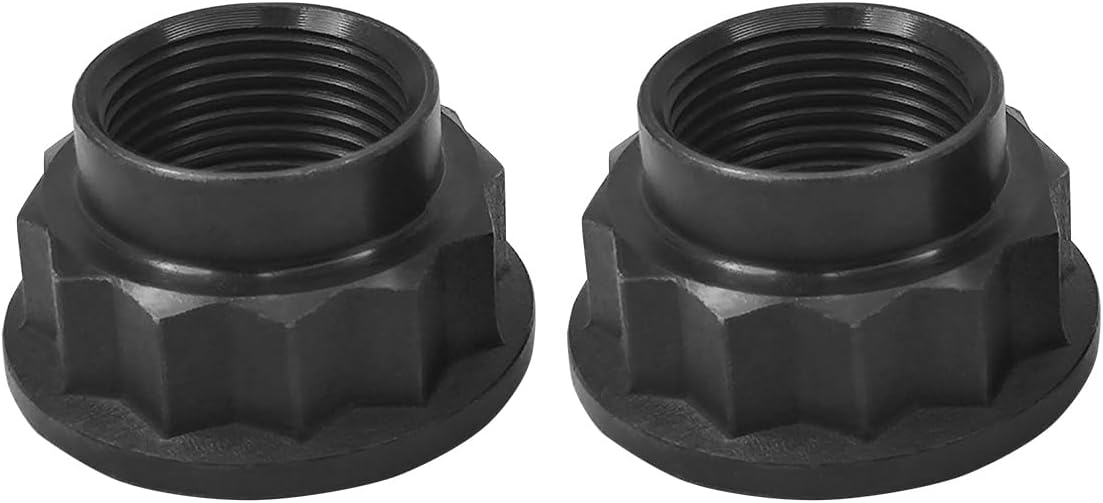
This pair of front axle shaft nuts is designed to secure CV joints and wheel bearings on compatible Toyota and Lexus front drive axles. Built from heat-treated carbon steel for durability and corrosion resistance, it helps maintain proper torque and reliable power transfer. It is a direct replacement for several factory part numbers and is recommended for paired replacement.

This steering clock spring is designed to restore reliable steering wheel controls across a wide range of Toyota models. It supports audio, cruise control, and other multifunction commands while matching OEM part numbers for confident replacement fitment. Built for dependable signal transfer and straightforward installation, it is an effective solution for repairing steering column control issues.
Check Hub Lever Position
Walk to the front wheels and confirm both hub dials are fully in Lock. If one dial is between positions, turn it back to Free, then firmly back to Lock. If the dial is stiff, do not hit it with a hammer. Clean around the dial, move it gently, and service the hub if it will not seat.
- Both hubs must match: Lock/Lock for 4H use or Free/Free for normal 2H cruising.
- If the 4WD light does not confirm, drive straight a short distance and try again.
- If you hear grinding, clunking, or repeated clicking, stop and inspect before continuing.
Check the Transfer Lever, Switch, and Indicator
If the lever or switch refuses to move, reduce load on the driveline. Straighten the wheels, ease off the accelerator, roll slowly, or stop and shift the transmission to Neutral if your manual calls for it. A flashing 4WD or low-range light usually means the shift is not complete yet.
On newer Land Cruisers, Toyota’s manual guidance for H4 to L4 shifting requires the vehicle to be completely stopped and the shift lever in N. If the indicator keeps blinking, stop, return to N, and operate the switch again.
Inspect Drive Components
If the hubs and controls are correct but 4H still does not work, inspect the front prop shaft, CV joints, axle shafts, hub bodies, vacuum/electric actuators if fitted, and transfer-case linkage. Look for torn boots, missing fasteners, leaks, fresh impact marks, or play in the joints.
Do not keep driving in 4H if the vehicle makes harsh grinding noises or binds badly on a surface where it should not. Shift back to 2H when safe and diagnose the issue before using 4H again.
Check Lubricants and Service History
Transfer case, differential, and hub lubricant condition matters, but a fluid flush is not always the first repair. Check the maintenance schedule for your exact model. If the transfer case or differential oil is contaminated, low, metallic, milky, or overdue, drain and refill it with the specification Toyota lists for that vehicle.
Manual hubs should also be serviced when they become stiff, noisy, loose, or contaminated. Some aftermarket hub manufacturers warn against overpacking hubs with grease, so follow the hub maker’s instructions rather than guessing.
How Locked Hubs Affect Fuel Economy and Wear
When manual hubs are locked, more front driveline parts rotate. That can add drag and wear compared with unlocked hubs in 2H. The difference may be small during short off-road trips, but for long dry-road driving, unlocking the hubs helps reduce unnecessary front driveline movement.
Do not confuse locked hubs in 2H with part-time 4H on dry pavement. Locked hubs alone mainly spin parts. Part-time 4H on dry hard pavement can create drivetrain wind-up because the front and rear axles are forced to turn together without enough tire slip.
Common Mistakes That Damage the Drivetrain (And How to Avoid Them)

Most 4H damage comes from forcing the system, using the wrong mode on the wrong surface, or ignoring warning signs. Avoid these common mistakes:
- Forgetting the hubs: On manual-hub models, 4H will not drive the front wheels correctly unless both hubs are locked.
- Locking only one hub: This can prevent proper front drive and can stress driveline parts.
- Using part-time 4H on dry pavement: This can cause binding, tire scrub, heavy steering, and transfer-case stress.
- Shifting while wheels are spinning: Wait until the tires regain traction before changing modes.
- Forcing a lever or switch: If it resists, unload the driveline and try the correct procedure again.
- Ignoring flashing indicators: A flashing light usually means the shift is not complete.
The safest 4H shift is the one you make before traction is gone: hubs locked, wheels straight, throttle light, and the correct Toyota procedure for your model.
Routine 4WD Maintenance: Hubs, Transfer Case, and Lube
Use 4H regularly enough to keep the system moving, but service it by the book. Check the owner’s manual or scheduled maintenance guide for transfer case oil, differential oil, hub service, and inspection intervals. Severe off-road use, water crossings, towing, and heavy dust can shorten service needs.
During routine checks, look for leaking axle seals, torn CV boots, loose prop-shaft joints, rusty hub hardware, and contaminated oil. After mud or water use, inspect sooner. Milky gear oil, grinding, or a hub that will not turn smoothly is a sign to service the system before your next trail drive.
Upgrades: Solid Flanges vs Full-Time 4WD – When to Consider Each
Some owners replace manual hubs with solid drive flanges for simplicity and strength. Solid flanges keep the front axle connected all the time, so there is no hub dial to forget or damage. They can be a good fit for vehicles that spend a lot of time off-road.
The trade-off is that the front driveline rotates whenever the vehicle moves, which can add wear, noise, and drag compared with unlocked hubs. Solid flanges also do not turn a part-time Land Cruiser into a full-time 4WD vehicle. You still must avoid part-time 4H on dry high-traction pavement unless the transfer case has been properly converted for it.
Full-time 4WD systems solve a different problem. They use a center differential so the vehicle can drive all four wheels on high-traction roads, then lock the center differential only when extra traction is needed. If you want full-time behavior, do not rely on hub changes alone; use the correct transfer case and driveline setup.
Frequently Asked Questions
How do you put a manual-hub Land Cruiser in 4H?
Stop if the hubs are in Free, turn both front hub dials to Lock, return to the cabin, keep the wheels straight, ease off the throttle, and shift the transfer case from H2 to H4/4H according to the owner’s manual. Confirm the 4WD indicator before relying on front-wheel drive.
Can you shift a Land Cruiser into 4H while driving?
Sometimes, but only on models whose manuals allow it and only when the required conditions are met. On manual-hub models, the hubs must already be locked. Keep the wheels straight, avoid wheel spin, use light throttle, and do not force the lever or switch.
Is a Toyota Land Cruiser always in 4WD?
It depends on the model. Many later Land Cruisers use full-time 4WD, while some older or market-specific models use part-time 4WD with H2 and H4 positions. If your vehicle has manual hub dials, it is not using the same system as a modern full-time 4WD Land Cruiser.
Should I unlock the hubs after using 4H?
Yes, on manual-hub part-time models, unlock both hubs when you return to normal dry-road 2H driving and no longer need 4WD. This reduces unnecessary front driveline movement. If you expect more slippery sections soon, you may leave both hubs locked temporarily and shift from the cabin as your manual allows.
Why is my 4H light flashing?
A flashing 4H or 4WD light usually means the shift is not complete. Drive straight a short distance, ease off the throttle, or stop and follow the Neutral procedure if your model requires it. If the light keeps flashing, check hub position, actuator operation, linkage, and driveline service condition.
Conclusion
To put a manual-hub Land Cruiser in 4H, lock both front hubs first, shift the transfer case correctly, and confirm the indicator. To put a full-time Land Cruiser in the right traction mode, understand H4, L4, and the center differential lock as separate controls. The safest rule is simple: know your system, engage 4H before you lose traction, avoid dry-pavement binding on part-time 4WD, and never force a shift that does not feel right.
Sources
- Toyota Owners — 2025 Land Cruiser Four-Wheel Drive System — current H4, L4, and center differential lock guidance.
- Toyota Owners — Manuals and Warranties — finding the correct owner’s manual for a specific Land Cruiser.
- Toyota Land Cruiser 78 Series Owner’s Manual Archive — older H2/H4/L4 and free-wheeling hub guidance.
- FJ62 Owner’s Manual Archive — older H2/H4 shifting cautions, including hubs engaged and no one-hub driving.
- WARN Locking Hubs — manual hub purpose, front drivetrain disconnection, wear, and fuel-economy context.