Before you drive your Toyota 4Runner on ice, clear all windows and lights, top up de-icing wiper fluid, check battery and tire pressure, and fit winter tires with the mountain-snowflake symbol. Use diamond-pattern chains on rear tires for extreme conditions and keep speeds under 30 mph with chains. Engage 4H for general icy roads, switch to 4L for deep snow while stopped, and use Snow mode for gentler throttle; follow smooth acceleration, steering, and braking for controlled traction — more practical setup and techniques follow.
Immediate Safety Checklist Before You Drive
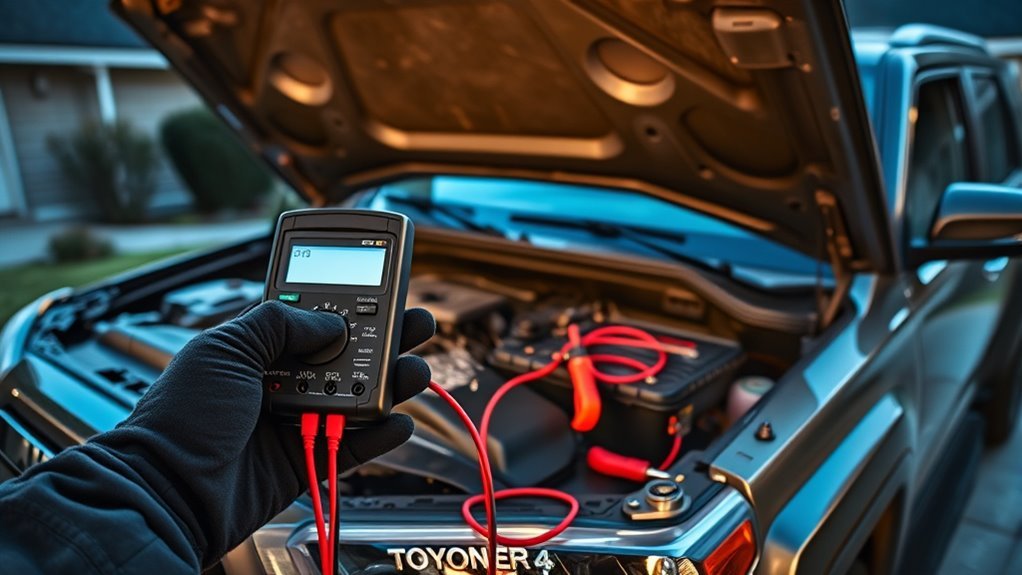
Before you set off, run through a quick, targeted safety check to make sure your 4Runner is prepared for icy conditions. You’ll perform visibility checks first: clear all windows, mirrors, headlights, and taillights of snow and ice, and confirm lights and brake lights operate so others can see your movement. Top up windshield wiper fluid with a de-icing formula to prevent freeze-up during use. While you’re there, verify tire pressure and inspect tread depth; they must meet winter-grip requirements to maintain control on slick surfaces. Don’t skip battery maintenance—test voltage and connections because cold cuts battery efficiency, and a weak cell can strand you when temperatures drop. This focused checklist lets you leave on your terms, not at the mercy of weather. Act deliberately, address each item, and only depart when visibility, electrical systems, and basic traction indicators meet safe thresholds.
[Products Worth Considering]

This 50-pack of tire tread depth gauges offers a simple way to check tire wear quickly and accurately. Color-coded reading zones make it easy to see tread condition at a glance, while the compact design and pocket clip support convenient everyday carry. Built for repeated use, these gauges help drivers monitor tire safety with confidence.

This dial type tire tread depth gauge helps you quickly check tread wear on motorcycles, cars, trucks, and buses with easy-to-read 1/32-inch increments. Its colorful zone markings make it simple to assess tire condition for safer driving in different weather, while the durable zinc cast body and legible dial provide dependable everyday use.

This smart tire tread depth gauge provides quick, accurate readings from 0 to 1 inch in 1/32-inch increments, helping drivers assess tire wear with confidence. Its color-coded display makes it easy to see tread condition at a glance, while the pocket clip adds convenient portability for garages, glove boxes, and on-the-go inspections. Designed for use on trucks, motorcycles, automobiles, and other passenger vehicles, it is a simple tool for safer tire maintenance.
Tires and Chains: What to Use on Ice
When roads glaze over, fit winter tires stamped with the mountain-snowflake symbol to keep rubber soft and responsive in low temperatures; you’ll gain meaningful traction compared with all-season tires. Inspect and perform tire maintenance regularly: check pressures (cold), tread depth, and sidewalls before trips so your 4Runner responds predictably.
Fit mountain‑snowflake winter tires and check cold pressures, tread depth, and sidewalls so your 4Runner stays predictable on glazed roads
- Use dedicated winter tires on all wheels for balanced grip; they liberate your control when ice threatens.
- For extreme ice, carry diamond-pattern chains and learn chain installation beforehand; they give superior bite on packed ice and snow.
- Install chains on the rear tires only, drive cautiously, and stop after a quarter-mile to retighten links—this preserves chain integrity and vehicle safety.
- Don’t exceed 30 mph with chains fitted; higher speeds increase wear and reduce your ability to manage sudden slides.
Stay measured, practice installations in safe conditions, and keep tools and spare parts ready so you’re empowered, not dependent, when winter hits.
How to Set 4WD and Drive Modes on Ice
If ice has you worried, set your 4Runner’s drive system to match the conditions: use 4H for general icy roads to improve traction up to 55 mph, switch to 4L only for steep climbs or deep snow while stopped or in Neutral, and choose Snow in Terrain Select (if equipped) to let the vehicle manage power delivery and traction control for you. Use 4H to exploit 4WD benefits: better torque distribution and lateral stability without sacrificing highway speed. Reserve 4L for low-speed, high-load situations where maximum torque and engine braking help you ascend or crawl through deep snow. Engage Snow mode to let the vehicle modulate throttle response and traction control for predictable Ice traction. Remember to deactivate traction control only when you need steady momentum on a steep, icy grade; otherwise leave it on. Make mode changes deliberately while stopped or at safe speeds, and confirm settings on the dash. These choices free you to move confidently while respecting ice’s limits.
Driving Techniques: Acceleration, Steering, and Braking on Ice
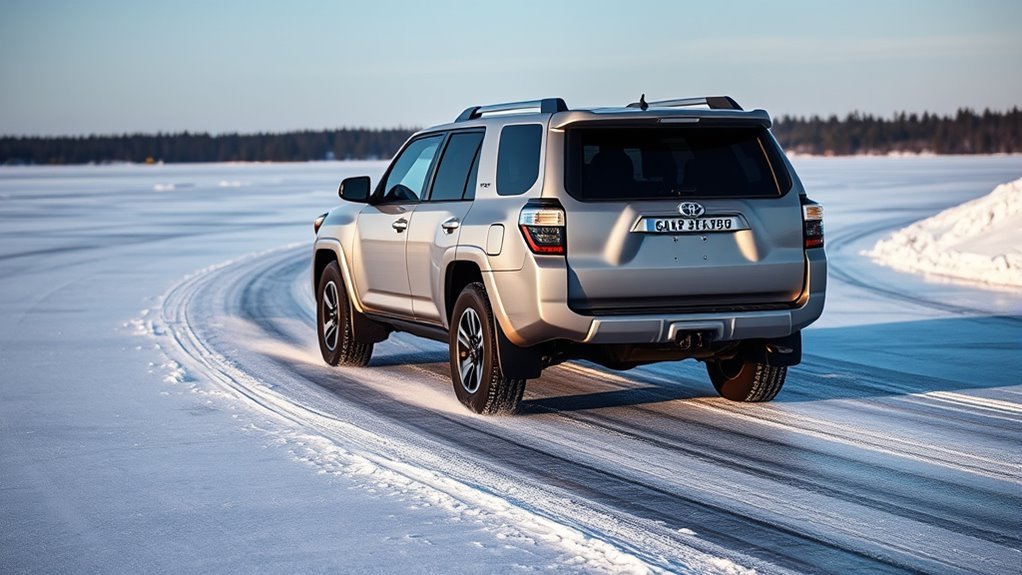
Because traction is limited on ice, you’ll need to accelerate, steer and brake far more deliberately than on dry roads. You’ll rely on controlled inputs, traction control systems, and mindful throttle management to preserve momentum and freedom of movement. Stay calm, purposefully smooth, and prepared.
On icy roads, be smooth, deliberate, and calm—manage throttle, steering, and braking to preserve control and momentum
- Use smooth acceleration: roll on the throttle gently to prevent wheel spin; sudden throttle inputs override traction control and reduce control.
- Make gentle steering inputs: steer slowly and predictably; abrupt corrections provoke skids and rob you of options.
- Brake with steady pressure: apply brakes progressively so ABS can modulate; don’t stomp the pedal, which can cause instability.
- Use gears for control: downshift if possible to help decelerate without overusing brakes; maintain a larger following distance (four to six car lengths).
These techniques give you more control and autonomy on icy roads. They’re technical, cautious measures that let you choose safe lines and preserve mobility without provoking slides.
[Products Worth Considering]

This digital tire tread depth gauge helps you check tire wear quickly and accurately with fractional inch, decimal inch, and millimeter readouts. Its large LCD screen, zero reset function, and automatic shutoff make it easy to use for cars, motorcycles, SUVs, trucks, and pickups. Designed for clear readings and dependable measurement, it is a practical tool for routine tire safety checks.

This color coded tire tread depth gauge helps you quickly check tire wear and monitor when replacement is needed. Calibrated in easy-to-read 32nds with clear red, yellow, and green ranges, it offers fast visual results for cars, trucks, motorcycles, and other passenger vehicles. The pocket clip makes it simple to keep on hand for routine maintenance and safety checks.

This heavy-duty steering wheel cover is made from thick microfiber leather with a natural rubber inner layer for a secure, comfortable grip. Its anti-slip, full-surround design helps improve control and driving safety while staying breathable and odor-free for everyday use. Designed to fit standard steering wheels, it adds a sporty look and lasting protection to your vehicle interior.
Recovering From a Slide, Getting Unstuck, and Winter Emergency Kit
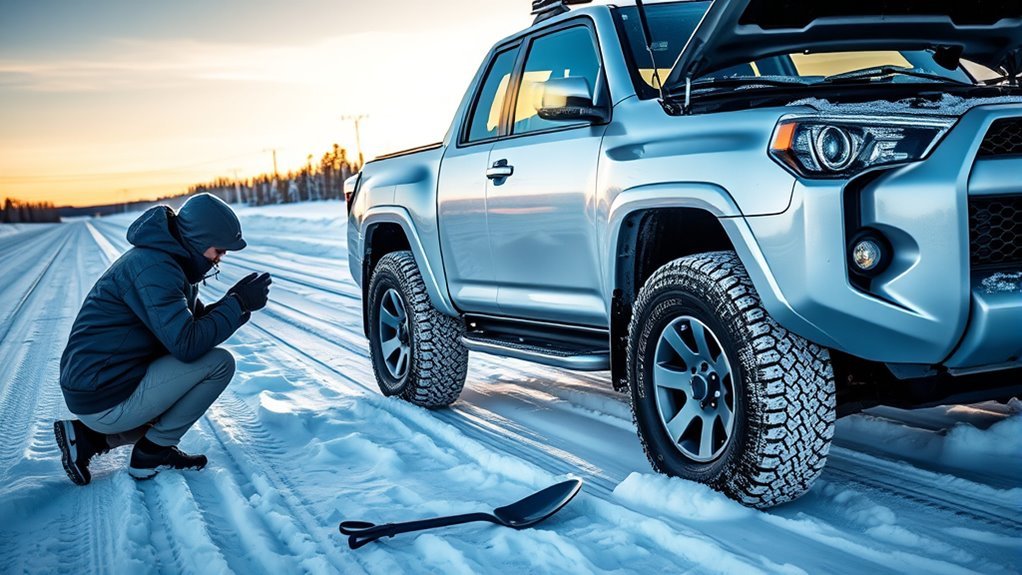
Having learned how to manage throttle, steering, and braking on ice, you also need clear procedures for recovering from slides, getting unstuck, and equipping your 4Runner for winter emergencies. For slide recovery, gently steer into the direction of the skid while avoiding sudden braking; smooth steering and small throttle corrections help you regain control without amplifying the slide. If you get stuck, engage 4WD, keep steering smooth, and avoid abrupt inputs. Use a shovel to clear snow from around the tires and lay sand or kitty litter under the tires to improve bite; these traction techniques often free you without assistance. Carry a concise winter emergency kit: blanket, flashlight, nonperishable food, water, first aid supplies, shovel, tow strap, and a compact traction aid. A tow strap lets another vehicle assist if self-recovery fails. Equip and practice these methods so you stay autonomous, safe, and ready to reclaim the road when conditions turn against you.
Frequently Asked Questions
Can Electronic Stability Control Be Turned off on Icy Roads?
You can usually disable electronic stability control, but you shouldn’t on icy roads; you’ll lose traction aid, so instead focus on gentle braking techniques and precise steering control, staying cautious while asserting confident, controlled freedom behind the wheel.
How Does Tire Pressure Affect Ice Performance?
Studies show 60% fewer incidents with proper inflation; you’ll find tire tread grips better when you make modest pressure adjustments, because correct pressure maintains contact patch stability, improving control while you cautiously pursue winter freedom.
Are All-Weather Tires Acceptable Instead of Winter Tires?
You can use all-weather tires in mild icy conditions, but they won’t match winter tires’ softer compound and deeper tire tread for grip; engage traction control cautiously, and don’t assume identical performance—prioritize safety and freedom to choose wisely.
Should Cruise Control Ever Be Used on Ice?
Like a taut wire snapping, no — you shouldn’t use cruise control on ice; cruise control risks include delayed reaction and wheel slip in icy conditions, so you’ll stay safer by controlling throttle and speed manually, cautiously and deliberately.
How Often Should Awd/4wd System Be Serviced for Winter Use?
Service your AWD/4WD at least annually and before winter, or every 12k–15k miles; check fluids, differentials, and traction control integration. You’ll stay liberated on icy roads by proactive, technical, cautious maintenance.
Conclusion
Like a seasoned guide leading you across a glassy river, you’ll check gear, fit chains, choose 4WD and move with quiet purpose—each step measured, each input light. Treat acceleration, steering and braking as careful breath: slow, steady, anticipatory. If you slide or sink, stop, assess, and work methodically—winch, rock, or dig—never panic. Keep an emergency kit close; respect the ice and you’ll cross safely, controlled, and prepared.
[Products Worth Considering]

This LUMITECO tire tread depth gauge set makes it easy to monitor tire wear and maintain safer driving performance. The color-coded scale provides quick, easy-to-read measurements, while the compact pocket-size design and included clip make it convenient to keep in your vehicle or toolbox. Suitable for cars, trucks, motorcycles, and more, it offers a simple reusable way to check tread depth whenever needed.

This smart color coded tire tread depth gauge makes it easy to check tread wear at a glance with clear red, yellow, and green ranges. Calibrated from 0 to 1 inch in 1/32 inch increments, it helps you quickly assess tire condition for safer driving and timely replacements. The pocket clip design makes it convenient to carry and use on trucks, motorcycles, cars, and other passenger vehicles.

These off-road traction boards are designed to help vehicles recover from mud, sand, and snow with reliable grip and easier ramp-up. Their double-sided diamond construction, cross-shaped teeth, and contoured ramps improve traction while the durable polypropylene build stays flexible in harsh conditions. Convenient mounting points, ergonomic handles, and a visible leash make them practical to carry, store, and retrieve when recovery is needed.