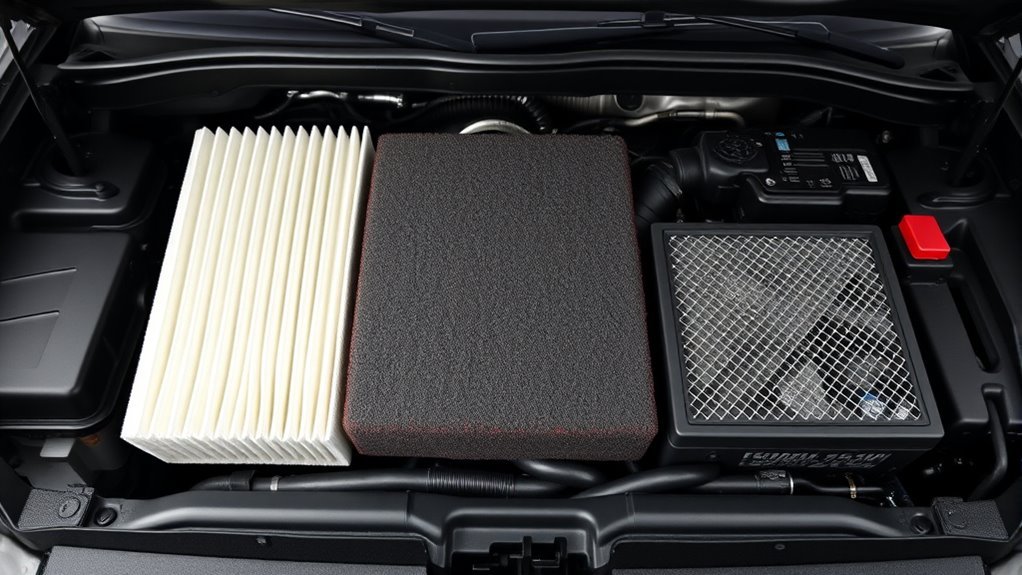
You’ll choose 4Runner air filters by matching media to conditions: pleated particle media traps dust and pollen for general use, activated carbon adsorbs odors and VOCs for city driving, HEPA catches finest particulates for wildfire-prone areas, while oiled performance elements boost peak airflow but need upkeep and can risk MAF contamination; dry high‑flow options give reliable service with less maintenance. Pick filters with proper seals and OEM fitment, and keep service intervals aligned with exposure to learn which option fits best.
Quick Recommendation: Best 4Runner Filters by Use Case
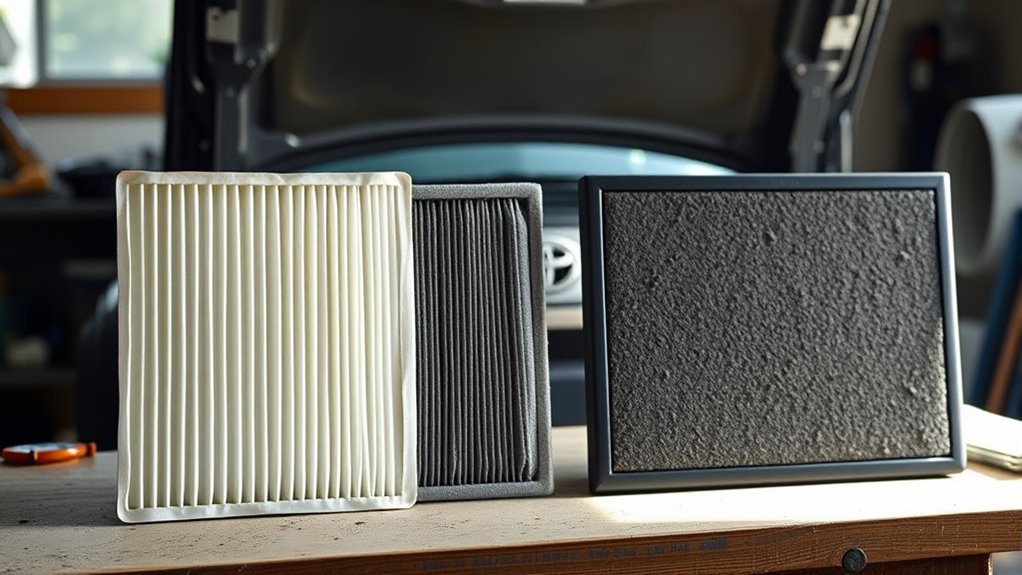
When choosing a 4Runner cabin or engine air filter, match the media to your driving conditions and goals: pick OEM charcoal filters (87139-50100) for urban commuting and odor control. You’ll get strong filter performance against fumes and smells, keeping the cabin breathable during stop-and-go traffic. If you’re budget-minded and operate in low-smog areas, choose standard particle filters; they trap dust and allergens efficiently but won’t absorb gases. For performance focus and higher airflow, K&N filters suit spirited on-road use, though they can reduce particulate capture and aren’t ideal for dusty off-road runs. aFe Pro-Dry S filters balance airflow and filtration, minimizing MAF contamination risk—good for mixed urban commuting and light adventure. If you want reliable economy, Wix filters maintain engine performance without premium cost. Decide by where you drive and the freedom you want: prioritize odor control and air quality for city life, or airflow and reusability if you value open-road performance.
[Products Worth Considering]

This Puroma cabin air filter uses activated carbon and a close-meshed filter layer to help trap odors, smog, smoke, and microscopic particles before they enter the cabin. It supports fresher air, helps reduce window fogging, and can improve comfort while also helping maintain HVAC airflow and performance. Designed for a straightforward installation, it is a practical replacement filter for a wide range of compatible Hyundai, Kia, Chevrolet, GMC, and Saturn vehicles.

This Puroma cabin air filter uses activated carbon and a close-meshed non-woven layer to help block airborne particles and reduce unwanted odors inside the vehicle. It supports cleaner cabin air and improved HVAC airflow, helping maintain comfortable heating and cooling performance. Designed for quick installation, it is compatible with a wide range of Toyota, Lexus, Mazda, and Subaru models.
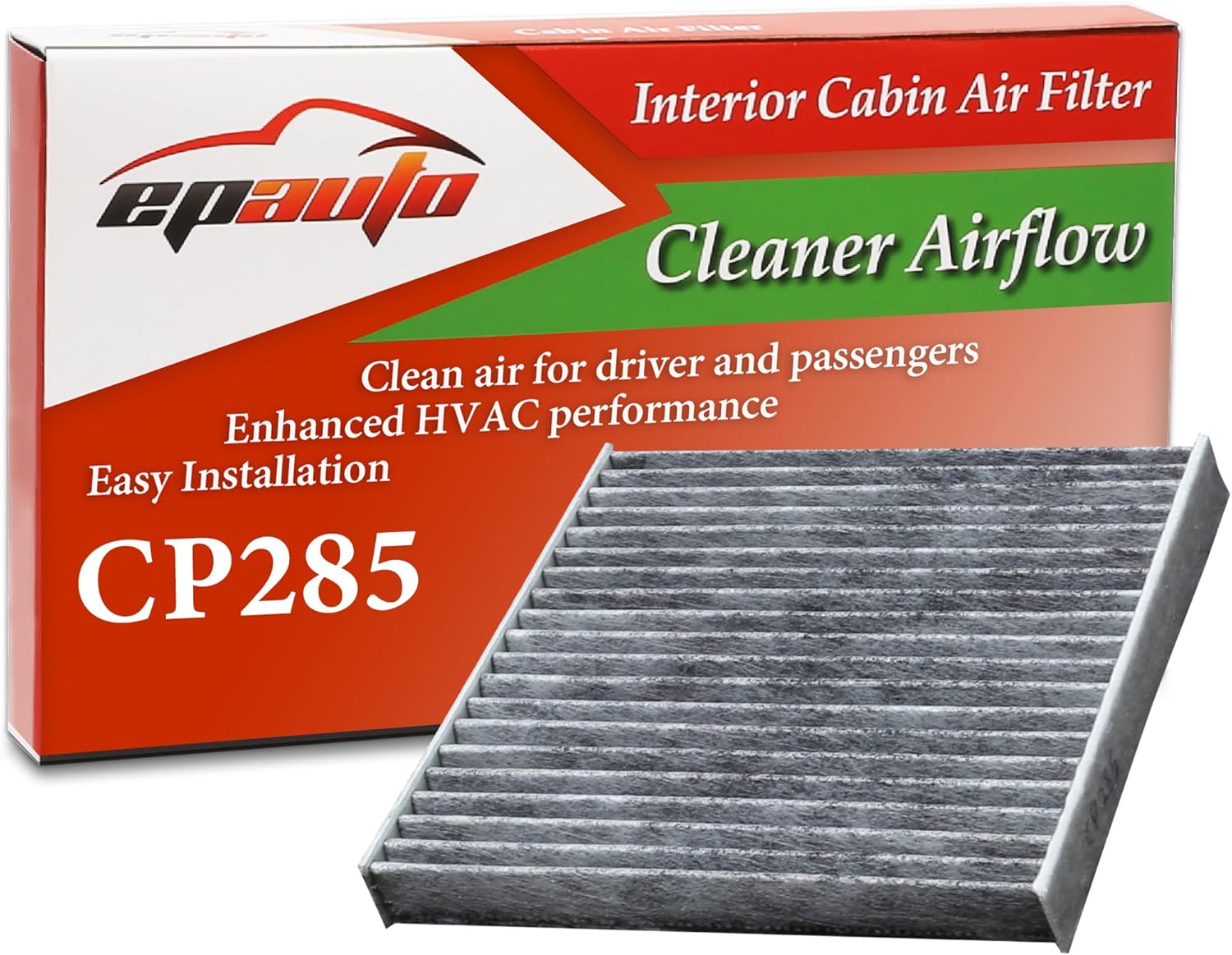
EPAuto CP285 premium cabin air filter helps keep the vehicle interior air cleaner by trapping dust and supporting fresh airflow through the HVAC system. It includes activated carbon and soda to help reduce odors while promoting better cabin comfort for drivers and passengers. Designed as a replacement filter for a wide range of compatible vehicles, it is recommended to replace it regularly for consistent performance.
Why Engine and Cabin Filters Matter for Your 4Runner
You rely on the engine air filter to shield the 4.0L V6 from dust and debris, preserving airflow for peak performance and fuel efficiency. The cabin charcoal filter keeps HVAC output clean by trapping dust, allergens, and odors so passengers breathe better. Replace engine filters every 15–30k miles and cabin filters every 12–18 months to prevent power loss, poor economy, and musty smells.
Engine Protection Essentials
Because clean air is the foundation of reliable performance, keeping both your engine and cabin filters in good condition directly preserves the 4.0L V6’s horsepower and torque while also protecting occupants from dust and pollutants. You’ll extend filter lifespan and optimize maintenance frequency by inspecting filters regularly and replacing the engine air filter every 15,000–30,000 miles depending on conditions. A clogged engine filter reduces acceleration, fuel economy, and causes rough idling—act immediately.
- Engine protection: stops dirt/debris from entering the intake, sustaining towing and daily performance.
- Fuel economy: clean intake airflow maintains combustion efficiency and lowers emissions.
- HVAC support: cabin filter prevents particulates from reaching occupants and vents.
- Environment match: choose activated carbon in urban areas; standard particle filters in low-pollution settings.
Cabin Air Quality
Wondering why that little filter behind your glove box matters so much? You rely on the cabin air filter—often an activated carbon type—to provide clean air, block fumes, and neutralize odors. Using proper filter materials and the correct part number (e.g., 87139-50100 for OEM charcoal) guarantees compatibility and adsorption performance. Replace it every 12–18 months or 15,000–30,000 miles to prevent musty smells and preserve HVAC efficiency. A clogged filter restricts airflow, reducing heating and cooling effectiveness and compromising comfort. It also fails to trap dust, pollen, and allergens, impacting health and your freedom to breathe easy. Maintain both engine and cabin filters: engine protection preserves drivetrain function, while cabin filtration protects your immediate environment.
Standard Particle vs Activated Carbon vs HEPA: Quick Comparison
You’ll compare filtration efficiency, odor and gas control, and maintenance needs across standard particle, activated carbon, and HEPA cabin filters. Standard particle filters trap dust and allergens cost-effectively, activated carbon adds odor and gas adsorption at the potential cost of airflow, and HEPA offers the highest particulate removal down to 0.3 microns. Also consider carbon layer thickness and replacement intervals (typically 12–18 months or 15,000–30,000 miles) when balancing longevity and performance.
Filtration Efficiency Differences
When comparing filtration types, think about what you need: standard particle filters trap dust and common allergens efficiently in low-smog areas. You’ll evaluate filter media and filtration technology by particle capture, gas handling, and service interval. Choose based on exposure and desire for clean, free air.
- Standard Particle: captures larger dust/allergens; simple, low restriction; best in clean environments.
- Activated Carbon: adds adsorption of some fumes and VOCs; carbon layer thickness affects lifespan and airflow.
- HEPA: captures 99.97% of ≥0.3 µm particles; ideal for allergy relief and maximum particulate control.
- Service & Fit: replacement frequency rises with pollution; heavier media can reduce flow if poorly engineered.
You’ll pick the option that aligns with liberation from contaminants.
Odor And Gas Control
Because odor and gas control depend on both adsorption and particulate capture, you should match filter type to your driving environment: standard particle media stops dust and pollen but won’t remove fumes or smells, activated carbon adds a charcoal layer that adsorbs many VOCs and exhaust odors useful in urban commuting, and HEPA focuses on particle removal (99.97% at 0.3 µm) without significant gas adsorption unless combined with carbon. If you want clear cabin air and liberation from stale fumes, choose activated carbon for odor absorption and targeted gas filtration in cities. Pick HEPA when particles threaten health, then add carbon if odors persist. Remember lower-quality carbon or HEPA constructions can restrict airflow, so balance filtration needs against HVAC performance.
Maintenance And Longevity
After choosing the right media for odor control or particle removal, you’ll want a clear plan for maintenance and replacement to keep performance steady. You need to match filter lifespan to your environment: standard particle filters often last 15,000–30,000 miles in low-smog areas, while activated carbon and HEPA may need earlier swaps in urban or high-odor conditions. Follow these maintenance tips to stay free and effective:
- Inspect every 6 months for clogging or odor accumulation.
- Replace standard filters at manufacturer intervals; shorten intervals if dusty.
- Swap activated carbon filters sooner if fumes persist; check airflow loss.
- Change HEPA filters based on mileage and cabin air resistance to retain HVAC performance and occupant comfort.
Oiled vs Dry Filters: Pros, Cons, and MAF Risk
Although both oiled and dry aftermarket filters aim to improve airflow, they differ in maintenance, contamination risk, and suitability for specific driving conditions. You’ll weigh oiled filter advantages like higher peak airflow and suitability for performance applications against dry filter disadvantages often cited but less absolute; some dry units match or exceed oiled filters in filtration efficiency. For MAF sensor protection, dry filters win—no oil means no risk of sensor contamination and fewer tuning headaches. In an airflow comparison, oiled media can deliver marginal gains, but those gains come with regular maintenance: oiled filters need cleaning and re‑oiling roughly every 30,000 miles, while dry filters lower maintenance frequency or are simple swap replacements. If you pursue liberation through reliability, prioritize MAF sensor protection and predictable filtration over minimal horsepower gains. Choose based on your tolerance for upkeep and exposure to dust; balance performance applications against long‑term engine health and sensor integrity.
Which Filter to Pick: City, Wildfire, or Off‑Road Scenarios
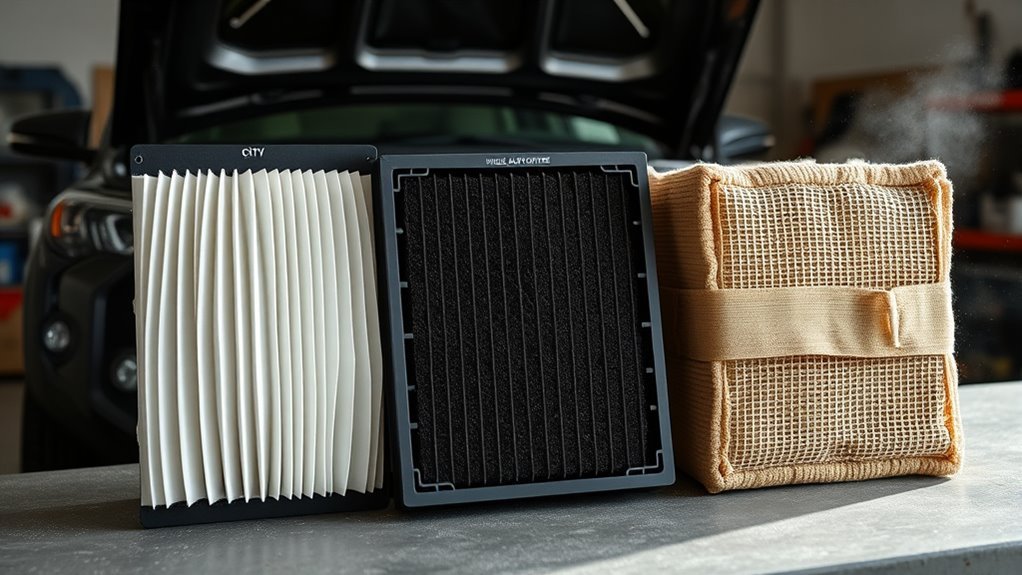
You’ve weighed oiled versus dry media and their maintenance and MAF implications; now let’s pick the right filter for the conditions you drive in. Choose based on filter performance, environment, and desire for control over air quality and engine protection.
- City Driving: Use an activated carbon filter to absorb urban pollutants, fumes, and exhaust odors. It preserves cabin freshness and targets chemical contaminants without compromising flow.
- Wildfire Scenarios: Select a high-efficiency pleated media filter to trap fine particulate matter (PM2.5). That maximizes protection from smoke and reduces inhalation risk while maintaining adequate airflow.
- Off-Road Use: Fit a heavy-duty, high dust-holding capacity element to resist rapid clogging. It captures gritty particles and environmental silicates that would otherwise erode engine internals.
- Combination or Frequent Role Changes: Prioritize modular solutions—swap filters based on season or carry a dedicated unit—so you control performance and adapt to shifting threats.
[Products Worth Considering]

This cabin air filter replacement is designed to help keep your vehicle’s interior air fresher and cleaner by capturing dust, odors, and fine particles with a multi-layer filtration structure. The activated carbon layer helps reduce unwanted smells, while the extended service life makes it a practical maintenance part for many compatible Toyota, Lexus, Subaru, Scion, and Jaguar models.

This activated carbon cabin air filter helps improve in-cabin air quality by capturing dust, smoke, pollen, and odors for a fresher driving experience. Designed as a direct replacement for many Toyota, Lexus, Subaru, and other compatible models, it supports HVAC performance and offers easy, tool-free installation.

This dual filter kit helps keep your vehicle running and riding cleaner by replacing both the engine air filter and cabin air filter at the same time. It is designed for a range of Toyota and Lexus hybrid models, helping support engine performance while reducing odors and airborne particles inside the cabin. Built with high-quality filtration materials, it offers a convenient maintenance solution for routine filter replacement.
Maintenance, Lifespan, and Cleaning Best Practices
Because filter condition directly affects performance and air quality, you should inspect and service both engine and cabin filters on a regular schedule—typically every 12,000–30,000 miles for engine filters and 15,000–30,000 miles for activated carbon cabin filters—more often in dusty or smoky environments. You’ll check filters during oil changes to spot clogging that reduces acceleration and fuel economy. Know your filter types: OEM disposable panels, washable K&N-style units, and activated carbon cabin elements each demand distinct care.
For reusable engine filters, follow cleaning techniques: remove loose debris, apply a MAF-safe cleaner to dissolve oil and particulates, rinse gently, and let the element dry completely before re-oiling per manufacturer specs. Replace OEM engine filters and activated carbon cabin filters on schedule; carbon media loses adsorption capacity and won’t meaningfully recover if saturated. Track mileage and environmental exposure, document replacements, and prioritize straightforward maintenance to keep your 4Runner breathing free and performing without compromise.
Exact Part Numbers and Fit : 2020–2024 4Runner Checklist
When you’re ordering replacement filters for a 2020–2024 4Runner, confirm exact part numbers and VIN compatibility to avoid fitment issues and wasted returns. Use the VIN to verify that the common cabin part 87139-50100 (charcoal) matches your trim; engine air filters follow OEM specs to guarantee seal and airflow. Activated carbon cabin media suits urban drivers who want odor control and cleaner breathing air. Track replacement frequency—12,000–30,000 miles—based on your environment.
- Verify VIN: confirm cabin (87139-50100) and engine filter OEM cross-reference.
- Choose media: activated carbon for city use, standard paper for light conditions.
- Prepare for filter installation: have basic tools, keep seals clean, orient pleats per stamp.
- Note replacement frequency: adjust interval toward 12k in dusty areas, 30k in clean environments.
You’ll maintain performance and freedom from avoidable cabin odors and intake restriction by matching parts precisely and scheduling timely replacement.
Buying Checklist: Seals, Frame, Media, and Red Flags
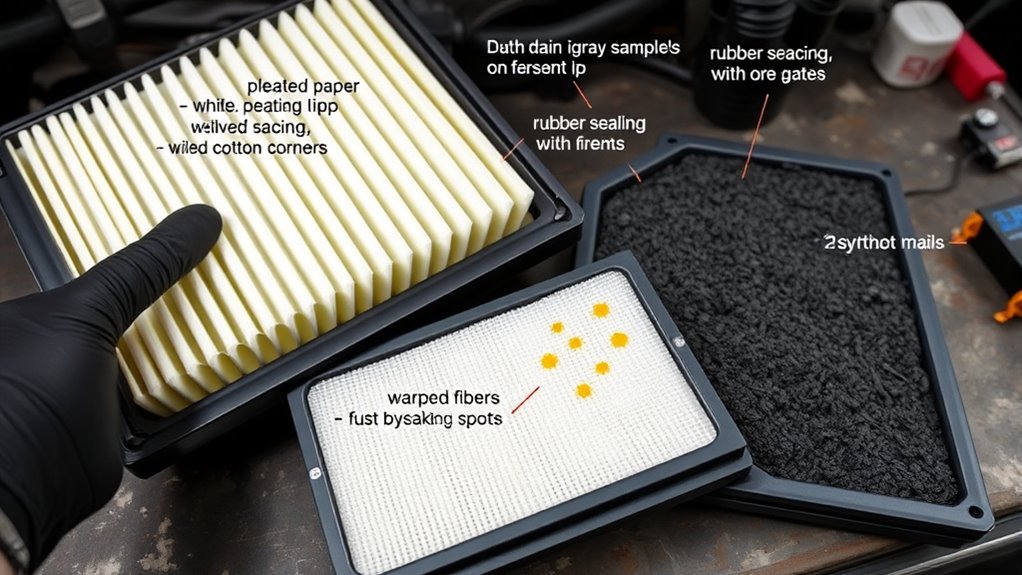
Start by inspecting four critical areas—media, carbon layer, frame seal, and listed part numbers—to guarantee the filter will perform for your driving conditions. You’ll verify media type matches use: pleated synthetic or cellulose blends for mixed terrain and dust. Check activated carbon thickness; thicker layers boost odor control and longevity assessment but can restrict airflow if poorly engineered. Inspect the frame seal: rigid, seamless construction prevents bypass air and preserves filter performance. Be skeptical of multiple part numbers without clarification; that’s often a compatibility red flag. Avoid bargains well below market price—they usually sacrifice quality.
| Checkpoint | What to look for |
|---|---|
| Media type | Pleated synthetic or cellulose blend |
| Carbon layer | Even, adequate thickness—not dense choke |
| Frame seal | Rigid, continuous, no gaps |
| Part numbers/price | Single clear PN; avoid suspiciously low cost |
Make choices that free you from compromise: prioritize verified performance and measured longevity assessment.
Frequently Asked Questions
Can I Use Aftermarket Filters Without Affecting My Warranty?
Yes — you can use aftermarket filters, but you’ll follow warranty regulations: manufacturers can’t deny coverage solely for aftermarket filter benefits unless you prove damage caused by the part, so document installations and keep receipts, empowering your defense.
Do Reusable Filters Impact Fuel Economy Noticeably?
No, reusable filters rarely impact fuel economy noticeably; you’ll usually gain reusable benefits like marginal airflow improvements and filter longevity, but measurable MPG changes are minimal unless the old filter was severely clogged—liberate maintenance routines.
Are Performance Gains Measurable With High-Flow Filters?
Yes — you’ll see small, measurable gains with high-flow benefits on tuned engines; stock setups show minor changes. You’ll need diligent filter maintenance to preserve airflow, power, and longevity while pursuing liberated, efficient performance.
Can Cabin HEPA Filters Reduce COVID-19 Transmission Risk?
Yes—you can reduce COVID-19 transmission risk with cabin HEPA filters: HEPA effectiveness improves indoor air quality by capturing virus-laden aerosols, lowering exposure; combine filtration with ventilation and masks for greater community protection and personal liberation.
How Do Temperature Extremes Affect Filter Materials?
Temperature extremes can wreck filter materials: you’ll see fibers stiffen, melt, or crumble, reducing filter durability under extreme conditions. You’ll need tougher media, regular inspection, and replacements to keep performance reliable and your freedom intact.
Conclusion
Think of your 4Runner’s filters as the vehicle’s lungs and shield: choose engine media that breathes freely and cabin media that deflects toxins. Match dry, pleated paper for reliable city duty, activated carbon for wildfire smoke, and HEPA for allergy-level protection; reserve oiled or washable units for serious off‑road when you’ll clean them regularly. Inspect seals, frame rigidity, and MAF‑safe claims. Maintain schedules and you’ll keep performance and air quality strong for every mile.
[Products Worth Considering]

This cabin air filter helps improve in-cabin air quality by trapping dust, pollen, and other airborne contaminants while activated carbon helps reduce odors. It is designed as a replacement for multiple Toyota, Lexus, Subaru, Land Rover, Jaguar, Scion, and Pontiac applications, making it a versatile fitment option for many popular vehicles. Use it for routine maintenance to help keep your vehicle's HVAC system breathing cleaner air.

This CARORY cabin air filter helps improve in-cabin air quality by capturing dust, pollen, and other airborne particles while activated carbon works to reduce odors. It is designed as a replacement fit for a wide range of Toyota, Lexus, Subaru, and Mazda vehicles, with compatibility details updated to help support a confident installation. Use it as a direct replacement to help keep your vehicle's HVAC system breathing cleaner air.

This Puroma cabin air filter helps keep your vehicle’s interior air cleaner by trapping particles and reducing unwanted odors with an activated carbon layer. It supports efficient HVAC airflow for improved heating and cooling performance while offering a simple, quick installation. Designed for a wide range of Toyota, Lexus, Mazda, and Subaru models, it is a practical replacement filter for maintaining a fresher driving experience.