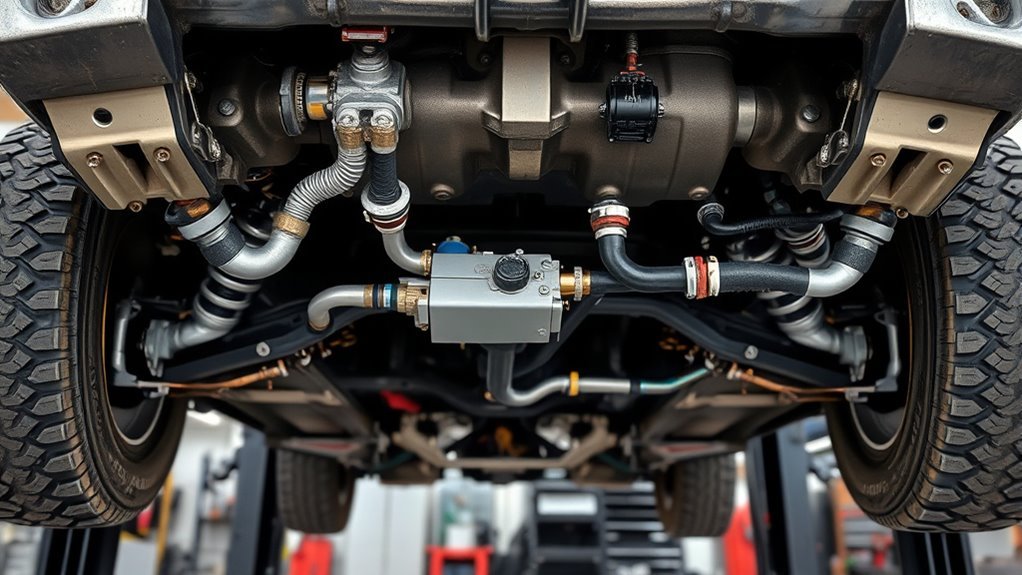

Your 4Runner’s turning radius is half the diameter of a full-lock circle and governs maneuverability on tight trails and in parking spots.
Spec sheets usually list the full curb-to-curb turning circle (the diameter), so a 37.4-ft listing means a radius of roughly 18.7 ft. Published figures are about ~36.4 ft for 4th‑gen and ~37.4 ft for later models, but real-world radius changes with tire size, steering-rack design, alignment, lifts, wear, and driver input.
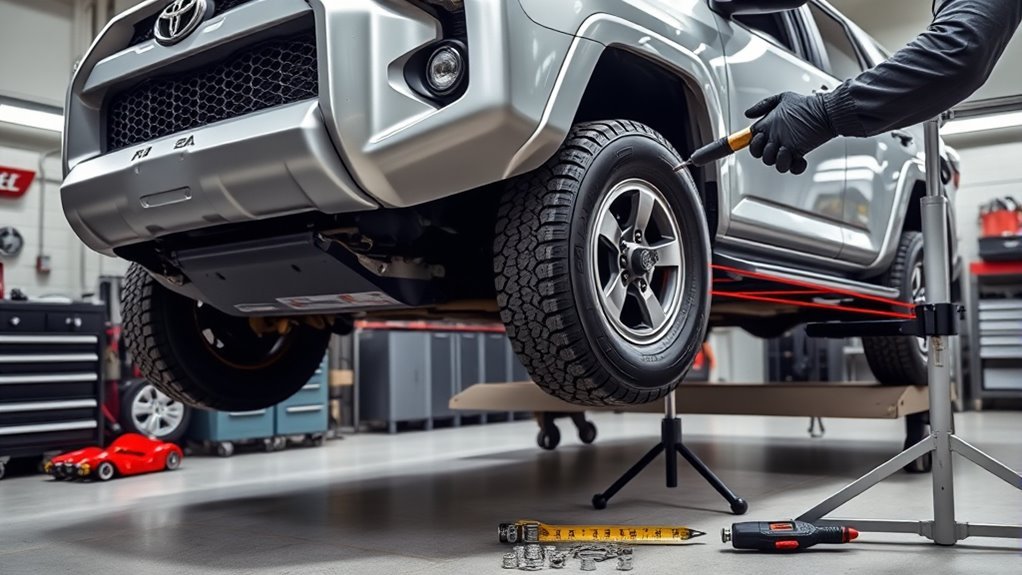
Measure by marking the outer front tire’s circle and comparing to specs. Continue for practical tests, diagnostics, and targeted fixes that shrink effective radius.
What Turning Radius Means for 4Runner Owners

When you’re choosing or driving a 4Runner, turning radius directly affects maneuverability on tight trails and in confined spaces; the 4th‑gen’s 36.4‑foot radius gives noticeably crisper steering than the 5th‑gen’s 37.4‑foot radius, reducing the need for multi‑point turns.
You’ll feel the difference during off road navigation: a tighter radius translates to fewer corrective maneuvers, faster line selection, and reduced time spent reversing.
That precision frees you to commit to routes that would force other rigs into 3‑point turns. Be aware model‑year rack changes (post‑2006 4th‑gen) can marginally alter response, so validate steering feel before committing.
Also factor wheel alignment and tire size; larger tires or misalignment increase effective turning radius and degrade maneuverability in tight spaces. Assess real vehicles rather than spec sheets alone, test turns under load, and prioritize the configuration that maximizes your control and escape options on narrow trails.
Official Turning-Radius Specs vs. Real-World Numbers
You’ll notice the official spec sheet lists 36.4 ft for the 2004 4Runner and 37.4 ft for 2005-on models, but real-world measurements often differ. Tire size, steering input, and driver technique can all change the effective turning circle you achieve. Measurement methods and steering-rack design changes since 2006 further explain why community reports don’t always match the manufacturer’s numbers.
Spec Sheet Versus Reality
Official specs list the 4th‑gen (2004) 4Runner with a 36.4 ft turning radius and later 5th‑gen models at 37.4 ft, but real‑world measurements and owner reports often tell a different story. You should treat spec sheets as baseline geometry, not immutable truth. When you apply turning techniques on trails, maneuvering challenges reveal deviations from published figures.
- Manufacturer spec: 36.4 ft (2004) vs. 37.4 ft (2005+).
- Independent confirmations: Edmunds lists 37.4 ft for 2006 and 2015.
- Owner reports: tighter 4th‑gen feel, improved narrow‑trail maneuverability.
- Anecdotal variance: tire sizes, mods, and inconsistent testing protocols.
Driver And Tire Effects
Although the factory lists a 36.4 ft turning radius for the 2004 4Runner and 37.4 ft for later models, real-world turning behavior depends heavily on driver inputs and tire characteristics.
You’ll find official specs useful, but driver feedback shows the 4th Gen needs fewer 3-point turns on tight trails than the 5th Gen. Tire selection alters contact patch, scrub radius, and effective steering lock; larger or aggressive off-road tires can hit steering stops sooner, increasing turning effort and turning circle.
Alignment angles shift toe and camber, changing steering response and perceived radius. To maximize maneuverability, you’ll combine measured tire selection, correct alignment, and controlled steering technique. That practical approach lets you reclaim capability beyond raw factory numbers.
Measurement Method Variance
After covering how driver input and tires affect real-world handling, we’ll look at why published turning-radius figures often don’t match what you measure on the road. You’ll see official specs list 36.4 ft for the 2004 4Runner and 37.4 ft for 2005+, yet measurement techniques and user experiences show variance. Factors include modifications, maintenance, and steering updates that alter effective radius.
- Manufacturer test method: controlled, minimal tire scrub, standardized load.
- User field test: varied surfaces, drivers, and tire sizes.
- Forum reports: subjective comparisons—4th Gen often feels more maneuverable.
- Technical causes: alignment, steering rack, and aftermarket changes.
Turning Radius Changes Across Generations (2003–2025)
Across the 2003–2025 span, the 4Runner’s turning radius shifted subtly but measurably between generations: the 4th‑gen (2003–2009) achieved tighter maneuvering—36.4 ft for the 2004 model—while the 5th‑gen (2010–present) generally measures about 37.4 ft, with 4WD variants often requiring more three‑point turns on narrow trails.
You’ll see in 4Runner comparisons and Generation differences that this nominal increase reduces low‑speed agility; it’s a trade‑off for packaging and off‑road capability.
Manufacturer specs (Edmunds) show consistent 37.4 ft entries for models like the 2006 and 2015, while a 2006 steering‑rack update in the 4th‑gen likely affected feel and limits. Forum reports confirm tire size and alignment further alter effective radius, so vehicle setup matters if you demand freedom of movement. Use the table below to visualize the change.
| Generation | Turning Radius |
|---|---|
| 4th‑gen (2004) | 36.4 ft |
| 5th‑gen (2015) | 37.4 ft |
How Steering Racks, Tie Rods, and Alignment Affect Turning Radius
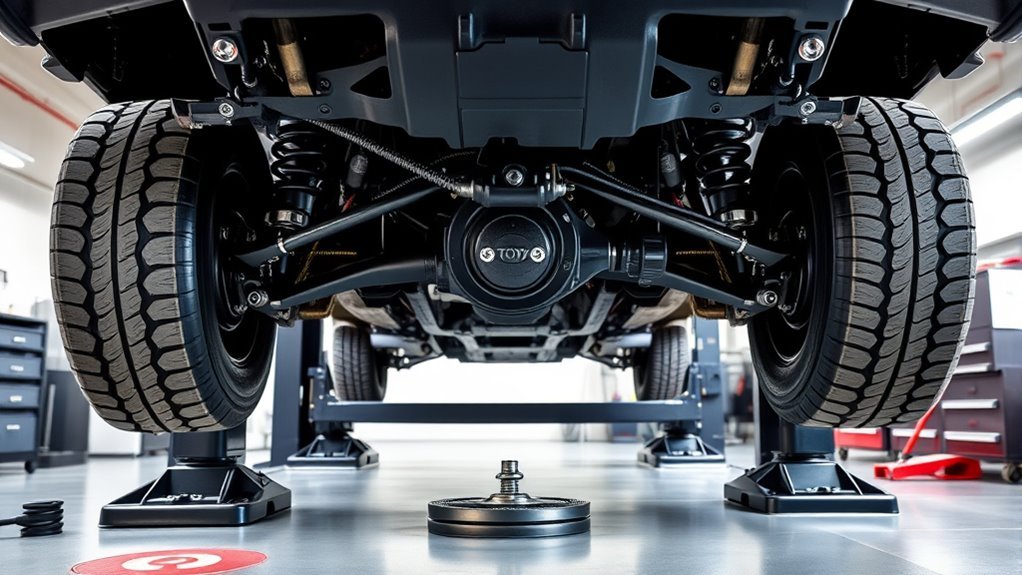
You’ll notice turning feel and minimum turning radius change when the steering rack design or tie rod geometry is altered. Worn or unevenly exposed tie rod threads will introduce misalignment that degrades cornering precision. Keep alignment angles within spec and verify tie rod lengths/exposure after any steering or wheel/tire modification to preserve intended maneuverability.
Steering Rack Design
When you examine turning radius, the steering rack’s geometry and condition directly set the mechanical limits: mid-production 4th‑Gen updates (notably on 2006 models) changed rack travel and tie‑rod attachment points, yielding tighter lock and crisper steering compared with earlier units that share the same part number and often exhibit more restrictive sweep.
You’ll want to assess steering feedback and rack durability together: worn racks or torn boots reduce travel and introduce play, constraining turn angle. Maintain factory tire sizes to avoid additional mechanical interference.
- Inspect boots for wetness or wear to catch early failure.
- Verify equal thread exposure on tie rods after adjustments.
- Compare rack travel specs between early and 2006-style units.
- Prioritize durable replacement racks matching updated geometry.
Tie Rod Alignment
Although steering racks set the baseline mechanics, tie rod alignment directly determines how much of that travel is usable at the wheel hubs, so misaligned or unevenly threaded tie rods will reduce effective turn angle and introduce asymmetric steering response.
You should inspect thread exposure and toe settings after any rack change—2006 part differences can alter required corrections.
Precise tie rod adjustments restore equal left/right travel and minimize the 4Runner’s turning-radius variance between 4th and 5th gens. Use alignment tools and measurable reference points to verify toe, caster interplay, and steering arm geometry, especially if you’ve changed tire size.
Tires, Lift Kits, and Mods That Reduce Turning Radius
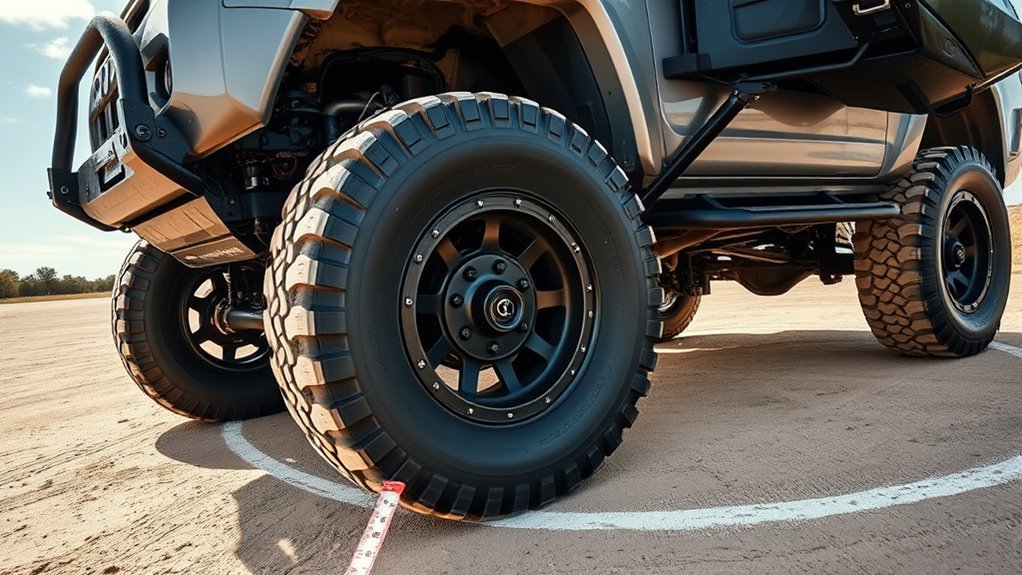
If you fit larger tires or a lift kit without addressing steering geometry and component ratios, you’ll likely see a larger turning radius and degraded steering feel.
You must consider tire size, lift kit height, and steering geometry together: larger tires cause friction increase and added weight distribution to the front, worsening turning dynamics. A lift kit raises center of gravity and can reduce steering responsiveness unless you correct linkage angles.
You can mitigate impacts with targeted mods:
- Install performance upgrades like a quicker ratio steering rack to restore response.
- Recalibrate alignment; alignment importance is critical after changes to avoid compounded handling issues.
- Shorten steering stops cautiously to tighten turning radius, but monitor for rubbing issues at full lock.
- Upgrade steering components (tie rods, idler arms) to handle increased loads and preserve precise steering geometry.
Act decisively to free your 4Runner: combine mechanical upgrades and alignment to reclaim nimble, reliable turning performance.
Measure Your 4Runner’s Turning Radius and Diagnose Problems
Start by finding an open, level area and drive a full-lock circle to measure your 4Runner’s turning radius: mark the path of the outer front tire, complete a 360° turn at a steady low speed, then measure the diameter of the circle and divide by two to get the radius.
Record the result and compare it to factory figures (2004: 36.4 ft; 2005+ : 37.4 ft). Use consistent turning techniques and neutral driving habits to avoid skewed data.
If measured radius exceeds expected, inspect tire size and type—oversized or aggressive tread alters effective radius. Check alignment after any lifts or modifications; changed steering geometry commonly increases turn diameter. Examine the steering rack for leaks or play, especially on pre-2006 racks that may wear and reduce responsiveness.
Log observations and replicate tests to confirm faults before replacing components. This methodical approach frees you from guesswork and lets you diagnose maneuverability issues with objective measurements and targeted interventions.
Fixes and Upgrades That Actually Improve Turning Radius
When you want a measurable reduction in your 4Runner’s turning radius, focus on targeted mechanical changes rather than guesswork: You’ll get reliable gains by combining steering modifications, tire adjustments, alignment tuning, and routine maintenance. Apply each fix with intent to free your vehicle for tighter, safer maneuvers.
- Replace worn steering parts first; a faster steering ratio changes how much you turn the wheel, not the minimum circle the 4Runner can make.
- Install steering stops to prevent tire contact with suspension parts; that lets you use full lock without damage and tightens your usable turning envelope.
- Adjust caster/camber alignment and inspect tie rods/boots; optimized angles enhance steering feedback and prevent wander that enlarges turning paths.
- Use smaller-diameter tires or raise/reduce tire pressure within spec to shrink the contact patch and reduce scrub radius, improving turnability.
Frequently Asked Questions
How Does Turning Radius Affect Insurance Premiums?
Your turning radius influences insurance risk because sharper handling can reduce collision likelihood; insurers include handling among premium factors, so you’ll often pay lower premiums if vehicle maneuverability demonstrably lowers accident probability and claim severity.
Can Electronic Steering Aids Alter the 4runner’s Turning Radius?
No. The minimum turning circle is set by the wheelbase, the steering stops and the tire and wheel size. Power-steering assist changes how hard the wheel is to turn, not how far the front wheels can turn.
Does Cargo Weight Distribution Change Turning Radius Noticeably?
Not the geometric turning circle, which depends on steering lock. Heavy or uneven cargo does change how the 4Runner leans, grips and responds in a turn, so slow down and load the heaviest items low and centered.
Are There Model-Specific Steering Recalls Impacting Turning Radius?
Run your VIN through NHTSA’s recall lookup or Toyota’s owner site to see whether any steering recall applies. A recall repair restores the factory design, so it should not change the published turning circle.
How Does Tire Pressure Variation Influence Turning Radius?
Within the placard range, tire pressure has little effect on the turning circle itself. Low pressure makes steering heavier and vaguer and increases tire scrub at full lock, so keep the tires at the pressure on the driver-door label.
Conclusion
Think of your 4Runner’s turning radius like a compass needle: small shifts in steering components or suspension tilt its path. You’ve seen official specs vs. real-world numbers, generational changes, and how racks, tie rods, alignment, tires, lifts, and mods alter steering geometry.
Measure precisely, diagnose binding or wear, then apply targeted fixes—replacement steering rack, correct toe/camber, shorter tie rods, or adjusted lift geometry—to restore predictable, tighter turning performance.