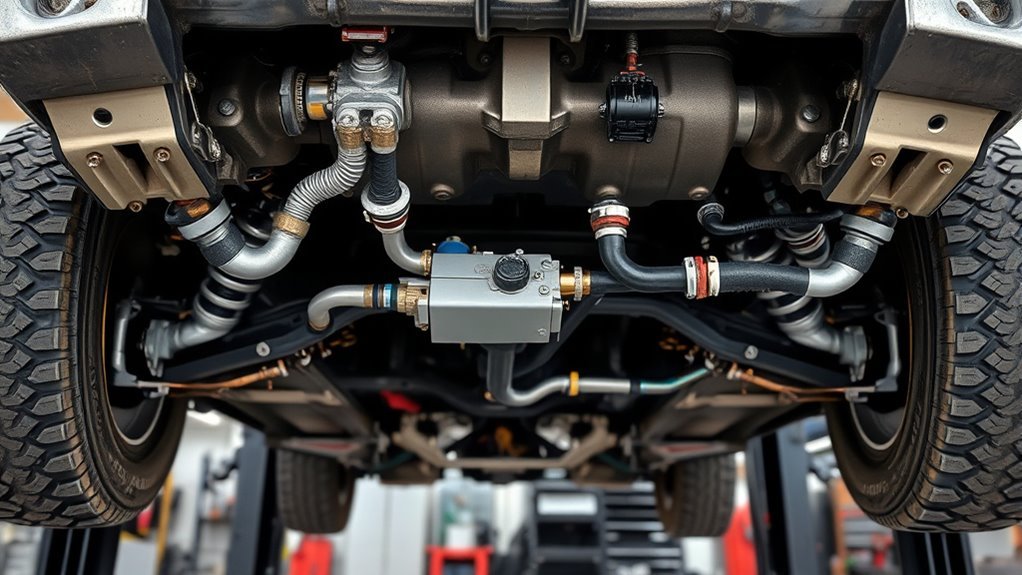
Body-on-frame SUVs usually force a compromise between stiff anti-roll bars that corner flat on the highway and disconnected bars that let wheels drop into deep trail ruts. The 4Runner KDSS (Kinetic Dynamic Suspension System) solves this trade-off with a closed-loop hydraulic network that automatically locks your stabilizer bars on pavement and releases them off-road. Understanding how its cylinders, lines, and accumulator assembly interact helps you get the best handling out of your rig while avoiding costly maintenance and suspension lift mistakes.
Quick Answer
The Toyota 4Runner KDSS links the front and rear sway bars through double-acting hydraulic cylinders and two fluid lines. During cornering, equal pressure locks the cylinders to resist body roll; on uneven trails below 12 mph, opposing wheel motion shifts fluid between front and rear chambers so the wheels articulate freely.
Last checked: October 17, 2026. Dates and figures were verified against official sources.
What KDSS Does for the 4Runner: Quick Answer and When It Switches
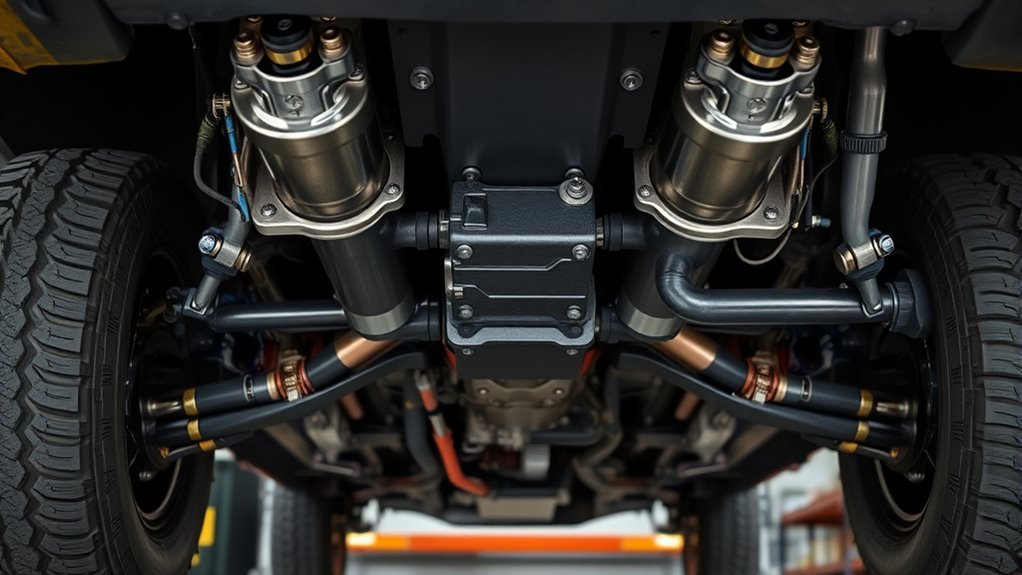
A 4Runner equipped with KDSS uses hydraulic cylinders on the driver-side front and rear sway-bar mounts to vary torsional stiffness automatically. You get flatter highway cornering and up to 5 to 10 percent greater wheel articulation on uneven trails without pressing a cabin switch or crawling underneath to pull end-link pins.
Originally developed by Australian engineering firm Kinetic Pty Ltd (later Tenneco) and introduced by Toyota on the 4th-generation 4Runner (2004–2009) and 5th-generation 4Runner (2010–2024), Toyota’s optional Kinetic Dynamic Suspension System (KDSS) was offered on Trail, Trail Premium, Venture, and TRD Off-Road grades. Unlike the Limited and TRD Sport trims—which use X-REAS cross-linked shock dampers for street handling—KDSS replaces one conventional sway-bar end link on each axle with a pressurized hydraulic ram.
The system switches profiles passively based on how your wheels move relative to each other, paired with an electronic speed threshold on 5th-generation models:
- On-road cornering (locked state): Both driver-side wheels compress or extend in the same direction during a turn. Equal pressure builds in the front and rear cylinders simultaneously, preventing fluid transfer and locking the thick stabilizer bars in place.
- Low-speed trail articulation (unlocked state): Below 12 mph (20 km/h), when a front wheel climbs a rock while the rear wheel drops into a rut, the opposing cylinder motions push fluid freely from the front cylinder to the rear cylinder so both sway bars pivot without twisting.
- High-speed washboard and highway driving: Above 12 mph, the stabilizer control solenoid closes the accumulator bypass path so the suspension maintains predictable anti-roll resistance during emergency lane changes.
Note: Starting with the 6th-generation 4Runner (2025 and 2026 model years), Toyota replaced hydraulic KDSS on the 4Runner with the electronic Stabilizer with Disconnection Mechanism (SDM) on TRD Pro and Trailhunter trims, which disconnects only the front sway bar via a dash button. Hydraulic and electronic KDSS (E-KDSS) remain on the Lexus GX.
4Runner KDSS Anatomy: Cylinders, Lines, Accumulator Valve, and Roles
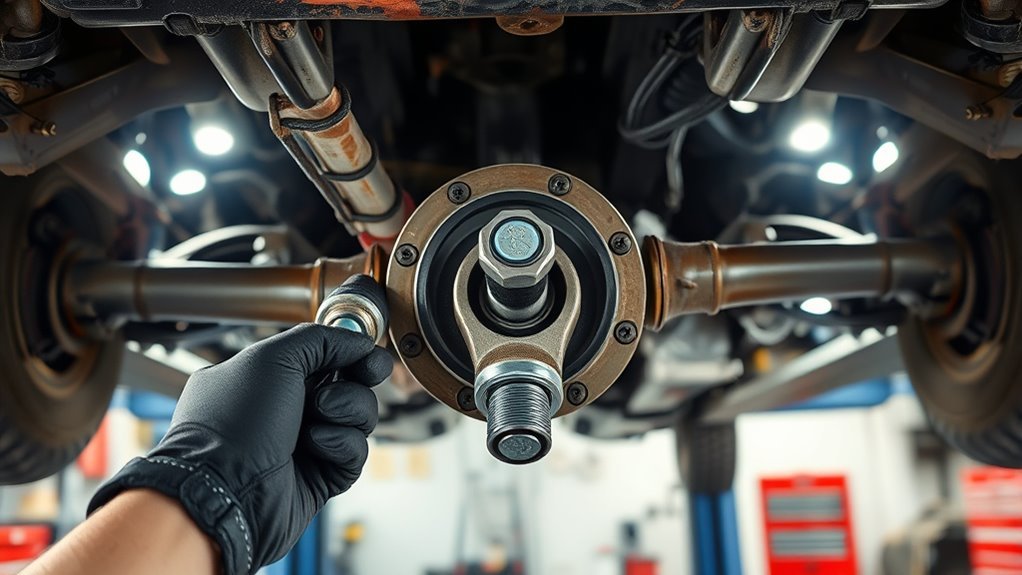
Four core hardware assemblies make up the 4Runner KDSS circuit: oversized solid stabilizer bars, two double-acting hydraulic cylinders, two steel-and-flexible fluid lines, and a frame-mounted accumulator and control valve housing. Every component works in a sealed, high-pressure circuit mounted along the driver-side frame rail.
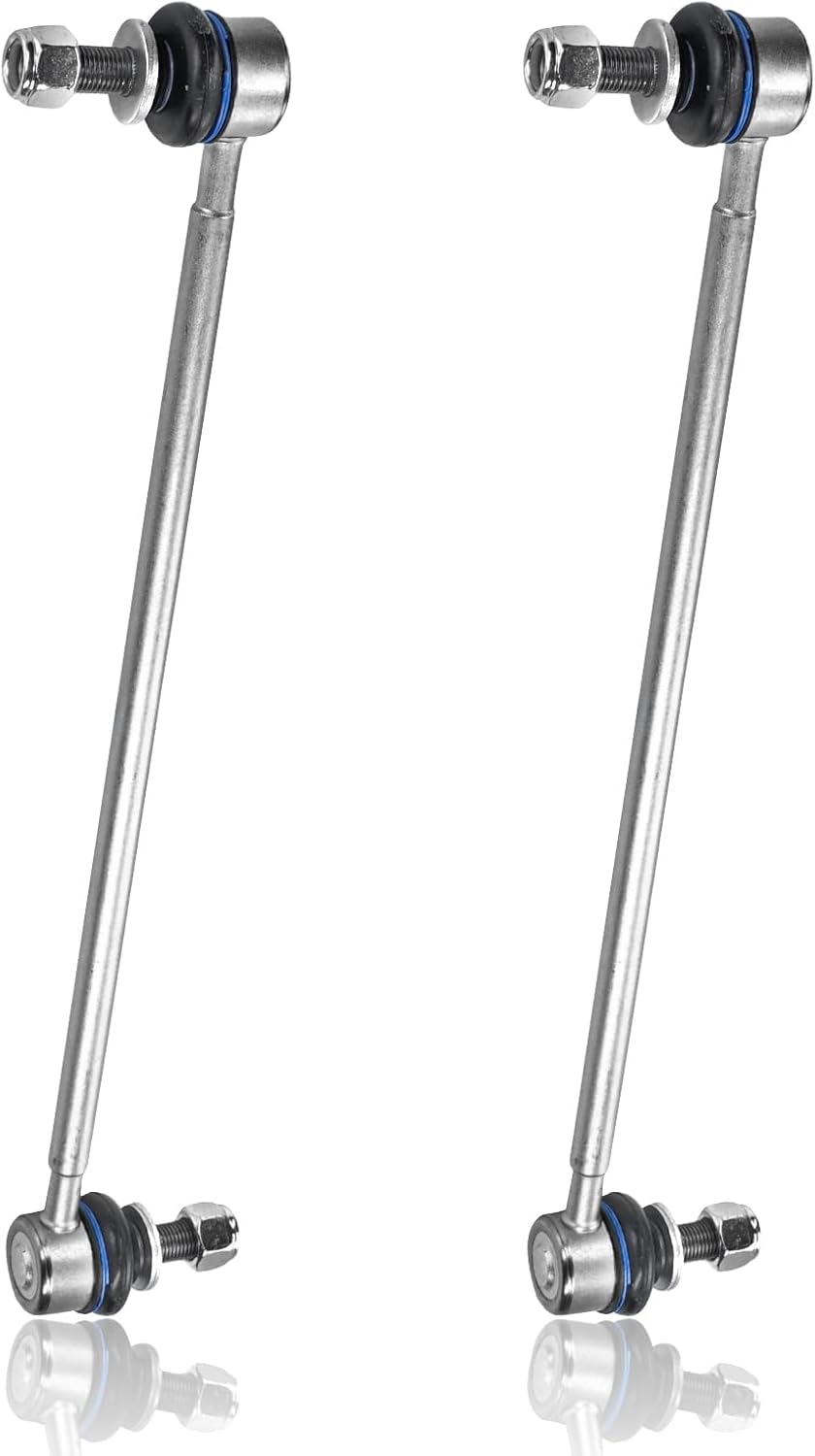
Because the hydraulic cylinders can completely release torsional tension off-road, Toyota fits KDSS trucks with significantly thicker solid steel sway bars than standard 4Runners. On a 5th-generation 4Runner (2010–2024), the front KDSS sway bar measures 42.7 mm (1.68 inches) in diameter compared with 30 to 31 mm on non-KDSS 4×4 models, while the rear KDSS bar measures 30.0 mm (1.18 inches) compared with 20 mm (0.79 inches) on standard models. Rather than using thin vertical end links on both sides, the driver side of each bar connects to the frame and axle through center-jointed stabilizer bars controlled by hydraulic pressure cylinders.
Inside each cylinder, a piston divides the barrel into an upper chamber and a lower chamber:
- Upper-to-upper hydraulic line: Connects the upper chamber of the front cylinder directly to the upper chamber of the rear cylinder.
- Lower-to-lower hydraulic line: Connects the lower chamber of the front cylinder directly to the lower chamber of the rear cylinder.
- Accumulator and solenoid housing: Mounted inside a steel skid shield on the driver-side frame rail under the front door, this unit holds two nitrogen-charged bladder accumulators, pressure switches, solenoid valves, and two manual service shutter valves.
The nitrogen accumulators act as hydraulic shock absorbers when both left-side tires hit a sharp ridge or pothole at the same time, absorbing spike pressures while the solenoids and internal check valves regulate flow between the upper and lower circuits.
How KDSS Shifts Between Road and Trail: Pressure Flow and Sway‑Bar Modulation
KDSS shifts between road stiffness and trail flex by comparing the direction of piston travel in the front and rear cylinders. When both pistons push into the same hydraulic line, fluid has nowhere to go and locks the bars; when one piston rises while the other falls, fluid cycles freely between cylinders.
Because of this passive hydraulic plumbing connecting the front and rear anti-roll bars, the front and rear stabilizers always work as a paired system. The table below breaks down how fluid moves across four real-world scenarios.
| Driving Scenario | Front & Rear Piston Motion | Hydraulic Fluid Flow | Sway-Bar Effect |
|---|---|---|---|
| Paved Cornering | Both left cylinders compress together (right turn) or extend together (left turn) | Equal opposing pressure blocks fluid movement in both lines | Cylinders lock solid; 42.7 mm front and 30 mm rear bars twist to resist body roll |
| Cross-Axle Trail Flex (Under 12 mph) | Front cylinder compresses while rear cylinder extends (or vice versa) | Fluid flows from front upper chamber to rear upper chamber and back through lower line | Cylinders stroke freely; sway bars pivot without resisting wheel droop |
| One-Sided Pothole or Bump | Sudden upward spike on one cylinder before the other reacts | Accumulator gas diaphragm compresses briefly to absorb pressure spike | Dampens side-to-side head toss while keeping highway stability |
| High-Speed Trail (Over 12 mph) | Rapid, uneven suspension cycling at desert or washboard speeds | Solenoid valves restrict free transfer across the accumulator block | Bars stay engaged for high-speed stability (feels firmer over washboard) |
When your left front tire climbs a boulder on the trail, it pushes the front cylinder piston up. That displaced hydraulic fluid travels down the upper line into the upper chamber of the rear cylinder, actively pushing the left rear piston—and the left rear tire—downward toward the dirt to maintain traction.
Real-World Effects: Body Roll, Wheel Articulation, Traction, and Comfort

Behind the wheel, KDSS cuts cornering body roll by roughly 50 percent compared with a standard SR5 or TRD Off-Road suspension while keeping all four tires planted in deep off-road ruts. That added mechanical grip reduces how often your 4Runner has to rely on electronic brake-based traction aids like A-TRAC.
On paved mountain switchbacks and highway exit ramps, the thick 42.7 mm front bar resists chassis lean right away, eliminating the top-heavy sway common to high-clearance SUVs. Keep in mind that KDSS only controls lateral roll—not front-to-rear pitch—so a stock 4Runner will still exhibit braking nose-dive until you upgrade to firmer front coilovers.
Off-road, keeping tires in physical contact with rocks and ledges means the open differentials lose traction less frequently. One trade-off appears on fast, corrugated gravel or washboard roads above 12 mph: because the system locks into its firm on-road state at speed, the thick sway bars can transmit sharper side-to-side vibrations into the cabin than a softer non-KDSS setup.
Maintenance, Common Failures, Costs, and Lift/Mod Compatibility
Keeping a KDSS-equipped 4Runner reliable requires periodic visual checks of the frame-mounted accumulator housing, watching for side-to-side suspension lean, and respecting geometry limits when installing a lift kit. Because the hydraulic circuit is factory-sealed and pressurized, DIY fluid top-offs are not possible.
| Specification / Service Item | Verified Value / Limit | Practical Impact for Owners |
|---|---|---|
| Front / Rear Sway Bar Diameter | 42.7 mm (1.68 in) front / 30.0 mm (1.18 in) rear | Requires KDSS-specific frame bushings and lower control arm brackets |
| Factory “KDSS Lean” Threshold | 20 mm (0.79 in) left-to-right difference | Corrected by equalizing pressure via shutter valves on level ground |
| Shutter Valve Service Limit | Maximum 3 turns counter-clockwise | Unscrewing further blows out the internal seal and depressurizes the system |
| Maximum Recommended Lift Height | 2.5 to 3.0 inches (front) / 2.0 inches (rear) | Lifts above 2 inches benefit from sway-bar link adapters and panhard correction |
| OEM Accumulator Assembly (48006-60031) | $750 to $1,030 (part) / $1,500 to $3,000+ (installed) | Requires Toyota dealer SST high-pressure bleeding pump after replacement |
Follow these four maintenance and modification practices to prevent expensive hydraulic failures:
- Inspect hydraulic cylinders, lines, and the accumulator housing: Check the rubber boots on the front and rear cylinders for weeping fluid and clean packed mud out of the accumulator skid plate on the driver-side frame rail every oil change.
- Watch for KDSS lean and dashboard warnings: If the vehicle sits noticeably lower on the passenger or driver side—Toyota’s service bulletin for KDSS lean exceeding 20 mm (0.79 inches) defines the official threshold—or if the amber KDSS warning light illuminates, diagnose seized shutter valves, low circuit pressure, or a faulty pressure switch early.
- Budget realistically for hydraulic repairs: While bushings cost under $60, replacing a corroded OEM stabilizer control accumulator housing (part number
48006-60031) costs $750 to $1,030 for the part alone, and total dealership replacement with pressurized bleeding runs $1,500 to $3,000 or more. - Respect the 3-inch lift limit and correct geometry: Keep suspension lifts at or below 2.5 to 3 inches, choose KDSS-compatible front skid plates and reservoir shock mounts, and install angled sway-bar end-link brackets plus a rear track-bar (panhard) correction kit so the hydraulic pistons do not bind at full droop.
Warning: When opening the two shutter valves on the accumulator housing to drop the sway bars during a suspension install or to level KDSS lean, never turn the screws more than three full turns counter-clockwise, and never drive the vehicle with the valves open. Backing them out past the internal stop releases high-pressure fluid and gas, requiring a dealership tow and specialized recharge pump.
Pro Tip: In northern states where winter road salt collects inside the accumulator cover plate, unbolt the protective shield once a year, flush out trapped grit, and coat the accumulator body and shutter-valve screw heads with a lanolin-based rust inhibitor such as Fluid Film or Woolwax.
Frequently Asked Questions
Can KDSS Be Manually Disabled or Locked Out for Off‑Road Use?
Factory KDSS cannot be manually unlocked from the cabin in stock form, as it automatically releases below 12 mph during cross-axle wheel travel. However, aftermarket wiring harnesses can interrupt the speed signal to the stabilizer ECU so the accumulator valves stay open above 12 mph on washboard trails. Never open the manual frame shutter valves to drive off-road.
Does KDSS Affect Towing Capacity or Trailer Sway?
KDSS does not change the 5th-generation 4Runner’s rated 5,000-pound towing capacity, but it noticeably improves towing stability on paved highways. Because the hydraulic cylinders lock at highway speeds and pair with thicker 42.7 mm front and 30 mm rear sway bars, the chassis resists side-to-side trailer sway and crosswinds better than a standard SR5 suspension.
Are KDSS Parts Interchangeable Between 4Runner Model Years?
Most KDSS hydraulic cylinders, sway bars, and the 48006-60031 accumulator housing interchange across 5th-generation 4Runner model years (2010–2024) and share components with the 2010–2023 Lexus GX 460. However, 4th-generation (2004–2009) KDSS parts are not interchangeable with 5th-generation models, and 2010–2013 vs. 2014–2024 models should always be matched by VIN.
How Does KDSS Interact With Aftermarket Sway Bars?
KDSS does not work with standard aftermarket sway bars or manual quick-disconnect links because the driver side of each bar mounts directly to a pressurized hydraulic cylinder. Unless you perform a full KDSS delete, you must keep the factory KDSS sway bars and use KDSS-specific polyurethane bushings, drop spacers, or billet angle-correction links when lifting.
Can KDSS Cause Uneven Tire Wear Over Time?
A healthy KDSS system at stock ride height does not cause uneven tire wear, but persistent KDSS lean or uncorrected geometry after a lift can pull alignment out of spec. If your 4Runner leans more than 20 mm (0.79 inches) side-to-side or lacks a rear track-bar bracket after a lift, equalize the shutter valves and perform a four-wheel alignment.
What Causes KDSS Lean and How Do You Fix It?
KDSS lean happens when unequal hydraulic volume gets trapped between the upper and lower cylinder circuits, usually after lifting the truck on a hoist or installing new springs. To fix it, park on dead-level pavement, open both accumulator shutter valves two to three turns counter-clockwise, rock the bumper to let the chassis settle, and torque the valves closed.
Does the 2025 or 2026 6th-Gen Toyota 4Runner Still Have KDSS?
No, Toyota discontinued hydraulic KDSS on the 6th-generation 4Runner starting with the 2025 model year. Instead, the 2025 and 2026 4Runner TRD Pro and Trailhunter trims feature the electronic Stabilizer with Disconnection Mechanism (SDM), which uses a button-controlled electric actuator to unlock only the front sway bar on the trail.
Conclusion
The 4Runner KDSS remains one of the smartest dual-purpose suspension designs ever fitted to a factory off-roader, pairing massive 42.7 mm front and 30 mm rear sway bars with cross-linked hydraulic cylinders that release automatically on the trail. Before modifying or servicing your rig, crawl under the driver-side frame rail to inspect the accumulator housing for rust, measure left-to-right fender height for any lean over 20 mm, and plan geometry-correcting link brackets if you are lifting up to 3 inches.
Sources
- Toyota USA Newsroom: Official 4Runner TRD Off-Road KDSS availability and capability specifications
- Olathe Toyota Parts Center: Technical breakdown of KDSS hydraulic cylinders, stabilizer bars, and accumulators
- Car and Driver: Engineering comparison of passive hydraulic KDSS plumbing versus electronic E-KDSS
- National Highway Traffic Safety Administration (NHTSA): Toyota/Lexus Technical Service Bulletin L-SB-0015-21 for KDSS right-side lean exceeding 20 mm