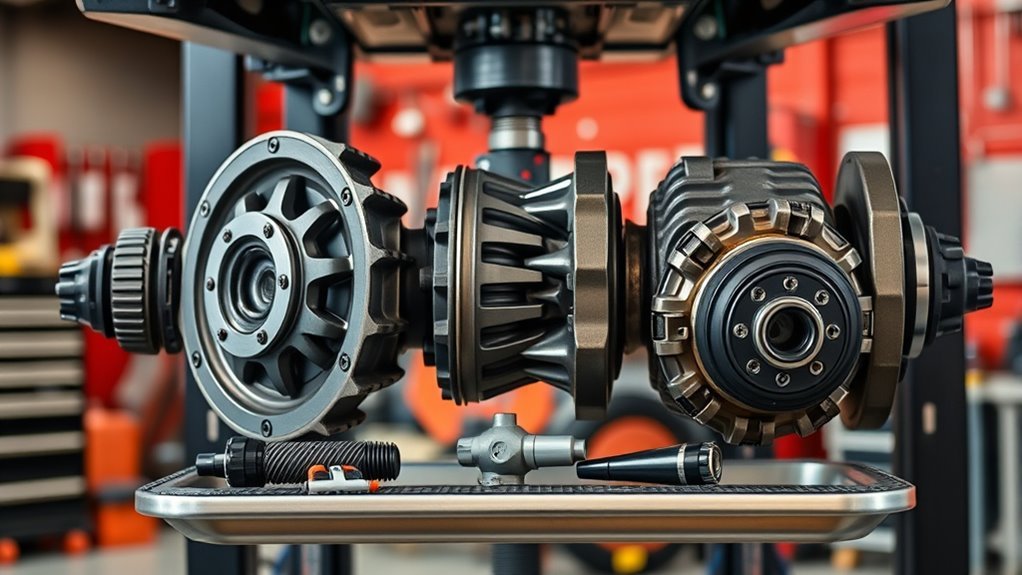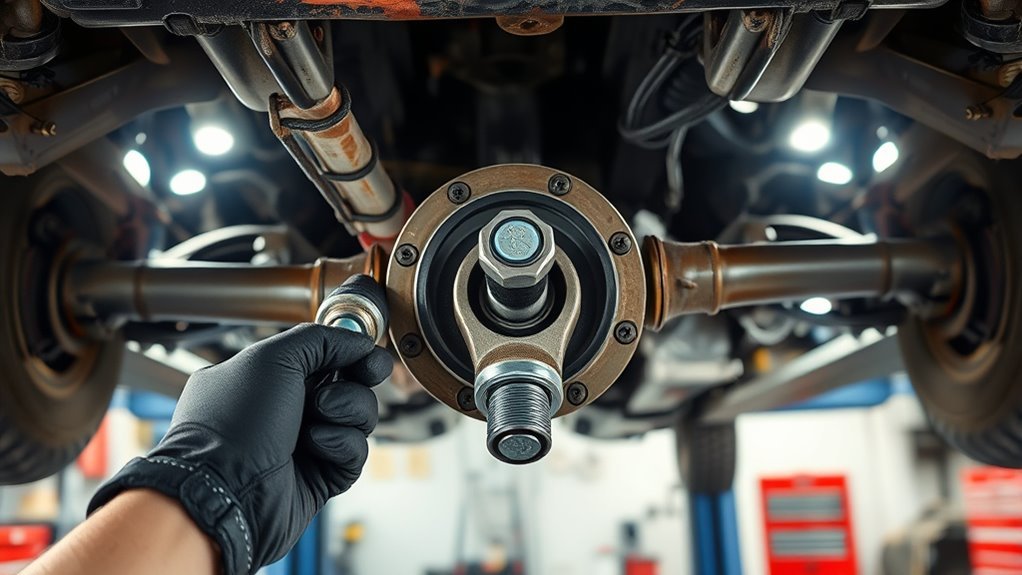
If your Toyota 4Runner makes a dull clunk when you shift from Reverse to Drive, roll into the throttle, or let off the gas, start with the driveline parts that can move under load: the propeller shaft slip yoke, U-joints, flange bolts, transmission or differential mounts, and—on 4WD models—the front driveshaft and CV axle area. Do the simple checks first, but keep the testing gentle and safe so you do not turn a small clunk into a damaged driveline.
Quick Answer
A 4Runner driveshaft clunk is commonly caused by dry slip-yoke splines, worn U-joints, loose flange hardware, worn mounts, or driveline backlash. Safely reproduce the noise, inspect for play, grease the propeller shaft with the grease specified for your model year, and replace any joint or mount with visible looseness.
Key Takeaways
- A single clunk on takeoff or stop is often slip-yoke stick-slip, U-joint play, mount movement, or normal-but-excessive driveline backlash.
- Use low-speed, low-load tests only. Do not crawl under a vehicle supported by a jack alone.
- For Toyota 4Runner propeller shaft service, Toyota specifies lithium-base chassis grease for propeller shaft spiders and slide yokes, and molybdenum-disulfide lithium-base chassis grease for the double cardan joint.
- Visible U-joint looseness, rusty bearing dust, missing snap rings, torn bushings, or severe vibration means the vehicle needs repair before continued driving.
At a Glance
| Time Required | 20–45 minutes for basic diagnosis; 30–90 minutes for greasing if fittings are accessible |
| Difficulty | Beginner for visual checks; intermediate for under-vehicle inspection and lubrication |
| Tools Needed | Wheel chocks, flashlight, gloves, safety glasses, jack stands or ramps, pry bar, grease gun, Toyota-specified grease, torque wrench if bolts are loosened |
| Cost | About $15–$60 for DIY grease and supplies; commonly $300–$400 for a U-joint job; more if a shaft, mount, or differential repair is needed |
Warning: Never work under a 4Runner supported only by a hydraulic jack. Use rated jack stands or ramps on a level surface, chock the wheels, wear eye protection, and keep all helpers clear of the vehicle path during shift tests.
Immediate Checks Before You Replace Parts
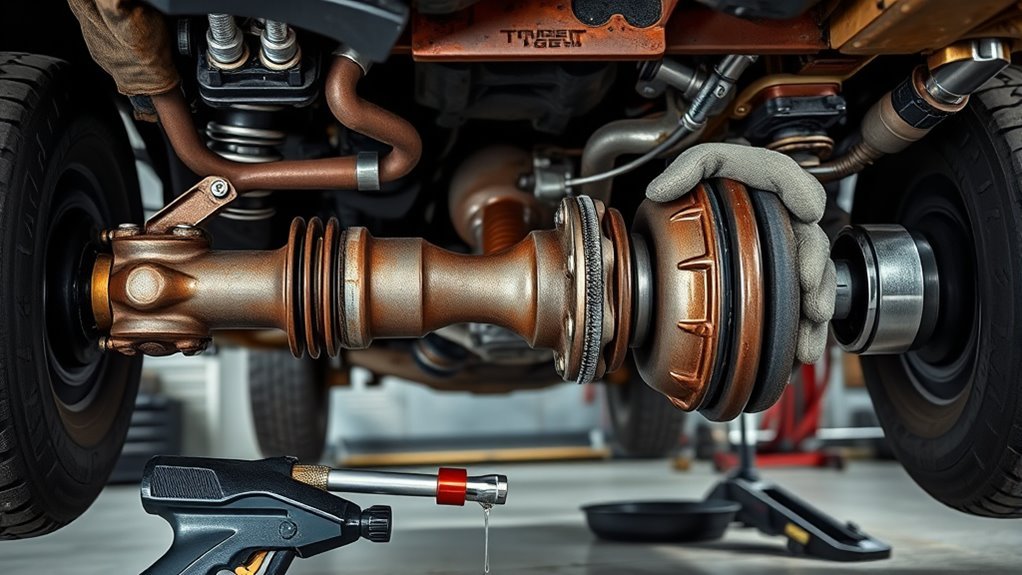
Start with the checks that cost nothing and do not require disassembly. The goal is to identify when the clunk happens and which part moves when torque changes direction.
- Note the exact moment: Does it clunk once when shifting into Drive, once when stopping, repeatedly over bumps, or only while turning?
- Look for fresh clues: Check for shiny metal contact marks, grease spray around U-joints or CV boots, torn rubber bushings, or a propeller shaft that looks recently polished near the slip yoke.
- Listen from outside: With the vehicle on level ground, a helper can stand safely to the side while you apply the brake and shift gently between Reverse and Drive. Do not rev the engine hard.
- Check service history: If the propeller shaft has not been lubricated recently, dry slip-yoke splines are a strong first suspect.
For Toyota’s 2024 4Runner maintenance guide, propeller shaft service includes lubrication and propeller shaft bolt re-torque at specified intervals, and the guide says only a qualified technician should perform the re-torque operation. The guide also specifies lithium-base chassis grease for the propeller shaft spiders and slide yokes, and molybdenum-disulfide lithium-base chassis grease for the double cardan joint. Toyota 2024 4Runner Warranty & Maintenance Guide
Reproduce the 4Runner Driveshaft Clunk Safely
A repeatable test helps separate driveline clunk from suspension, brake, exhaust, or cargo noise. Keep the test slow and controlled.
- Park on a flat surface with open space in front and behind the vehicle.
- Set the parking brake, chock the wheels, and keep your foot firmly on the service brake.
- Start the engine and let it idle. Do not raise the RPM aggressively.
- Shift from Reverse to Drive, pause, then shift from Drive to Reverse. Listen for a single thump and note which direction causes it.
- Repeat only a few times. If the clunk is loud, metallic, or paired with vibration, stop testing and inspect the driveline.
- For a road check, drive at parking-lot speed and lightly apply and release the throttle. A helper should not hang out of the vehicle or walk near a moving vehicle.
| When the clunk happens | Most likely areas to inspect first |
|---|---|
| Single clunk shifting Reverse to Drive | Slip yoke, U-joints, flange bolts, transmission mount, differential backlash |
| Clunk on acceleration from a stop | Rear propeller shaft, slip yoke, U-joints, rear suspension links, engine/transmission mounts |
| Clunk on deceleration or braking | Slip yoke bind, loose brake hardware, driveshaft play, rear axle/control-arm movement |
| Clicking while turning in 4WD | CV axles, front hub area, front differential mounts, front propeller shaft |
| Vibration that rises with road speed | U-joints, driveshaft balance, bent shaft, worn slip splines, tire/wheel issues |
Quick Diagnostics: What Each Result Means
Use the test result to decide where to inspect first instead of replacing parts at random.
Shift-Load Test
If the 4Runner clunks once when torque changes direction, look for a part that takes up slack suddenly. Common areas include dry slip-yoke splines, a worn U-joint, a loose companion flange, a soft transmission mount, or normal backlash that has become noticeable because another part is moving too much.
Driveline Play Check
With the engine off, transmission in Park, wheels chocked, and the vehicle safely supported if you need under-vehicle access, grab the driveshaft near each U-joint. Try to rotate it back and forth by hand. A small amount of drivetrain lash can be normal, but a sharp click, visible bearing-cap movement, rust powder, or side-to-side U-joint play is not normal.
Pro Tip: Mark the shaft and flange with a paint pen before removing anything. Reinstalling the shaft in the same orientation helps reduce the chance of creating a new vibration.
Inspect the Slip Yoke and Driveshaft Splines
The slip yoke lets the propeller shaft change length as the rear suspension moves. When the splines get dry or sticky, the shaft can bind slightly and then release with a thump as the vehicle starts or stops.
- Look for dry, polished, or rusty areas near the slip section.
- Check whether the slip joint moves smoothly without a notch or bind.
- Inspect the boot or seal area for damage, grease loss, or dirt entry.
- Grease only through the correct fittings and with the correct grease for the joint type.
- If the slip splines have deep wear, looseness, or binding that returns immediately after lubrication, plan on professional inspection or shaft repair.
Do not assume every 4Runner uses the same service details. A 2WD, 4WD, older 4th-gen, 5th-gen, and newer 2025+ 4Runner may not have identical shaft layouts or maintenance points. Use your exact model-year Toyota maintenance guide before choosing grease or loosening hardware.
[Products Worth Considering]
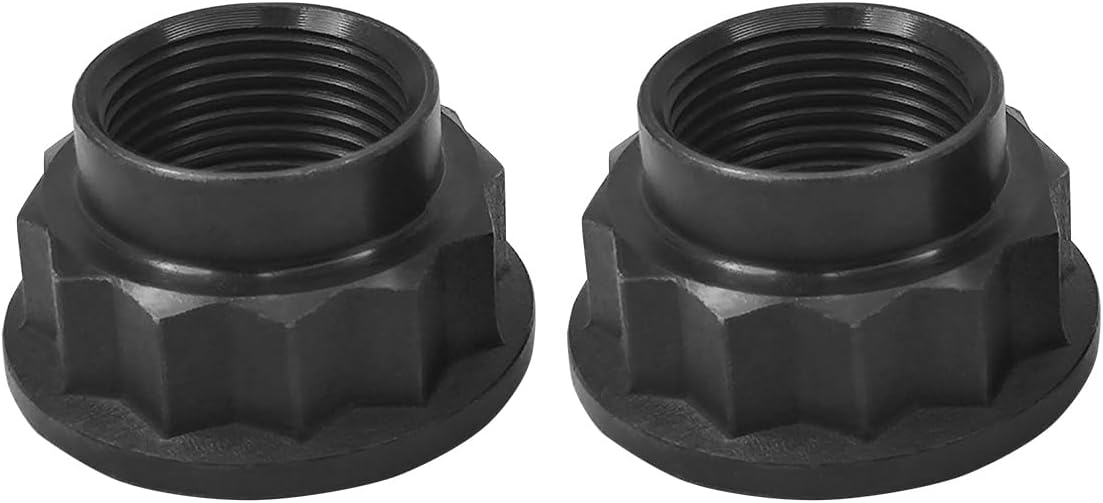
This pair of front axle shaft nuts is designed to secure CV joints and wheel bearings on compatible Toyota and Lexus front drive axles. Built from heat-treated carbon steel for durability and corrosion resistance, it helps maintain proper torque and reliable power transfer. It is a direct replacement for several factory part numbers and is recommended for paired replacement.

This 120-piece clip and fastener kit helps restore secure fitment for Toyota fender flares, bumper liners, rocker panels, and wheel well trims. It includes multiple clip styles plus a removal tool, making it easier to replace worn or missing retainers and reduce panel wiggle. Designed for a wide range of Toyota vehicles, it’s a practical solution for trim and liner repairs.

This 121-piece 4-in-1 clip kit provides a versatile replacement solution for Toyota and Lexus body, bumper, fender liner, and splash shield fasteners. It includes multiple clip and screw styles designed to fit common mounting points across popular models, helping restore secure panel attachment and reduce rattles or loose trim. Ideal for maintenance, repair, and restoration projects, this assortment supports a wide range of wheel well and exterior trim applications.
Check U-Joints, Hub Flange, and CV Axles for Play
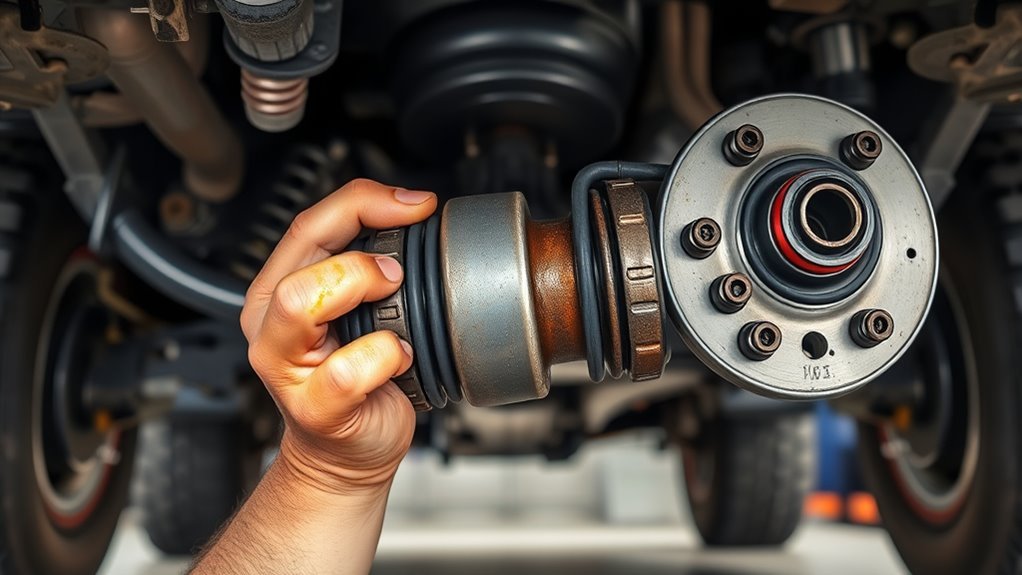
U-joints should rotate smoothly without visible looseness. A failing U-joint may cause a clunk, squeak, vibration, or rusty powder around the bearing caps.
[Products Worth Considering]
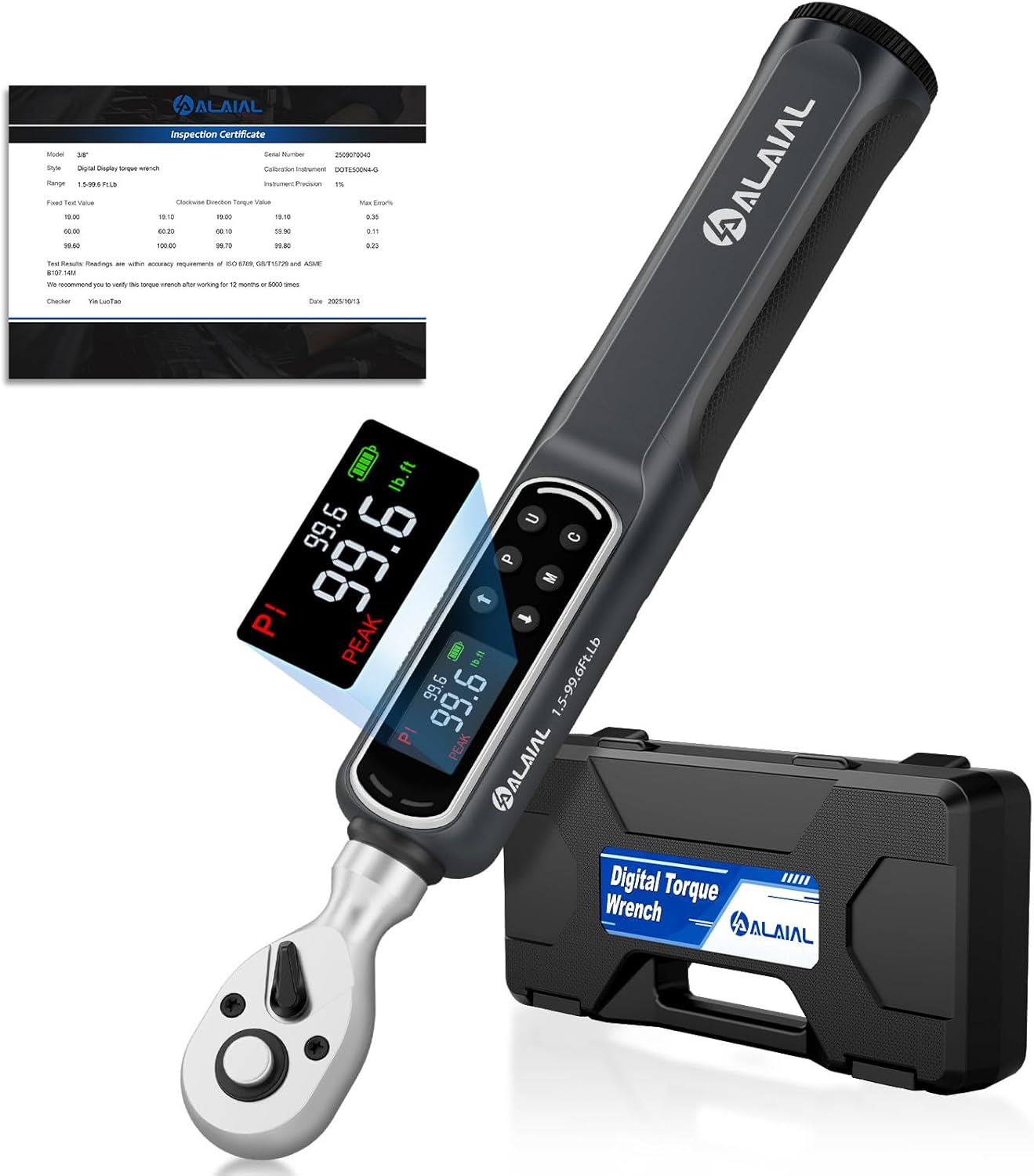
This digital torque wrench delivers precise fastening across a wide torque range with strong accuracy, making it a reliable choice for automotive, motorcycle, and general repair work. Its LED display, buzzer, and vibration alerts help prevent overtightening, while PEAK and TRACE modes plus preset memory and data logging add control and consistency for repeat jobs. Built for comfort and durability, it includes a storage case and batteries for ready-to-use convenience.

The LEXIVON 3/8-Inch Drive Click Torque Wrench is built for accurate, reliable fastening across a wide range of automotive and mechanical tasks. It arrives pre-calibrated for dependable use, with a clear dual-range scale for easy reading and a reversible ratchet head for added convenience. The hardened steel construction and corrosion-resistant finish help deliver long-lasting performance and comfort in everyday use.

This front stabilizer sway bar link set is designed to restore smooth, controlled handling and reduce clunking noises caused by worn suspension components. Built with a zinc-nickel alloy coating, carbon steel, and reinforced ball studs, it offers strong corrosion resistance and durable performance for a wide range of Toyota, Lexus, and Scion models. It is engineered for straightforward installation and reliable OE-style fitment.
U-Joint Warning Signs
- Visible movement: The bearing cap shifts in the yoke when you twist the shaft.
- Rust dust: Orange-brown powder around the cap can mean the bearing is dry.
- Binding: The joint feels notchy instead of smooth.
- Missing or damaged clips: A missing snap ring or retainer is a stop-driving issue.
- Road-speed vibration: A worn joint can vibrate as speed rises.
On 4WD models, a front-end clunk or click may come from the front propeller shaft, CV axle, hub flange area, or front differential mounts rather than the rear driveshaft. Clicking during tight turns is more typical of a CV joint than a rear driveshaft slip-yoke clunk.
Spicer, a driveline component manufacturer, warns that lack of proper lubrication is a common cause of premature U-joint and slip assembly failure, and that inadequate lubrication can lead to driveline failure. Spicer Driveshaft Lube & Torque Specifications
Identify Worn Mounts, Bushings, and Backlash
If the shaft and U-joints look good, the clunk may be caused by something that lets the driveline move when torque reverses. Check mounts and bushings before blaming the differential.
Front Differential Mount Wear
On 4WD models, worn front differential mounts can let the front differential shift under load. Look for cracked rubber, separated bushings, shiny contact points, or movement when the drivetrain is gently loaded. Do not pry aggressively on aluminum housings.
Transmission and Engine Mount Check
A soft transmission mount or engine mount can create a thud that sounds like a driveshaft clunk. Watch for excessive drivetrain movement during a gentle load test. If the engine or transmission lifts sharply, the mount needs closer inspection.
Rear Suspension and Axle Movement
Rear control-arm bushings, panhard bar bushings, loose shock hardware, or axle wrap can also cause a clunk during throttle changes. If the noise happens over bumps as well as on acceleration, inspect suspension hardware and bushings along with the driveshaft.
Differential Backlash
Some ring-and-pinion backlash is normal, but excessive backlash or a clunk paired with whining, metal flakes in the gear oil, or a changing gear noise needs professional diagnosis. Do not try to adjust ring-and-pinion backlash without the proper tools and service information.
Greasing and Lubrication: What Grease, How Much, and How to Apply
Use grease that matches your exact 4Runner and joint type. For the 2024 4Runner guide, Toyota states that propeller shaft spiders and slide yokes use lithium-base chassis grease, while the double cardan joint uses molybdenum-disulfide lithium-base chassis grease. If you have a different model year, confirm the specification in that guide before servicing.
- Wipe mud and grit off each grease fitting before attaching the grease gun.
- Use the correct grease for the fitting you are servicing.
- Pump slowly. For U-joints, fresh grease purging at the seals usually confirms the bearing has been filled.
- For slip assemblies, follow the shaft manufacturer’s procedure and do not over-pressurize boots or seals.
- Wipe off excess grease so it does not collect dirt.
- After greasing, drive slowly and recheck for leaks, thrown grease, or persistent clunking.
Note: Mixing incompatible greases can reduce lubricant performance. If you do not know what grease is already in the shaft, ask a qualified technician or purge thoroughly according to the component manufacturer’s procedure.
A clunk that improves immediately after propeller shaft lubrication is a strong clue, but it is not a final diagnosis. If the noise returns quickly, inspect for worn splines, bad U-joints, loose mounts, or backlash.
Repair vs. Rebuild vs. Replace: Costs, Warranty, and When to Call a Shop
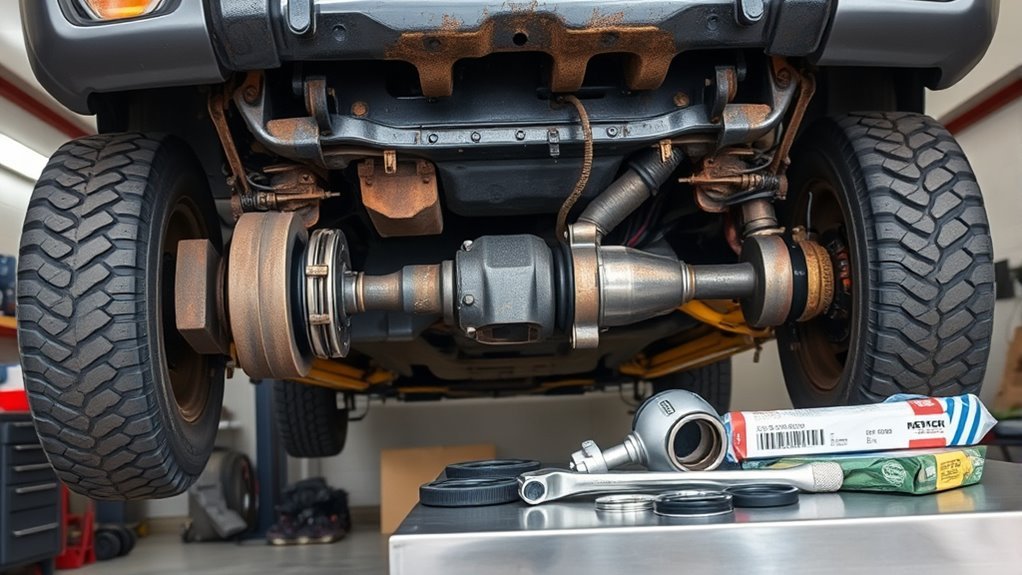
Choose the repair path based on the failed part, not just the sound.
| Finding | Likely fix | Typical cost direction |
|---|---|---|
| Dry slip yoke, no visible wear | Clean and grease with correct grease | Lowest cost |
| Loose or dry U-joint | Replace U-joint or affected joint assembly | RepairPal lists Toyota 4Runner U-joint replacement around $304–$395 |
| Worn slip splines or bent shaft | Driveshaft shop rebuild or replacement shaft | Moderate to high, depending on parts and balancing |
| Loose mounts or bushings | Replace mount, bushing, or suspension hardware | Varies by access and labor time |
| Gear whine, metal in oil, severe backlash | Differential diagnosis and repair | Highest cost |
Public repair estimators vary by location, year, and part source. RepairPal’s Toyota 4Runner U-joint estimate gives a useful baseline for one common repair, while YourMechanic’s 4Runner driveshaft repair estimate shows how labor and parts can vary by service type.
Check warranty coverage before paying out of pocket. Keep receipts for lubricant, parts, mileage, and repair notes. If you loosen propeller shaft bolts, use the correct service manual torque specification or have a qualified technician re-torque them.
[Products Worth Considering]

This click torque wrench delivers accurate, repeatable tightening for automotive and home repair tasks, helping prevent over-tightening and fastener damage. Its dual-range scale, knurled non-slip grip, and durable ratchet head make it easy to use, while the included extension bar and storage case add extra convenience.
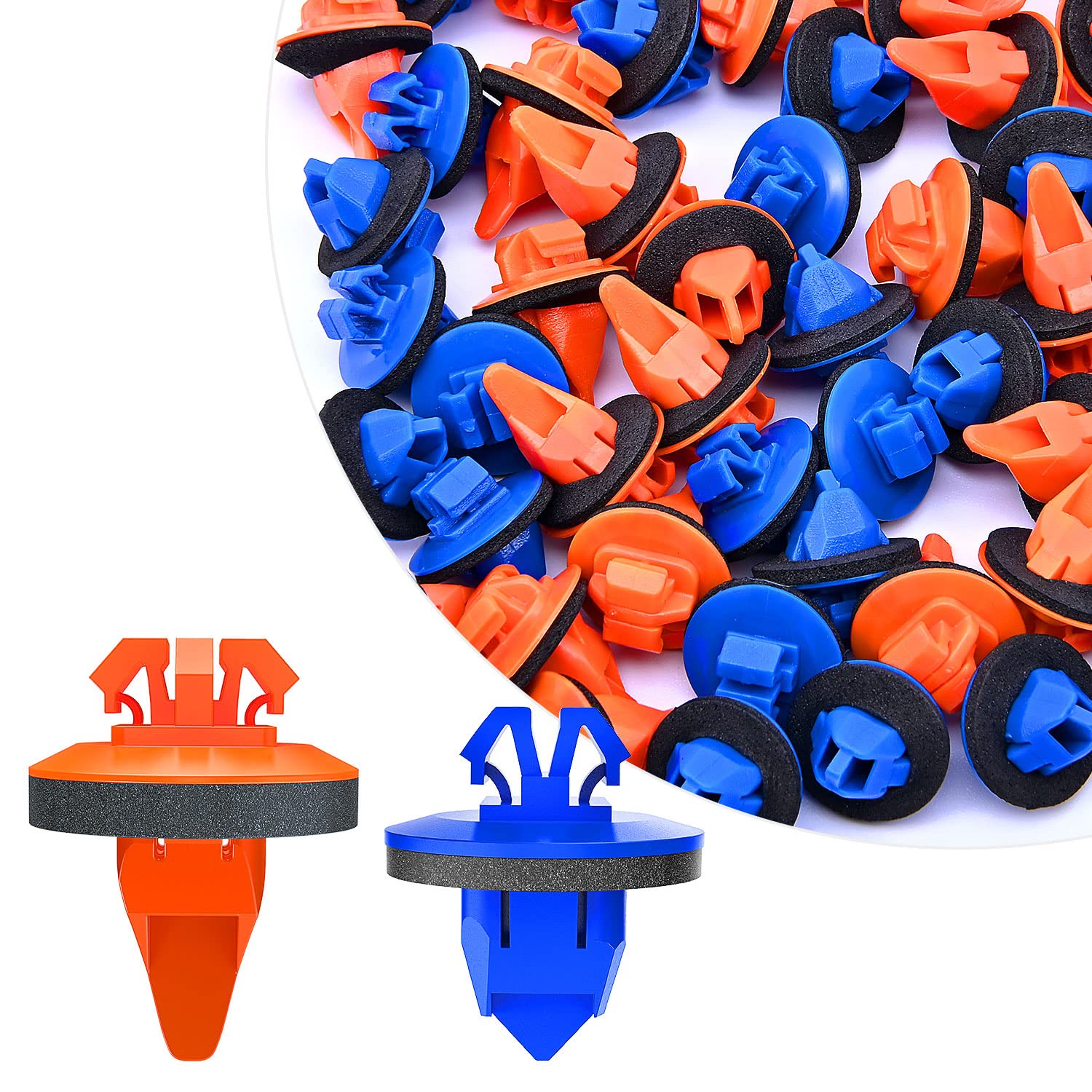
These replacement fender flare clips are designed to restore secure body trim mounting on compatible Toyota vehicles. The kit includes both rocker moulding and wheel flare moulding clips with sealers, helping ensure a proper fit for common applications on 4Runner, FJ Cruiser, Highlander, RAV4, and Tacoma models. With a mixed 100-piece assortment, this set is ideal for repairs, trim replacement, and maintenance.

This flexible oil funnel is designed to make fluid changes cleaner and easier by guiding oil around obstacles like skid plates and crossmembers. Its shape-retaining core and silicone body can be molded for custom positioning, while the heat-resistant, leak-proof design helps prevent spills during draining and filter removal. Reusable and easy to clean, it works well for cars, trucks, motorcycles, and other hard-to-reach fluid fill or drain applications.
Preventive Maintenance Schedule and Real-World Tips
The best maintenance interval is the one in your exact Toyota maintenance guide. For many 4Runner owners, the practical approach is:
- Normal use: Follow Toyota’s model-year maintenance guide for propeller shaft lubrication and inspection.
- Off-road, dusty roads, towing, heavy loading, or salted roads: Shorten the inspection interval and service the shaft more often if your guide lists special operating conditions.
- After deep water or mud: Inspect and clean the underbody, check fittings, and lubricate as your guide requires.
- After any clunk repair: Road-test gently, recheck for grease sling, and verify that no fasteners or shields were left loose.
Keep a simple log with date, mileage, grease type, symptoms, and what changed after service. That record helps you spot recurring slip-yoke clunk, prove maintenance history, and explain the problem clearly to a shop.
When to Stop Driving and Call a Shop
Do not keep driving if the clunk is paired with any of these signs:
- Severe vibration that increases with speed
- Visible U-joint play or a missing bearing-cap retainer
- A driveshaft contacting the body, exhaust, or skid plate
- Fresh gear oil leaking from the differential or transfer case
- Metal flakes in gear oil
- A torn CV boot with clicking and grease thrown around the wheel well
- A clunk that suddenly becomes louder after a trail impact or towing event
A separated driveline can cause vehicle damage and injury. If the shaft has visible looseness or the noise is getting worse quickly, tow the vehicle or have it inspected before driving farther.
Frequently Asked Questions
What can cause a 4Runner driveline clunk?
Common causes include dry slip-yoke splines, worn U-joints, loose flange hardware, soft engine or transmission mounts, differential mount movement, rear suspension bushing movement, CV axle play on 4WD models, and excessive gear backlash.
Can you drive with a clunking driveshaft?
You can drive briefly only if the clunk is mild, there is no vibration, and inspection shows no visible looseness. Do not keep driving with severe vibration, visible U-joint play, missing retainers, leaking driveline fluid, or a clunk that is getting worse.
What grease should I use on a 4Runner driveshaft?
Check your exact model-year maintenance guide. Toyota’s 2024 4Runner guide specifies lithium-base chassis grease for propeller shaft spiders and slide yokes, and molybdenum-disulfide lithium-base chassis grease for the double cardan joint.
Why does the clunk improve after greasing but come back later?
If greasing helps only briefly, the slip splines may be worn, the wrong grease may have been used, the joint may not be purging correctly, or another part such as a U-joint, mount, or suspension bushing may be moving under load.
Is a single clunk always a bad driveshaft?
No. A single clunk can come from the driveshaft, but it can also come from mounts, differential backlash, rear suspension links, brake hardware, loose skid plates, exhaust contact, or cargo moving in the rear. Diagnose before replacing parts.
Conclusion
A 4Runner driveshaft clunk is easiest to fix when you diagnose it in order: reproduce the noise safely, inspect for visible movement, grease the propeller shaft with the correct Toyota-specified lubricant, and replace only the worn part. If the clunk comes with vibration, visible U-joint play, leaking driveline fluid, or fast-worsening noise, stop driving and get a professional inspection. Good lubrication records and early repairs keep a small driveline thump from becoming a shaft, differential, or safety problem.
Sources
- Toyota 2024 4Runner Warranty & Maintenance Guide — propeller shaft maintenance schedule, grease types, and re-torque note
- Spicer Driveshaft Lube & Torque Specifications — U-joint and slip assembly lubrication cautions
- Canadian Centre for Occupational Health and Safety: Working Under Vehicles — support-stand safety guidance
- RepairPal Toyota 4Runner U-Joint Replacement Cost — current public repair-cost baseline
- YourMechanic Toyota 4Runner Driveshaft Repair Estimate — public driveshaft repair estimate reference