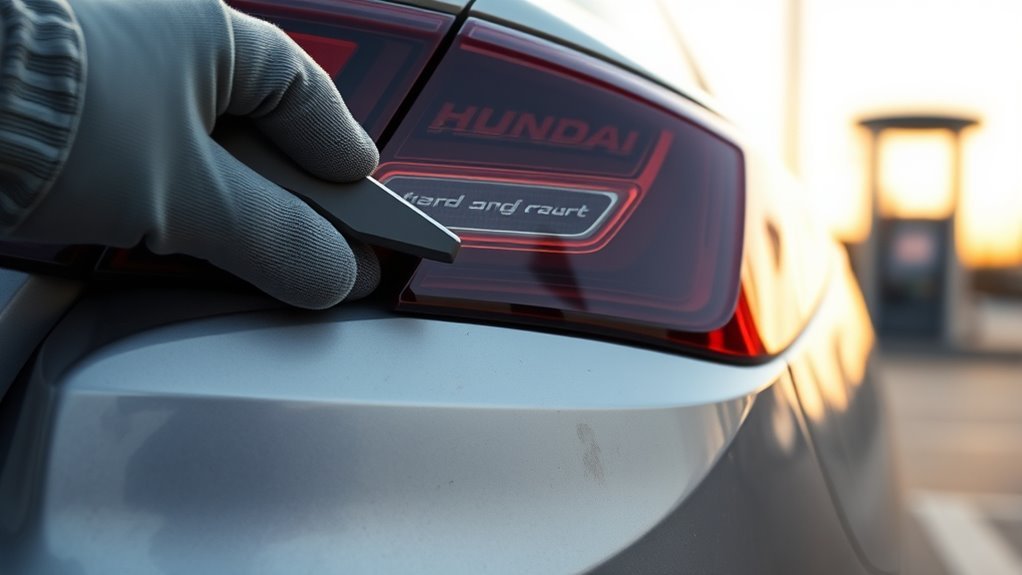
If your Hyundai Sonata fuel door will not open, start by unlocking the driver’s door and identifying the release system fitted to your model. Newer push-to-open designs unlock with the central locking system, while some older Sonata and Sonata Hybrid models use a cabin release or a separate emergency release. If the door is frozen, tap or press it lightly and use an approved deicer. Do not pry it with a screwdriver.
Last updated: July 14, 2026 · Reviewed for accuracy by: Auto Review Nest Editorial Team
Quick Answer
Unlock the driver’s door, then use the release method designed for your Sonata. On a push-to-open fuel door, press the rear center edge. On a model with a cabin release, operate the lever or button while a helper presses the fuel door inward. Use a trunk-side emergency cable only if the owner’s manual confirms your car has one. If ice is holding the door shut, tap lightly or apply an approved deicer. Once it opens, clean the latch and hinge before closing it again.
Key Takeaways
- Fuel-door operation varies by Sonata model year, trim, and market, so identify the release type before removing trim.
- Hyundai’s current fuel-filler guidance says the door unlocks with the driver’s door and may be freed from ice by light tapping, approved deicer, or warmth.
- A click with no opening usually points to a sticky latch, weak actuator, poor spring pressure, or panel misalignment.
- A loose cabin lever suggests a cable or anchor problem; a silent electric release needs circuit testing before parts are replaced.
- Stop troubleshooting if you smell raw fuel, see wetness, or find damaged fuel-system parts.
At a Glance
| First Check | Unlock the driver’s door and confirm whether your car uses push-to-open, a cabin lever/button, or a manual emergency release. |
| Most Common Low-Cost Fix | Remove dirt and old grease from the latch and hinge, then apply a small amount of suitable automotive latch lubricant. |
| Useful Tools | Flashlight, clean rag, small brush, plastic trim tool for approved trim access, suitable latch lubricant, and a multimeter for electrical diagnosis. |
| Stop DIY Work When | You smell fuel, see wetness, cannot identify the correct release system, or need to disturb fuel-system components or tightly fitted interior trim. |
Which Fuel-Door Release System Does Your Sonata Use?
Do not assume every Sonata opens the same way. Hyundai’s current owner guidance describes a fuel door that unlocks with the driver’s door and opens when you press the rear center edge. Older Sonata and Sonata Hybrid models may instead use a cabin lever, an electric release button, or a separate manual emergency release. The safest first step is to check the fuel-filler section of the owner’s manual for your exact year, trim, and market.
| Release Type | How to Recognize It | Correct First Action |
|---|---|---|
| Push-to-open with central locking | No cabin fuel-door lever or button; the door releases when pressed. | Unlock the driver’s door, then press the rear center edge of the fuel door. |
| Cabin cable release | A floor or lower-dash lever has a fuel-pump symbol. | Pull the lever while a helper presses inward on the fuel door, then releases it. |
| Electric cabin release | A dashboard or door-area button operates the latch. | Press the button and listen for a click before testing the switch, wiring, or actuator. |
| Manual emergency release | The owner’s manual identifies a cable, loop, or access point in the trunk or luggage area. | Use it only as the manual directs; do not remove trim based on another model year. |
Why Your Fuel Door Won’t Open
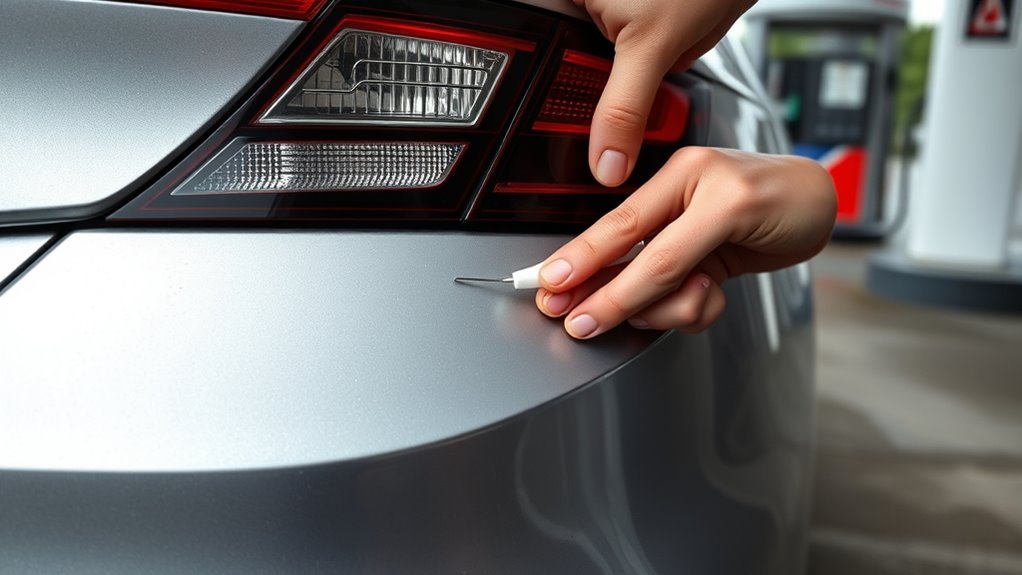
A stuck Sonata fuel door usually comes from one of six conditions: the vehicle is still locked, ice is holding the seal, the latch is dirty, the panel is misaligned, a cable has stretched or detached, or an electric actuator is weak. Match the symptom to the release system before buying a part.
If you hear a click but the door stays closed, the command is reaching part of the mechanism. The latch pin may be dragging, the actuator may be weak, or the hinge and rubber bumper may not push the panel outward. If a fitted cabin lever feels loose, inspect the cable and anchor points. If a fitted electric button is silent, test the circuit instead of assuming the actuator has failed.
Use Hyundai’s manuals and warranties resource to confirm the operating method for your vehicle before removing trim.
Warning: Work around the fuel filler only in a ventilated area. Do not smoke, use an open flame, or pry the painted panel with metal. If you smell raw fuel or see a leak, stop and arrange professional inspection.
How Do You Open a Stuck Sonata Fuel Door Safely?
Use the least forceful method first. The goal is to release the latch without bending the panel, damaging the hinge, or disturbing the filler area.
- Unlock and retry the correct release. Unlock the driver’s door. On a push-to-open design, press the rear center edge. On a cabin-release design, operate the lever or button again.
- Relieve pressure on the latch. While one person operates the release, have a helper press the fuel door inward and then let it move outward. Light palm tapping around the edge can free a sticky latch.
- Deal with ice without prying. Tap or press the door lightly, apply approved deicer around the seam, or move the car to a warmer place. Do not use radiator antifreeze or very hot water.
- Use a manual emergency release only if fitted. Follow the owner’s manual for the exact access point and pulling direction. Stop if trim will not release normally or the cable requires force.
Pro Tip: If the door opens only while someone presses or taps it, clean the latch, hinge, and panel contact points before closing it. Otherwise, it may stick again at the next fill-up.
[Products Worth Considering]

[Vehicle Fitment]: Fuel Door Lock Actuator Compatible with Hyundai Sonata 2015-2019; Compatible with Kia Optima 2011-2020

Fuel door actuator, constructed of premium material for long lasting durability and reliability

Application for Hyundai Sonata 2011-2015
Before You Remove Trim: Quick Checks
These checks separate a simple latch problem from a cable, actuator, or wiring fault. Use only the rows that match the release system fitted to your Sonata.
| What You Notice | Likely Cause | Best Next Step |
|---|---|---|
| Door opens after unlocking the driver’s door | Normal central-locking operation | No repair is needed; remember that locking the driver’s door may lock the fuel door. |
| Release clicks or clunks | Sticky latch, weak actuator, low spring pressure, or misalignment | Relieve pressure on the door, open it safely, then clean and observe latch movement. |
| Fitted cabin lever feels loose | Stretched, slipped, detached, or broken cable | Inspect the lever anchor, cable sheath, and both cable ends. |
| Fitted electric button is silent | Switch, fuse, wiring, ground, control, or actuator fault | Use the correct wiring diagram, then test power and ground before replacing the actuator. |
| Door is stuck after freezing weather or a winter wash | Ice around the seal or latch | Use light tapping, approved deicer, or warmth; do not pry. |
| Fuel smell, wetness, or a deformed filler area | Possible fuel-system problem rather than a door-only fault | Stop DIY work and schedule service immediately. |
Is the Problem the Latch, Cable, Switch, or Actuator?
The fastest diagnosis starts with what the release feels and sounds like. A door that opens after pressure is removed usually has a sticky latch or alignment issue. A loose lever points toward a cable problem. A button that works intermittently may indicate a weak actuator, poor connection, or binding latch. A completely silent system needs electrical testing only if the vehicle actually uses an electric release.
- Latch or alignment problem: The release makes noise, but the door stays shut or needs a helper. Clean the latch pin, hinge, rubber bumper, and contact points.
- Cable problem: A fitted lever feels loose, gritty, or disconnected. Inspect both cable ends, the outer sheath, and the mounting clips.
- Electric actuator problem: You hear clicking, the door works intermittently, or the pin moves weakly. Confirm good power and ground before replacement.
- Switch, fuse, or wiring problem: A fitted electric release is silent. Check the correct fuse panel, wiring diagram, switch output, ground, and connector condition.
- Frozen seal problem: The issue started after snow, freezing rain, or a winter wash. Use deicer and warmth instead of force.
Note: A fuse cannot fix a cable-operated release, and a new actuator cannot correct a misaligned panel. Identify the system and test the failed function first.
How Do You Inspect an Interior Release and Its Wiring?
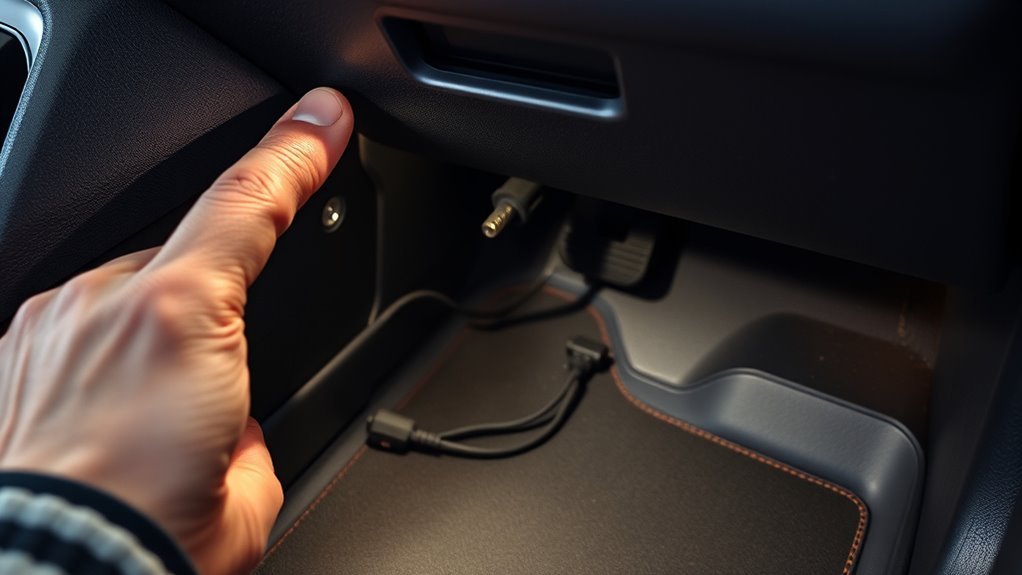
Use this section only if your Sonata has a cabin lever or electric release button. A sticky switch, loose connector, damaged cable anchor, or broken wire can imitate a failed latch or actuator.
Check the Release Switch or Lever
- Operate the release several times and listen near the fuel door for movement.
- Check whether the switch is sticky, sunken, cracked, or loose, or whether the lever has normal resistance.
- Remove surrounding trim only by the procedure in the service information for your model.
- Inspect accessible connectors, cable anchors, and clips for looseness, corrosion, or damage.
- On an electric system, use a multimeter and the correct wiring diagram to test the switch command, power, and ground.
If the switch receives power but the actuator receives no command, the switch, wiring, or control path may be faulty. If good power and ground reach the actuator but it only clicks or moves weakly, check for mechanical binding before replacing it.
Inspect Wiring Connections
Follow accessible wiring without piercing insulation. Look for pinched sections, broken clips, corrosion, loose grounds, damaged connectors, or old repair splices. Back-probe only when you know how to avoid spreading terminals or allowing moisture into the connector.
No command at the actuator means the fault is upstream. Depending on the model, that path may include a fuse, switch, wiring, ground, or body-control logic. Use model-specific wiring information rather than guessing from another Sonata year.
How Do You Check the Manual Release on a 2014 Sonata Hybrid?
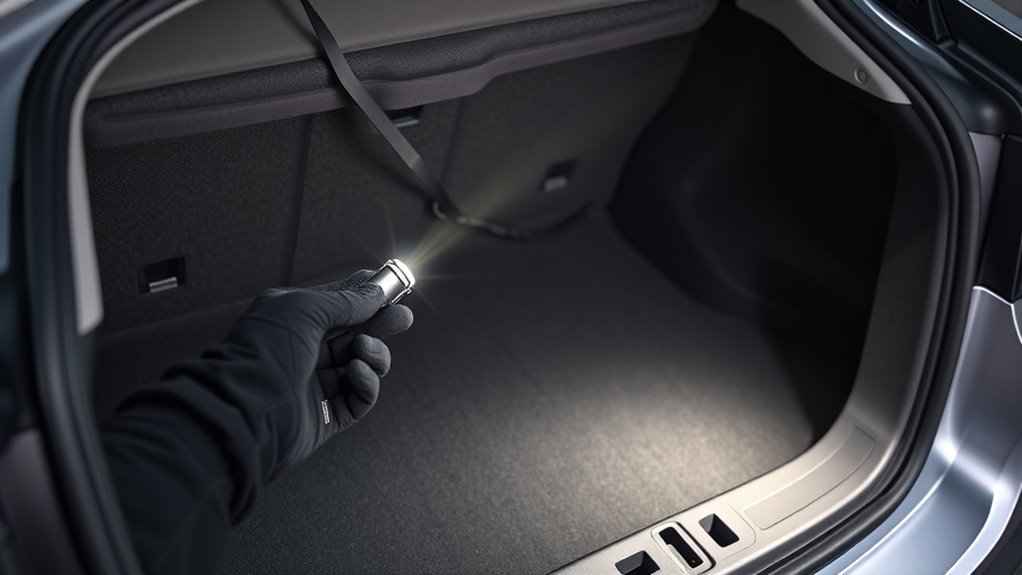
Release layout varies across Sonata generations, and current push-to-open instructions should not be applied automatically to a 2014 Hybrid.
Locate the Release Only From Model-Specific Instructions
- Open the trunk or luggage compartment and compare the trim layout with the owner’s manual.
- Look only at the access point identified by the manual; do not pull random loops, wires, or trim fasteners.
- Use a flashlight and confirm that the identified cable or pull routes toward the fuel-door side.
- Pull steadily in the direction shown by the manual. Stop if it needs a sharp yank.
- Have a helper relieve pressure on the fuel door while the release is operated.
Inspect the Cable for Damage
After the door opens, inspect any confirmed release cable and its housing. Look for fraying, kinks, corrosion, loose clips, split sheathing, or an end fitting that has slipped from its bracket. The outer sheath must remain anchored while the inner cable moves. If the sheath moves with the pull, the latch may not receive enough travel.
Operate and Test the Mechanism
With the fuel door open, watch the latch while a helper operates the normal release. The latch should retract smoothly and return cleanly. Do not place fingers in the latch path.
- Moves freely: Inspect panel alignment, hinge spring pressure, and the rubber bumper.
- Moves slowly: Clean the latch and apply a small amount of suitable lubricant.
- Does not move: Inspect the confirmed cable, actuator, switch, wiring, or control path.
- Moves but misses the door: Check latch position, hinge condition, and panel alignment.
How Do You Clean and Lubricate a Sticking Fuel-Door Latch?
Dirt, road salt, dried grease, and moisture can make a latch pin drag. Cleaning is the first repair to try after the door has been opened safely.
- Open the fuel door without force. Use the release method specified for your model.
- Clean the latch area. Wipe away old grease, grit, and dirt with a rag. Use a small brush for the latch pocket.
- Clean the hinge and contact points. Remove packed dirt and inspect for corrosion or rubbing marks.
- Lubricate lightly. Apply a small amount of lubricant suitable for automotive latches to the moving pin and hinge pivot. Keep overspray away from the filler opening and painted surfaces.
- Cycle the release. Open and close the door several times while watching the latch movement.
- Check the rubber bumper and alignment. Excess pressure against the latch can keep the door from popping outward.
The door should release without repeated tapping. If it still needs a helper after cleaning and alignment checks, the latch, cable, actuator, or hinge may be near failure.
[Products Worth Considering]
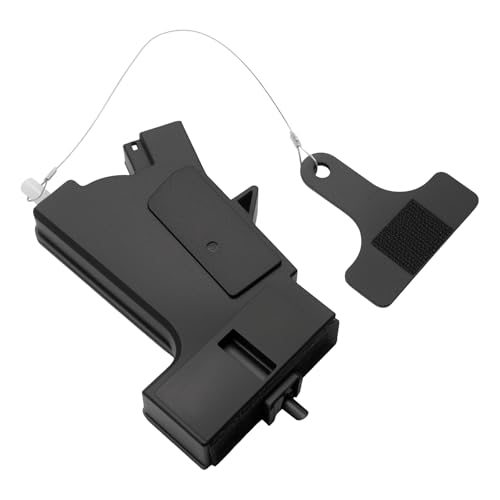
Fitment: 81590-2T000 Fuel Door Lock Actuator replacement for Kia Optima 2011-2020

Cleans entire fuel system (injector valves, injectors, valves, combustion chamber) to restore fuel economy; exact Original Equipment Manufacturer fluid that your vehicle came with

[OE Number] 81590-3S000, 815903S000.
What Fuel-Door Panel Problems Can Keep It Closed?
Inspect the open panel for anything that prevents it from moving outward when the latch releases.
- Misaligned fuel door: The gaps are uneven, or an edge rubs the body opening.
- Weak hinge spring or low bumper pressure: The latch releases, but the door does not move outward.
- Sticky latch pin: The release clicks, but the pin retracts slowly.
- Damaged plastic pocket: Cracked or warped plastic traps the latch pin.
- Old grease, salt, or corrosion: Sticky black residue or white corrosion interferes with movement.
If the door sits flush but does not pop outward, inspect the hinge spring and rubber bumper. If the panel is visibly crooked, do not keep slamming it. Correct the alignment or damaged hinge first.
When Should You Replace the Cable, Latch, or Actuator?
Replace a part only after cleaning, alignment checks, and model-specific testing identify the failed component. This avoids replacing an expensive actuator when the real problem is pressure on a dirty latch.
| Confirmed Sign | Likely Failed Part | Action |
|---|---|---|
| A fitted lever has no resistance and an end is detached or the cable is damaged | Cable, anchor, or clip | Repair the anchor or replace the cable assembly after confirming fitment. |
| Good power and ground reach the actuator, but movement remains weak after the latch is cleaned | Electric actuator | Replace the actuator or actuator/latch assembly specified for the VIN. |
| Latch pin binds or stays extended after cleaning and correct alignment | Latch mechanism | Replace the latch mechanism or combined assembly used on that model. |
| No command reaches a fitted actuator | Switch, fuse, wiring, ground, or control path | Trace the circuit with the correct diagram before replacing the actuator. |
A current OEM-parts retailer labels Hyundai part number 81590-3S000 as a 2011–2015 Sonata fuel-filler door lock actuator and describes it for Sonata Hybrid use. However, the same listing shows no application-level fitment table. Treat the number as a reference only and confirm the correct part through a Hyundai dealer or VIN-based catalog before ordering.
[Products Worth Considering]

Fitment - For Kia Optima 2011-2020, For Hyundai Sonata Sedan 2015-2019, not for Hyundai Sonata Hybrid

[Vehicle Fitment]: Fuel Door Actuator Compatible with Hyundai Sonata 2011-2014 L4 2.0L(Sedan), Sonata 2011-2015 L4 2.4L(Sedan)
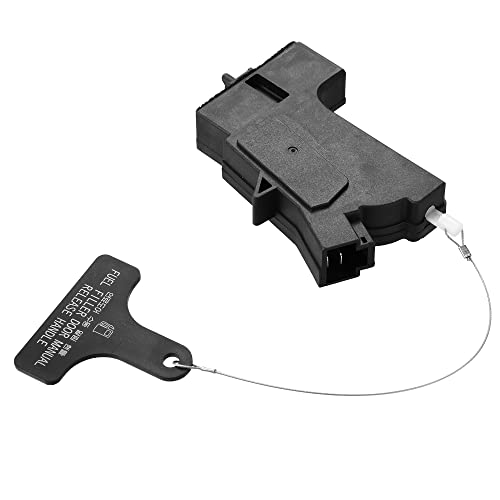
[OE Number] 81590-2T000, 815902T000.
What Affects Repair Cost, and How Can You Prevent Another Jam?
Cleaning and alignment are the lowest-cost fixes because they require little more than basic supplies. Cost rises when trim removal, electrical diagnosis, cable replacement, or actuator replacement is needed. Labor varies because access and release design differ by model year.
Start with the free checks: unlock the car, confirm the release type, relieve pressure on the door, address ice, and clean the latch. Replace a part only after testing identifies the failure.
- Cleaning and lubrication: Best when the latch is dirty but still moves through its full travel.
- Cable repair: Appropriate only on a cable-equipped model with a confirmed anchor, sheath, or cable fault.
- Actuator replacement: Appropriate when the actuator receives correct power and ground but cannot move the cleaned latch properly.
- Professional diagnosis: Recommended when trim access is unclear, wiring diagrams are unavailable, or the emergency method does not work.
To prevent repeat problems, clean the latch during routine washes, remove road salt from the seal and hinge area, and avoid closing a visibly misaligned panel. In freezing weather, keep the seam dry when possible. Hyundai’s fuel-filler guidance recommends light tapping, approved deicer, or moving the vehicle to a warm place when ice prevents opening.
Does a Stuck Sonata Fuel Door Mean There Is a Recall?
A stuck outer fuel door does not by itself prove that your Sonata is covered by a recall. The usual causes are locking state, ice, latch contamination, panel alignment, cable trouble, or an electric release fault. Fuel-system recalls can involve different components and symptoms, so do not treat a fuel-door jam as confirmation of recall coverage.
Check the vehicle’s 17-digit VIN through the NHTSA recall lookup and the Hyundai safety recall and service campaign lookup. NHTSA explains that a VIN result can show unrepaired safety recalls, but it may not show a completed recall, certain newly announced recalls before all VINs are identified, or non-safety service campaigns. Hyundai’s tool also covers service campaigns and states that covered repairs are completed free of charge.
If the fuel door problem comes with a fuel odor, a popping sound from the tank area, warning lights, visible deformation, or a leak, stop treating it as a simple latch issue. Arrange service and check the VIN before driving further.
Note: Use the VIN, not only the year and model. Recall status can differ because of build date, powertrain, market, previous repair completion, and campaign scope.
Frequently Asked Questions
How do I open a stuck Hyundai Sonata fuel door?
Unlock the driver’s door first. Use the release method fitted to your model: press the rear center edge on push-to-open designs, operate the cabin release on older designs, or use a manual emergency release only when the owner’s manual confirms one is fitted. If ice is present, tap lightly or use an approved deicer instead of prying.
Why does my Sonata fuel door click but not open?
A click means the release is receiving a command, but the latch pin may be dirty, the actuator may be weak, the hinge may not push the door outward, or the panel may be misaligned. Open the door without force, then clean and test the latch movement.
Where is the emergency fuel filler release on a Hyundai Sonata?
The location varies by year, trim, and market, and some Sonatas do not use a separate manual cable. Check the owner’s manual for your exact vehicle before removing trunk trim. Do not assume a video for another model year matches your car.
What should I do if my Sonata fuel door is frozen?
Unlock the vehicle, tap or press the door lightly, and use an approved deicer around the seam. You can also move the car to a warmer place and allow the ice to melt. Do not pry the panel or pour very hot water on it.
Can I spray WD-40 on the fuel door latch?
Use only a small amount of a lubricant suitable for automotive latches, applied away from the filler opening. Wipe away excess. A silicone-based lubricant is often cleaner for the hinge and latch after dirt and old grease are removed.
Does a stuck Sonata fuel door mean the car has a recall?
Not by itself. A stuck outer fuel door is usually a latch, alignment, release, or freezing issue. Recall coverage is VIN-specific, so check both NHTSA and Hyundai with the vehicle’s 17-digit VIN.
How much does it cost to replace a Sonata fuel door actuator?
Cost varies by model year, part design, labor access, and whether the problem is actually the actuator. Cleaning and adjustment are the lowest-cost steps. Confirm the failed component and verify any replacement part by VIN before ordering.
Conclusion
When a Hyundai Sonata fuel door will not open, unlock the driver’s door and confirm the release type before doing anything else. Use light pressure, approved deicer, or the exact emergency method in the owner’s manual. After the door opens, clean the latch and check alignment. Test a cable or electric circuit only when your model uses one. Stop immediately if you smell fuel, see a leak, or find deformation around the filler area.
Sources
- MyHyundai Manuals & Warranties — official Hyundai resource for model-specific owner information.
- Hyundai Owner’s Manual: Opening the Fuel Filler Door — central-lock operation and ice-release guidance for the manual shown.
- NHTSA Recall Lookup — VIN recall scope, limitations, and owner guidance.
- Hyundai Safety Recalls and Service Campaigns — Hyundai VIN lookup and repair information.
- Hyundai Fuel Filler Door Lock Actuator 81590-3S000 Listing — part-number reference that still requires VIN fitment confirmation.