Curb weight is the weight of a vehicle with its standard equipment and required fluids, including a full fuel tank, but without passengers or cargo. You use it to estimate payload, compare performance, plan towing safely, and avoid overloading the vehicle. It is different from GVWR, gross vehicle weight, dry weight, and payload capacity, so reading the right number matters.
Quick Answer
Curb weight is your vehicle’s weight as it sits ready to drive: standard equipment, fuel, oil, coolant, and other factory-required items included, but no passengers or cargo. To estimate payload, subtract curb weight from GVWR. For the most accurate number, check manufacturer specs or weigh the vehicle on a certified scale.
Key Takeaways
- Curb weight includes the vehicle and required fluids, but excludes passengers, cargo, and most aftermarket accessories.
- GVWR is the maximum loaded weight the manufacturer says the vehicle can safely handle.
- Estimated payload = GVWR minus curb weight, but the door-jamb payload label or a certified scale is better for real-world loading.
- Towing capacity cannot be calculated from curb weight alone; you must also check GCWR, tongue weight, hitch rating, axle ratings, tires, and the owner’s manual.
Who Needs to Know Curb Weight (And Why It Matters)
You need curb weight any time you want to understand what your vehicle can safely carry or tow. It gives you the starting point before you add people, luggage, tools, cargo, a trailer tongue load, or accessories.
Curb weight matters for buyers, owners, fleet managers, RV users, contractors, and anyone who tows. A lighter vehicle may accelerate more easily and use less energy, while a heavier vehicle may feel more stable but needs more braking force and often uses more fuel. The useful number is not just the weight itself; it is how that weight compares with the vehicle’s ratings.
The federal definition of curb weight includes standard equipment, maximum capacity of engine fuel, oil, and coolant, and certain equipped items such as air conditioning or optional engine weight. That makes curb weight a ready-to-operate baseline, not a stripped or empty shell.
Warning: Never load a vehicle based on guesswork. Exceeding GVWR, GAWR, tire load ratings, hitch ratings, or the manufacturer’s towing limits can reduce braking control, overheat tires, damage suspension parts, and create legal or insurance problems.
What Curb Weight Includes
Curb weight is the vehicle’s ready-to-drive baseline weight. In normal automotive use, it includes the vehicle itself, standard factory equipment, and required operating fluids. The federal wording specifically includes standard equipment plus maximum fuel, oil, and coolant, with certain equipped items such as air conditioning and optional engine weight included when applicable.
Fluids and Fuel Included
Curb weight is not the same as an empty, dry vehicle. It includes fuel, engine oil, coolant, and the factory equipment needed for the vehicle’s normal operation. Many manufacturer spec sheets also describe curb weight as including all standard fluids.
The fuel tank can make a noticeable difference. A full tank may add 80 to 200 pounds or more depending on tank size and fuel type. If you weigh a vehicle yourself and want a curb-weight-style number, remove cargo and passengers and fill the tank first.
Standard Equipment Count
Curb weight includes standard equipment installed on the vehicle for that trim or configuration. This typically includes the engine, transmission, body, chassis, seats, standard wheels, standard battery, factory HVAC equipment, safety systems, and other standard components.
Trim levels matter. A base model, luxury trim, long-wheelbase version, diesel engine, four-wheel-drive system, panoramic roof, or heavy-duty tow package can change curb weight. Do not assume every version of the same model has the same number.
What Curb Weight Does Not Include (Passengers, Cargo, and Exceptions)
Curb weight does not include people, luggage, work tools, pets, groceries, camping gear, bikes, roof boxes, trailer tongue weight, or most aftermarket accessories. Those items must be added when you calculate the vehicle’s actual loaded weight.
Passengers and Weight
Passenger weight is outside curb weight. If five people get into the vehicle, their combined weight reduces the remaining payload available for cargo or trailer tongue weight.
For example, if your estimated payload is 1,300 pounds and the occupants weigh 700 pounds combined, you have about 600 pounds left before cargo, accessories, and tongue weight. This is why the same vehicle can be safe for a light weekend trip but overloaded for a fully packed towing trip.
Cargo and Belongings
Cargo includes anything added after the curb-weight baseline: luggage, tools, sports gear, spare fluids, coolers, construction materials, or equipment. Cargo should be counted and distributed carefully.
Heavy cargo should be kept low and secured. Poor weight distribution can make the vehicle harder to steer, increase braking distance, overload one axle, or make a trailer combination unstable.
Aftermarket Accessories
Aftermarket parts reduce the payload you have left. Common examples include larger wheels and tires, steel bumpers, winches, roof racks, bed covers, drawer systems, lift kits, running boards, audio equipment, auxiliary batteries, and camper shells.
If you add a 120-pound bumper and winch, that 120 pounds must be treated like permanent cargo. It also changes axle loading, especially if the part is mounted far forward or far behind the axle.
Note: Electric vehicles often have higher curb weights because of battery packs. That does not automatically mean more payload. Always check the vehicle-specific payload label and manufacturer ratings.
Curb Weight vs. Dry Weight, GVW, GVWR, GAWR, and GCWR
Vehicle weight terms sound similar, but they are used for different decisions. Curb weight tells you the baseline. GVWR tells you the ceiling. GVW tells you what the vehicle actually weighs right now.
| Term | What It Means | Why It Matters |
|---|---|---|
| Curb Weight | Vehicle ready to drive with standard equipment and required fluids, but no passengers or cargo. | Starting point for estimating payload and comparing vehicle specs. |
| Dry Weight | Vehicle weight without some or all fluids, depending on the manufacturer’s definition. | Common in RVs, trailers, motorcycles, and powersports; not the best number for real-world loading. |
| GVW | Gross vehicle weight: what the vehicle actually weighs at a specific moment with people and cargo. | Use a scale to confirm it before heavy hauling or towing. |
| GVWR | Gross vehicle weight rating: the manufacturer’s maximum loaded weight for the single vehicle. | Do not exceed it. |
| GAWR | Gross axle weight rating: the maximum load allowed on each axle. | A vehicle can be under GVWR but still overload one axle. |
| GCWR | Gross combination weight rating: the maximum loaded weight of the vehicle and trailer together. | Critical for towing. |
| Payload Capacity | How much weight you can add to the vehicle. | Includes passengers, cargo, accessories, and trailer tongue weight. |
| Tongue Weight | The downward force a trailer puts on the hitch. | Counts against payload and rear axle capacity. |
[Products Worth Considering]

This Andersen Hitches weight distribution hitch kit is designed to improve towing stability with a grease-free friction cone and tension chain system that helps reduce sway and bounce. It features a universal setup with a 2-inch ball and 4-inch drop/rise to suit many bumper-pull trailer applications, while making hitching and unhitching faster and easier than traditional spring bar systems. Built in the USA, it offers dependable performance for travelers, workers, and outdoor enthusiasts who need confident towing control.

This trailer tongue weight scale helps you check hitch weight quickly and accurately before towing, reducing sway and improving overall safety. Built with durable steel and a spring mechanism, it works without batteries and includes a recalibration feature to maintain true-zero accuracy over time. It is designed for RVs, campers, and utility trailers, with a top plate that helps protect your coupler during use.

The MaxxHaul 70115 roof rack cargo basket adds valuable storage space for road trips, camping, moving, and everyday hauling. Built from powder-coated steel with a raised rail design and mesh base, it helps keep luggage, gear, and bulky items secure while reducing wind resistance. It installs easily on most factory or aftermarket crossbars with included mounting hardware for a dependable rooftop cargo solution.
Gross Weight vs. Curb Weight: Key Differences
Curb weight is the vehicle before you load it. Gross vehicle weight is the vehicle after you load it. That difference is the heart of safe loading.
For example, a vehicle with a curb weight of 4,200 pounds may weigh 5,400 pounds after you add passengers, luggage, a cargo box, and trailer tongue weight. The 5,400-pound number is the gross vehicle weight at that moment. If the GVWR is 5,700 pounds, you have only 300 pounds of margin left.
| Metric | Role |
|---|---|
| Curb Weight | Baseline ready-to-drive weight |
| Gross Vehicle Weight | Actual loaded weight right now |
| GVWR | Maximum loaded vehicle rating |
| Use | Payload planning, towing checks, safety compliance |
What GVWR Is and Where to Find It
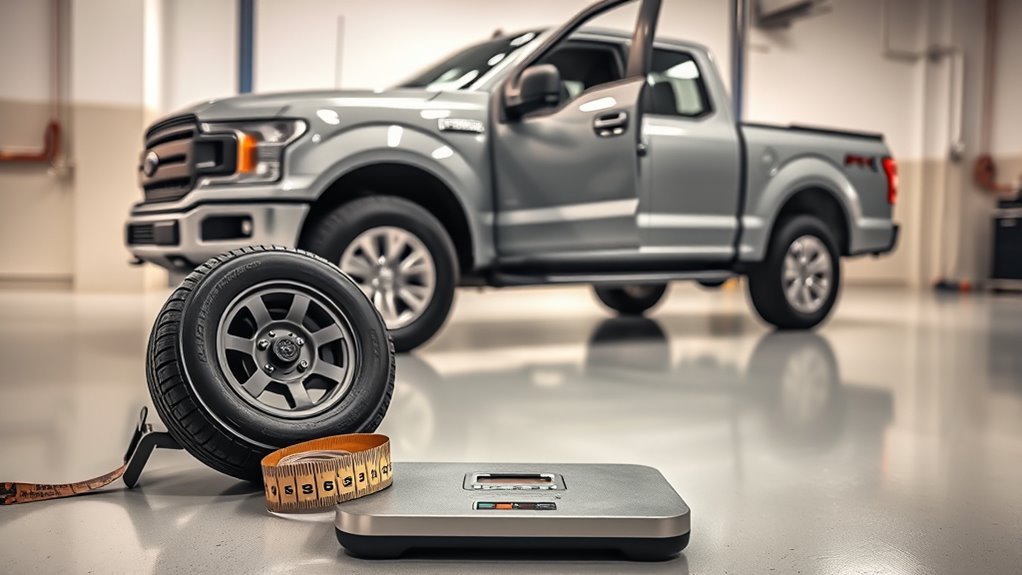
GVWR stands for Gross Vehicle Weight Rating. It is the manufacturer’s maximum allowed loaded weight for a single vehicle. It includes the vehicle, passengers, cargo, fluids, accessories, and any trailer tongue weight pressing down on the hitch.
You can usually find GVWR on the certification label near the driver’s seating position, often on the driver-side door jamb, door edge, latch post, or pillar. Federal certification rules require the label to include GVWR and GAWR information.
Do not confuse GVWR with curb weight. The label may show how much occupants and cargo should not exceed, and it may show GVWR and GAWR, but it usually does not give you the exact curb weight for your trim and options.
How Curb Weight Affects Performance and Fuel Economy
Curb weight affects how much work the engine, motor, brakes, tires, and suspension must do. A lighter vehicle generally needs less energy to accelerate and climb hills, while a heavier vehicle usually needs stronger brakes, tires, and suspension components to manage the added mass.
For performance, curb weight is often discussed with power-to-weight ratio. A 300-horsepower car that weighs 3,000 pounds will usually feel quicker than a 300-horsepower vehicle that weighs 4,500 pounds, assuming gearing, traction, and aerodynamics are similar.
For fuel economy, weight is only one factor. Aerodynamics, engine design, tires, gearing, hybrid systems, battery size, and driving habits also matter. To compare official estimates for a specific model, use the EPA and DOE resource FuelEconomy.gov.
A lighter curb weight can improve acceleration and efficiency, but safe loading depends on ratings, not guesses. Always compare your actual loaded weight with GVWR, GAWR, GCWR, tire ratings, and hitch ratings.
Calculating Payload From Curb Weight and GVWR
The basic payload estimate is simple:
Estimated payload = GVWR − curb weight
If a vehicle has a 6,000-pound GVWR and a 4,200-pound curb weight, the estimated payload is 1,800 pounds. That 1,800 pounds must cover passengers, cargo, dealer-installed accessories, aftermarket accessories, and trailer tongue weight.
| Example Load | Weight |
|---|---|
| Estimated payload | 1,800 lb |
| Passengers | 700 lb |
| Cargo | 450 lb |
| Aftermarket roof rack and accessories | 100 lb |
| Trailer tongue weight | 350 lb |
| Remaining margin | 200 lb |
This example is still under the estimated payload, but the margin is small. You would also need to check rear GAWR, tire load ratings, hitch rating, and the towing section of the owner’s manual.
Pro Tip: The “combined weight of occupants and cargo should never exceed” number on the tire-and-loading label is often the easiest payload number to use. It already reflects the vehicle as built by the manufacturer.
How Curb Weight Relates to Towing Capacity
Curb weight helps you understand the starting weight of the tow vehicle, but it does not give you towing capacity by itself. Towing capacity is set by the manufacturer and depends on drivetrain, cooling, frame strength, brakes, axle ratio, hitch equipment, tires, and combined weight limits.
Before towing, check these numbers:
- GVWR: maximum loaded weight of the tow vehicle.
- GAWR: maximum allowed weight on each axle.
- GCWR: maximum loaded weight of the vehicle and trailer together.
- Trailer weight: loaded trailer weight, not empty trailer weight.
- Tongue weight: the downward hitch load that counts against payload.
- Hitch rating: the limit printed on the hitch or listed by the manufacturer.
- Tire load rating: the tire’s maximum supported load at the correct pressure.
A common mistake is focusing only on advertised towing capacity. A vehicle can be under its trailer-weight limit but still exceed payload, rear axle rating, or GVWR because tongue weight and cargo add up quickly.
[Products Worth Considering]
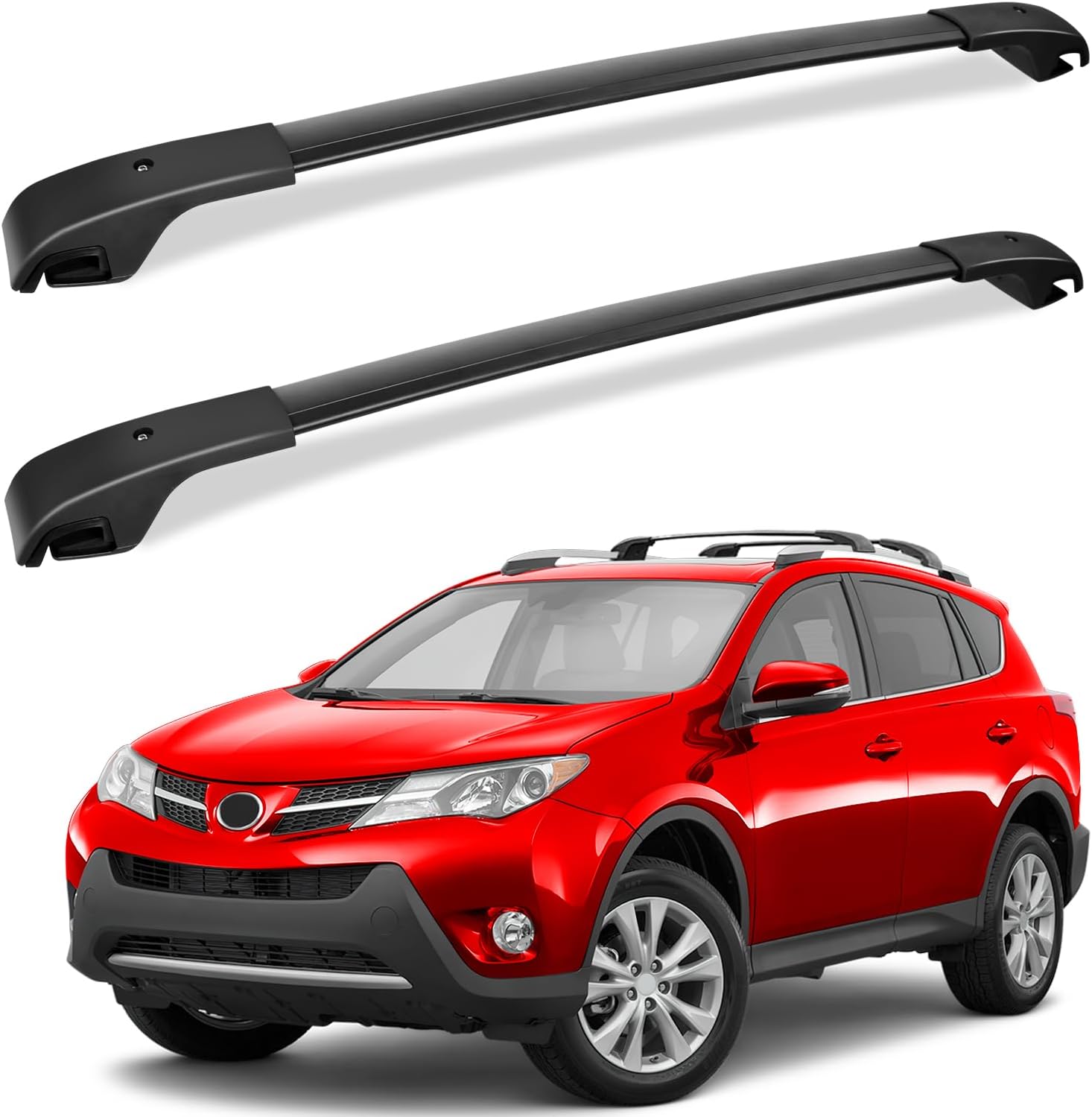
These roof rack cross bars are designed specifically for Toyota RAV4 models from 2013 to 2018 with side rails, offering a secure fit across multiple trims. Built with thickened aluminum, durable clamps, rubber padding, and stainless steel hardware, they provide dependable cargo support for travel and daily hauling. The easy-install design and high load capacity make them a practical upgrade for carrying luggage and other gear.

These replacement support brackets are designed to secure the spring bars on a trailer frame for CURT TruTrack weight distribution hitches. Their adjustable mounting holes help achieve precise leveling while the rigid construction supports integrated sway control for a steadier towing experience. A durable powder coat finish adds long-lasting protection, and the package includes two replacement brackets.

Expand your vehicle's storage with this universal roof rack cargo basket, designed to carry gear securely on road trips, camping adventures, and everyday hauling. Built from powder-coated steel with rust-resistant treatment, it offers dependable durability in harsh weather while the wind deflector, side rails, and reflective accents help protect cargo and improve travel safety. Installation is simple with universal U-bolts, making it a practical fit for many vehicles with crossbars.
How to Find or Measure Your Vehicle’s Curb Weight (VIN, Door Sticker, Scales)

At a Glance
| Time Required | 5 minutes for a spec lookup; 20–45 minutes if using a public scale |
| Difficulty | Easy |
| Tools Needed | Owner’s manual, VIN/build sheet, door labels, certified scale |
| Cost | Usually free for manual/spec lookup; public scales may charge a small fee |
There are four practical ways to find or confirm curb weight:
[Products Worth Considering]

The CURT 17200 Trailer Sway Control Kit helps limit lateral trailer movement to improve towing stability and control. It is designed to work with most weight distribution hitches or a sway tab mount, and includes a weld-on tab, spacer plate, and adjustable hardware for flexible installation. Built for smoother, straighter towing, it helps reduce sway and makes towing more confident on the road.
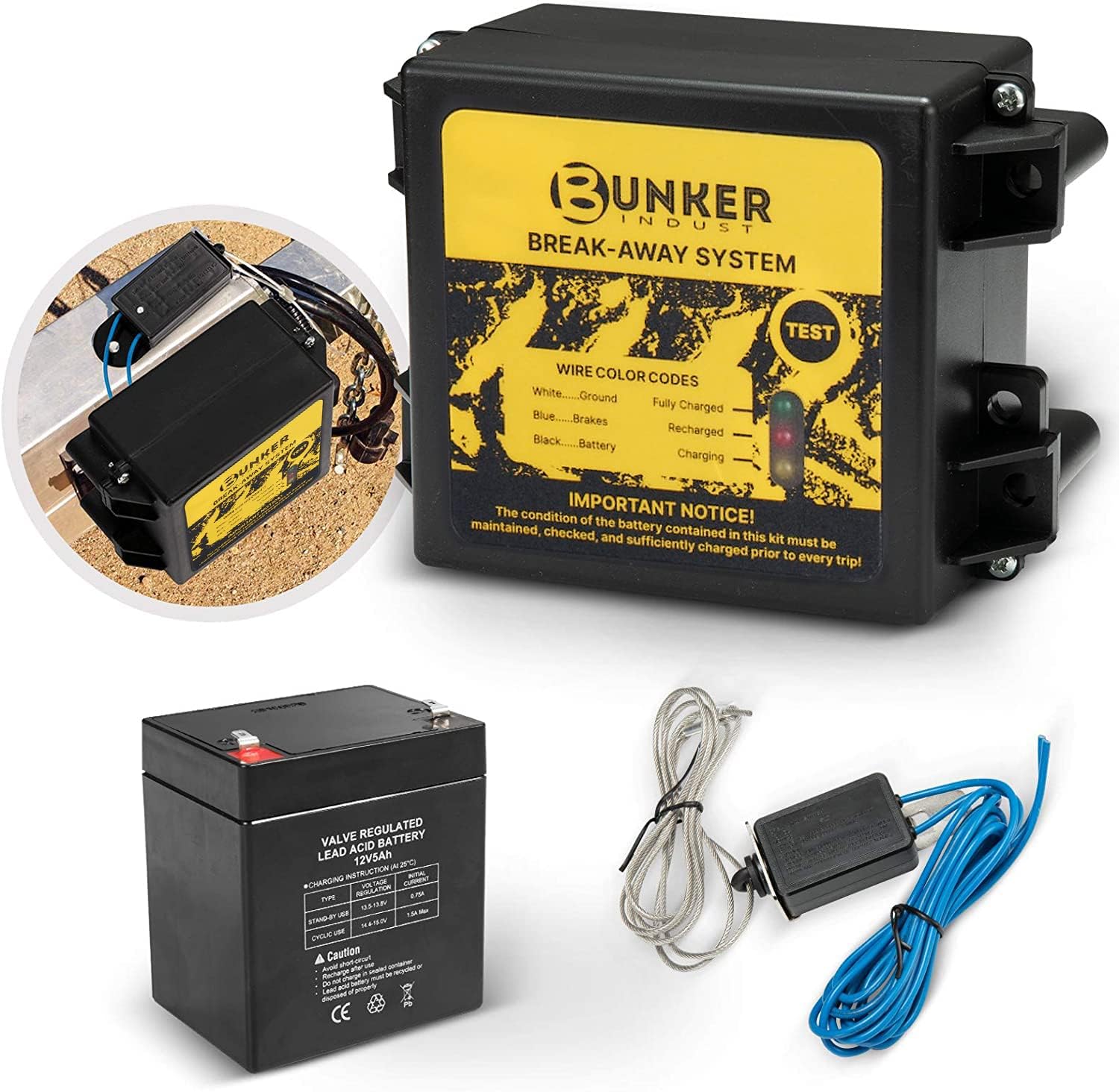
This trailer breakaway kit is designed for trailers with an existing electric brake system, helping activate the brakes if the trailer separates from the tow vehicle. It includes a battery, breakaway switch, and charger with an LED display for easy status checks, making it a practical safety upgrade for caravans and trailers. The side-mount design supports quick installation, while weather and corrosion resistance help it stand up to outdoor use.

Rhino USA D Ring Shackles provide a dependable recovery connection for off-road and towing setups, with a high break strength designed for demanding use. They fit most aftermarket bumpers and universal shackle mounts, and the included rubber isolator kit helps reduce noise, vibration, and wear. Built from chromoly steel with an anti-rust powder-coated finish, these shackles are made for long-lasting performance in harsh conditions.
1. Check the Owner’s Manual or Manufacturer Specs
Start with the owner’s manual, manufacturer specification page, window sticker, or build sheet. This is usually the fastest source for published curb weight. Make sure the number matches the model year, trim, drivetrain, engine, cab style, bed length, battery size, and wheelbase.
2. Use the VIN or Build Sheet
A VIN lookup or dealer build sheet can identify the original trim and factory options. This helps when the same model has several curb weights. Use manufacturer or dealer data when possible instead of random databases.
3. Read the Door Labels Correctly
The driver-side certification label usually gives GVWR and GAWR. The tire-and-loading label usually gives tire pressures and a statement such as “the combined weight of occupants and cargo should never exceed” a specific number. These are extremely useful for payload and safety, but they are not the same as curb weight.
If your door label does not show curb weight, that is normal. Use the label for ratings and payload, then use manufacturer specs or a scale for curb weight.
4. Weigh the Vehicle on a Certified Public Scale
For the most accurate real-world number, use a certified public scale, truck stop scale, recycling center scale, quarry scale, or similar facility. Household scales are not suitable.
- Remove passengers, cargo, tools, child seats, roof boxes, and loose items.
- Fill the fuel tank if you want a curb-weight-style measurement.
- Keep installed accessories on the vehicle if you want your real-world baseline.
- Drive onto the scale and record total weight.
- If the driver must stay inside, subtract the driver’s weight afterward.
- Ask for axle weights if you also need front/rear loading data.
This measured number may be higher than the published curb weight because it includes installed accessories, optional equipment, or dealer-installed parts.
Common Mistakes and Safety Risks From Misreading Curb Weight, Gross Weight, and GVWR
The biggest mistake is treating curb weight as the maximum safe vehicle weight. It is not. Curb weight is the starting point; GVWR is the maximum loaded limit.
Another common mistake is forgetting that payload includes people. A vehicle with a high towing number can still run out of payload after passengers, cargo, a hitch, and tongue weight are added. This is especially common with SUVs, half-ton pickups, and adventure vehicles loaded with roof racks, larger tires, recovery gear, and camping equipment.
Also watch axle ratings. A vehicle can be under GVWR while the rear axle is overloaded. This can happen when heavy cargo sits behind the rear axle or when trailer tongue weight is too high.
- Do not exceed GVWR. It is the maximum loaded vehicle rating.
- Do not exceed GAWR. Check front and rear axle weights when carrying heavy loads.
- Do not exceed tire ratings. Use the correct tire size, load rating, and cold pressure.
- Do not rely only on advertised towing capacity. Confirm payload, GCWR, hitch rating, and tongue weight.
- Recalculate after modifications. Accessories reduce available payload.
Frequently Asked Questions
Is a higher curb weight safer?
Sometimes, but not always. A bigger, heavier vehicle can offer better protection to its own occupants in a crash with a smaller vehicle, all else equal. However, heavier vehicles can increase risks for people in smaller vehicles, pedestrians, and cyclists. Safety features, crash structure, tires, brakes, and driver behavior still matter.
What is the difference between GVWR and curb weight?
Curb weight is the vehicle’s ready-to-drive weight without passengers or cargo. GVWR is the maximum loaded weight allowed by the manufacturer. In simple terms, curb weight is where you start, and GVWR is the limit you should not exceed.
Does the IRS use GVWR or curb weight?
For certain business vehicle depreciation rules, IRS guidance uses gross vehicle weight thresholds, not curb weight. Rules and deduction limits change by tax year, so check current IRS Publication 946 or Form 4562 instructions and speak with a qualified tax professional before making a purchase for tax reasons.
Is curb weight the same as dry weight?
No. Curb weight includes required fluids and fuel. Dry weight usually excludes some fluids, but the exact dry-weight definition can vary by manufacturer and vehicle type. For real-world loading, curb weight or actual scale weight is more useful.
Does curb weight include the driver?
Usually no. Curb weight excludes occupants. If you weigh the vehicle on a public scale while sitting inside it, subtract your body weight if you want an unloaded curb-weight-style measurement.
Can I calculate exact towing capacity from curb weight?
No. Curb weight helps with the math, but towing capacity depends on manufacturer ratings such as GCWR, trailer-weight rating, hitch rating, axle ratings, tire ratings, cooling, brakes, drivetrain, and the exact vehicle configuration.
Conclusion
Curb weight is the vehicle’s ready-to-drive baseline weight, not its maximum safe loaded weight. Use it with GVWR to estimate payload, but confirm real-world loads with the tire-and-loading label, owner’s manual, manufacturer towing guide, and a certified scale when accuracy matters.
The safest habit is simple: start with curb weight, add every person and item, count trailer tongue weight as payload, then compare the result with GVWR, GAWR, GCWR, tire ratings, and hitch ratings. That extra check can prevent overload, poor handling, brake fade, tire failure, and expensive damage.
Sources
- eCFR 49 CFR §571.3 — federal definitions of curb weight, GVWR, GAWR, and GCWR.
- eCFR 49 CFR §571.110 — tire selection, rim, and load-carrying capacity placard requirements.
- eCFR 49 CFR §567.4 — certification label content and placement requirements.
- IRS Publication 946 — depreciation and Section 179 vehicle guidance.
- U.S. EPA Fuel Economy — official fuel-economy resources and vehicle comparison tools.
- IIHS Vehicle Size and Weight — safety context for vehicle size, weight, crash protection, and road-user risk.