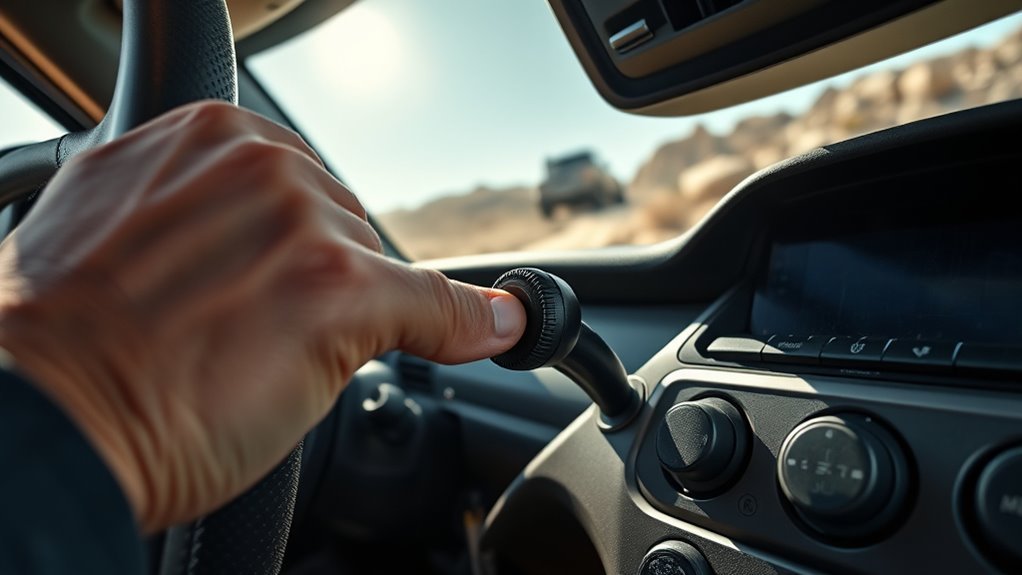
A center differential lock is a traction aid found on many full-time 4WD and AWD-based off-road vehicles. It locks the front and rear driveline together so one axle cannot spin faster than the other, helping the vehicle keep moving through mud, snow, sand, ruts, steep climbs, and uneven ground. Use it only when the surface allows some tire slip, then unlock it before normal dry-road driving.
Quick Answer
A center diff lock links the front and rear axles so both ends keep driving even when one axle loses traction. Engage it before slippery, loose, rutted, or steep terrain. Do not use it on dry pavement, because the locked driveline can bind, wear tires, stress drivetrain parts, and make steering feel heavy.
Key Takeaways
- A center differential lock connects the front and rear driveline so one axle cannot spin away while the other sits still.
- Use it on low-traction surfaces such as mud, snow, ice, sand, loose gravel, wet grass, steep dirt climbs, and uneven trails.
- Unlock it on dry pavement and other high-grip surfaces to avoid drivetrain windup, tire scrub, and poor turning feel.
- It is different from a front or rear axle locker, which locks the left and right wheels on one axle.
- Always follow your owner’s manual because engagement speed, 4HI/4LO rules, warning lights, and traction-control behavior vary by vehicle.
At a Glance
| Time Required | A few seconds once the vehicle is in the correct range |
| Difficulty | Easy, but vehicle-specific |
| Tools Needed | None for normal operation; owner’s manual recommended |
| Cost | No operating cost; maintenance cost depends on transfer case, actuator, seals, and fluid service |
Center Diff Lock vs Open and Limited-Slip Differentials
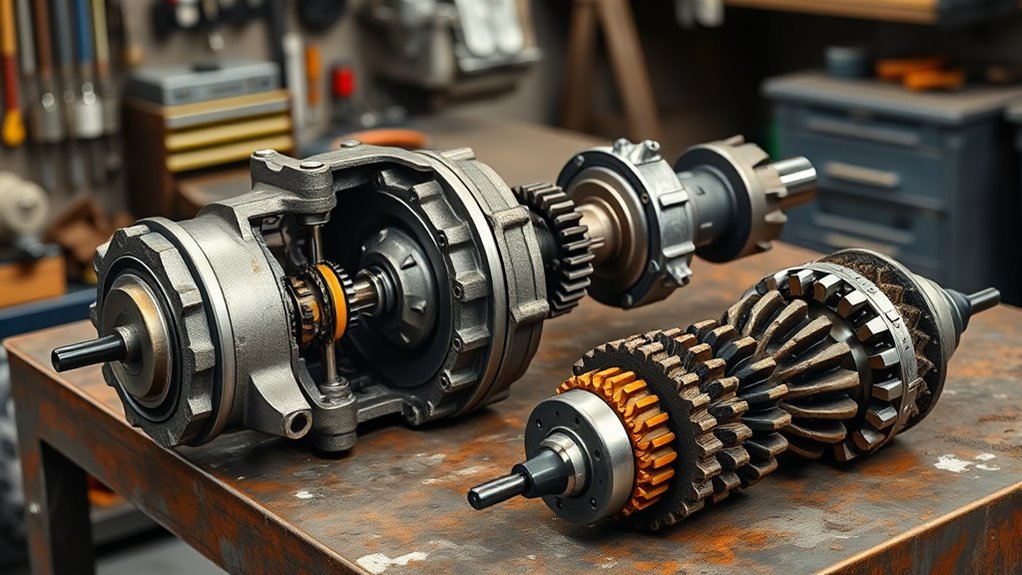
A center differential sits between the front and rear axles on a full-time 4WD or AWD-style driveline. When it is open, it lets the front and rear axles rotate at different speeds, which is what the vehicle needs for smooth turning on pavement. When you lock it, the front and rear outputs are mechanically linked so one axle cannot freely spin faster than the other.
You will often hear this described as a fixed 50/50 front-to-rear torque split. That is a useful driver shortcut, but the technical point is even more important: the lock prevents front-to-rear speed difference, so usable drive is not lost through the axle with the least grip. Actual wheel torque still depends on tires, surface grip, axle differentials, traction control, and whether front or rear axle lockers are also engaged.
| System | What It Does | Best Use | Avoid |
|---|---|---|---|
| Open center differential | Allows front and rear axles to rotate at different speeds | Dry pavement and normal driving | Deep mud, crossed-up ruts, or one axle spinning freely |
| Limited-slip or active center differential | Biases drive toward the axle with more grip | Mixed traction, snow, rain, gravel, light trails | Severe wheel lift or very low traction where a full lock is needed |
| Locked center differential | Links front and rear driveline speed | Mud, snow, sand, rocks, ruts, steep loose climbs | Dry pavement and tight high-grip turns |
Note: Not every 4WD vehicle has a center differential. Many part-time 4WD trucks do not have a center diff at all; selecting 4HI or 4LO already locks the front and rear driveline together through the transfer case. Full-time 4WD vehicles are the ones most commonly discussed when people say “center diff lock.”
[Products Worth Considering]

Custom-fit floor mats and cargo liner designed to provide edge-to-edge protection for the Toyota Land Cruiser Prado. Made from durable TPE material, they offer all-weather defense against rain, slush, snow, mud, and everyday dirt while remaining easy to install, clean, and maintain. The odorless, non-slip design helps keep your interior safer, cleaner, and more comfortable in every season.

These off-road traction boards are designed to help vehicles recover from mud, sand, and snow with reliable grip and easier ramp-up. Their double-sided diamond construction, cross-shaped teeth, and contoured ramps improve traction while the durable polypropylene build stays flexible in harsh conditions. Convenient mounting points, ergonomic handles, and a visible leash make them practical to carry, store, and retrieve when recovery is needed.

BUNKER INDUST off-road traction boards help vehicles regain grip in mud, sand, and snow with a double-sided diamond array and cross-shaped teeth for improved bite and stability. Built from upgraded automotive-grade polypropylene, they resist UV damage, cold-weather brittleness, and wheel-spin heat while remaining flexible enough to handle demanding recovery situations. Contoured ramps, ergonomic handles, and multiple mounting points make them practical to use, store, and retrieve when adventure turns into recovery.
How a Center Diff Lock Changes Front/Rear Torque
When you engage the center diff lock, the vehicle stops allowing the front and rear axles to rotate independently. That helps when one axle is on a slick patch and the other axle still has bite. Instead of letting the slippery end spin quickly, the locked center forces both driveline ends to keep working together.
Torque Split Dynamics
In simple terms, the center lock gives the vehicle a more predictable front-to-rear drive path. It is especially useful when the front tires and rear tires are on different surfaces, such as one axle on rock and the other in mud. It also helps on steep climbs, descents, and uneven tracks where weight transfer can unload one axle.
The real advantage is not magic extra power; it is preventing front-to-rear wheel-speed difference from wasting the power you already have.
Lock Versus Open
An open center differential is best for road manners because it lets the front and rear axles rotate at the different speeds required during turns. Its weakness appears when traction is uneven. An open differential does not truly “send all torque to the spinning side,” but the amount of usable torque is limited by the side with the least grip. That can leave the vehicle stuck even though some tires still have traction.
A locked center differential solves that front-to-rear problem by making both axles rotate together. This gives you steadier momentum through low-grip terrain and reduces the need to stab the throttle, which can dig holes, overheat components, or make the vehicle harder to control.
Effects During Turns
During a turn, the front and rear axles do not travel the exact same path. On a loose trail, the tires can slip slightly and release the stress. On dry pavement, they usually cannot. That is why a locked center diff can make the vehicle hop, bind, understeer, or feel reluctant to turn on high-traction surfaces.
- On hard surfaces: steering may feel heavy, tires may scrub, and driveline stress can build.
- On slippery terrain: the lock improves front-to-rear drive consistency and helps maintain momentum.
- For tight maneuvers: unlock the center diff when traction is high so the vehicle can turn normally.
When to Use a Center Diff Lock
Use a center diff lock when traction is low or uneven and the vehicle needs both axles to keep driving together. The best time to engage it is before you enter the difficult section, not after you are already buried, crossed up, or spinning.
Off-Road Traction Situations
Engage the center differential lock for conditions where tires can slip slightly and traction changes quickly. Common examples include:
- Mud and ruts: locking the center helps prevent one axle from spinning while the other still has grip.
- Snow and ice: it can improve steady drive at low speed, especially when traction is patchy.
- Loose gravel and wet grass: it helps maintain momentum when grip comes and goes.
- Soft sand: it supports smooth, consistent motion and reduces the chance of bogging down.
- Steep dirt climbs or descents: it keeps front and rear driveline speed tied together for more predictable control.
- Uneven trails and wheel-lift situations: it helps when one axle becomes light or loses traction.
Pro Tip: Engage the center diff lock before the obstacle, keep throttle smooth, and let the vehicle crawl or roll steadily. Spinning the tires hard usually makes recovery harder.
Avoid On High-Traction Surfaces
Do not use the center differential lock for normal dry-road driving. High-grip pavement does not let the tires release driveline tension easily, so the locked front and rear shafts can fight each other during turns. That stress is called drivetrain windup.
| Condition | Risk | Action |
|---|---|---|
| Dry pavement | Drivetrain windup and tire scrub | Unlock |
| Tight parking-lot turns | Binding, hopping, poor steering feel | Unlock |
| Even high traction | Extra wear with no traction benefit | Unlock |
| After leaving the trail | Unnecessary drivetrain stress | Unlock and confirm the light is off |
| Mud, snow, sand, loose gravel | Improved front-to-rear drive control | Lock when needed |
Warning: If the vehicle bucks, hops, binds, or resists turning on pavement, stop forcing it. Drive straight slowly, ease off the throttle, and unlock the center diff as your owner’s manual instructs.
How to Engage and Disengage a Center Diff Lock
The exact procedure depends on the vehicle, so your owner’s manual is the final authority. Toyota, Land Rover, Mercedes-Benz, Mitsubishi, and other full-time 4WD systems can use different switches, speed limits, indicator lights, shift positions, and 4HI/4LO rules.
Locate the center diff lock button or dial, select the correct transfer-case range, engage the lock before low-traction terrain, and confirm the indicator light.
[Products Worth Considering]
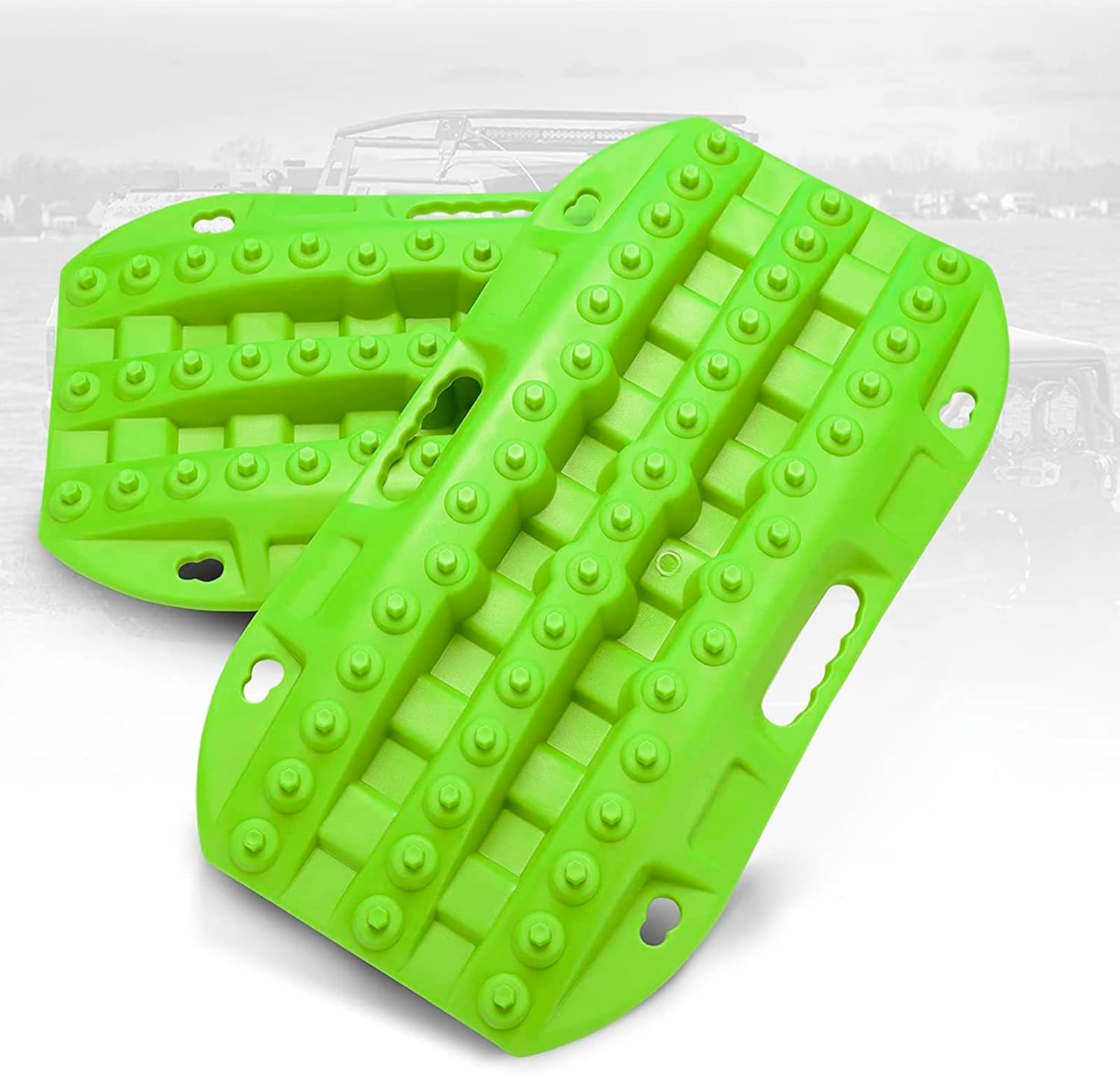
These short recovery traction boards are designed to help ATVs, UTVs, and other off-road vehicles regain grip in mud, sand, and snow. Built with strengthened teeth and a durable polypropylene construction, they provide reliable traction, easy handling, and year-round performance in tough conditions. Their nested, space-saving design and integrated shovels make them practical for carrying and using on remote adventures.
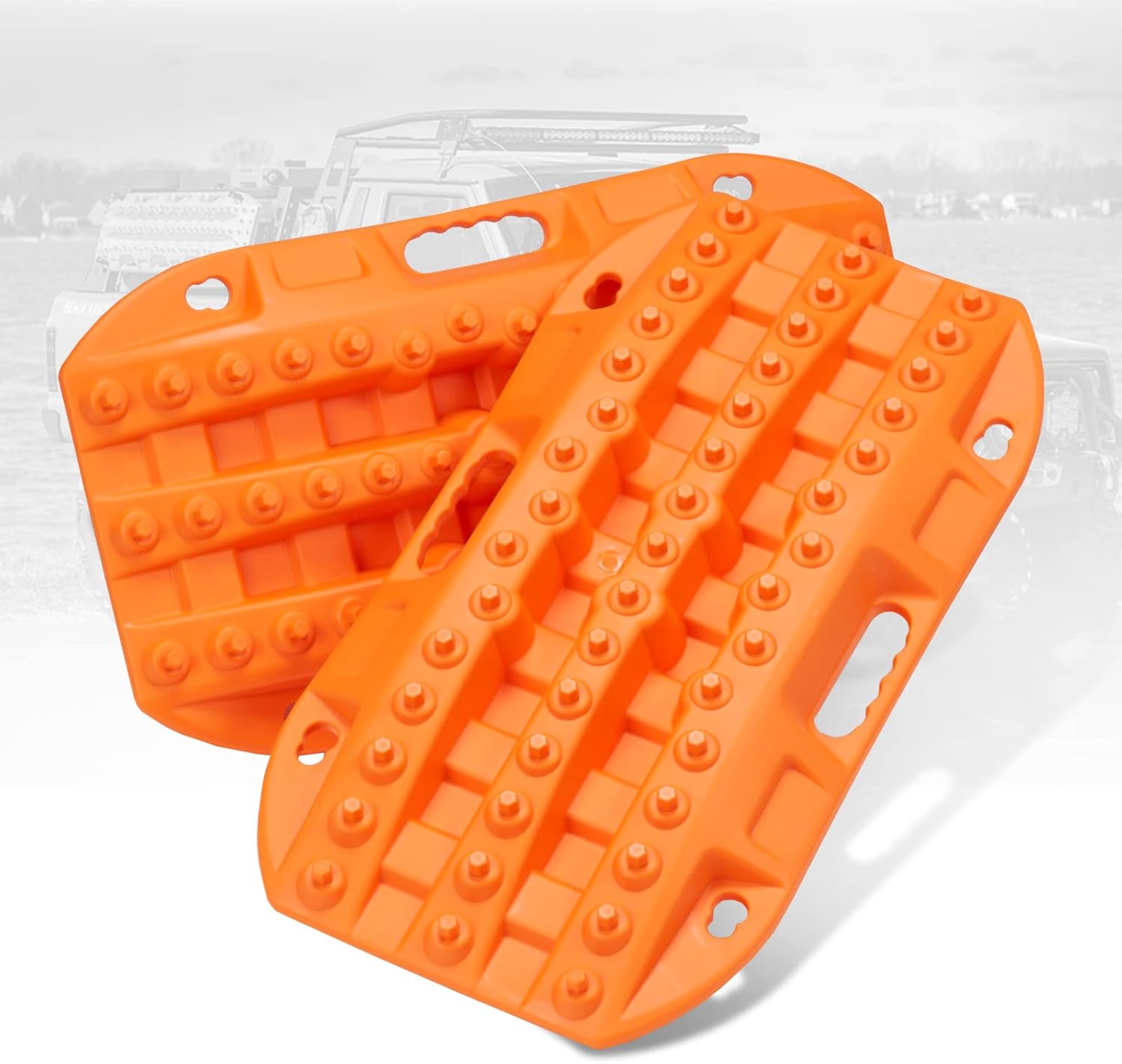
These short off-road traction boards are designed to help ATV and UTV drivers recover from mud, sand, and snow with added convenience and portability. Built with strengthened teeth and a stable bottom channel design, they help prevent wheel slip and improve traction in tough terrain. Made from durable automotive-grade polypropylene, they are lightweight, easy to clean, and suited for year-round use in extreme temperatures. Built-in shovels, ergonomic handles, and nesting storage make them practical for compact vehicle setups.

This dual dash cam captures detailed road footage with front and rear recording for added driving security. Built-in WiFi and app control make it easy to review, download, and manage videos from your phone, while the IPS screen provides clear on-device viewing. With loop recording, G-sensor protection, parking mode, and WDR support, it is designed to help document incidents day or night.
Before You Engage
- Check that the surface is loose, slippery, or uneven enough to allow tire slip.
- Reduce speed and keep the steering as straight as practical.
- Select the correct transfer-case range, such as 4HI for faster loose surfaces or 4LO for slow technical terrain, if your vehicle offers both.
- Confirm that no warning message says the system is unavailable or overheated.
Engagement Steps
- Slow down before the obstacle or stop if your owner’s manual requires it.
- Press the center diff lock switch or select the locked mode on the dial.
- Wait for the center diff lock indicator to illuminate steadily. A flashing light usually means the system is still engaging or needs the vehicle to roll slightly.
- Drive smoothly through the low-traction section. Avoid sharp steering inputs and unnecessary wheelspin.
Disengagement Steps
- Return to a straight, low-speed path if possible.
- Press the switch again or select the unlocked/open mode.
- Confirm the indicator light turns off.
- If it stays flashing, roll forward and backward gently in a straight line to release driveline tension, then try again according to your manual.
Risks of Using a Center Diff Lock on High-Traction Surfaces
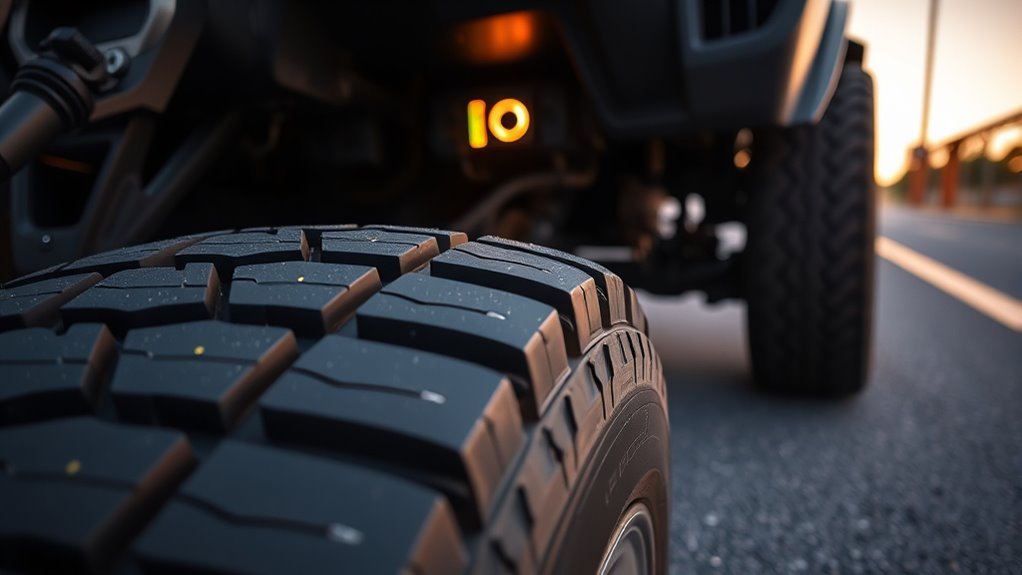
Leaving the center diff lock engaged on high-traction pavement can stress the drivetrain because the front and rear axles want to rotate at slightly different speeds during turns. Since the lock prevents that difference, the tension has to go somewhere: tires scrub, driveline parts twist, and steering feel gets worse.
Common risks include:
- Drivetrain windup: binding stress builds through the transfer case, driveshafts, gears, CV joints, and axles.
- Accelerated tire wear: tires scrub across the road instead of rolling cleanly.
- Reduced maneuverability: steering can feel heavy, wide, or jerky in tight turns.
- Possible component damage: repeated misuse can shorten the life of seals, gears, joints, mounts, and actuators.
- Less predictable handling: the vehicle may understeer or hop when traction is high.
For normal roads, leave the center differential open unless your owner’s manual specifically says a particular mode is safe for pavement.
How Center Lock Works With 4HI/4LO, Lockers, and Traction Control
A center diff lock is only one part of the 4WD system. It controls front-to-rear driveline behavior. Axle lockers, traction control, 4HI, and 4LO handle different jobs.
Center Lock and 4HI
Use 4HI with the center diff locked for loose surfaces where you need better traction but not maximum crawling torque. Examples include snowy roads, muddy tracks, wet grass, gravel, and sand. Some vehicles allow a locked center in high range; others do not. Check the vehicle’s manual before assuming.
Center Lock and 4LO
Use 4LO when you need low-speed control, more torque multiplication, and better engine braking. This is the right range for technical climbs, descents, rocks, deep ruts, and slow recovery work. Many vehicles either require or strongly pair center-lock use with 4LO in tough off-road conditions.
Center Lock vs Axle Lockers
A center diff lock ties the front and rear axles together. A rear diff lock ties the left and right rear wheels together. A front diff lock ties the left and right front wheels together. They solve different traction problems.
| Lock Type | Locks Together | Main Benefit | Main Tradeoff |
|---|---|---|---|
| Center diff lock | Front axle group and rear axle group | Keeps both axles driving | Can bind on high-grip turns |
| Rear diff lock | Left and right rear wheels | Improves traction when one rear wheel lifts or slips | Wider turning and rear-end push |
| Front diff lock | Left and right front wheels | Maximum pull in severe terrain | Heavy steering and reduced turning control |
As a general off-road sequence, engage the center lock first, then use 4LO if speed is low and terrain is technical, then add rear and front axle lockers only when the obstacle demands them. This preserves steering and reduces unnecessary drivetrain load.
Traction Control Interaction
Modern traction-control systems can brake a spinning wheel to help send usable torque to wheels with grip. When the center diff lock is engaged, some vehicles change stability-control or traction-control behavior. That can be helpful off road, but it also means the dashboard may show different warning lights or messages. Again, follow the vehicle-specific manual.
Choosing a Vehicle and Maintaining a Center Diff Lock: Factory vs Aftermarket
If you are shopping for an off-road vehicle, a factory center differential lock is usually the cleanest option. Factory systems are engineered to work with the transfer case, ABS, traction control, stability control, indicator lights, and driveline limits. Vehicles such as many Toyota Land Cruiser models, some Toyota 4Runner full-time 4WD models, older Land Rover Defender/Discovery models, and certain Mitsubishi or Mercedes-Benz 4WD models are common examples of vehicles people discuss when comparing center-lock systems.
Be careful with blanket claims. For example, a Jeep Wrangler Rubicon is famous for front and rear axle lockers, but many Wrangler systems are part-time 4WD and do not operate like a full-time 4WD center differential lock. Likewise, some AWD systems use clutches, active couplings, or brake-based traction control rather than a true lockable center differential.
| Option | Advantages | Watchouts |
|---|---|---|
| Factory center diff lock | Integrated, tested, usually works with dashboard indicators and traction systems | Available only on certain trims and drivetrains |
| Aftermarket conversion | Can add capability to a build when compatible parts exist | May require transfer-case work, calibration, wiring, and professional setup |
| Active AWD coupling | Easy daily driving and automatic torque management | May not provide the same locked mechanical behavior off road |
[Products Worth Considering]

This Nilight LED light bar set delivers bright spot and flood combo lighting for off-road driving, work sites, and rugged trails. Built with high-intensity LEDs, an aluminum housing for better heat dissipation, and IP67 waterproof protection, it is designed for reliable performance in demanding conditions. The included wiring harness kit and mounting brackets make installation straightforward and secure.
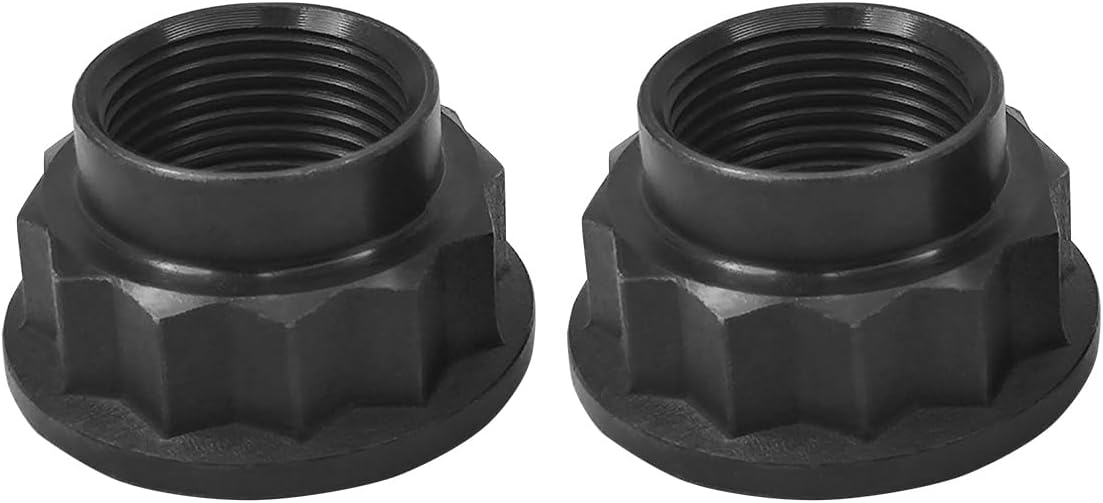
This pair of front axle shaft nuts is designed to secure CV joints and wheel bearings on compatible Toyota and Lexus front drive axles. Built from heat-treated carbon steel for durability and corrosion resistance, it helps maintain proper torque and reliable power transfer. It is a direct replacement for several factory part numbers and is recommended for paired replacement.

This front left door lock actuator assembly is a direct replacement for select Toyota and Lexus models, helping restore reliable power door locking and latch operation. Built as an OEM-quality aftermarket part, it includes the latch assembly and is factory tested for dependable performance. It is designed for driver-side front door fitment across a wide range of compatible vehicles and comes with replacement support for added peace of mind.
Maintenance Tips
- Service transfer-case and differential fluids at the interval listed in your owner’s manual, especially after water crossings or heavy off-road use.
- Inspect transfer-case seals, axle seals, actuator wiring, and breather hoses.
- Use the correct fluid specification, not just the correct viscosity.
- Exercise the lock occasionally on a loose surface if the manual allows it, so actuators and linkages do not sit unused for years.
- Do not ignore flashing indicator lights, grinding noises, warning messages, or a lock that will not disengage.
Troubleshooting Center Diff Lock Problems
If the center diff lock does not engage or disengage normally, do not force the switch repeatedly at speed. Most issues are simple, but some point to actuator, sensor, transfer-case, or driveline problems.
| Symptom | Possible Cause | What to Try |
|---|---|---|
| Indicator keeps flashing | Lock has not fully engaged or disengaged | Drive slowly straight ahead or reverse gently as the manual recommends |
| Vehicle binds after unlocking | Driveline windup still loaded | Move to a loose surface or roll straight slowly to release tension |
| Grinding or clunking | Incorrect shift timing, worn parts, or internal transfer-case issue | Stop using the lock and have the system inspected |
| Lock will not activate | Wrong range, speed too high, actuator fault, low voltage, or sensor issue | Confirm the required 4HI/4LO and speed conditions, then scan for faults if needed |
| Warning light stays on | System fault or incomplete engagement | Follow the manual and schedule service if it does not clear |
Note: After water, mud, or sand driving, inspection matters. Contaminated fluid, damaged breathers, and leaking seals can shorten the life of the transfer case and differentials.
Frequently Asked Questions
What is the purpose of a center locking differential?
A center locking differential links the front and rear driveline so both axles keep rotating together. This improves traction when one axle loses grip in mud, snow, sand, ruts, rocks, or steep loose terrain. It should be unlocked on dry pavement unless your manual states otherwise.
When should I use a center diff lock?
Use it before low-traction or uneven terrain, such as mud, deep snow, ice, wet grass, loose gravel, soft sand, steep dirt climbs, or crossed-up ruts. Unlock it after the obstacle or before returning to firm pavement.
What is the difference between a center diff lock and a rear diff lock?
A center diff lock links the front and rear axles. A rear diff lock links the left and right rear wheels. The center lock helps both axles keep driving; the rear lock helps both rear wheels keep driving when one rear wheel slips or lifts.
Can I drive on the highway with the center diff locked?
Do not drive on dry, high-grip highways with the center diff locked unless your specific manual allows that mode. A locked center diff is meant for surfaces that allow some tire slip. On dry pavement, it can cause windup, tire wear, handling problems, and drivetrain stress.
How do I know if my center differential is bad?
Warning signs include grinding noises, clunks, trouble engaging or disengaging the lock, a flashing or stuck indicator light, binding that does not release, uneven tire wear, fluid leaks, or warning messages. Stop forcing the system and have the transfer case and actuator inspected.
Is a center diff lock the same as AWD lock?
Not always. Some vehicles use a true mechanical center differential lock. Others use clutch packs, active couplings, software, or brake-based traction control to imitate a locked feel. The dashboard label may say “lock,” but the hardware can differ, so check your owner’s manual.
Conclusion
A center differential lock is one of the most useful traction tools on a full-time 4WD vehicle, but it works best when used selectively. Lock it before mud, snow, sand, ruts, steep loose climbs, or other low-traction conditions. Unlock it before dry pavement, tight high-grip turns, or normal road driving.
The simple rule is this: use the center diff lock when the tires can slip, and unlock it when the tires need to grip cleanly. Pair it with 4HI, 4LO, traction control, and axle lockers according to your vehicle’s manual, and keep the transfer case, fluids, seals, and actuators maintained. Used correctly, it gives you steadier off-road control without sacrificing long-term reliability.
Sources
- Toyota Owners: 2025 Land Cruiser Four-Wheel Drive System — center differential lock switch use, H4/L4 guidance, and slippery-surface operation.
- Toyota Owners: 2025 4Runner Hybrid Full-Time 4WD System — H4F, H4L, and L4L guidance for dry roads, slippery tracks, and maximum traction.
- Mopar Owner’s Manual Portal — official source for model-specific Jeep, Ram, Dodge, Chrysler, and Fiat 4WD and locker operating instructions.
- Land Rover Owners Library — official owner guidance, off-road driving resources, and model-specific manual access.
- Dana Spicer Literature Library — drivetrain service literature and maintenance reference materials.