
By AutoReviewNest Editorial Team · Last updated July 31, 2026
What’s in This Article
Quick Answer
A Toyota Camry CV axle has no dependable fixed replacement interval. Many original axles last beyond 100,000 miles when their protective boots stay sealed, but a torn boot, impact damage, contamination, or incorrect operating angle can cause much earlier failure. Inspect the axle when you hear rhythmic clicking during a tight turn, feel vibration that becomes stronger under acceleration, hear a clunk as load changes, or see thick grease around a wheel or suspension component.
Key Takeaways
- Camry CV axles are normally replaced because of condition or symptoms, not at one universal mileage.
- Rhythmic clicking during a slow, tight turn strongly points toward outer CV joint wear.
- Vibration that appears mainly under acceleration can involve an inner CV joint, but tires, wheels, mounts, and other drivetrain parts must also be checked.
- A fresh boot tear may be repairable before the joint becomes noisy, rough, dry, or contaminated.
- Replace both axles only when both sides are damaged or when you knowingly choose preventive paired replacement after inspection.
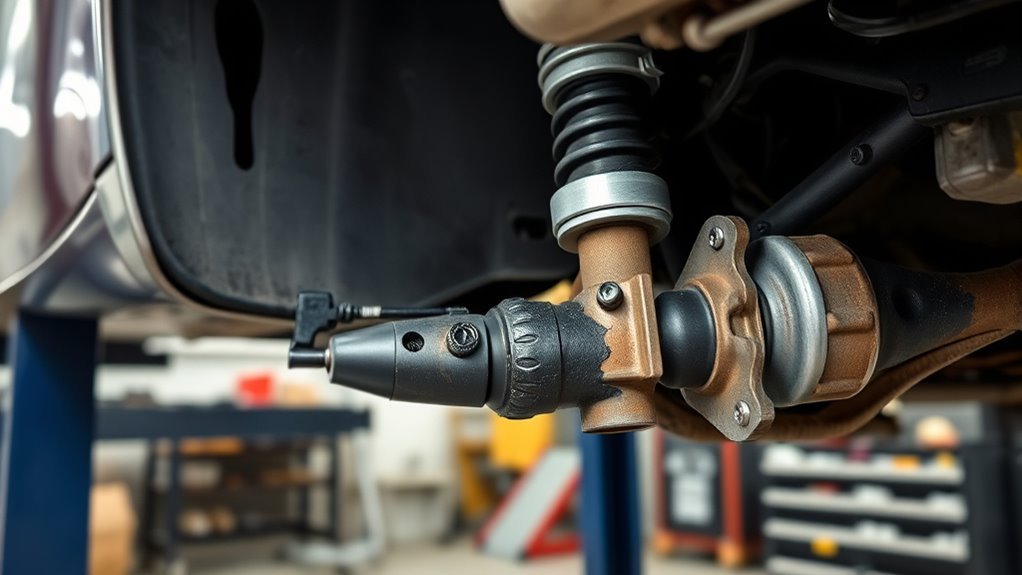
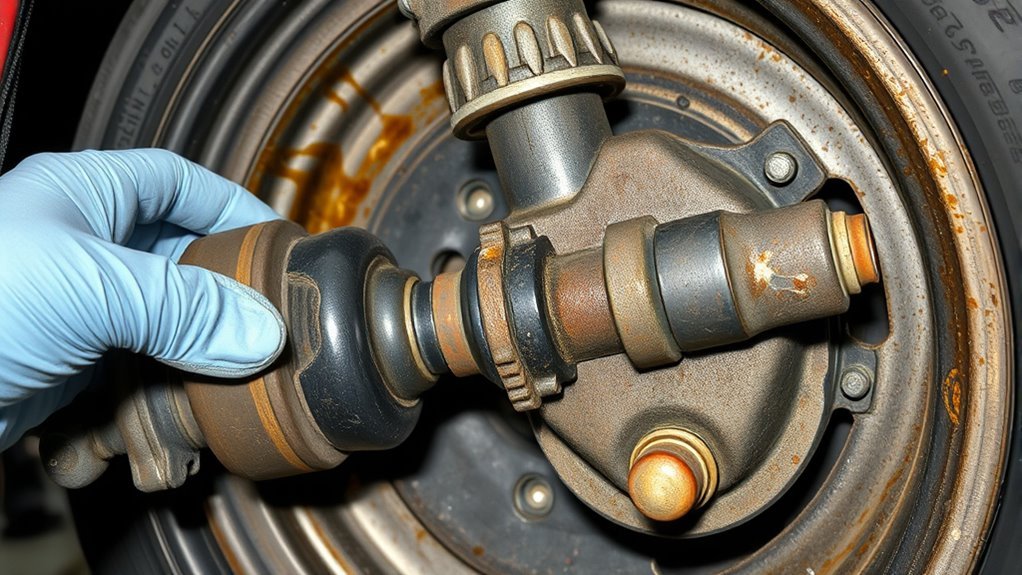
A clicking noise during a slow, sharp turn is one of the clearest warnings that a Camry’s outer CV joint may be worn. Grease near the inside of a wheel can reveal the problem even earlier because it often means a protective boot has split and is no longer keeping lubricant in and contamination out.
Do not use mileage alone to approve an axle replacement. A high-mileage original axle with clean, flexible boots and no noise may remain serviceable, while a lower-mileage axle can fail after a torn boot, hard impact, incorrect part installation, or suspension modification.
How Long Do Toyota Camry CV Axles Last?
There is no single Camry CV axle lifespan that applies to every model year, drivetrain, climate, and driving pattern. Many original axles exceed 100,000 miles, and some remain usable for the life of the vehicle. The protective boots usually determine how long the joints survive because they keep specialized grease inside and water, sand, and road debris outside.
Use mileage as inspection context, not as an automatic replacement trigger. Check the axles more closely as the vehicle ages, after a hard pothole or curb impact, when a boot looks dry or cracked, or when a new noise or vibration appears.
Toyota publishes model-year-specific manuals and maintenance information through Toyota Owners. Consult the information for your exact Camry before relying on a generic interval, procedure, or torque specification.
| Axle condition | What it means | Recommended action |
|---|---|---|
| Boots intact, no grease leak, no noise | No clear evidence of axle failure | Continue routine visual inspections |
| Small boot crack or fresh grease seepage | The joint may still be serviceable if it remains clean and smooth | Arrange inspection and boot service promptly |
| Clicking during tight turns | Outer CV joint wear is likely | Have the axle diagnosed and expect full assembly replacement if wear is confirmed |
| Shudder mainly under acceleration | An inner CV joint or another load-sensitive drivetrain part may be worn | Compare acceleration and coasting behavior before replacing parts |
| Severe vibration, binding, wobble, or loss of drive | The axle or another rotating component may be unsafe | Stop driving and arrange professional inspection or towing |
What Are the Signs of a Failing Camry CV Axle?
The strongest CV axle symptoms change with steering angle or drivetrain load. A rhythmic click that becomes faster with wheel speed during a slow, tight turn commonly points to an outer CV joint. A shudder that appears mainly while accelerating can point to an inner joint, axle shaft, mount, or another drivetrain component.
Grease sprayed onto the inner wheel, control arm, strut, or fender liner indicates that a boot or clamp may have failed. A clunk when accelerating, releasing the throttle, or shifting between Drive and Reverse can involve joint play, but engine mounts, transmission mounts, driveline backlash, and suspension parts can produce similar sounds.
MOOG’s CV axle symptom guide identifies turning-related clicking, grease leakage, acceleration or deceleration clunks, and excessive vibration as reasons to have the vehicle inspected.
| Symptom | What it may suggest | Common mimics | Next check |
|---|---|---|---|
| Rhythmic clicking during a tight turn | Worn outer CV joint | Loose wheel hardware, brake hardware, tire rub, or a suspension joint | Inspect the boots, wheel area, brakes, and steering or suspension parts |
| Thick grease near the wheel or suspension | Torn boot or loose boot clamp | Other fluid or grease from recent service | Trace the material back to the inner or outer boot |
| Vibration mainly during acceleration | Inner CV joint, bent axle, or related drivetrain fault | Engine or transmission mount, tire, wheel, or powertrain problem | Compare light throttle, hard acceleration, and coasting |
| Vibration at the same speed while accelerating and coasting | A rotating assembly problem remains possible | Tire imbalance, wheel runout, tire uniformity, or wheel bearing | Follow the Camry highway-speed vibration checks |
| Hum or growl that changes as steering load shifts | Wheel bearing is often a stronger suspect | Tire wear or drivetrain noise | Compare the sound with the Camry wheel-bearing warning signs |
If symptoms become sudden or severe, stop test-driving. Arrange towing when the wheel wobbles, the axle binds or visibly separates, the vibration makes steering difficult, you hear repeated heavy impacts or grinding, or the Camry loses normal power delivery to a drive wheel.
[Products Worth Considering]
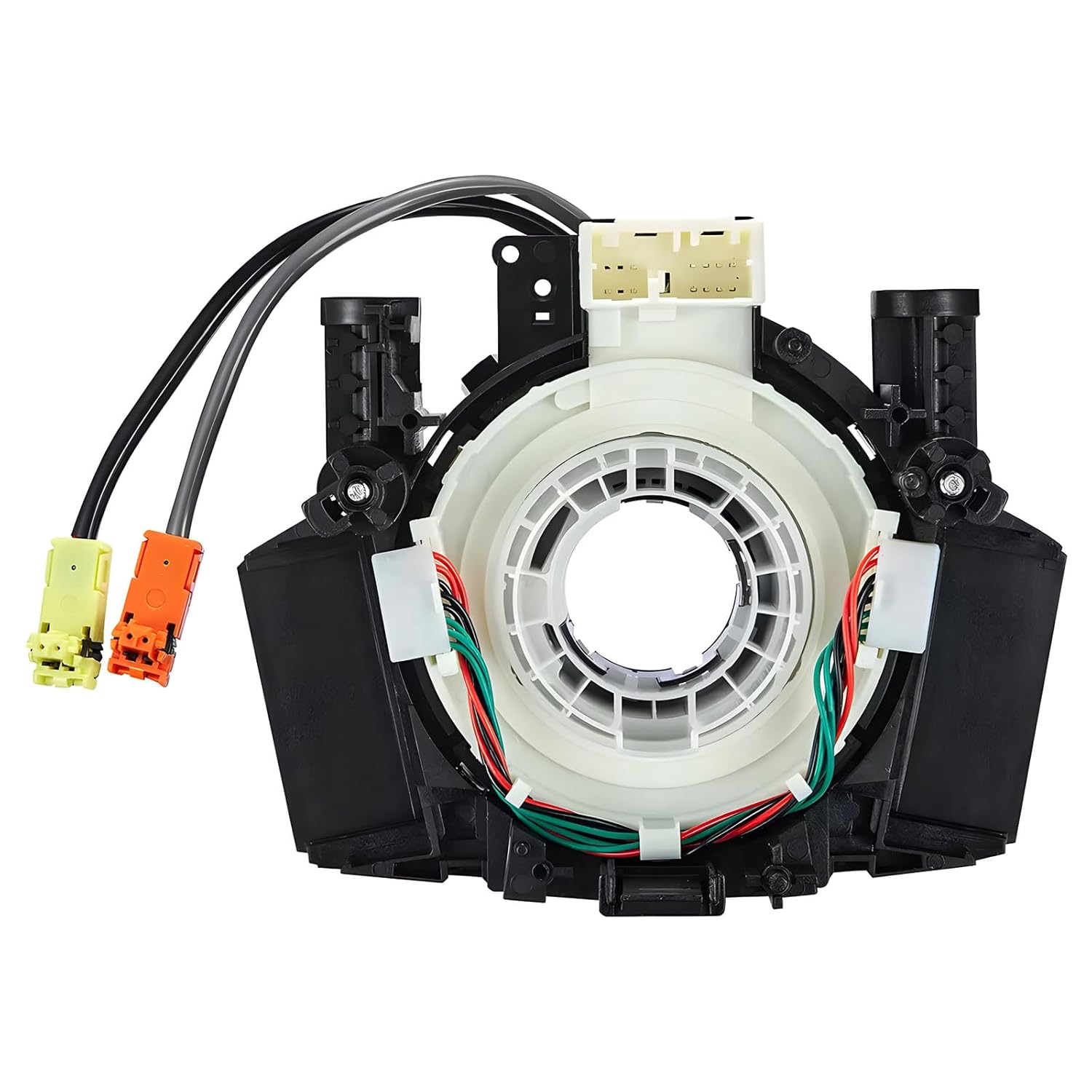
This steering clock spring assembly is an OEM-style replacement designed to restore steering wheel controls and related electronic functions in compatible Nissan vehicles. It supports audio, cruise control, and multi-function button operation while matching multiple factory part numbers for a reliable fit. Built for direct installation with vehicle-specific connectors, it helps return steering column electronics to proper working order.
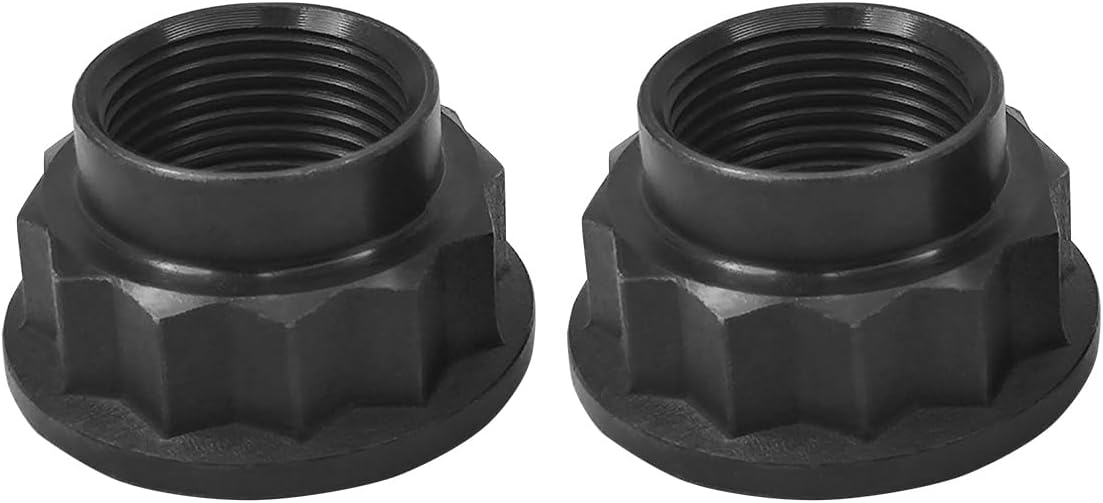
This pair of front axle shaft nuts is designed to secure CV joints and wheel bearings on compatible Toyota and Lexus front drive axles. Built from heat-treated carbon steel for durability and corrosion resistance, it helps maintain proper torque and reliable power transfer. It is a direct replacement for several factory part numbers and is recommended for paired replacement.

Turn your iPhone, Android device, or Windows PC into a professional-grade diagnostic scan tool with this Bluetooth OBD2 adapter. It is designed for broad vehicle compatibility and supports popular apps for deeper diagnostics, live data, and code clearing. Built-in protections and firmware updates help keep your vehicle and scanner safe while delivering reliable performance.
Why Do Camry CV Axles Fail?
A damaged protective boot is one of the most common starting points. Once grease escapes, water and road grit can enter the joint and wear its precision surfaces. A boot can split because of age, heat cycles, road debris, incorrect installation, a damaged clamp, or contact with another component.
CV joints and shafts can also fail from normal wear, pothole or curb impacts, a bent axle, incorrect replacement-part dimensions, worn engine or transmission mounts, or suspension geometry that forces the axle to operate at an excessive angle.
Lift kits are uncommon on a Camry, but lowering springs, collision damage, incorrect ride height, or other suspension changes can still alter the joint angle. If an axle repeatedly fails after replacement, inspect the mounts, wheel bearing, suspension position, transmission alignment, axle seal area, and replacement-part dimensions before installing another unit.
DIY: How Do You Inspect Camry CV Boots and Joints?
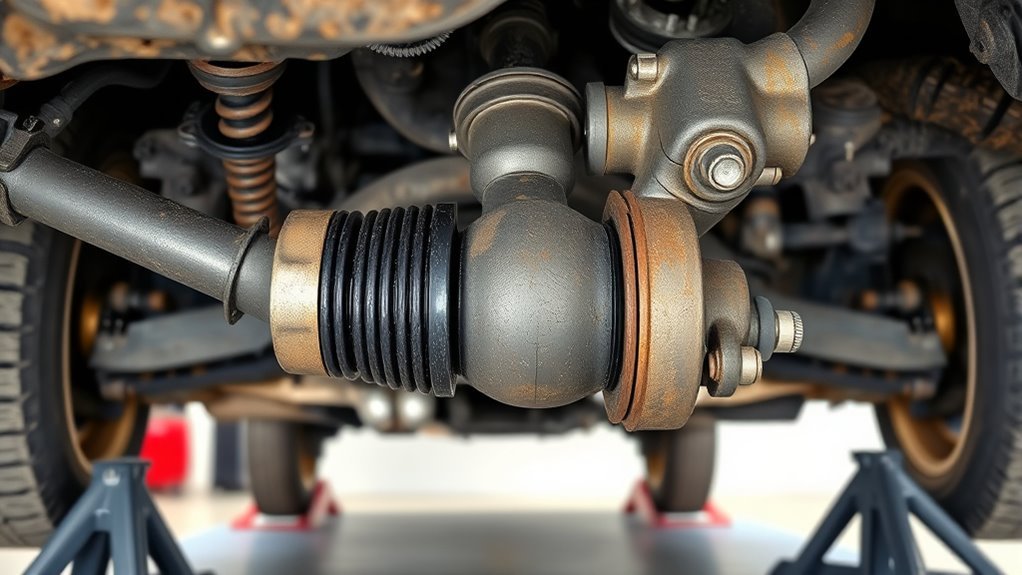
Begin with a visual inspection from outside the vehicle. Park on firm, level ground, select Park, apply the parking brake, and keep the engine off. Turn the steering wheel to expose each front outer boot, then use a flashlight to look for splits, pinholes, missing clamps, hardened rubber, wet grease, or grease sprayed onto nearby parts.
Inspect the inner boots as far as they can be seen safely. Do not reach near hot exhaust parts or moving components. A clean boot should be flexible, evenly shaped, securely clamped, and dry on the outside.
Next, use an empty parking area for a low-speed sound check. With the windows open, drive slowly in a tight circle in each direction and listen for a repeated click or pop. Do not accelerate hard, make abrupt steering inputs, or continue the test if the noise becomes heavy or the steering feels abnormal.
Pro tip: Ask for a CV boot inspection whenever the wheels are already off for tire rotation or brake service. This creates a practical inspection opportunity without treating the axle as a scheduled replacement item.
- Check the inner and outer boots for cracks, tears, pinholes, bulges, and damaged clamps.
- Look for thick grease on the wheel, strut, control arm, splash shield, or fender liner.
- Listen for rhythmic clicking during slow, tight turns in both directions.
- Note whether vibration appears under acceleration, while coasting, during braking, or at all times.
- Check whether a clunk occurs during throttle changes or when selecting Drive or Reverse.
- Record which side seems louder, but do not order a part until the source is confirmed.
Warning: Never place any part of your body under a Camry supported only by a hydraulic or emergency jack. Use the Toyota-specified lift points, wheel chocks, and properly rated jack stands on firm, level ground. Review the Camry jack-point and stand-placement guide, or leave under-car inspection to a qualified shop.
Do not diagnose a CV joint from axle movement alone. The inner joint normally has controlled in-and-out movement as the suspension travels. Roughness, binding, looseness accompanied by a clunk, or movement outside the correct specification should be assessed by a technician who can compare both sides and inspect the wheel bearing, mounts, suspension, and transaxle area.
[Products Worth Considering]

This plug-and-play OBD2 scanner helps drivers quickly read and clear engine error codes while providing live data, freeze frame information, I/M readiness, and MIL status for more confident troubleshooting. It adds a built-in voltage test and clear status indicators to support electrical checks and faster diagnostics, making it a practical choice for home users, car enthusiasts, and repair professionals. Compatible with most OBDII vehicles since 1996 and designed with an easy-to-use interface, it offers broad coverage and simple operation in one compact tool.

This bearing press kit makes it easy to install bearing races and seals quickly without damaging the axle housing. It includes nine dual-sided adapters to fit a wide range of standard races and seals, plus a knurled handle for controlled, slip-resistant use. Built from durable aluminum alloy and stored in a compact case, it is a practical solution for automotive bearing installation jobs.

This GM TPMS relearn tool helps reset tire sensors, clear warning lights, and match tire positions after rotation quickly at home. Designed for Chevrolet, GMC, Cadillac, and Buick vehicles, it offers one-button operation, fast activation, and broad compatibility with many GM models. It is best suited for OE/OEM sensors and includes paper instructions plus video guidance for easier DIY use.
Repair vs. Replace: Boot, Axle, One Side or Both
[Products Worth Considering]

FOXWELL NT201 is an easy-to-use OBD2 scanner designed to help drivers quickly read and clear check engine codes, view live engine data, and check emissions readiness. Its color screen, one-key I/M readiness test, and broad compatibility with most gasoline vehicles since 1996 make it a practical tool for everyday diagnostics and maintenance. With plug-and-play operation and lifetime free updates, it offers a simple way to understand vehicle issues without expensive shop visits.

The ANCEL AD410 PRO combines engine diagnostics and 12V battery testing in one easy-to-use tool, helping you read and clear check engine codes while checking battery health, cranking, and charging performance. It also provides live data, freeze frame details, and I/M readiness checks to help you diagnose issues faster and prepare for emissions testing. With plug-and-play operation, a clear screen, and broad vehicle compatibility, it is a practical solution for home mechanics and everyday drivers.

The MOTOPOWER MP69033 is a compact OBD2 scanner designed to help drivers quickly diagnose check engine issues and understand vehicle fault codes. It offers a range of practical functions including code reading and clearing, live data, freeze frame, vehicle information, and I/M readiness, all displayed on a clear LCD screen. Compatible with many OBD II and CAN vehicles, it is a convenient plug-in tool for routine engine diagnostics and basic troubleshooting.
Can a Torn CV Boot Be Repaired?
A boot-only repair may be reasonable when the damage is caught early, the joint is still quiet and smooth, enough grease remains, and the joint can be cleaned, inspected, repacked with the correct lubricant, and sealed with the correct boot and clamps.
Replace the complete axle when the joint clicks, binds, feels rough, has operated with substantial grease loss, contains grit or water, has heat or impact damage, or when the shaft, splines, seal surface, or housing is damaged. Once hardened joint surfaces are worn, a new boot cannot restore them.
| Repair choice | When it may fit | When it does not fit |
|---|---|---|
| Boot replacement and joint service | Fresh boot damage, no clicking, no roughness, and no confirmed contamination | Noisy, dry, rough, overheated, or contaminated joint |
| Complete axle replacement | Confirmed joint wear, bent shaft, damaged splines, or major contamination | The symptom has not been diagnosed and may come from tires, bearings, mounts, or brakes |
| One-side replacement | Failure is isolated and the opposite axle passes inspection | Both sides leak, click, bind, or show significant boot damage |
| Both-side replacement | Both axles are defective or preventive paired replacement is an informed owner choice | The second axle is healthy and paired replacement is being recommended only because of mileage |
Should You Replace One Camry CV Axle or Both?
Replacing one axle is normally reasonable when the failed side is confirmed and the opposite side has intact boots, no grease leakage, no abnormal noise, and no excessive wear. A CV axle is not like a brake pad or tire that must automatically be replaced as a matched axle set.
Replacing both may make sense when both sides show boot deterioration, grease loss, noise, roughness, or abnormal movement. Some owners also choose preventive paired replacement on a high-mileage car to reduce the chance of a second future visit, but that is a cost decision rather than a universal mechanical requirement.
Pro tip: Ask the shop to document the opposite axle’s boot condition, leakage, noise, and joint movement before approving paired replacement. Mileage by itself does not prove that the second axle has failed.
How Much Does Camry CV Axle Inspection or Replacement Cost?
RepairPal’s estimate updated June 18, 2026 places a Toyota Camry drive-axle assembly leak inspection at $61 to $90 before taxes, fees, location differences, and related repairs. This is an inspection estimate, not a complete axle-replacement price.
Replacement cost varies by model year, drivetrain, axle side, labor access, local shop rate, and whether the repair uses a Toyota Genuine, new aftermarket, remanufactured, or rebuilt original assembly. Request an itemized quote that separates diagnosis, part cost, labor, axle seals or fluid, alignment if needed, and any related suspension or bearing work. See the current RepairPal Camry drive-axle inspection estimate for location-specific context.
How Do You Choose the Correct Replacement Axle?
Do not order by “Toyota Camry” alone. Verify all of the following before installation:
- Model year and production date
- Engine or hybrid powertrain
- Front-wheel-drive or all-wheel-drive layout
- Left, right, front, or rear position
- Transmission or transaxle configuration
- Compressed axle length and spline details
- Seal surface and carrier-bearing configuration
- ABS-related tone ring or sensor compatibility where applicable
Use the VIN when ordering through Toyota or a parts catalog. Physically compare the replacement axle with the removed unit before installation. A part that fits into the hub but has the wrong length, seal surface, spline arrangement, or support-bearing design can leak, bind, vibrate, or fail prematurely.
Toyota Genuine parts provide original-equipment fitment when the correct VIN-matched part is selected. A new aftermarket or professionally remanufactured axle may also be suitable, but part quality does not compensate for an incorrect application or poor installation.
Frequently Asked Questions
Can a Worn CV Axle Affect My Camry’s Fuel Economy?
A worn CV axle is not a common direct cause of a noticeable fuel-economy loss. It may make the car noisy or create vibration under load, but an MPG drop should also be checked for tire pressure, dragging brakes, alignment problems, engine faults, driving conditions, and other more common causes.
A CV axle should not cause rough idle while the Camry is stationary because the axle is not rotating. Diagnose an idle shake through the engine, ignition, fuel, air-intake, exhaust, and mount systems instead of assuming the axle is responsible.
Are Front and Rear CV Axles Different on AWD Camry Models?
Yes. Front and rear drive axles are position-specific and can differ in length, joint design, spline arrangement, support hardware, and connection points. Camry applications also vary by model year, market, hybrid system, drivetrain, and production date.
Never move an axle from one position to another unless Toyota’s part catalog specifically identifies it as the correct part. Use the VIN and exact axle position when ordering.
How Long Can I Drive After a CV Boot Tears?
There is no reliable safe-driving countdown after a boot tear. A small fresh crack with no noise is different from a joint that has lost grease, collected grit, or started clicking.
Arrange inspection promptly and avoid hard acceleration, high-speed driving, and tight powered turns until the condition is known. Stop driving and arrange towing if the axle binds, vibration becomes severe, the wheel wobbles, heavy impacts or grinding appear, or the Camry loses normal drive.
Can a Bad CV Axle Cause a Check Engine Light?
A failing CV axle by itself usually does not turn on the check-engine light. A check-engine light normally means the powertrain control system stored an engine, emissions, or transmission-related diagnostic code.
Damage near a wheel-speed sensor, its wiring, or a reluctor may illuminate an ABS or traction-control warning instead. Use an appropriate scan tool to read all relevant modules, not only generic engine codes. This OBD2 overview explains why the stored code must be diagnosed before a part is replaced.
Should Both Camry CV Axles Be Replaced at the Same Time?
Not automatically. Replace one axle when its failure is isolated and the opposite side passes inspection. Replace both when both boots or joints are damaged, both sides make noise, or both assemblies fail a proper inspection.
Paired replacement can also be a preventive owner choice on an older vehicle, but mileage alone does not prove that the second axle is defective.
How Can I Tell a Bad CV Axle From a Bad Wheel Bearing?
A worn outer CV joint commonly makes a rhythmic click during slow, tight turns. An inner CV joint may cause vibration that becomes stronger under acceleration.
A wheel bearing more often creates a hum or growl that rises with road speed and may change as vehicle weight shifts during a gentle turn. These patterns are clues, not final proof. Tires, brakes, loose wheel hardware, and suspension parts must also be inspected.
Do Extended Warranties Cover CV Axle Failure?
Coverage depends on the exact factory warranty, service contract, vehicle age, mileage, failure cause, and exclusions. Some contracts include drive axles or drivetrain components but exclude torn boots, impact damage, modifications, contamination, or normal wear.
Read the warranty booklet for the exact model year and ask the administrator for a written coverage decision before authorizing non-emergency work. Keep inspection photos, diagnostic notes, and maintenance records.
Keep Your Camry Rolling: Final Advice
A Camry CV axle does not need replacement simply because it reaches a certain mileage. Its boot condition, noise pattern, vibration behavior, and inspection results provide better evidence.
Inspect a grease leak or damaged boot promptly. Expect full axle replacement when a joint clicks, binds, runs rough, or has suffered substantial contamination. Replace only the failed side when the opposite axle is healthy, and verify every replacement part by VIN, drivetrain, side, and dimensions.
Stop driving when vibration becomes severe, a wheel wobbles, the axle binds or separates, heavy grinding or impacts appear, or the Camry loses normal drive. When symptoms remain mild, document exactly when they occur and give that information to a qualified technician before approving parts.
Automotive Disclaimer: This article is for informational purposes only and does not replace model-specific Toyota service information or professional diagnosis. Use the correct lift points and safety equipment, verify parts and torque specifications for the exact vehicle, and consult a qualified mechanic for safety-related drivetrain issues.


[…] Is My Toyota Camry Vibrating at Highway […]