Last updated: July 31, 2026
Affiliate disclosure: As an Amazon Associate, Auto Review Nest earns from qualifying purchases. This does not affect our editorial independence or the price you pay.
Toyota Camry towing capacity depends on the exact model year and sales market. For the 2025 U.S. Camry, Toyota does not recommend trailer towing or tow-hitch-mounted carriers. By contrast, published specifications for the 2025 and 2026 Australian Camry list 400 kg braked and 400 kg unbraked, or about 882 lb. Never apply an Australian, European, or older-model rating to a U.S. Camry without checking the owner’s manual issued for your exact vehicle.
Quick Answer
A Toyota Camry does not have one universal towing capacity. Toyota’s 2025 U.S. Camry guidance does not recommend trailer towing or tow-hitch-mounted carriers. The 2025 and 2026 Australian Camry models are listed at 400 kg braked and unbraked. Check the manual for your exact year, powertrain, and sales market before buying or installing any towing equipment.
Key Takeaways
- The 2025 U.S. Camry is not recommended for trailer towing or tow-hitch-mounted carriers.
- The 2025 and 2026 Australian Camry models are listed at 400 kg, or about 882 lb, braked and unbraked.
- An aftermarket hitch rating never creates or raises the Camry’s vehicle towing capacity.
- Compare the trailer’s actual loaded weight, vehicle payload, axle load, and hitch-component ratings.
- Use the instructions supplied by the trailer manufacturer for load balance and required equipment.
How this guide was checked: This source-based safety guide compared Toyota’s 2025 U.S. owner information, current Australian Camry specification databases, NHTSA loading-label guidance, U-Haul trailer specifications and loading instructions, and current Class I hitch ratings. It is not a claim that we road-tested every Camry-and-trailer combination. The Toyota manual for your exact vehicle remains the controlling source.
What’s in This Article
- Toyota Camry Towing Capacity at a Glance
- How Much Can a Toyota Camry Tow in Kg, Tonnes, and Pounds?
- What Trailers Can a Toyota Camry Tow?
- Find Your Camry’s Exact Towing Guidance: VIN, Manual, and Door Label
- When You Shouldn’t Tow With a Camry
- Does a Hitch Increase Camry Towing Capacity?
- Camry Towing Checklist: Weight, Load Distribution, and Legal Rules
- Why Camry Towing Ratings Differ by Market
- Frequently Asked Questions
- References
Toyota Camry Towing Capacity at a Glance
Start with the row that matches your vehicle’s sales market and model year. Do not transfer a rating between countries, generations, engines, or hybrid systems.
| Camry Example | Published Guidance | What It Means |
|---|---|---|
| 2025 U.S. Camry | Toyota does not recommend trailer towing or tow-hitch-mounted carriers | Treat it as a no-tow vehicle unless Toyota issues different guidance for your exact VIN |
| 2025–2026 Australian Camry | 400 kg braked and 400 kg unbraked, about 882 lb | The trailer and everything loaded in it must remain within the applicable 400 kg limit |
| Other years or markets | Varies by year, variant, powertrain, equipment, and market | Check the exact owner’s manual and ask Toyota to confirm the guidance for your VIN |
Towing Capacity vs. Payload vs. Hitch Rating
- Towing capacity is the maximum loaded trailer weight Toyota permits for the exact vehicle.
- Payload is the weight carried by the Camry, including people, luggage, accessories, hitch hardware, and the trailer’s downward tongue load.
- Tongue load is the downward force the trailer places on the hitch. It uses part of the Camry’s available payload and affects rear-axle load.
- Hitch rating is the component’s own maximum. It cannot create or raise the vehicle’s towing capacity.
You can review Toyota’s 2025 U.S. Camry trailer-towing guidance and the published 2025 Australian Camry specifications. Always recheck the manual supplied for your vehicle because an online page may not match your build, market, or later Toyota revisions.
How Much Can a Toyota Camry Tow in Kg, Tonnes, and Pounds?
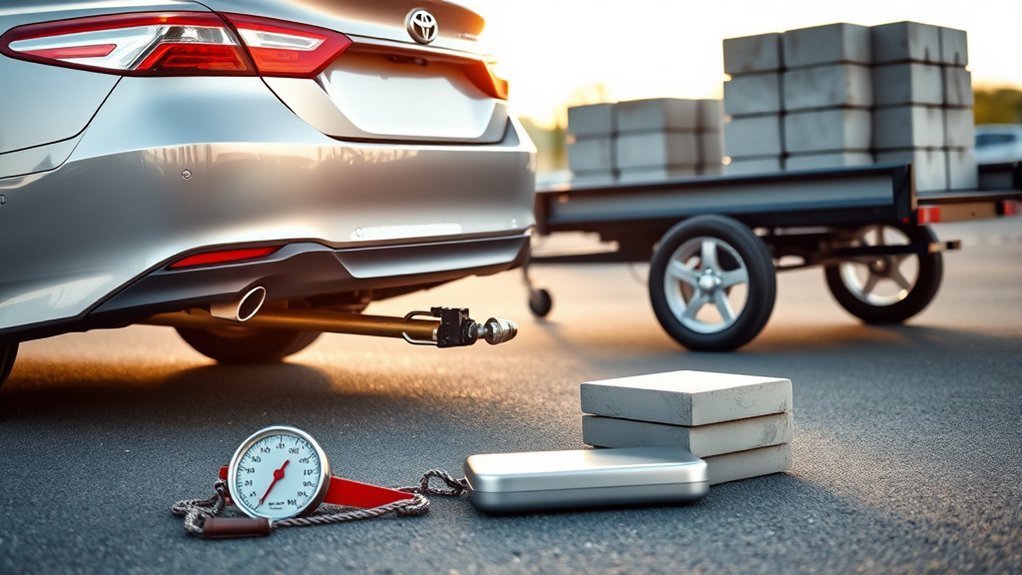
Camry towing numbers change by sales market, model year, powertrain, variant, and factory approval. The current Australian figure of 400 kg equals 0.4 tonnes or about 882 lb. It does not apply automatically to a U.S., Canadian, British, or other-market Camry.
Published Australian tables for some older Camry variants show higher braked ratings, including 1,200 kg or 1,600 kg. Those historical figures describe particular vehicles sold under different market rules and configurations. They are not evidence that a newer U.S. Camry can tow the same load.
Do not carry a general 1,000-pound figure from a dealer article, forum post, or different Camry generation into your vehicle. The 2025 U.S. Toyota guidance does not recommend trailer towing. If your exact manual says the vehicle is not designed for towing, a lower trailer weight does not change that instruction.
Why Can a Year-Only Camry Towing Chart Be Misleading?
A model-year chart can combine different sales markets, powertrains, variants, and definitions of braked and unbraked capacity. Match five details before using any number: model year, sales market, powertrain, variant or trim, and the exact owner’s-manual revision. If one detail differs, do not transfer the rating to your Camry.
A braked trailer uses its own approved braking system. An unbraked trailer depends on the tow vehicle’s brakes. A country may permit unbraked trailers up to a general legal threshold, but that law does not raise the Camry’s manufacturer rating.
Warning: A hitch label, trailer-rental page, dealer article, or forum post cannot override the instructions in your Camry owner’s manual.
Tongue weight or downward hitch load also matters. That load is carried by the vehicle and affects available payload and rear-axle load. Compare the fully loaded tongue weight with the vehicle, axle, hitch, drawbar, ball, and trailer limits rather than checking trailer weight alone.
What Trailers Can a Toyota Camry Tow?
Use five gates before deciding that any trailer fits:
- Manufacturer permission: Does the manual for your exact Camry allow trailer towing?
- Loaded trailer weight: What does the trailer weigh with every box, tool, battery, tank, bike, or other item aboard?
- Vehicle load: Do passengers, luggage, hitch hardware, and tongue weight remain within payload and axle limits?
- Component limits: Are the hitch, drawbar, ball, coupler, chains, tires, wiring, and brakes correctly rated?
- Operating conditions: Does the setup meet local law and remain suitable for the route, hills, temperature, traffic, and weather?
A light utility trailer may fit a Camry that has an approved towing rating, but only after it passes all five gates. Trailer dimensions do not tell you the weight. A compact enclosed trailer can use nearly the entire vehicle rating before you load the first item.
U-Haul lists its 4×8 cargo trailer at 850 lb empty. Against a 400 kg, approximately 882 lb Australian Camry rating, that leaves only about 32 lb before cargo. That small difference is not a practical cargo allowance once you consider the trailer’s actual scale weight and every other vehicle and component limit.
U-Haul lists its 5×8 cargo trailer at 900 lb empty. It already exceeds a 400 kg rating before you add boxes, furniture, tools, or other cargo. For a 2025 U.S. Camry, Toyota’s no-towing recommendation controls before trailer weight is even considered.
U-Haul’s trailer user instructions explain that allowed cargo depends on the tow vehicle, hitch system, and selected trailer, and the rental contract may set a lower cargo limit. A rental-system match or reservation does not override Toyota’s owner-manual guidance.
If your exact market manual allows towing, weigh the trailer in its travel-ready condition. Check tire pressures, lights, coupler engagement, hitch hardware, safety chains, load security, and required trailer brakes before every trip. Increase following distance and stop safely if the combination begins to sway, pull, overheat, or feel unstable.
You can also review Camry trailer wiring requirements when towing is permitted. Wiring fitment provides trailer-light functions only. It does not approve the vehicle for towing or increase any weight rating.
Do not use a Camry for heavy equipment, ordinary pop-up campers, loaded moving trailers, or multi-motorcycle trailers when their loaded weight approaches or exceeds the vehicle guidance. Choose a properly rated tow vehicle instead of relying on a narrow theoretical margin.
[Products Worth Considering]

This Bluetooth FM transmitter car adapter upgrades your vehicle audio with stable Bluetooth 5.3 connectivity for hands-free calling, wireless music streaming, and automatic reconnection. It also adds Type-C PD and USB charging ports so you can power two devices while driving, plus built-in safety protections and colorful LED lighting for a more enjoyable ride.

This trailer hitch lock helps secure your trailer and hitch-mounted accessories with a high-strength steel pin designed for 2-inch receivers. It includes a weather-resistant cap to help keep out dust and moisture, plus rubber O-rings to reduce rattling during towing. With two copper keys and a sturdy lock core, it offers added peace of mind and dependable everyday protection.

This universal trailer coupler lock helps secure trailers, vehicles, and RVs by fitting a wide range of common hitch couplers. Its advanced locking mechanism is designed to resist picking and prying, while the zinc construction helps protect against rust and corrosion for dependable outdoor use.
Find Your Camry’s Exact Towing Guidance: VIN, Manual, and Door Label
Your owner’s manual is the first source for towing permission, restrictions, warnings, and any published capacity. Use the vehicle identification number (VIN) when asking Toyota to confirm the model year, build, drivetrain, powertrain, and original sales market.
Note: The door-jamb labels confirm vehicle loading information, but they normally do not create or replace a trailer-towing rating.
[Products Worth Considering]

This proportional trailer brake controller provides smooth, responsive braking by automatically matching your tow vehicle’s stopping force for safer trailer control. The bright LED digital display makes it easy to monitor voltage output in real time, while adjustable braking and sync settings help tailor performance to different trailers and road conditions. Designed for quick installation and broad compatibility, it supports 1 to 4 axle trailers for dependable towing confidence.

AUXITO H11/H8/H16 LED fog light bulbs deliver bright cool white illumination to improve nighttime visibility and help you see farther in poor weather. Designed with CSP LED chips, a fanless aluminum body, and a safe 1:1 beam pattern, they offer easy plug-and-play installation, strong waterproofing, and broad vehicle compatibility for fog lights and DRL use.

Genuine Toyota Hitch Cover
Locate the VIN and Owner’s Manual
Find the VIN at the lower driver-side corner of the windshield or on the driver-side door area. You can use this VIN location guide for a general explanation of common Toyota VIN locations, but confirm the location in your Camry documentation.
Use Toyota’s owner’s-manual portal to select the correct model and year. If the manual says Toyota does not recommend towing, do not use an aftermarket hitch listing as a substitute towing approval.
Check What the Door Labels Can Confirm
The vehicle certification label can show the VIN, gross vehicle weight rating (GVWR), and gross axle weight ratings (GAWR). The separate Tire and Loading Information label normally shows the original tire size, recommended cold tire pressure, seating information, and the maximum combined weight of occupants and cargo.
NHTSA explains that the Tire and Loading Information label is normally on the driver-side door jamb or door edge. Read the exact “combined weight of occupants and cargo” value on your vehicle rather than using a payload number from another trim.
Add the weight of the driver, passengers, luggage, loose cargo, installed accessories, hitch hardware, and the trailer’s downward tongue load. If the total exceeds the vehicle’s occupant-and-cargo limit, or if an axle exceeds its rating, the setup is overloaded even when the trailer itself sits below a published towing figure.
When You Shouldn’t Tow With a Camry
Do not tow when the manual for your exact Camry says Toyota does not recommend trailer towing. This applies to the 2025 U.S. Camry guidance. Toyota also does not recommend tow-hitch-mounted carriers for that vehicle, so installing a receiver does not automatically approve a bike rack, cargo tray, wheelchair carrier, or similar hitch-mounted load.
Do not tow when the loaded trailer, downward hitch load, occupant-and-cargo total, axle load, tire load, or any hitch component exceeds its limit. The lowest applicable rating controls the complete setup.
Do not tow when required lights, safety chains, coupler locks, breakaway equipment, registration, insurance, or trailer brakes are missing or defective. Local equipment and brake requirements vary, so check the rules for every jurisdiction on your route.
A Camry is designed primarily as a passenger sedan. Trailer load can lengthen stopping distance, increase thermal stress, change steering response, place more load on the tires and rear axle, and make the combination less stable during emergency maneuvers.
Choose a vehicle designed and rated for towing if the trailer is close to the limit, the route includes long grades, or you expect to tow frequently. Toyota SUVs and trucks may offer higher capacities when correctly equipped. Review the exact trim and manual rather than relying on a model-wide maximum.
Does a Hitch Increase Camry Towing Capacity?
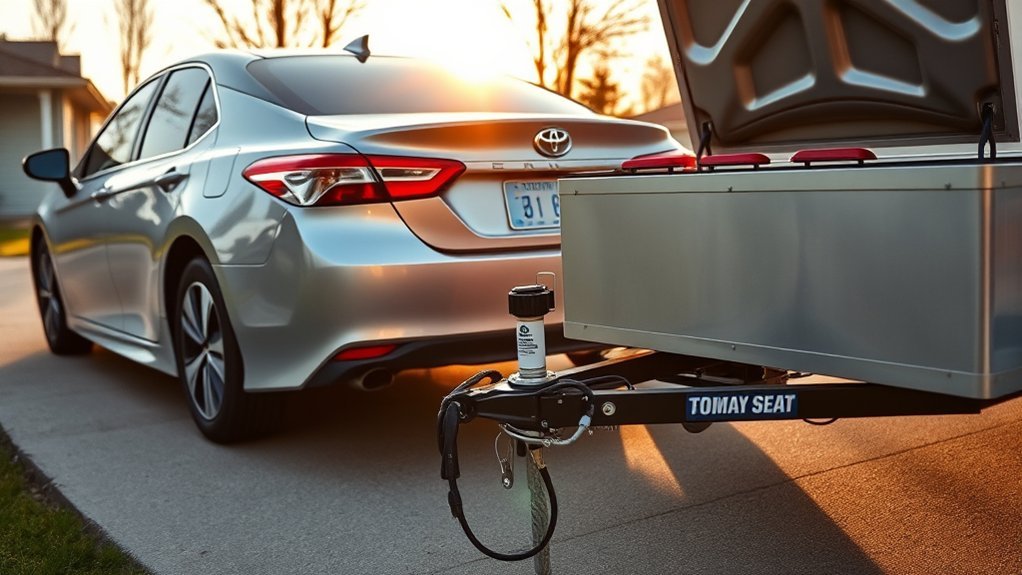
Confirm that Toyota permits towing before shopping for a hitch or wiring kit. A product can physically fit the Camry without the vehicle being approved to tow a trailer or carry a hitch-mounted accessory.
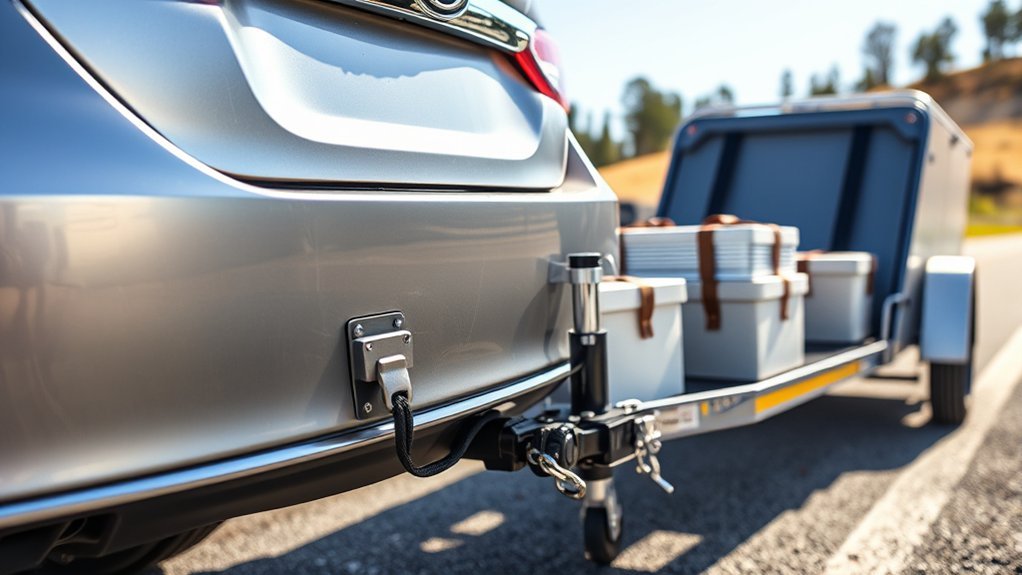
A Class I hitch is commonly rated for light-duty use, with some models rated up to 2,000 lb gross trailer weight and 200 lb tongue weight. That number describes the hitch component. It does not create a 2,000 lb Camry towing capacity and does not override a lower vehicle, drawbar, ball, coupler, or trailer limit.
If your exact Camry is approved for towing, use a hitch, drawbar, ball, coupler, chains, and wiring system verified for that vehicle and trailer. Have a qualified installer follow the equipment instructions and applicable torque, clearance, wiring, and corrosion-protection requirements.
Check the brakes, tires, wheel condition, cooling system, fluid condition, suspension, lights, and warning indicators before adding trailer load. Repair faults before towing. Do not use a transmission cooler, stronger springs, air helpers, or a higher-rated hitch to claim a towing capacity Toyota did not publish.
Suspension helpers may reduce visible rear sag, but they do not raise GVWR, GAWR, payload, tire capacity, brake capacity, structural limits, or Toyota’s towing guidance. Incorrect modifications can also change handling or interfere with sensors and other vehicle systems.
[Products Worth Considering]

DEPENDABLE STRENGTH — With a strong, welded steel build, this class 1 hitch is rated for 2,000 lbs. gross trailer weight and 200 lbs. tongue weight (limited to lowest-rated towing component)

Fitment: This class 2 trailer hitch receiver is compatible with 2012-2017 Toyota Camry, compatible with 2013-2018 Toyota Avalon

Highlander Trailer Wiring Harness: Trailer light wiring fits for 2020 2021 2022 2023 2024 Toyota Highlander, easily installing a 4 pin trailer wiring for towing a trailer; NOTE: Factory Tow Package is Required!!!
Camry Towing Checklist: Weight, Load Distribution, and Legal Rules
Complete every check before moving the vehicle. A “no” at the first step ends the towing decision, even when the hitch and trailer appear capable.
| Item | Required Result | Action |
|---|---|---|
| Toyota guidance | Towing permitted for the exact vehicle | Check the year, powertrain, VIN, and sales-market manual |
| Loaded trailer weight | Below the vehicle and every component limit | Weigh the travel-ready trailer, not only its empty specification |
| Vehicle payload | Below the door-label occupant-and-cargo limit | Add people, luggage, accessories, hitch hardware, and tongue load |
| Axle and tire loads | Within GAWR and tire limits | Check actual axle loads when the margin is narrow |
| Load distribution | Matches the trailer manufacturer’s instructions | For U-Haul trailers, place about 60% of cargo weight in the front half |
| Equipment and law | All required equipment works and the setup is legal | Verify lights, brakes, chains, coupler, registration, insurance, and permits |
Keep heavy items low and secure every object so it cannot move. Follow the trailer manufacturer’s balance and tongue-load instructions. Do not assume one universal percentage works for every trailer design.
For U-Haul equipment, the company’s trailer user instructions tell renters to place about 60 percent of cargo weight in the front half of the trailer box and 40 percent in the rear half. U-Haul warns that rear-heavy loading can cause violent and uncontrollable sway. Follow any model-specific instructions supplied with the rented trailer.
Test running lights, brake lights, turn signals, coupler engagement, safety chains, tires, wheel fasteners, and trailer brakes before departure. Recheck the load and connections after the first stop and whenever the trailer’s handling changes.
Why Camry Towing Ratings Differ by Market
Toyota sells different Camry configurations under different national rules and approval systems. Powertrains, cooling provisions, chassis specifications, hitch approvals, certification methods, and published owner guidance can differ even when two cars share a model name.
The 2025 and 2026 Australian Camry models are published with a 400 kg braked and 400 kg unbraked rating. Australian databases list higher capacities for some older Camry variants, but those figures belong to the specified Australian years and configurations.
The 2025 U.S. Camry owner information takes a different approach: Toyota does not recommend trailer towing or tow-hitch-mounted carriers. A third-party hitch made for the body shape does not convert that U.S. vehicle into the Australian towing configuration.
Use this source order when numbers conflict:
- The Toyota owner’s manual issued for the exact VIN, year, powertrain, and sales market.
- Written confirmation from Toyota or an authorized Toyota dealer for that VIN.
- Market-specific Toyota specifications or reputable specification databases.
- The ratings and instructions for the trailer, hitch, drawbar, ball, coupler, tires, and other components.
Follow the lower applicable limit until Toyota confirms otherwise. Do not average conflicting numbers or choose the highest figure found online.
Frequently Asked Questions
Can a 2025 U.S. Camry tow a trailer?
Toyota’s 2025 U.S. Camry guidance does not recommend trailer towing. It also does not recommend installing or using tow-hitch-mounted carriers. Follow that guidance unless Toyota provides different written information for your exact VIN.
Can a Camry tow a 4×8 U-Haul trailer?
Not with a 2025 U.S. Camry because Toyota does not recommend trailer towing. A U-Haul 4×8 cargo trailer weighs about 850 lb empty. Against the Australian Camry’s 400 kg, approximately 882 lb rating, it leaves only about 32 lb before cargo and still must pass every payload, axle, hitch, equipment, and legal check.
What is the difference between braked and unbraked towing capacity?
Braked towing capacity applies when the trailer has an approved braking system. Unbraked capacity applies when the tow vehicle must provide the stopping force for both vehicles. Use the lower limit that applies to your Camry, trailer, equipment, and local law.
Can a Camry pull a pop-up camper?
A 2025 U.S. Camry should not pull a pop-up camper because Toyota does not recommend trailer towing. In a market where the exact Camry has an approved rating, the camper’s travel-ready weight, including water, propane, batteries, food, and equipment, must remain below every vehicle and component limit.
Does a Class I hitch increase Camry towing capacity?
No. A Class I hitch provides a component rating and connection point. It does not increase the Camry’s towing capacity, payload, GVWR, GAWR, tire capacity, structural capacity, or braking ability, and it does not override Toyota’s owner-manual guidance.
Can I put a bike rack on a 2025 U.S. Camry hitch?
Toyota’s 2025 U.S. Camry guidance does not recommend installing or using tow-hitch-mounted carriers. That includes a hitch-mounted bike rack or cargo carrier. Use a carrying method Toyota approves for your exact vehicle, and stay within every roof, trunk, accessory, and vehicle-load limit.
Where can I find my exact Camry towing guidance?
Start with the Toyota owner’s manual issued for your exact model year and sales market. Use the VIN when asking Toyota or an authorized dealer to confirm the vehicle’s build and guidance. Use the door-jamb labels to check payload, GVWR, GAWR, tires, and recommended pressure, not as a substitute trailer rating.
Safety Disclaimer: This article is for informational purposes only and does not replace your Toyota owner’s manual, written Toyota guidance, equipment-manufacturer instructions, local law, or advice from a qualified professional. Confirm every limit before towing or fitting a hitch-mounted accessory.
Conclusion
Camry towing capacity is a market- and vehicle-specific answer. Toyota does not recommend trailer towing or tow-hitch-mounted carriers for the 2025 U.S. Camry. The 2025 and 2026 Australian Camry models are listed at 400 kg braked and unbraked, but that rating cannot be transferred to another market.
Open the owner’s manual for your exact Camry before buying a hitch, reserving a trailer, or loading a hitch-mounted accessory. Then compare loaded trailer weight, vehicle payload, axle loads, tongue load, component ratings, equipment, and local rules. A hitch or suspension upgrade cannot create a towing rating. When the manual prohibits towing or the numbers leave only a narrow margin, use a properly rated tow vehicle instead.
References
- 2025 Toyota Camry: Trailer Towing – Toyota Motor Sales, U.S.A.
- Toyota Owner’s Manuals and Warranty Information – Toyota Motor Sales, U.S.A.
- 2025 Toyota Camry Price and Specifications – CarExpert
- 2026 Toyota Camry Towing Capacity – CarsGuide
- Toyota Camry Towing Capacity by Year – CarsGuide
- Tire Safety Ratings and Tire and Loading Information Labels – National Highway Traffic Safety Administration
- 49 CFR 571.110: Tire Selection and Rims – Electronic Code of Federal Regulations
- Trailer Tongue Weight and Axle-Rating Guidance – National Highway Traffic Safety Administration
- 4×8 Cargo Trailer Rental Specifications – U-Haul
- 5×8 Cargo Trailer Rental Specifications – U-Haul
- U-Haul Trailer User Instructions – U-Haul
- Class I Trailer Hitch Ratings – CURT Manufacturing