
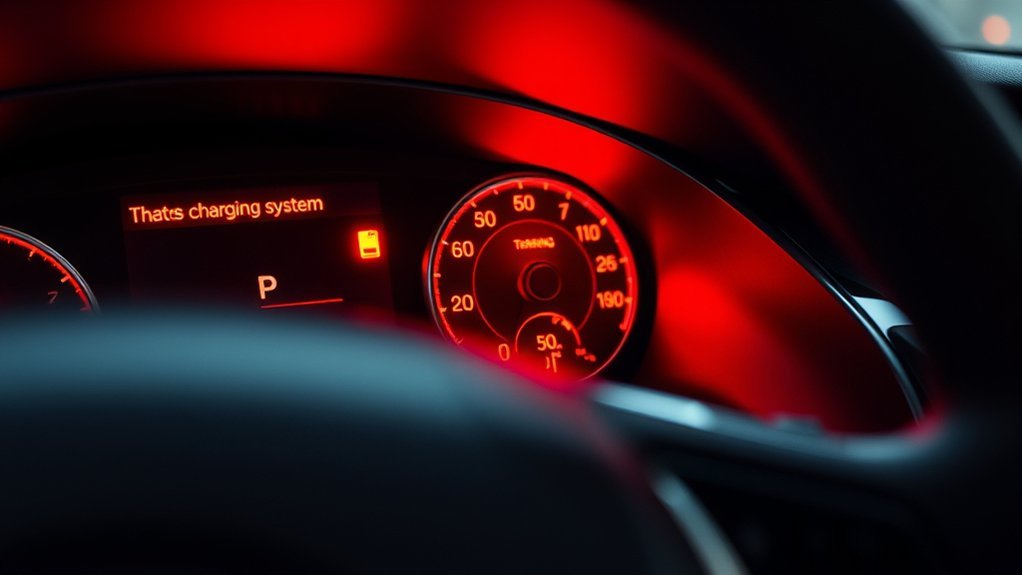
If your Camry shows a charging system warning light or a “Check Charging System” message, first check when it appears. On some older gasoline Camrys, the message can appear when the ignition is ON but the engine is not running; it is usually normal if it disappears after the engine starts. If the warning stays on with the engine running, appears while driving, or remains after a hybrid reaches READY, treat it as a charging-system fault and stop safely.
The cause may be a weak 12-volt battery, loose terminals, a failing alternator on a non-hybrid gasoline model, a belt or fuse problem, damaged wiring, or a hybrid DC-DC charging-system fault. For U.S.-market vehicles, the 2025 and 2026 Camry lineups are exclusively hybrid, so conventional alternator advice does not apply to those model years.
Quick Answer
A “Check Charging System” message that appears only with the ignition ON and the gasoline engine off may be normal if it clears after startup. A warning that stays on while the engine runs, appears while driving, or remains while a hybrid is in READY indicates a possible fault. Turn off unnecessary electrical loads, stop in a safe place, and arrange diagnosis. Do not disconnect a battery cable while the vehicle is operating.
Key Takeaways
- The warning may be normal during ignition-on/engine-off operation if it disappears after the gasoline engine starts.
- A warning that remains on while driving, while a gasoline engine runs, or while a hybrid is in READY requires prompt diagnosis.
- On non-hybrid gasoline Camrys, test the battery first, then inspect alternator output, the belt, fuses, grounds, and wiring.
- Camry Hybrid models and 2025–2026 U.S. Camrys do not use the same belt-driven alternator arrangement as a conventional gasoline Camry.
- There is no universal reset procedure. Correct the cause before clearing any stored codes.
At a Glance
| Basic Check Time | About 15–30 minutes |
| Difficulty | Beginner for visual and voltage checks; advanced for wiring or hybrid diagnosis |
| Tools Needed | Digital multimeter, safety glasses, gloves, flashlight, and an OBD-II scanner if available |
| Likely Systems | 12-volt battery, alternator or DC-DC converter, belt, fuses, fusible links, wiring, grounds, and control modules |
Warning: Toyota’s current Camry guidance treats an active charging-system warning as a condition requiring an immediate safe stop. If the warning remains on while the vehicle is operating, electrical functions weaken, or the display tells you to stop, pull over safely and arrange service. Do not continue until the 12-volt system is exhausted.
Is the Camry Check Charging System Message Normal?
It depends on the vehicle’s operating state. A message shown before the gasoline engine starts does not mean the same thing as a warning that appears while driving.
| When It Appears | Likely Meaning | What to Do |
|---|---|---|
| Ignition ON, gasoline engine off | The alternator is not turning, so some older Camrys may display the message during this state | Start the engine and confirm that the warning disappears |
| Warning remains after the gasoline engine starts | Possible battery, alternator, belt, fuse, wiring, ground, or regulator fault | Stop safely and test the charging system |
| Hybrid power is on, but READY is not displayed | The hybrid system is not fully operating; the 12-volt battery may be powering accessories without active charging | Turn off accessories and follow the model-specific starting instructions |
| Warning remains while a hybrid is in READY or appears while driving | Possible 12-volt battery, DC-DC converter, inverter, fuse, wiring, or control-system fault | Stop safely and arrange Toyota-capable diagnosis |
If the message clears after the vehicle starts normally and does not return while driving, a repair may not be needed. If it remains active, follow the warning rather than trying to reset it.
What the Charging System Warning Light Means
The charging system maintains the 12-volt battery and supplies the vehicle’s low-voltage electronics while the car is operating. Toyota’s official warning-lights guide identifies the charging-system light as a malfunction indicator. The 2025 Camry Hybrid manual directs the driver to stop immediately in a safe place and contact a Toyota dealer when the warning remains active.
The parts involved depend on the Camry’s powertrain. A non-hybrid gasoline model may have a 12-volt battery, belt-driven alternator, voltage regulator, drive belt, fuses or fusible links, wiring, grounds, and control modules. A Camry Hybrid uses a DC-DC converter within its hybrid power-control system to support the 12-volt electrical system instead of relying on the same conventional alternator arrangement.
Which Charging System Does Your Camry Use?
| Camry Type | 12-Volt Charging Hardware | Main DIY Checks |
|---|---|---|
| Non-hybrid gasoline Camry | Belt-driven alternator and voltage regulator | Battery, terminals, belt, alternator output, fuses, cables, and grounds |
| Camry Hybrid | Hybrid inverter/converter and DC-DC charging circuit | 12-volt battery, visible terminals, accessible fuses, READY status, and diagnostic codes |
| 2025–2026 U.S. Camry | Fifth-generation Toyota Hybrid System; U.S. lineup is exclusively hybrid | Use hybrid-specific checks and Toyota service information rather than alternator replacement advice |
Toyota confirms that the 2026 U.S. Camry has an all-hybrid powertrain. Owners of 2025 and 2026 U.S. models should therefore skip conventional alternator replacement instructions.
Understanding the Charging System in Your Camry
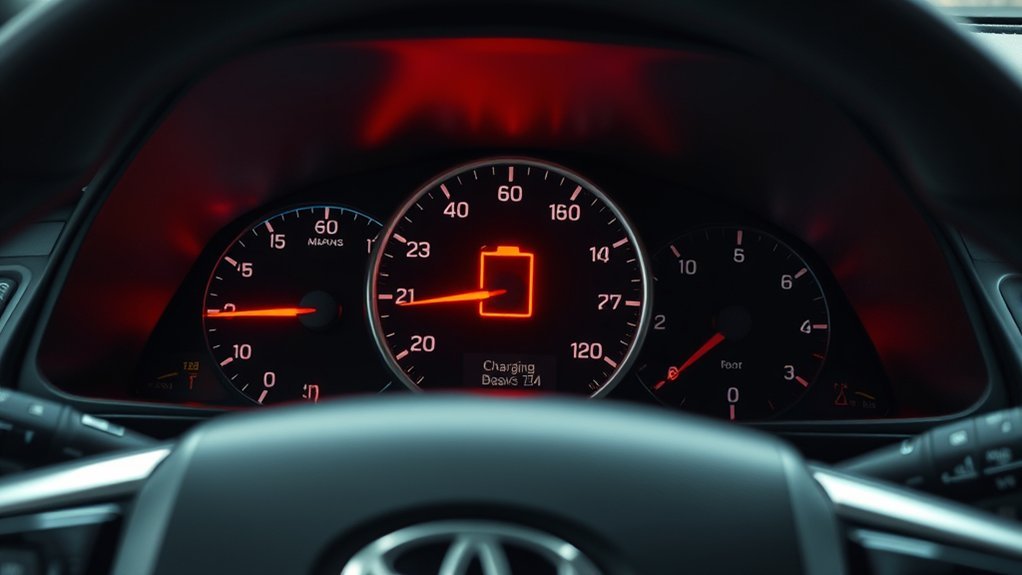
On a conventional gasoline Camry, the alternator creates electrical power while the engine runs. The voltage regulator adjusts output according to battery condition, temperature, engine speed, and electrical demand.
According to Fluke’s automotive battery-testing guidance, a fully charged battery commonly measures about 12.6 volts at rest, while many conventional alternator systems operate around 13.7 to 14.7 volts. These are screening ranges rather than a Camry-specific pass-or-fail specification.
On Camry Hybrid models, the 12-volt battery still powers computers, relays, locks, lights, and other low-voltage equipment. When the hybrid system reaches READY, the hybrid power-control system supports the 12-volt circuit through a DC-DC converter. Persistent warnings require hybrid-capable diagnostic equipment.
Note: Wire colors, connector names, fuse locations, charging specifications, and system layouts vary by Camry year, engine, market, and hybrid configuration. Do not probe a named wire or connector unless the service information for your exact vehicle confirms it.
What Symptoms Often Appear With a Charging-System Fault?
A true charging fault may appear with one or more of these symptoms:
- Dimming or flickering lights: Headlights, interior lights, or the instrument cluster may dim, pulse, or change with electrical load.
- Electrical accessories acting strangely: Power windows, audio, infotainment, the blower motor, or dashboard displays may operate slowly or erratically.
- Slow cranking or no-start: A weak or discharged 12-volt battery may not provide enough power to start a gasoline engine or activate a hybrid system.
- Burning smell or belt noise: A slipping belt, seized pulley, overheated cable, or failing alternator may create odor or noise on a gasoline model.
- Repeated dead battery: A battery that keeps losing charge may be weak, undercharged, affected by poor connections, or drained while the vehicle is parked.
- Multiple warning lights: Low system voltage may cause several modules to report faults at the same time.
Why Does the Check Charging System Warning Turn On?
First separate normal ignition-on/engine-off behavior from an active fault. If the message remains after startup or appears during operation, common causes include:
- Weak, discharged, or failing 12-volt battery: AAA reports that many automotive batteries last about three to five years, with heat, vibration, short trips, and charging problems affecting service life.
- Loose or corroded battery terminals: Resistance at a connection can reduce current flow and create misleading voltage readings.
- Failing alternator or voltage regulator: This applies to non-hybrid gasoline Camrys with a conventional alternator.
- Worn or slipping drive belt: A damaged, oily, loose, or slipping belt can reduce alternator speed and output.
- Blown fuse or fusible link: A failed high-current protection device can interrupt the charging path.
- Damaged wiring or poor grounds: Loose fasteners, corrosion, broken conductors, or overheated terminals can create excessive voltage drop.
- Parasitic battery drain: An accessory or module that remains active while parked may discharge the battery even when the charging system works normally while driving.
- Hybrid charging-system fault: A Camry Hybrid may have a fault involving the 12-volt battery, DC-DC converter, inverter/converter assembly, hybrid control system, fuses, wiring, or communication network.
What Safety Steps Should You Take Before Testing?
Battery and charging checks involve electrical current, corrosive electrolyte, moving belts, and possible spark risk. Work in a ventilated area, wear safety glasses and gloves, remove metal jewelry, and keep tools from touching both battery terminals or a positive terminal and grounded metal at the same time.
Do not disconnect a battery cable while the engine runs or while a hybrid is in READY. The old “remove a cable and see whether it keeps running” test can create voltage spikes and damage vehicle electronics.
Hybrid Camrys add a high-voltage hazard. Do not open, probe, disconnect, or test orange cables, the hybrid battery case, inverter/converter connectors, or service plugs. Fluke’s hybrid-vehicle measurement guidance explains that high-voltage work requires the correct meter, protective equipment, shutdown procedure, and training. Basic owner checks should remain on the 12-volt side.
What Should You Check First?
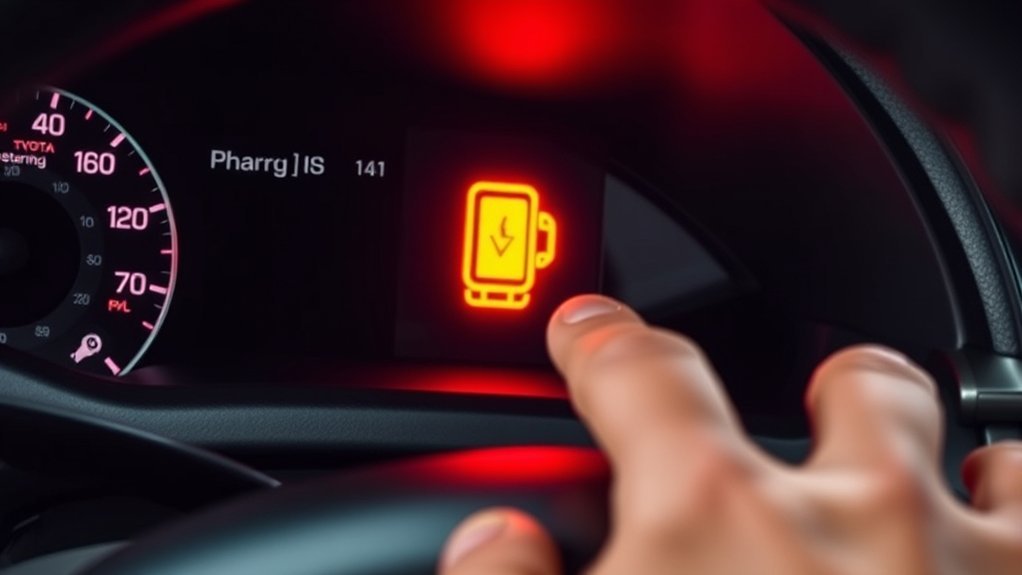
- Read the exact message and note the operating state. Record whether the engine was off, running, or the hybrid READY indicator was on.
- Stop safely if the warning remains during operation. Follow any instructions shown on the multi-information display.
- Turn off unnecessary electrical loads. Switch off the rear defroster, heated seats, audio, chargers, and blower if safe to do so.
- Inspect the 12-volt battery. Look for loose clamps, corrosion, cracked terminals, swelling, leaks, or a missing hold-down.
- Inspect the drive belt on a non-hybrid gasoline model. Look for fraying, cracks, glazing, missing ribs, oil contamination, or abnormal looseness.
- Measure rested battery voltage. Let the vehicle sit with accessories off before using open-circuit voltage as a state-of-charge check.
- Measure operating voltage. Start the gasoline engine or place a hybrid in READY, then compare the reading with the rested value and model-specific specification.
- Scan the vehicle before clearing anything. Save diagnostic codes and freeze-frame data.
How Do You Check the Battery and Charging Voltage?
Set a digital multimeter to DC volts. Touch the red probe to the positive battery terminal and the black probe to the negative terminal or the approved test point for your model. Do not allow either probe to contact moving parts.
Start with a rested engine-off reading. Then start a gasoline Camry or place a hybrid in READY and measure again. Use the following ranges as screening guidance, not as a substitute for Toyota service specifications.
| Reading or Result | What It Suggests | Next Step |
|---|---|---|
| About 12.6 V after the battery has rested | The battery has a high state of charge, but voltage alone does not prove battery health | Continue with an operating-voltage and battery load or conductance test |
| Near 12.0 V after resting | The battery is deeply discharged | Charge the battery, test its capacity, and check for undercharging or a parasitic draw |
| About 13.7–14.7 V on many conventional gasoline systems | The alternator is producing charging voltage at that moment | Compare with the model specification and repeat the test under electrical load |
| Voltage remains near the rested reading while a gasoline engine runs and the warning is active | The battery may not be receiving enough charging current | Inspect the belt, alternator, fuses, cables, grounds, and regulator circuit |
| Hybrid is in READY, but the warning remains active | The 12-volt battery or hybrid DC-DC charging circuit may have a fault | Use model-specific specifications and Toyota-capable diagnostics |
| Voltage is unstable or outside the model-specific range | Possible regulator, converter, connection, sensing, or control fault | Stop testing and have the system diagnosed under load |
Pro Tip: Repeat the test with the headlights and blower operating. A marginal charging system may appear normal with little electrical demand but fail to maintain voltage under load.
A multimeter is only a screening tool. One voltage reading cannot measure battery capacity, maximum alternator output, diode ripple, intermittent connector faults, or excessive resistance in a cable. Those conditions require a load test, conductance test, output test, ripple test, voltage-drop test, or scan-tool diagnosis.
[Products Worth Considering]

The ANCEL AD410 PRO combines engine diagnostics and 12V battery testing in one easy-to-use tool, helping you read and clear check engine codes while checking battery health, cranking, and charging performance. It also provides live data, freeze frame details, and I/M readiness checks to help you diagnose issues faster and prepare for emissions testing. With plug-and-play operation, a clear screen, and broad vehicle compatibility, it is a practical solution for home mechanics and everyday drivers.

The TOPDON BT100 helps you quickly check the health and charge status of 12V lead-acid batteries with clear analytical results, including state of health, state of charge, voltage, and cranking performance. It supports a wide range of battery types and vehicles, making it a practical tool for diagnosing starting and charging issues at home or in the shop. Compact and easy to use, it provides fast, reliable testing without needing to charge the device first.

The Fluke 15B+ Digital Multimeter is a rugged, easy-to-use tool designed for accurate electrical troubleshooting in residential, commercial, automotive, and equipment applications. It measures AC/DC voltage and current, resistance, continuity, diode, and capacitance, helping you diagnose problems quickly and confidently. With a safety-focused design and one-handed operation, it is built for dependable everyday use.
How Do You Check the Alternator on a Gasoline Camry?
This section applies only to non-hybrid gasoline Camrys with a belt-driven alternator. If your Camry is a hybrid, skip to the hybrid section.
- Charge and test the battery first. A discharged or internally damaged battery can distort alternator-test results.
- Inspect the drive belt. Look for wear, looseness, oil contamination, glazing, abnormal noise, or a pulley that does not turn smoothly.
- Compare rested and running voltage. The running reading should normally show that the charging system is supporting the electrical circuit.
- Test under load. Turn on the headlights, blower, and rear defroster while watching voltage stability.
- Inspect alternator connections. Look for loose plugs, damaged insulation, corrosion, melted terminals, or signs of overheating.
- Check charging fuses and fusible links. Use the owner’s manual, fuse-box label, or service information for the exact location and rating.
- Perform voltage-drop tests if needed. Excessive resistance in the positive cable or ground path can imitate alternator failure.
- Have the alternator output-tested. If the battery, belt, cables, grounds, and fuses pass inspection but charging remains low, test the alternator and regulator before replacement.
For a deeper alternator-only diagnostic path, see the site’s Camry alternator symptoms and testing guide.
Do Not Use the Cable-Removal Test: Never disconnect a battery terminal while the engine is running. Use a meter and proper charging-system test equipment instead.
[Products Worth Considering]

The ANCEL AD410 helps drivers quickly read and clear engine-related fault codes, view live data, and understand why the check engine light is on before heading to a repair shop. With built-in code definitions, readiness checks, and support for common OBD2 functions, it makes basic diagnostics straightforward for beginners and DIY users. Powered directly from the vehicle and easy to use with no app required, it offers practical value for everyday vehicle troubleshooting.

This scissor car jack kit provides a dependable solution for emergency tire changes and roadside repairs. With a lifting range suited for low sedans and higher-body SUVs, it comes with essential tools like a ratchet wrench, lug wrench, gloves, tire pressure gauge, and storage bag for convenient use and transport. Built for stability and ease of operation, it is a practical all-in-one kit for cars, SUVs, and MPVs.
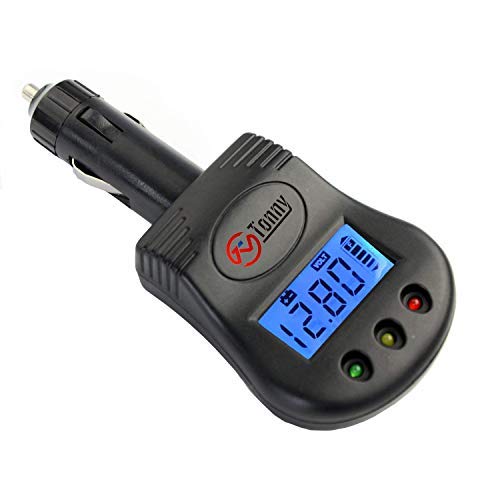
【Checking Your battery's and charging system (alternator) health】 Easily plugs into any DC 12 Volt cigarette lighter plugs,If you doubt your battery's health plug it in and get detailed readings.
How Does the 12-Volt Battery Affect the Warning?
The 12-volt battery powers or stabilizes low-voltage modules, lights, sensors, relays, and accessories. A battery with low charge, internal damage, or poor terminal connections can trigger warnings even when the alternator or hybrid charging circuit is capable of producing voltage.
AAA says battery service life is commonly about three to five years, but climate and operating conditions matter. Testing becomes increasingly useful after the third year, especially in a hot climate or when the vehicle is used mainly for short trips.
Battery Age and State of Charge
A deeply discharged battery increases charging demand, but it does not prove the alternator or DC-DC converter is faulty. Charge the battery and test its capacity before judging the charging hardware.
- Slow crank: A gasoline engine turns over more slowly than usual.
- No READY indication: A hybrid may not activate its control systems when 12-volt power is too low.
- Low rested voltage: The battery remains discharged after sitting.
- Poor load-test result: Voltage falls too far when the battery supplies current.
- Corroded terminals: White, blue, or green buildup increases connection resistance.
Why Voltage Regulation Matters
Undercharging leaves the battery partly discharged. Excessive or unstable charging voltage may damage the battery and vehicle electronics. If readings are too low, too high, or erratic, test the complete circuit instead of replacing parts at random.
What Changes on a Camry Hybrid or 2025–2026 U.S. Camry?
A Camry Hybrid has a 12-volt battery, but it does not use the same conventional belt-driven alternator arrangement as a non-hybrid gasoline Camry. Its hybrid inverter/converter system converts high-voltage energy to support the low-voltage electrical system when the vehicle is in READY.
Toyota states that the 2025 and 2026 U.S. Camry lineups are exclusively hybrid. Owners of those models should not follow generic instructions to replace an alternator or alternator belt.
Safe owner checks include:
- Confirming whether the READY indicator appears
- Inspecting the accessible 12-volt battery terminals
- Looking for visible corrosion, swelling, leaks, or loose connections
- Checking accessible fuses according to the owner’s manual
- Recording all dashboard messages
- Reading codes with a Toyota-capable scan tool
If a separate hybrid-system warning appears, see the site’s Camry Hybrid warning guide.
Warning: Never probe orange high-voltage cables, inverter/converter connectors, the hybrid battery case, or service plugs. High-voltage hybrid components can cause severe injury or death.
How Do You Inspect Charging-System Wiring and Connections?
If battery and operating-voltage tests do not identify the fault, inspect the low-voltage paths that carry power through the vehicle.
- Battery terminals: Check for looseness, corrosion, damaged clamps, and poor contact between the post and terminal.
- Ground cables: Inspect the battery-to-body ground and applicable engine or powertrain ground straps.
- Alternator output cable on gasoline models: Look for loose fasteners, cracked insulation, corrosion, or heat damage.
- Fuses and fusible links: A failed high-amperage link can interrupt charging even when the charging unit works.
- Low-voltage connectors: Look for water intrusion, corrosion, bent pins, broken locks, or partially seated plugs.
- Aftermarket accessories: Audio amplifiers, dash cameras, alarms, trackers, and remote starters can cause drains or wiring faults if installed incorrectly.
Do not tighten high-current terminals without the correct torque specification. An overtightened stud can be damaged, while an undertightened connection can overheat.
What Can a Diagnostic Scanner Tell You?

A multimeter tells you what voltage is present. A scan tool can show why a control module has flagged a fault.
A basic OBD-II reader may find related powertrain codes, but it may not access hybrid-control, body, charging-control, or communication modules. A Toyota-capable scanner provides broader module coverage and may display freeze-frame data, battery-sensor information, commanded charging data, and communication faults.
Record all stored, pending, and history codes before clearing them. Clearing codes too early can erase low-voltage history and freeze-frame evidence. After the repair, clear codes only when appropriate, operate the vehicle through the required conditions, and repeat the voltage and load checks.
[Products Worth Considering]

CEL Doctor: The ANCEL AD310 is one of the best-selling OBD II scanners on the market and is recommended by Scotty Kilmer, a YouTuber and auto mechanic. It can easily determine the cause of the check engine light coming on. After repairing the vehicle's problems, it can quickly read and clear diagnostic trouble codes of emission system, read live data & hard memory data, view freeze frame, I/M monitor readiness and collect vehicle information

[Effortless Vehicle Health Management] - Master your vehicle’s diagnostics with the blcktec 440 obd2 scanner, the ultimate tool in car maintenance. This car check engine code reader not only simplifies the process of reading and clearing trouble codes but also enhances your diagnostic capabilities by providing comprehensive emissions readiness and system resets. It’s the go-to device for turning off CEL efficiently.

【Diagnose on Your Own】The LAUNCH Creader Elite V3.0 is engineered specifically for Toyota & Lexus owners, DIYers, and small shop pros—putting professional-grade diagnostic power right in your hands, making complex repairs feel simple and effortless. It also has Powerful Bidirectional Control, which can remotely control windows, mirrors, lights, wipers, sunroofs, and more—without touching any in-cabin controls. Dismountable USB Cable, Android 8.1, 4'' Touchscreen, Larger 2G+64GB Extended Memory, 3000mAh Battery. It delivers in-depth full-system diagnostics, all free reset services, 10 full OBD2 functions, Auto VIN, Free Update.
Do You Need to Reset the Charging-System Warning?
There is no universal Camry charging-system reset procedure. This is a malfunction warning, not a routine maintenance reminder.
When normal charging returns, the warning may turn off on its own. Stored diagnostic codes may remain in module memory and can be cleared with a compatible scan tool after they have been recorded and the fault has been repaired. Disconnecting the battery simply to erase the warning can remove diagnostic clues and may create additional relearn requirements.
If the warning immediately returns after codes are cleared, the underlying problem is still active.
When Should You Seek Professional Help?
Arrange professional diagnosis when any of these conditions apply:
- The charging warning remains on while the vehicle is operating.
- The display instructs you to stop in a safe place.
- The vehicle loses electrical functions or multiple warning lights appear.
- Running voltage stays near rested battery voltage on a gasoline Camry.
- Voltage is unstable or outside the vehicle’s specified range.
- The battery and alternator have already been replaced but the warning remains.
- A charging-system fuse or fusible link fails repeatedly.
- Wiring is melted, burned, brittle, wet, or heavily corroded.
- A Camry Hybrid shows a charging or hybrid-system warning while in READY.
- You do not have the equipment or service information required for the test.
When Should a Component Be Replaced?
Replace parts only after testing identifies the failed component. A new battery will not repair a failed alternator or converter, and a new alternator will not repair a corroded ground, damaged cable, blown fusible link, or parasitic drain.
A practical order is:
- Confirm the operating state in which the warning appears
- Inspect the battery and terminals
- Test battery state of charge and capacity
- Measure operating voltage
- Inspect the belt on gasoline models
- Check fuses, cables, and grounds
- Read all applicable control modules
- Perform output, ripple, voltage-drop, or parasitic-draw testing as required
- Replace only the confirmed failed part
What Tests Can a Professional Shop Perform?
A qualified shop can perform battery load or conductance testing, alternator current-output testing, ripple testing, loaded voltage-drop testing, parasitic-draw testing, wiring-diagram checks, and Toyota-specific module scans. Hybrid-qualified technicians can also diagnose the inverter, DC-DC converter, isolation systems, and hybrid control network without exposing the owner to high-voltage components.
Frequently Asked Questions
Is the Camry Check Charging System message normal when the engine is off?
It can be normal on some older gasoline Camrys when the ignition is ON but the engine is not running because the alternator is not producing power. Start the engine and confirm that the message disappears. If it remains on after startup or appears while driving, treat it as a fault.
How do I fix my Camry charging-system warning?
First note whether the engine is off, running, or the hybrid is in READY. For an active warning, stop safely, inspect the 12-volt battery and terminals, measure rested and operating voltage, inspect the belt on a gasoline model, check fuses and grounds, and scan all applicable modules. Replace a part only after testing confirms the fault.
Can I drive with the Camry charging-system warning on?
Do not continue normal driving with an active warning. If it stays on while the engine runs, remains while a hybrid is in READY, appears while driving, or the display tells you to stop, pull over safely and arrange service. The vehicle may be operating on limited stored 12-volt power.
What voltage should a Camry battery show?
A fully charged 12-volt battery commonly measures about 12.6 volts after resting. Many conventional gasoline charging systems operate around 13.7 to 14.7 volts, but the correct range varies by model, temperature, battery condition, and electrical load. Resting voltage does not replace a battery load or conductance test.
Why did the warning stay on after replacing the battery?
The battery may not have been the root cause. Possible causes include a failing alternator on a gasoline model, a slipping belt, a blown fusible link, a poor ground, damaged wiring, an improperly connected battery sensor, a parasitic drain, or a hybrid DC-DC charging fault. Test the complete circuit before replacing another part.
Does a Camry Hybrid have the same alternator problem?
No. A Camry Hybrid uses its inverter and DC-DC converter to support the 12-volt electrical system rather than the same belt-driven alternator arrangement used by a conventional gasoline Camry. Basic 12-volt checks are still useful, but persistent warnings require hybrid-capable diagnosis.
How do I reset the Camry charging-system warning?
There is no universal manual reset. Repair the charging fault first. The warning may clear when normal operation returns, while stored codes may need to be cleared with a compatible scan tool after the codes and freeze-frame data have been recorded.
Can a bad 12-volt battery cause the charging warning?
Yes. A weak, discharged, internally damaged, or poorly connected 12-volt battery can cause low-voltage warnings and starting problems. However, a dead battery does not prove the battery itself caused the problem; undercharging or a parasitic draw may have discharged it.
Conclusion
A Camry charging-system message is not always a failed alternator. If it appears only with the ignition ON and a gasoline engine off, then disappears after startup, it may be normal. If it stays on while the engine runs, remains while a hybrid is in READY, or appears while driving, stop safely and diagnose it promptly.
Start with the 12-volt battery, terminals, operating voltage, fuses, cables, and grounds. Inspect the belt and alternator only on a non-hybrid gasoline Camry. For a Camry Hybrid or a 2025–2026 U.S. Camry, keep DIY work on the low-voltage side and use Toyota-capable diagnosis for a persistent warning. Do not reset the warning or replace parts until the underlying cause has been identified.
Sources
- Toyota Owners — Warning Lights — supports the meaning of the charging-system warning and model-specific manual guidance.
- Toyota Owners — 2025 Camry Hybrid Warning-Light Instructions — supports the immediate safe-stop instruction for an active charging-system warning.
- Toyota — 2026 Camry — confirms the current U.S. Camry’s all-hybrid powertrain.
- Toyota USA Newsroom — 2026 Camry — supports the 2026 model-year and fifth-generation Toyota Hybrid System guidance.
- Fluke — Testing an Automotive Battery With a Multimeter — supports resting-voltage and conventional alternator screening ranges.
- AAA — How Long Do Car Batteries Last? — supports 12-volt battery lifespan and environmental factors.
- Fluke — Hybrid Vehicle Measurement Safety — supports high-voltage testing restrictions and protective-equipment guidance.
- Toyota Technical Information — Emergency Response Guides — supports Toyota hybrid-system component and high-voltage safety guidance.




[…] Consider the 12-volt battery. Test battery and charging-system condition if several electrical systems are dim, slow, resetting, or failing together. For related symptoms, see the Camry charging system warning guide. […]
[…] fail, or the problem changes with engine speed, use the Toyota Camry headlight flickering guide and Camry charging-system warning guide to separate a bulb problem from a fuse, relay, ground, switch, or power-supply […]