The 2025 Toyota Camry XSE Hybrid is efficient, but the exact EPA fuel economy rating depends on whether you are looking at the front-wheel-drive or all-wheel-drive version. The key number most shoppers see—47 MPG combined—applies to the XSE Hybrid with front-wheel drive. The XSE Hybrid with all-wheel drive is rated lower, so checking the drivetrain matters before comparing fuel costs or real-world MPG.
Quick Answer
The 2025 Toyota Camry XSE Hybrid FWD is EPA-rated at 48 MPG city, 47 MPG highway, and 47 MPG combined. The 2025 Camry XSE Hybrid AWD is rated at 44 MPG city, 43 MPG highway, and 44 MPG combined. Real-world MPG can vary with speed, weather, tires, traffic, and driving style.
Key Takeaways
- The 47 MPG combined figure applies to the 2025 Camry XSE Hybrid FWD, not the AWD model.
- The XSE Hybrid AWD is officially rated at 44 MPG combined because the added rear electric motor and AWD hardware change efficiency.
- EPA ratings are controlled lab estimates, so they are best used for comparison rather than as a guaranteed number.
- Real-world MPG can match, beat, or trail the EPA rating depending on speed, climate, tire pressure, maintenance, and traffic.
Official 2025 Toyota Camry Hybrid MPG by Trim
The official 2025 Camry Hybrid lineup is not one single MPG rating. Toyota offers the Camry as a hybrid across the lineup, but wheel size, trim, and drivetrain all affect the final EPA estimate. According to FuelEconomy.gov’s 2025 Toyota Camry listings, the Camry ranges from 51 MPG combined in LE FWD form to 44 MPG combined in XSE AWD form.
| 2025 Camry Hybrid Version | City MPG | Highway MPG | Combined MPG | EPA Total Range |
|---|---|---|---|---|
| LE FWD | 53 | 50 | 51 | 663 miles |
| LE AWD | 51 | 49 | 50 | 650 miles |
| SE / XLE / XSE FWD | 48 | 47 | 47 | 611 miles |
| SE / XLE AWD | 46 | 46 | 46 | 598 miles |
| XSE AWD | 44 | 43 | 44 | 572 miles |
Note: If you are shopping specifically for the XSE, confirm whether the car is FWD or AWD. The XSE FWD is rated at 47 MPG combined, while the XSE AWD is rated at 44 MPG combined.
[Products Worth Considering]

Castrol EDGE 0W-20 advanced full synthetic motor oil is engineered for drivers seeking strong wear protection, excellent viscosity control, and thermal stability. It delivers superior performance in critical engine areas, including fuel economy, high-temperature protection, sludge control, and wear defense. Designed for extended oil-change intervals, it helps keep modern engines running smoothly under demanding conditions.

CHAPIN’s low-profile oil drain pan is designed to slide under low-clearance vehicles and equipment, making fluid changes easier in tight spaces. The large splash-free target area helps reduce mess while the molded carry handles support easier lifting, pouring, and storage. Built for draining oil, coolant, and other automotive fluids, it offers a practical high-capacity solution for routine maintenance.

This automotive circuit tester checks low-voltage DC systems from 3-65V, making it useful for diagnosing headlights, taillights, fuses, sockets, and other vehicle wiring issues. The digital backlit display provides clear voltage readings with fine accuracy, while the bidirectional polarity indicator helps you test from either ground or positive. Built with a durable probe, insulated tip, and extra-long spring wire, it is designed for dependable everyday use in automotive and household electrical work.
What Are EPA Fuel Economy Ratings?
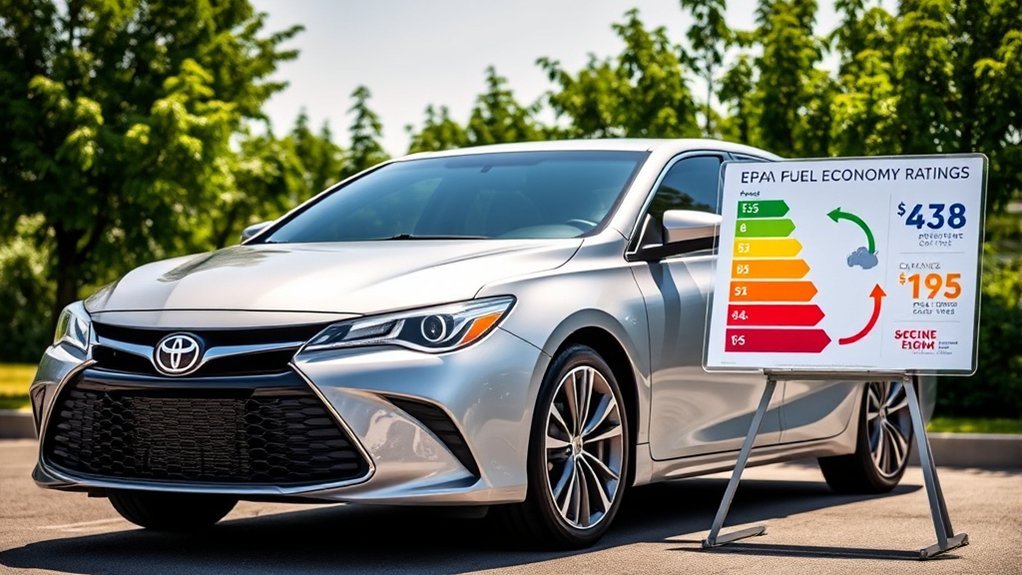
EPA fuel economy ratings are standardized estimates that help shoppers compare vehicles under the same testing rules. They are not promises of the exact MPG every driver will see. FuelEconomy.gov explains that vehicles are tested under controlled laboratory conditions on a dynamometer, with the test setup adjusted for factors such as vehicle weight and wind resistance. You can read the official explanation on how vehicles are tested.
That controlled process is what makes the 2025 Camry XSE Hybrid FWD’s 48 city / 47 highway / 47 combined rating useful. It gives you a fair way to compare the Camry against other cars. Your personal MPG may still vary because your route, speed, traffic, tires, temperature, cargo, and climate-control use are different from the test cycle.
The 2025 Camry XSE Hybrid FWD is rated at 47 MPG combined, while the XSE Hybrid AWD is rated at 44 MPG combined. That three-MPG difference is why drivetrain matters when comparing Camry fuel economy.
How the 2025 Camry Hybrid System Works
The 2025 Camry is hybrid-only in the U.S. market. Toyota says the model pairs a 2.5-liter four-cylinder engine with its fifth-generation Toyota Hybrid System, also called THS 5. In front-wheel-drive form, the system produces 225 net-combined horsepower. With Electronic On-Demand All-Wheel Drive, output rises to 232 net-combined horsepower because the AWD version uses a dedicated rear electric motor. Toyota explains the system in its 2025 Camry press release.
The hybrid system blends gasoline and electric power based on driving conditions. At low speeds and during gentle acceleration, the electric motor can reduce how hard the gas engine works. During braking, the hybrid system can recover some energy through regenerative braking. On the highway, the gas engine tends to do more of the work, which is one reason hybrid city MPG can be as good as, or better than, highway MPG.
XSE FWD vs. XSE AWD: Why the MPG Changes
The main fuel-economy difference is drivetrain. The XSE FWD has less AWD hardware to carry and power, so it earns the higher EPA estimate: 48 city / 47 highway / 47 combined. The XSE AWD adds the rear electric motor and AWD system for extra traction, but its estimate drops to 44 city / 43 highway / 44 combined.
That does not make the AWD model inefficient. A 44 MPG combined midsize hybrid sedan is still strong. It simply means the buyer needs to decide whether the traction benefit of AWD is worth the lower MPG rating. For drivers in snow, rain, steep driveways, or rural roads, AWD may be a worthwhile tradeoff. For drivers focused mainly on fuel savings, the XSE FWD is the more efficient choice.
[Products Worth Considering]

The MOTOPOWER MP0514A makes it easy to check battery and charging system health with simple plug-and-test operation. Its digital LCD display and LED indicators provide clear voltage readings and alternator status, while built-in reverse connection and over-voltage protection help support safe use. Compact and portable, it is a practical tool for drivers and mechanics who want quick, reliable diagnostics.

This heavy-duty car ramp set provides a stable, reliable lift for routine maintenance like oil changes, tire rotations, brake work, and undercarriage inspections. Built from high-impact poly with a non-skid tread and rubber feet, it helps keep vehicles secure while offering a lightweight, corrosion-resistant alternative to steel ramps. The wide, gradual design supports a broad range of vehicles, from compact cars to trucks, SUVs, and vans.
How Do Real-World MPG Figures Compare With EPA Estimates?
Real-world MPG can land above or below the EPA rating. For the 2025 Camry HEV FWD SE/XLE/XSE listing, FuelEconomy.gov shows an unofficial owner-reported average of 48.4 MPG based on one vehicle. That is encouraging, but it should be treated as limited owner-reported data, not as an official road test or a guarantee that every driver will average the same result.
| Data Point | MPG | What It Means |
|---|---|---|
| EPA estimate: Camry XSE Hybrid FWD | 47 combined | Official controlled-test estimate for comparison. |
| EPA estimate: Camry XSE Hybrid AWD | 44 combined | Official controlled-test estimate for the AWD XSE. |
| FuelEconomy.gov owner-reported average: FWD SE/XLE/XSE | 48.4 | Unofficial owner data from one vehicle, useful as an example but too small to prove typical MPG. |
The best way to judge your own Camry is to track several tanks of fuel. One tank can be skewed by pump shutoff differences, wind, weather, road grade, traffic, or a long highway trip. A three- to five-tank average is more useful.
Highway Driving Performance: What to Expect
The Camry XSE Hybrid FWD’s official highway estimate is 47 MPG. That is close to its combined rating, which makes it a strong long-distance commuter. The AWD XSE’s official highway estimate is 43 MPG, which is still efficient but lower than the FWD version.
Highway MPG often depends heavily on speed. Driving at 65 mph can return better fuel economy than driving at 75 mph because aerodynamic drag rises quickly as speed increases. Wind, roof accessories, tire condition, and heavy cargo can also pull the number down. On flat roads in mild weather, a careful driver may come close to the EPA highway rating. In cold weather, heavy rain, mountain terrain, or high-speed traffic, the same car may fall short.
City Driving Performance and Hybrid Advantage
The Camry XSE Hybrid FWD is rated at 48 MPG city, slightly higher than its highway rating. That pattern is common for hybrids because stop-and-go traffic gives the electric motor and regenerative braking system more chances to help. A traditional gas car usually wastes more energy during braking and idling, while a hybrid can recover some energy and use electric assist at low speeds.
City MPG is still not automatic. Short trips with a cold engine, aggressive acceleration, long idle periods, heavy climate-control use, and underinflated tires can reduce efficiency. Smooth acceleration and early, gentle braking help the hybrid system work at its best.
Fuel Range and Fuel Cost Context
FuelEconomy.gov lists a 13.0-gallon tank for the 2025 Camry HEV FWD SE/XLE/XSE and the 2025 Camry HEV AWD XSE. Based on EPA estimates, the FWD SE/XLE/XSE group has a listed total range of 611 miles, while the AWD XSE has a listed range of 572 miles.
Note: EPA range is a comparison estimate, not a suggestion to drive until the tank is empty. For everyday use, refuel before the tank gets extremely low to protect the fuel pump and avoid being stranded.
Annual fuel cost depends on gas prices and miles driven. The official FuelEconomy.gov page uses assumptions such as 15,000 miles per year and a mix of city and highway driving. If you drive fewer miles, your annual cost will be lower. If gas prices rise or you drive mostly high-speed highway routes, your costs can increase.
Key Factors Influencing Fuel Economy in the 2025 Camry
The 2025 Camry Hybrid is efficient by design, but the driver still plays a major role. FuelEconomy.gov notes that aggressive driving can lower gas mileage significantly, especially through speeding, rapid acceleration, and hard braking. It also notes that proper maintenance and tire pressure can help preserve fuel economy.
| Factor | Effect on MPG | Best Habit |
|---|---|---|
| Speed | Higher speeds increase aerodynamic drag. | Use steady, moderate highway speeds when possible. |
| Acceleration and braking | Hard inputs waste fuel and reduce hybrid efficiency. | Accelerate smoothly and brake early. |
| Tire pressure | Underinflated tires increase rolling resistance. | Check cold tire pressure monthly. |
| Weather | Cold weather and short trips can lower MPG. | Combine errands and avoid long warm-up idling. |
| Climate control | Heavy heating or A/C use can reduce efficiency. | Use automatic climate settings wisely. |
Comparing the 2025 Camry With Other Hybrid Sedans
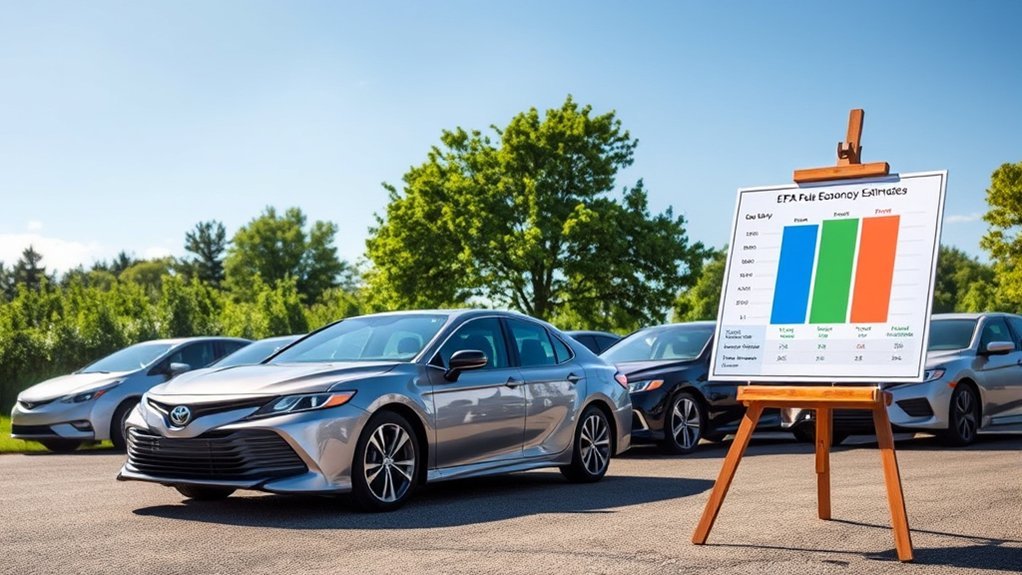
The 2025 Camry XSE Hybrid FWD is competitive with other midsize hybrid sedans, but the best comparison depends on trim. The Honda Accord Hybrid’s most efficient 2025 hybrid listing is rated at 51 city / 44 highway / 48 combined, while the Sport/Touring hybrid versions are rated at 46 city / 41 highway / 44 combined. The 2025 Hyundai Sonata Hybrid is rated at 44 city / 51 highway / 47 combined.
| Vehicle | City MPG | Highway MPG | Combined MPG |
|---|---|---|---|
| 2025 Toyota Camry XSE Hybrid FWD | 48 | 47 | 47 |
| 2025 Toyota Camry XSE Hybrid AWD | 44 | 43 | 44 |
| 2025 Honda Accord Hybrid | 51 | 44 | 48 |
| 2025 Honda Accord Hybrid Sport/Touring | 46 | 41 | 44 |
| 2025 Hyundai Sonata Hybrid | 44 | 51 | 47 |
The Camry’s advantage is balance. The XSE FWD does not lead every MPG category, but it delivers strong combined fuel economy with a sportier trim package. The XSE AWD gives up a few MPG but adds extra traction, which most direct hybrid-sedan rivals do not offer in the same way.
How Fuel Efficiency Can Change Over Time
Fuel economy can change during long-term ownership, but it is not guaranteed to drop sharply just because the car gets older. Tires, alignment, brake drag, oil condition, air filters, weather, battery condition, and driving routes all matter. A well-maintained Camry Hybrid driven smoothly can stay close to its expected efficiency for a long time.
The most common reason owners see MPG change is not the hybrid system itself. It is usually a mix of seasonal weather, tire pressure, short trips, traffic, and driving speed. If your MPG drops suddenly, check tire pressure first, then look for maintenance issues such as a dragging brake, worn tires, alignment problems, or warning lights.
How to Track Your Own Camry MPG
The dashboard MPG display is useful, but a manual calculation gives you a good second opinion. Use the same method for several tanks so the average smooths out pump-to-pump variation.
- Fill the tank and reset the trip odometer.
- Drive normally until your next fill-up.
- Fill the tank again, preferably at the same pump style if practical.
- Divide miles driven by gallons added.
- Repeat for at least three tanks and average the results.
Pro Tip: Do not judge MPG from one short trip. A 5-mile cold-start errand and a 100-mile warm highway drive tell very different stories. A multi-tank average is much more useful.
Tips for Maximizing Fuel Economy in Your Camry
The Camry Hybrid already does a lot of efficiency work automatically, but the best results still come from consistent habits. FuelEconomy.gov’s efficient driving guidance says aggressive driving can reduce gas mileage by roughly 15% to 30% at highway speeds and 10% to 40% in stop-and-go traffic. Its maintenance guidance also notes that underinflated tires can lower MPG.
Optimize Tire Pressure
Check tire pressure at least once a month and before long trips. Use the pressure listed on the driver-side door jamb or in the owner’s manual, not the maximum number printed on the tire sidewall. Proper tire pressure helps fuel economy, tire life, braking, and handling.
Use Smooth Inputs
Accelerate gently, look ahead, and brake early. This gives the hybrid system more chances to use electric assist and regenerative braking. Hard acceleration followed by hard braking wastes energy the hybrid system could otherwise manage more efficiently.
Use Eco Mode When It Fits
Eco mode can soften throttle response and help encourage efficient driving. It is most useful in city and suburban traffic, where smooth inputs matter. On fast highways, your speed, wind, traffic, and terrain may matter more than the drive mode itself.
Reduce Unnecessary Load and Drag
Remove heavy cargo when you do not need it. Take off roof racks or cargo boxes when they are not in use. Extra weight and aerodynamic drag both make the car work harder, especially at highway speeds.
Limit Long Idle Time
Long warm-up idling wastes fuel. In cold weather, drive gently after a short initial warm-up rather than letting the car idle for a long time. The engine warms more efficiently when the vehicle is being driven carefully.
Frequently Asked Questions
How accurate are EPA gas mileage estimates?
EPA estimates are accurate as standardized comparison numbers, but they are not guaranteed real-world results. They come from controlled tests, while your MPG depends on weather, speed, traffic, tire pressure, route, maintenance, and driving style.
What is the official 2025 Toyota Camry XSE Hybrid MPG?
The 2025 Toyota Camry XSE Hybrid FWD is rated at 48 MPG city, 47 MPG highway, and 47 MPG combined. The 2025 Toyota Camry XSE Hybrid AWD is rated at 44 MPG city, 43 MPG highway, and 44 MPG combined.
What is a good EPA MPG rating?
For a modern midsize sedan, anything around 40 MPG combined is strong, and the Camry XSE Hybrid FWD’s 47 MPG combined rating is very efficient. The best number depends on vehicle size, drivetrain, tires, and whether you need AWD.
Is the Toyota Camry a fuel-efficient car?
Yes. The 2025 Camry is hybrid-only, and every version is efficient for a midsize sedan. The LE FWD is the most efficient version at 51 MPG combined, while the XSE FWD is rated at 47 MPG combined and the XSE AWD is rated at 44 MPG combined.
Why does the Camry Hybrid get better city MPG than highway MPG?
Hybrids can do especially well in city driving because low-speed electric assist and regenerative braking help recover energy that a traditional gas car would waste. Highway driving relies more on steady engine power and is affected more by aerodynamic drag.
Can the 2025 Camry XSE Hybrid beat its EPA rating?
Yes, it can under favorable conditions, especially with smooth driving, moderate speeds, mild weather, and properly inflated tires. It can also fall short in cold weather, short-trip driving, heavy traffic, high-speed highway use, or poor maintenance conditions.
Conclusion
The 2025 Toyota Camry XSE Hybrid has excellent fuel economy, but the most important detail is drivetrain. The XSE Hybrid FWD is EPA-rated at 48 city / 47 highway / 47 combined, while the XSE Hybrid AWD is rated at 44 city / 43 highway / 44 combined. Both are efficient, but the FWD version is the better pick for maximum MPG, and the AWD version is the better fit for drivers who value extra traction.
Use EPA ratings as a comparison tool, then track your own mileage across several tanks. With smooth driving, proper tire pressure, routine maintenance, and moderate speeds, the Camry XSE Hybrid can be a very economical daily driver.
Sources
- FuelEconomy.gov: 2025 Toyota Camry HEV FWD SE/XLE/XSE — official EPA MPG, tank size, range, fuel cost, and owner-reported MPG context.
- FuelEconomy.gov: 2025 Toyota Camry HEV AWD XSE — official EPA MPG, tank size, and range for the AWD XSE.
- FuelEconomy.gov: 2025 Toyota Camry model listings — trim-by-trim Camry Hybrid fuel economy comparison.
- Toyota Pressroom: 2025 Camry Hybrid system — THS 5, 2.5-liter engine, FWD/AWD horsepower, and hybrid-only lineup details.
- FuelEconomy.gov: How vehicles are tested — EPA fuel economy testing process and controlled-lab context.
- FuelEconomy.gov: Driving more efficiently and FuelEconomy.gov: Keeping your vehicle in shape — official guidance on driving habits, tire pressure, and maintenance.