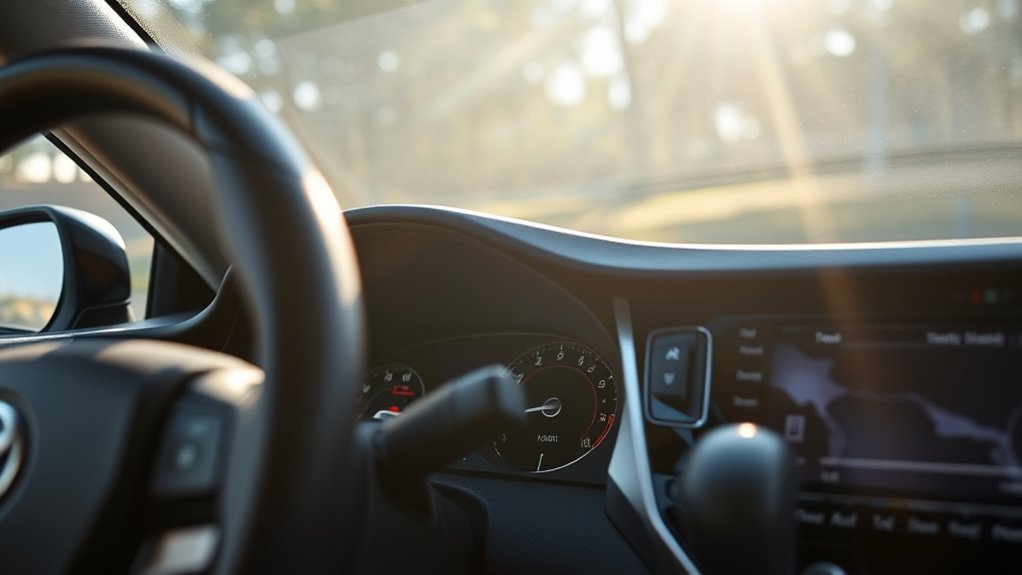
To use Hill Start Assist on a Toyota Camry, stop completely on an uphill incline, keep the accelerator released, select a drive position that will move the car up the slope, and keep the parking brake disengaged. On U.S.-spec 2018 and newer Camrys, Hill-start Assist Control (HAC) is automatic when its operating conditions are met; there is no separate HAC button or older-style confirmation beep. On 2012–2014 U.S. Camry Hybrid models, Toyota instead instructs the driver to press the brake pedal farther at a complete stop until one beep sounds and the slip indicator comes on. Toyota documentation verified for 2012–2014 Hybrid, 2018, and 2025 models specifies an approximately two-second hold after brake release; check the owner’s manual for your exact model year and market before assuming identical timing.
Quick Answer
Toyota Camry Hill-start Assist Control (HAC) temporarily keeps the brakes applied after you release the brake pedal so you can move your foot to the accelerator without an immediate rollback.
- 2018 and newer automatic-HAC Camrys: Stop fully on an uphill incline, keep the accelerator released, use the appropriate drive position, and keep the parking brake disengaged. Toyota’s verified 2018 and 2025 U.S. manuals specify a maximum hold of about 2 seconds.
- 2012–2014 Camry Hybrid: Stop fully, press the brake pedal farther until you hear one beep and the slip indicator comes on, then release the brake and accelerate promptly. Toyota’s Quick Reference Guides specify an approximately 2-second hold.
Key Takeaways
- Hill Start Assist temporarily keeps braking force applied; it does not create tire grip or prevent a vehicle from sliding on ice, snow, gravel, or another low-traction surface.
- Toyota’s 2012–2014 U.S. Camry Hybrid guides use a deep brake-pedal press, one beep, and the slip indicator as the activation confirmation. Later automatic-HAC Camrys do not use that driver-triggered sequence.
- For the U.S.-spec 2018 and 2025 Camry manuals verified for this update, HAC operates automatically when the vehicle is stopped on an upward incline, the accelerator is not pressed, the parking brake is not engaged, and the transmission is in an allowed drive position.
- Toyota does not publish a universal “3% grade” activation threshold in the Camry sources verified for this update. Grade, road surface, vehicle load, and driver input can affect performance.
- Consult the official Toyota owner’s manual for your exact Camry model year before relying on a specific hold time or operating condition.
Which Camry Procedure Applies?
| 2012–2014 Camry Hybrid (U.S.) | At a complete stop, press the brake pedal farther until 1 beep sounds and the slip indicator comes on. Toyota’s Quick Reference Guides specify an approximately 2-second hold after brake release. |
| 2018 Camry and later automatic-HAC models | HAC operates automatically when the manual’s conditions are met. The verified 2018 U.S. manual requires the vehicle to be stopped on an upward incline, the accelerator released, the parking brake off, and the transmission out of P/N; the hold is limited to about 2 seconds. |
| 2025 Camry (U.S.) | The verified 2025 U.S. manual uses the same core automatic-HAC conditions and specifies a maximum hold of about 2 seconds. The power switch must be ON. |
| 2026 Camry (U.S.) | Toyota’s 2026 U.S. brochure lists HAC as standard across Camry grades. [VERIFY: confirm the exact 2026 owner’s-manual operating conditions and hold timing before stating that every detail is identical to 2025.] |
| Other Years and Global Markets | Check the exact owner’s manual. Toyota’s feature availability and operating details can differ by model year and market. For example, Toyota Brunei’s Camry HEV brochure states a 3-second brake-pressure hold, so the U.S. approximately 2-second timing should not be generalized worldwide. |
What Is Toyota Camry Hill Start Assist?

Hill Start Assist, officially designated as Hill-start Assist Control (HAC) in Toyota literature, is a driving-assistance feature designed to reduce rollback as you start on an uphill incline. It briefly keeps braking force applied after brake-pedal release so you have time to move your foot to the accelerator.
HAC is not designed for continuous holding. In the U.S.-spec 2018 and 2025 Camry owner information verified for this update, the vehicle must be stopped on an upward incline, the accelerator must not be pressed, the parking brake must be disengaged, and the transmission must be in an allowed drive position. Those manuals specify a maximum hold of about two seconds and list accelerator input, an ineligible shift position, or parking-brake use among the conditions that cancel or prevent operation. Toyota does not state a universal 3% Camry trigger threshold in the sources verified here.
Warning: Hill-start Assist Control is not an automatic parking brake. It will not hold a vehicle indefinitely on steep mountain grades or icy road surfaces. Always maintain primary vehicle control with the foot brake, and set the parking brake whenever coming to a prolonged stop or parking on a hill.
What Does Hill Start Assist Actually Do?
Toyota’s HAC addresses one specific mechanical challenge: gravitational rollback during the driver’s pedal transition. It does not manipulate steering angles, increase hybrid powertrain output, or increase physical tire traction.
| Function | What the System Does | What It Does Not Do |
|---|---|---|
| Rollback Reduction | Maintains braking force briefly after the pedal is released; verified U.S. manuals for 2018 and 2025 specify up to about 2 seconds | Guarantee zero rollback on extreme grades or overloaded vehicles |
| Pedal Transition | Provides a seamless window to transfer your foot to the throttle | Hold the car in place during long red lights or stop-and-go delays |
| Automatic Support | Activates automatically when the owner’s-manual operating conditions are met on modern Camrys | Replace manual foot braking or the Electronic Parking Brake (EPB) |
| Incline Starts | Works in Drive when facing uphill, and in Reverse when facing downhill | Generate traction on slick ice, wet leaves, or loose gravel |
Why Does the Procedure Change by Camry Model Year?
Toyota changed the documented activation procedure across Camry generations. The 2012–2014 U.S. Camry Hybrid Quick Reference Guides instruct the driver to press the brake pedal farther at a complete stop until one beep sounds and the slip indicator comes on. The verified 2018 and 2025 U.S. Camry manuals instead describe HAC as an automatic function that operates when its listed conditions are satisfied. The public owner literature does not support the article’s previous claims about a special mechanical trigger switch, a yaw-sensor trigger, or a specific Skid Control ECU architecture, so those explanations have been removed.
Understanding your model year prevents confusion. A driver moving from an older Camry Hybrid may wait for a beep that the later automatic procedure does not require. Conversely, an older Hybrid driver must perform the documented deep-pedal activation step. You can verify your specific equipment and procedure in the official Toyota Manuals & Warranties library.
Model-year note: Do not use the older deep-press/beep sequence as a test on a newer automatic-HAC Camry. If a warning light or message is present, follow the exact owner’s-manual instructions for that warning rather than judging HAC only by whether you hear a chime.
How to Use Toyota Camry Hill Start Assist (2018–2026 Models)
Use this sequence for a modern Camry equipped with automatic Hill-start Assist Control. The operating-condition wording below is verified against U.S.-spec 2018 and 2025 owner information; check your exact manual if you drive another model year or market.
- Bring the car to a complete stop on the uphill incline. Keep steady pressure on the brake pedal until the vehicle is stationary. Toyota’s verified Camry sources do not publish a universal 3% activation threshold.
- Select the drive position that will move the car up the slope. For a normal uphill start, use Drive (D). If you are backing uphill, use Reverse (R). The verified U.S. manuals state that HAC does not operate in Park (P) or Neutral (N).
- Keep your foot off the accelerator. Accelerator input prevents or cancels the temporary hold.
- Keep the parking brake disengaged. An engaged parking brake prevents HAC operation under the verified manual conditions.
- Release the brake only when you are ready to move. The verified 2018 and 2025 U.S. manuals specify a maximum hold of approximately two seconds.
- Press the accelerator smoothly. The temporary hold ends as you accelerate, so do not use HAC as a substitute for continuous brake-pedal control.
Pro Tip: Release the brake only when you are ready to accelerate. If traffic has not moved, keep the brake pedal pressed instead of trying to “wait out” the HAC timer.
[Products Worth Considering]

This TPMS sensor training tool is designed for Ford, Lincoln, and Mercury vehicles with compatible tire pressure sensors, helping activate sensors after tire rotations or sensor replacement. It supports relearning and warning light reset workflows with a simple one-button operation, making tire pressure maintenance easier and faster. Built for reliable use and broad vehicle compatibility, it is a practical accessory for TPMS service and sensor activation.

This Yuirote universal car motor diagnostic tool helps drivers quickly detect engine fault codes and identify system issues for routine inspections and maintenance. It also supports electronic parking brake reset and emergency release functions, making it useful for handling EPB-related problems without a repair shop visit. Its compact, ergonomic design and broad vehicle compatibility make it a practical choice for car owners and DIY repair enthusiasts.
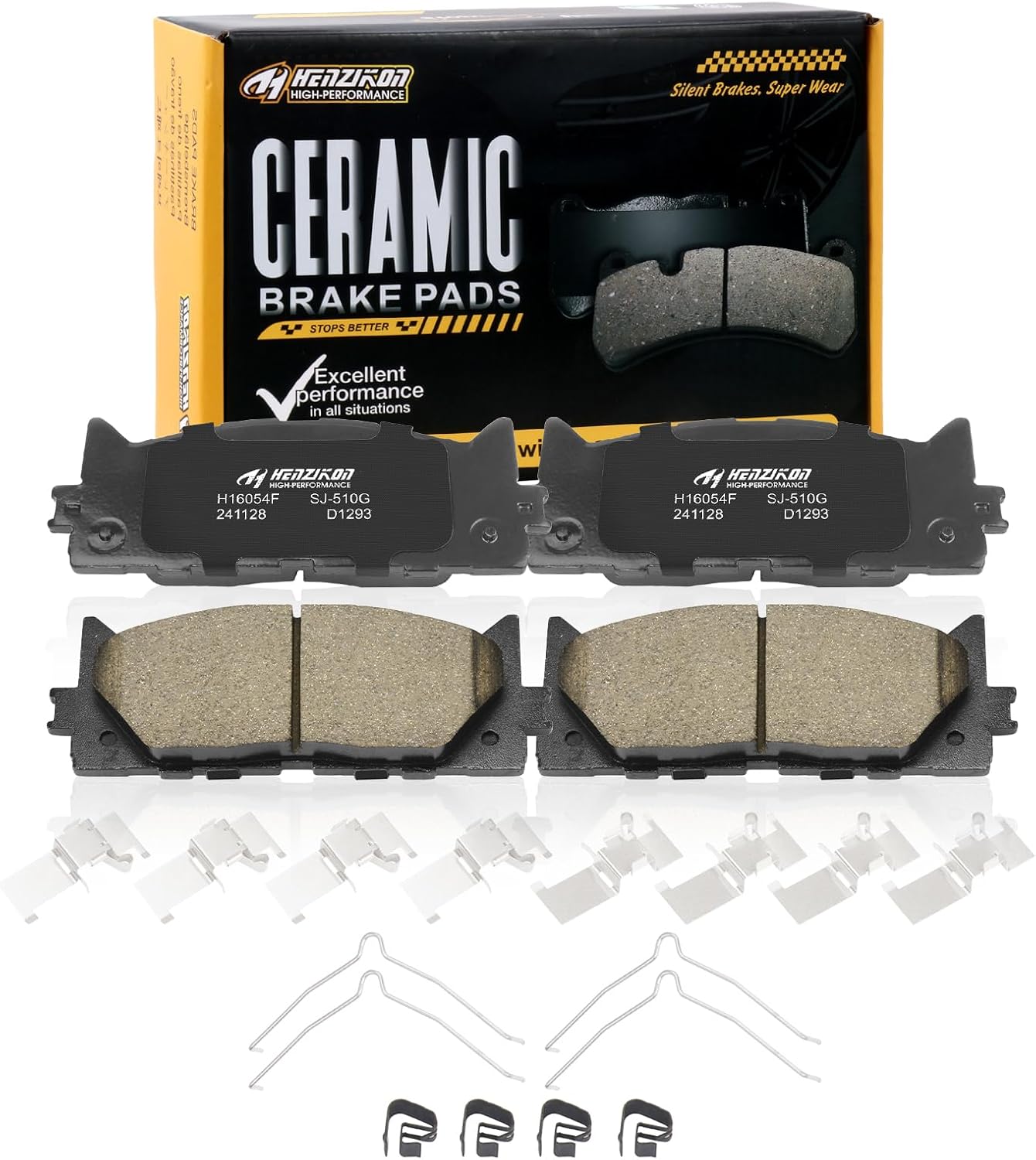
These ceramic front brake pads are designed for compatible Toyota Avalon, Camry, and Lexus ES-series vehicles, offering dependable stopping power and smooth, consistent braking performance. Built with included hardware for easier installation, they help reduce squealing and brake dust while supporting long-term durability for everyday driving.
How Do Older Camry Hybrid Models (2012–2014) Activate HAC?

If you drive a 2012–2014 Camry Hybrid, your vehicle uses the manual deep-press activation sequence outlined in Toyota Quick Reference Guides:
- Bring the vehicle to a full stop on the hill. Keep the shift lever in Drive or Reverse, with your foot on the brake.
- Depress the brake pedal further down. Apply firm, additional downward pressure on the brake pedal while remaining stopped.
- Listen for the confirmation beep. Toyota’s Quick Reference Guides say a beep sounds and the slip indicator comes on when HAC is engaged.
- Release the brake and accelerate promptly. Toyota specifies an approximately two-second hold after you release the brake pedal.
- Reset if the system does not beep. If no beep occurs, slightly ease up on the brake pedal (without allowing the car to roll) and depress it firmly again.
Do not attempt the deep-press and beep sequence on 2018 or newer Camrys. Modern models operate automatically and do not sound an audible chime.
How Long Does Camry Hill Start Assist Hold the Car?
Toyota documentation verified for the U.S.-spec 2012–2014 Camry Hybrid, 2018 Camry, and 2025 Camry specifies an approximately two-second maximum hold after brake-pedal release. Do not assume that timing applies to every global-market Camry without checking the exact manual. Toyota’s 2026 U.S. brochure confirms HAC is standard, but [VERIFY: confirm the 2026 owner’s-manual hold timing before publishing a model-year-specific two-second claim for 2026].
| Trigger / Condition | System Response | Driver Best Practice |
|---|---|---|
| Driver presses the accelerator | Brake pressure releases immediately | Apply smooth, progressive throttle input |
| 2-second duration expires | Temporary HAC hold ends; the vehicle may move if no other braking or drive force is applied | Re-apply the brake pedal if traffic has not moved |
| Shifting into Neutral (N) or Park (P) | HAC disengages instantly | Keep transmission in Drive (D) or Reverse (R) on slopes |
| Engaging the Parking Brake | HAC cancels; the parking brake then provides its own holding function if engaged | Use EPB or Brake Hold for extended waiting periods |
| Steep, icy, or gravel surface | Tires may slip despite the applied braking force | Leave extra following distance and modulate throttle gently |
Hill Start Assist vs. Brake Hold vs. Parking Brake
While all three systems manipulate vehicle braking, their roles, activation methods, and holding durations are fundamentally distinct:
- Hill-start Assist Control (HAC): A brief, automatic rollback-reduction feature for starting on an incline. Toyota’s verified 2018 and 2025 U.S. manuals limit the hold to about two seconds.
- Brake Hold: A driver-selected feature enabled with the “HOLD” button on equipped Camrys. It can keep the vehicle stopped after the brake pedal is released, but it is not an indefinite parking function. Toyota documentation for relevant Camry models states that the parking brake can be set automatically after Brake Hold has kept the vehicle stopped for about three minutes under the specified conditions. See the Toyota Camry Brake Hold guide for the model-year-specific setup and indicators.
- Electronic Parking Brake (EPB): The parking system used to secure the vehicle when parked. See the Camry electric parking brake guide for operating details.
For a normal hill departure, HAC assists only during the brief brake-to-accelerator transition. For a short traffic stop on an equipped Camry, Brake Hold can reduce the need to keep your foot on the pedal. For parking or leaving the driver’s seat, use Park and the parking brake.
[Products Worth Considering]

This coolant electric water pump is designed as a replacement for select Toyota vehicles, helping maintain proper engine cooling performance and reliable temperature control. Built to OE specifications, it offers fitment support for compatible Avalon, Camry, and RAV4 models with 2.5L L4 engines. It also includes cross-reference part numbers for easier matching and comes with after-sales support for covered defects.

This GM TPMS relearn tool helps reset tire sensors, clear warning lights, and match tire positions after rotation quickly at home. Designed for Chevrolet, GMC, Cadillac, and Buick vehicles, it offers one-button operation, fast activation, and broad compatibility with many GM models. It is best suited for OE/OEM sensors and includes paper instructions plus video guidance for easier DIY use.

These custom floor mats are designed to fit the Toyota Land Cruiser GX550 with a 5-seat layout for a precise, secure install. Made from durable TPE, they help shield your interior from spills, mud, snow, dirt, sand, pet hair, and everyday debris while making cleanup quick and easy.
Common Toyota Camry Hill Start Assist Myths
Myth 1: It Works the Same on Every Camry
False. Toyota’s 2012–2014 U.S. Camry Hybrid guides require the driver to press the brake pedal farther and confirm activation with a beep and the slip indicator. The verified 2018 and 2025 U.S. manuals describe automatic HAC operation instead. The previous claim that a specific “internal yaw sensor” is the activation trigger is not supported by the owner literature reviewed for this update.
Myth 2: It Improves Driving Traction
False. HAC applies braking force, but it cannot create tire grip. On icy hills, packed snow, or another low-traction surface, a stopped car can still slide even while the brakes are applied.
Myth 3: It Replaces the Parking Brake
False. Because HAC times out after roughly two seconds, it cannot be used to park or hold the car during extended stops. Always engage the parking brake when parking on slopes.
Myth 4: No Beep Means the System Is Broken
False. The older Camry Hybrid Quick Reference Guides explicitly use a beep as part of the manual activation sequence, while the verified 2018 and 2025 automatic-HAC procedures do not require that confirmation. A lack of a beep on a later automatic-HAC Camry is therefore not, by itself, evidence of a fault. If a warning light or message appears, use the exact model-year manual to identify it.
Why Is My Camry Hill Start Assist Not Working?
If your Camry rolls on a hill, first check whether all operating conditions were met. Some rollback or movement does not automatically prove a hardware failure, and Toyota warns that road grade, surface conditions, vehicle load, and driver input can affect system effectiveness.
[Products Worth Considering]
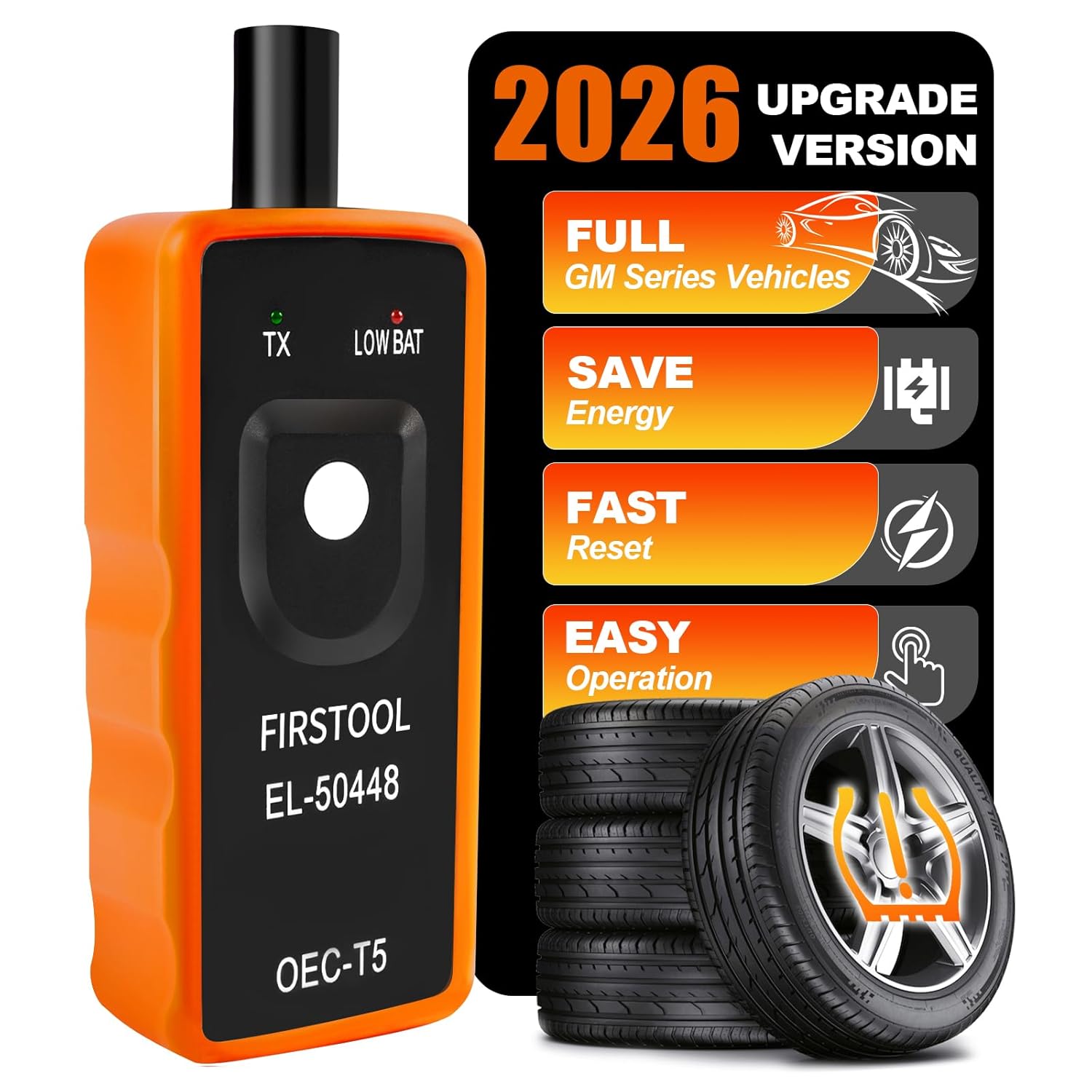
This EL-50448 TPMS relearn tool helps quickly activate and reset tire pressure sensors so your vehicle’s monitoring system stays accurate after tire rotations, sensor replacement, or seasonal tire changes. Designed for many GM-related vehicles and compatible with common 315 and 433 MHz TPMS systems, it offers simple one-button operation and reliable performance for clearing warning lights and relearning sensor positions.

Custom-fit floor mats and cargo liner designed to provide edge-to-edge protection for the Toyota Land Cruiser Prado. Made from durable TPE material, they offer all-weather defense against rain, slush, snow, mud, and everyday dirt while remaining easy to install, clean, and maintain. The odorless, non-slip design helps keep your interior safer, cleaner, and more comfortable in every season.
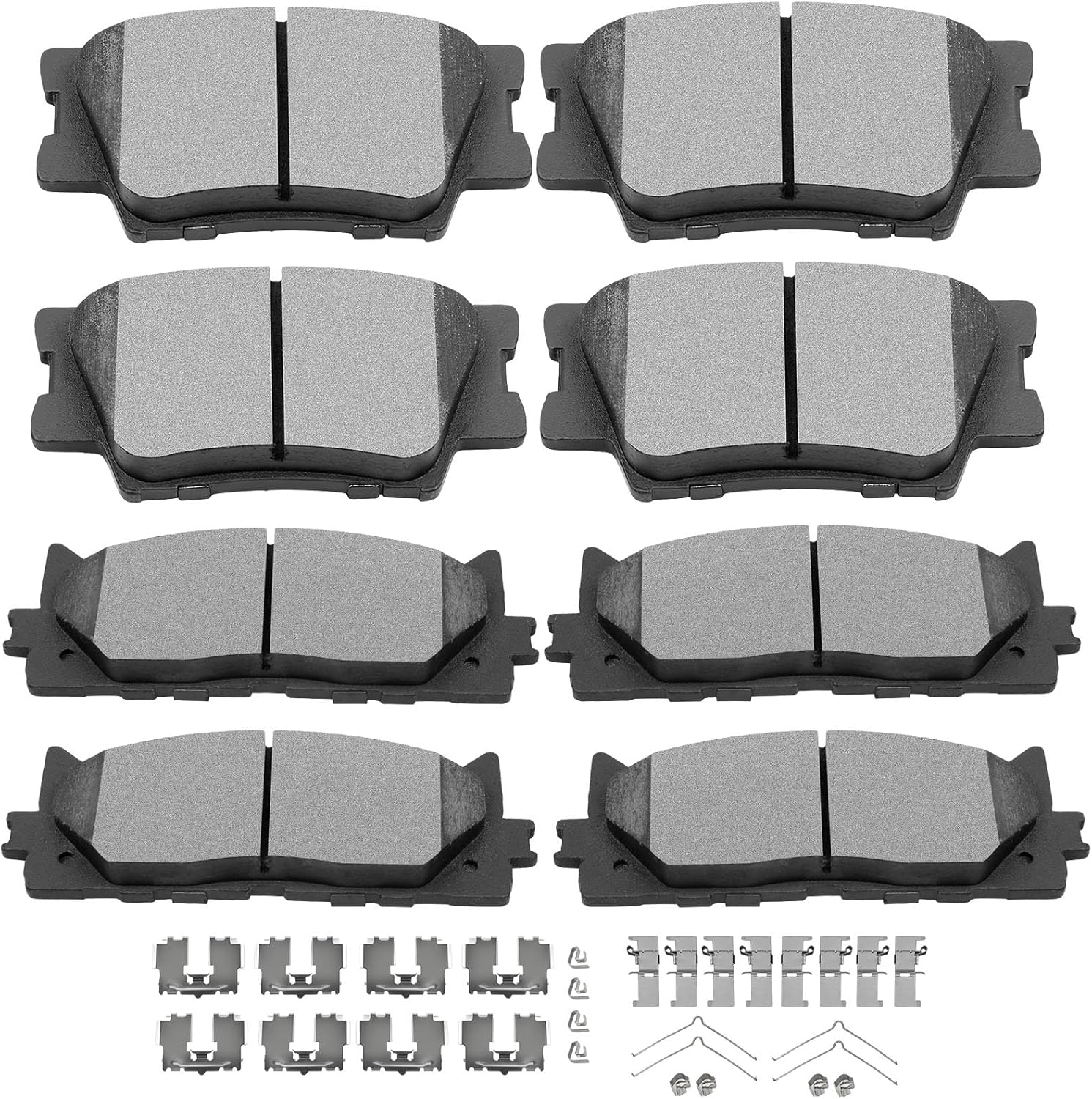
This ceramic front and rear brake pad set is designed as a direct replacement for select Lexus and Toyota models, helping restore reliable stopping performance. The pads feature a scorch-treated friction surface for quicker break-in and consistent wear, while the included gasket design helps reduce vibration and noise for quieter braking. Built for easy installation, this kit comes ready to fit compatible vehicles without modification.
Common Activation Issues
- The incline or road conditions did not allow effective operation: Toyota’s Camry materials say grade and surface conditions affect HAC, but the sources verified for this update do not publish a universal 3%–5% trigger threshold. Do not diagnose the system from a guessed slope percentage.
- The vehicle was not completely stopped: The verified modern Camry manuals require the vehicle to be stationary before HAC can operate.
- The transmission was in Neutral (N) or Park (P): The verified U.S. automatic-HAC instructions require a permitted drive position.
- The accelerator was pressed: Accelerator input prevents or cancels the temporary hold.
- The parking brake was engaged: An engaged parking brake prevents HAC operation under the verified manual conditions.
- The holding period expired: On the model years verified with a two-second limit, waiting too long after brake release ends the temporary hold.
What If an Older Camry Hybrid Does Not Beep?
On 2012–2014 Camry Hybrids, the most common issue is insufficient pedal travel. Come to a complete stop, keep the shift lever in Drive, and press the brake pedal down firmly until you hear the confirmation chime. If it does not beep, release slight pressure without letting the car roll, then push down with firm, continuous pressure.
When Should the System Be Checked?
Have the vehicle inspected if a brake, ABS, VSC/TRAC, or slip-indicator warning remains on, a relevant warning message appears, braking behavior changes, or HAC repeatedly fails despite the documented operating conditions being met. Warning-light meanings vary by model year, so use the exact manual instead of assuming one stored fault or sensor is responsible. For a focused warning-light checklist, see the Camry traction-control and slip-indicator guide.
Diagnostic Note: Toyota’s 2018 Camry owner information notes that operating sounds from the engine compartment and some vibration can occur when ABS, brake assist, VSC, TRAC, or HAC is operating and do not necessarily indicate a malfunction. Diagnose warning lights, messages, and changed braking behavior rather than a faint sound alone.
How Does Hill Start Assist Compare to Hill Descent Control?
Hill-start Assist Control (HAC) and Downhill Assist Control (DAC) / Hill Descent Control perform opposite tasks. HAC reduces rollback when starting up an incline, whereas Downhill Assist Control uses automatic braking to help control low-speed descents on steep terrain.
| Feature | Primary Purpose | Vehicle Application |
|---|---|---|
| Hill Start Assist (HAC) | Prevents backward rollback when starting on an uphill grade | Standard on the 2026 U.S. Camry; availability on other Toyota models varies |
| Hill Descent Control / Downhill Assist Control (DAC) | Regulates low-speed descent without driver brake input | Dedicated 4WD/AWD SUVs and trucks (e.g., 4Runner, Land Cruiser, Tacoma) |
Toyota sedans like the Camry do not include Downhill Assist Control. For an in-depth breakdown of off-road downhill assist systems, explore our guide on how Hill Start Assist Control works in the Toyota Land Cruiser.
How Do ABS, TRAC, and VSC Relate to Hill Start Assist?

Toyota’s 2026 U.S. Camry brochure lists Hill Start Assist Control (HAC) separately from the Star Safety System. Star Safety System includes Vehicle Stability Control (VSC), Traction Control (TRAC), Anti-lock Brake System (ABS), Electronic Brake-force Distribution (EBD), Brake Assist (BA), and Smart Stop Technology (SST). HAC works alongside these brake and stability functions, but it should not be described as one of the brochure’s Star Safety System components.
- ABS (Anti-lock Brake System): Helps prevent wheel lock during hard braking.
- TRAC (Traction Control): Helps limit drive-wheel spin during acceleration.
- VSC (Vehicle Stability Control): Helps control a skid by managing braking and engine output as needed.
- HAC (Hill-start Assist Control): Briefly keeps braking force applied during an uphill start when its operating conditions are met.
The slip indicator also has more than one meaning. It can flash when stability or traction control is actively intervening, while a light that stays on or appears with a warning message can indicate that a system needs attention. Use the indicator description in your exact model-year manual before deciding what a steady or flashing light means.
What Should Hill Start Assist Feel Like?
On an automatic-HAC Camry, you may notice little more than a brief pause in rollback after releasing the brake. Toyota owner information also notes that some operating sounds or vibration can occur when brake and stability-control systems are working and do not necessarily indicate a malfunction.
Do not use subjective pedal feel, a click, or the absence of a click as your only test. On 2012–2014 Camry Hybrid models, the documented activation confirmation is clearer: press the brake pedal farther at a complete stop until the beep sounds and the slip indicator comes on. On later automatic-HAC models, judge operation by the owner-manual conditions and any dashboard warnings rather than by an expected chime.
Frequently Asked Questions
How do you activate Hill Start Assist in a Toyota Camry?
On a modern automatic-HAC Camry, stop completely on an uphill incline, keep the accelerator released, select the drive position that will move the car up the slope, and keep the parking brake disengaged. HAC operates automatically when the model-year manual’s conditions are met. On 2012–2014 U.S. Camry Hybrids, press the brake pedal farther at a complete stop until one beep sounds and the slip indicator comes on.
Does Toyota Camry Hill Start Assist work automatically?
Yes on the later automatic-HAC Camrys covered by the verified 2018 and 2025 U.S. owner information. Toyota’s 2026 U.S. brochure also lists HAC as standard across Camry grades. Older 2012–2014 U.S. Camry Hybrids use a driver-triggered deep-brake-pedal procedure instead.
How long does Toyota Camry Hill Start Assist hold the brakes?
Toyota documentation verified for the U.S.-spec 2012–2014 Camry Hybrid, 2018 Camry, and 2025 Camry specifies an approximately two-second maximum hold after the brake pedal is released. Check the exact owner’s manual before assuming the same timing for another model year or market. [VERIFY: confirm the 2026 U.S. owner’s-manual timing before publishing a 2026-specific two-second claim.]
Is Hill Start Assist the same as Brake Hold?
No. Hill Start Assist is a brief rollback-reduction feature for starting on an incline. Brake Hold is a driver-selected feature for keeping an equipped Camry stopped after the brake pedal is released. Brake Hold is not an indefinite parking function; Toyota documentation for relevant models provides for the parking brake to set automatically after about three minutes under specified conditions.
Does the Toyota Camry have a dedicated Hill Start Assist button?
The verified U.S. 2018 and 2025 Camry operating information does not require a dedicated HAC button. On those automatic-HAC models, the system operates when its listed conditions are met. The older 2012–2014 Camry Hybrid procedure is triggered with additional brake-pedal pressure, not a separate HAC switch.
Can Toyota Camry Hill Start Assist work in Reverse?
Yes, when Reverse is the drive position that moves the car up the incline. Toyota’s verified modern Camry manual wording covers starting forward or backward on an upward incline, while Park and Neutral are excluded operating positions.
Why does my Camry not beep when I use Hill Start Assist?
The beep is part of Toyota’s documented activation sequence for older 2012–2014 U.S. Camry Hybrid models. The verified 2018 and 2025 automatic-HAC procedures do not use that confirmation step, so no beep on a later automatic-HAC Camry is not, by itself, evidence of a fault.
Why did my Camry roll backward even with Hill Start Assist?
Possible reasons include the vehicle not being completely stopped, an ineligible shift position, accelerator input, the parking brake being engaged, the temporary hold expiring, or road and grade conditions reducing system effectiveness. Toyota’s verified Camry sources do not provide a universal 3% activation threshold, so do not diagnose HAC from a guessed slope percentage.
Does Hill Start Assist work on icy roads?
HAC can apply braking force, but it cannot create tire traction. On ice, packed snow, loose gravel, or another slippery surface, the tires can still slide. Keep direct control with the brake pedal and leave extra space rather than relying on HAC to hold the vehicle.
Does Toyota Camry Hill Start Assist have a 3% grade trigger?
The Toyota Camry sources verified for this update do not publish a universal 3% HAC activation threshold. Toyota states that grade and other conditions can affect system effectiveness, so use the operating conditions in the owner’s manual for your exact model year instead of relying on a fixed percentage.
Conclusion
Toyota Camry Hill-start Assist Control is meant to reduce rollback during the brief transition from the brake pedal to the accelerator. The key model-year difference is the activation method: 2012–2014 U.S. Camry Hybrid guides use a deep brake-pedal press with a beep and slip-indicator confirmation, while verified later Camry manuals describe automatic operation when the listed conditions are met. Use the foot brake for continuous control, Brake Hold only as directed for temporary stops, and the parking brake for parking. Before relying on a specific timing or warning-light behavior, check the Toyota manual for your exact model year and market.
Sources
- Toyota Owners: 2025 Camry Hybrid Driving Assist Systems — supports automatic HAC operating conditions, cancellation conditions, and the approximately 2-second maximum hold.
- Toyota 2014 Camry Hybrid Quick Reference Guide — supports the older deep-brake-pedal activation, beep, slip-indicator confirmation, and approximately 2-second hold.
- Toyota 2013 Camry Hybrid Quick Reference Guide — corroborates the older Camry Hybrid HAC procedure.
- Toyota USA Newsroom: 2012 Camry Introduction — confirms Hill-start Assist Control on the 2012 Camry Hybrid and its rollback-reduction purpose.
- Toyota Owners: 2018 Camry Manuals — source library for the later automatic-HAC operating conditions and approximately 2-second hold.
- Toyota 2026 Camry eBrochure — confirms HAC is standard across U.S. Camry grades and lists HAC separately from the Star Safety System.
- Toyota Brunei: Camry HEV eBrochure — shows a 3-second regional HAC hold specification, demonstrating that timing can differ by market.
- Toyota Manuals & Warranties — official repository for model-year-specific Toyota owner information.