

Yes. Land Cruiser Hill-Start Assist Control (HAC) is designed to reduce backward movement during an uphill start, but it is a brief assist rather than a long hold. On the 2025 U.S. 250-series Land Cruiser, Toyota says HAC can operate when the vehicle is stopped, the shift lever is not in P or N, the accelerator is not pressed, the parking brake is not engaged, and the power switch is ON; it cancels no later than 2 seconds after the brake pedal is released. Toyota lists HAC as standard on the 2026 U.S. Land Cruiser. Older Land Cruisers can use different timing and activation logic, so use the Toyota owner’s manual for your exact vehicle.
Last updated: September 16, 2026 — verified 2026 U.S. HAC availability and 2025 U.S. 250-series operating conditions against Toyota sources.
Quick Answer
Yes. On the 2025 U.S. 250-series Land Cruiser, HAC helps reduce rollback and can remain active for no more than about 2 seconds after you release the brake pedal. Toyota warns that HAC may not work effectively on steep inclines or ice and is not intended to hold the vehicle for an extended period. Treat it as a transition aid, not a substitute for the brake pedal or parking brake.
Key Takeaways
- Toyota lists HAC as standard on the 2026 U.S. Land Cruiser.
- The 2025 U.S. 250-series manual gives HAC a maximum 2-second window after brake-pedal release.
- HAC works automatically when its operating conditions are met; it is not a long-duration brake-hold feature.
- For a steep uphill start, Toyota’s 2025 procedure uses the parking brake so you are not relying only on HAC’s brief window.
- Older Land Cruiser generations and other markets can use different timing or feedback, so check the exact manual before applying current-model instructions.
At a Glance
| 2026 U.S. Availability | HAC is standard on the U.S. Land Cruiser |
| 2025 U.S. 250-Series Hold Window | No more than 2 seconds after the brake pedal is released |
| Published Operating Conditions | Vehicle stopped; shift lever not in P or N; accelerator not pressed; parking brake not engaged; power switch ON |
| Steep-Uphill Method | Toyota’s 2025 procedure uses the parking brake rather than relying only on the brief HAC window |
Does Land Cruiser HAC Prevent Rollback on the Current 250 Series?
Yes. HAC is specifically intended to help reduce backward movement when starting on an uphill. On the 2025 U.S. 250-series, the system can briefly maintain brake force after you release the brake pedal, but Toyota caps that assist at no more than 2 seconds. Once the window ends—or another cancellation condition is met—the driver must control the vehicle with the brake, accelerator, or parking brake.
That model-year scope matters. Older Land Cruisers can use different HAC timing, indicators, and activation logic. For generation-by-generation context, see our Land Cruiser Hill-Start Assist Control guide; use this page for the narrower question of rollback, current 250-series timing, and safe hill-start technique.
For the 2026 U.S. Land Cruiser, Toyota lists HAC alongside full-time 4WD, Crawl Control, Downhill Assist Control, Multi-Terrain Select, and locking differentials. Those systems serve different jobs: HAC helps during an uphill start, while traction and off-road systems do not replace the service brake or parking brake.
Model-year note: Do not rely on a universal beep, light, or hold-time rule for every Land Cruiser. Toyota manuals differ by generation and market. The timing and conditions below are specifically tied to the cited 2025 U.S. 250-series manual unless stated otherwise.
[Products Worth Considering]

Custom-fit floor mats and cargo liner designed to provide edge-to-edge protection for the Toyota Land Cruiser Prado. Made from durable TPE material, they offer all-weather defense against rain, slush, snow, mud, and everyday dirt while remaining easy to install, clean, and maintain. The odorless, non-slip design helps keep your interior safer, cleaner, and more comfortable in every season.

This Yuirote universal car motor diagnostic tool helps drivers quickly detect engine fault codes and identify system issues for routine inspections and maintenance. It also supports electronic parking brake reset and emergency release functions, making it useful for handling EPB-related problems without a repair shop visit. Its compact, ergonomic design and broad vehicle compatibility make it a practical choice for car owners and DIY repair enthusiasts.

These custom floor mats are designed to fit the Toyota Land Cruiser GX550 with a 5-seat layout for a precise, secure install. Made from durable TPE, they help shield your interior from spills, mud, snow, dirt, sand, pet hair, and everyday debris while making cleanup quick and easy.
When Does Land Cruiser HAC Activate?
On the 2025 U.S. 250-series Land Cruiser, HAC is automatic when its published operating conditions are met. You do not need to press a separate HAC button.
Toyota lists these operating conditions:
- The vehicle is stopped.
- The shift lever is not in P or N.
- The accelerator pedal is not depressed.
- The parking brake is not engaged.
- The power switch is ON.
The same manual says HAC stops operating if the shift lever moves to P or N, the accelerator is pressed, the brake pedal is depressed while the parking brake is engaged, the power switch is turned off, or no more than 2 seconds have passed since the brake pedal was released.
Warning: Toyota says HAC may not operate effectively on steep inclines or icy surfaces and is not designed to hold the vehicle for an extended period. Keep control with the brake pedal and use the parking-brake procedure for a steep uphill start.
Step-by-Step Hill Start With HAC
For a normal uphill start on the current U.S. 250-series, HAC can cover the short transition after you release the service brake. For a steep uphill start, Toyota’s 2025 manual specifically gives a parking-brake procedure, which reduces your dependence on HAC’s 2-second limit.
- Stop completely. Keep the service brake depressed and keep the vehicle under control.
- Select the correct driving range. For a forward uphill start, select D.
- On a steep hill, set the parking brake manually. This is Toyota’s published steep-uphill method for the current 250-series.
- Release the service brake and apply the accelerator gently. Do not use a large throttle input to fight rollback.
- Release the parking brake manually as the vehicle begins to pull forward. Remember that HAC itself requires the parking brake to be disengaged and the accelerator not to be pressed, so the parking-brake technique is a separate way to avoid relying on the brief HAC window.
- Brake and reset if the vehicle rolls. Do not keep adding throttle while the vehicle is moving backward.
Pro Tip: Learn your exact model’s behavior on a mild, low-risk slope before you need it in traffic. Do not test HAC on a steep or icy grade just to see how long it holds.
[Products Worth Considering]

This proportional trailer brake controller provides smooth, responsive braking by automatically matching your tow vehicle’s stopping force for safer trailer control. The bright LED digital display makes it easy to monitor voltage output in real time, while adjustable braking and sync settings help tailor performance to different trailers and road conditions. Designed for quick installation and broad compatibility, it supports 1 to 4 axle trailers for dependable towing confidence.
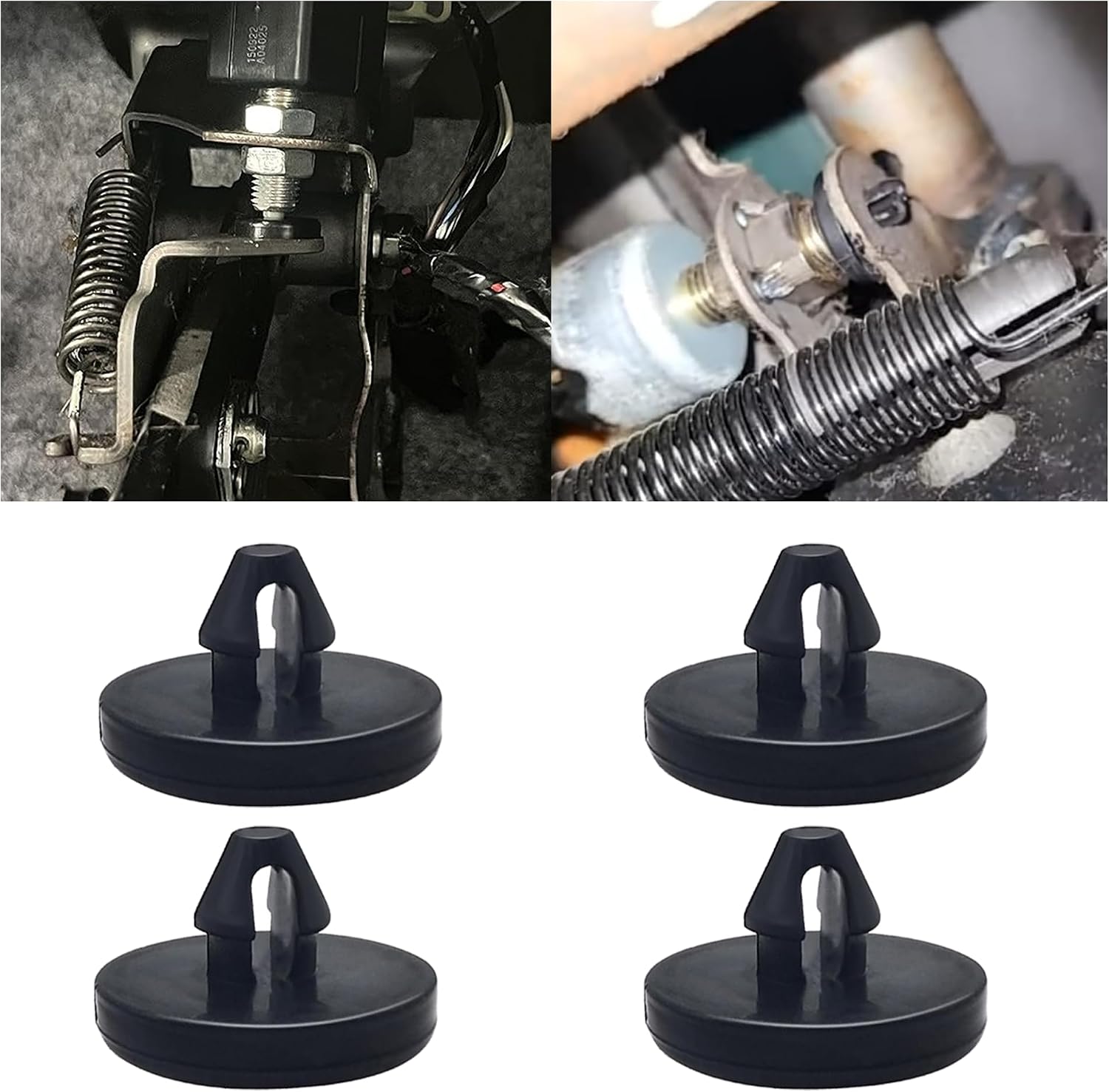
This brake pedal stop pad set is designed as an OEM replacement for compatible Toyota, Lexus, and Scion models, helping restore proper brake light switch function when the brake light stays on. Made from durable nylon, these compact stoppers are built for reliable long-term use and quick, tool-free installation. The set includes multiple pieces for convenient replacement and sharing.

This proportional electric brake controller automatically applies trailer brakes based on your vehicle's braking force and speed for smoother, more responsive stopping. It is compatible with a wide range of tow vehicles and trailer setups, and includes an LED display for easy setup, diagnostics, and manual braking control. The included mounting hardware and plug-and-play port help make installation simple and convenient.
Why Can a Land Cruiser Still Roll Back With HAC?
HAC reduces rollback; it does not guarantee a stationary vehicle. On the 2025 U.S. 250-series, these are the main situations to check:
- The hold window has ended: HAC stops no later than 2 seconds after the brake pedal is released.
- An operating condition is no longer met: Pressing the accelerator, selecting P or N, engaging the parking brake in the published cancellation condition, or turning the power switch off can end or prevent HAC operation.
- The hill is very steep: Toyota warns that HAC may not work effectively on steep inclines.
- The road is icy or very slippery: Toyota specifically warns that HAC may be ineffective on ice; HAC cannot create tire grip.
- A related warning remains on: If the slip indicator or other brake/stability warnings stay illuminated, follow the owner’s manual and have the vehicle inspected.
- The start has higher consequences: Towing or a heavy load does not change the published HAC logic in the cited manual, but it increases the importance of preventing rollback. Use the parking brake and the towing instructions for your exact vehicle.
On the 2025 U.S. 250-series, HAC’s published window is no more than 2 seconds after brake release. Treat it as a transition aid, not a hold mode.
Land Cruiser HAC Rollback, Noise, and Warning-Light Troubleshooting
If the vehicle rolls, you hear brake-system sounds, or a warning stays on, separate normal HAC behavior from a condition that needs service.
| What You Notice | What It Can Mean | What To Do |
| Vehicle rolls immediately | The HAC conditions may not be met, or the grade/surface may be outside effective operation | Reapply the brake, confirm the operating conditions, and use the parking-brake technique on a steep hill |
| Vehicle rolls after a brief pause | The 2-second 250-series HAC window may have ended | Brake, reset the start, and do not depend on HAC as a longer hold |
| Brief vibration or motor/brake-system sound | Toyota says sounds and vibrations can occur when HAC and related brake-control systems operate | Monitor normal operation; seek service if the symptom is harsh, new, persistent, or paired with a warning light |
| Slip indicator or brake/stability warning stays on | A related system may have a malfunction | Follow the warning guidance in the owner’s manual and arrange inspection if the warning remains |
| You need the vehicle held longer | That is outside HAC’s intended job | Keep using the service brake or use the parking-brake hill-start procedure |
HAC Safety and Best Practices for Land Cruiser on Hills
Use HAC as an assist, not as permission to release control of the vehicle. Toyota warns against relying on HAC to hold a Land Cruiser on a hill, and the NHTSA driver-assistance guidance likewise emphasizes that the driver remains responsible for steering, braking, and accelerating.
Proper Engagement Technique
For the current 250-series, the cleanest approach is to understand the automatic conditions rather than trying to “trigger” HAC with an invented pedal sequence. Stop fully, keep the vehicle in the correct driving range, and move deliberately from braking to propulsion while staying ready to brake again.
- Do not use HAC as a parking brake or extended hold.
- Expect only a brief transition window on the 2025 U.S. 250-series.
- Use gentle accelerator input to avoid breaking traction.
- Use the parking-brake procedure on a steep uphill start.
- Follow the exact model-year manual if your Land Cruiser is not a U.S. 250-series model.
When To Rely on HAC
HAC is most useful during an ordinary start from a stop on an incline, such as a driveway, parking-garage ramp, or uphill traffic stop. On the current 250-series it works automatically when the operating conditions are satisfied, so the driver’s job is to maintain control rather than switch HAC on manually.
If the grade is steep, the surface is icy, or rollback would create an immediate hazard, do not make HAC’s short hold your only safeguard. Keep a safe gap and use the parking brake where the manual calls for it.
How To Start on a Steep Hill With the Parking Brake
Toyota’s 2025 U.S. Land Cruiser manual gives a specific parking-brake method for a steep uphill start:
- Keep the brake pedal depressed and shift to D for a forward start.
- Pull the parking-brake switch to set the parking brake manually.
- Release the brake pedal and gently depress the accelerator.
- Press the parking-brake switch to release the parking brake manually as the vehicle begins to move.
- Reapply the brake if the vehicle moves in an unintended direction.
HAC vs. Crawl Control, Downhill Assist, and Locking Differentials
Several Land Cruiser systems affect low-speed control, but they are not interchangeable with HAC:
- HAC: Helps reduce backward movement during an uphill start by briefly controlling brake force.
- Crawl Control: Manages very low-speed off-road progress so the driver can focus more on steering.
- Downhill Assist Control: Helps control vehicle speed on steep descents; it is not an uphill-start hold.
- Locking differentials: Improve torque distribution and traction in suitable conditions; they do not replace the service brake or parking brake.
- Multi-Terrain Select: Adjusts vehicle control for selected terrain conditions; it does not extend HAC’s hold window.
Toyota lists these off-road systems on the current U.S. Land Cruiser, but the safest way to think about HAC is narrow: it is a brief uphill-start aid. That distinction keeps drivers from expecting a traction feature or descent-control feature to hold the vehicle on a grade.
[Products Worth Considering]

This TPMS sensor training tool is designed for Ford, Lincoln, and Mercury vehicles with compatible tire pressure sensors, helping activate sensors after tire rotations or sensor replacement. It supports relearning and warning light reset workflows with a simple one-button operation, making tire pressure maintenance easier and faster. Built for reliable use and broad vehicle compatibility, it is a practical accessory for TPMS service and sensor activation.

This GM TPMS relearn tool helps reset tire sensors, clear warning lights, and match tire positions after rotation quickly at home. Designed for Chevrolet, GMC, Cadillac, and Buick vehicles, it offers one-button operation, fast activation, and broad compatibility with many GM models. It is best suited for OE/OEM sensors and includes paper instructions plus video guidance for easier DIY use.

This brake switch stopper helps restore proper brake light operation by providing a precise pedal stopping point, reducing issues where brake lights stay on. Made from durable nylon, it is designed for easy installation and dependable fitment across many Toyota, Lexus, and Scion models. The multi-pack supply makes it convenient to replace worn stoppers and keep spares on hand for future maintenance.
Frequently Asked Questions
Does Land Cruiser HAC work automatically?
On the 2025 U.S. 250-series, yes. HAC operates automatically when the vehicle is stopped, the shift lever is not in P or N, the accelerator is not pressed, the parking brake is not engaged, and the power switch is ON. Other generations can differ.
How long does Land Cruiser HAC hold the brakes?
The 2025 U.S. 250-series manual says HAC stops operating no more than 2 seconds after the brake pedal is released. Do not apply that number to every older Land Cruiser; check the exact model-year manual.
Why does my Land Cruiser roll back even with HAC?
Rollback can occur if HAC’s short hold has ended, an operating condition is not met, or the grade or surface is outside effective operation. Toyota specifically warns about steep inclines and ice. Reapply the brake and use the parking-brake method on a steep uphill start.
Are vibration or brake-system sounds normal when HAC works?
They can be. Toyota notes that sounds and vibrations may occur when HAC and related brake-control systems operate. A persistent warning light, changed braking feel, or harsh/new symptom should be checked according to the owner’s manual.
Can HAC replace the parking brake on a steep hill?
No. Toyota says HAC is not intended to hold the vehicle for an extended period, and its 2025 steep-uphill procedure uses the parking brake. Use HAC as a transition aid, not a parking or long-hold system.
What is AHC on a Land Cruiser?
AHC is Toyota’s Active Height Control Suspension terminology on equipped Land Cruiser models. It changes suspension ride height. AVS means Adaptive Variable Suspension. HAC is different: it is Hill-Start Assist Control.
Can locking differentials stop rollback?
No. Locking differentials can improve traction and torque distribution in suitable conditions, but they are not a brake-hold system. Use the service brake or parking brake to control rollback.
Conclusion
Land Cruiser HAC does help reduce rollback, but the current 250-series system is deliberately brief. The 2025 U.S. manual limits operation to no more than 2 seconds after brake release and warns that HAC may not work effectively on steep inclines or ice. For a steep uphill start, use Toyota’s parking-brake procedure rather than depending on HAC alone. If a warning stays on or braking behavior changes, stop treating the issue as normal HAC behavior and follow the owner’s manual or arrange service.
Sources
- Toyota Owners Manuals and Warranties — model-year manual lookup and the final authority for vehicle-specific operating instructions.
- Toyota Owners: 2026 Land Cruiser Digital Manual — current U.S. Land Cruiser manual access.
- Toyota USA Newsroom: 2026 Land Cruiser — supports current U.S. HAC availability and off-road-system context.
- NHTSA Driver Assistance Technologies — supports the general principle that driver-assistance systems do not replace driver responsibility.


[…] Assist or lane departure prevention: can provide gentle corrective steering on equipped models when operating conditions are […]
[…] Toyota sedans like the Camry do not include Downhill Assist Control. For an in-depth breakdown of off-road downhill assist systems, explore our guide on how Hill Start Assist Control works in the Toyota Land Cruiser. […]