
Last updated: September 16, 2026
Toyota Camry no heat at idle usually points first to low engine coolant or air trapped in the engine-cooling circuit. If heat returns while driving or when engine speed rises, the next checks are actual engine-coolant temperature and heater-core inlet and outlet temperatures. A restricted heater core, stuck-open thermostat, coolant leak, pump or pump-control fault, or HVAC air-mix problem can produce a similar symptom. If the engine temperature is rising above normal, treat it as an overheating problem rather than a cabin-comfort problem and stop driving if a high-temperature warning, steam, or rapid coolant loss appears.
Identify the Camry’s model year and powertrain before replacing parts. Pump design varies by engine: older Camrys may use a mechanically driven water pump, while later A25A-FKS and A25A-FXS Camrys use an ECM-controlled electric engine water pump. A hybrid also has more than one coolant circuit, and only the engine-coolant circuit supplies normal heater-core heat.
Quick Answer
Start with a completely cold engine and check the correct engine-coolant reservoir. If the level is low, find the leak instead of repeatedly topping it off. If the level is stable, confirm that the engine reaches normal temperature, use a non-contact thermometer to compare the heater-core hoses, and then separate a coolant-flow problem from a blend-door or HVAC control problem. If the temperature gauge or warning is rising above normal, switch to the Camry overheating-at-idle diagnostic path instead of continuing heater-only tests.
Key Takeaways
- Heat that returns while driving supports a low-coolant, trapped-air, heater-core-flow, or coolant-temperature diagnosis, but it does not identify one failed part by itself.
- If the temperature gauge stays below its usual range or scan-tool coolant temperature remains low, a stuck-open thermostat moves higher on the list.
- Use an infrared thermometer instead of touching hot heater hoses. A large inlet-to-outlet temperature difference can support restricted heater-core flow.
- If both heater hoses are hot but the vents remain cold, check the blend or air-mix door, actuator, HVAC controls, and airflow through the heater case.
- Use the correct model-year coolant and service interval. See the Toyota Camry coolant check and refill guide for the cold-level inspection sequence.
At a Glance
| Basic Check Time | Usually brief for a cold coolant-level, leak, gauge, and HVAC-response inspection |
| Difficulty | Beginner for observation; intermediate for model-specific bleeding; professional for pressure testing, pump diagnosis, heater-core work, or dashboard disassembly |
| Useful Tools | Gloves, eye protection, flashlight, non-contact infrared thermometer, model-approved coolant, scan tool if available, and the correct service information |
| Repair Cost | Varies widely by model year and confirmed fault; obtain a VIN-specific estimate before approving heater-core, pump, valve, or dashboard work |
Warning: Never remove a radiator cap, coolant filler cap, or pressurized coolant-reservoir cap while the engine, hybrid system, radiator, or coolant is hot. Pressurized coolant or steam can cause severe burns. Let the vehicle cool fully before checking the level or opening the system.
Hybrid warning: Switch the power system fully off and confirm that the READY indicator is off before working under the hood. Keep hands, clothing, and tools away from cooling fans because they may start unexpectedly. Never touch, disconnect, probe, or open orange high-voltage cables or connectors.
Before You Begin: Identify Your Camry
Record the model year, engine or hybrid powertrain, and whether the HVAC system is single-zone or dual-zone. Cooling-system layouts, pressure-cap locations, water-pump control, valves, reservoirs, and HVAC actuators vary by Camry generation.
- Conventional Camry: Identify whether the engine uses a mechanical or electric engine water pump before applying an RPM-based diagnosis.
- Camry Hybrid: Identify the engine-coolant reservoir separately from the inverter or power-control-unit coolant reservoir. The cabin heater core uses engine coolant.
- Dual-zone HVAC: Compare driver and passenger vent temperatures. One warm side and one cold side can point to an actuator, air-mix door, calibration, or uneven heater-core-flow problem.
- Recent coolant repair: Note any radiator, hose, thermostat, pump, valve, or coolant service performed before the heat problem began.
Why Your Camry Has No Heat at Idle
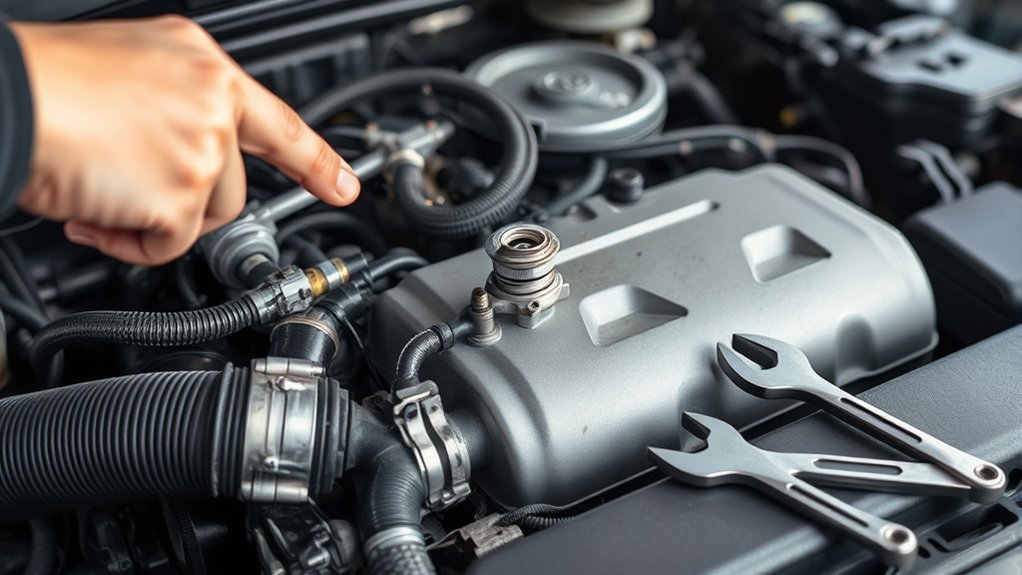
Your Camry’s cabin heater depends on hot engine coolant flowing through a small radiator-like part called the heater core. The blower pushes cabin air across that core, and HVAC doors direct the warmed air to the selected vents.
On an older Camry with a mechanically driven water pump, pump speed follows engine speed. On later A25A-FKS and A25A-FXS Camrys, Toyota service information shows an ECM-controlled electric engine water pump with target-speed and actual-speed data, so higher engine RPM does not by itself prove that pump speed increased. In either design, heat that changes between idle and driving is a reason to check coolant level, trapped air, actual engine-coolant temperature, heater-core flow, and pump operation before replacing HVAC parts.
Important interpretation: If the air gets warmer when you raise engine speed, do not treat that as proof of a bad water pump. Low coolant, trapped air, heater-core restriction, and pump-control faults can all change heater flow. On electric-pump Camrys, compare scan-tool target speed with actual pump speed instead of relying on RPM alone.
A stuck-open thermostat usually causes slow warm-up and weak heat at more than one vehicle speed. If the temperature gauge stays below its usual range or scan-tool coolant temperature remains low after normal driving, test the thermostat and engine warm-up behavior.
Note: A heater control valve is not used the same way on every Camry. Some older or specific models use a valve to control heater-core coolant flow, while many later systems regulate cabin temperature mainly with air-mix doors and actuators. Confirm the exact model-year layout before buying a “heater valve.”
Common Causes of No Heat in Your Toyota Camry
Low Coolant or a Small Leak
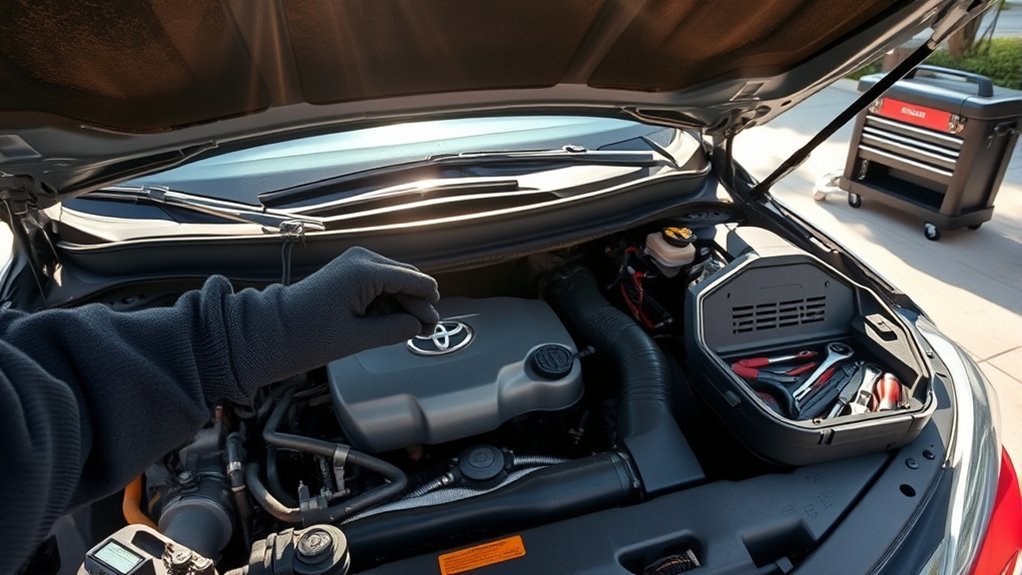
Low engine coolant is the first condition to rule out. The heater core may lose consistent coolant flow before an obvious overheating warning appears. With the vehicle completely cold and parked on level ground, check the correct translucent engine-coolant reservoir and inspect the radiator, hoses, water-pump area, thermostat housing, coolant valves, reservoir, and heater hoses for wetness or dried coolant residue.
If the level drops again, follow the Camry coolant-leak diagnostic guide instead of repeatedly topping off the reservoir.
Flow Shut-Off Valve Leak on Certain 2018–2021 Camrys
Certain U.S.-market 2018–2021 Camry and Camry Hybrid vehicles are included in Toyota Customer Support Program 24TE04 for a verified small engine-coolant leak from the flow shut-off valve. Toyota’s related service bulletin lists vehicle-specific water-bypass hose assemblies as the service part on Camry applications. The condition may also be associated with an “Engine Maintenance Required” message or abnormal A/C operation.
If that message is present on an affected A25A-FKS or A25A-FXS Camry, scan for the complete DTC. Toyota T-SB-0112-24 Rev1 identifies P268111 and/or P268115 for the flow shut-off valve condition. Model year alone does not confirm coverage, so ask a Toyota dealer to check the VIN and current program status before replacing the valve or hose assembly.
Air Trapped in the Cooling System
Air pockets can interrupt coolant circulation through the heater core. This can happen after a coolant service, hose replacement, radiator repair, thermostat replacement, pump repair, valve repair, or any work that opens the engine-coolant circuit. Common clues include inconsistent heat, gurgling behind the dash, or heat that changes with vehicle operation.
If air returns after the correct bleeding procedure and no external leak is visible, request a cooling-system pressure test, pressure-cap test, and further leak diagnosis. Persistent bubbles alone do not prove a head-gasket failure.
Partially Clogged Heater Core
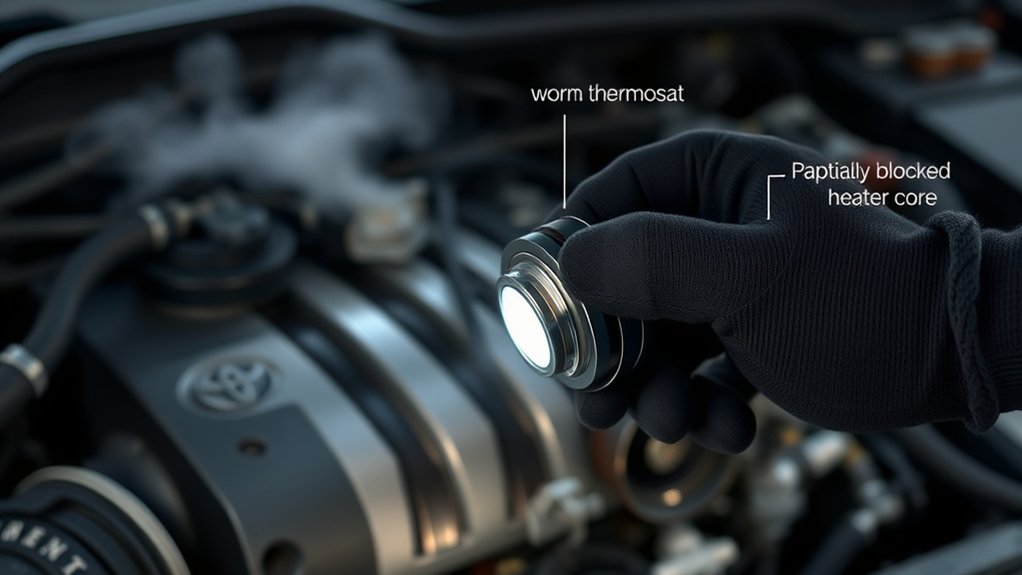
A restricted heater core may pass some coolant but not enough to maintain heat under every condition. With the engine at stable operating temperature and the blower operating consistently, use a non-contact thermometer to compare the inlet and outlet hose surfaces near the firewall. A large temperature difference supports restricted flow, but it does not prove that replacement is required.
Stuck-Open Thermostat
A thermostat stuck open can send coolant through the radiator too early and slow engine warm-up. The result is usually weak cabin heat at multiple speeds, reduced defrost performance, and a temperature gauge or scan-tool reading that remains below the expected operating range. Confirm engine temperature before replacing the thermostat.
Pressure-Cap, Coolant-Recovery, or Water-Pump Problem
A failed pressure-cap seal or vacuum valve can release coolant too early, interfere with coolant recovery after cooldown, or contribute to low coolant and trapped air. Test the cap when coolant is disappearing, the recovery reservoir repeatedly overfills or empties, coolant does not return after cooling, or no other leak can be found. See the Camry radiator-cap pressure and testing guide before selecting a replacement.
A water-pump problem can also reduce coolant circulation. Diagnosis depends on pump design. Older mechanical pumps may show leakage, bearing noise, pulley play, or confirmed circulation loss. Later electric-pump models may store engine-coolant-pump circuit or performance codes and require comparison of commanded and actual pump operation. See the Camry water-pump signs and diagnosis guide for the model-specific split.
Blend Door, Actuator, or HVAC Control Issue
If both heater-core hoses are hot but the vents still blow cold, the coolant side may be working. The fault may be an air-mix or blend door, actuator, linkage, HVAC control, calibration problem, or obstructed airflow through the heater case. This becomes more likely when one cabin zone is warm and the other is cold, clicking comes from behind the dash, or outlet temperature does not respond to the control setting.
Use the Camry blend-door actuator diagnostic guide before ordering an actuator because a Camry may use several different HVAC servos.
Quick Diagnosis by Symptom
| Symptom | Most Likely Area | Next Check |
|---|---|---|
| Heat is cold at idle but warmer while driving | Low coolant, trapped air, restricted heater-core flow, pump or pump-control problem | Check the cold engine-coolant level, scan actual coolant temperature, and compare heater-hose surface temperatures |
| Temperature gauge stays below its usual range | Stuck-open thermostat or engine warm-up problem | Confirm engine-coolant temperature with a scan tool if available |
| One heater hose is hot and the other is much cooler | Restricted heater core, trapped air, or valve problem if equipped | Use a non-contact thermometer under consistent test conditions; do not touch the hoses |
| Both heater hoses are hot but vents blow cold | Air-mix door, actuator, HVAC control, calibration, or heater-case airflow problem | Compare both cabin zones and listen for clicking, binding, or no actuator movement |
| No air comes from the vents | Blower motor, fuse, relay, resistor or control module, wiring, or blocked airflow | Diagnose blower operation before heater-core temperature |
| Coolant level keeps dropping | External leak, pressure-cap or recovery fault, pump leak, flow shut-off valve, heater core, or internal leak | Pressure-test the cold system and stop driving if overheating or rapid loss occurs |
| 2018–2021 Camry with coolant loss or “Engine Maintenance Required” | Possible flow shut-off valve condition; Camry service parts may include the vehicle-specific water-bypass hose assembly | Ask Toyota to check the VIN for CSP 24TE04 eligibility; if the message is present, preserve the full P268111/P268115 DTC if stored |
[Products Worth Considering]
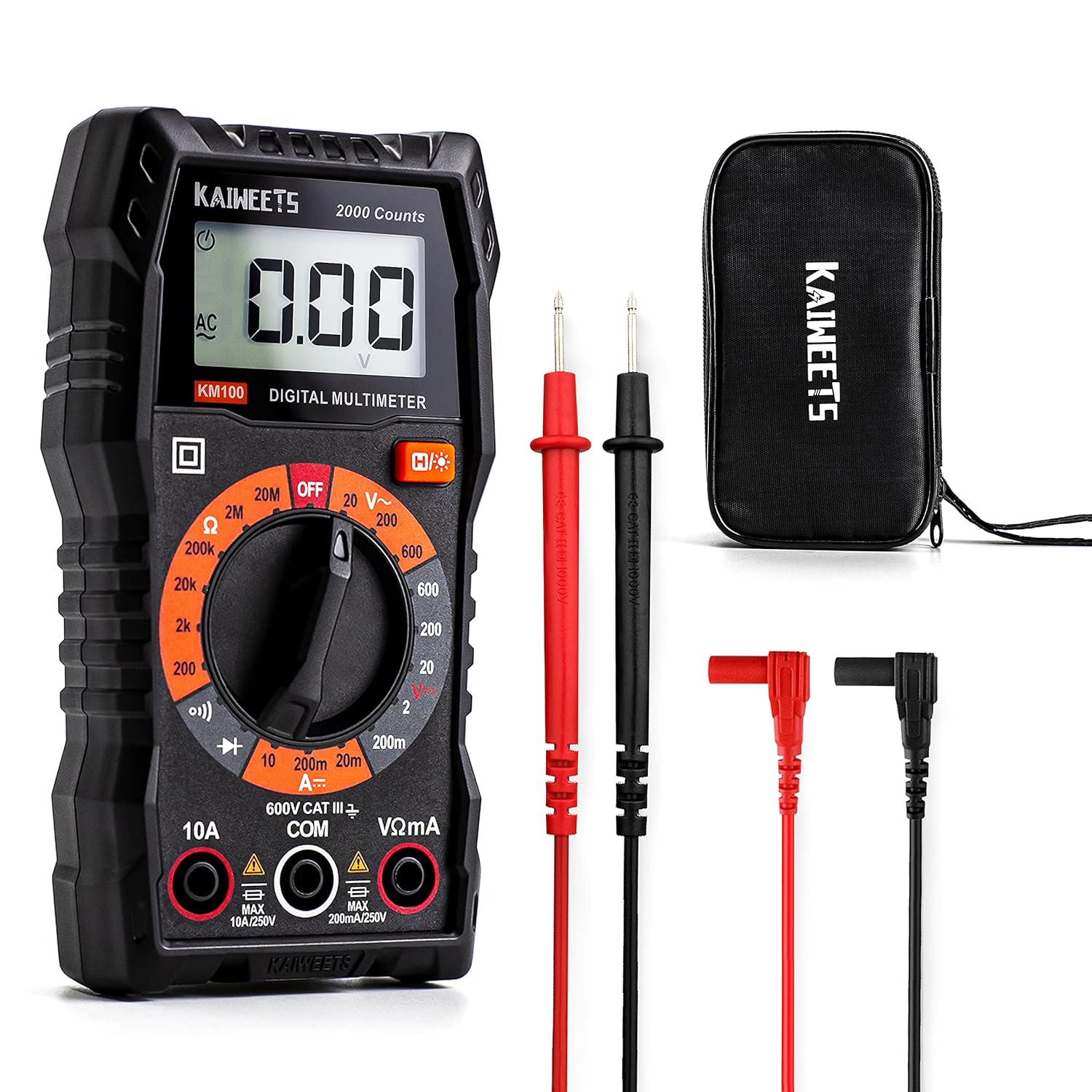
This KAIWEETS digital multimeter is a versatile tool for measuring AC/DC voltage, DC current, resistance, continuity, and diodes in home, automotive, and electrical applications. It includes pre-installed batteries, a carrying case, test leads, data hold, backlight, and overload protection for easier and safer everyday testing. Built with double fuses and rated for broad household and light professional use, it helps users diagnose electrical issues with confidence.
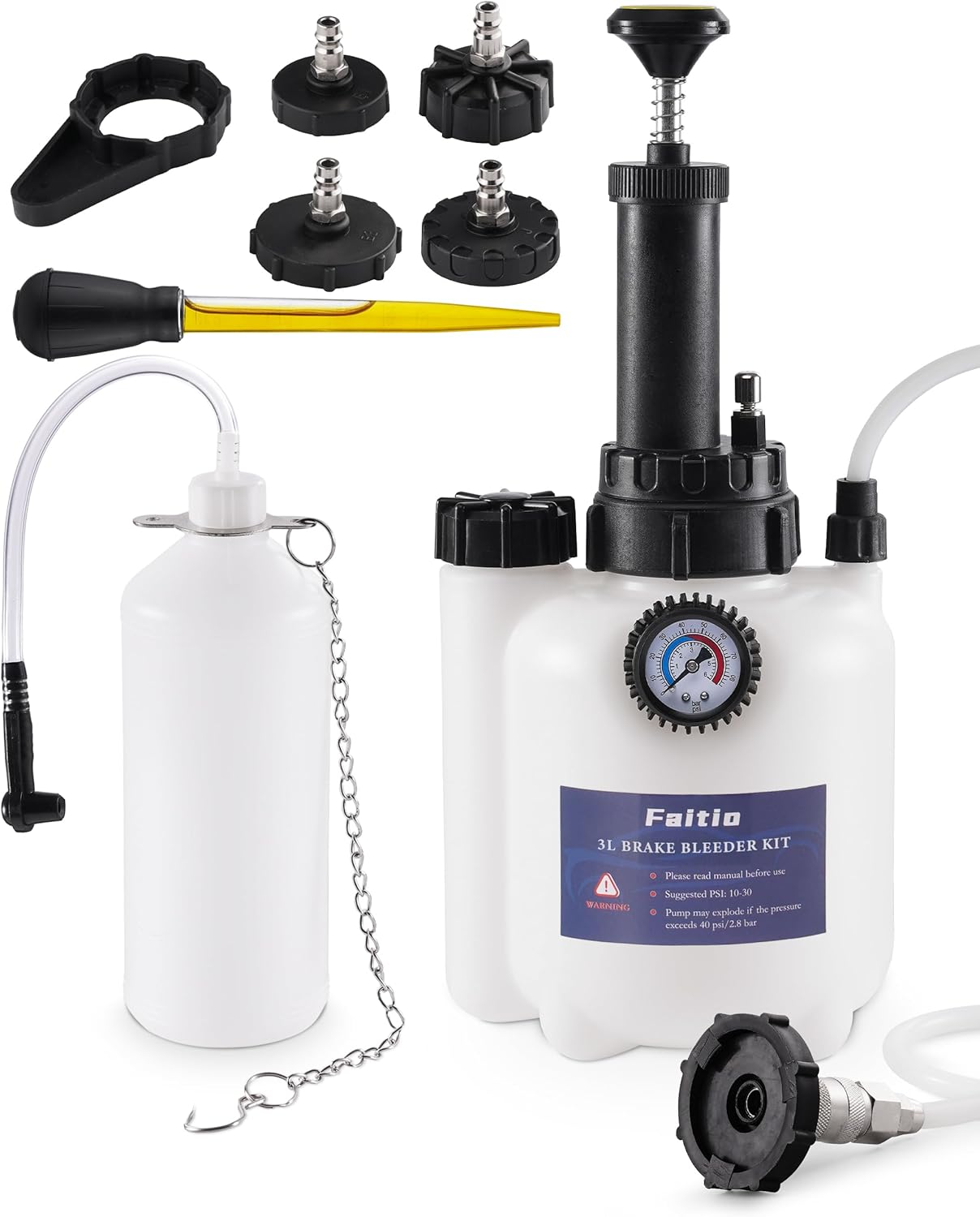
This one-man brake bleeding kit helps flush old brake fluid and remove trapped air for firmer, more responsive braking without the hassle of a second person. Its improved sealing and translucent catch bottle help prevent leaks while making fluid level checks easy during use. With multiple adapter sizes for many vehicle makes, it is a practical tool for clean, efficient brake system maintenance.

This spill-proof radiator coolant filling funnel kit helps you refill cooling systems cleanly while reducing trapped air pockets that can affect heater and engine performance. It includes a 5-inch extension bar and 45-degree elbow for easier access under shrouds or at awkward angles. Color-matched caps for dedicated adapters make setup simpler and more organized.
How to Diagnose Your Heater Problems
Start with observations that separate an engine-coolant problem from an HVAC air-routing problem. Do not replace the thermostat, heater core, pressure cap, water pump, or actuator until the test results support that repair.
| Check | Action | How to Interpret It |
|---|---|---|
| Cold Coolant Level | With the vehicle fully cold and level, inspect the correct engine-coolant reservoir | A low or falling level requires leak diagnosis before repeated bleeding or parts replacement |
| Visible Leak Signs | Inspect hoses, radiator, reservoir, pump area, thermostat housing, valves, and heater-hose connections | Wetness, crusty residue, a sweet odor, windshield film, or wet carpet narrows the leak area |
| Engine Temperature | After normal driving, observe the gauge and read engine-coolant temperature with a scan tool if available | A persistently low reading supports a thermostat or warm-up problem; a high reading requires immediate cooling-system diagnosis |
| Heater-Hose Temperatures | Use a non-contact thermometer on both heater hoses near the firewall under the same operating condition | One hot and one much cooler supports restricted flow; two hot hoses move the diagnosis toward HVAC air routing |
| HVAC Response | Move the temperature setting from cold to hot and compare all zones | Clicking, no temperature change, or one-zone failure supports actuator, door, calibration, or control diagnosis |
| Pump Data | On an electric-pump model, scan for complete codes and compare target and actual pump data using the correct service procedure | A code or commanded-versus-actual mismatch supports pump, wiring, power-supply, or control diagnosis |
[Products Worth Considering]

The Fluke 15B+ Digital Multimeter is a rugged, easy-to-use tool designed for accurate electrical troubleshooting in residential, commercial, automotive, and equipment applications. It measures AC/DC voltage and current, resistance, continuity, diode, and capacitance, helping you diagnose problems quickly and confidently. With a safety-focused design and one-handed operation, it is built for dependable everyday use.

This universal brake bleeder kit makes one-person brake and clutch line bleeding simple by using compressed air to create stable vacuum-assisted fluid flow. Its extra-large 3L tank helps complete full-system flushes with fewer interruptions, while the included refill bottle, flexible hose, and universal adapter support clean, efficient use on standard and ABS brake systems.

NTC WATERPROOF PROBES - This aquarium thermometer uses high-precision NTC waterproof metal sensor probes to measure the water temperature of the aquarium.
Diagnostic Record to Capture
Record the following before replacing parts or visiting a shop. These details make the symptom easier to reproduce and reduce wrong-part diagnosis.
- Model year, engine, and conventional or hybrid powertrain.
- Single-zone or dual-zone climate control.
- Cold engine-coolant level and whether it changes over several checks.
- Gauge position and scan-tool engine-coolant temperature after normal driving.
- Heater-core inlet and outlet hose surface temperatures measured at the same time.
- Whether heat changes at idle, while driving, or between driver and passenger zones.
- Any coolant service, leak repair, warning message, stored code, gurgling, sweet odor, or wet carpet.
Pro Tip: A non-contact infrared thermometer is safer than touching heater hoses. Measure both hoses at similar surface locations and under the same blower setting. Treat the readings as comparative evidence, not as a universal pass/fail temperature specification.
Step-by-Step Fixes to Restore Heat in Your Camry
[Products Worth Considering]

SPILL-FREE OPERATION - This no-spill coolant funnel kit helps reduce fluid spills and air pockets during cooling system refills, supporting cleaner maintenance and smoother coolant flow while minimizing mess during routine vehicle service
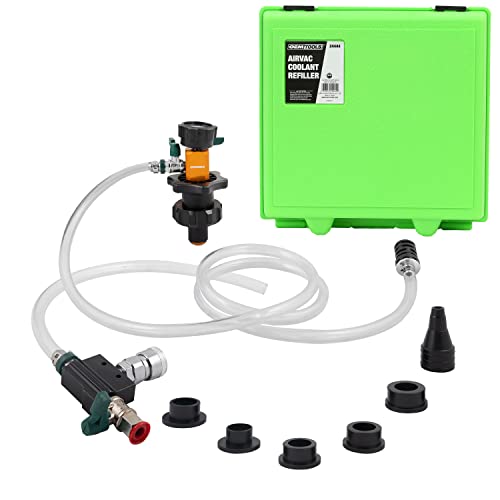
Efficient Cooling System Refill: The OEMTOOLS 24444 cooling system pressure tester kit quickly refills your vehicle's cooling system while eliminating trapped air, preventing engine damage.

1. Pneumatic Vacuum Type Coolant Filling Tool Kit: Use shop air to pump the cooling system to form a vacuum, then suck in the coolant, adding in the vacuum state avoids cavitation and prevents engine damage, filling usually takes only 5 - 10 minutes depending on the size of the water tank.
1. Top Off With the Correct Coolant
With the vehicle fully cool, add only the coolant specified for the exact model year and cooling circuit. Toyota’s 2025 Camry maintenance guide calls for Genuine Toyota Super Long-Life Coolant or a similar high-quality ethylene-glycol coolant with the specified non-silicate, non-amine, non-nitrate, non-borate long-life hybrid organic acid technology. Do not choose coolant by color alone or mix it with an unknown coolant.
2. Find and Fix Any Coolant Leak
Topping off may restore heat temporarily, but the coolant level should not continue dropping. Inspect the radiator, hoses, reservoir, pressure-cap area, pump, thermostat housing, valves, bypass hoses, and heater-hose connections. A sweet cabin odor, greasy windshield film, or wet carpet can support a leaking heater-core diagnosis.
For certain 2018–2021 Camry and Camry Hybrid vehicles, ask Toyota to check the VIN for Customer Support Program 24TE04 when a flow shut-off valve leak is suspected. If an “Engine Maintenance Required” message is present, preserve any P268111/P268115 code and use the Toyota service procedure before replacing the vehicle-specific valve or water-bypass hose assembly.
3. Bleed Air From the Cooling System
Use only the bleeding and refill procedure for the exact model year, engine, and coolant circuit. Camry fill points, pump controls, service modes, and hybrid procedures vary. A spill-free funnel may help on an application that permits it, but it does not replace the model-specific procedure.
If air repeatedly returns, stop repeating the bleed process and find the source. Request pressure-cap, cooling-system leak, and combustion-gas testing when appropriate.
4. Check the Thermostat
If the engine warms unusually slowly or scan-tool coolant temperature remains low, test the thermostat and warm-up behavior. Use the correct thermostat and gasket for the VIN and engine. Do not replace it solely because heat is weak at idle if the engine reaches and maintains its normal temperature.
5. Flush the Heater Core Only if the Test Points to a Restriction
A heater-core flush is justified when testing supports restricted flow, such as a consistently large heater-hose temperature difference after trapped air and valve operation have been considered. The engine must be fully cold before disconnecting hoses. Use controlled low pressure and collect the discharged coolant. Excessive pressure can rupture an older core or create a leak inside the cabin.
Use professional service when the hoses are brittle, access is poor, the core already leaks, or the restriction does not clear safely.
6. Check the Heater Control Valve if Equipped
On a Camry equipped with a separate heater control valve, confirm that the valve, cable, vacuum control, or actuator moves as specified and allows the intended flow. Do not confuse a coolant bypass valve or vacuum switching valve from another system with a heater valve. If the model does not use a separate heater valve, continue to air-mix-door diagnosis.
7. Test the Blend Door and Actuator
If both heater hoses are hot but cabin air remains cold, move the temperature setting from full cold to full hot and compare the driver and passenger vents. Clicking, binding, no temperature response, or one-zone failure supports an air-mix door, actuator, calibration, wiring, or HVAC control problem.
8. Check the Pressure Cap and Water Pump if the Problem Persists
Test the pressure cap when the system loses coolant, coolant fails to return from the recovery reservoir, the reservoir repeatedly overfills or empties, or no other leak can be found. Match any replacement by VIN, coolant circuit, pressure specification, cap depth, seals, and valve design.
For a mechanical pump, inspect for active leakage, bearing noise, pulley play, or confirmed circulation loss. For an electric engine water pump, scan the engine module, preserve the complete diagnostic code and suffix, and use model-specific data to compare commanded and actual operation. Do not replace an electric pump from a generic “weak flow at idle” assumption.
Camry Hybrid note: The heater core is supplied by the engine-coolant circuit. The inverter or power-control-unit coolant circuit is separate and does not provide normal heater-core heat. Identify each reservoir before checking or adding coolant, and do not open either circuit while hot.
When to Stop Driving or Call a Mechanic
Stop in a safe place and shut the vehicle down if the temperature gauge or warning rises above normal, steam appears, coolant pours out, the cabin heat suddenly disappears while the engine temperature rises, or the vehicle enters reduced-power operation. Do not open a hot cooling system.
Call a qualified technician or Toyota service center if:
- The coolant level drops again after a correct cold refill.
- You see an active leak near the pump, radiator, valve, heater hoses, or under the dashboard.
- The system will not bleed correctly or repeatedly forms air pockets.
- The heater core needs flushing but the hoses are brittle or difficult to access.
- An electric-pump code or commanded-versus-actual speed problem is present.
- The blend-door actuator or heater case requires dashboard disassembly.
- The vehicle overheats or displays a high-temperature warning, even briefly.
Related overheating symptoms are covered separately in the Camry overheating-at-idle diagnostic guide.
Essential Maintenance Tips to Keep Your Heat Running Smoothly
Coolant maintenance protects engine temperature control, heater-core flow, pumps, valves, hoses, and corrosion-sensitive cooling passages. Check the level only when the system is cold, use the coolant specified for the exact circuit, and follow the model-year Toyota maintenance guide rather than a universal mileage rule.
Toyota’s 2025 Camry maintenance guide lists initial applicable engine/intercooler coolant replacement at 100,000 miles or 120 months, then every 50,000 miles or 60 months. It separately lists initial applicable inverter/intercooler coolant replacement at 150,000 miles or 180 months, then every 50,000 miles or 60 months. Confirm the schedule for the exact model year and circuit.
Find the correct owner’s manual and maintenance guide through Toyota Owners manuals and warranties. Do not apply the 2025 schedule automatically to an older Camry.
Used antifreeze should not be poured onto the ground, into a storm drain, or into ordinary household trash. The EPA provides used-antifreeze disposal guidance, and the CDC/ATSDR identifies ethylene glycol as a substance used in automotive antifreeze. Keep coolant away from children and pets, clean spills promptly, and use an approved recycling or hazardous-waste site.
Frequently Asked Questions
Why does my Camry heat work only while driving?
Heat that returns while driving commonly points to low engine coolant, trapped air, restricted heater-core flow, or a coolant-circulation problem. Confirm the cold coolant level first, then check actual engine temperature and compare the heater-core hose temperatures with a non-contact thermometer.
What should I check first when a Camry has no heat at idle?
With the vehicle completely cold, check the correct engine-coolant reservoir and look for leaks or dried coolant residue. If the level is stable, confirm normal engine-coolant temperature, measure both heater hoses, and then check HVAC air-mix operation.
What does one hot heater hose and one cool hose mean?
A large heater-core inlet-to-outlet temperature difference can support restricted coolant flow, trapped air, or a heater-valve problem on a model equipped with one. Use a non-contact thermometer under consistent conditions and do not touch hot hoses.
What if both heater hoses are hot but the Camry still blows cold air?
Two hot heater hoses move the diagnosis toward the HVAC side. Check the air-mix or blend door, actuator, calibration, controls, and airflow through the heater case. On a dual-zone Camry, compare the driver and passenger vent temperatures.
Can a stuck-open thermostat cause weak Camry heat?
Yes. A stuck-open thermostat can delay warm-up and keep the engine coolant below the temperature needed for strong cabin heat. The symptom usually affects more than idle, so confirm the gauge behavior or scan-tool coolant temperature before replacing the thermostat.
Is no heat at idle diagnosed differently on a Camry Hybrid?
The basic coolant and heater-core checks still apply, but a hybrid may use an ECM-controlled electric engine water pump and has a separate inverter or power-control-unit cooling circuit. The cabin heater core uses engine coolant. Confirm that the READY indicator is off before underhood checks and keep away from orange high-voltage components.
Can I drive my Camry with no heat at idle?
Drive only when the engine temperature remains normal, the coolant level is stable, and there is no active leak or warning. Stop if the temperature rises, steam appears, coolant pours out, or the heat disappears while the engine becomes hotter.
Does heat returning when I rev the engine prove the water pump is bad?
No. On older mechanically driven pumps, engine speed can increase pump speed, but later A25A-FKS and A25A-FXS Camrys use ECM-controlled electric engine water pumps. Low coolant, trapped air, heater-core restriction, or a pump-control fault can all make heat change with operating conditions. On an electric-pump model, compare target and actual pump speed with the correct scan-tool procedure.
What coolant should I use in a Toyota Camry?
Use the coolant specified in the model-year Toyota owner’s manual for the exact cooling circuit. Current Toyota guidance commonly calls for Genuine Toyota Super Long-Life Coolant or a similar compatible ethylene-glycol coolant with the specified long-life hybrid organic acid technology. Do not select coolant by color alone.
Conclusion
If your Toyota Camry has no heat at idle, begin with the correct cold engine-coolant level and leak inspection. Then confirm actual engine temperature and compare the heater-core hose temperatures with a non-contact thermometer. Low coolant, trapped air, and heater-core restriction remain the first coolant-side checks. Two hot heater hoses with cold vent air move the diagnosis toward the air-mix door, actuator, or HVAC controls.
Do not apply one pump explanation to every Camry. Confirm the model year, engine, mechanical or electric pump design, and correct coolant circuit before replacing parts. On later A25A-FKS/A25A-FXS electric-pump cars, use target-versus-actual pump data rather than assuming engine RPM directly controls pump speed. Stop driving if the engine temperature rises, steam appears, or coolant loss becomes rapid.
Sources
- Toyota Owners Manuals and Warranties — model-year owner’s manuals, coolant-circuit identification, warnings, and maintenance information.
- 2025 Toyota Camry Warranty & Maintenance Guide — coolant formulation, inspection, and engine/inverter coolant replacement intervals.
- Toyota CSP 24TE04 FAQ / NHTSA Manufacturer Communication — flow shut-off valve coolant-leak coverage for certain Toyota vehicles, including certain 2018–2021 Camry and Camry Hybrid vehicles.
- Toyota T-SB-0112-24 Rev1 — “Engine Maintenance Required” diagnosis, P268111/P268115, and vehicle-specific flow shut-off valve service parts.
- Camry A25A-FKS electric-water-pump data and Camry Hybrid A25A-FXS pump-control information — ECM-controlled pump target-speed, actual-speed, and diagnostic data.
- U.S. EPA: How Do I Dispose of Used Antifreeze? — used-antifreeze handling and disposal guidance.
- CDC/ATSDR: Ethylene Glycol Public Health Statement — ethylene-glycol background and automotive-antifreeze use.

[…] a deeper diagnosis when heat changes mainly at idle or returns as engine speed rises, see the Toyota Camry no-heat-at-idle guide. Keep this page as the broader diagnostic path when the problem is not limited to […]