
Last updated: August 20, 2026 · Reviewed against Toyota maintenance guidance and Toyota/NHTSA campaign documents.
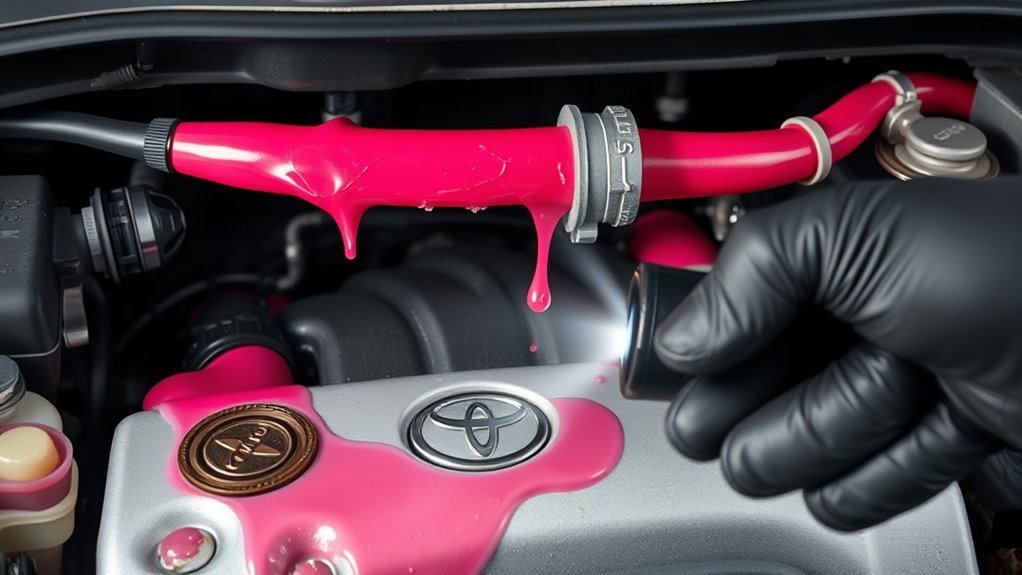
A Toyota Camry coolant leak often shows up as a sweet smell, pink or whitish residue, a falling coolant level, weak cabin heat, or an engine-temperature warning. Check the car only after it is fully cool. Stop driving if the warning appears, steam is visible, the reservoir is empty, or the level drops quickly.
On certain 2018–2021 Camry and Camry Hybrid vehicles, Toyota Customer Support Program 24TE04 may cover a verified leak from the flow shut-off valve. Other leaks can come from hoses, the radiator, reservoir, cap, water pump, thermostat housing, heater core, or an internal engine fault, so confirm the source before replacing parts.
Quick Answer
Check a Camry coolant leak only when the engine is fully cool. Inspect the correct coolant reservoir, hose connections, radiator area, and flow shut-off valve area for a falling level, dampness, or dried pink or white residue. A clear, odorless drip after A/C use is usually condensation, not coolant. Do not drive if the Camry overheats, steams, loses coolant quickly, or has an empty reservoir.
Key Takeaways
- Never open a coolant cap or cooling-system fitting while the engine, radiator, or hybrid system is hot.
- Color alone does not identify a leak. Clear A/C condensation is common, while coolant usually has a sweet odor and may leave pink, white, green, or orange residue.
- Camry Hybrid models can have separate engine and inverter coolant reservoirs. Check the owner’s manual before adding fluid.
- Toyota CSP 24TE04 is not a recall and does not cover every coolant leak. Eligibility depends on the VIN, diagnosis, mileage, and date of first use.
- The Toyota-related diagnostic codes to ask about are P268111 and P268115, but a scan does not replace a physical leak inspection.
- After repair, monitor the cold coolant level, heater output, warning lights, and repaired area for renewed leakage.
At a Glance
| Safe owner checks | Cold reservoir level, cardboard drip check, photos of residue, cabin odor, and stored diagnostic codes |
| Professional checks | Cooling-system pressure test, valve and connector inspection, combustion-gas testing when needed, repair confirmation, and system bleeding |
| Tow instead of drive | Temperature warning, steam, rapid coolant loss, empty reservoir, repeated overheating, or sudden loss of cabin heat with low coolant |
| Possible Toyota coverage | CSP 24TE04 may cover a verified flow shut-off valve condition on certain 2018–2021 Camry and Camry Hybrid vehicles |
Warning: Never loosen a coolant reservoir cap, radiator cap, or cooling-system fitting while the engine, radiator, or hybrid system is hot. Hot coolant and steam can spray out under pressure and cause serious burns. Coolant can also be dangerous if swallowed, so keep puddles away from children and pets and clean spills promptly.
How Do You Know If a Toyota Camry Is Leaking Coolant?
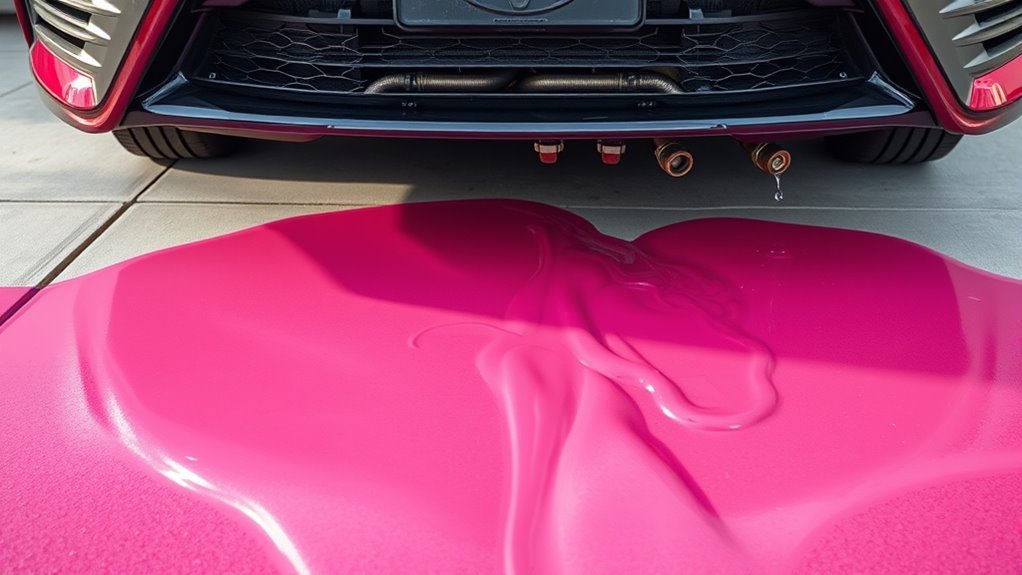
Start with symptoms you can confirm without touching a hot engine. A coolant leak may leave a sweet odor, dampness, a falling reservoir level, or dried pink or whitish crust. Toyota coolant is commonly pink, but old or mixed coolant may look different. Do not identify fluid by color alone.
With the Camry parked on level ground and fully cool, inspect the see-through reservoir against its low and full marks. Camry Hybrid models may have separate engine and inverter coolant reservoirs, so use the owner’s manual to identify the correct tank. A level that falls again after proper topping-off needs diagnosis.
Dashboard and comfort symptoms matter too. “Engine Coolant Temp High,” “Engine Maintenance Required,” poor cabin heat, or repeated overheating can point to a cooling-system fault. These symptoms do not prove the flow shut-off valve is the failed part, so scan the vehicle and inspect for a physical leak.
| Fluid or symptom | What it may mean | What to do |
|---|---|---|
| Clear, odorless water after A/C use | Usually normal evaporator condensation | Monitor it; investigate if the fluid is oily, colored, sweet-smelling, or paired with a falling coolant level |
| Pink, white, green, or orange residue | Possible dried or mixed coolant | Photograph the location and arrange a cold-system inspection |
| Sweet smell inside the cabin | Possible heater-core or interior cooling-system leak | Check for foggy windows or damp carpet and schedule service |
| Falling level with no visible puddle | A hidden external leak, heater-core leak, or internal engine leak may be present | Request a pressure test and further diagnosis; do not assume the coolant is simply “burning off” |
Note: Low coolant is a symptom, not a diagnosis. A Camry can lose coolant from a hose, clamp, radiator, reservoir, cap, water pump, thermostat housing, heater core, flow shut-off valve/coolant bypass valve, or an internal engine fault.
[Products Worth Considering]

AISIN OE matched engine coolant thermostat delivers consistent temperature control for reliable cooling system performance. Built with high-quality materials and designed for perfect OE form, fit, and function, it helps maintain efficient engine operation across a wide range of compatible Lexus, Scion, and Toyota vehicles. The correct OE specified operating temperature supports dependable cooling, while note that a gasket is not included.

This coolant bypass valve is a direct replacement for select Toyota models, helping regulate coolant flow for stable engine temperature and dependable performance. Built from high-temperature, corrosion-resistant materials, it is designed to handle demanding driving conditions while supporting long-term durability. Its straightforward design also makes installation quick and hassle-free.

This engine water pump kit is designed to help maintain reliable cooling performance across a wide range of compatible Toyota, Lexus, Scion, and Pontiac vehicles. Built with aluminum and tested for leak-free operation, it offers a direct replacement solution that supports engine efficiency and long-term service life. The kit includes a professional water pump and gasket for a convenient installation-ready repair.
What Commonly Causes a Toyota Camry Coolant Leak?
Match the leak location and symptoms with the nearby components, then confirm the source with a cold visual inspection, scan, or pressure test. Avoid pulling hoses, opening caps, or reaching near fans and belts unless the vehicle is off and fully cool.
| Possible leak source | What you may notice | Best next step |
|---|---|---|
| Flow shut-off valve / coolant bypass valve | Pink or whitish crust, dampness near the valve or connector, poor heat, “Engine Maintenance Required,” or codes P268111/P268115 | Have a Toyota dealer or qualified shop scan and inspect it; check CSP 24TE04 eligibility by VIN |
| Radiator hoses and clamps | Wet hose ends, bulges, cracks, soft spots, loose clamps, or dried residue at connections | Replace damaged parts and pressure-test the system after repair |
| Radiator | Coolant at the front lower area, damaged fins, corrosion, debris blockage, or leaks at plastic end tanks | Inspect for blockage and damage; repair or replace only after confirming the leak |
| Reservoir or cap | Coolant around the tank seam, cap, overflow area, or splash marks after driving | Inspect the cap seal and reservoir for cracks; use parts matched to the model year and powertrain |
| Water pump or thermostat housing | Coolant near the engine, recurring low coolant, noise, temperature swings, or overheating | Have a technician inspect because access and confirmation can be more involved |
| Heater core or interior connection | Sweet cabin smell, foggy windows, damp carpet, or weak heat | Avoid unnecessary driving and have the HVAC and cooling system inspected |
| Internal engine leak | Coolant loss without an obvious puddle, repeated overheating, persistent white exhaust after warm-up, bubbling, or contaminated oil | Request professional pressure, combustion-gas, compression, or leak-down testing as appropriate; symptoms alone are not conclusive |
Act quickly if the coolant level keeps falling. A small leak can become an overheating event, and repeated overheating can damage the head gasket, cylinder head, or engine.
What Are Four Safe Checks for a Camry Coolant Leak?
These checks help you document the problem before repair. They do not replace a pressure test, scan, or professional diagnosis.
- Identify the correct reservoir and check it cold. Use the owner’s manual, especially on a Camry Hybrid with more than one cooling circuit. Note the level, coolant condition, floating debris, oily film, or a sudden drop after proper topping-off.
- Use clean cardboard under the parked car. Place it under the front engine and radiator area overnight. Note the color, location, and size of any drip pattern without touching or tasting the fluid.
- Look for residue and scan for codes. Pink, white, or chalky crust near hose ends, the radiator, or valve area can show where coolant dried. If the dash shows “Engine Maintenance Required,” ask the shop to check for P268111 and P268115.
- Check the cabin and exhaust clues. Note a sweet cabin odor, damp carpet, repeated window fogging, persistent white exhaust after warm-up, or unexplained coolant loss. These signs require diagnosis and do not prove one specific failed part.
| Situation | Safer action |
|---|---|
| Temperature warning, steam, empty reservoir, or rapid coolant loss | Stop, shut the vehicle off, let it cool, and arrange a tow. |
| Sudden loss of cabin heat with low coolant or rising temperature | Stop driving. The system may not be circulating enough coolant. |
| Small residue spot, stable cold level, normal temperature, and no warning | Schedule prompt inspection. A tow is safest when the leak source or rate is unknown. |
| Sweet cabin smell, fogging, or damp carpet | Limit driving and have the heater core and interior connections inspected. |
Warning: Do not keep driving if the temperature gauge rises into the hot zone, steam appears, the warning says to stop, the heater suddenly blows cold with low coolant, or the reservoir empties soon after topping off. Pull over safely, shut the vehicle off, let it cool, and arrange a tow.
[Products Worth Considering]

This coolant electric water pump is designed as a replacement for select Toyota vehicles, helping maintain proper engine cooling performance and reliable temperature control. Built to OE specifications, it offers fitment support for compatible Avalon, Camry, and RAV4 models with 2.5L L4 engines. It also includes cross-reference part numbers for easier matching and comes with after-sales support for covered defects.

The OEMTOOLS coolant vacuum refill kit helps quickly refill a vehicle’s cooling system while removing trapped air that can lead to overheating and engine damage. It also performs vacuum leak tests to help confirm system integrity and reduce the chance of repeat repairs. With multiple bushings, adapters, and a tapered cone seal, it is designed for flexible use on many radiator and coolant bottle necks.

This all-in-one radiator pressure tester and vacuum refill kit helps diagnose cooling system leaks, measure temperature, and refill coolant efficiently. It includes a wide range of adapters for broad vehicle compatibility, plus a pressure tester, vacuum refiller, thermometer, and storage case for organized use. Designed for DIY mechanics and professionals, it simplifies coolant service while reducing guesswork and unnecessary repairs.
How Is a Camry Coolant Leak Fixed, and Does CSP 24TE04 Cover It?
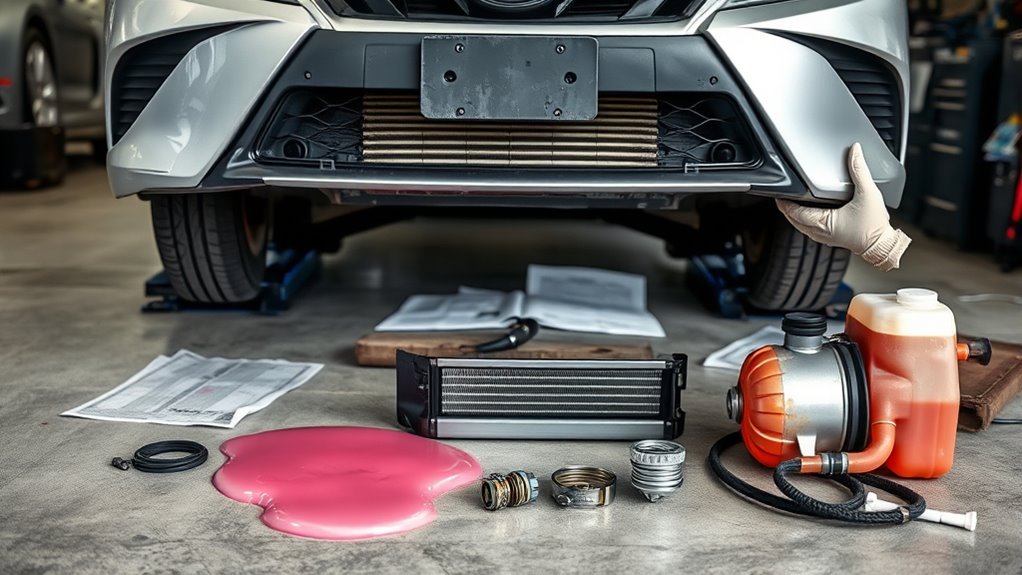
No single Camry coolant-leak price is reliable before diagnosis. The bill depends on the failed part, access time, diagnostic work, coolant refill and bleeding, and whether Toyota coverage applies. Ask for a written estimate that separates diagnosis, parts, labor, coolant, and post-repair testing.
| Repair category | What affects the bill | Coverage note |
|---|---|---|
| Hose, clamp, cap, or reservoir | Part fitment, access, coolant loss, and pressure testing | Normally an owner-paid repair unless another warranty applies |
| Radiator, water pump, or thermostat housing | Diagnosis, labor access, replacement parts, coolant, and bleeding | Coverage depends on the vehicle’s warranty status and diagnosed cause |
| Flow shut-off valve | VIN eligibility, verified condition, mileage, date of first use, and program terms | May be repaired at no charge under CSP 24TE04 if all requirements are met |
| Heater core or internal engine fault | Diagnostic depth, disassembly, labor time, and related damage | Get a written diagnosis and estimate before approving major work |
Toyota’s Customer Support Program 24TE04 addresses a specific flow shut-off valve coolant-leak condition on certain Toyota vehicles, including certain 2018–2021 Camry and Camry Hybrid vehicles. It is not a blanket warranty for every coolant leak. An authorized Toyota dealer must verify the covered condition and eligibility. Separately, the flow shut-off valve is also covered under Toyota’s New Vehicle Limited Warranty for 36 months or 36,000 miles, whichever comes first — so a newer or lower-mileage Camry may already be covered without needing CSP 24TE04. ``
According to the CSP document, the primary coverage period ended November 30, 2025, regardless of mileage. Secondary coverage may continue for 10 years from the date of first use or 100,000 miles, whichever comes first. As of August 20, 2026, eligibility can differ by VIN, mileage, first-use date, and diagnosis, so contact a Toyota dealer with the VIN before authorizing out-of-pocket valve work.
If the message is “Engine Maintenance Required,” ask the shop to check Toyota service-bulletin information for DTCs P268111 and/or P268115. These codes relate to the engine coolant bypass valve circuit. A puddle alone does not prove those codes are present, and the codes do not replace a physical leak inspection.
- Confirm the source. Diagnosis may include a cold visual inspection, reservoir-level check, scan, pressure test, and inspection of hoses, radiator, reservoir, valve area, cabin, and engine.
- Check coverage before paying. If the flow shut-off valve condition is verified and the Camry qualifies under CSP 24TE04 — or is still within the standard 36-month/36,000-mile warranty — the covered repair may be performed at no charge.
- Get the estimate in writing. If the vehicle is not covered, ask for the diagnostic fee, labor time, part number, coolant charge, and confirmation that the system will be pressure-tested and bled after repair.
Pro Tip: Do not replace the thermostat, radiator, or water pump only because the dash says “Engine Maintenance Required.” On an affected Camry, scanning for P268111/P268115 and inspecting the valve area can reduce the risk of paying for the wrong repair.
[Products Worth Considering]

This 16-piece hose clamp pliers set is built for removing and installing a wide range of automotive hose clamps and connectors with less effort. It includes specialized tools for radiator, coolant, fuel, vacuum, and water line service, plus long-reach and lockable pliers to help work in tight engine spaces. Durable steel construction and comfortable handles make it a practical choice for repair and maintenance tasks.

This A-Premium engine air filter is designed to help maintain clean airflow for compatible Lexus and Toyota vehicles, supporting better engine performance and efficiency. It uses fine filtration media to capture debris while minimizing airflow restriction, making it a practical replacement for routine maintenance. With fitment for multiple popular models and a convenient boxed single-pack design, it offers a straightforward solution for keeping your engine protected.

This 16-piece hose clamp pliers set provides a complete solution for removing and installing a wide range of automotive hose clamps. It is designed to reach tight engine spaces and handle spring, flat band, and ring-type clamps on radiator, coolant, fuel, and vacuum hoses. Built from durable heat-treated steel and organized in a carrying case, it helps simplify repairs for cars, trucks, motorcycles, and DIY maintenance.
What Should You Check After a Camry Coolant-Leak Repair?
Check the reservoir only when the Camry is cold and parked on level ground. Recheck it before driving for several days, then periodically during the next month. Watch for fresh puddles, a sweet smell, weak heater output, warning lights, or a return of the “Engine Maintenance Required” message.
Use the coolant specified for the exact model year and powertrain. Toyota’s 2025 Camry maintenance guide says to use Genuine Toyota Super Long-Life Coolant or a similar high-quality coolant that meets the listed chemistry requirements. Do not mix an unknown coolant with the existing fluid unless a qualified technician confirms compatibility.
For the 2025 Camry, Toyota lists initial engine/intercooler coolant replacement, if applicable, at 100,000 miles or 120 months, then every 50,000 miles or 60 months. The guide lists initial inverter/intercooler coolant replacement, if applicable, at 150,000 miles or 180 months, then every 50,000 miles or 60 months. Older model years can differ, so use the manual for the exact year and powertrain. ``
After a valve, hose, radiator, water pump, thermostat-housing, or heater-core repair, ask the technician to confirm that the correct coolant was used, trapped air was removed, the repair area was cleaned, warning codes were addressed, and the cooling system passed its final leak or pressure check.
Frequently Asked Questions
Why is my Toyota Camry leaking coolant?
A Camry may leak coolant from a hose, clamp, radiator, reservoir, cap, water pump, thermostat housing, heater core, flow shut-off valve/coolant bypass valve, or an internal engine fault. Match the residue or puddle with the nearby component, then confirm the source with a cold inspection, pressure test, scan, or other professional testing.
Is a clear puddle under my Camry a coolant leak?
A clear, odorless drip after using the air conditioner is usually normal condensation. Suspect coolant when the fluid has a sweet smell, feels slippery, leaves colored or whitish residue, or appears with a falling coolant level, weak heat, or a temperature warning.
Is Toyota CSP 24TE04 a recall?
No. CSP 24TE04 is a Toyota Customer Support Program for a specific flow shut-off valve coolant-leak condition. It is not a safety recall and does not cover every coolant leak. A Toyota dealer must verify the VIN, condition, mileage, date of first use, and program eligibility.
What codes are linked to the Camry coolant bypass valve issue?
The Toyota service-bulletin codes to ask about are P268111 and P268115. They relate to the engine coolant bypass valve circuit. A shop should still inspect for a physical leak because codes, warning messages, and puddles do not always point to the same failed part.
Can I drive my Camry with a coolant leak?
Do not drive if a temperature warning appears, steam is visible, the reservoir is empty, coolant drops quickly, or the heater suddenly blows cold with low coolant. Pull over, shut the vehicle off, let it cool, and arrange a tow. Even with a small leak and normal temperature, prompt inspection is safer than continued driving.
What coolant should I add to a Toyota Camry?
Use the coolant specified in the owner’s manual for the exact model year and powertrain. Many late-model Camrys specify Toyota Super Long-Life Coolant or an equivalent long-life ethylene-glycol coolant that meets Toyota’s chemistry requirements. Avoid mixing unknown coolant types.
How do I know if the leak is the radiator, hose, or valve?
A hose leak often appears at a hose end, clamp, crack, bulge, or soft spot. A radiator leak may appear near the front, lower corners, fins, or plastic end tanks. A flow shut-off valve issue may leave residue near the valve or connector and may come with “Engine Maintenance Required” plus P268111 or P268115. Confirm the source before replacing parts.
How much does a Toyota Camry coolant-leak repair cost?
The cost depends on the failed part, diagnosis, labor access, coolant refill and bleeding, and warranty or CSP eligibility. Ask for a written estimate that separates diagnosis, parts, labor, coolant, and final pressure or leak testing. An eligible CSP 24TE04 flow shut-off valve repair may be completed at no charge under the program terms.
Conclusion
Handle a Toyota Camry coolant leak before it turns into an overheating event. Check the correct reservoir only when the car is fully cool, document the fluid and residue location, and tow the vehicle if the temperature warning appears, steam is visible, or coolant falls quickly. For certain 2018–2021 Camry and Camry Hybrid vehicles, ask a Toyota dealer to check CSP 24TE04 eligibility and standard warranty status, and scan for P268111/P268115 before you approve valve-related work. After repair, verify the cold level and watch the repaired area until it stays dry.
Sources
- Toyota Customer Support Program 24TE04 via NHTSA — covered vehicles, flow shut-off valve condition, primary and secondary coverage terms, and dealer verification.
- Toyota service bulletin for P268111/P268115 via NHTSA — diagnostic-code wording and the engine coolant bypass valve circuit condition.
- Toyota Manuals and Warranties — official portal for model-year owner manuals, warranty guides, and maintenance information.
- 2025 Toyota Camry Warranty & Maintenance Guide — coolant chemistry, reservoir inspection, radiator and hose inspection, and replacement intervals for that model year.
- Toyota Camry Hybrid owner’s manual: overheating procedure — official model-year safety guidance for overheating conditions.
- Poison Control: Antifreeze safety — ingestion risk and spill-safety guidance.



[…] stack. Check whether road debris, leaves, or packed dirt blocks airflow. Use the site’s Camry coolant-leak guide if the level keeps […]
[…] leak that needs prompt diagnosis. See the Camry intermittent A/C guide for cooling faults and the Camry coolant leak guide for coolant-loss […]
[…] the Camry coolant-leak guide when the source is not clearly at the […]