
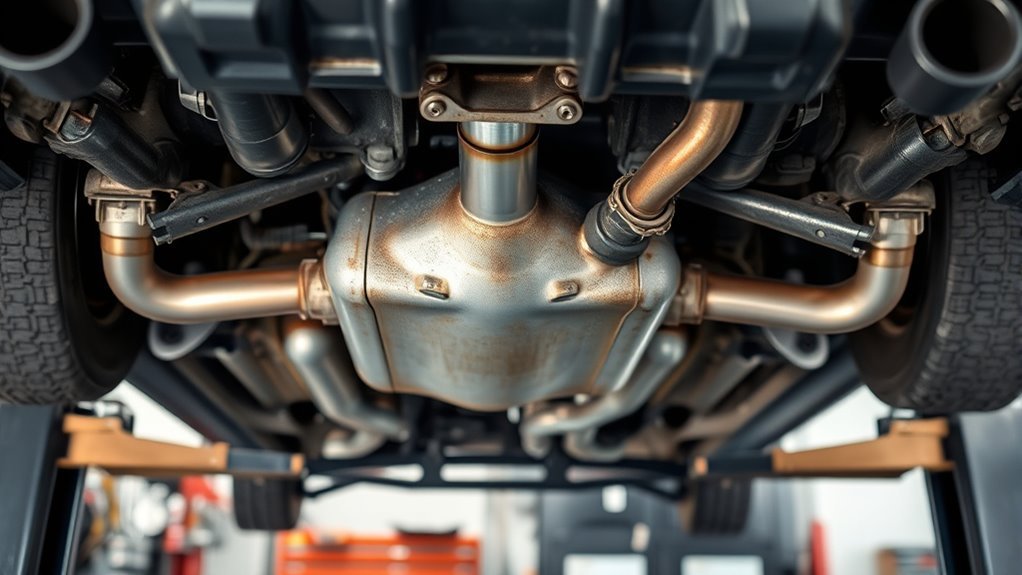
A Toyota Camry catalytic converter has no single replacement mileage that applies to every model. A healthy original converter may remain serviceable for much of the vehicle’s life, while a misfire, rich fuel mixture, oil burning, coolant contamination, impact damage, or theft can end its service early. This guide shows you how to judge its condition, diagnose P0420 correctly, choose a legal replacement, and protect the new part.
Last updated: July 15, 2026
Quick Answer
A Camry catalytic converter can last for much of the car’s service life when the engine runs cleanly, but no single replacement mileage applies to every Camry. Do not replace it from mileage or a P0420 code alone. First check misfires, fuel trims, air/fuel and oxygen-sensor data, exhaust leaks, oil or coolant consumption, and exhaust restriction.
Key Takeaways
- Mileage alone does not determine converter condition; engine health, contamination, heat, corrosion, impact damage, and theft matter more.
- A P0420 code points to catalyst efficiency, but it does not prove the converter is bad by itself.
- Check misfire data, fuel trims, air/fuel and oxygen-sensor readings, exhaust leaks, and restriction before replacing the converter.
- A California replacement must match the vehicle application and a current CARB Executive Order approval.
- Keep maintenance records, repair misfires quickly, and protect the converter from theft with a shield or welded deterrent.
At a Glance
| Time Required | 10 to 30 minutes for basic checks; 1 to 2 hours for shop diagnosis |
| Difficulty | Beginner for code reading; intermediate to professional for backpressure and leak testing |
| Tools Needed | OBD-II scanner, flashlight, repair history, emissions label photo, and shop-grade smoke or backpressure tools when needed |
| Cost | Basic code scan may be low-cost; converter replacement varies widely by engine, emissions label, state rules, parts supply, and labor |
What’s in This Article
- How Long Does a Toyota Camry Catalytic Converter Last?
- What Shortens a Camry Catalytic Converter’s Life?
- What Are the Signs of a Bad Camry Catalytic Converter?
- What Engine Problems Damage a Catalytic Converter?
- How Do You Diagnose a Bad or Clogged Camry Converter?
- Should You Repair the Cause or Replace the Converter?
- Which Replacement Converter Should You Choose?
- What Affects Camry Catalytic Converter Cost and Repair Time?
- How Do You Protect a Camry Catalytic Converter From Theft?
- How Can You Make a Camry Catalytic Converter Last Longer?
- Frequently Asked Questions
How Long Does a Toyota Camry Catalytic Converter Last?
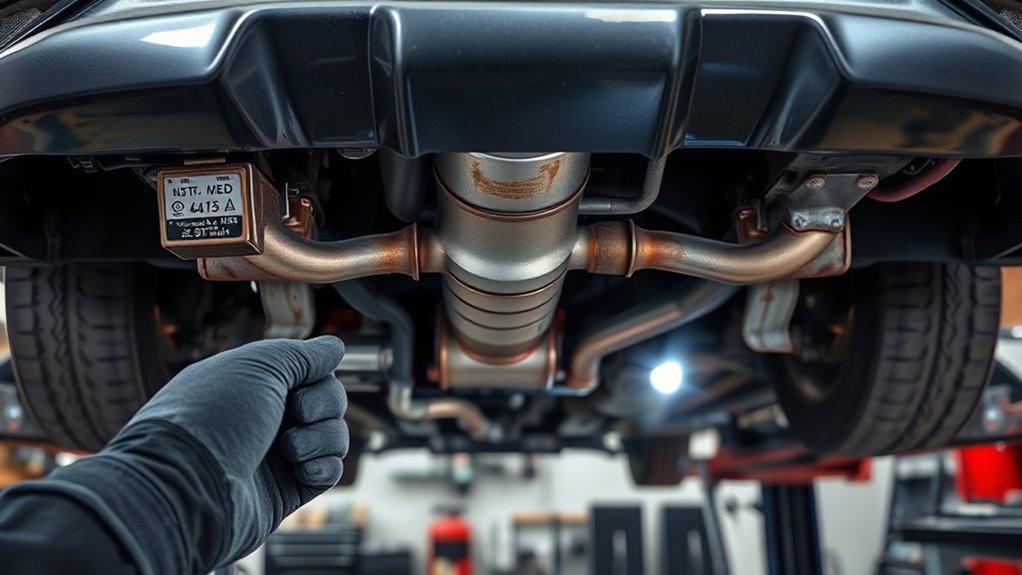
A Camry converter is not a routine maintenance item with a fixed replacement interval. Its useful life depends on whether the engine maintains the correct air/fuel mixture and keeps raw fuel, oil, and coolant out of the exhaust. Age and mileage increase exposure to corrosion and heat cycles, but they do not prove the catalyst has failed.
Do not confuse service life with warranty coverage. Federal rules require coverage for specified major emissions-control components for 8 years or 80,000 miles, while Toyota states that emissions coverage varies under federal and California regulations. Check the Warranty & Maintenance Guide for your exact year through Toyota Owners manuals and warranties.
The converter usually fails early because another problem damages it. Raw fuel from a misfire, a rich air/fuel mixture, oil burning, coolant entering the exhaust, or a leak that changes oxygen readings can all reduce catalyst efficiency. Treat a catalytic converter as a downstream victim first, not the first part to replace.
What Shortens a Camry Catalytic Converter’s Life?
On an older Camry, heat cycles, corrosion, road debris, oil consumption, and aging exhaust hardware can raise failure risk. Newer models use different engines, sensors, catalyst layouts, and control strategies, so diagnosis must follow the service information for the exact year and engine. The basic rule stays the same: a converter lasts longest when combustion and fuel control remain healthy.
Mileage and Wear
High mileage alone does not condemn a catalytic converter. The stronger warning is high mileage combined with ignored misfires, oil or coolant consumption, abnormal fuel trims, corrosion, or repeated short trips. Scan the car when the check engine light appears, and compare the result with drivability symptoms and service history.
- Inspect the exhaust for rust, rattles, impact damage, and leaks during routine service and after a road impact.
- Scan check engine lights quickly instead of clearing codes and continuing to drive.
- Keep maintenance receipts so you can prove fuel, ignition, and emissions service history.
Driving Habits Impact
Frequent short trips keep the catalyst below full operating temperature for a larger share of each trip. Hard use is not automatically harmful, but driving with an active misfire, severe fuel-control fault, or overloaded vehicle can raise exhaust heat. Normal driving and prompt fault repair matter more than trying to follow a special driving routine.
Fuel quality also matters, but the safest advice is simple: use the fuel grade Toyota specifies for your Camry and avoid questionable additives. Additives that leave deposits can contaminate the catalyst instead of helping it.
What Are the Signs of a Bad Camry Catalytic Converter?
A bad or clogged converter may trigger an illuminated check engine light, weak acceleration, poor high-load performance, rattling, excess exhaust heat, or a failed emissions test. Hissing usually points to an exhaust leak or restriction. A sulfur smell can accompany a fuel-control or catalyst problem, but it does not identify the converter by itself.
Note: P0420 means “Catalyst System Efficiency Below Threshold” for Bank 1. It shows that the catalyst monitor detected low efficiency, not that a visual inspection has proved the converter bad. Misfires, exhaust leaks, fuel-control faults, sensor problems, oil burning, and coolant contamination must be checked first. See the OBD-Codes P0420 guide for a general code overview, then use Toyota service information for your exact Camry.
Watch for these common warning signs:
- A persistent check engine light with P0420 or related catalyst monitor codes.
- Reduced power, slow acceleration, rough running, or poor fuel economy.
- Rattling from the converter body, hissing from leaks, or a failed emissions inspection.
- A sulfur smell, glowing exhaust parts, or severe heat under the floor, especially with a fuel-control fault.
Warning: Stop driving and diagnose the car quickly if the engine misfires, the converter glows red, power drops sharply, or the exhaust smells extremely hot. Continued driving can melt the substrate and turn a repairable engine problem into a full converter replacement.
What Engine Problems Damage a Catalytic Converter?
The converter treats gases produced by the engine, so upstream faults strongly affect its life. Misfires and rich mixtures can overheat the substrate. Oil or coolant can contaminate the catalyst surface. Exhaust leaks and sensor faults can also distort catalyst-monitor results without creating a true restriction.
Engine Misfires and Overheating
A misfire sends unburned fuel into the exhaust. That fuel can ignite inside the converter, raising temperatures far beyond normal operating range. If the substrate overheats, it can melt, crack, or break apart.
- Diagnose misfires promptly with spark plug, ignition coil, injector, compression, and vacuum checks.
- Correct rich or lean fuel trims before they overheat or contaminate the converter.
- Repair vacuum leaks, fuel pressure problems, and worn ignition parts before replacing the converter.
Oil/Coolant Contamination
Oil or coolant entering the exhaust can coat the catalyst and reduce its ability to store oxygen and treat exhaust gases. Oil burning can leave ash deposits, while coolant intrusion can create deposits and thermal stress. A cleaner cannot repair a melted, cracked, or heavily poisoned substrate.
Warning: White smoke, blue smoke, milky oil, disappearing coolant, or a sweet exhaust smell needs immediate diagnosis. Replacing the converter before fixing the leak can destroy the new part.
Inspect the PCV system, valve cover gaskets, head gasket symptoms, coolant hoses, and oil level trends. Track oil and coolant loss between services. A simple maintenance log can help you spot a pattern before the converter pays the price.
How Do You Diagnose a Bad or Clogged Camry Converter?
Start with data, not guesses. Use an OBD-II scanner to read stored, pending, and permanent codes. Review freeze-frame data, short- and long-term fuel trims, misfire information, sensor activity, and readiness status. Sensor type and expected behavior vary by model year and engine, so interpret the data with year-specific Toyota service information.
Pro Tip: Diagnose in this order: all codes, freeze-frame data, misfires, fuel trims, exhaust leaks, air/fuel and oxygen-sensor tests, then restriction testing. Do not approve a converter from one code, one temperature reading, or a visual check alone.
- Read all codes and note whether P0420 appears alone or with misfire, fuel trim, O2 sensor, or coolant temperature codes.
- Check for exhaust leaks at the manifold, flex pipe, gaskets, converter shell, and downstream joints.
- Test the upstream air/fuel or oxygen sensor and the downstream oxygen sensor using the correct specifications for the model year.
- Measure exhaust backpressure or use another manufacturer-approved restriction test if the car loses power under load, starts hard, or stalls.
- Confirm emissions readiness after repairs before inspection.
A physically clogged converter restricts exhaust flow. A chemically aged or contaminated converter may flow normally but fail the catalyst monitor. Because those failure modes are different, backpressure, sensor data, leak testing, and monitor results must be considered together.
[Products Worth Considering]

This ignition coil and spark plug set is designed to restore reliable starting, smooth engine performance, and efficient combustion for compatible Toyota, Lexus, Scion, and Pontiac models. Built with durable materials and engineered to meet or exceed OE design standards, it offers dependable fitment and long-lasting operation. The package includes four ignition coils and four double iridium spark plugs for a complete tune-up solution.

Walker 36454 is a spring bolt kit designed to help secure exhaust components and maintain a tight, leak-resistant connection. It is made for ball and socket joint applications and uses durable materials for long-lasting performance. This hardware is a practical choice for exhaust repairs and compatible replacement needs on select vehicles.

The FOXWELL NT301 is a plug-and-play OBD2 code reader designed to help drivers and home mechanics diagnose check engine light issues with ease. It reads fault codes, clears emissions-related warnings, displays live sensor data in graph form, and shows I/M readiness so you can quickly check vehicle status before an emissions test. With broad compatibility across many OBD2 vehicles and a clear color screen, it offers a practical, user-friendly way to monitor and troubleshoot engine performance.
Should You Repair the Cause or Replace the Converter?
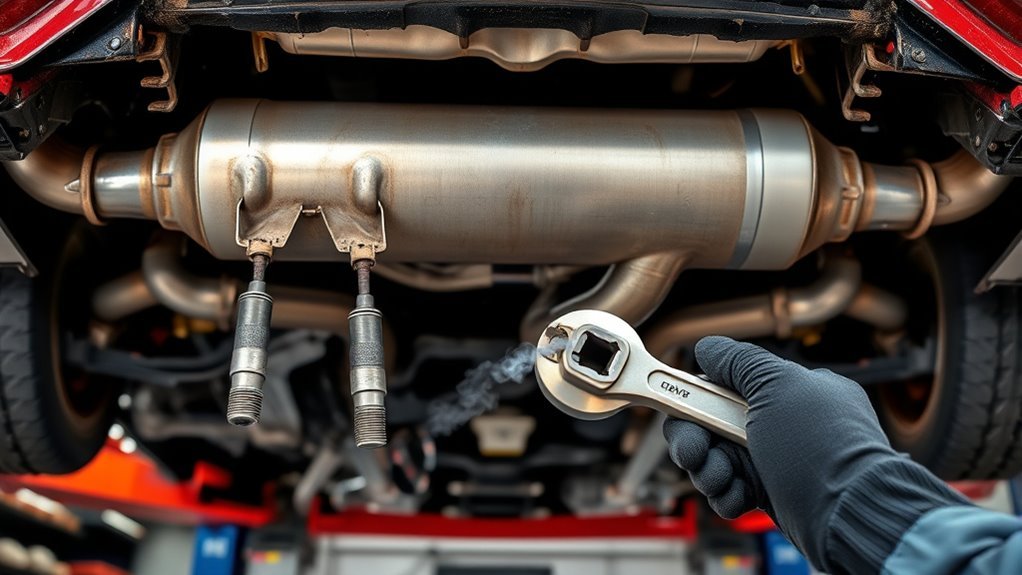
Before replacing the converter, fix faults that can imitate or cause catalyst failure. A biased sensor, cracked manifold, leaking gasket, damaged flex pipe, misfire, or fuel-control problem can lead to a P0420 diagnosis. Replacing the converter first may leave the original cause in place and damage the new part.
Repairing sensors, leaks, and misfires costs less than replacing a converter and protects any new converter you install later. Ask the shop to document the root-cause checks on the invoice.
| Step | Action | Why It Matters |
|---|---|---|
| 1 | Scan all codes | Shows whether P0420 is alone or part of a wider engine problem |
| 2 | Check misfires and fuel trims | Finds rich, lean, or ignition faults that can ruin the converter |
| 3 | Smoke test or inspect exhaust | Locates leaks that distort oxygen sensor readings |
| 4 | Test air/fuel and O2 sensor activity | Prevents replacing the converter because of a bad sensor |
| 5 | Confirm converter failure | Supports the replacement decision with evidence |
[Products Worth Considering]

This set of four ignition coils is designed to restore smooth engine performance and reliable starting for compatible Toyota, Scion, and Lexus applications. Built to meet or exceed OE specifications, these coil packs help reduce misfires, hesitation, and check engine light issues while supporting stronger ignition output. The direct-fit design makes installation straightforward, and the package includes a warranty for added peace of mind.

The BLCKTEC 440 Bluetooth OBD2 scanner helps drivers and DIY mechanics quickly read and clear trouble codes, monitor live data, and check emissions readiness with confidence. Its color display, graphing capabilities, and battery and charging system testing make it a versatile diagnostic tool for OBD-compliant vehicles. Designed for plug-and-play convenience, it runs directly from your vehicle and includes support for report sharing and ongoing updates.

FOXWELL NT201 is an easy-to-use OBD2 scanner designed to help drivers quickly read and clear check engine codes, view live engine data, and check emissions readiness. Its color screen, one-key I/M readiness test, and broad compatibility with most gasoline vehicles since 1996 make it a practical tool for everyday diagnostics and maintenance. With plug-and-play operation and lifetime free updates, it offers a simple way to understand vehicle issues without expensive shop visits.
Which Replacement Converter Should You Choose?
The correct replacement depends on the Camry’s year, engine, emissions label, vehicle test group or engine family, and registration state. An OEM assembly usually provides the most direct fit and documentation path. A certified aftermarket converter may cost less, but it must be approved for the exact application. A “high-flow” label does not prove legal compliance or correct fit.
Before ordering, photograph the underhood emissions label, record the VIN, confirm the engine, and identify every converter position that needs repair. In California, use the CARB aftermarket catalytic converter database to verify the application by vehicle information or ARB Executive Order number. Also check whether the Executive Order has been rescinded or withdrawn.
[Products Worth Considering]

This ignition coil pack and pre-gapped spark plug set is designed for select 3.5L V6 Toyota and Lexus models, helping restore smooth engine performance and reliable starting. Built to meet or exceed OEM specifications, it can help fix common issues like misfires, rough idle, poor fuel economy, and reduced power. The complete 6-piece set offers a convenient replacement solution for compatible vehicles.

This plug-and-play OBD2 scanner helps drivers quickly read and clear engine error codes while providing live data, freeze frame information, I/M readiness, and MIL status for more confident troubleshooting. It adds a built-in voltage test and clear status indicators to support electrical checks and faster diagnostics, making it a practical choice for home users, car enthusiasts, and repair professionals. Compatible with most OBDII vehicles since 1996 and designed with an easy-to-use interface, it offers broad coverage and simple operation in one compact tool.

This ignition coil pack and spark plug set is designed to restore strong spark, smoother starts, and reliable engine performance for a wide range of Toyota, Lexus, Pontiac, and Scion vehicles. Built with durable materials and engineered to meet or exceed OE standards, it helps improve combustion efficiency and long-term dependability. The kit includes four ignition coils and four spark plugs for a convenient all-in-one replacement solution.
OEM Replacement Considerations
OEM replacement is the cleanest route when inspection compliance matters most. It should match the vehicle’s emissions configuration and reduce fitment problems. The tradeoff is price and availability, especially for older Camrys and California-compliant applications.
- Use the VIN and emissions label to request the correct part.
- Ask whether the part is federal-compliant, California-compliant, or legal in all applicable states.
- Keep the invoice and part documentation for future emissions inspections or resale.
Aftermarket Fit and Warranty
An aftermarket converter must match the engine family and emissions certification. Do not buy only by “Camry” and model year. Submodel, engine, build configuration, and state rules can change the correct part.
Check the warranty terms before installation. Some warranties exclude converter failure caused by misfires, oil burning, coolant leaks, modified exhaust systems, or improper installation. That makes root-cause diagnosis even more important.
Legal High-Flow and Performance-Style Converters
Choose a performance-style converter only when its documentation approves it for the exact vehicle and jurisdiction. Do not assume that “high-flow,” “universal,” or “race” wording makes a part street legal. A test pipe, hollowed converter, spacer used to defeat monitoring, or non-approved part can violate emissions rules.
- Confirm engine family and emissions label details before purchase.
- Verify CARB Executive Order approval if the car is registered in California or another state that follows California emissions rules.
- Save the box label, part number, paperwork, and invoice after installation.
What Affects Camry Catalytic Converter Cost and Repair Time?
Camry catalytic converter cost varies too widely for one reliable model-wide figure. The quote changes with model year, engine, converter position, federal or California emissions certification, OEM or aftermarket construction, rust, theft damage, labor rate, and related sensor or exhaust repairs. Compare written quotes that use the same part type and emissions approval.
Get a written estimate before authorizing work. Ask whether diagnosis, parts, gaskets, oxygen sensors, welding, disposal, and post-repair readiness checks are included.
| Item | What Affects Cost | Typical Timeline |
|---|---|---|
| Diagnostic scan and inspection | Code reading, live data, leak checks, and misfire checks | Often under 2 hours, but intermittent faults may require more testing |
| OEM converter | Dealer availability, emissions label, engine, and state requirements | Same day if stocked; longer when VIN-specific parts are ordered |
| Certified aftermarket converter | Certification, fitment, warranty, and local emissions rules | Same day to several days, depending on approved-part availability |
| Labor and related parts | Rust, broken fasteners, welding, gaskets, and oxygen sensors | Varies with access, corrosion, welding, and theft damage |
Bring your VIN, emissions label photo, OBD-II code report, and service history to the shop. Ask for a post-repair leak check and readiness monitor confirmation before an emissions inspection.
How Do You Protect a Camry Catalytic Converter From Theft?
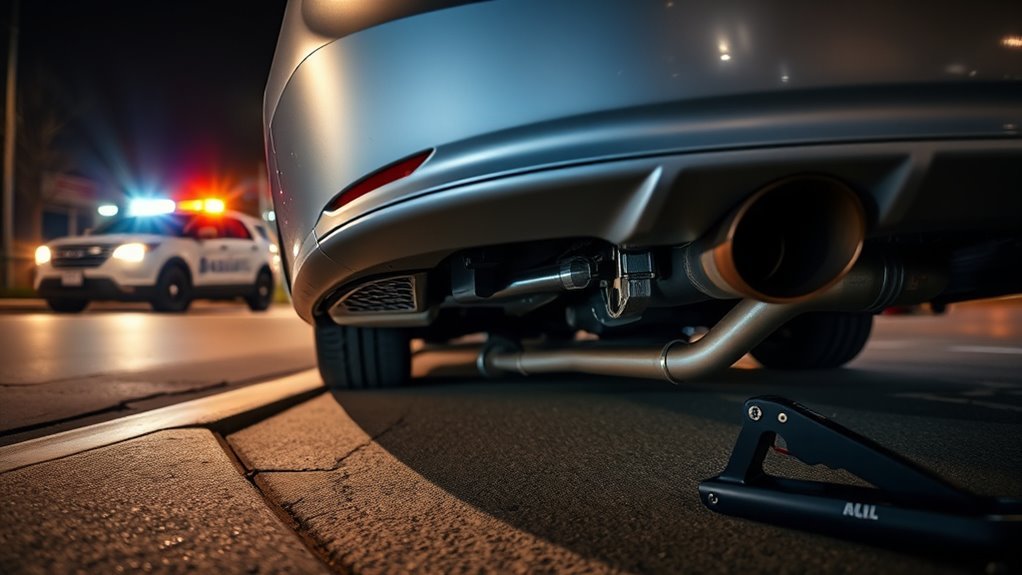
Thieves target converters for the recoverable metals inside them. Risk varies by location, parking conditions, vehicle access, and local resale markets. A stolen Camry converter usually causes a sudden loud exhaust note and may leave cut sensor wiring or damaged exhaust sections.
Removing a converter, installing a defeat device, or using a noncompliant replacement can violate emissions law. The EPA’s vehicle and engine enforcement page covers certification, labeling, tampering, defeat devices, and penalties. Treat replacement as an emissions-compliance repair, not only an exhaust repair.
- Install a catalytic converter shield, cage, or welded deterrent that slows removal.
- Park in a locked garage or well-lit, visible location when possible.
- Ask a muffler shop about VIN marking or identification marking where legal and available.
- Photograph the converter area and keep receipts for insurance documentation.
- Report theft to police and your insurer before authorizing replacement.
Note: A shield cannot make theft impossible. Its job is to add time, noise, and effort so thieves move on to an easier target.
How Can You Make a Camry Catalytic Converter Last Longer?
The best way to extend converter life is to keep combustion and fuel control correct. Repair misfires, abnormal fuel trims, coolant leaks, oil consumption, and exhaust leaks quickly. No fuel additive can compensate for an active engine fault or restore a melted substrate.
- Scan and diagnose check engine lights instead of clearing them repeatedly.
- Replace spark plugs and ignition parts according to the Toyota maintenance schedule for your model.
- Fix oil leaks, coolant loss, and smoke symptoms before they reach the converter.
- Use the fuel grade Toyota specifies and avoid unproven additives.
- Inspect the exhaust system after impacts, rust exposure, or theft attempts.
- Keep receipts for tune-ups, repairs, diagnostics, and converter replacement.
| Action | When to Do It |
|---|---|
| Visual exhaust and rattle check | During routine service or after road debris impact |
| Code scan and live-data review | Any time the check engine light appears |
| Spark plugs and ignition inspection | At Toyota’s scheduled interval or sooner if misfires appear |
| Oil and coolant level tracking | Monthly on older or high-mileage Camrys |
| Converter shield inspection | Every service visit if you have theft protection installed |
A catalytic converter usually fails early because another system sends heat, raw fuel, oil, coolant, or false oxygen readings into the exhaust.
Frequently Asked Questions
How long does a catalytic converter last on a Toyota Camry?
A Camry converter can remain serviceable for much of the vehicle’s life, but no single mileage applies to every year and engine. Condition depends on combustion, oil and coolant control, exhaust integrity, corrosion, impact damage, and prior overheating.
Can a catalytic converter last 200,000 miles?
It is possible, but 200,000 miles is not a promised service interval. Diagnose the converter from codes, sensor data, exhaust leaks, restriction, contamination, and symptoms rather than replacing it because the odometer reached a certain number.
How do I know if my Toyota Camry catalytic converter is bad?
Possible signs include P0420, poor high-load power, rattling, excess heat, or a failed emissions test. Confirm the cause with misfire and fuel-trim checks, leak testing, year-correct sensor analysis, and a restriction test when symptoms suggest a clog.
Can I drive a Toyota Camry with a P0420 code?
A steady check engine light with normal power is not the same emergency as a flashing light, active misfire, sharp power loss, or red-hot converter. Limit driving until the cause is diagnosed. Stop and tow the car if the light flashes, the engine misfires, or the exhaust overheats.
Should I replace the O2 sensors with the catalytic converter?
Not automatically. Test the oxygen sensors first. Replace a sensor if it responds slowly, reports incorrect data, has damaged wiring, or fails a diagnostic test. A good sensor does not need replacement just because the converter failed.
Can I use an aftermarket catalytic converter on a Camry?
Yes, when the part is approved for the exact Camry, engine, emissions label, converter position, and registration state. California applications require a current CARB-approved match. Verify the part number and Executive Order before installation.
Can catalytic converter cleaner fix a P0420 code?
Do not rely on a cleaner to repair a confirmed converter failure. It cannot restore a melted, cracked, or heavily contaminated substrate. Diagnose and repair the engine, sensor, or exhaust fault first, then confirm whether the catalyst monitor passes.
Conclusion
A Camry catalytic converter may remain serviceable for much of the vehicle’s life, but age, mileage, or P0420 alone does not prove failure. Treat converter trouble as a system diagnosis. Check combustion, fuel control, sensor data, exhaust leaks, contamination, and restriction before approving a replacement.
Fix misfires, fuel control problems, oil burning, coolant leaks, and exhaust leaks before you install a new converter. If replacement is necessary, match the part to the VIN, emissions label, engine family, and state rules. Keep the paperwork, protect the converter from theft, and your Camry has a much better chance of keeping its emissions system reliable for the long run.
Sources
- Toyota Manuals and Warranties: Toyota warranty and maintenance guide access
- 40 CFR 85.2107: federal emissions warranty remedy rules
- CARB Aftermarket Catalytic Converter Database: California-approved aftermarket converter lookup
- EPA Clean Air Act Vehicle and Engine Enforcement: emissions certification, tampering, defeat device, and enforcement context
- OBD-Codes P0420 Guide: P0420 definition, causes, and diagnostic checks


[…] P0420 code on a Toyota Camry means the engine computer has detected that the catalytic converter system on Bank 1 is not cleaning exhaust as efficiently as expected. The downstream oxygen sensor […]
[…] Exhaust or Intake Air Leaks: Minute leaks around the exhaust flex pipe, upstream manifold, or catalytic converter gaskets distort downstream O2 sensor feedback, blocking catalyst readiness. For lifespan details, explore our guide to Toyota Camry catalytic converter lifespan. […]