
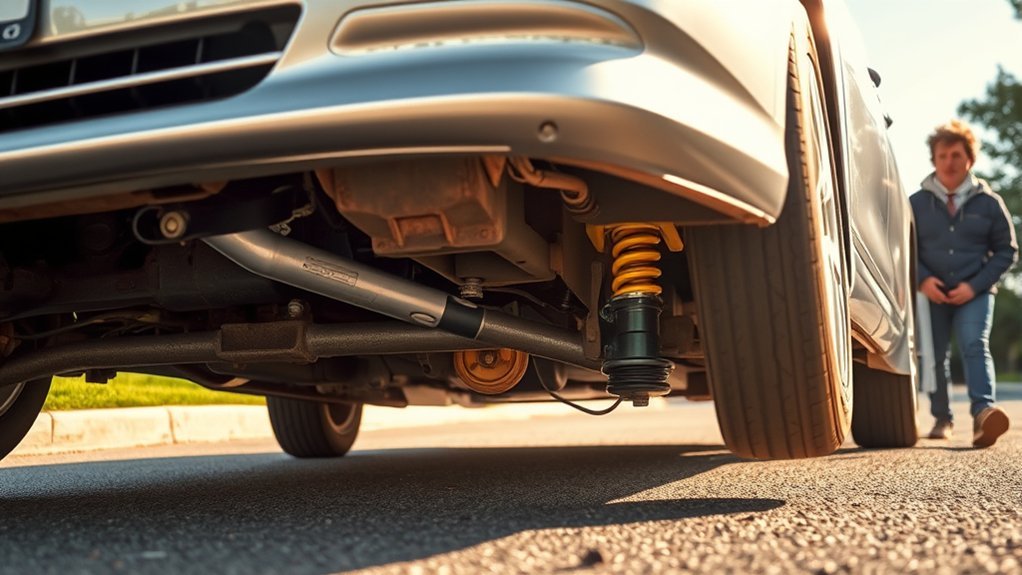
If your Toyota Camry makes a clunking noise over bumps, do not assume one part is automatically bad. The noise can come from worn sway bar links, sway bar bushings, control arm bushings, ball joints, tie rod ends, strut mounts, loose brake hardware, or even an exhaust part tapping the body. The best fix is to narrow the sound down by when it happens, where it comes from, and which suspension part has visible wear or looseness.
Quick Answer
A Toyota Camry that clunks over bumps most often has looseness in the front suspension, such as worn sway bar links or bushings, control arm bushings, ball joints, strut mounts, or tie rod ends. Stop driving if the steering feels loose, the car pulls hard, or the wheel has visible play.
Key Takeaways
- A bump-only clunk usually points to a loose or worn suspension part, not the engine.
- Sway bar links and bushings are common suspects, but control arms, ball joints, tie rods, struts, brake hardware, and exhaust mounts should also be checked.
- Use your Camry’s VIN or service manual when ordering suspension parts because bushing size and hardware can vary by year, trim, and production spec.
- Never work under a Camry supported only by a jack; use wheel chocks and properly rated jack stands.
At a Glance
| Time Required | 30–60 minutes for inspection; 1–3+ hours for repair, depending on the part |
| Difficulty | Beginner for visual checks; intermediate for part replacement |
| Tools Needed | Flashlight, gloves, wheel chocks, floor jack, jack stands, pry bar, socket set, torque wrench |
| Typical Cost | $0–$50 for DIY inspection; installed repairs often range from about $152–$735+ depending on the component |
Identifying the Source of Clunking Noises in Your Toyota Camry
Start by paying attention to the pattern of the sound. A single heavy clunk over speed bumps is different from a light rattle on rough pavement, a pop during turns, or a knock when braking. Those details help you avoid replacing good parts.
| Symptom | Likely Area to Check First |
|---|---|
| Clunk over small bumps or rough roads | Sway bar links, sway bar bushings, strut mounts |
| Clunk when turning slowly | Ball joints, tie rod ends, control arm bushings, strut mounts |
| Clunk when braking or starting from a stop | Control arm bushings, brake caliper hardware, loose subframe or engine mount |
| Loose steering or wandering | Tie rod ends, ball joints, alignment, tires, steering linkage |
| Metallic rattle from underneath | Exhaust heat shield, exhaust hanger, loose splash shield |
Warning: Do not crawl under the car while it is supported only by a hydraulic jack. Park on level ground, chock the wheels, use jack stands rated for the vehicle, and follow the lifting points in your Toyota owner’s manual or repair manual.
How to Spot Worn Sway Bar Bushings?
Sway bar bushings hold the stabilizer bar against the body or subframe. When the rubber hardens, cracks, shrinks, or separates from the bracket area, the bar can move and make a dull clunk over bumps. Many Camry owners report the sway bar links rattling before the bushings show obvious damage, so inspect both parts together rather than assuming the bushing is the culprit.
Look for cracks, missing chunks of rubber, shiny metal marks where the bar has been moving, or a bushing that no longer grips the sway bar firmly. With the vehicle safely supported, you can also check for excessive movement by gently moving the sway bar and links by hand. Any looseness, clicking, or visible play deserves closer inspection.
Note: A dry bushing may squeak, but a torn or loose bushing should be replaced. Do not rely on spray lubricant to “fix” a damaged suspension bushing.
The Role of Control Arms and Ball Joints in Suspension Noise
The control arms locate the wheel and allow the suspension to move up and down. The control arm bushings absorb movement and road shock, while the ball joints allow the steering knuckle to pivot. If a bushing tears or a ball joint develops play, the wheel can shift slightly when the Camry hits a bump, turns, or brakes.
Toyota maintenance schedules include regular inspections of ball joints, dust covers, steering gear, and steering linkage/boots, especially for vehicles driven on dirt roads or dusty roads. That matters because torn boots let grease out and contamination in, which can accelerate wear.
| Component | Noise or Symptom When Worn |
|---|---|
| Control arm bushings | Thud or clunk over bumps, braking clunk, uneven tire wear |
| Ball joints | Knock during turns, loose steering, tire movement when lifted |
| Tie rod ends | Steering play, wandering, clunk while turning |
| Strut mounts | Top-end clunk, popping while turning, rough ride |
Step-by-Step Guide to Inspecting Suspension Components
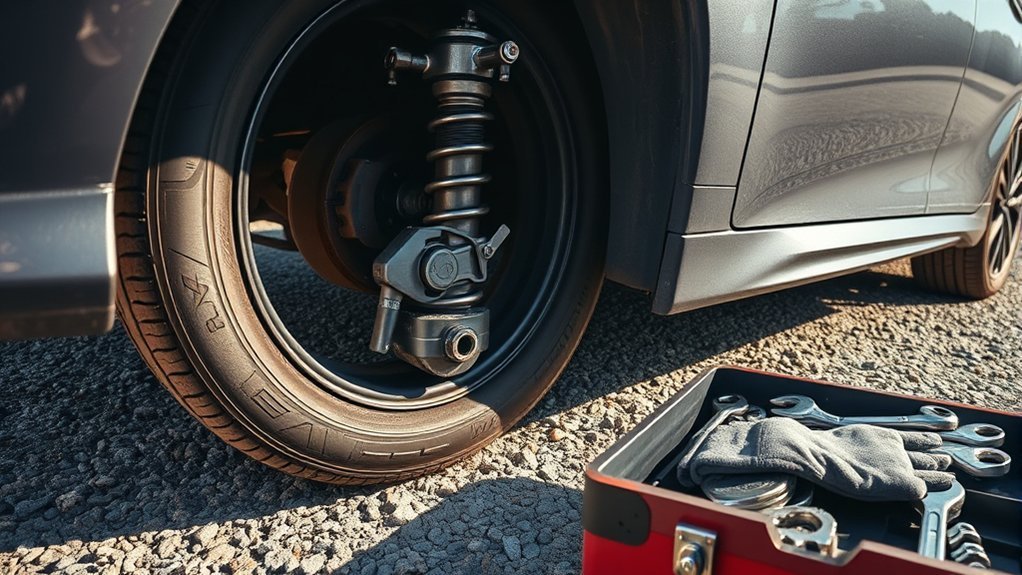
Use a simple order so you do not miss obvious causes. Work slowly, compare the left and right sides, and do not pry against brake hoses, ABS wires, or rubber boots.
[Products Worth Considering]

This front stabilizer sway bar link set is designed to restore smooth, controlled handling and reduce clunking noises caused by worn suspension components. Built with a zinc-nickel alloy coating, carbon steel, and reinforced ball studs, it offers strong corrosion resistance and durable performance for a wide range of Toyota, Lexus, and Scion models. It is engineered for straightforward installation and reliable OE-style fitment.
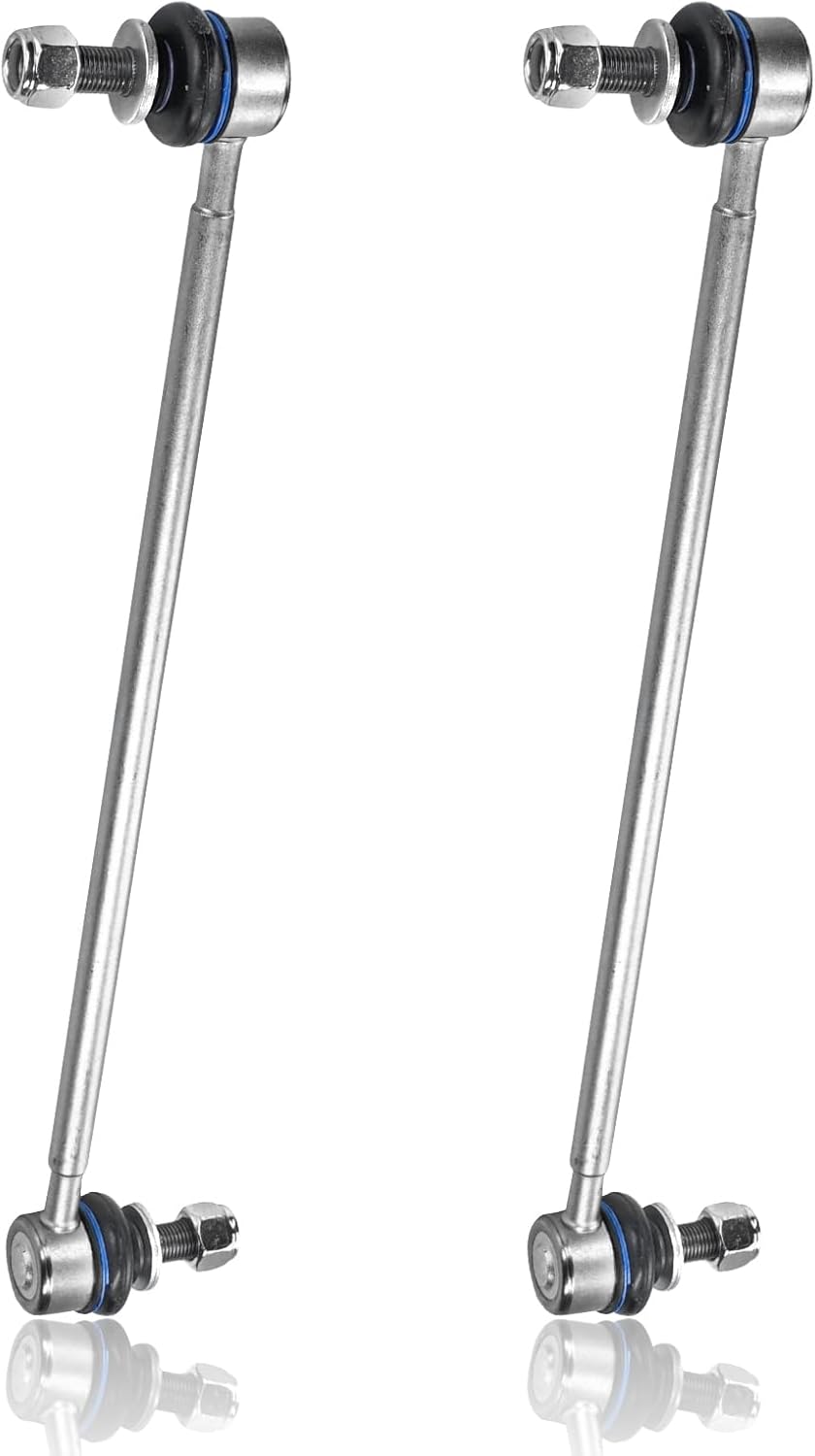
These front stabilizer sway bar end links are designed to restore smooth, stable handling and reduce noise and vibration during turns and over bumps. Compatible with select Toyota, Prius, and Scion models, they offer a reliable replacement built to meet manufacturing standards with corrosion-resistant coating and a strong, durable body.

Built for towing, winching, and off-road recovery, this D-ring shackle set delivers dependable strength in a compact, easy-to-use design. The drop-forged steel construction and protective coated finish help provide reliable performance and resistance to rust in demanding outdoor conditions. Compatible with Jeeps, ATVs, UTVs, trucks, trailers, and SUVs, it is a practical recovery accessory for everyday trail and rescue use.
Start With a Safe Road Test
- Drive on a quiet, low-speed road and listen for when the clunk happens.
- Note whether it comes from the left, right, front, or rear.
- Test light braking, slow turning, and small bumps separately.
- Stop the test if the steering feels loose, the car pulls suddenly, or the noise becomes severe.
Keep in mind that a part can pass a hand-check on a lift and still clunk under real load — always road-test after each suspected fix rather than relying on a stationary check alone.
Check Control Arm Bushings
Inspect each control arm bushing for cracked rubber, separation from the sleeve, fluid contamination, rust around the bracket, or metal-to-metal contact. A torn bushing can let the control arm shift during braking or when the wheel hits a bump.
If you use a pry bar, use light pressure only and compare both sides. Some movement is normal because bushings are designed to flex, but obvious separation, knocking, or a control arm that jumps in the bracket is not normal.
Inspect Sway Bar Links
Look at the sway bar links on both sides. A worn link may have a torn boot, rust dust around the joint, a loose stud, or a joint that clicks when moved. If the link moves freely by hand or rattles, it can create the exact clunk many Camry owners hear over small bumps.
Inspect Ball Joints and Tie Rod Ends
Check for torn dust boots, grease leakage, rust-colored powder, or looseness. With the wheel safely lifted and supported, a technician can check for play by moving the wheel at the proper positions and watching the joint. If you are not sure what movement is normal, have a mechanic inspect it because a failed ball joint or tie rod can affect steering control.
Do Not Overlook Struts, Brakes, Exhaust — and the Steering Shaft
If the main suspension joints look tight, inspect the strut mount, shock/strut body, coil spring seat, brake caliper bracket, brake pads, exhaust hangers, heat shields, and splash shields. A loose caliper bracket or rattling heat shield can sound like a suspension clunk even when the suspension is fine.
One source that’s easy to miss: the intermediate steering shaft that connects the steering column to the steering rack. On some Camrys this shaft can develop play at its joints and clunk over bumps in a way that feels identical to a sway bar or control arm issue, even though it has nothing to do with the suspension. If every suspension and steering-linkage part checks out tight but the clunk persists, ask a technician to check the intermediate shaft coupling next.
Pro Tip: If the clunk is on one side, inspect the noisy side first, then compare it with the quiet side. Side-to-side comparison makes torn bushings, loose links, and missing hardware easier to spot.
Why Sway Bar Bushing Size Matters
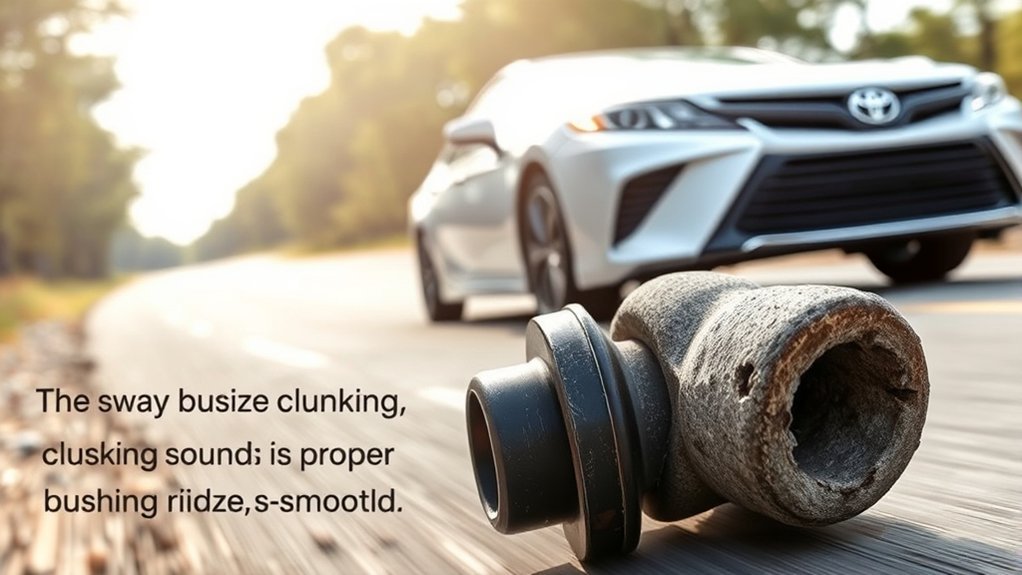
The correct sway bar bushing must match the stabilizer bar diameter and the bracket design. A bushing that is too loose can let the bar knock. A bushing that is too tight or shaped incorrectly can bind, squeak, wear early, or make installation difficult.
Correct Fit Ensures Performance
Do not choose a bushing simply because it looks close or because a larger size seems tighter. Use your Camry’s VIN, model year, trim, drivetrain, and production details when ordering parts. If you are buying from a dealer or OEM catalog, confirm the exact part number before installing it.
Size Impact on Handling
The sway bar helps reduce body roll during cornering. The bushing does not need to be larger; it needs to fit correctly so the bar is supported without excess play. A correct bushing helps keep the stabilizer bar quiet and predictable.
| Bushing Fit | Likely Result |
|---|---|
| Too loose | Clunking, bar movement, uneven wear |
| Too tight | Binding, squeaking, difficult installation |
| Correct size | Stable support and reduced noise |
| Wrong bracket shape | Poor clamping or premature wear |
Preventing Additional Repairs
Wrong suspension parts can waste time and may damage surrounding components. Before replacing sway bar bushings, clean the area, check the sway bar for rust or wear grooves, confirm the bracket is not bent, and inspect the links at the same time.
Replacing Sway Bar Bushings: A Safe Guide
Replacing sway bar bushings can be a manageable DIY job on some Toyota Camry models, but access, bolt size, rust, bracket shape, and torque specs vary by year. Use a repair manual for your exact Camry and do not guess on torque values.
- Park on level ground, set the parking brake, and chock the wheels.
- Lift the vehicle only at approved lift points and support it with rated jack stands.
- Locate the sway bar brackets and compare the new bushings with the old ones before removing parts.
- Remove the bracket bolts carefully. If the bolts are rusty, use penetrating oil and avoid snapping hardware.
- Remove the old bushings and clean the contact area on the sway bar.
- Install the correct bushings in the same orientation as the originals.
- Reinstall brackets and tighten hardware to the service-manual torque specification.
- Road-test slowly and recheck for noise.
Note: Some bushings are installed dry, while others may allow a silicone-compatible grease. Avoid petroleum grease unless the part manufacturer specifically allows it because it can damage some rubber compounds.
[Products Worth Considering]
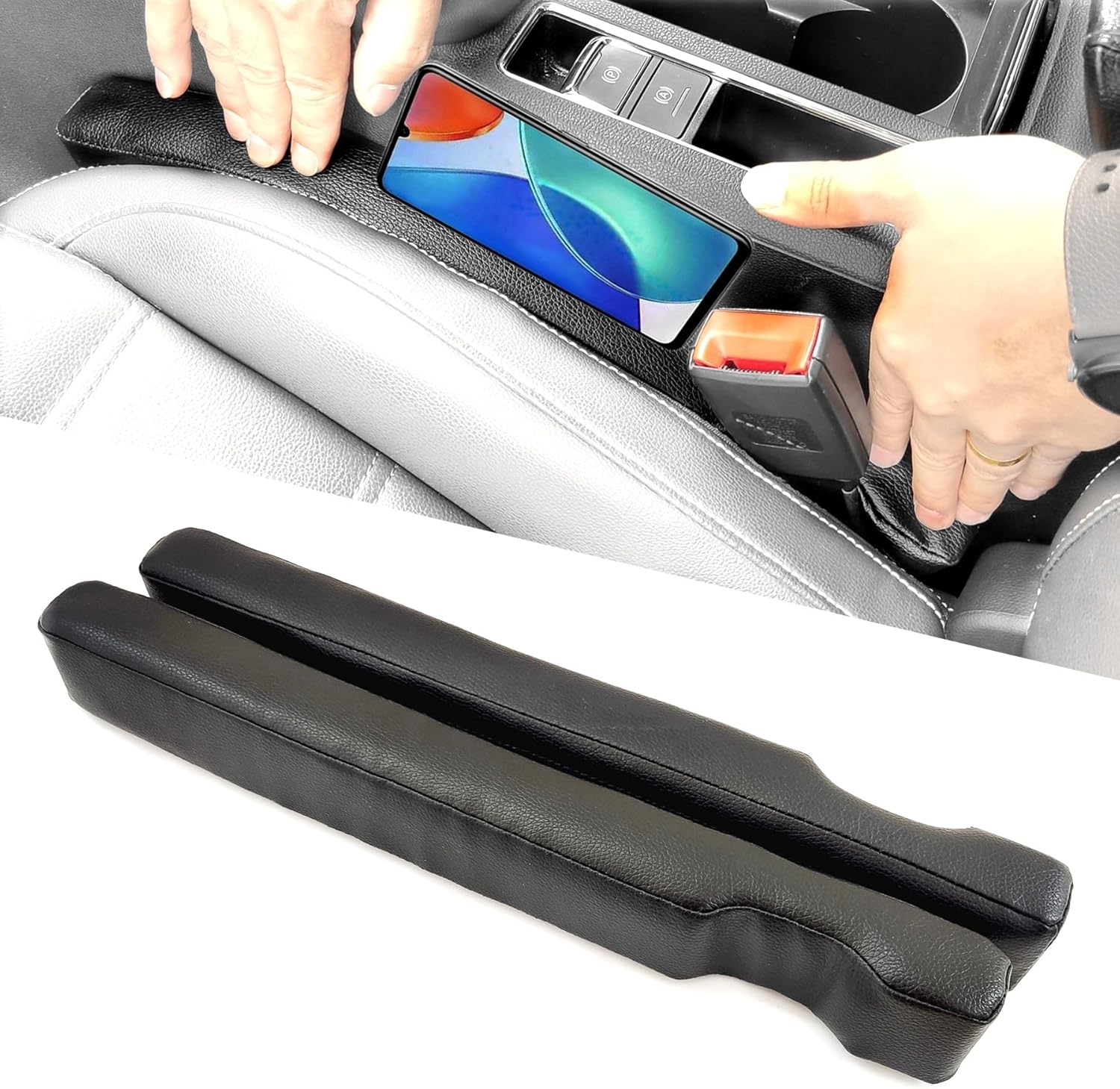
This universal car seat gap filler helps block the space between your seat and console to stop keys, phones, food, and small items from falling through. Made with durable PU leather and a sponge core, it offers a premium look, waterproof protection, and easy installation for most cars, SUVs, and trucks.

This foam cannon creates thick snow foam for washing cars, trucks, and other vehicles, helping lift dirt and grime for a safer, scratch-resistant clean. It connects quickly to compatible pressure washers and lets you adjust the spray pattern and foam mix for better control. Built with a solid-brass body and durable components, it is designed for dependable cleaning performance.

COMPATIBILITY — Fits 2001-2007 Toyota Highlander; 2002-2006 Toyota Camry; 2005-2006 Lexus ES330.
Signs of Further Suspension Issues in Your Toyota Camry
If new sway bar bushings do not stop the clunk, keep diagnosing instead of replacing random parts. Suspension noises often overlap, and one worn part can hide another. For a broader look at how long these parts should last before wearing out, see our Toyota Camry suspension lifespan guide; if the noise is more of a grinding hum than a clunk, it may point instead to wheel bearing wear.
- Persistent clunking after sway bar bushing or link replacement
- Uneven tire wear or a steering wheel that sits off-center
- Loose, wandering, or vague steering
- Popping or knocking when turning into a driveway
- Brake clunk when shifting from reverse to drive or during the first stop
- Visible torn boots on ball joints or tie rod ends
- Oil leakage from a strut or shock
A clunk is not just a comfort issue. If it comes with loose steering, heavy pulling, wheel play, or uneven tire wear, treat it as a safety problem until the suspension and steering are inspected.
Essential DIY Suspension Maintenance Tips for Your Toyota Camry
Routine checks can catch problems before a small clunk becomes a larger repair. Toyota maintenance guidance includes visual inspections of ball joints, dust covers, steering linkage, boots, and related chassis components at scheduled intervals and under special driving conditions.
- Inspect suspension and steering boots during oil changes or tire rotations.
- Rotate tires on schedule and watch for feathering, cupping, or one-sided wear.
- Check for loose splash shields, heat shields, and brake hardware before assuming the suspension is bad.
- Replace worn parts in pairs when appropriate, especially links, struts, or bushings with similar mileage.
- Use a torque wrench on suspension hardware and lug nuts.
- Have alignment checked after replacing control arms, ball joints, tie rod ends, struts, or after impact damage.
[Products Worth Considering]

Premium Material: Ball joint kit built with high quality material, referring to international original factory standard and multiple tests to ensure quality and durability with over 30 years of experience.

COMPATIBILITY – Fits 2004-2006 Lexus ES330; 2004-2006 Lexus RX330; 2006-2008 Lexus RX400h; 2007-2009 Lexus RX350; 2002-2003 Lexus ES300; 2001-2007 Toyota Highlander; 2002-2006 Toyota Camry; 2004-2010 Toyota Sienna; 2004-2008 Toyota Solara

【Front End Suspension Kit Fitment】2013-2018 for Toyota Avalon, 2012-2017 for Toyota Camry
When to Consult a Professional Mechanic for Suspension Problems?
See a professional mechanic if the clunk is loud, hard to locate, or linked to steering, braking, or tire wear. A shop can lift the car safely, use chassis ears or pry-bar tests correctly, check alignment angles, and confirm whether the noise is from the suspension, steering, brakes, or body.
Warning: Do not keep driving if the Camry has severe steering looseness, a wheel that visibly shifts, a ball joint or tie rod with obvious play, a hard pull, or a clunk that suddenly becomes much louder. Have it towed or inspected before driving again.
As a current cost reference, RepairPal lists average Toyota Camry estimates of about $152–$215 for stabilizer bar link kit replacement, $342–$504 for suspension ball joint replacement, and $569–$735 for control arm replacement. These ranges do not include every possible fee, tax, location difference, rust issue, alignment, or related repair, and can vary by model year.
Frequently Asked Questions
What can cause clunking when going over bumps?
Common causes include worn sway bar links, sway bar bushings, control arm bushings, ball joints, tie rod ends, strut mounts, loose brake hardware, loose subframe hardware, a worn intermediate steering shaft, or exhaust parts touching the body. Start with the easiest visual checks, then inspect steering and suspension joints for play.
How much does it cost to fix the suspension on a Toyota Camry?
It depends on the failed part. A stabilizer bar link kit is often less expensive than a control arm or ball joint. Current RepairPal averages list Camry stabilizer bar link kit replacement around $152–$215, ball joint replacement around $342–$504, and control arm replacement around $569–$735 before taxes, fees, and location-specific differences.
How do you diagnose a suspension clunk?
Road-test safely, note when the clunk happens, then inspect from simple to serious: sway bar links and bushings, control arm bushings, ball joints, tie rods, strut mounts, brake hardware, exhaust hangers, and loose shields. Compare left and right sides and confirm the failed part before replacing anything.
Is it safe to drive a Camry with a clunking suspension?
A light rattle from a sway bar link may not feel urgent, but you should still inspect it soon. Do not continue driving if the steering feels loose, the vehicle pulls hard, a tire shows abnormal wear, the wheel has visible play, or the clunk becomes loud and sudden.
Do I need an alignment after replacing sway bar bushings?
Usually, replacing only sway bar bushings or sway bar links does not change alignment angles. However, alignment is often needed after replacing control arms, ball joints, tie rod ends, struts, or after impact damage. If the steering wheel is off-center or the tires are wearing unevenly, have alignment checked.
Can I lubricate sway bar bushings to stop a clunk?
Lubrication may reduce a squeak if the bushing design allows it, but it will not repair cracked, loose, or missing rubber. Use only the lubricant recommended by the bushing manufacturer, and replace the bushing if it no longer holds the sway bar firmly.
Conclusion
A Toyota Camry clunking over bumps is usually a sign that something in the suspension, steering, brakes, or underbody has loosened or worn out. Sway bar bushings and links are common causes, but control arm bushings, ball joints, tie rods, strut mounts, brake hardware, the intermediate steering shaft, and exhaust mounts can make similar noises. Inspect safely, confirm the failed part before replacing it, and get professional help if the noise comes with loose steering, pulling, wheel play, or uneven tire wear.
Sources
- Toyota 2024 Camry Hybrid Warranty & Maintenance Guide — maintenance inspection items including ball joints, dust covers, steering gear, and steering linkage/boots.
- Toyota T-SB-0063-20 via NHTSA — alignment troubleshooting and guidance to inspect tires, wheels, suspension, steering, and body/frame components.
- OSHA 29 CFR 1910.244 — jack rating and lifting equipment safety requirements.
- RepairPal Toyota Camry Stabilizer Bar Link Kit Replacement Cost — current cost range and symptom reference for knocking/rattling over bumps.
- RepairPal Toyota Camry Suspension Ball Joint Replacement Cost — current cost range for ball joint replacement.
- RepairPal Toyota Camry Control Arm Replacement Cost — current cost range for control arm replacement.



[…] If your Camry bounces, clunks, pulls, sags, or develops cupped tire wear, inspect the suspension before ordering parts. Confirm the model year, trim, drivetrain, market, and VIN because suspension components are not universal across every Camry. For a deeper look at diagnosing clunks specifically, see our Camry clunking noise guide. […]