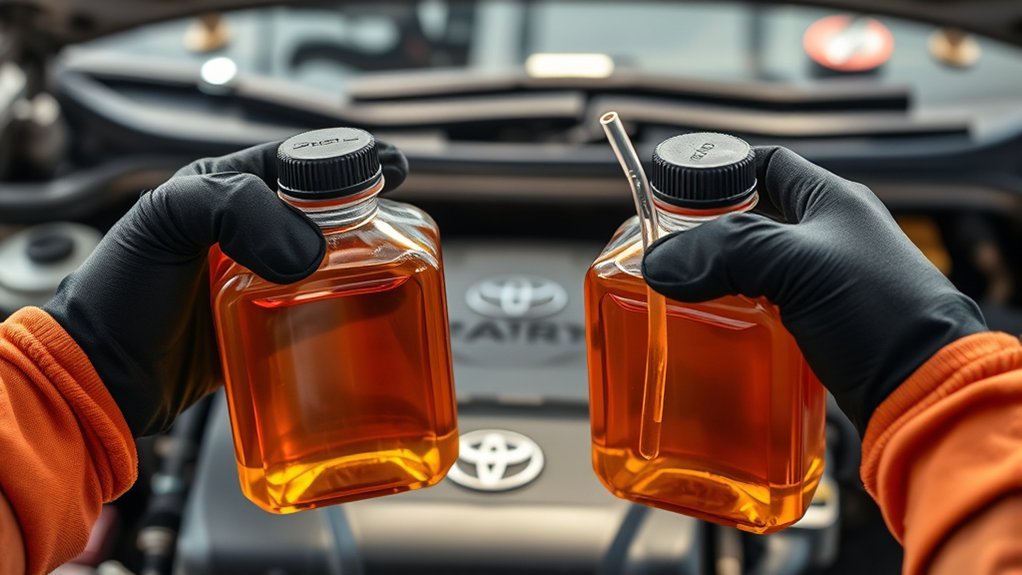
For a Toyota Camry, use 0W-20 only when Toyota specifies or allows 0W-20, and use 5W-30 only when Toyota specifies or allows 5W-30. Many older Camrys call for 5W-30, while later engines may require 0W-20, 0W-16, or 0W-8. Model year alone is not enough because four-cylinder, V6, and hybrid engines can use different grades.
Check the owner’s manual for your exact engine or VIN before buying oil. Climate and mileage can affect service conditions, but they do not override Toyota’s approved viscosity unless the manual gives an alternative.
Last updated: July 15, 2026. This revision checked Toyota owner resources, oil-certification guidance, and the model-year decision rules used below.
Quick Answer
Use the viscosity and oil standard listed in your Camry owner’s manual. Choose 0W-20 when Toyota specifies or permits it, and choose 5W-30 when Toyota specifies or permits it. Some 2018–2024 U.S.-market 2.5L Camrys use 0W-16, while Toyota’s 2025 U.S. Camry Hybrid maintenance data lists 0W-8. Never switch grades only because the engine is older or the weather is hot.
Key Takeaways
- The owner’s manual and engine are the deciding factors. A Camry badge or model year alone cannot confirm the correct oil.
- 0W-20 has a lower winter grade than 5W-30, while 5W-30 is thicker at operating temperature. Neither is automatically “better.”
- Many U.S.-market 2018–2024 Camrys with 2.5L engines commonly specify 0W-16, and Toyota’s 2025 U.S. Camry Hybrid maintenance data lists SAE 0W-8.
- A temporary substitute is not a permanent viscosity change. Return to the primary grade at the interval Toyota states.
- Correct oil level, certification, filter fit, service interval, and maintenance records matter more than choosing a thicker grade without approval.
How This Guide Was Checked
This is a documentation-based comparison. The decision rules below separate Toyota’s primary viscosity, any temporary substitute, the required oil certification, and the exact engine application. It does not claim laboratory oil analysis, engine teardown testing, or long-term testing of a specific oil brand.
0W-20 vs 5W-30 for Toyota Camry: Which Is Right?
For normal driving, use the exact viscosity Toyota recommends for your Camry’s engine. Toyota’s owner portal lets you select the vehicle or use VIN-specific information, which is safer than relying on a general parts-store chart.
A blanket rule such as “0W-20 is best for every Camry” or “5W-30 protects every Camry better” is inaccurate. A 2007 Camry and a 2025 Camry Hybrid can have different oil requirements. Confirm the viscosity, the performance standard on the bottle, and whether Toyota describes another grade as a temporary substitute.
Warning: Do not use 5W-30 in a newer Camry only because the engine has high mileage. If Toyota specifies 0W-16, 0W-20, or 0W-8 and does not approve 5W-30, the thicker grade may change cold-start flow, fuel economy, and lubrication behavior. A warranty is not automatically “void,” but a claim can be disputed if an unapproved oil contributed to the failure.
[Products Worth Considering]

ECOGARD X5608 is a premium cartridge oil filter designed for a wide range of Toyota, Lexus, and Scion vehicles. It helps protect your engine by screening out harmful contaminants and is built for use with both synthetic and conventional oils. Included O-rings support a proper housing seal for dependable maintenance between oil changes.

FOCUSFILTER 04152-YZZA1 OEM grade oil filter is designed to help protect your engine with reliable filtration and 10K mile protection. It cross references multiple OE part numbers and fits a wide range of Toyota and Lexus applications, making it a practical replacement for routine maintenance. Built for compatible vehicles including Camry, Avalon, Highlander, Tacoma, RAV4, Sienna, ES 350, and RX 350.

This 12-pack oil filter and drain plug washer set is designed for a wide range of Toyota and Scion vehicles, helping support clean oil flow and dependable engine performance. It replaces several common OE part numbers and offers an easy-fit solution for routine maintenance. Built with corrosion-resistant materials and efficient filtration, it helps keep engine contaminants out and supports longer service life.
What Oil Does a Toyota Camry Take by Model Year?
Toyota’s recommendation depends on the model year and engine. The most reliable answer is always the owner’s manual for your VIN, but this table gives a practical overview for common U.S. Camry generations.
| Camry Model Years | Common Recommended Oil | Important Note |
|---|---|---|
| Older Camrys, especially many 2000s models | Often 5W-30 | Check your manual because engine options and markets vary. |
| 2012–2017 Camry | Often 0W-20 | Check the engine and manual because temporary substitute rules can differ. |
| 2018–2024 Camry 2.5L four-cylinder and hybrid | Often 0W-16 | Some manuals allow 0W-20 temporarily when 0W-16 is unavailable; return to 0W-16 as directed. |
| 2018–2024 Camry 3.5L V6 | Often 0W-20 | Do not assume the four-cylinder and V6 use the same oil. |
| 2025 U.S. Camry Hybrid | SAE 0W-8, JASO GLV-1 | Toyota’s 2025 Camry Hybrid maintenance data lists 0W-16 only as a substitute if 0W-8 is not available, and says to replace it with 0W-8 at the next oil change. |
| 2026 U.S. Camry Hybrid | [VERIFY: confirm in the 2026 owner’s manual] | Do not assume the 2025 viscosity carries over without checking Toyota’s 2026 manual. |
For current Toyota guidance, use Toyota’s official owner resources and select your model year and trim: Toyota Owners Manuals and Warranties. For the 2025 Camry Hybrid, Toyota lists JASO GLV-1 and SAE 0W-8 in the maintenance data.
Is 0W-20 Better for a Toyota Camry?
0W-20 is better only for a Camry designed to use it. The “0W” describes tested low-temperature cranking and pumping performance, while “20” describes the operating-temperature viscosity grade. Compared with 5W-30, a typical 0W-20 oil is easier to pump in severe cold and is thinner at operating temperature. Those differences support the engine design Toyota validated, but they do not make 0W-20 a universal upgrade for older engines.
[Products Worth Considering]
These White Knight mag-style lug nuts are designed for select Toyota, Lexus, Kia, and Genesis vehicles, delivering a secure fit and a clean factory-inspired look. Made from heat-treated cold forged carbon steel with a chrome finish, they offer durable strength, reliable corrosion resistance, and easy installation with a traditional hex-body, flat-seat design. Use them to replace worn or damaged lug nuts while maintaining proper wheel fitment and dependable performance.

This upgraded aluminum oil filter housing cap is designed as a direct replacement for compatible Toyota and Lexus models, helping restore a secure, reliable seal for the oil filter housing. Built from durable aluminum, it offers improved strength and heat resistance over factory plastic covers, while the included gasket and plug support straightforward installation and dependable leak-free performance.

3X Stronger than the leading full synthetic*
Cold-Start Flow Benefits
Cold starts are hard on engines because oil has not fully circulated yet. A lower winter rating helps oil move faster through the engine in cold weather. That is why Toyota and other automakers often specify oils such as 0W-20, 0W-16, and 0W-8 for newer engines with tight clearances and fuel-efficiency targets.
If your Camry’s manual calls for 0W-20, using the correct 0W-20 oil is usually best for:
- Cold climates and winter starts
- Short trips where the engine spends more time warming up
- Normal commuting and city driving
- Maintaining Toyota’s intended fuel economy
- Keeping the engine within the manufacturer’s tested lubrication range
Does 0W-20 Improve Fuel Economy?
Lower-viscosity oils can reduce pumping and friction losses in engines designed for them. SAE research shows that the result depends on engine design, temperature, test cycle, and the viscosity change. Treat any real-world fuel-economy improvement as modest, and never trade the correct specification for a hoped-for mileage gain.
Low-viscosity oil can help fuel economy, but it is not a universal upgrade. The correct oil is the viscosity and certification your engine was designed and tested to use.
Can 0W-20 Protect a Camry in Hot Weather?
0W-20 is not “weak” when Toyota specifies it. The approved oil is tested for the engine’s normal operating range, including hot-weather use. Ambient heat alone does not justify switching to 5W-30 unless Toyota provides that option. Follow the manual’s special-operating-condition schedule when your use qualifies.
Check Toyota’s special-operating-condition schedule instead of inventing a shorter interval when your Camry regularly sees conditions such as:
- Repeated short trips in cold weather
- Long idling or heavy stop-and-go use
- Dusty roads
- High-speed driving in hot weather
- Frequent mountain driving
- Oil consumption between changes
Is 5W-30 Better for an Older or High-Mileage Camry?
5W-30 is thicker than 0W-20 at operating temperature, but it is better only when the engine was designed to use it or Toyota lists it as an alternative. Many older Camry engines specify 5W-30. A thicker grade may reduce consumption in some worn engines, yet that possibility does not justify using an unapproved viscosity in a newer engine.
Does 5W-30 Give More Hot-Engine Protection?
The “30” means 5W-30 falls within a thicker operating-temperature viscosity range than a 20-grade oil. In an engine designed for 5W-30, that grade provides the intended oil-pressure and film behavior. In an engine designed for 0W-20 or 0W-16, extra thickness is not automatically extra protection.
5W-30 can make sense when:
- Your Camry owner’s manual specifies 5W-30
- Your manual lists 5W-30 as an allowed alternative for your climate or use
- You have an older, high-mileage engine that already calls for 5W-30
- Your mechanic recommends it based on oil consumption and Toyota-approved specs
Long-Term Wear Protection
Thicker oil is not automatically better. Too thick an oil can flow more slowly at startup and may not match the oil-control strategy of newer engines. Long-term protection comes from the correct viscosity, the correct certification, the right oil level, and timely oil changes.
Pro Tip: If your Camry is burning oil, do not jump straight to a thicker grade. First check for leaks, confirm the PCV system is working, verify the oil level after each fill, and compare your consumption with Toyota’s service guidance or a trusted technician’s diagnosis.
Does Camry Engine Type Change the Oil Viscosity?
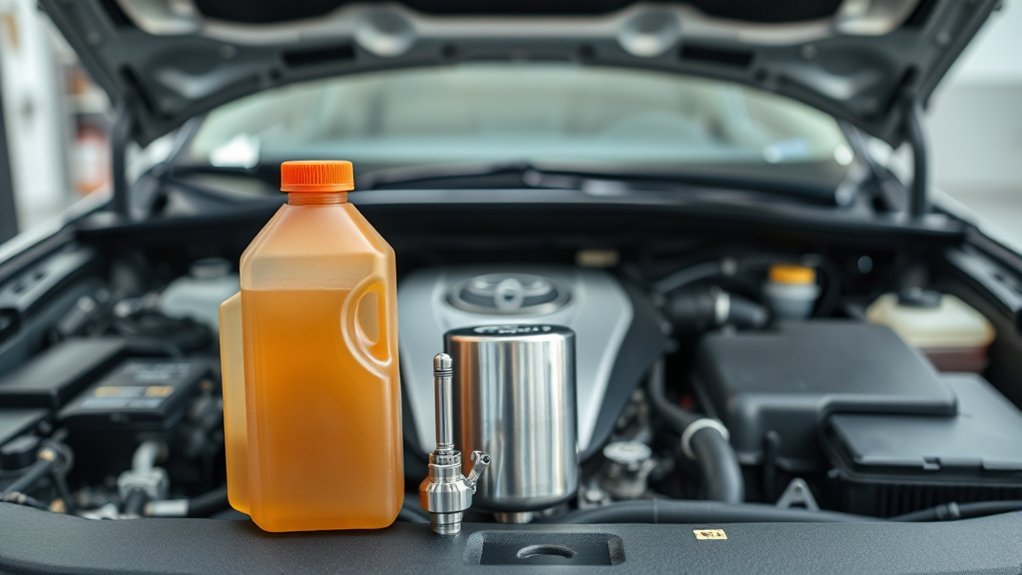
The same Camry model year can have different engine options, and those engines may not use the same oil. A four-cylinder, V6, and hybrid Camry can have different viscosity requirements. That is why the engine code and model year matter more than general advice from forums or oil-store lookup charts.
Four-Cylinder Camry Engines
Many U.S.-market 2018–2024 Camrys with the 2.5L Dynamic Force engine commonly specify 0W-16, not 0W-20 or 5W-30. Some manuals list 0W-20 only as a temporary substitute when 0W-16 is unavailable. Confirm the exact engine and substitute wording before topping off or changing oil.
V6 Camry Engines
Many late-model U.S. V6 Camrys specify 0W-20, while older V6 engines may call for 5W-30. The U.S. Camry became hybrid-only for the 2025 model year, so current advice should not imply that a 2025-or-newer U.S. Camry has a V6 option.
Hybrid Camry Engines
Hybrid Camrys can start and stop the gasoline engine frequently, so Toyota may specify very low-viscosity oil for quick circulation and efficiency. Toyota’s 2025 U.S. Camry Hybrid maintenance data lists SAE 0W-8 with JASO GLV-1. That specification sits outside the simple 0W-20-versus-5W-30 comparison, which is why current owners must check the manual.
When Should You Use 0W-20 in a Camry?
Pick 0W-20 when your owner’s manual specifies 0W-20 or lists it as an approved option for your exact engine. It is especially useful for cold starts, normal commuting, and engines designed around low-friction lubrication.
Cold Climate Starts
0W-20 has strong cold-flow performance because of its 0W winter rating. If your Camry manual calls for 0W-20, this is a good match for winter driving and short trips where the engine may not stay at full operating temperature for long.
Short Daily Commutes
Short trips create moisture, fuel dilution, and repeated cold-start stress. Using the specified low-viscosity oil helps the engine build oil pressure quickly. If your driving is mostly short trips, consider following the severe-service oil-change interval rather than stretching the oil to the maximum normal-service interval.
| Driving Pattern | Best Approach | Why It Matters |
|---|---|---|
| Cold starts and short trips | Use the specified 0W oil and shorten intervals if needed | Improves startup flow and limits contamination buildup |
| Normal commuting | Follow the manual exactly | Matches Toyota’s tested balance of economy and protection |
| Hot weather highway use | Use the manual-approved grade; check severe-service guidance | Heat and high speed can justify shorter intervals |
| High-mileage engine with consumption | Use approved high-mileage oil in the correct viscosity | Helps seals and consumption without using an unapproved grade |
When Should You Use 5W-30 in a Camry?
Pick 5W-30 when your Camry owner’s manual specifies 5W-30 or lists it as an acceptable oil for your engine and conditions. This is common on many older Camrys. It may also be appropriate where Toyota provides a temperature chart or severe-use allowance that includes 5W-30.
5W-30 is usually not the right choice for a newer Camry that specifies 0W-16, 0W-20, or 0W-8 unless the manual clearly allows it. Hot weather and high mileage do not create automatic permission to change grades. The correct oil must circulate at the intended speed and maintain the viscosity range Toyota validated for that engine.
Note: A “high-mileage” oil is a formulation type, not a license to change viscosity. You can buy high-mileage oil in 0W-20, 5W-30, and other grades. Choose the high-mileage formula only in a viscosity your Camry can use.
Which Oil Certifications Should You Check?
Viscosity is only part of the decision. The bottle also needs the performance standard named in the manual. Gasoline-engine oils commonly show API and ILSAC marks, while ultra-low-viscosity applications may use another specification, such as JASO GLV-1 for the 2025 U.S. Camry Hybrid’s 0W-8 oil.
- API SP: A gasoline-engine oil category introduced in 2020. It remains common on bottles, but do not call it the newest category without checking current API guidance.
- ILSAC GF-6A: Applies to many common gasoline-engine oils and was designed for backward-compatible use where earlier ILSAC categories were specified.
- ILSAC GF-6B: Applies only to SAE 0W-16 oils and uses the API “Shield” mark rather than the traditional Starburst.
- JASO GLV-1: Used for certain ultra-low-viscosity oils such as SAE 0W-8.
- Full synthetic: Common in late-model low-viscosity grades, but the viscosity and certification on the label matter more than the marketing term alone.
API advises owners to consult the owner’s manual before choosing an oil category, and the API oil categories chart explains how current gasoline-engine oil standards work.
What Matters More Than Choosing 0W-20 or 5W-30?
The best oil choice can still fail if the oil level is low, the filter is poor, or the interval is too long for your driving. For most Camry owners, maintenance habits matter more than debating one viscosity grade.
| Maintenance Item | What to Do | Why It Matters |
|---|---|---|
| Oil level | Check regularly, especially on high-mileage engines | Low oil causes far more risk than small viscosity differences |
| Oil-change interval | Follow Toyota’s normal or severe schedule | Short trips, dust, heat, and idling can require shorter intervals |
| Oil filter | Use a quality filter that fits the exact engine | Filtration and bypass-valve behavior affect oil cleanliness |
| Records | Keep receipts and mileage notes | Records help with warranty claims and resale value |
| Leaks or consumption | Diagnose before changing viscosity | A thicker oil may hide a symptom without fixing the cause |
For warranty documentation, you do not have to use only a dealer for routine maintenance. FTC guidance explains that independent or owner-performed maintenance does not automatically cancel warranty coverage. Follow Toyota’s schedule, use the correct materials, and keep dated receipts and mileage records.
How Do You Choose the Right Oil for Your Camry?
Use this simple decision flow before buying oil:
- Find your exact model year and engine. Check the owner’s manual, oil cap, Toyota Owners portal, or VIN-specific service information.
- Confirm the required viscosity. Do not rely only on “most Camrys use…” advice.
- Confirm the required certification. Look for API, ILSAC, or JASO wording that matches the manual.
- Check the formulation requirement. Choose synthetic oil when Toyota requires it or when the approved grade is sold in that formulation.
- Check special operating conditions. Use Toyota’s schedule for short trips, dust, long idling, mountain use, or other listed conditions.
- Track oil level and consumption. If the level drops between changes, diagnose the cause instead of guessing at viscosity.
- Keep receipts. Save the oil type, filter part number, mileage, and date.
Oil cap vs. manual: The oil cap is a quick reference, but the owner’s manual provides the complete rule, including certifications and substitute grades. If the cap, a parts-store database, and the manual appear to disagree, confirm the engine or VIN through Toyota’s owner resources before adding oil.
At a Glance
| Time Required | 5–10 minutes to verify the correct oil before buying |
| Difficulty | Easy |
| Tools Needed | Owner’s manual, VIN or model year/engine info, and the oil bottle label |
| Cost | No cost to check; oil cost depends on viscosity, brand, and capacity |
[Products Worth Considering]

Advanced protection against the four main causes of engine breakdown: wear friction heat and deposits

6X better wear protection on critical engine parts than industry standards**

Advanced protection against the four main causes of engine breakdown: wear friction heat and deposits
Frequently Asked Questions
Can using 0W-20 void my Camry’s warranty?
Using 0W-20 should not create a warranty issue when Toyota specifies it or lists it as an approved substitute. A warranty is not automatically canceled by one oil choice, but coverage for a specific failure can be disputed if an unapproved viscosity or specification caused or contributed to the damage. Keep dated oil and filter receipts.
Can I mix 0W-20 and 5W-30 oils safely?
In an emergency, mixing small amounts of compatible gasoline-engine oils is usually better than driving with low oil. However, the blend will no longer be the exact viscosity Toyota specified. Top off only as needed, then return to the correct oil at the next change or sooner if the wrong grade was added in a large amount.
How does engine oil viscosity affect CVT transmission life?
Engine oil viscosity does not lubricate the CVT. Your Camry’s engine oil and transmission fluid are separate fluids. For CVT life, use the Toyota-specified transmission fluid and service guidance. Never put engine oil in the transmission, and never use transmission fluid as engine oil.
Will switching viscosities change my oil-change interval?
No. The interval comes from Toyota’s maintenance schedule and listed operating conditions, not from choosing a thicker grade. Synthetic oil also does not authorize a longer interval than Toyota allows.
Can I use 5W-30 instead of 0W-20 in a Toyota Camry?
Use 5W-30 instead of 0W-20 only when Toyota lists 5W-30 as an approved grade for your exact engine and conditions. High mileage or hot weather alone is not enough. If the manual does not allow 5W-30, stay with the specified viscosity or ask a qualified technician to diagnose the reason you want to change it.
What should I do if the oil cap and owner’s manual seem different?
Confirm that both references match the same engine and market. The manual contains the complete viscosity, certification, and substitute-oil instructions. Use Toyota’s owner portal or VIN-specific service information before adding oil if a cap, lookup chart, or manual appears inconsistent.
Is 5W-30 better for a high-mileage Camry?
5W-30 can be a good choice for a high-mileage Camry if the owner’s manual specifies or allows 5W-30. If your Camry requires 0W-20, 0W-16, or 0W-8, choose a high-mileage oil in the correct viscosity instead of switching to an unapproved thicker grade.
Conclusion
For a Toyota Camry, the correct choice is not automatically 0W-20 or 5W-30. Use the viscosity and certification Toyota specifies for your exact engine. Newer models may require 0W-16 or 0W-8, while many older engines use 5W-30.
Before your next oil change, verify the engine or VIN in Toyota’s owner resources, read the substitute-oil wording, and match the bottle label. Then keep the oil at the correct level and follow Toyota’s service schedule. That is safer than changing viscosity based only on heat, mileage, or general online advice.
Sources
- Toyota Owners Manuals and Warranties — official Toyota source for model-year-specific owner manuals and warranty information.
- Toyota 2025 Camry Hybrid Maintenance Data — official Toyota oil grade and viscosity information for the 2025 Camry Hybrid.
- API Oil Categories — official API explanation of current gasoline-engine oil categories and ILSAC standards.
- API GF-6A, GF-6B, and API SP Overview — official API details on modern oil marks and service categories.
- SAE International: Engine Oil Fuel Economy Benefits and Potential Debits of Low Viscosity Engine Oil — research summary explaining that low-viscosity fuel-economy benefits depend on engine design and application.
- FTC: Auto Warranties, Routine Maintenance, and Repairs — consumer guidance on warranty coverage and routine maintenance outside the dealer.